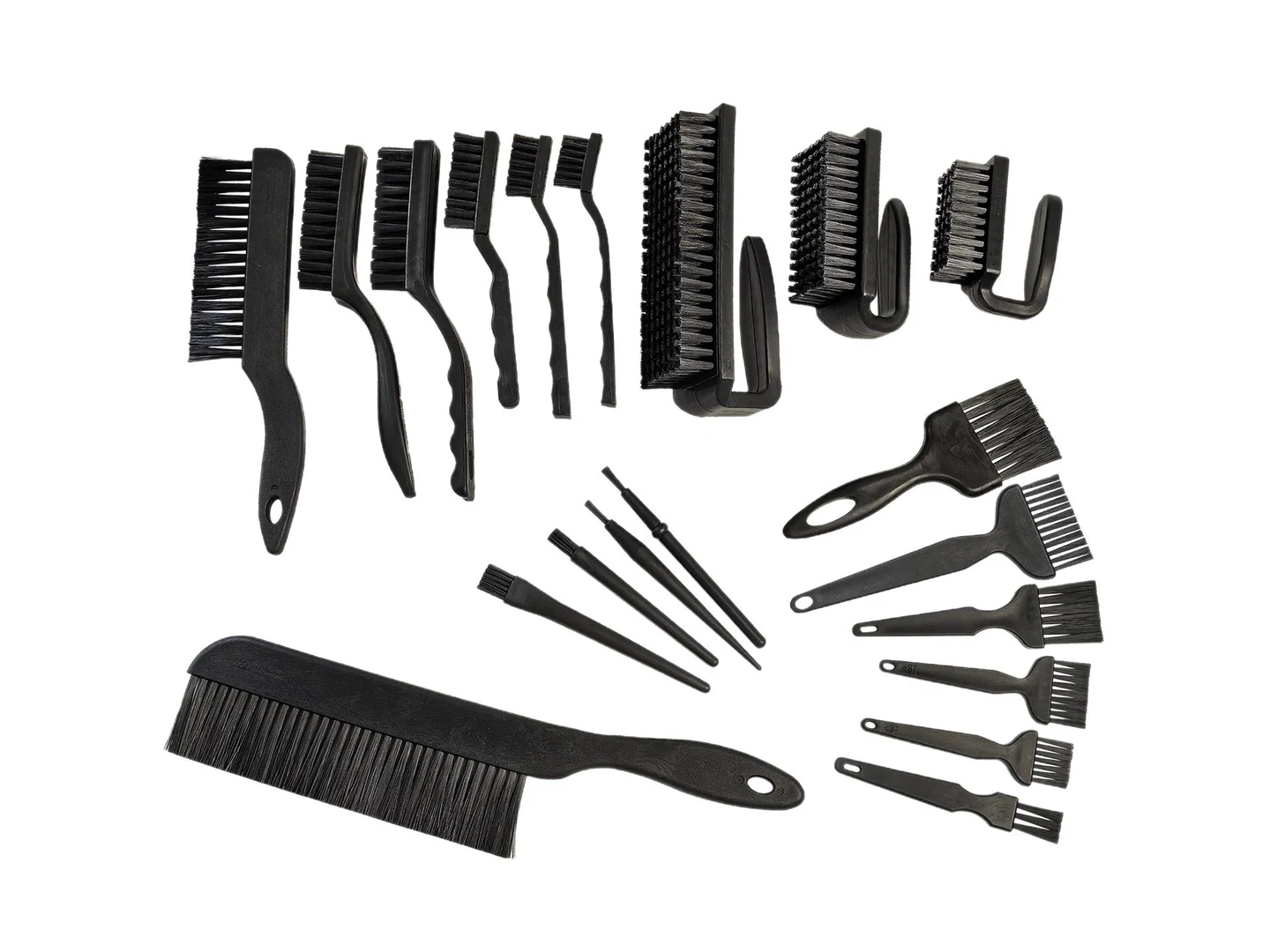
What Is an Eyeglass Cleaning Brush?
An eyeglass cleaning brush is a handheld accessory with soft bristles or a microfiber pad used for dry dust removal from spectacle lenses. Unlike a cloth, which is better for smudges and oils, a brush lifts particles without smearing or grinding them into the lens surface. This makes it the first step in a safe lens cleaning routine, especially for high‑index materials and multi‑coated lenses.
For cleanroom controlled-environment classification context, this section references ISO 14644-1 Cleanrooms and Associated Controlled Environments.
For semiconductor contamination, particle, and precision-cleaning context, this section references NISTIR 4653 — Metrology for the Semiconductor Industry.
For brush construction terminology, bristle/fill/backing/stem terms, this section references American Brush Manufacturers Association — Brush Lingo.
Common Types of Eyeglass Cleaning Brushes
Several brush styles are available, each with distinct strengths and handling characteristics. The three most common are microfiber brushes, camel hair brushes, and pen‑style retractable brushes.
- Microfiber brush: A small pad or strip of dense microfiber fabric attached to a handle. Excellent at trapping dust and gentle on all lens materials.
- Camel hair brush: A traditional style using ultra‑soft natural camel hair bristles. Popular for high‑end optics and coated lenses because of its pliable, non‑abrasive tips.
- Pen‑style brush: A compact, retractable design resembling a pen. Bristles are typically synthetic (nylon or polyester) and may be combined with a blower bulb or cleaning tip. Portable and convenient for on‑the‑go use.
Microfiber vs. Camel Hair vs. Pen‑Style Cleaning Brushes
| Feature | Microfiber Brush | Camel Hair Brush | Pen‑Style Brush |
|---|---|---|---|
| Material | Microfiber cloth on a holder | Natural camel hair bristles | Synthetic bristles (nylon, polyester) |
| Softness | Very soft, non‑abrasive | Extremely soft, flexible | Varies; high‑quality models are soft |
| Dust removal | Traps and lifts fine dust | Sweeps away loose particles | Effective on loose debris |
| Portability | Moderate; can be bulky | Moderate; bristles may bend if not protected | Highly portable; retractable design |
| Durability | Long‑lasting if kept clean | Shedding possible over time | Bristles can deform if pushed too hard |
| Best for | Everyday home use, all coatings | Delicate AR and premium coatings | Travel, quick touch‑ups |
How to Select a Brush Based on Lens Coatings
Modern lenses often have anti‑reflective (AR), anti‑scratch, UV, hydrophobic, and oleophobic treatments. These thin films can be vulnerable to scratching if hard particles are rubbed in. The right brush minimizes contact pressure and avoids dragging debris across the coating.
- Anti‑reflective coatings: Choose the softest bristle option – camel hair or high‑density microfiber – because AR layers can show micro‑abrasions more visibly.
- Scratch‑resistant coatings: While tougher, these still benefit from a clean microfiber or camel hair brush to prevent particle scratching.
- Hydrophobic/oleophobic top coats: Brushes are safe; do not use stiff bristles that could wear away the coating prematurely.
- Polycarbonate or Trivex lenses: Softer substrates that scratch more easily. A dedicated microfiber brush is recommended.
Regardless of coating, always start with a blast of air (blower bulb, canned air, or your breath) to remove the largest particles before brushing. This reduces the risk of grinding grit into the lens.
Common Mistakes When Using a Cleaning Brush
Even the best brush can cause damage if misused. Avoid these frequent errors:
- Using a dirty brush: A brush that has collected oil, dust, and debris from multiple uses will deposit those contaminants back onto the lens, increasing scratch risk. Clean your brush regularly.
- Pressing too hard: Brushing with excessive force can bend bristles and press particles against the coating. Use a light, sweeping motion.
- Choosing the wrong type: Stiff‑bristled brushes (e.g., some pen‑style models with firm nylon) are not suitable for coated lenses. Always verify the brush is labeled for eyeglasses or optics.
- Brushing a wet or oily lens: A brush is for dry dust only. Applying it to a lens with condensation, fingerprints, or sunscreen will smear the grime and may embed it in the bristles.
- Not protecting the brush: Leaving a brush loose in a bag or pocket allows it to pick up dirt and lint, defeating its purpose. Store it in a case or retract it fully.
When a Lens Cleaning Brush Is Not Enough
A brush is one part of a complete lens care kit. It should never replace a proper cleaning cloth and solution when the lens has:
- Grease or oily residues: Smudges from skin, food, or cosmetics require a microfiber cloth and lens cleaner to dissolve and lift the oil. Brushing alone will only smear it.
- Dried‑on deposits: Dust that has bonded with moisture or chemicals may need a cleaning spray or pre‑moistened wipe to soften before removal.
- Fine scratches or haze: A brush cannot repair existing damage. Seek professional resurfacing or replacement.
For travel or emergencies, individually wrapped lens wipes are a convenient alternative that combines cleaning fluid and soft material in one disposable step. However, they still work best after loose particles have been brushed or blown away.
Final Takeaway
Selecting an eyeglass cleaning brush comes down to matching bristle softness to your lens coatings and handling the brush with care. A microfiber or camel hair brush is the safest bet for most coated lenses, while a high‑quality retractable pen‑style brush offers portability without compromising safety – as long as you keep it clean. Pair the brush with a blower or your breath for pre‑cleaning, and always follow up with a lens cleaning cloth and solution when oils are present. With the right habits, a simple brush can help keep your vision clear and your lenses scratch‑free for years.
Practical Use Note
In daily use, the practical test is simple: check whether the brush reaches the full contact area, removes the target residue, and leaves the surface in the required condition. Record what changes when access, residue type, surface sensitivity, brush stiffness, operating environment, and replacement routine changes, because many brush failures are caused by the working condition shifting rather than by the brush body alone.
Frequently Asked Questions
Can I use a regular artist camel hair brush for my glasses?
Not all camel hair brushes are created equal. Artist brushes may have binders or treatments that could transfer to your lenses. Use brushes specifically sold as eyeglass or optics cleaning tools.
How often should I clean my lens cleaning brush?
Clean it whenever you see visible dust or after a few uses. Rinse synthetic bristles with mild soapy water and air dry. For microfiber brushes, gently wash with lens cleaner or mild detergent. Camel hair can be cleaned with a soft detergent and careful reshaping while damp.
What is the difference between an anti‑static brush and a regular brush?
Anti‑static brushes are designed to reduce static cling, making them popular for electronics and vinyl records. For eyeglasses, static is rarely a problem; a clean, soft brush works just as well. Avoid buying a stiff anti‑static brush intended for computers, as it may be too harsh for coated lenses.
Does a pen‑style brush work as well as a traditional brush?
It can, if the bristles are soft and well‑made. Check the tip when extended – it should feel plush, not sharp. Inexpensive pen‑style brushes may have stiff, uneven bristles that can scratch, so invest in a model from a reputable optics brand.
Can I use the same brush for sunglasses?
Yes, the same cleaning brush can be used for prescription glasses and sunglasses. Just ensure the brush is clean before switching between pairs to avoid transferring contaminants.
Is a brush safer than a microfiber cloth for dry dusting?
In most cases, yes. A brush lifts dust away without pressing it against the lens the way a cloth might. This is why many opticians recommend brushing first, then wiping with a cloth and solution for a complete clean.
When should I replace my lens cleaning brush?
Replace your brush when bristles become permanently bent, splayed, or matted, or when the microfiber pad loses its texture and can no longer trap dust effectively. A worn brush does not clean well and could harbor particles that scratch lenses.