It Does Not Clean Well Enough
The bristles may be too fine, too long, too lightly filled, unable to reach the residue or contacting at the wrong angle.

Custom Cleaning Brush Manufacturer
CUSTOM CLEANING BRUSH MANUFACTURING
You don’t need to know the exact brush name to get started.
You may already have a drawing or an old brush. Or you may only know that a conveyor is not cleaning properly, a pipe is difficult to reach, or the current brush wears out too quickly.
Send what you have. We’ll review it and tell you what is still missing before sampling.
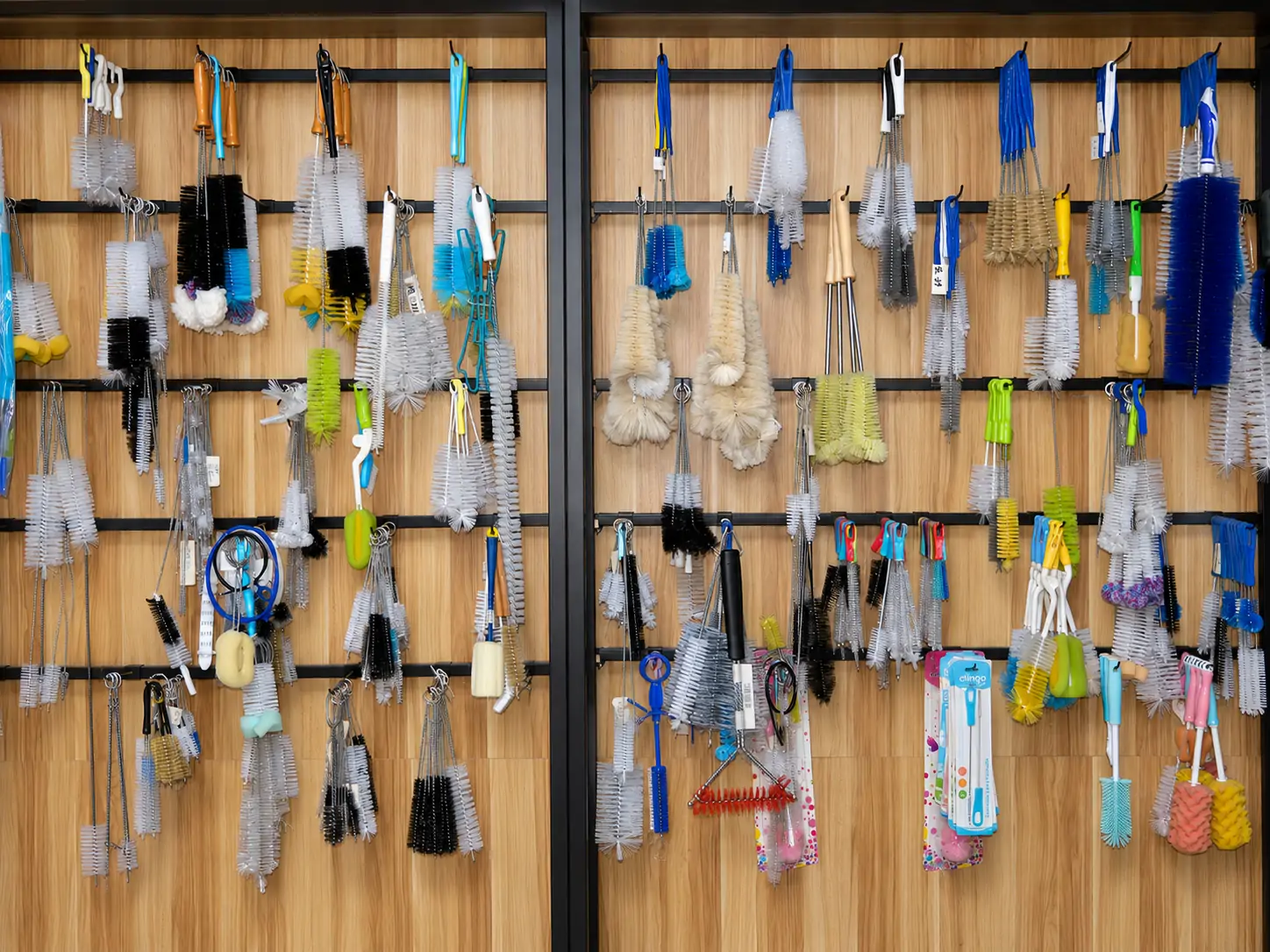
Custom brush projects come in different ways. Pick the one that fits your situation.
Start with a roller, strip, tube, wheel, disc or similar form, then define dimensions, bristle material, density and mounting.
Browse Brush Types →Send the old brush, a drawing, part number or clear photos with measurements, and tell us what should stay the same or improve.
Replace an Existing Brush →Start with the equipment, surface or residue, what needs to come off, and what the current method is not handling.
Find Brushes by Application →Share installation space, working width, movement direction and mounting so the brush can fit, work and remain replaceable.
Discuss a New Brush Design →Define end use, appearance, packaging, planned quantity, target cost, custom colors and branding for an OEM brush project.
Discuss an OEM Brush Project →Brush problems are not always caused by choosing the wrong material. Geometry, contact, density and retention can be just as important.
The bristles may be too fine, too long, too lightly filled, unable to reach the residue or contacting at the wrong angle.
Fast wear can come from excessive contact, unsuitable material, uneven loading or a construction that does not match the job.
Aggressive filament, trapped particles, exposed wire ends, excessive contact or contamination can all leave marks.
Retention method, repeated bending, chemical exposure, heat and construction all affect bristle loss.
Dense or closely spaced bristles may trap sticky residue; trim length, spacing, fill pattern and cleaning method may need adjustment.
Core, bore, shaft, thread, mounting holes, working face and installed position must match—not only the outside size.
Two brushes can look similar and perform very differently.
Roller, strip, tube, disc, wheel, cup, block and hand constructions reach the working area differently. Available space and contact direction quickly narrow the choice.
Staple-set, anchor-set, twisted-in-wire and resin-set constructions hold bristles differently and suit different structures and working conditions.
Nylon, PBT, polypropylene, abrasive filament, metal wire and natural fibers behave differently. Diameter changes flexibility and contact force.
The brush must cover the required area and still fit the available space. Working width, core size, outside diameter and clearance may need to be considered together.
Trim length and fill pattern affect flexibility, coverage, fluid movement, debris release, stiffness and clogging.
Hand brushes need reach and grip. Equipment brushes need the correct core, shaft, bore, thread, flange or mounting-hole arrangement.
You do not need a finished technical drawing. A worn brush, clear photographs, a rough sketch or a short description can be enough to begin.
Metal, glass, plastic, rubber, fabric, a coating, a pipe or another surface.
Dust, oil, residue, chips, scale, fibers, burrs or another contaminant.
By hand, fixed against a moving part, pushed through an opening or fitted to equipment.
Dry, wet, hot, exposed to chemicals, hygiene-sensitive or frequent use.
Overall size, working area, diameter, bore, shaft, thread or mounting position.
Cleaning, wear, shedding, clogging, fit, surface marking or user comfort.
If you already have a drawing, sample, photograph or another supplier’s recommendation, include it. It often helps us understand the project faster.
Established in 2011, our 3,400 m² manufacturing facility develops application-specific brush constructions for industrial, commercial and product-integrated cleaning tasks.
We combine material selection, brush structure, dimensions, mounting, sampling and production review around the actual job.
Learn More About Jiansheng Brush →Send the known application, dimensions, drawing, sample or photographs. We use these details to identify missing information before prototype and production review.
Send Project Details →No. A clear photo, old brush, rough sketch or description of the cleaning problem can start the review.
Yes. Send the original brush or clear measurements and identify what must remain the same and what needs to improve.
Yes. Start with the surface, residue, access, working method, known dimensions and current problem.
Custom colors, branding, kit packing and retail or bulk packaging can be reviewed with the planned quantity and target use.
Share the application, surface, residue, size, drawing or photo and required quantity. We will identify what is known and what still needs to be defined.
Plant-floor work, from the bore of a heat exchanger tube to the return side of a conveyor belt. It also holds the brushes that run as part of the machine rather than in someone's hand: deburring and surface-finishing wheels, paper-machine fabric cleaners, mold and screen brushes.
Everything a food or drink contact surface needs cleaned: bottle and cup interiors, straws and pastry tubes, CIP pipe runs, filling valves, fermentation tanks, and the wash lines and conveyors around them. Filament choice here is decided by hot caustic, chlorine and the rule that nothing may shed.
Buildings, grounds and the machines that clean them — floor scrubber and road sweeper discs, roof and gutter work, solar panels and glass, chimney flues, drains and sewer lines, pool walls, escalator step edges and air-conditioner coils. Most of it is wet, abrasive and outdoors, which rules out half the filament list.
Work where the brush must not scratch, must not shed and must not hold a charge: PCBs and connectors, wafers and end effectors, fiber optic endfaces, optical glass, printer paper paths and 3D printer nozzles. Conductive and carbon-fiber fills dominate here, and every one of them needs a grounded holder.
The brushes that are not cleaning anything. They seal a door gap, a cable entry or a machine guard, hold filter media in a tank, give fish somewhere to spawn, groom cattle or a pet, or finish a shoe. The brush is the product here, not the tool, so trim length and density are specified against a gap or a body rather than a residue.
Household surfaces and the appliances that reach them: coffee grinder burrs, window tracks and tile grout, sinks and dishes, air conditioner vents and filters, and the side brushes and rollers a robot vacuum wears out on a schedule. Most volume here is OEM and replacement-part work.
Vehicles inside and out: wheel barrels and lug holes where the fill must never touch the finish, tires and the swabs that apply dressing to them, dashboard vents and interior crevices, motorcycle chains, and the seal strips on rail transit platform doors.
Cleaning that has to survive a validated cycle. Endoscope and CPAP channels, lumened surgical instruments, laboratory tubes, dental tools, pharmaceutical reactor residue and cleanroom surfaces — all of it specified around enzymatic detergent, high-level disinfection or autoclave, which is why PBT and 316 appear so often.
The polymer filaments most brushes are actually filled with. The nylon family from PA6 to PA46, polypropylene and polyethylene for wet and chemical work, PBT where the wash is hot, polyester where cost matters, and PEEK, PPS, PVDF and PTFE at the top of the temperature and chemical range.
Animal hair, plant fiber and the soft non-filament fills. Horsehair, goat hair and mohair for dusting a surface you must not mark; boar and pig bristle for polishing and finish work; tampico, sisal and coir for wet scrubbing; plus wool, felt, microfiber, PVA and PU sponge, foam and rubber blades.
Wire fills, sorted by what they will do to the part rather than by hardness alone. Carbon steel and galvanized for scale and rust; 304 and 316 where the wash is wet, salted or acidic; brass, phosphor bronze and copper where steel would score the surface or throw a spark; Monel, Inconel and titanium for heat and seawater.
Not the fill — the part the fill is mounted in. Hardwood, PVC and polyethylene blocks, engineering plastic tube cores, aluminum wheel cores and holders, nylon drive gears. The core decides how the brush mounts, how true it runs at speed, and how much heat and moisture it can take before it moves.
Nylon and fiber with grit bonded all the way through the filament, so the cutting face renews itself as the brush wears instead of going smooth. Silicon carbide, aluminum oxide, ceramic, diamond and non-woven grades, for deburring, edge blending and surface finishing.
Fills that drain charge instead of building it. Carbon fiber for the fastest bleed-off, Thunderon copper-sulfide fiber where the contact has to stay soft, and conductive or antistatic nylon and PBT where the brush still has to clean something. All of them need a conductive holder and a real ground to work at all.
Choose your brush type, cleaning task, material direction, and key details before sending a custom brush request.