
Custom Cleaning Brush
Coffee Machine Cleaning Brush
Custom coffee machine cleaning brushes with nylon PA or PBT filaments for grinders, brew groups, chutes, and steam paths.
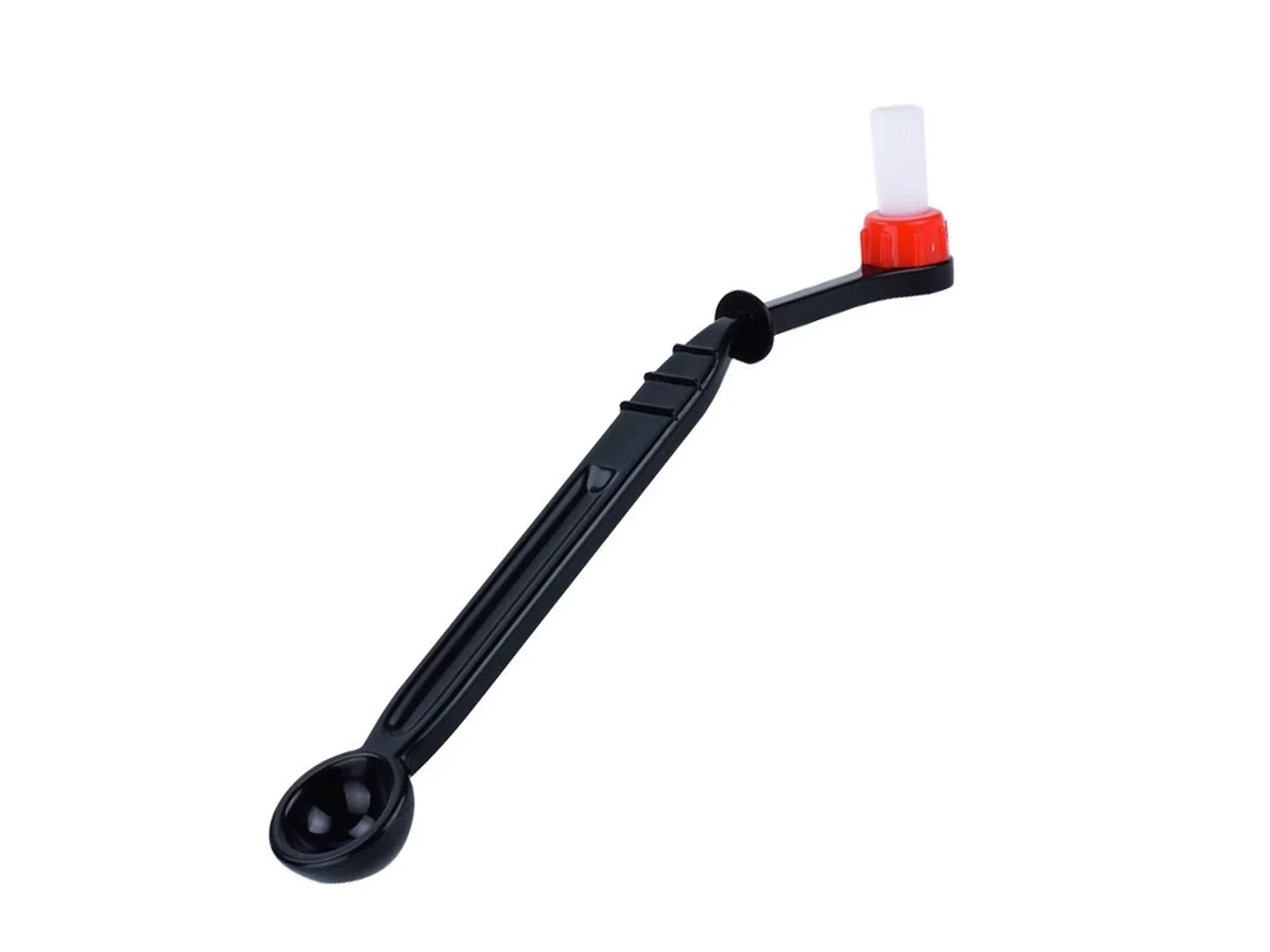
Small brush
500 pcs
Minimum order
Held in one hand: tube, bottle, detail and swab brushes — including long-handled ones with a small head.
Production lead time, once the specification is confirmed
- Up to 500 pcsWithin 7 days
- 501–50,000 pcsWithin 14 days
- Over 50,000 pcsWithin 21 days
Peak season can extend these times; the shipping date is confirmed in writing with your quotation. Sampling and shipping are quoted separately.
A purpose-built coffee machine cleaning brush engineered to reach the fouled, oil-loaded zones of espresso machines and grinders—burr crevices, chutes, brew group recesses, steam paths, and grounds containers—using nylon PA or PBT filaments that remove residue without scratching metal, coated, or polished surfaces. The working head and handle are configured around the machine’s actual access geometry, so maintenance teams get repeatable residue removal instead of improvising with bottle brushes or toothbrushes.
What can this brush do for you?
Reaches the residue zones that cloths and wide brushes cannot enter
Coffee residue builds up in narrow discharge chutes, burr carrier recesses, dosing chamber corners, and the small gaps around group head components. The brush is built with a slim, tapered working tip and a reach profile matched to those openings, so the operator can push into the exact spaces where oils and fines collect instead of wiping around them.
Cuts through coffee oils and packed grounds without scratching
Stale coffee oils polymerize into a tacky film, and fine grounds pack into surface textures. Nylon PA and PBT filaments are selected with a diameter and trim that lift this residue mechanically, while remaining softer than burr edges, chrome plating, and coated shower screens. The result is effective cleaning without scoring precision or appearance surfaces.
Withstands hot rinses, coffee acids, and detergent cycles
Cleaning usually happens when the machine is hot and residues are warm. Both PA and PBT filaments tolerate hot rinse water, coffee oils, and mild alkaline or neutral wash solutions without softening, swelling, or corroding the way wire or natural fiber brushes can. PBT is available when higher short-term rinse temperatures are part of the routine.
One configured tool covers the full maintenance loop
A single coffee machine cleaning brush can combine a long-reach tip for chutes and burr zones with a denser, shorter-trim section for flat surfaces such as dispersion screens and drip tray floors. Multi-zone trim heights and dual-end handles let one brush handle several machine areas without switching tools mid-job.
Leaves no metallic debris behind
Polymer filaments do not shed copper, steel, or brass fragments into the machine. When a metal-free core or fully encapsulated stem is specified, the brush adds no metallic contamination risk to the coffee path. For equipment where stray metal particles could damage burrs or end up in the product, this is the safer construction.
What is a Coffee Machine Cleaning Brush?
A coffee machine cleaning brush is a hand-guided maintenance tool with a working head formed from nylon PA or PBT filament, mounted on a stem and handle sized for coffee equipment service. It is used during end-of-day cleaning, preventive maintenance, product changeovers, or whenever coffee oils, compacted grounds, milk film, and light mineral deposits need to be removed from accessible machine surfaces.
Typical contact areas include group heads, dispersion screens, portafilter baskets, grinder discharge chutes, dosing chambers, steam wand tips, waste grounds drawers, and drip tray recesses. During use, the operator applies short push-pull or rotating strokes to loosen residue; the loosened material is then rinsed away, wiped off, or flushed by the machine’s normal cleaning cycle.
The brush is a mechanical cleaning aid, not a chemical descaler. It removes attached residue but does not replace backflushing, descaling solutions, or sanitizer steps. For surfaces that require documented material compatibility, the filament, core, and handle materials can be selected and documented for the customer’s hygiene program.
Technical Specifications
The table shows the standard design envelope. Final dimensions and materials are set from the target machine parts, access openings, and cleaning routine.
| Parameter | Value / Options |
|---|---|
| Filament material | Nylon PA6, PA66, or PBT; blends available for stiffness and heat balance |
| Filament diameter | 0.10–0.40 mm, selected for residue type and surface sensitivity |
| Trim length | 8–40 mm; shorter for scrub pressure on flat surfaces, longer for recess access |
| Working head shape | Round, flat, tapered, angled, or multi-zone profile with different trim lengths |
| Working head diameter / width | Specified from the smallest access opening; typically 6–30 mm for chutes and recesses, wider for drawer and tray areas |
| Reach length | 50–200 mm from handle or ferrule, matched to chute depth and group head position |
| Overall length | 150–400 mm standard; custom lengths for tall machines or operator reach |
| Core / stem | Plastic, stainless steel (encapsulated or exposed), or flexible polymer; metal-free option available |
| Handle | PP, ABS, TPE-overmolded, or stainless steel; straight, loop, angled, or ergonomic grip |
| Service temperature | PA: -20°C to 80°C continuous hot-water rinse; PBT: short-term exposure up to 100°C |
| Chemical exposure | Compatible with mild alkaline detergents, coffee acids, and neutral cleaners; avoid strong solvents and concentrated acids |
| Attachment / replacement | Fixed head, replaceable head, or threaded ferrule per maintenance plan |
| Brush type | Custom Handheld Detail Brushes |
| How it is driven | Hand-guided |
| Cleaning target | espresso machine group head and shower screen, grinder burr zone, and steam wand and frothing tip cleaning |
| Surface or part | chutes, recesses, brew groups, screens, chambers, trays, steam paths, and baskets |
| Residue or debris | coffee, burrs, coffee oil, milk, particles, milk film, fine particles, and milk protein |
| Mounting / connection | Fixed head, replaceable head, or threaded ferrule per maintenance plan |
Where does this brush work best?
- Espresso machine group heads and shower screens — remove baked-on coffee oils and fine particles without scratching chrome or dispersion screen surfaces.
- Grinder burr zones, chutes, and dosing chambers — dislodge packed grounds and oily film from accessible burr carriers, discharge paths, and corners.
- Portafilters, filter baskets, and dispersion screens — clean the recessed holes and rim grooves where coffee residue accumulates after daily use.
- Steam wands and frothing tips — remove milk protein film and light mineral residue from external surfaces and tip openings.
- Automatic and superautomatic brew units — reach accessible chutes, brew group recesses, and waste grounds drawer interiors.
- Drip trays, drawer seals, and molded recesses — lift soft residue from corners that flat sponges and cloths cannot enter.
How do I choose the right one?
Map every contact point first
List each zone the brush must reach and the smallest opening or gap involved. The working head diameter, tip taper, and reach length are set from the tightest access point, not from the largest component. A brush that fits the group head may be useless in the grinder chute if the chute width is smaller.
Match filament to residue and surface
For oily films and soft coffee fines, fine-to-medium PA filament (0.15–0.25 mm) gives good conforming contact without marring. For compacted grounds, dried milk film, or light scale, coarser PBT filament (0.25–0.40 mm) or a flagged trim increases scrubbing stiffness. On polished, chrome, or coated surfaces, choose softer trim and confirm on a hidden spot.
Choose the core and handle for the cleaning direction
A rigid core works best for straight push-pull strokes into vertical chutes. A flexible stem or angled handle helps reach around brew group components where a straight tool cannot align. The handle length should keep the operator’s wrist in a neutral position while reaching the farthest service point.
Account for water, heat, and chemicals
If brushes are rinsed under hot water after cleaning, PBT offers better temperature stability. If a mild alkaline detergent is part of the daily routine, PA66 provides reliable chemical resistance. Specify rinse temperature, detergent type and concentration, and whether the brush will be sterilized or dried hot.
When a different tool is the better choice
Use a chemical descaling program, not a brush, for hard mineral scale inside boilers, pipes, or valves. For internal steam paths and narrow tubing, a flexible spiral tube brush or chemical flush is needed. If absolute zero cross-contamination between product types is required, consider disposable swabs or single-use applicators. A coffee machine cleaning brush is the right primary tool when the residue is attached to accessible surfaces and can be mechanically loosened.
Can I customize this brush?
Every coffee machine model loads residue into slightly different geometry. The brush is built to the machine, not supplied as one generic size. To configure a project, provide the machine make and model, photos or drawings of the fouled areas, the smallest access opening dimensions, residue type, cleaning chemicals, rinse temperature, surface materials, and desired replacement frequency.
We can adjust:
- Working head geometry — length, diameter, tip taper, angle, multi-zone trim, and dedicated tip detail for grinder burrs or steam wand openings.
- Filament system — PA or PBT filament, diameter, trim length, stiffness, color, and flagged or unflagged tip finish.
- Core / stem — rigidity, flexibility, material (plastic, stainless steel, encapsulated), and length for reach.
- Handle — shape, length, grip material, overmold, hanging loop, and molded branding or part number.
- Attachment — fixed, replaceable head, threaded ferrule, or quick-change interface to match the maintenance plan.
- Color and marking — custom color to separate coffee zone brushes from other equipment, pad printing, laser marking, or identification coding.
- Packaging — bulk, polybag, retail card, service kit, or project-specific packing.
If your project requires material declarations, hygiene documentation, inspection plans, or third-party testing support, we can assist with those requirements during the customization process.
Which filament survives the cleaning chemicals a coffee machine cleaning brush meets?
How do I know whether the brush is reaching the actual fouling points?
Compare against a dirty machine. Brush the target area, then wipe the surface with a clean white cloth or rinse the loosened residue onto a white paper. If oil or fine grounds remain in grooves, corners, or inside the chute, the head length, tip taper, or trim length needs adjustment. Send photos or measurements of those dead zones so the profile can be corrected.
Can the same brush clean grinder burrs and milk steam parts?
Not without careful design. Milk proteins and coffee oils behave differently and can transfer odor or residue between zones. Use separate brushes for those applications, or specify a multi-zone head with clearly separated sections and define which section contacts which residue.
What filament material should I choose for heavy oil versus light dust?
PA filament has good oil release and conforms well for daily removal of oily films and soft fines. PBT is stiffer, absorbs very little water, and holds its shape better for compacted grounds, dried milk, light scale, and higher-temperature rinse environments. A blend or multi-diameter trim can cover both.
Will brushing remove scale deposits?
Brushing removes loose or soft scale and the residue sitting on top of it. Hard, mineralized scale and internal boiler scale require a descaling solution or mild acid treatment. The brush prepares surfaces and supports descaling, but it does not replace chemical descaling.
How do I inspect a coffee machine cleaning brush before use?
Check for splayed, bent, or melted filaments; embedded coffee grounds or sticky oil film; a loose head or cracked handle. Pull gently on a few filaments to confirm none shed. If the brush feels limp, sticky, or no longer springs back after use, replace it before it contaminates the machine.
Is the brush food-contact approved?
The brush is a maintenance tool for cleaning coffee equipment, not a food-contact utensil. Machine surfaces must be rinsed after brushing. However, we can supply materials and documentation selected for your project’s hygiene requirements and assist with material declarations or third-party testing where your process requires them.
Guides that go deeper on this
We have not written a guide specific to this one yet. The material that covers selection, filament, dimensions, maintenance and sourcing is collected in the technical resources library.
RELATED BRUSH RESOURCES
Recommended Reading & Related Brush Resources
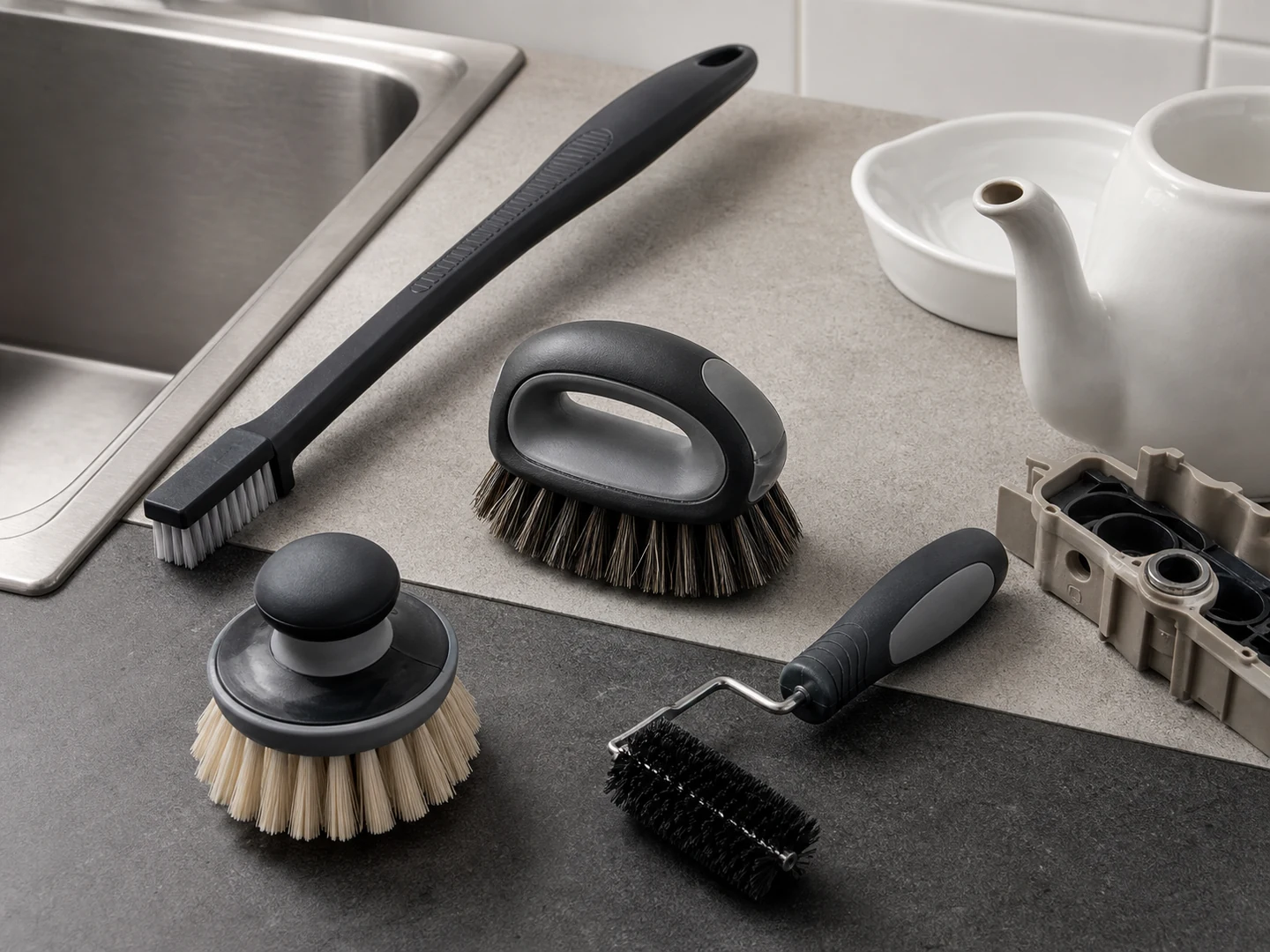
Custom Handheld Detail Brushes
Choose a handheld detail brush when you need direct control in seams, recesses, fittings,…
See how this type is built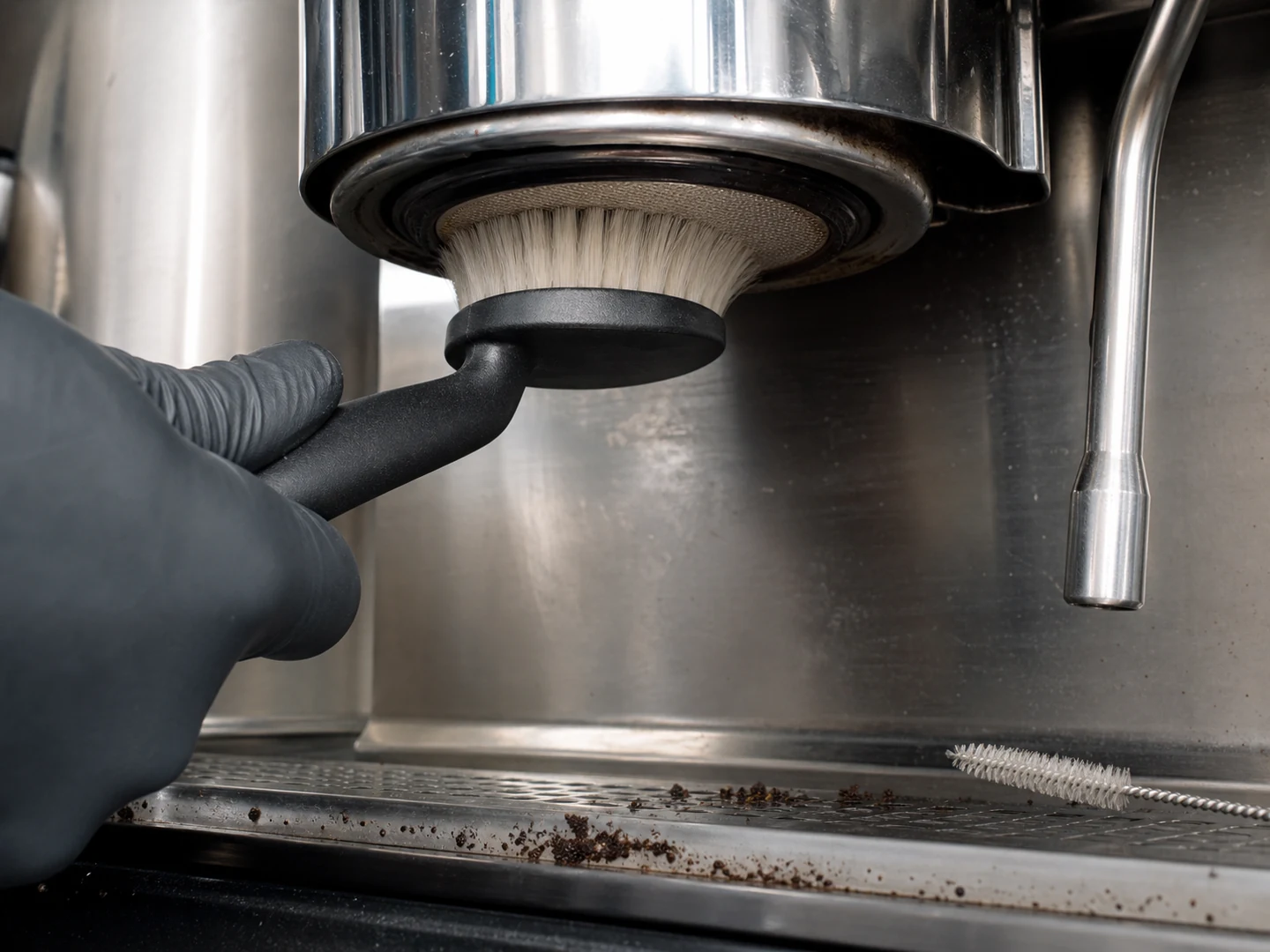
Coffee Machine Cleaning
For Coffee Machine Cleaning, the brush must reach the working area, disturb or collect…
See the cleaning job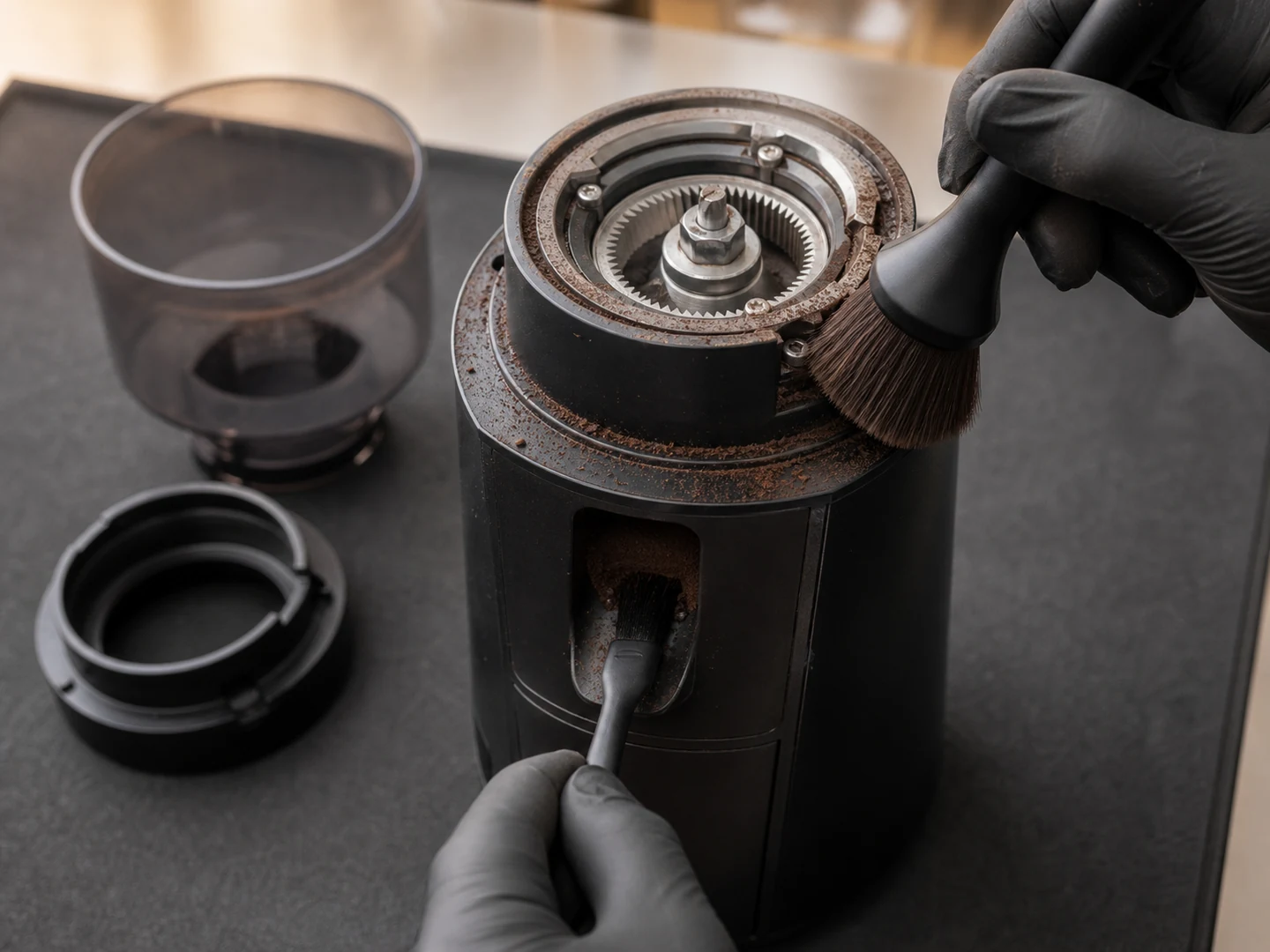
Coffee Grinder Cleaning
For Coffee Grinder Cleaning, the brush must reach the working area, disturb or collect…
See the cleaning job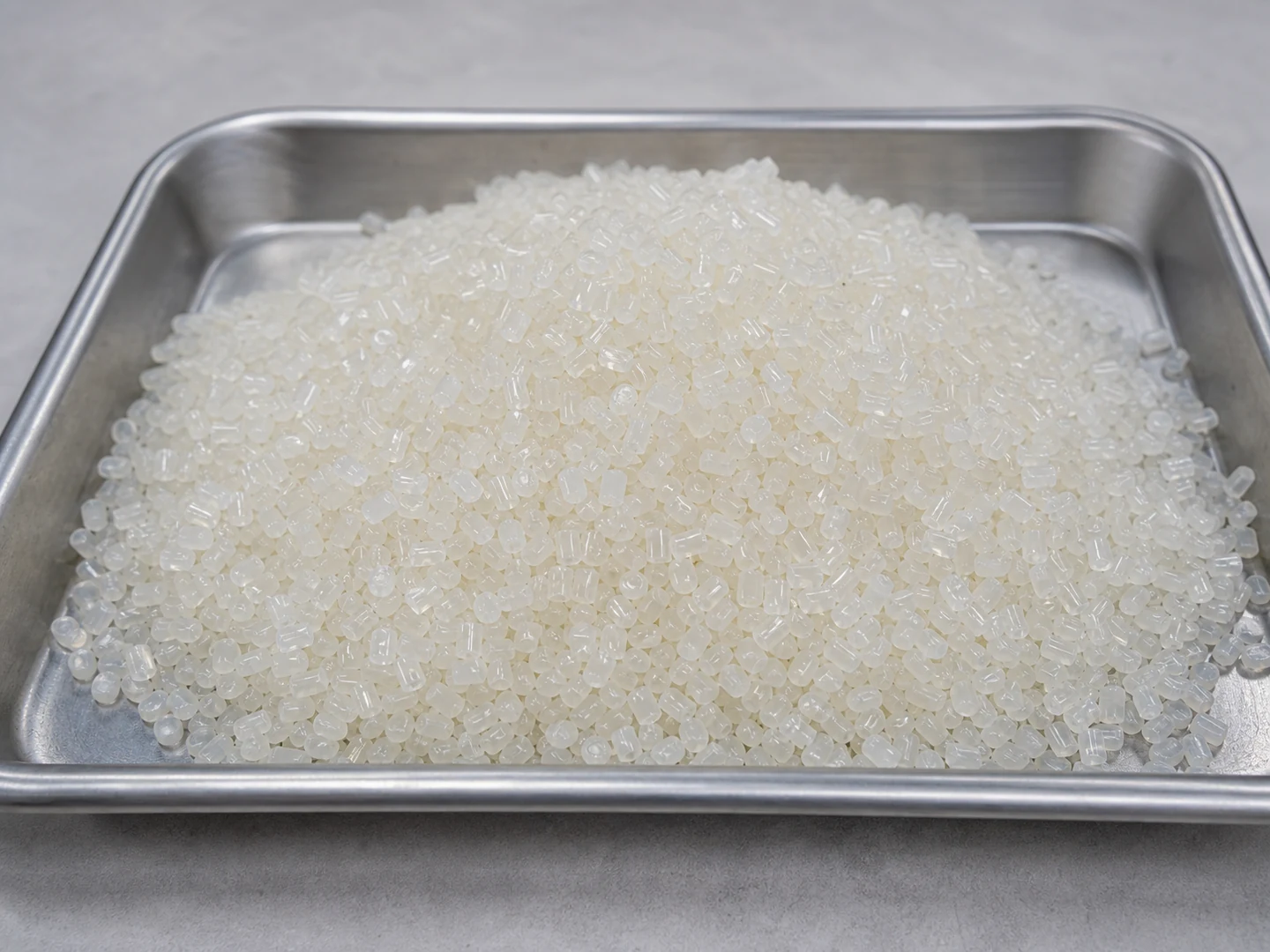
Nylon PA
Choose Nylon PA based on its stiffness, recovery, wear, wet-service, chemical, and temperature behavior.
Compare this material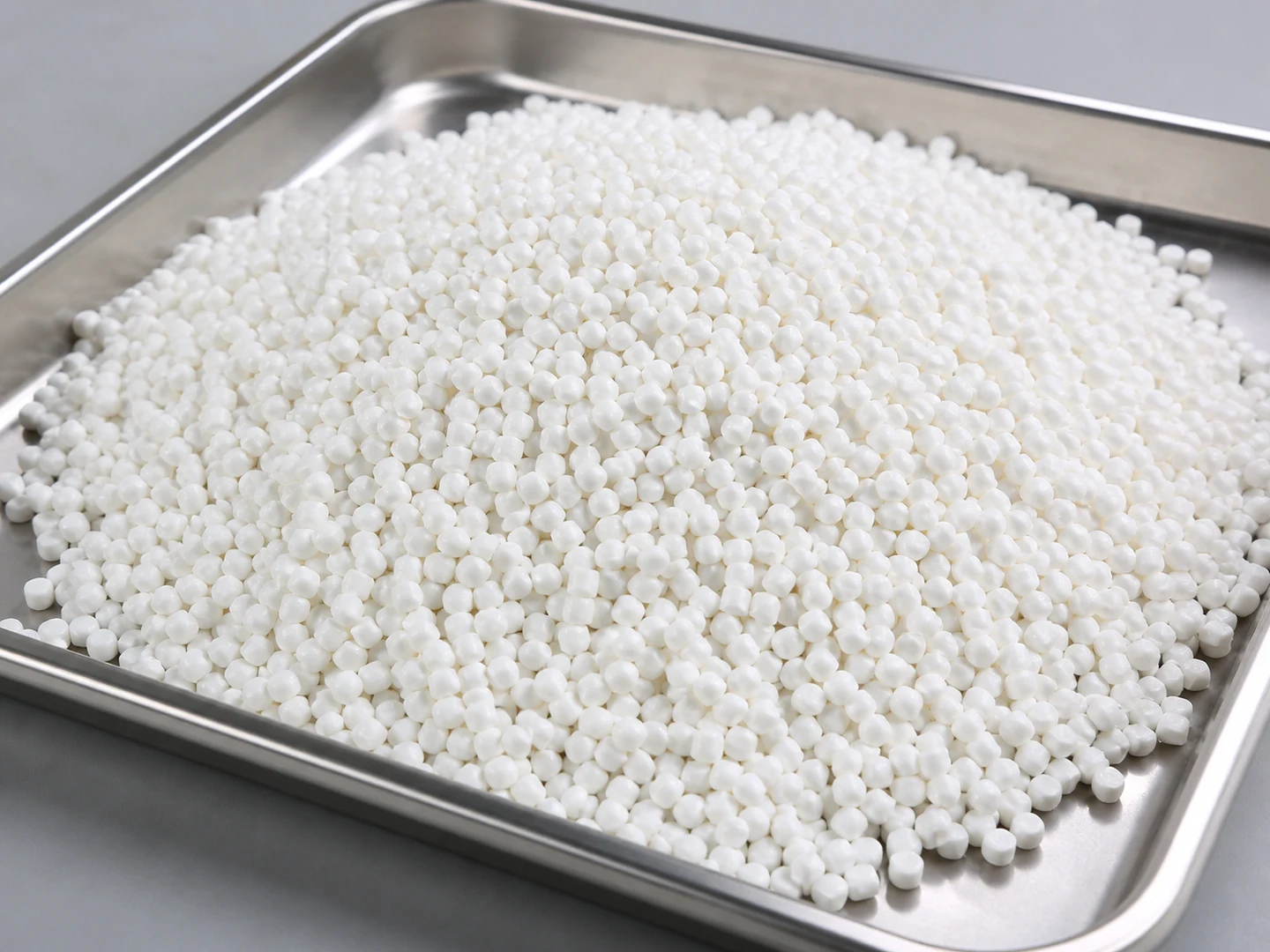
PBT
Choose PBT based on its stiffness, recovery, wear, wet-service, chemical, and temperature behavior. Do…
Compare this material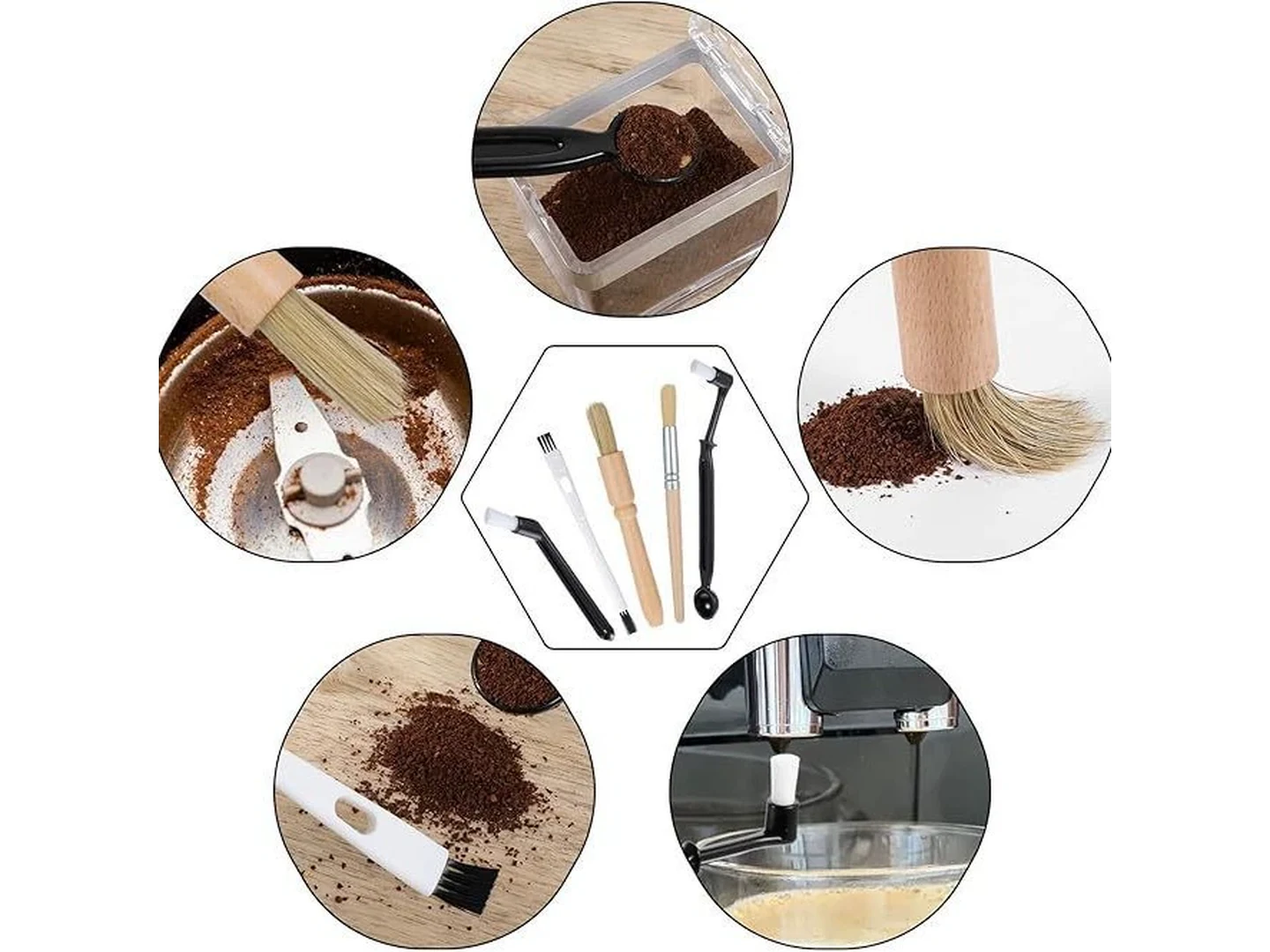
Coffee Grinder Cleaning Brush
A narrow-profile coffee grinder cleaning brush for burr gaps, grind chambers, chutes, and dosing…
Compare the specification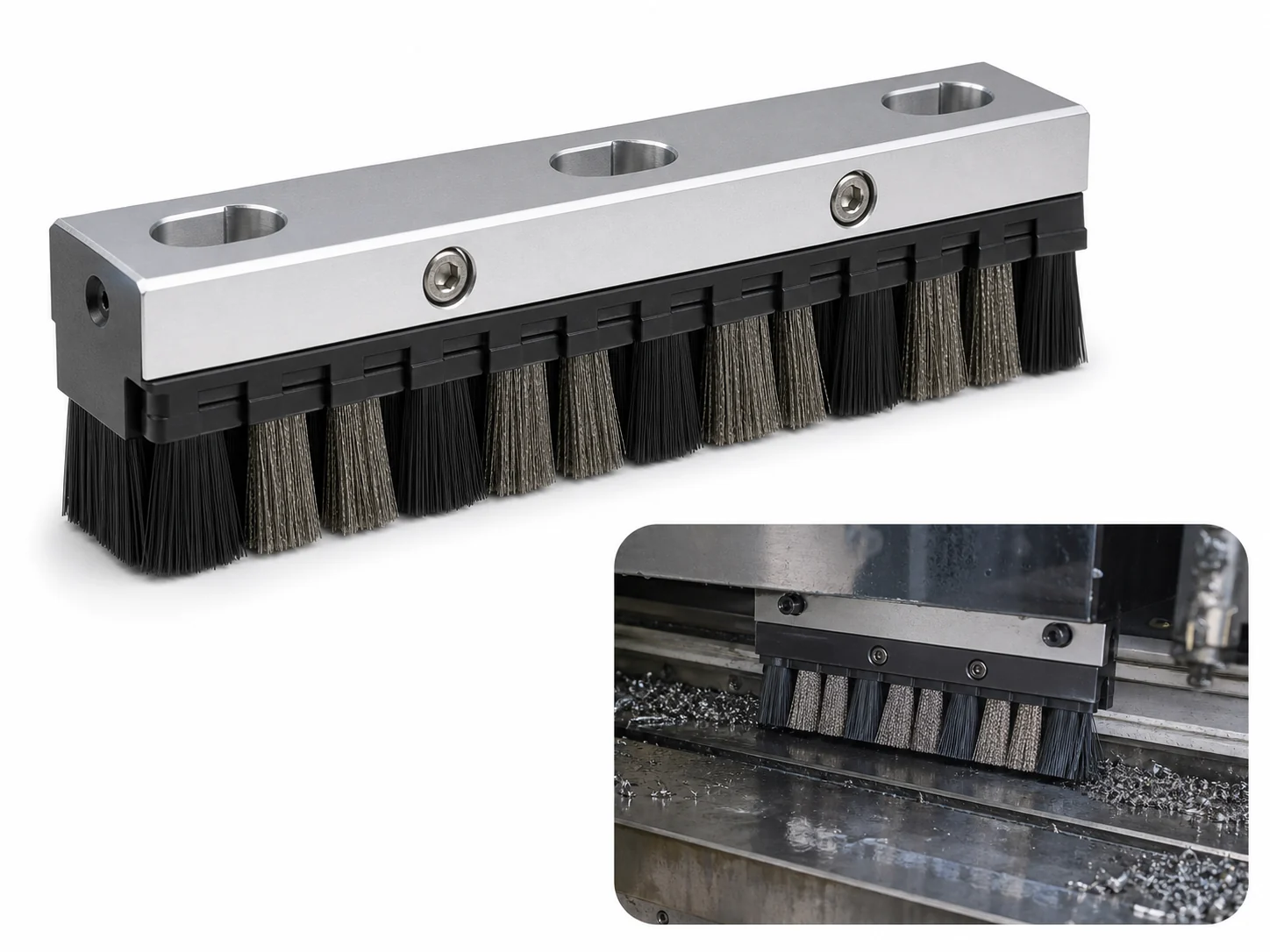
Machine Tool Brush
Configure a machine tool brush to clear chips, coolant, scale, and weld spatter from…
Compare the specification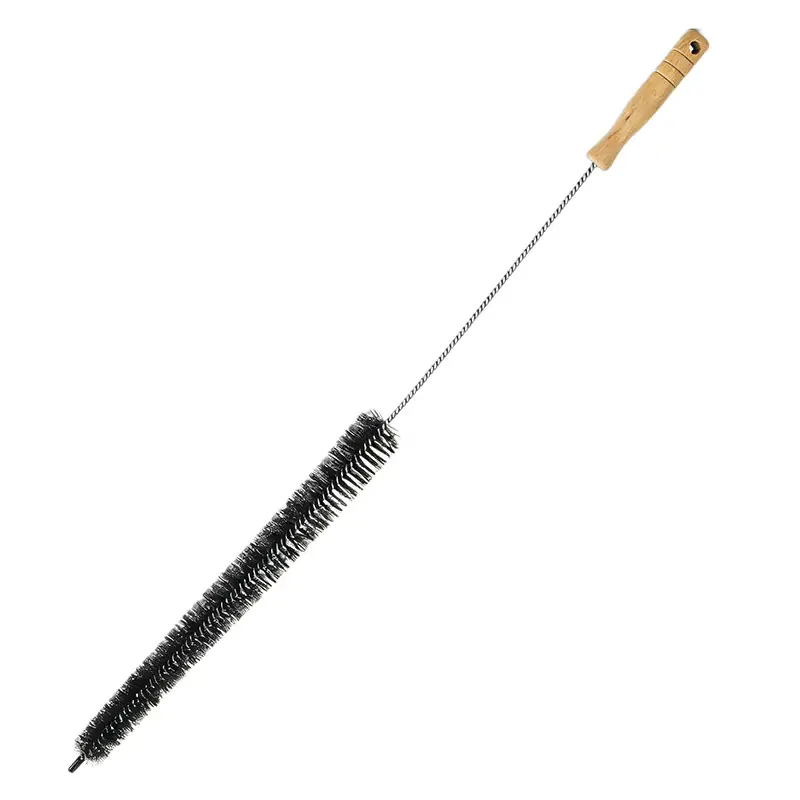
Washing Machine Gasket Cleaning Brush
Narrow-profile nylon brush for front-load washer door gasket folds. Angled head reaches the seal…
Compare the specificationCustom Manufacturing RFQ
Describe Your Application
To prepare the correct quotation, provide the dimensions, cleaning task, residue, material, mounting details, quantity, and a drawing or photo.
Drawing or photo optional — it speeds things up, it does not gate the enquiry.
Custom Brush RFQ
Send Your Brush Project
Upload a drawing, product photo, or sample photo and provide the core dimensions and cleaning conditions.
“We need a brush to remove wet residue from a stainless steel conveyor, about 800mm wide. The current brush wears quickly. We can send photos.”
“We sell drinkware and need a cleaning brush to include with the product. Quantity around 5,000 pieces.”