Quick Answer
Validate in stages: dimensional fit, low-energy contact, cleaning performance, surface result, wear, contamination, and repeated production cycles. Change one design variable at a time so the cause of improvement or failure remains visible.
Stage 1 — Drawing and Fit
- Confirm all brush and interface dimensions against the machine or part.
- Check assembly direction, access, available installation clearance, shaft fit, thread, hub, keyway, and removal path.
- Rotate manually or at low speed without contact to check runout, balance, and interference.
- Record the sample revision and the measured actual dimensions.
Stage 2 — Low-Energy Contact
Start with the lowest speed, engagement, pressure, or number of passes. Observe filament deflection and debris release. Confirm that the tips contact the intended zone instead of folding, snagging, or running on their sides.
Stage 3 — Performance Matrix
| Response | Measure |
|---|---|
| Cleaning | Residual mass, visual grade, particle count, swab result, pressure drop, or defined cleanliness test |
| Surface | Roughness, gloss, scratch, coating damage, edge radius, dimensional change, or microscopy |
| Process | Cycle time, passes, line speed, motor current, pressure, fluid, temperature, and operator steps |
| Brush | OD/trim loss, filament set, loading, shedding, corrosion, runout, and retention |
Stage 4 — Endurance
Run enough cycles to reveal heat, permanent set, loading, chemical attack, and uneven wear. Inspect at fixed intervals. Extrapolate life only after the wear rate stabilizes; the first cycles can remove high spots and do not always represent steady wear.
Change Control
Record brush revision, filament lot, dimensions, material, pattern, process settings, part lot, residue condition, and result. Do not change grit, filament diameter, trim, density, speed, and engagement together. A controlled sample program turns the accepted configuration into a repeatable purchase specification.
Approval Package
Keep the signed drawing, approved sample, inspection report, photographs, process window, acceptance criteria, packaging method, and labeling. State which characteristics are critical-to-fit and critical-to-performance.
Technical References
Which bristle material fits this job — PA612 Nylon, Abrasive Nylon or AISI 304 Stainless Steel Wire?
| Material | Continuous temperature (°C) | Peak temperature (°C) | Water absorption | Hardness |
|---|---|---|---|---|
| PA612 Nylon | 90–110 | 130–150 | 0.3–0.7% | Shore D 70–80 |
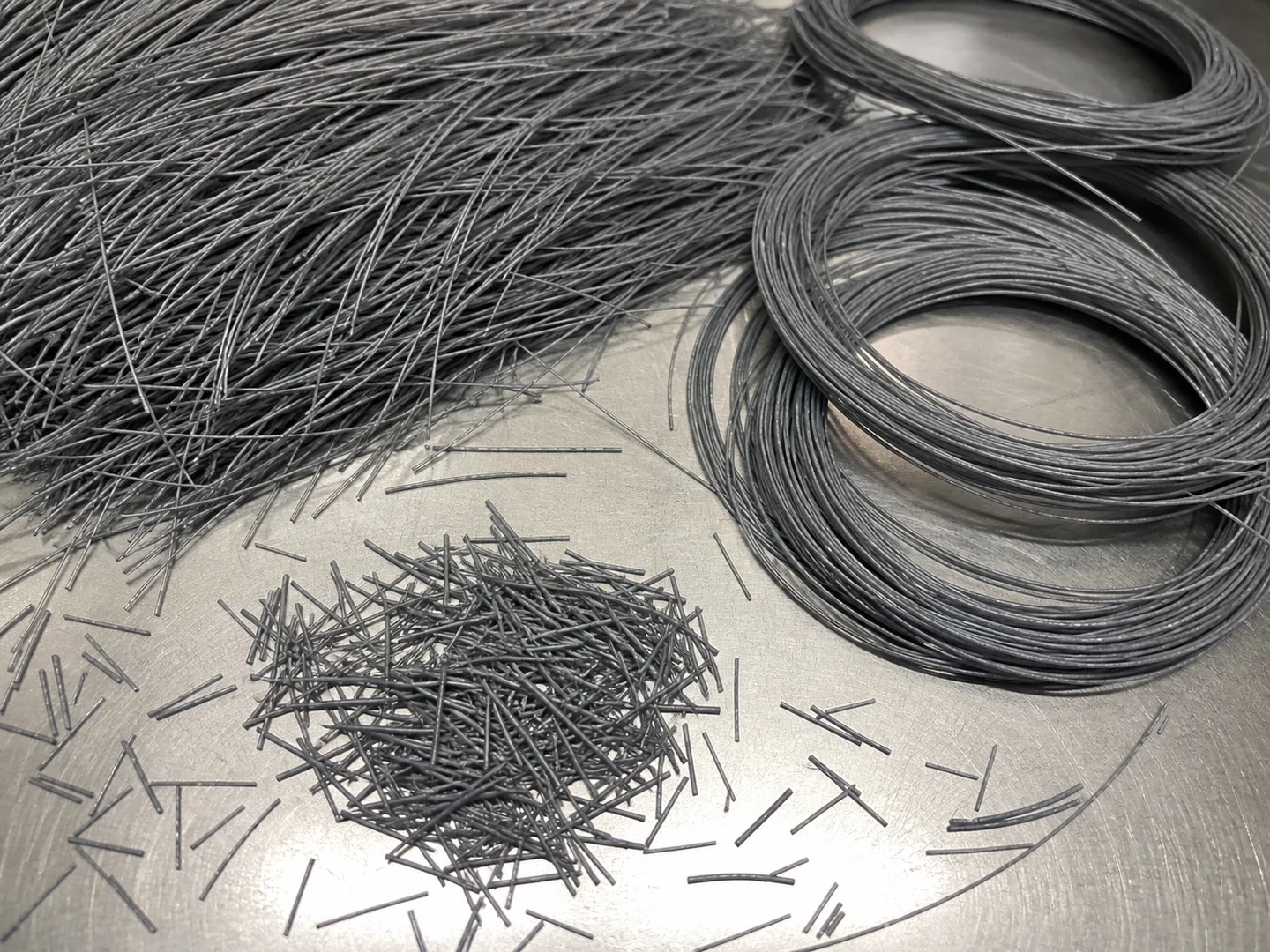
| Abrasive Nylon | 120 | 150 | 0.1–1.0% | Abrasive filament; stiffness and cutting level is controlled by PA base, grit type, grit size, filament diameter and trim height. |
| AISI 304 Stainless Steel Wire | 400 | 500 | 0% | Rockwell B 70–95 depending on temper and cold work |
| AISI 316 Stainless Steel Wire | 400 | 500 | 0% | Rockwell B 70–95 depending on temper and cold work |
Figures as published by Brushtec / DuPont; Perlon; Alleima. Confirm the exact grade against the supplier datasheet before ordering.
When are Roller and Conveyor Brushes the wrong choice?
- Roller and Conveyor Brushes — Use a stationary strip brush for a fixed linear seal or wipe, or another process when rotating line contact interferes with the product or cannot discharge the residue safely.
- Tube & Pipe Bore Brushes — Use pigs, flushing, ultrasonic, chemical descaling, blasting, or a flexible cable system for long, sharply curved, or heavily scaled passages.
- Strip Seal Brushes — Use rubber lips, foam, labyrinth seals, air curtains, or rigid scrapers when pressure sealing or liquid containment is required.
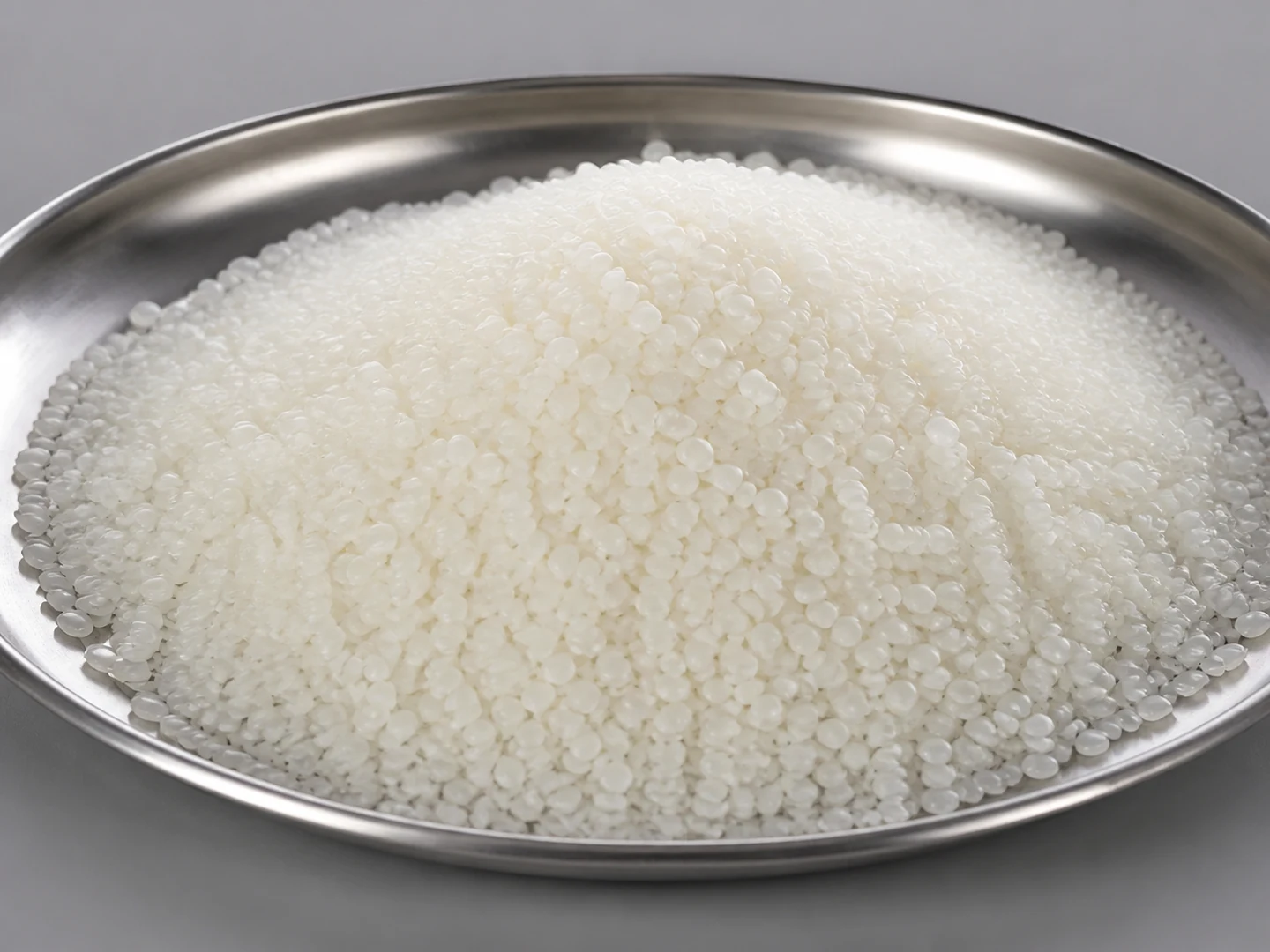
- PA612 Nylon — PA612 costs more than general PA6 and should be used where its wet stability, recovery or wear life creates a real process benefit.
What should replace Roller and Conveyor Brushes when they stop working?
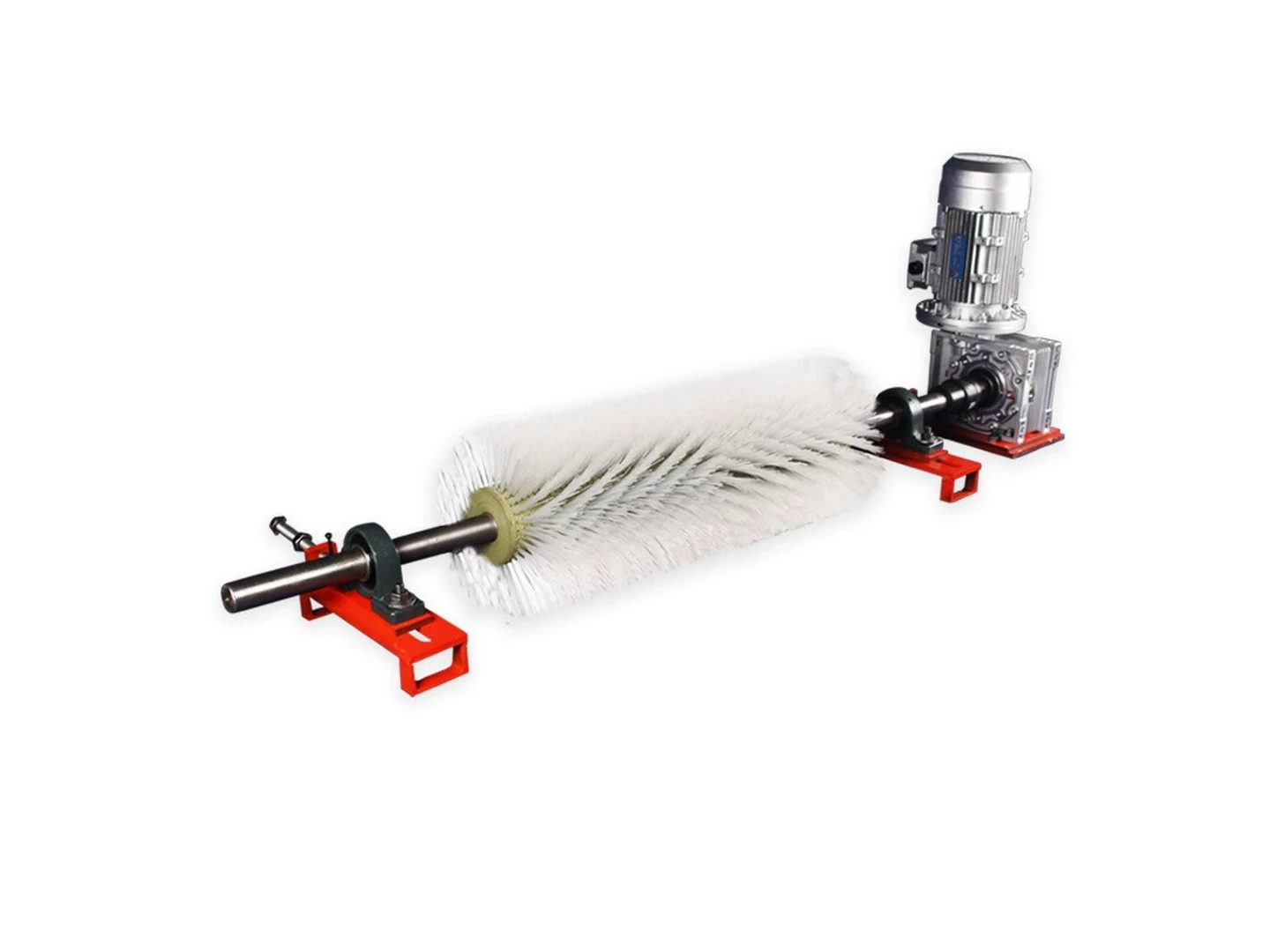
- Roller and Conveyor Brushes — Roller and conveyor brushes hold cylindrical line contact across a working width, including helix-wound builds where the filament path is set to move loosened material toward one side; a strip brush holds the same line without rotating, so it seals or wipes but cannot carry residue along the width.
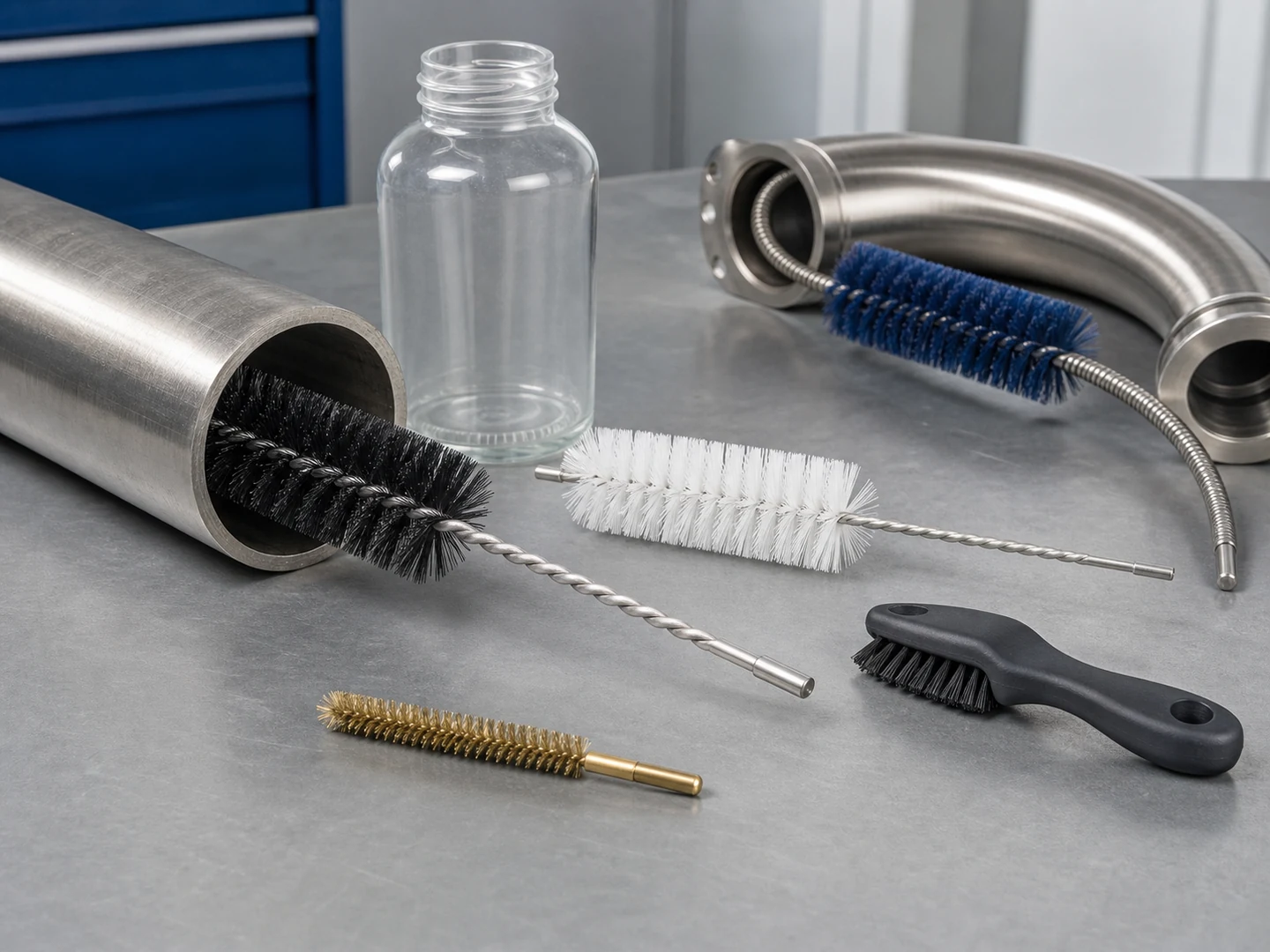
- Tube & Pipe Bore Brushes — Tube and bore brushes work by radial contact inside a confined diameter; wire wheels and cups work mainly on external edges, profiles, welds, and broad surfaces.
- Strip Seal Brushes — Strip brushes create a linear barrier or guide; machine-table brush plates distribute load and support products over a broad area. Closest alternative: Machine Table Brush Plates.
- PA612 Nylon — Compare PA612 Nylon with PA66, PP, PBT. Change material when wet stiffness, temperature, chemical resistance, conductivity, particle shedding, or surface marking becomes the limiting factor.