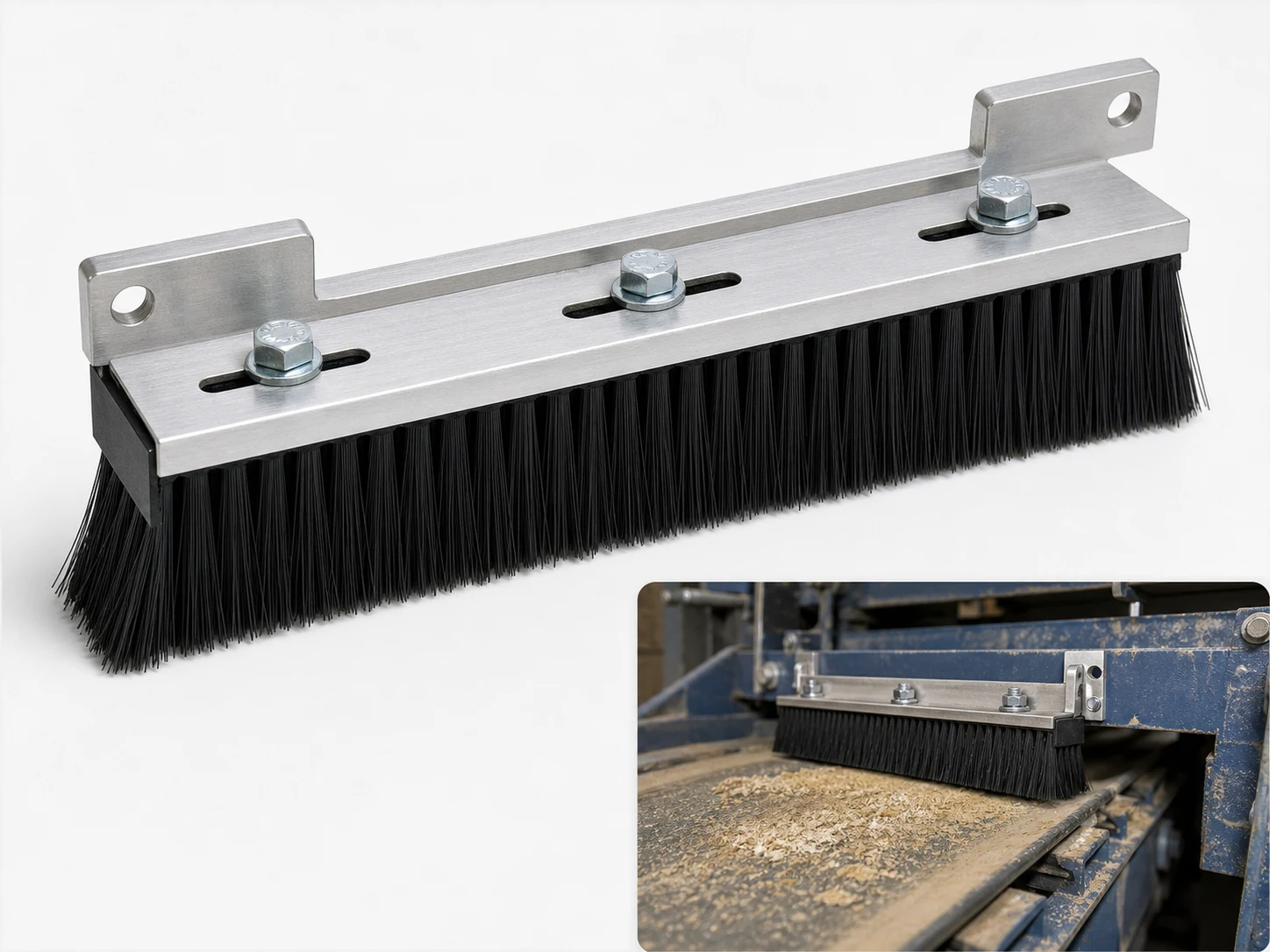
Feeder Brush
Custom feeder brush strips in PP or nylon for sheet feeders, packaging lines and part feeders.
- Head length
- 100–3000 mm

Custom Cleaning Brush Manufacturer
PRODUCT CATEGORY
Strip brushes create a continuous line of flexible contact. Depending on the application, that line may seal a gap, contain dust, wipe a moving surface, guide product or control static. Channel size, trim length and compression are therefore more important than treating every strip as the same brush.
Compare general strip brushes, seal strips, conveyor strips, food-processing strips, conductive or anti-static strips and specialty line-contact products.
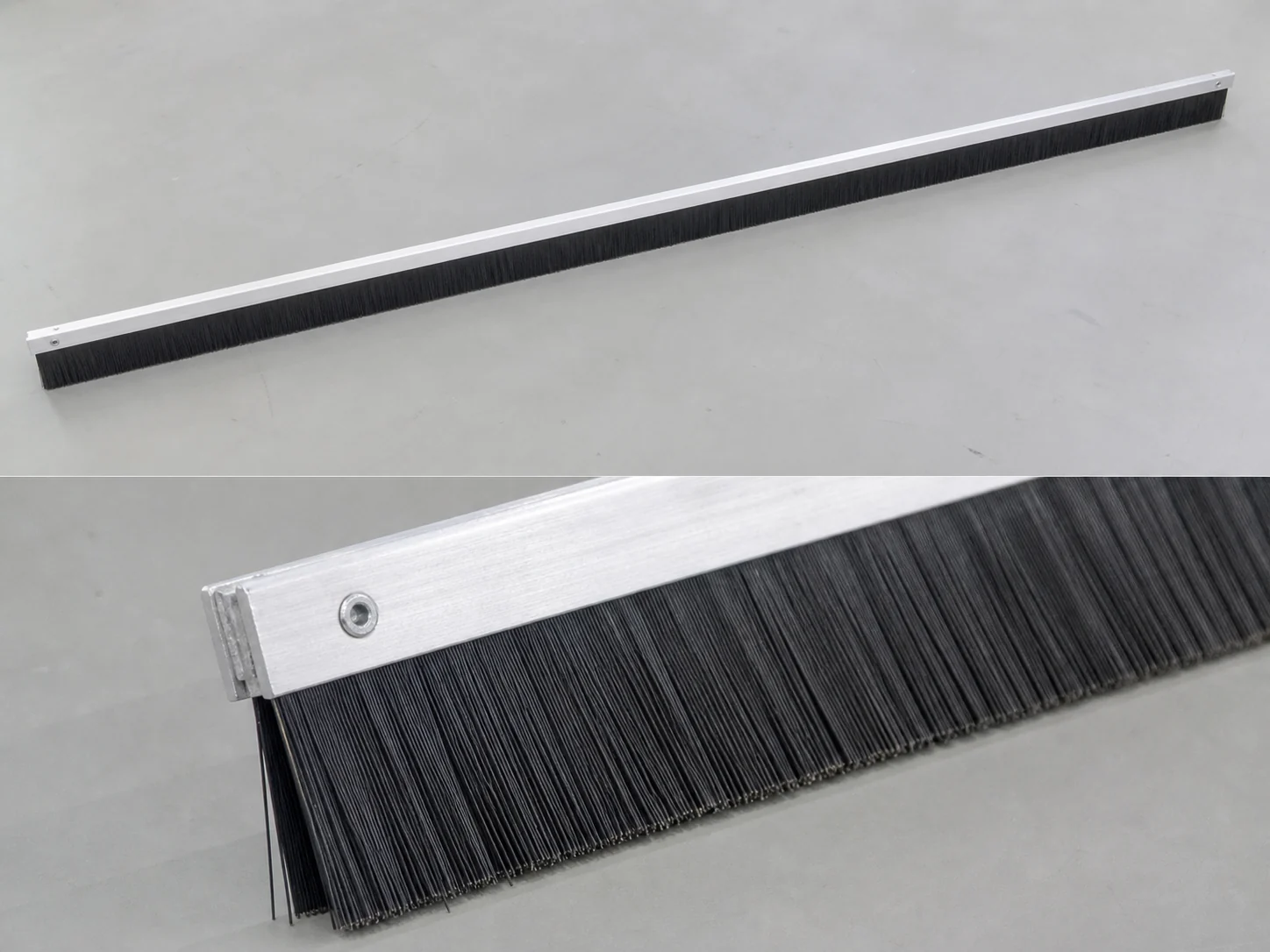
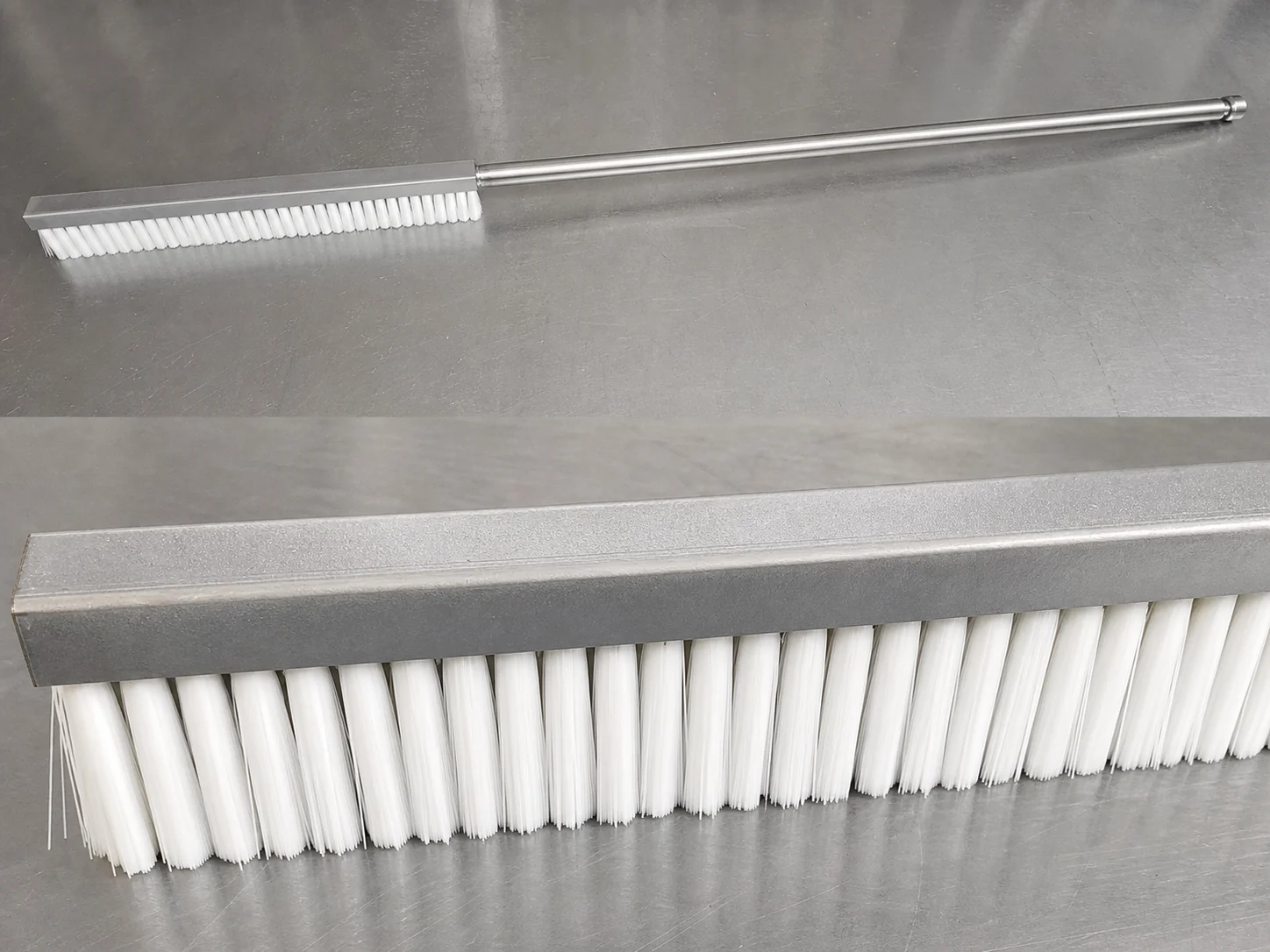
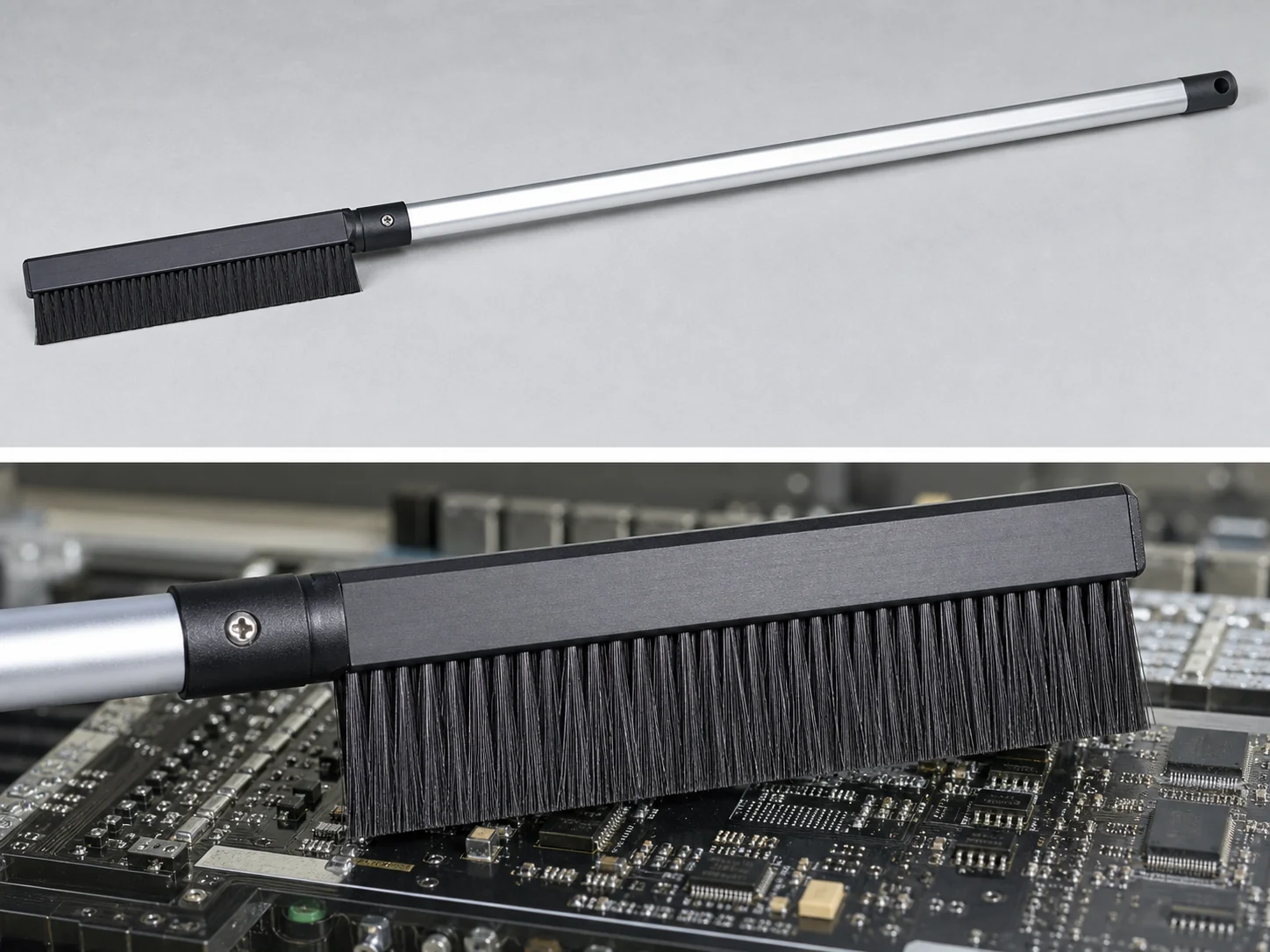
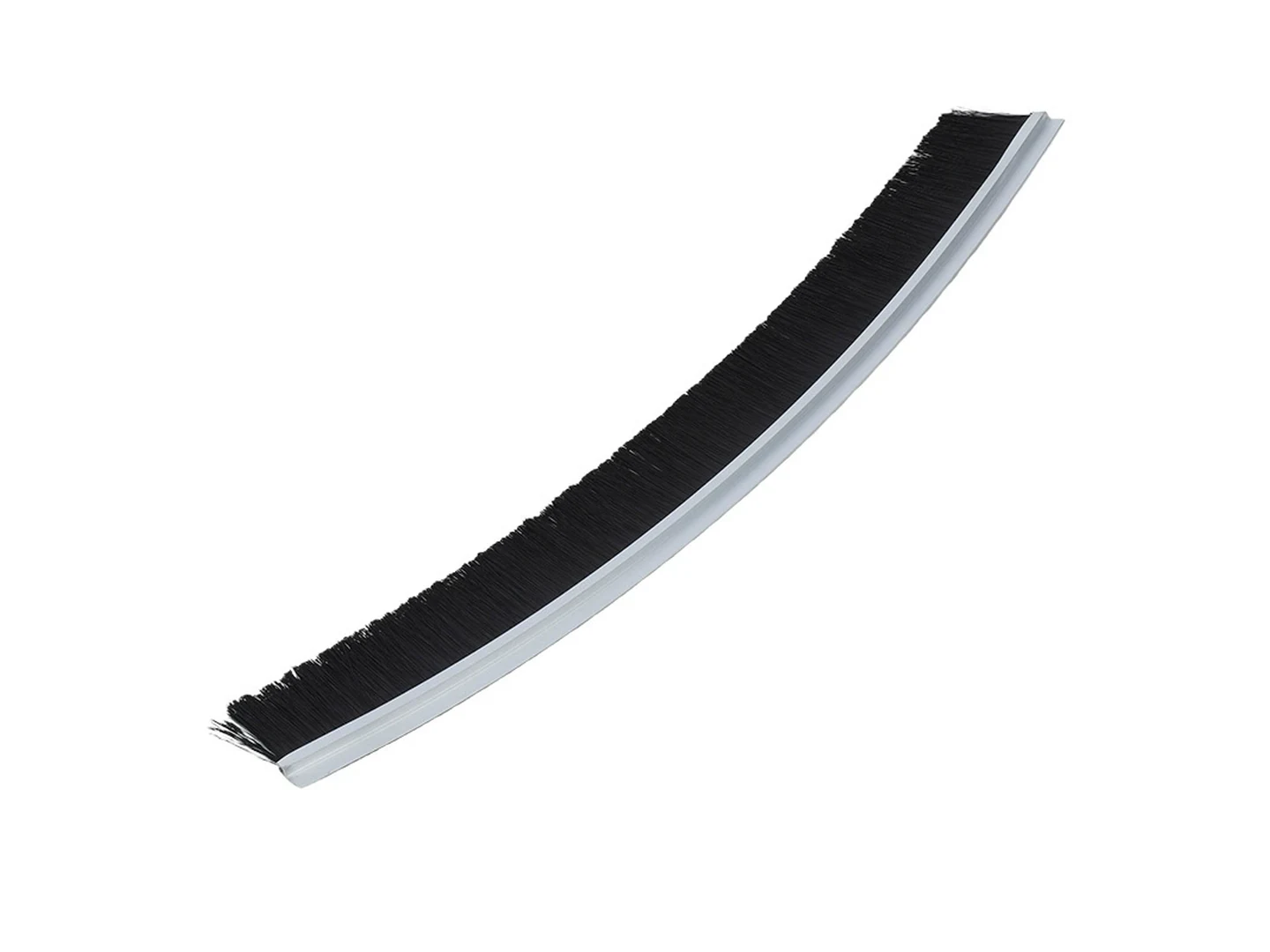
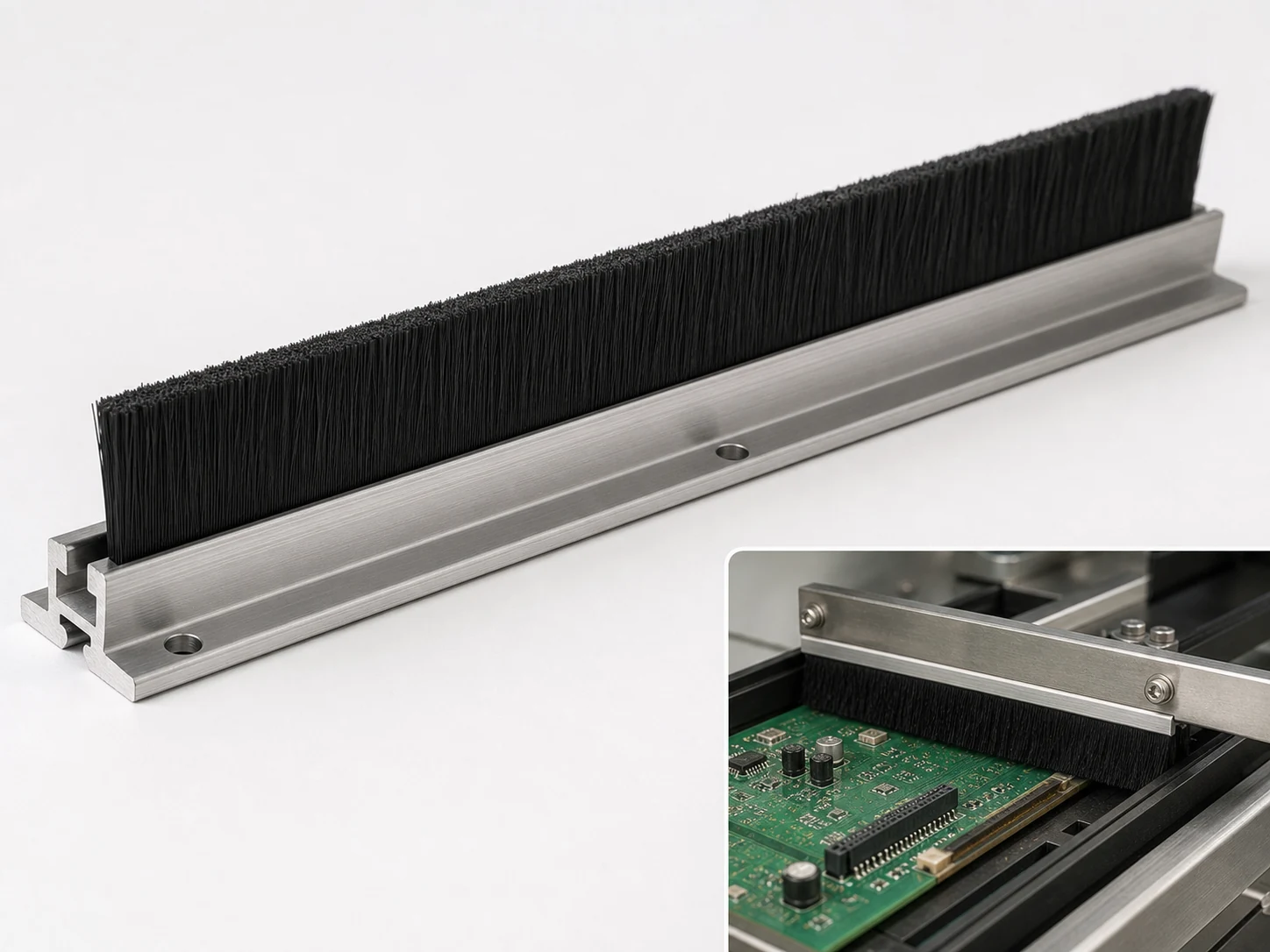
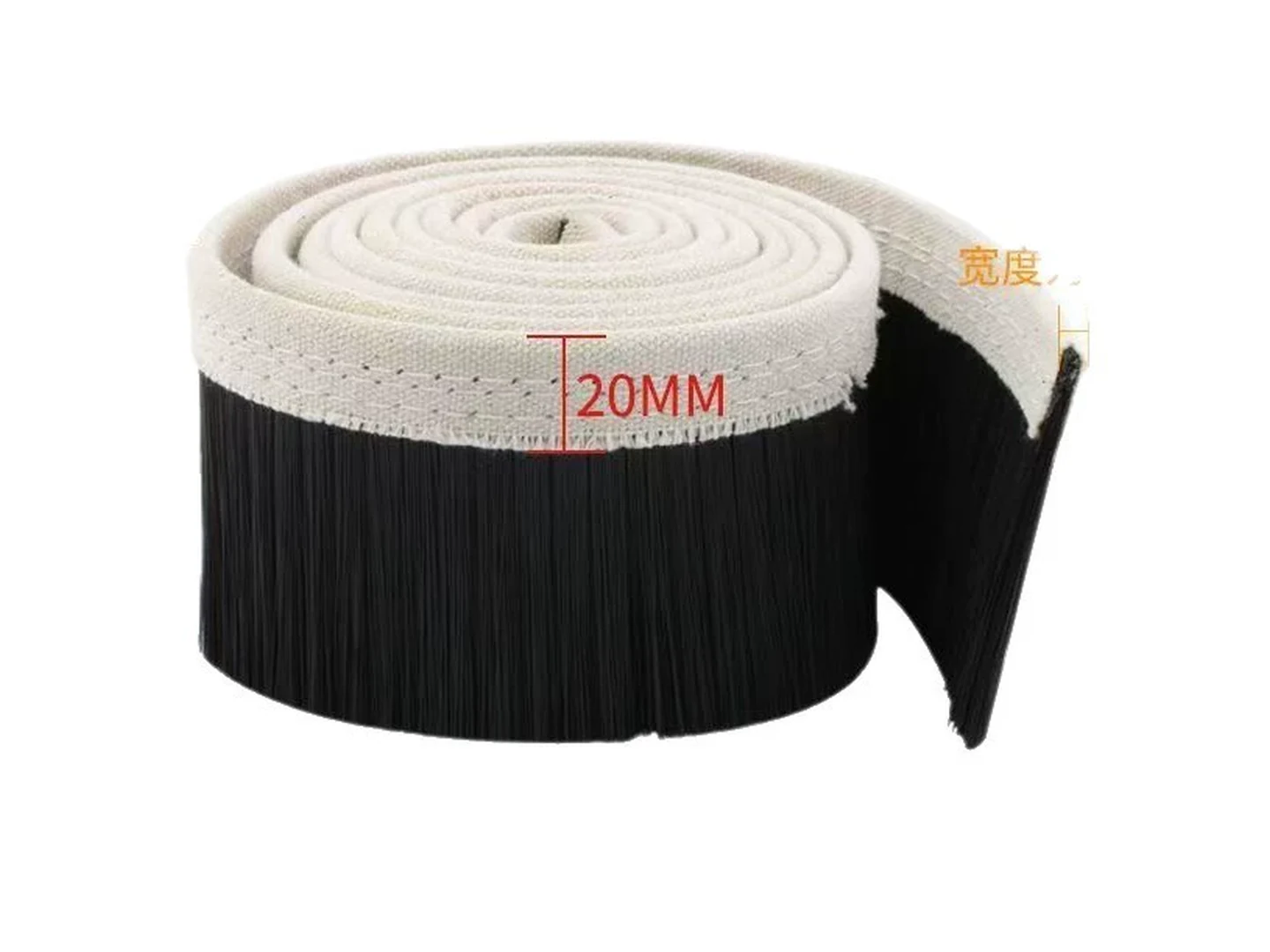
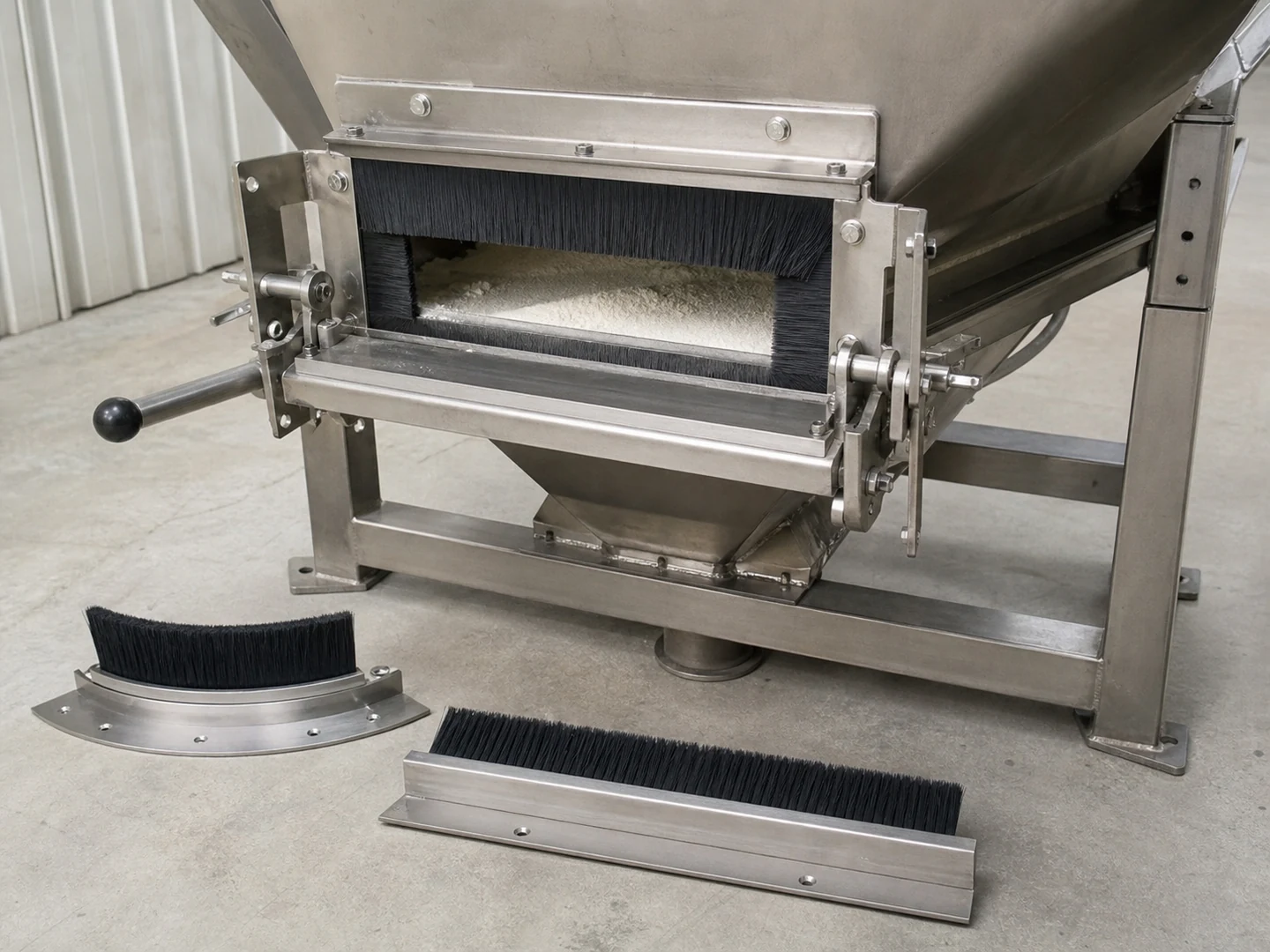
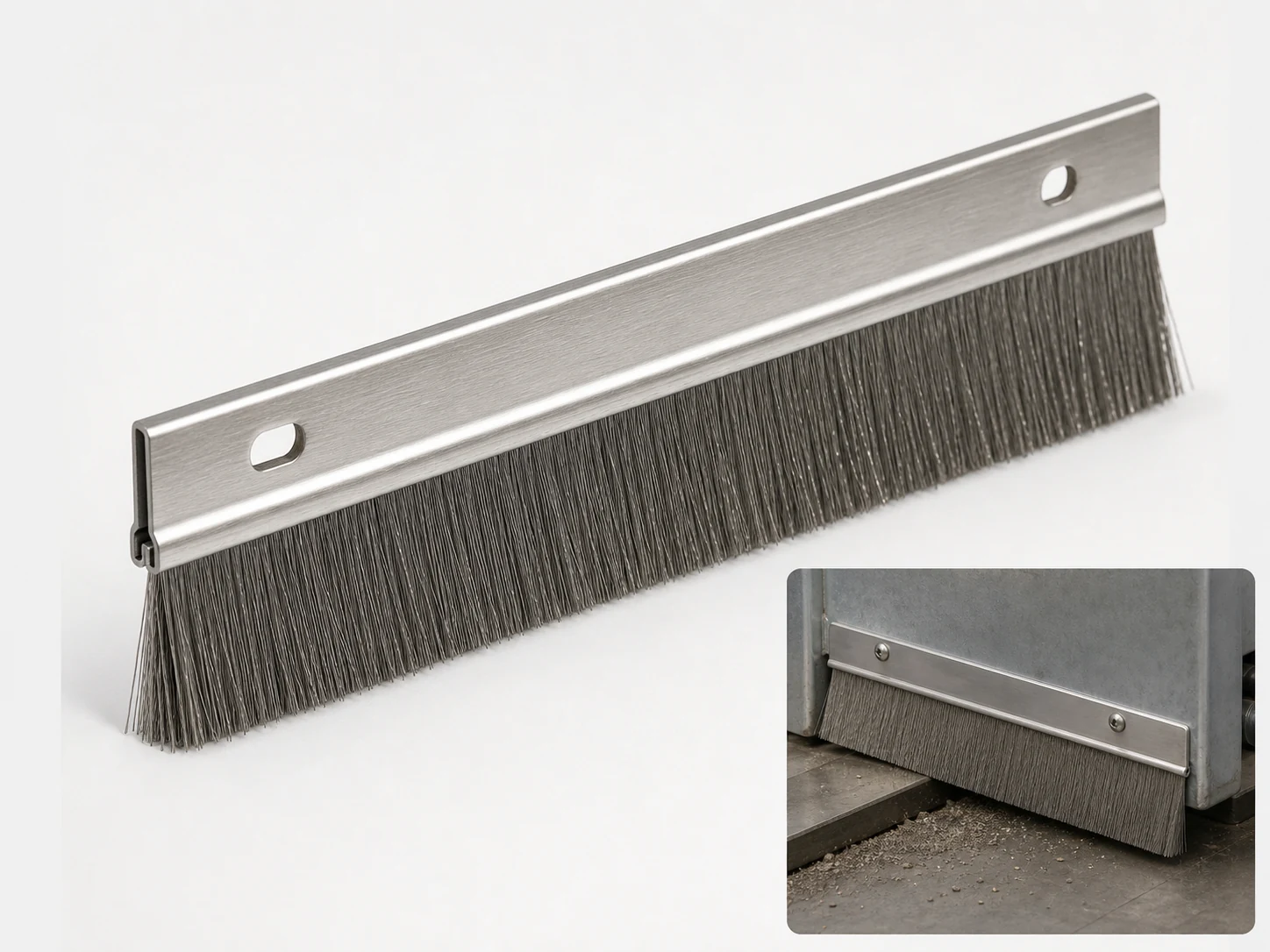
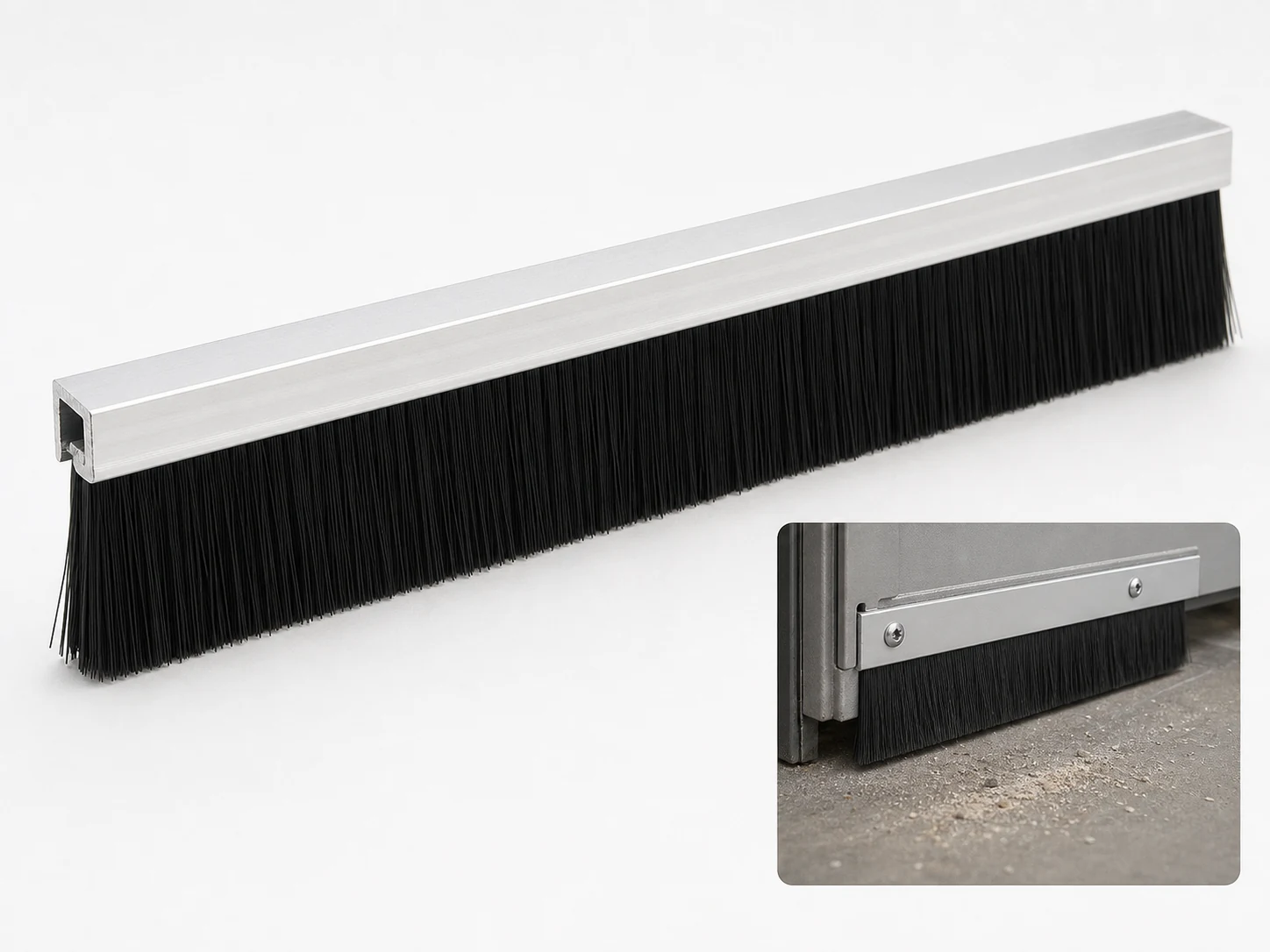
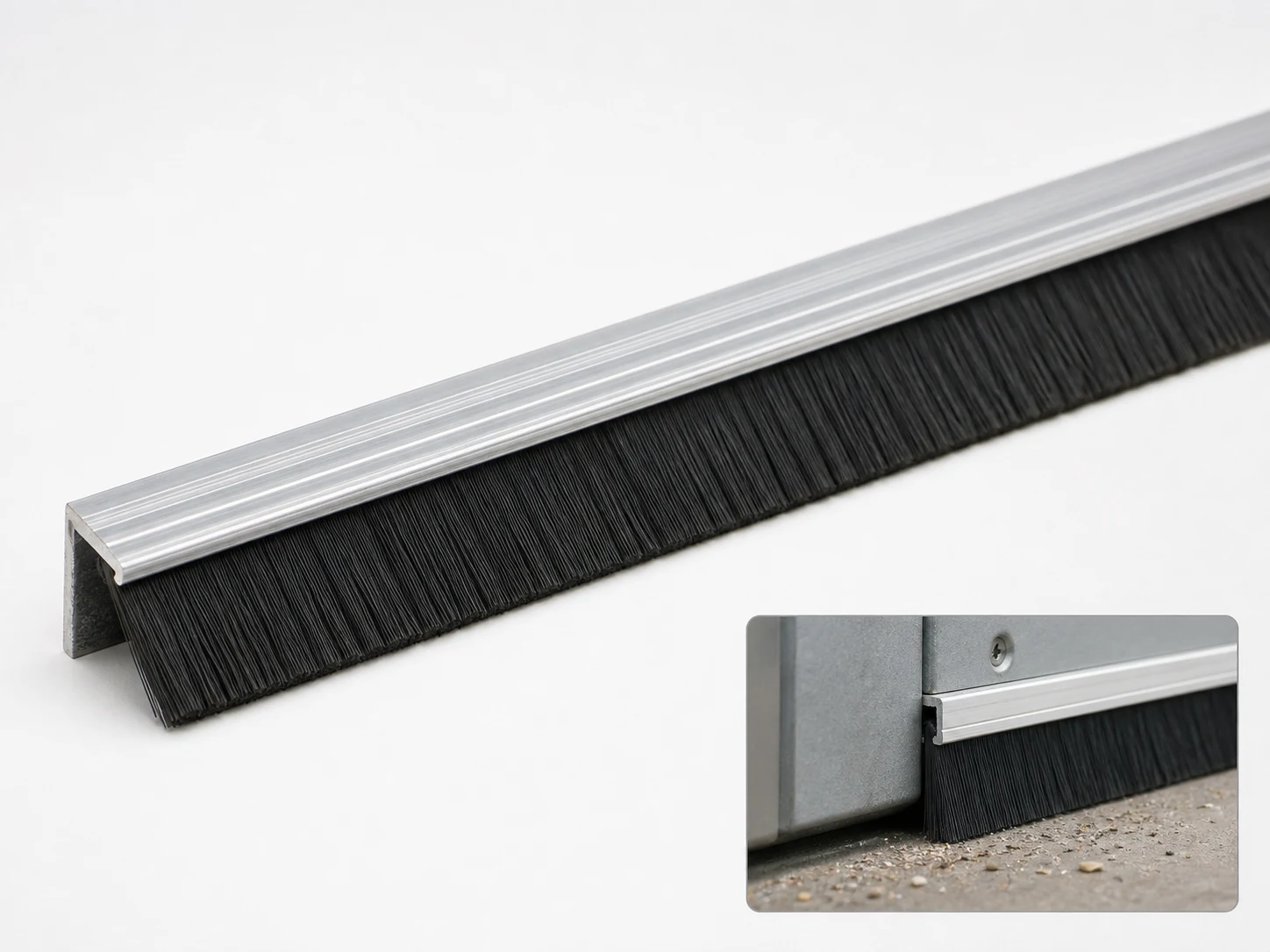
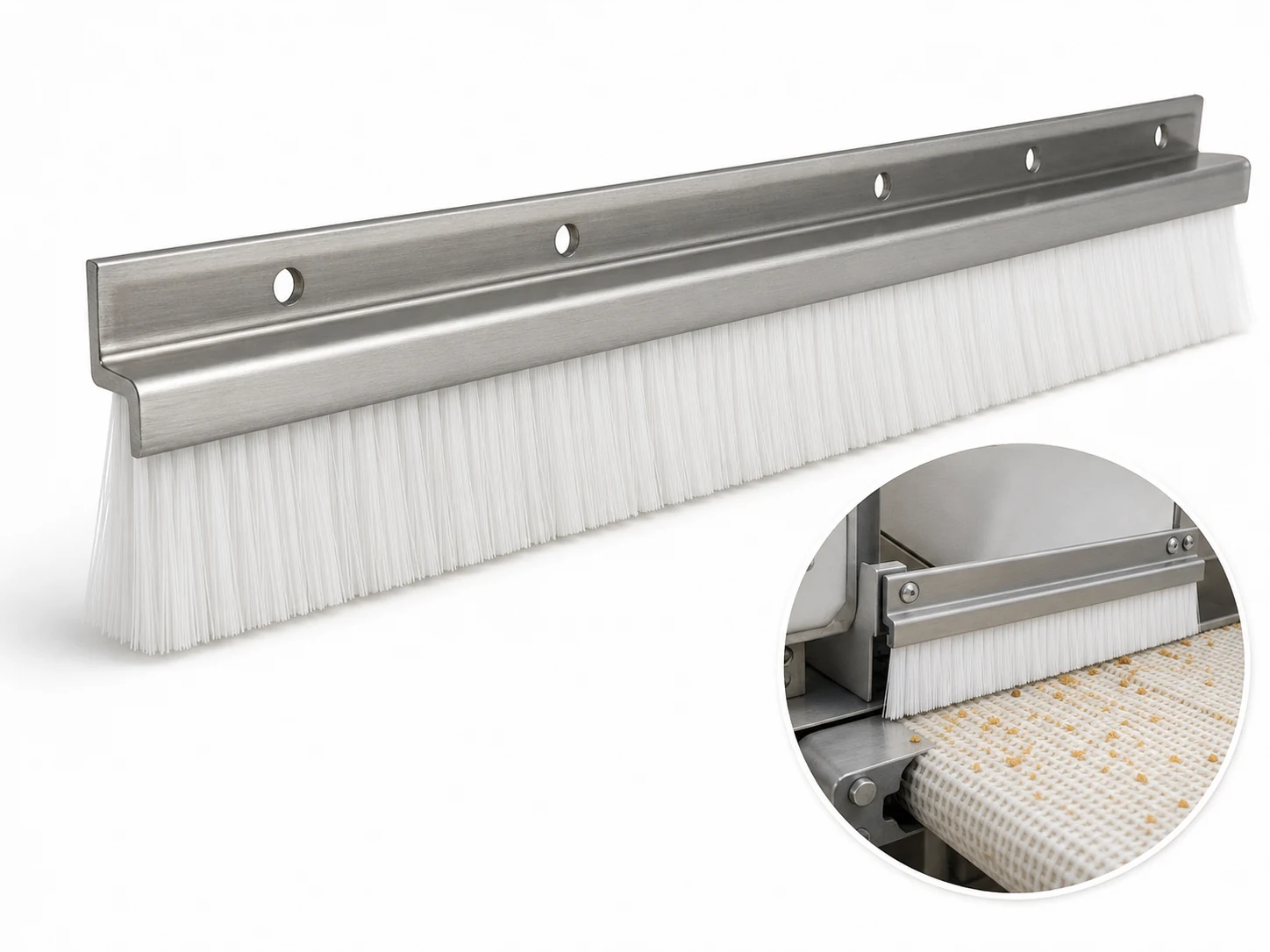
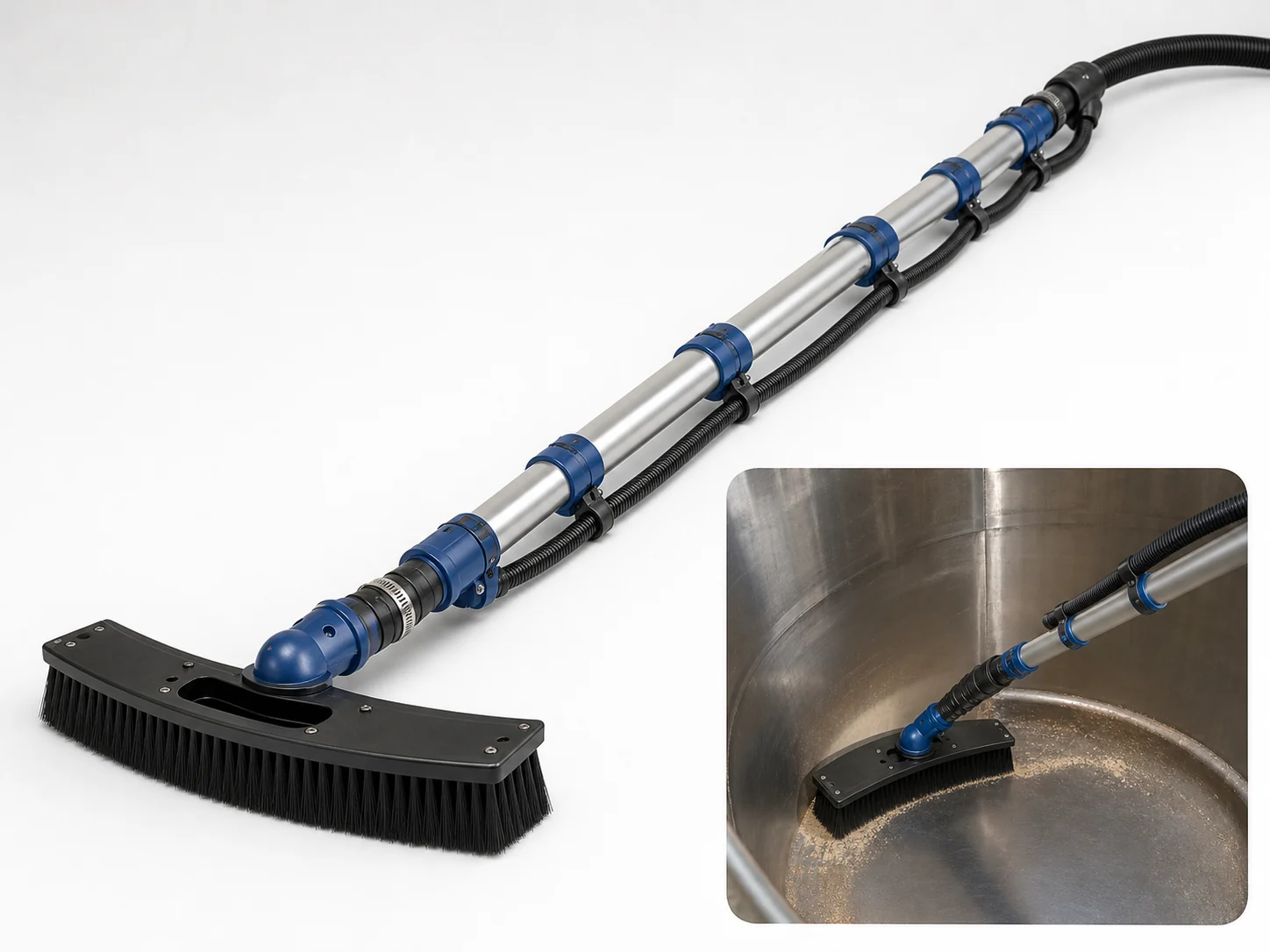
Define whether the goal is sealing, wiping, guiding, dust containment or static control, then set trim and mounting around the gap or surface.
For sealing, trim length must bridge the gap with enough compression to maintain contact without excessive drag.
A strip touching a conveyor or product line experiences wear and friction differently from a stationary door or enclosure seal.
Dust containment and ESD control are separate functions; if electrical behavior matters, specify the required conductivity or test condition.
Food areas, outdoor use, heat, chemicals and abrasive dust can change filament and channel material choices.
A door-seal strip, conveyor wiping strip and static-control strip may share the same channel form but require different trim, density, filament and grounding behavior. The job at the contact line defines the product.
Backing channel, overall length, trim height, density, filament, mounting holes or carrier, bend and conductive options can be customized. For seals, provide the gap and expected compression.
Provide strip length, gap, compression, moving/static surface, dust or ESD requirement and environment. We can then size the strip around the actual contact.
Choose your brush type, cleaning task, material direction, and key details before sending a custom brush request.