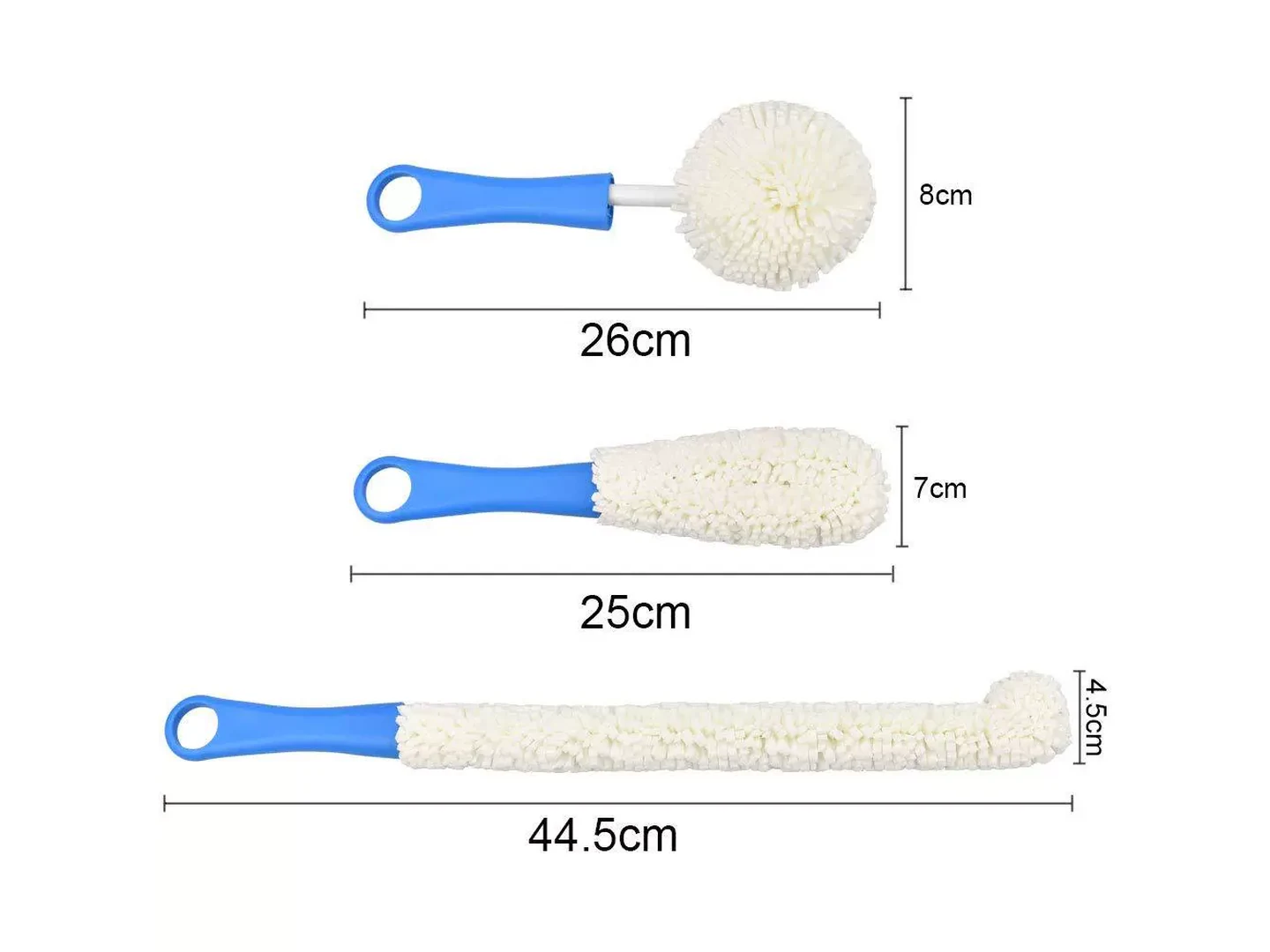
Glassware Cleaning Brush Kit
Laboratory glassware brush kit with nylon PA bristles sized for test tubes, flasks, beakers, cylinders and narrow-neck bottles.
- Head Ø
- 25–76 mm
- Head length
- 76–152 mm
- Handle
- 229–914 mm

Custom Cleaning Brush Manufacturer
PRODUCT CATEGORY
Laboratory glassware varies more in shape than it first appears. A test tube, volumetric flask, burette and Erlenmeyer flask each place the cleaning surface at a different depth and angle, so brush diameter, head profile and stem reach should follow the vessel geometry.
Compare brushes for test tubes, lab bottles, beakers, cylinders, flasks, burettes, pipettes, Petri dishes and other laboratory vessels.
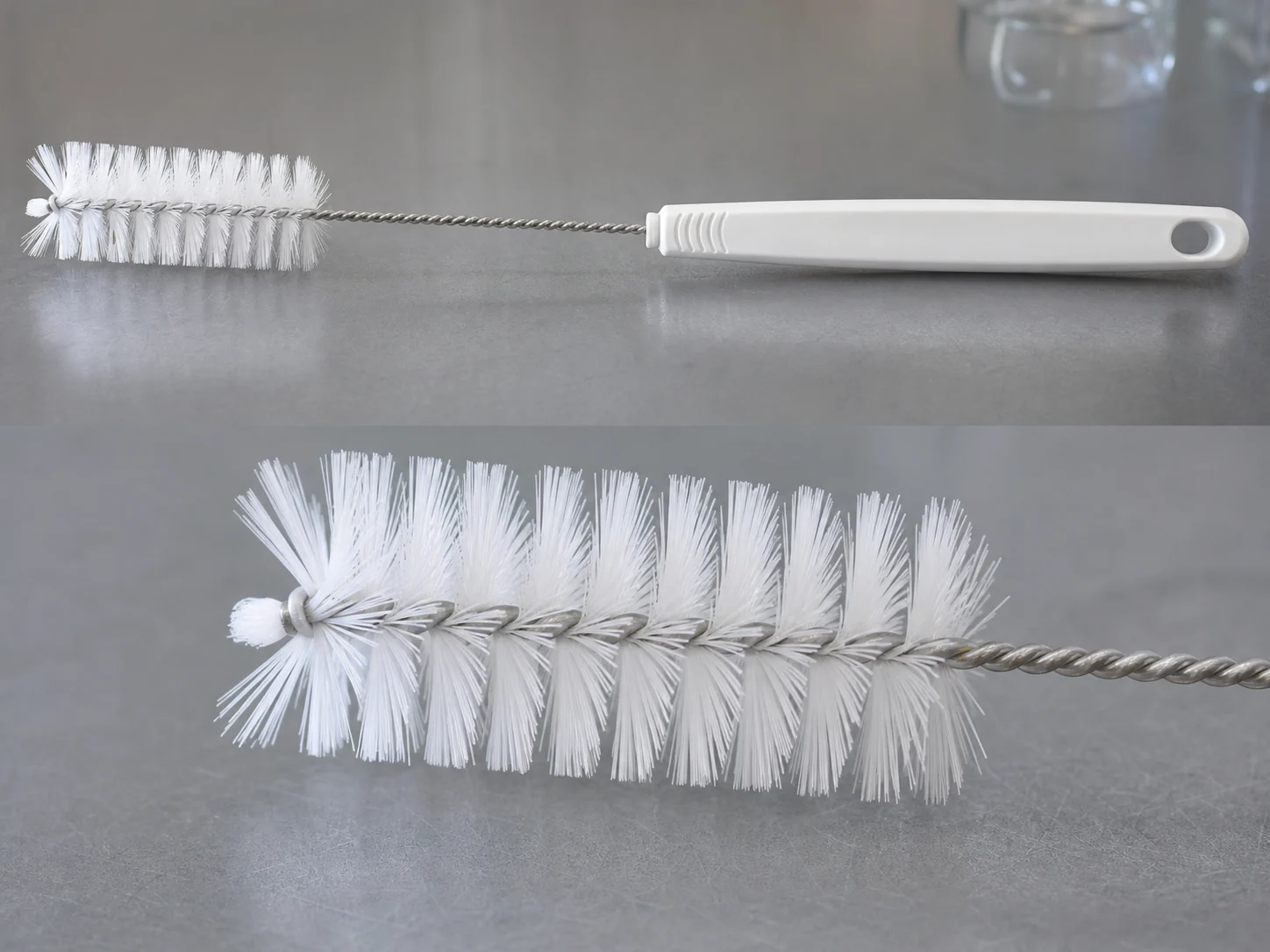
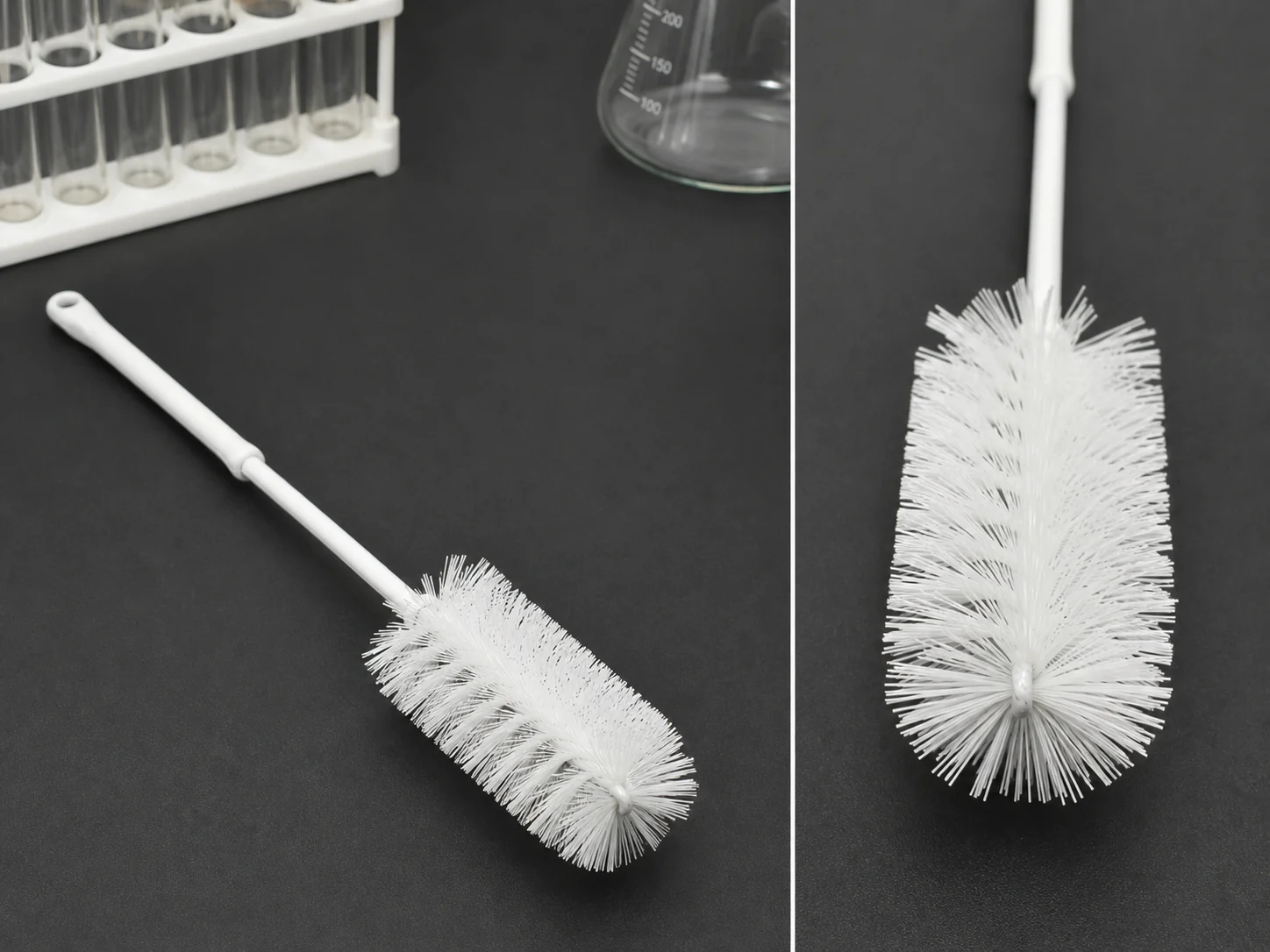
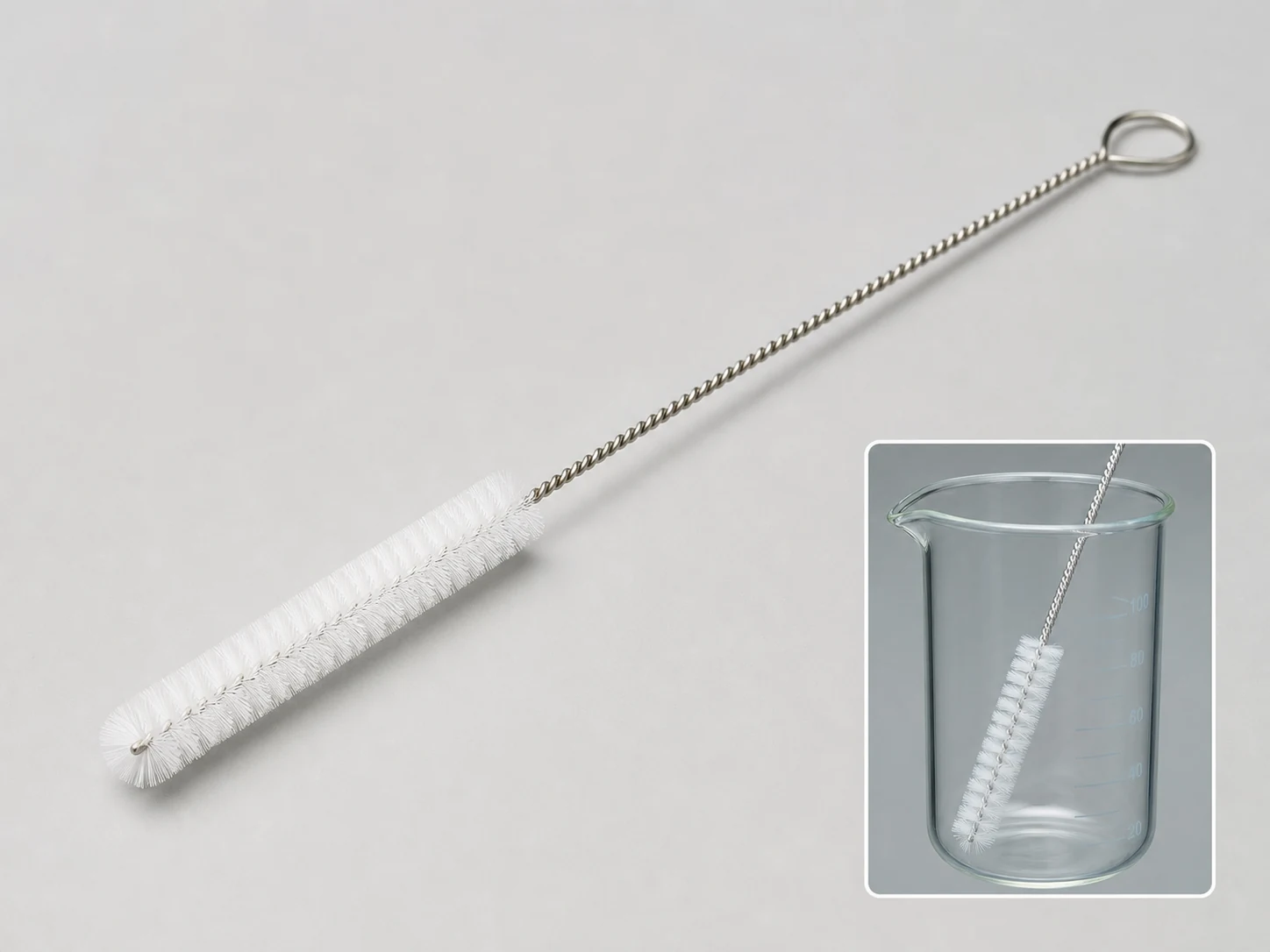
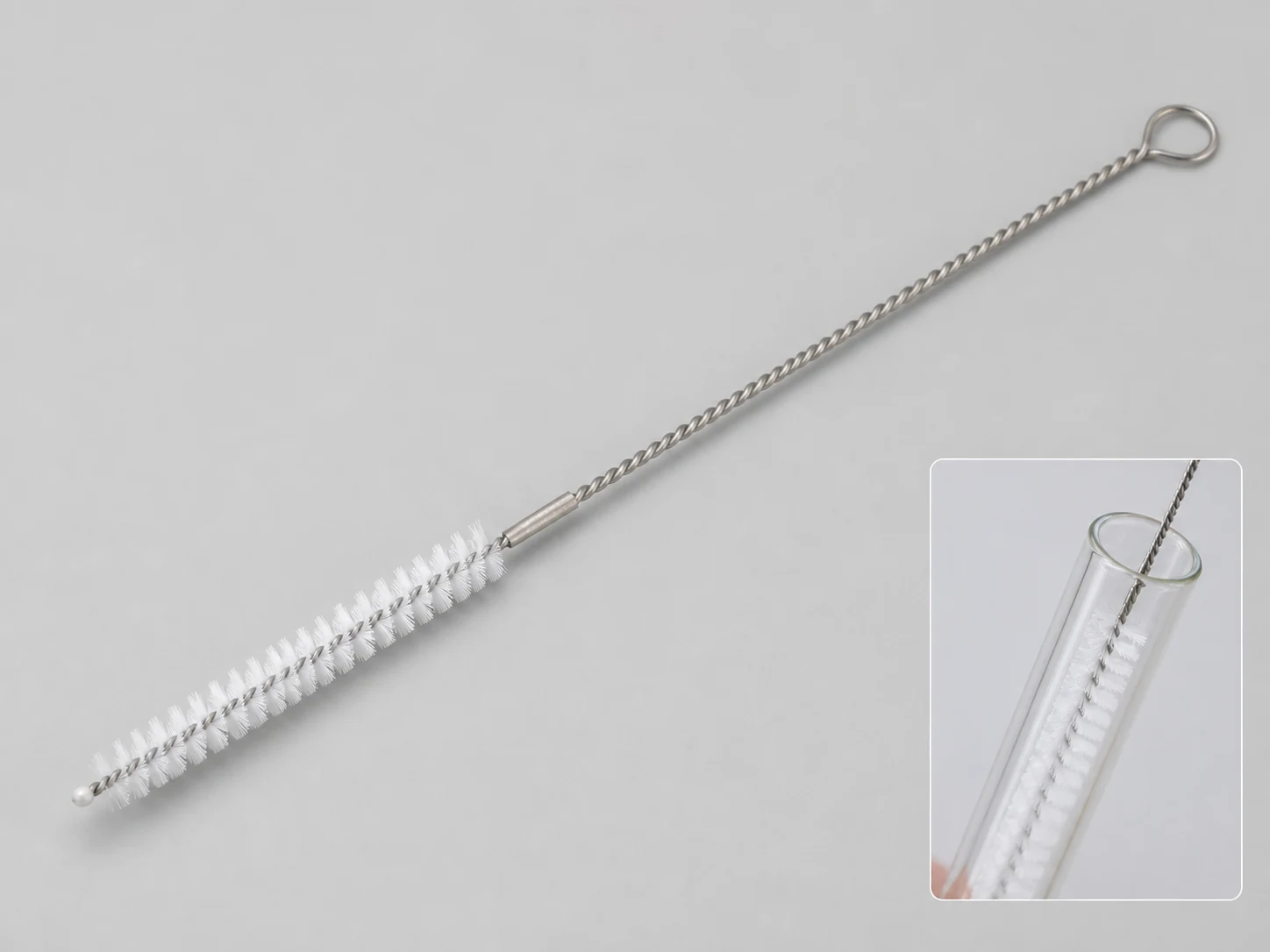
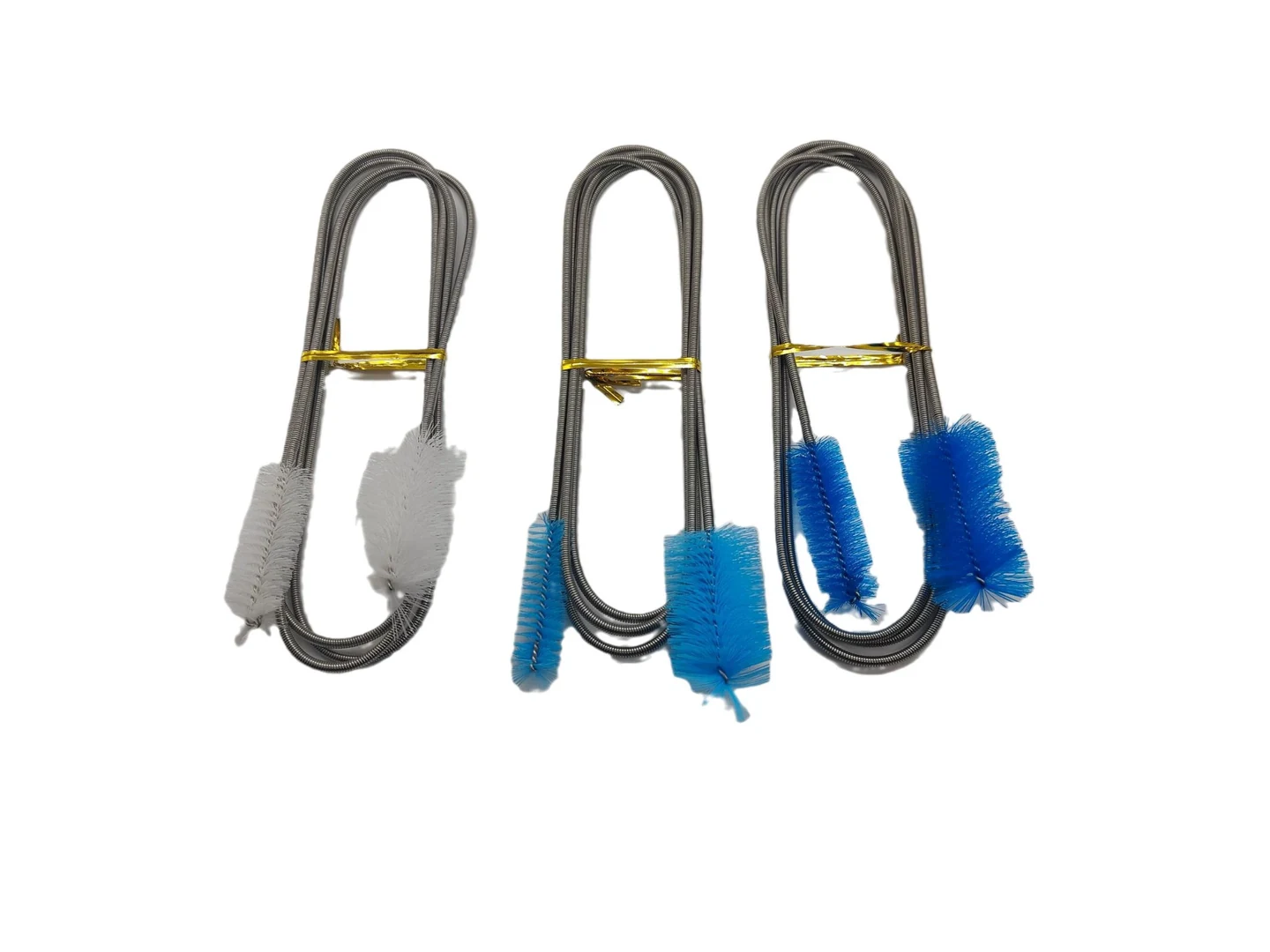
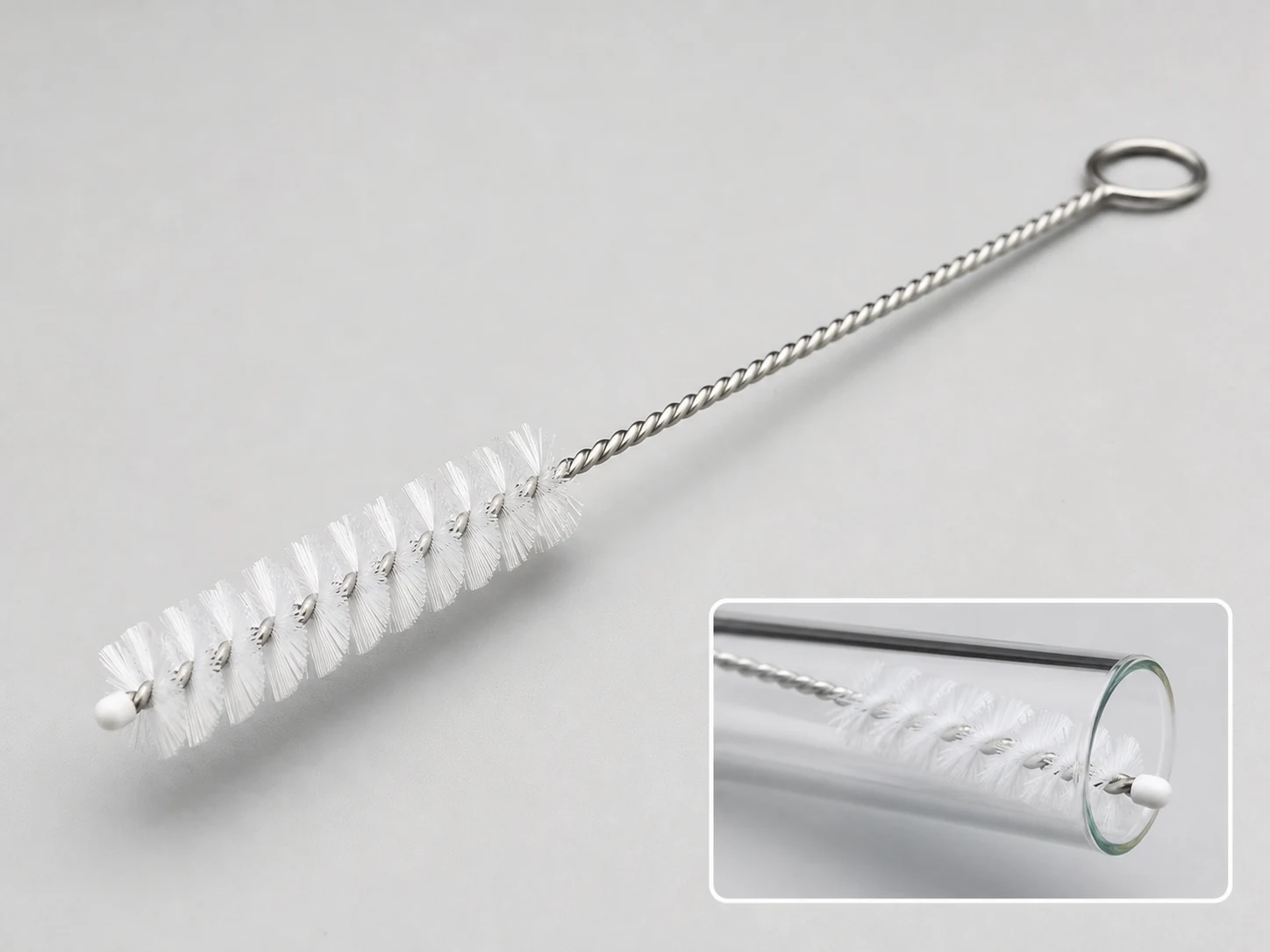
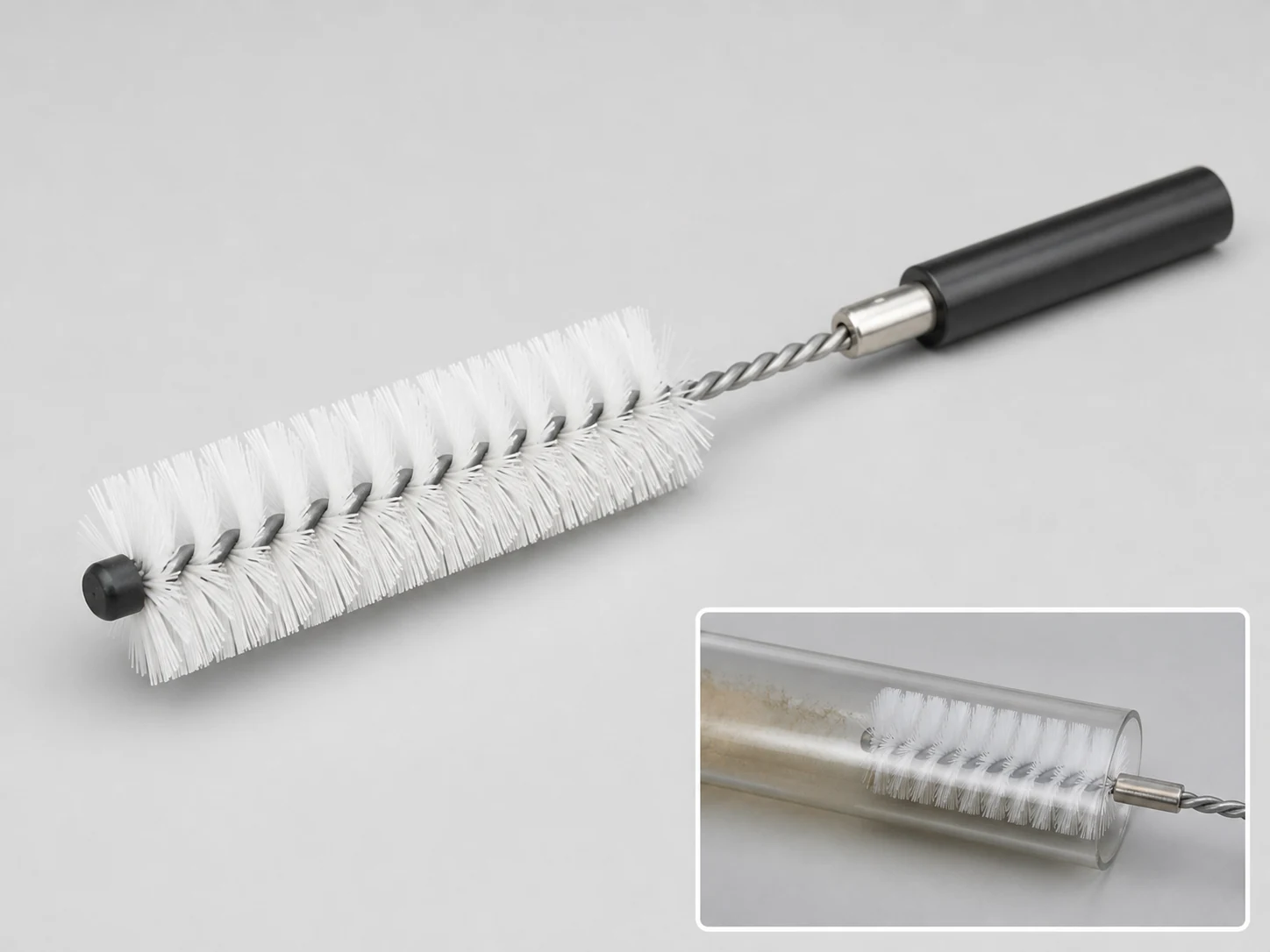
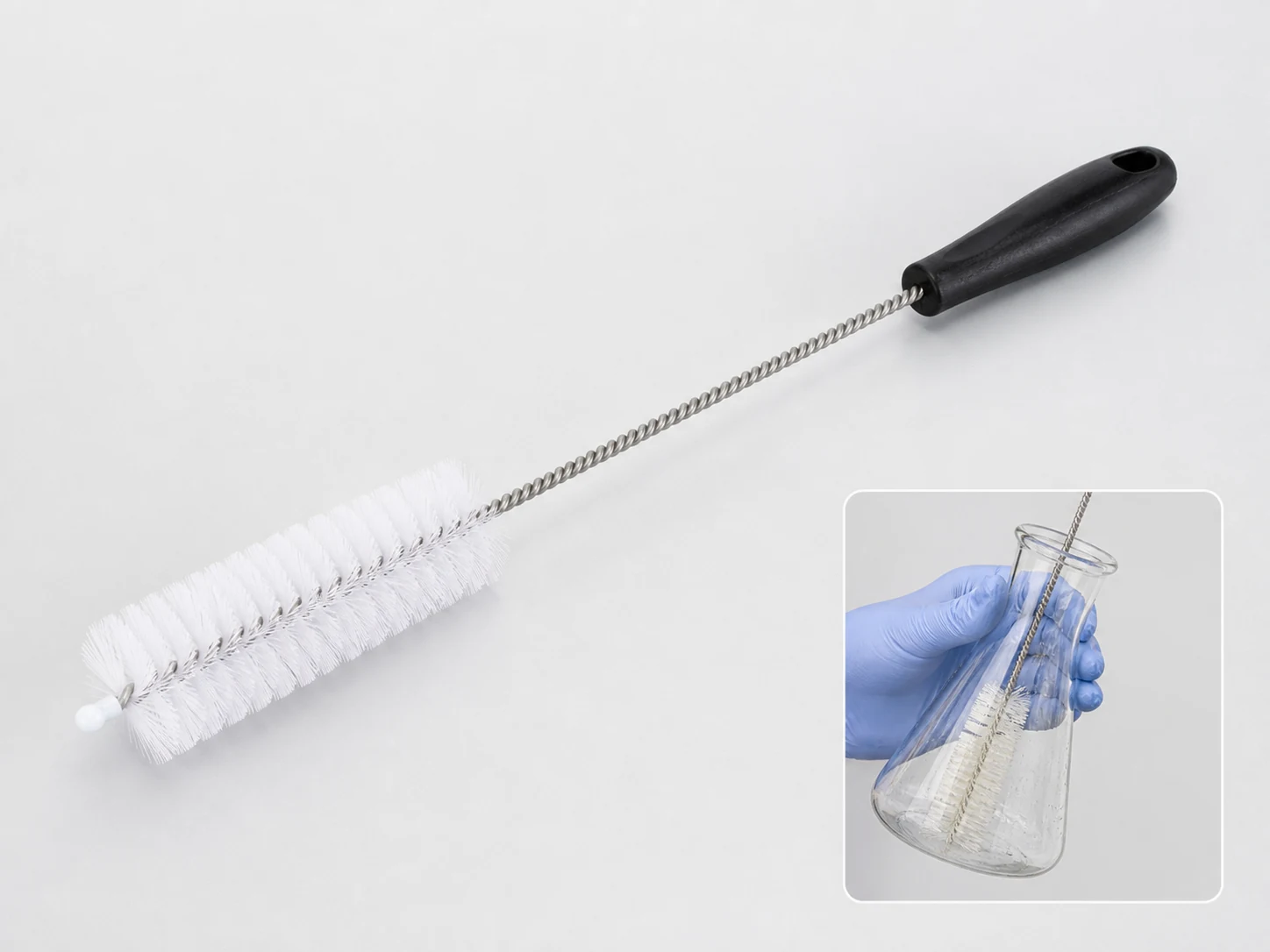
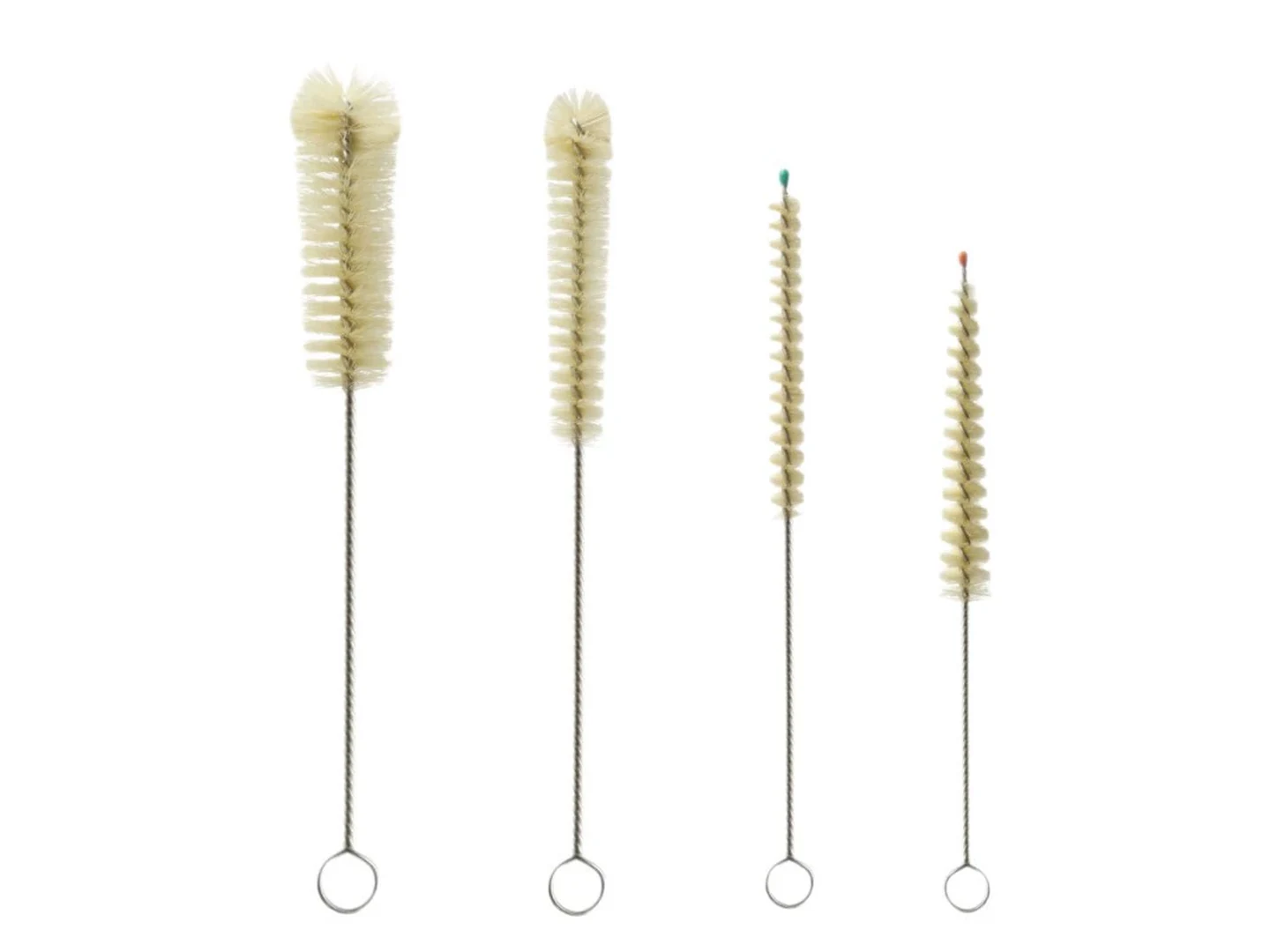
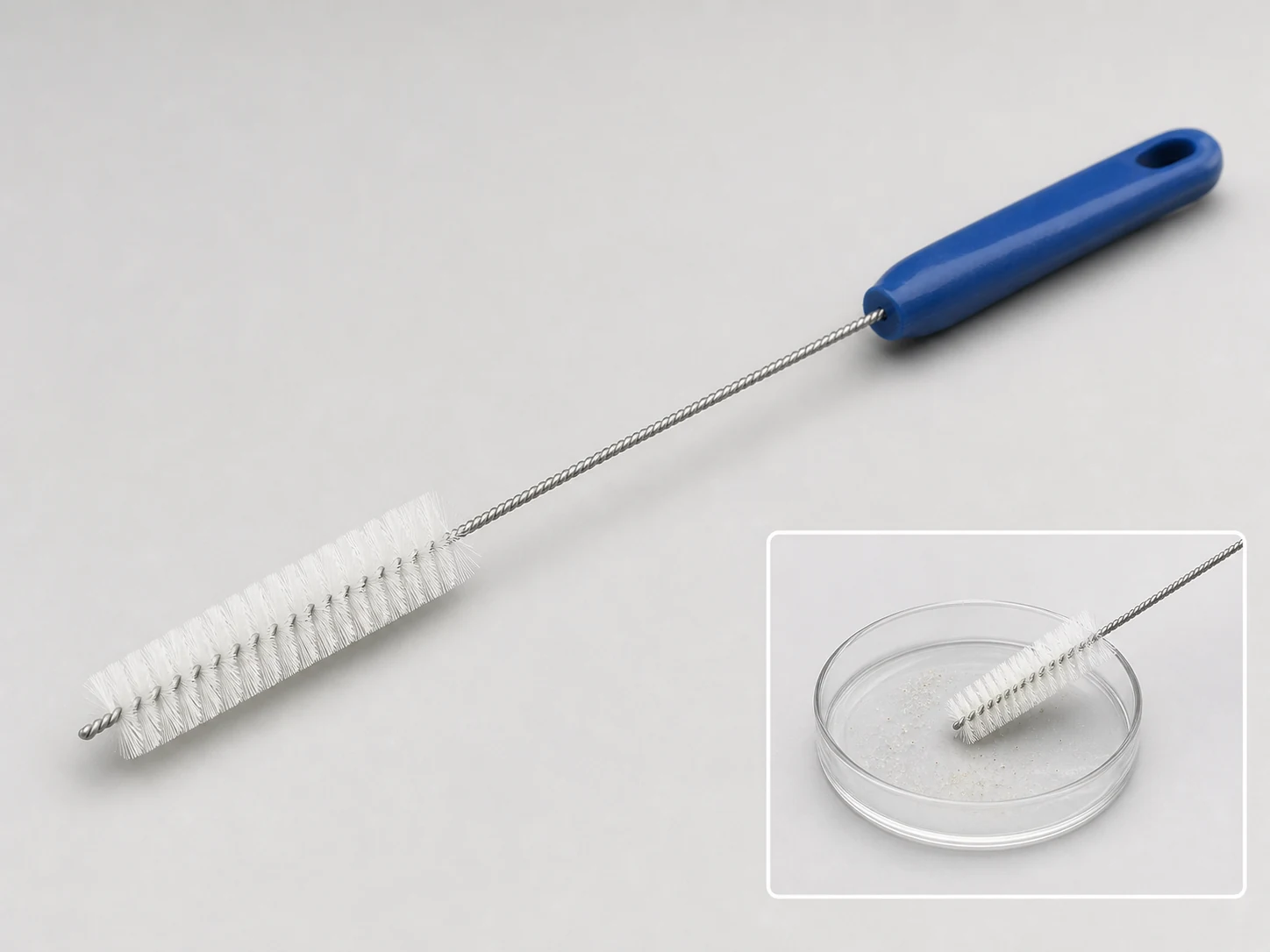
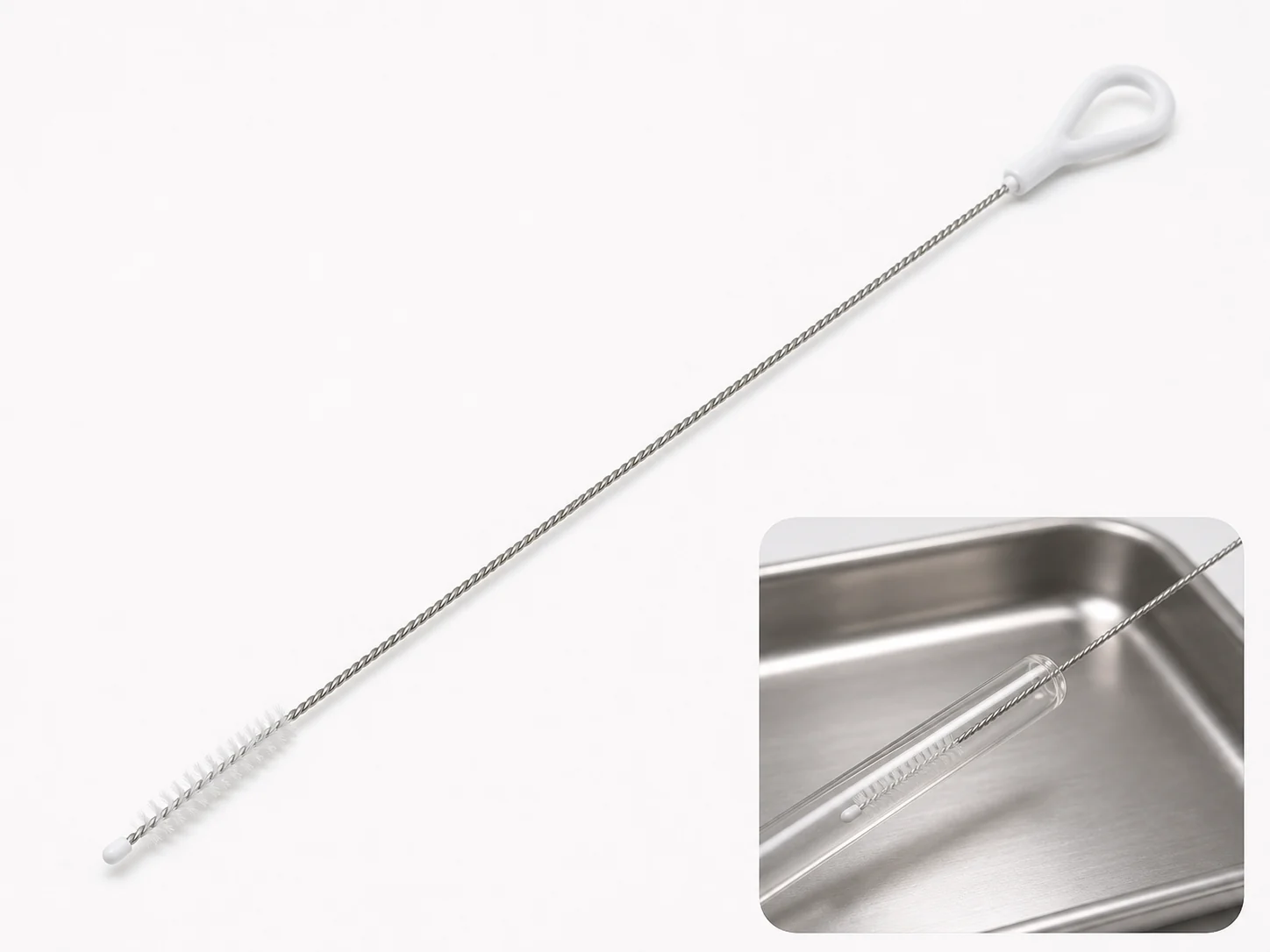
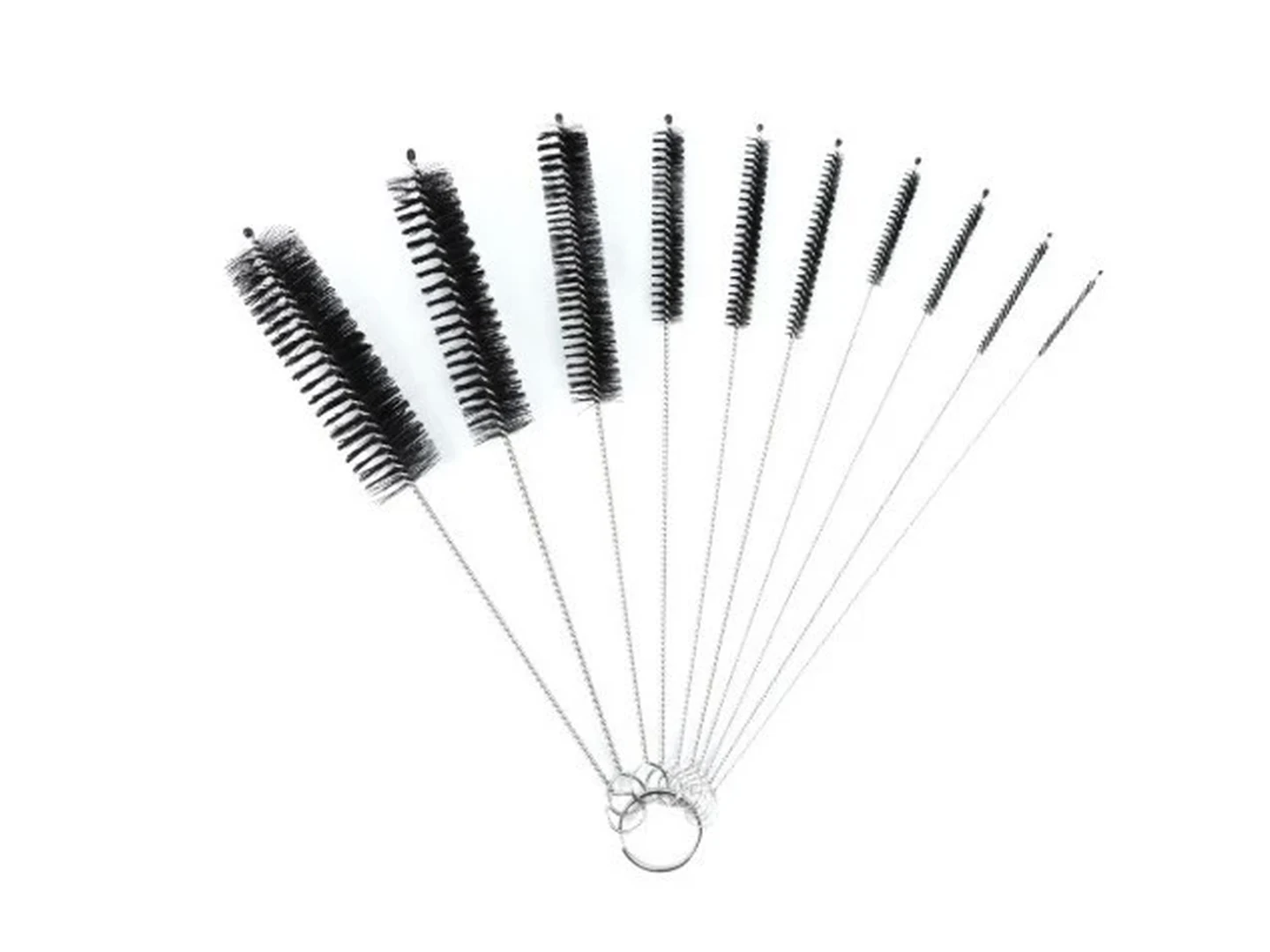
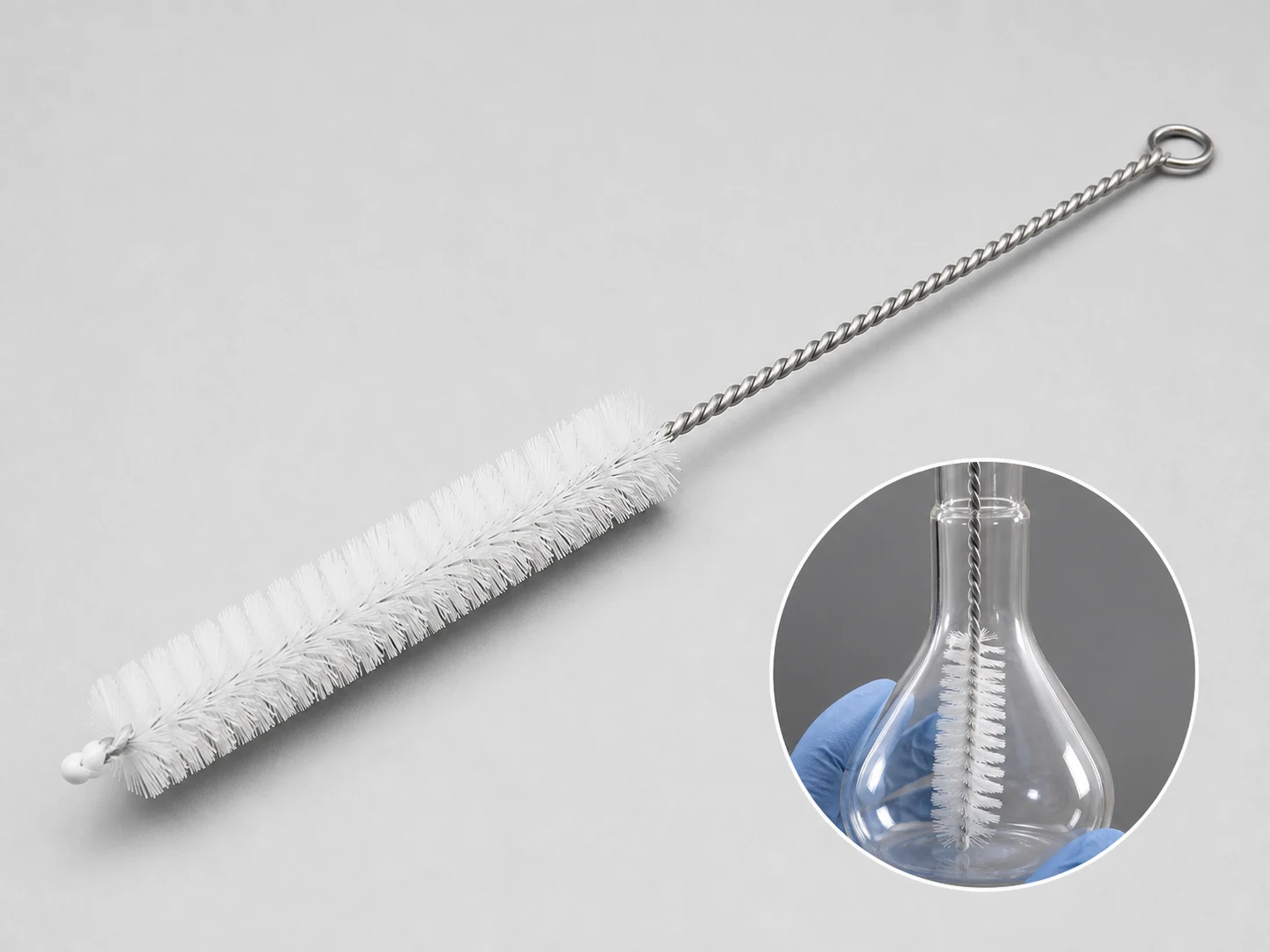
Measure the neck or opening first, then consider the widest internal area and the bottom shape the brush must contact.
The head must pass through the neck or tube without excessive force, especially on narrow-neck glassware.
Flasks and bottles may open into a much wider body, so a brush may need flexible or fuller contact after passing through the neck.
Burettes, cylinders and long tubes need enough working length to reach the entire internal surface.
Laboratory glass should be cleaned with controlled contact appropriate to the residue; highly abrasive media are not the default choice.
A test-tube brush follows a narrow cylinder, while a flask brush must pass a neck and then reach a broader body. Pipette and burette brushes add much longer, smaller passages. Vessel shape determines the product.
Brush diameter, head length, stem length, flexibility, tip style, filament and handle can be adjusted around the glassware. A vessel drawing or dimensions are sufficient for OEM sizing.
Provide opening diameter, internal body size, depth, vessel shape and residue. We can then match a standard format or size a custom laboratory brush.
Choose your brush type, cleaning task, material direction, and key details before sending a custom brush request.