
Custom Cleaning Brush
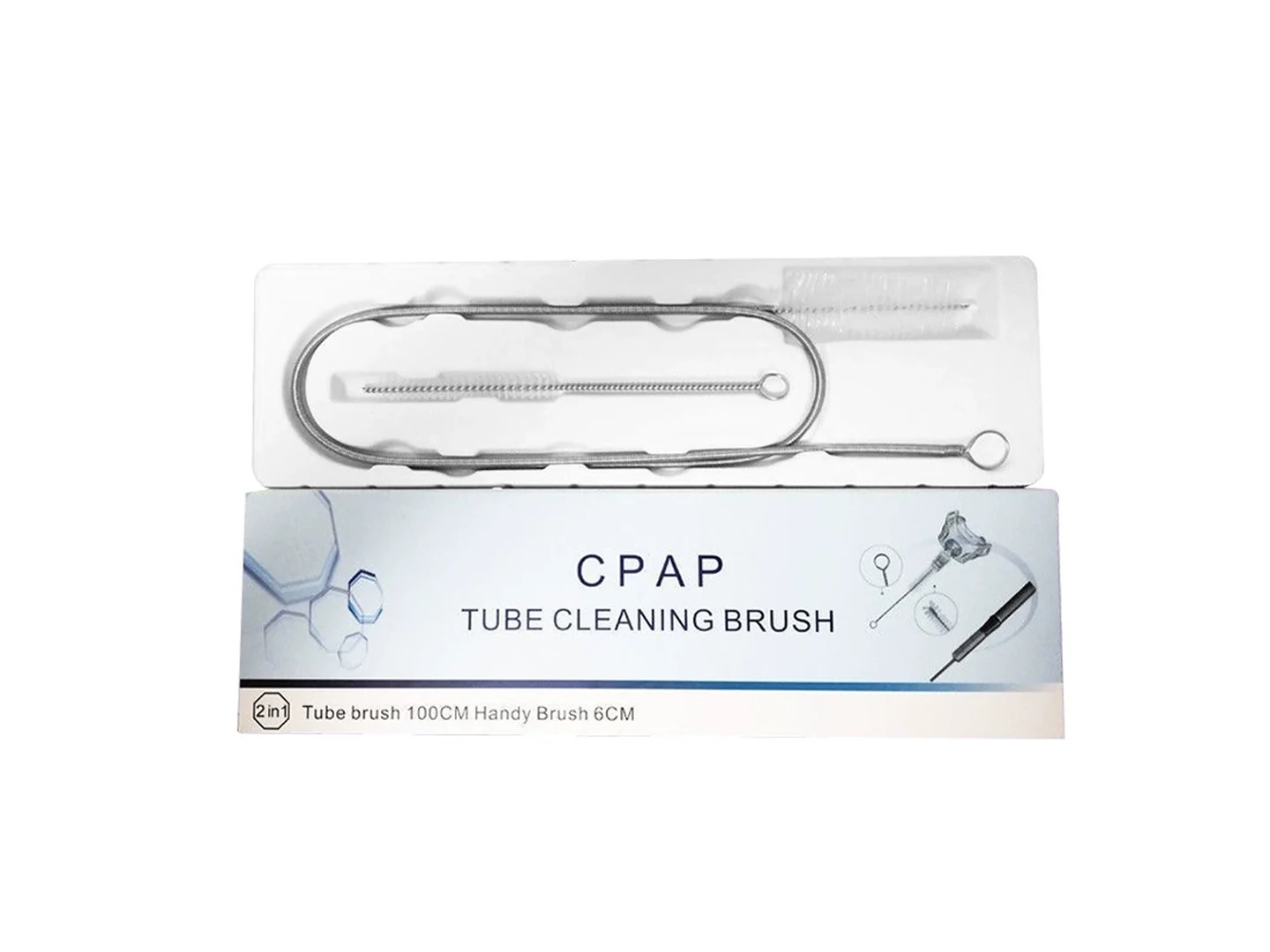
CPAP Hose Cleaning Brush
Flexible long-reach CPAP hose cleaning brush for corrugated respiratory tubing. PP, nylon, or PBT filaments, 1200–2200mm reach. Custom sizes and materials.
Small brush
500 pcs
Minimum order
Held in one hand: tube, bottle, detail and swab brushes — including long-handled ones with a small head.
Production lead time, once the specification is confirmed
- Up to 500 pcsWithin 7 days
- 501–50,000 pcsWithin 14 days
- Over 50,000 pcsWithin 21 days
Peak season can extend these times; the shipping date is confirmed in writing with your quotation. Sampling and shipping are quoted separately.
A flexible, long-reach brush for cleaning the inside of CPAP hoses and reusable respiratory tubing. Soft polymer filaments follow the corrugated bore to remove condensation film, dust, skin oil, and detergent residue without cutting or scratching thin-walled plastic tube.
What can this brush do for you?
Reaches the full length of a standard CPAP hose
Overall lengths from 1200mm to 2200mm let one operator pull the brush through a full 1.8m (6ft) hose in a single pass. The far end does not need to be disconnected for a second entry if the layout allows it.
Contacts the raised ribs and the troughs of the corrugated bore
The 15–25mm brush diameter is matched to the hose ID so the filaments bend into the troughs while the tips wipe the raised ribs. With a 5–20% oversize setting, polymer filaments reach both surfaces instead of riding over them.
Wipes residue away without cutting into thin-wall tubing
PP, nylon, and PBT filaments from 0.08mm to 0.25mm diameter release condensation film, skin oil, dust, and detergent residue without the scoring that a wire or abrasive brush can leave on 19mm and 22mm corrugated plastic tubing.
Flexible core follows loops and bends
The 1.0–3.0mm stem guides the head through the hose without trying to straighten it by force. This reduces the chance of kinking or stretching the tubing during pull-through cleaning.
Pull-through loop handle works from either end
A 20–60mm handle or loop at the tail lets the operator pull from the opposite end without regripping a wet tube. Running the brush in both directions removes film that a single pass may only push ahead.
What is a CPAP Hose Cleaning Brush?
A CPAP hose cleaning brush is a hand-pulled, long-reach cleaning tool built specifically for the inner bore of positive airway pressure tubing. The working end is a short, dense section of polymer filaments mounted on a long flexible stem. The operator feeds the handle or loop through the hose and pulls the brush head through the full length of the tube. As it passes, the filaments flex into the corrugation valleys and slide along the walls, wiping away the condensation film, dust, skin oil, and detergent residue that ordinary tube rinsing leaves behind.
This is a mechanical residue-removal tool, not a high-abrasion scrubber, not a sanitizer, and not a substitute for the care routine prescribed for the CPAP device. The brush loosens and removes attached film; disinfection, sanitizing, and drying remain separate steps. Run the brush with liquid detergent or a mild cleaning solution, then rinse the brush and the hose and allow both to dry before storage.
Technical Specifications
| Parameter | Value / Options |
|---|---|
| Brush diameter | 15–25 mm, matched to hose internal diameter |
| Working head length | 40–100 mm, selectable for corrugation pitch and stroke |
| Overall length | 1200–2200 mm, covers standard 1.8m CPAP hose in one pass |
| Stem diameter | 1.0–3.0 mm, sized for hose stiffness and pull force |
| Filament diameter | 0.08–0.25 mm, finer filaments wipe, thicker filaments scrub |
| Filament material | Polypropylene PP, Nylon PA, or PBT |
| Handle / loop | 20–60 mm molded or wire loop, with optional grip sleeve |
| Contact setting | Near-size for wiping; 5–20% oversize for flexible polymer scrubbing |
| Stem configuration | Polymer-coated steel or fully polymer flexible core |
| Hose compatibility | Standard 19mm and 22mm corrugated CPAP, BiPAP, and respiratory tubing; custom sizes on request |
| Brush type | Custom Tube & Pipe Bore Brushes |
| How it is driven | Hand-guided |
| Cleaning target | standard 19 mm and 22 mm cpap, reusable respiratory tubing and ventilator circuit hose, and humidifier outlet section and low-profile hose connection cleaning |
| Surface or part | bores, hoses, walls, tubes, plastic, bends, cuffs, and connectors |
| Residue or debris | condensation film, skin oil, detergent residue, dust, leaves, and pitch |
| Mounting / connection | Threaded Removable / Fixed |
Where does this brush work best?
- Standard 19 mm and 22 mm CPAP and BiPAP tubing where condensation film and skin oil accumulate along the inner wall and corrugations.
- Reusable respiratory tubing and ventilator circuit hoses that are cleaned between uses rather than disposed after each patient.
- Humidifier outlet sections and low-profile hose connections where a rigid brush cannot bend but a long flexible stem can reach.
- CPAP mask swivel cuffs, short connector sleeves, and hose adapters if they have enough internal clearance for a 15–25mm head. Smaller cuffs may need a dedicated smaller brush.
- Non-heated hoses are straightforward; heated CPAP tubing works only with a near-size diameter and soft filament because the inner heating wire sits inside the bore.
How do I choose the right one?
Start with the hose internal diameter and overall length. Measure the ID first. A 19mm hose typically works with a 19–23mm brush diameter depending on the desired interference; a 22mm hose works with 22–25mm. For wiping light film or smooth low-residue walls, choose near-size contact. For corrugated tubing where residue collects in troughs, choose 5–20% oversize so the filaments deflect into the valleys. If the stem is polymer-coated steel or has a larger diameter, reduce the interference percentage to keep pull force manageable.
| Hose ID | Recommended brush diameter | Contact type |
|---|---|---|
| 19 mm | 19–22 mm | Near-size wiping to moderate scrubbing |
| 22 mm | 22–25 mm | Moderate scrubbing for corrugated walls |
| Smaller than 15 mm | Custom smaller head | Requires special configuration |
| Heated CPAP tubing | Near-size only with soft filament | Avoid high oversize interference |
Filament material affects wet stiffness, wear, and chemical tolerance. PP is hydrophobic, chemical-tolerant, and economical for routine wiping with mild detergents, but it is less stiff than PBT. PBT retains its stiffness when wet and recovers well inside corrugations, making it a strong choice for frequent-use hoses. Nylon PA is flexible and durable but absorbs moisture and loses some stiffness when saturated, so it is better for softer wiping tasks where the brush will be thoroughly dried between uses.
Choose the stem diameter from the same facts: 1.0mm for very flexible tubing and light pull forces, 2–3mm for standard hoses and repeated industrial use. If the hose has an exposed heating element or metal contact is not acceptable, specify a fully polymer core. Do not use an oversize brush on heated tubing; the filament tips can catch the heating wire inside the bore.
Use a different tool when the hose ID is below 15mm, when mineral scale or hardened deposits need chemical descaling rather than mechanical brushing, or when cross-contamination control calls for a single-use swab or disposable brush. If the tubing has a broken heating wire or internal delamination, replace the hose rather than brushing it.
Can I customize this brush?
CPAP hose cleaning brushes are configured around the actual tubing. We will need the hose internal diameter, overall length, wall thickness, corrugation pitch, cleaning solution or detergent, wash temperature, and expected number of use cycles. A sample hose, drawing, or photo speeds up the configuration.
- Brush head diameter from 15mm to 25mm or outside that range for special tubing
- Working head length from 40mm to 100mm or a custom length matched to the corrugation pitch
- Overall length from 1200mm to 2200mm, or longer by special design
- Stem diameter and material, including polymer-coated steel or a fully polymer flexible core
- Filament material PP, Nylon PA, or PBT; filament diameter 0.08–0.25mm; fill density and trim profile
- Single or double brush head for two-direction cleaning in one pull
- Handle or loop size and type, grip sleeve, hanging hole, color coding, pad print, laser marking, or identification coding
- Bulk, individual bag, retail sleeve, kit, or project-specific packaging
If your project requires material documentation, inspection support, or third-party testing, we can assist with those requirements during the customization process.
How do you confirm a CPAP hose cleaning brush has actually cleaned the surface?
How can I verify the brush diameter is right before full production?
Pass a sample through the actual hose. The head should contact the corrugation valleys without forcing the stem to buckle. If it slides through with no resistance, the diameter is too small. If the stem bends sharply when pulled or the head stops, the diameter is too large or the stem stiffness is wrong.
Does this brush remove bacteria or sterilize the hose?
No. Mechanical brushing removes attached film and residue, but disinfection, sanitizing, and sterilization steps remain separate parts of the care routine. Do not treat a clean-looking hose as a disinfected hose.
Can I use the same brush on heated and non-heated CPAP tubing?
You can, but use a near-size diameter and soft filament for heated tubing. Inspect the interior for the heating wire before brushing. If the wire is exposed or broken, replace the tubing instead of brushing it.
How should the brush be cleaned and stored after use?
Rinse the brush with clean water or mild detergent after each use, then let it air dry completely before storage. Check the filaments for bunching, the stem for kinks, and the handle loop for cracks during routine inspection.
What is the recommended pulling technique?
Keep the hose as straight as possible, feed the brush slowly, and rotate the handle occasionally while pulling. Do not jerk or force the brush. If resistance suddenly increases, stop and check for a kink, obstruction, or heating wire contact. A second pass in the opposite direction improves residue removal.
When would a different cleaning tool be better?
If the hose ID is smaller than 15mm, choose a smaller tube brush or disposable swab. If only the outside of the hose is dirty, use a cloth or exterior hose brush. If mineral scale or hardened deposits are present, use a descaling soak rather than aggressive brushing.
Guides that go deeper on this
RELATED BRUSH RESOURCES
Recommended Reading & Related Brush Resources
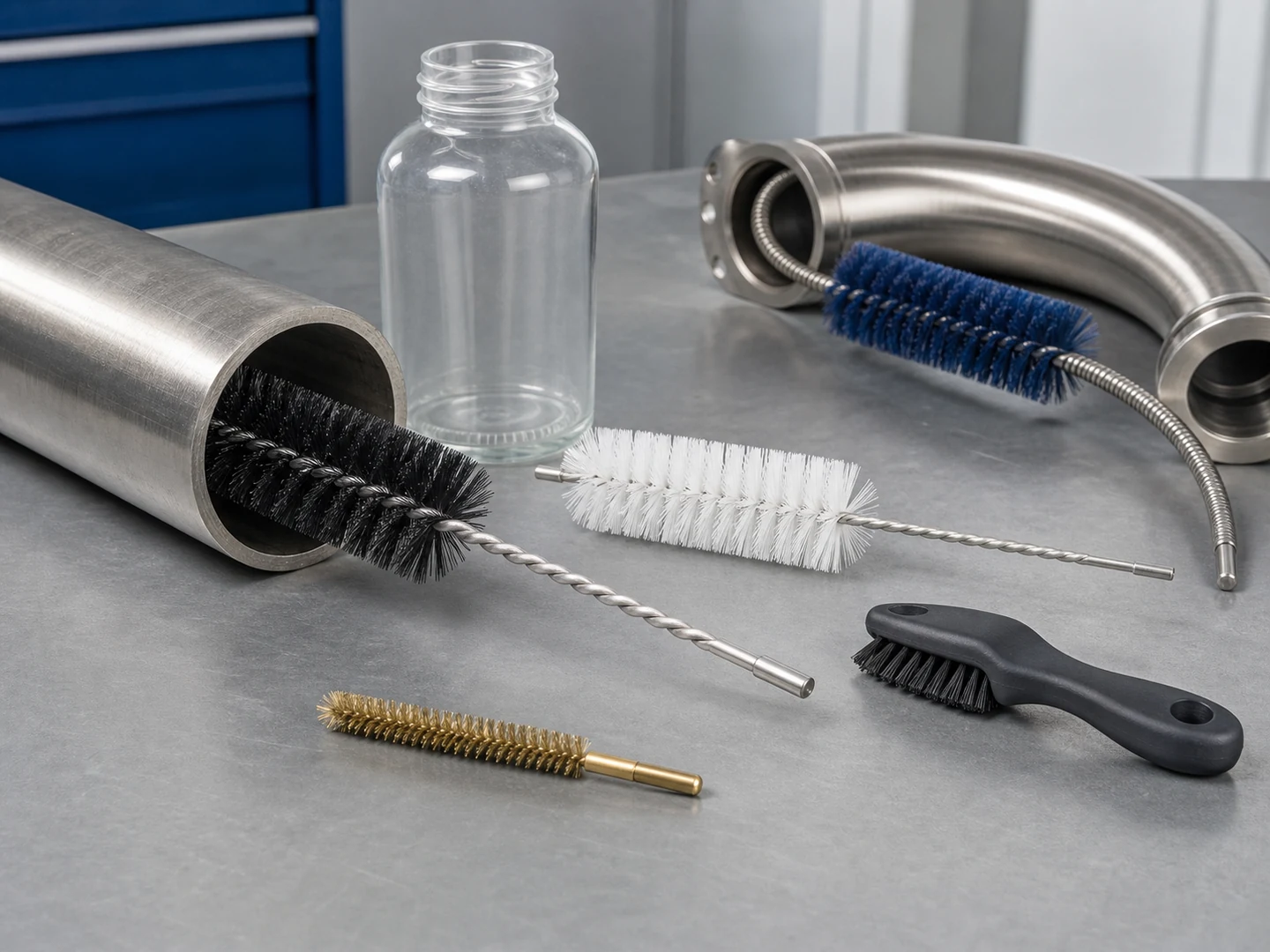
Custom Tube & Pipe Bore Brushes
Choose a tube, pipe, or bore brush when the working surface is inside a…
See how this type is built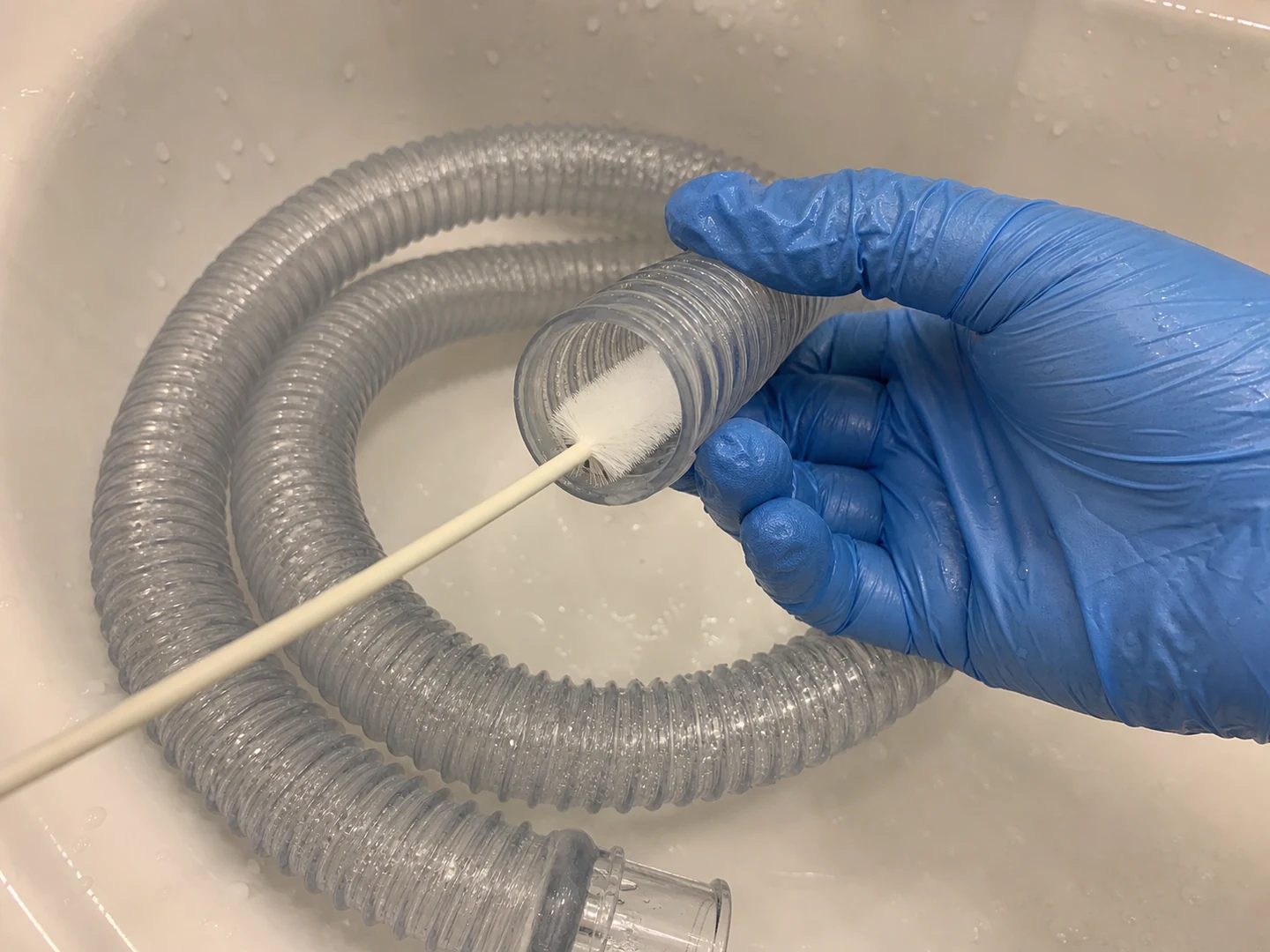
CPAP Hose Cleaning
For CPAP Hose Cleaning, the brush must reach the working area, disturb or collect…
See the cleaning job
Polypropylene PP
Choose Polypropylene PP based on its stiffness, recovery, wear, wet-service, chemical, and temperature behavior.…
Compare this material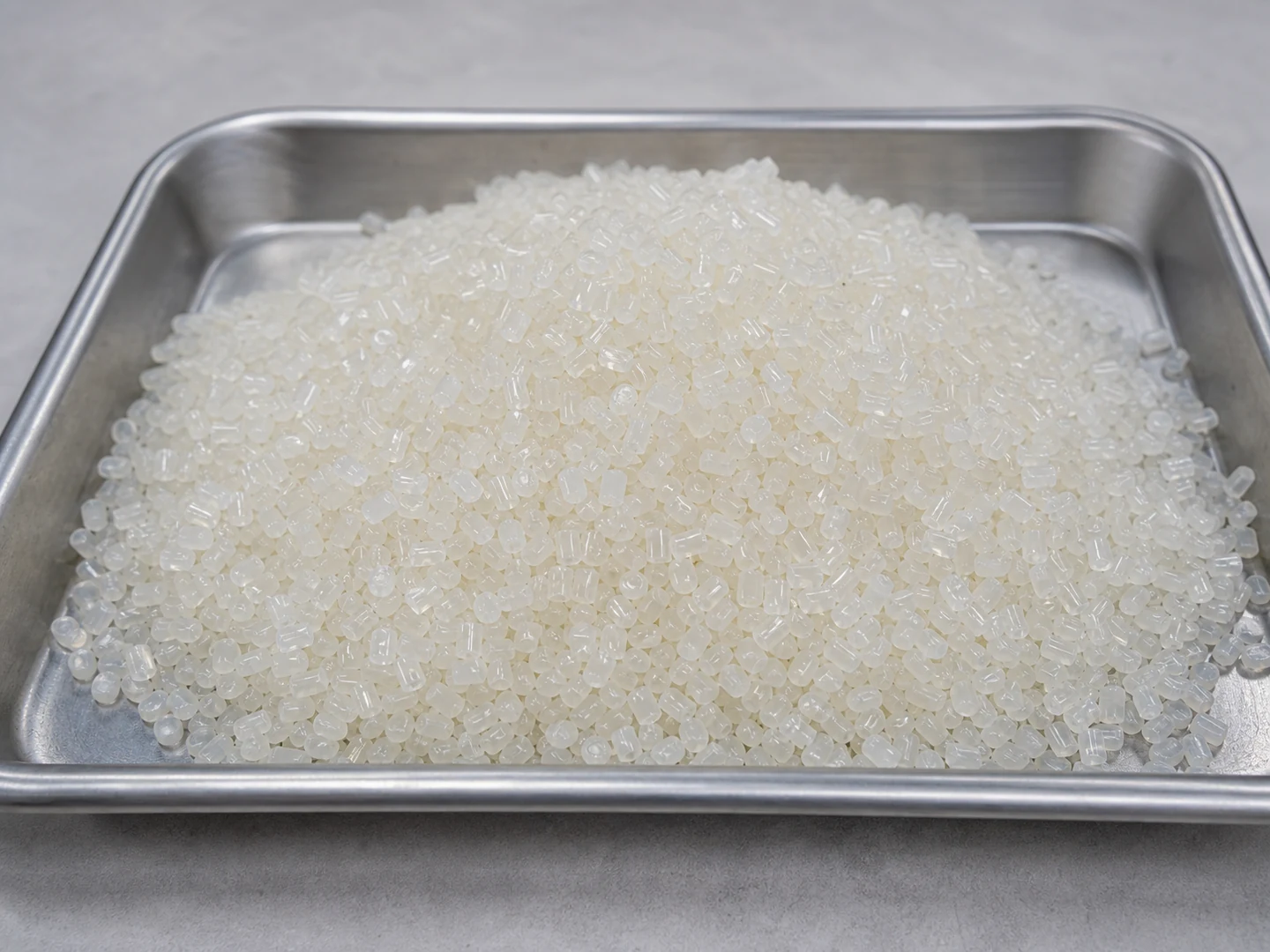
Nylon PA
Choose Nylon PA based on its stiffness, recovery, wear, wet-service, chemical, and temperature behavior.
Compare this materialCustom Manufacturing RFQ
Describe Your Application
An accurate custom quote starts with the dimensions, working surface, residue, material choice, connection, quantity, and reference files.
Drawing or photo optional — it speeds things up, it does not gate the enquiry.
Custom Brush RFQ
Send Your Brush Project
Upload a drawing, product photo, or sample photo and provide the core dimensions and cleaning conditions.
“We need a brush to remove wet residue from a stainless steel conveyor, about 800mm wide. The current brush wears quickly. We can send photos.”
“We sell drinkware and need a cleaning brush to include with the product. Quantity around 5,000 pieces.”