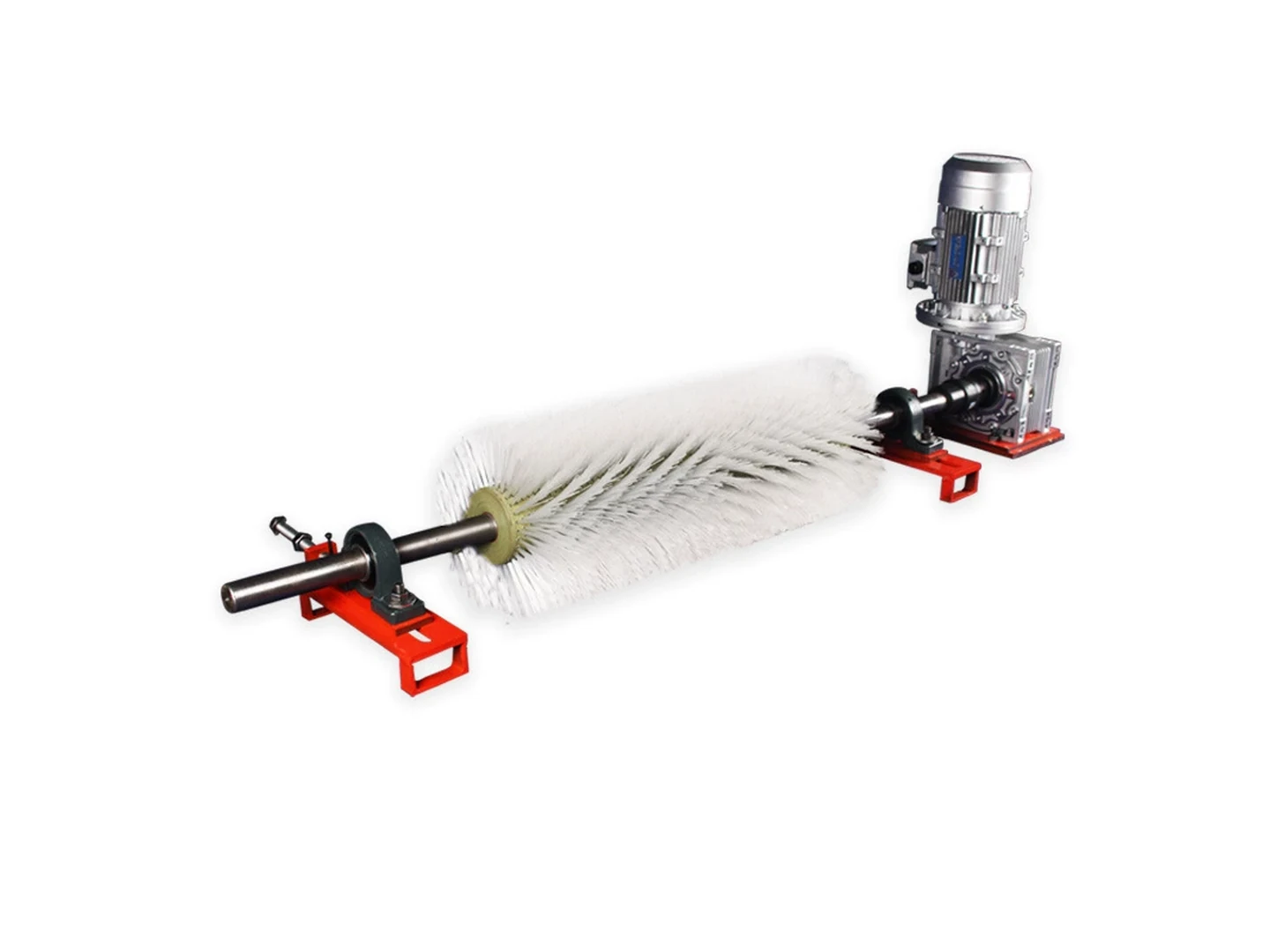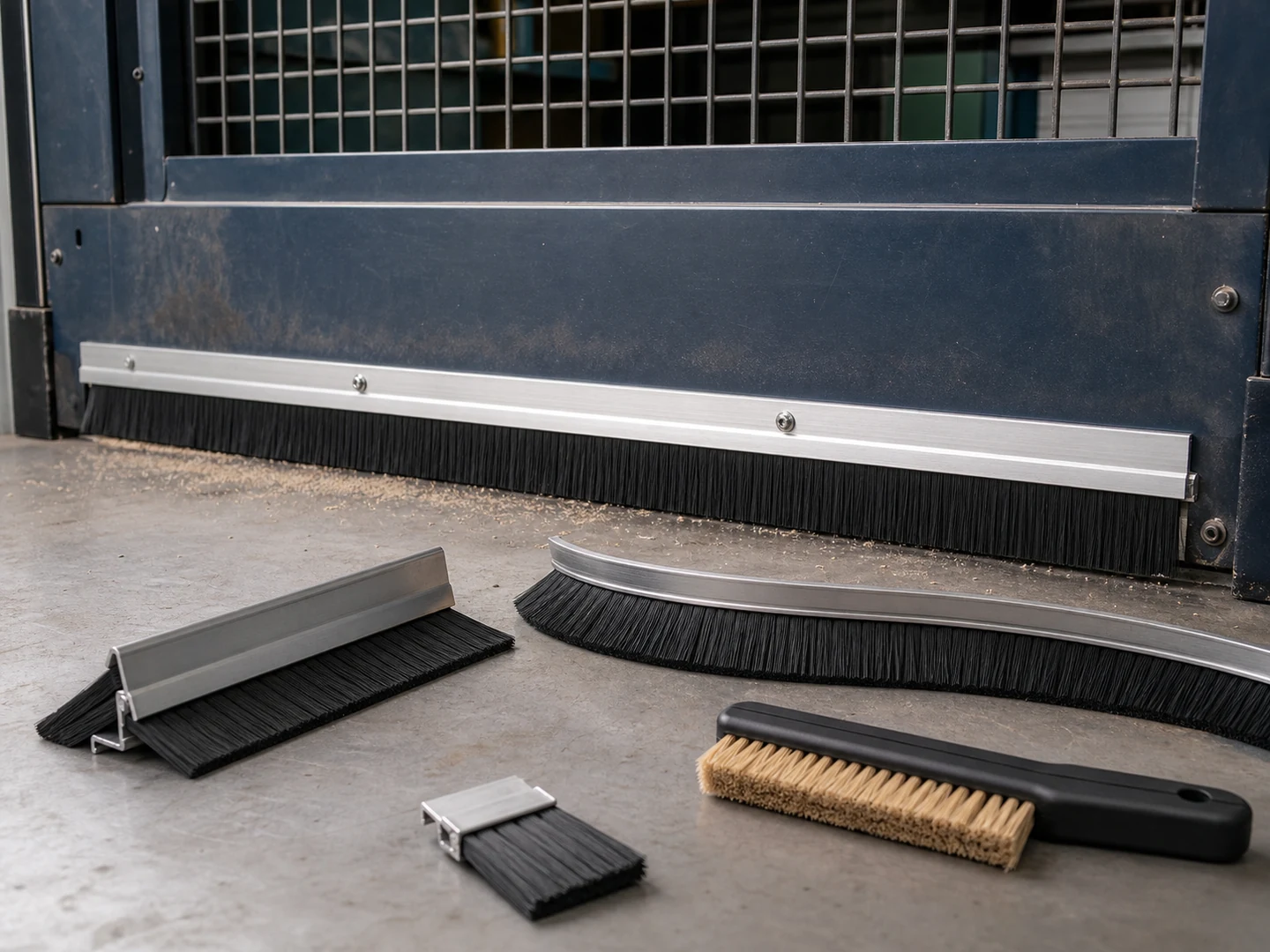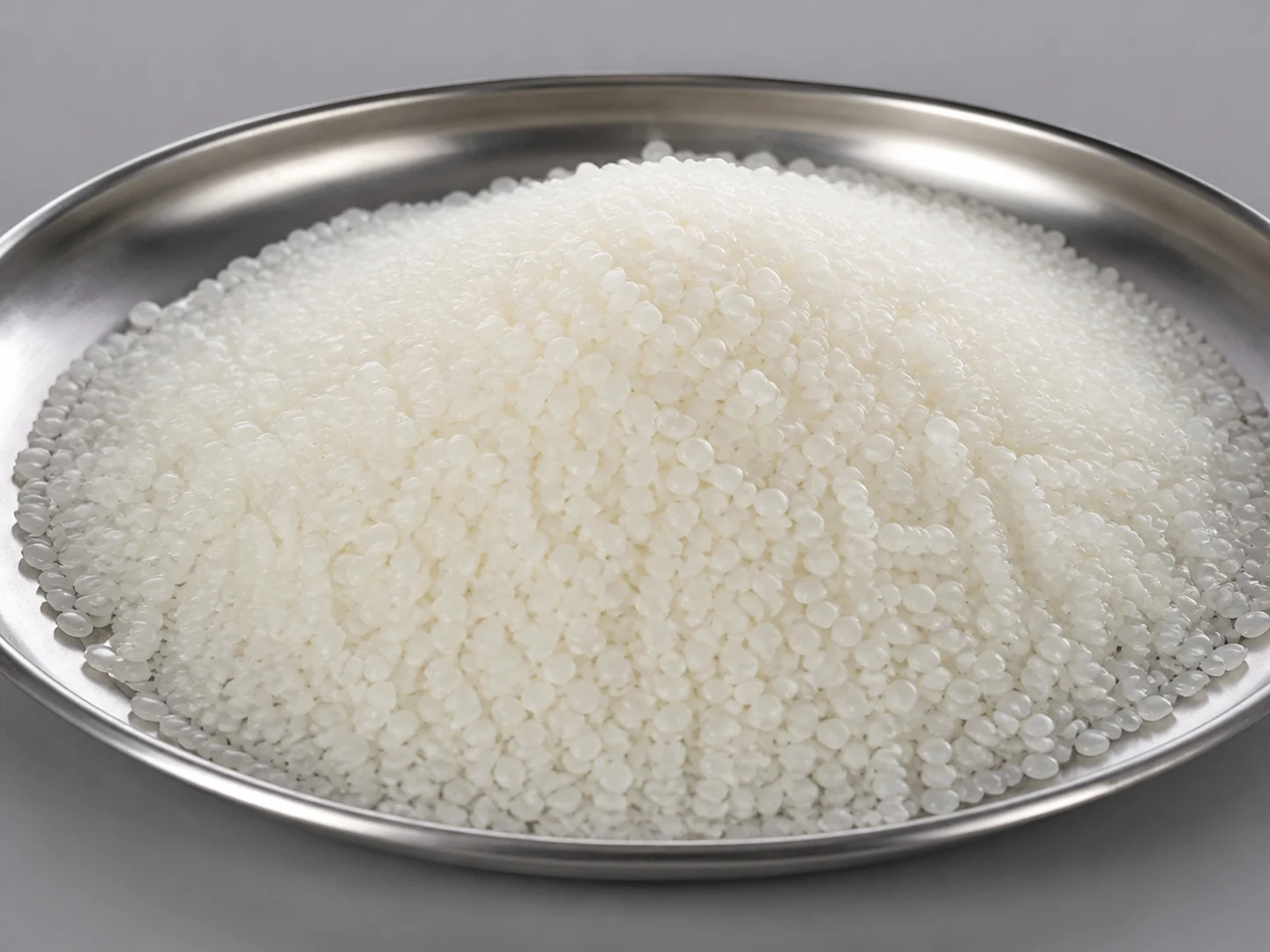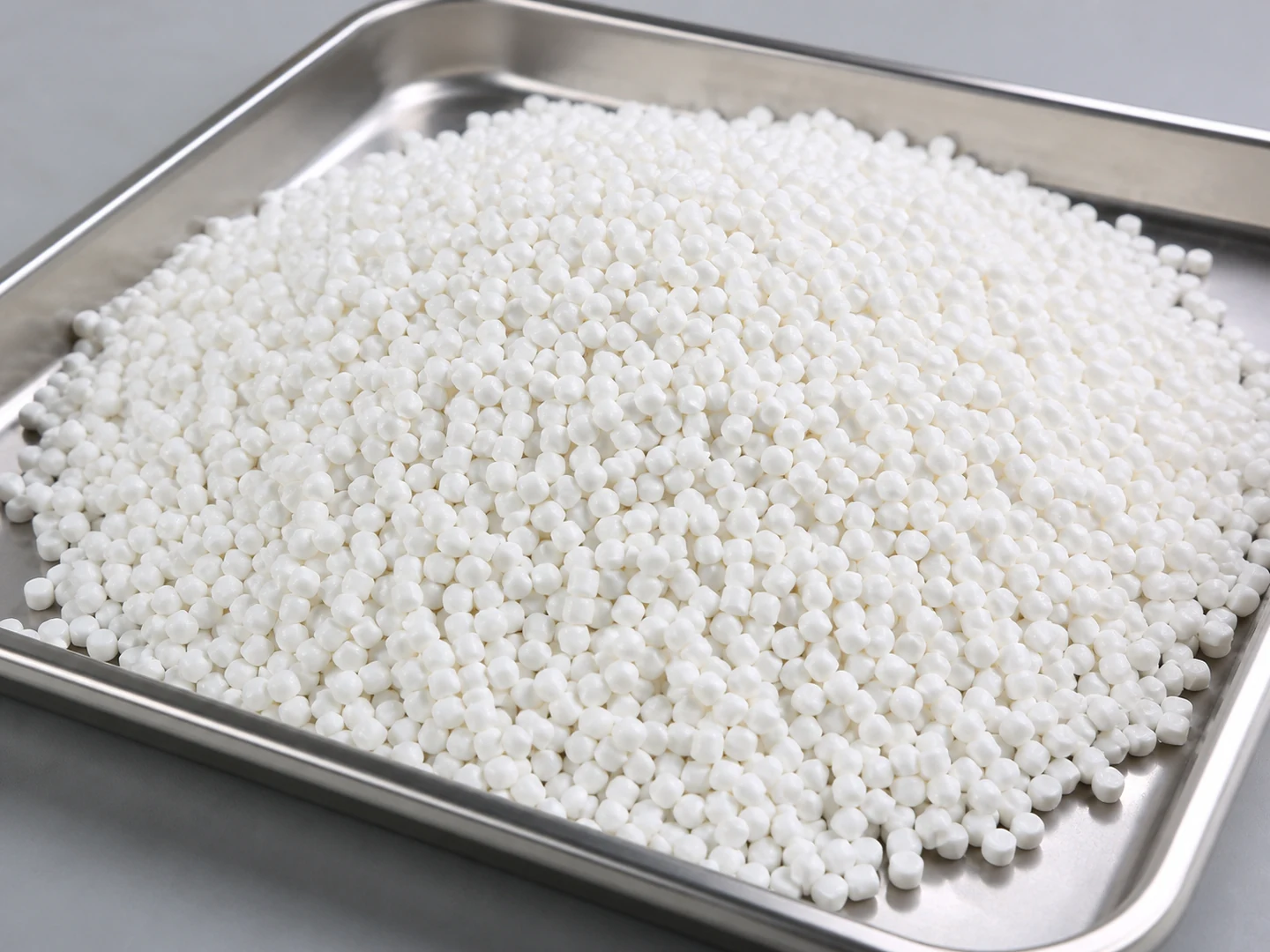
Quick Answer
Brush stiffness rises when filament diameter increases, free trim becomes shorter, fill density increases, or engagement increases. Outside diameter controls reach and available trim, but it does not define stiffness by itself. Evaluate all five variables together.
The Four Dimensions That Change Contact
| Dimension | What it changes | Common error |
|---|---|---|
| Outside diameter | Reach, available trim, rotational path, clearance, and surface speed | Selecting diameter only from available space |
| Free trim length | Flexibility, conformance, heat generation, and ability to enter texture | Using short trim on a delicate or irregular surface |
| Filament diameter | Individual strand stiffness, cutting action, and fatigue life | Increasing wire size before correcting engagement |
| Fill density | Number of contact points, debris capacity, airflow/liquid passage, and loading tendency | Making a sticky-residue brush too dense |
How Geometry Changes Stiffness
A small increase in filament diameter produces a large increase in strand stiffness. Shortening trim also raises stiffness sharply because the free length available to bend is reduced. Density increases total contact but can prevent sticky debris from leaving the face. For a softer result, use finer filament, longer trim, lower density, and lower engagement. For more cutting, change one variable at a time so the source of surface marking remains visible.
Engagement and Deflection
Set engagement as the amount the brush extends into the surface path or bore. Wiping uses light tip contact. Scrubbing uses controlled filament bending. Running on the filament sides instead of the tips creates heat, smearing, rapid fatigue, and permanent set. A supported conveyor or panel gives more uniform contact than an unsupported flexible surface.
Rotary Brush Check
- Confirm the maximum outside diameter and guarding envelope.
- Calculate surface speed from brush diameter and equipment speed.
- Set the trim and filament so contact occurs at the tips.
- Check shaft deflection and balance across the full working width.
- Run the sample at low engagement, then increase only until the residue clears.
Sizing Data to Put on the Drawing
- Outside diameter, face width, core or hub diameter, trim length, and filament diameter.
- Density or pattern: close-wound, open spiral, chevron, staggered, tuft rows, or mixed fill.
- Shaft, bore, keyway, thread, flange, journal, set screw, and rotation direction.
- Permitted runout, balance class, maximum equipment speed, temperature, and cleaning fluid.
Technical References
Which bristle material fits this job — PA612 Nylon, PBT or Abrasive Nylon?
| Material | Continuous temperature (°C) | Peak temperature (°C) | Water absorption | Hardness |
|---|---|---|---|---|
| PA612 Nylon | 90–110 | 130–150 | 0.3–0.7% | Shore D 70–80 |
| PBT | 120–140 | 160–180 | 0.05–0.20% | Shore D 80–90 |
| Abrasive Nylon | 120 | 150 | 0.1–1.0% | Abrasive filament; stiffness and cutting level is controlled by PA base, grit type, grit size, filament diameter and trim height. |
When are Roller and Conveyor Brushes the wrong choice?
- Roller and Conveyor Brushes — Use a stationary strip brush for a fixed linear seal or wipe, or another process when rotating line contact interferes with the product or cannot discharge the residue safely.
- Strip Seal Brushes — Use rubber lips, foam, labyrinth seals, air curtains, or rigid scrapers when pressure sealing or liquid containment is required.
- Tube & Pipe Bore Brushes — Use pigs, flushing, ultrasonic, chemical descaling, blasting, or a flexible cable system for long, sharply curved, or heavily scaled passages.
- PA612 Nylon — PA612 costs more than general PA6 and should be used where its wet stability, recovery or wear life creates a real process benefit.
What should replace Roller and Conveyor Brushes when they stop working?
- Roller and Conveyor Brushes — Roller and conveyor brushes hold cylindrical line contact across a working width, including helix-wound builds where the filament path is set to move loosened material toward one side; a strip brush holds the same line without rotating, so it seals or wipes but cannot carry residue along the width.
- Strip Seal Brushes — Strip brushes create a linear barrier or guide; machine-table brush plates distribute load and support products over a broad area. Closest alternative: Machine Table Brush Plates.
- Tube & Pipe Bore Brushes — Tube and bore brushes work by radial contact inside a confined diameter; wire wheels and cups work mainly on external edges, profiles, welds, and broad surfaces.
- PA612 Nylon — Compare PA612 Nylon with PA66, PP, PBT. Change material when wet stiffness, temperature, chemical resistance, conductivity, particle shedding, or surface marking becomes the limiting factor.