
Material
Rubber
Elastomer contact material
Choose Rubber based on its stiffness, recovery, wear, wet-service, chemical, and temperature behavior. Stiffness is set by the complete filament specification, including material, diameter, free trim, density, grade, and service conditions.
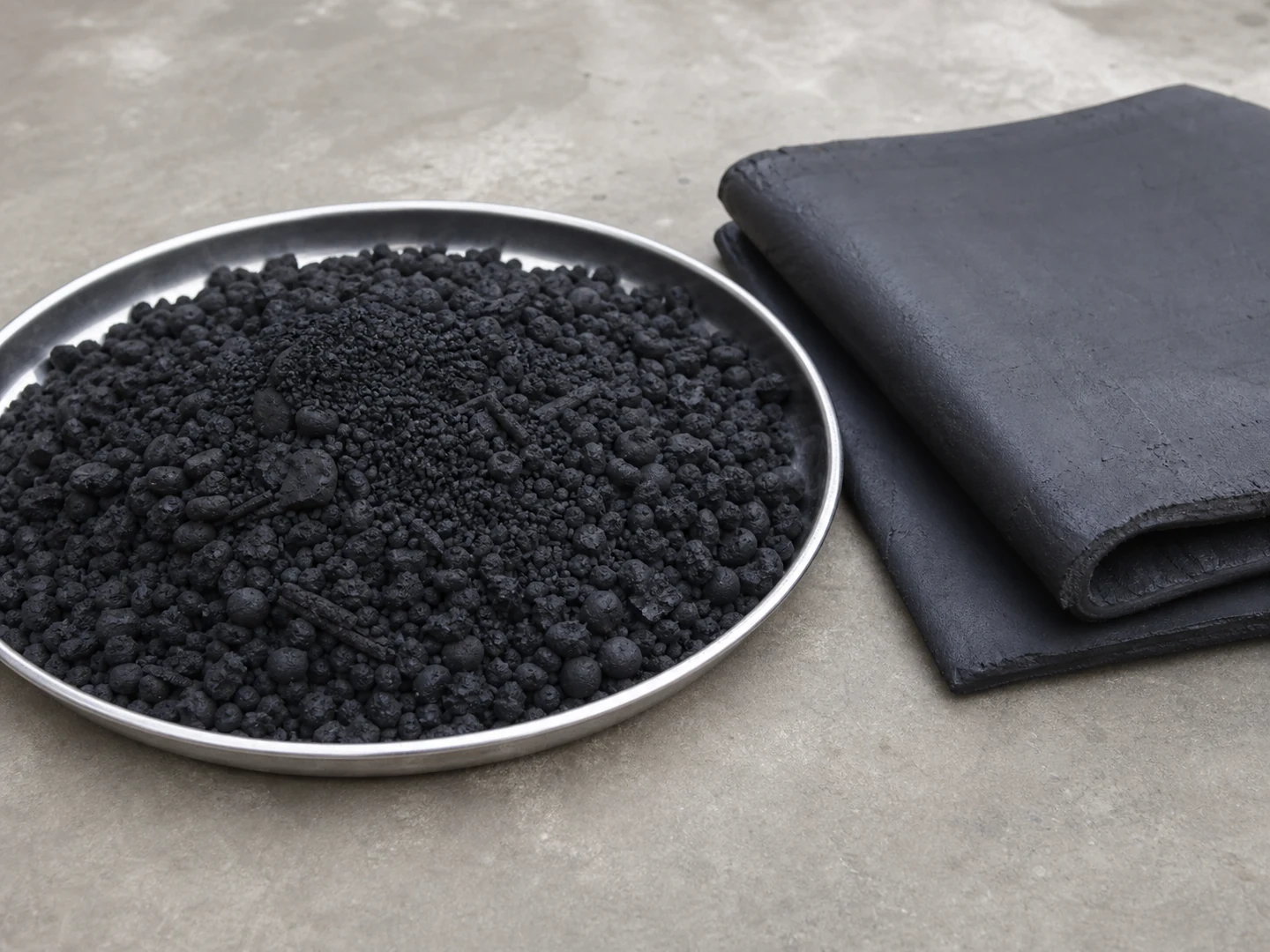
Datasheet values
- Hardness
- 30–90 Shore A
- Density
- 0.9–1.4 g/cm³
- Use temperature
- -30–120°C by elastomer
- Compression set
- 10–40% by grade
- Water absorption
- very low
Rubber is a generic term for natural or synthetic elastomers that recover after deformation; it does not identify a usable compound by itself.
What is Rubber, and what makes it different from other brush filaments?
Rubber appears in a brush as a contact element rather than a fill — moulded blades and fins, elastomer strip, TPE nubs, and overmoulded grip or roller surfaces. It wipes and grips where bristles would only push material around.
Rubber is used in custom cleaning brushes for squeegee, sealing and liquid-removal contact where elastomer hardness and chemical compatibility are known.
The realistic alternatives are TPEE Elastomer Filament and PVA Sponge. What separates them here is working temperature, not headline strength.
Compare Rubber with Silicone elastomer, TPE, PVC profile, PVA sponge. Change material when wet stiffness, temperature, chemical resistance, conductivity, particle shedding, or surface marking becomes the limiting factor.
What stiffness and contact pressure can I expect from Rubber?
Rubber is specified by compound and Shore hardness; published TPE families can span roughly 50–80 Shore A, but that is a product-family example rather than a universal rubber range. It Rubber changes brush stiffness through filament diameter, free trim, density, crimp, and contact. Use finer filament and longer trim for conformable contact; use coarser filament, shorter trim, or higher density for stronger displacement or cutting.
Published ranges for the filament itself. Read them as a shortlist tool, not as brush performance.
| Property | Rubber | TPEE Elastomer Filament | PVA Sponge |
|---|---|---|---|
| Shore hardness | Specified by compound and Shore hardness; published TPE families can span roughly 50–80 Shore A, but that is a product-family example rather than a universal rubber range. | Shore D 35–72 (Grade Range) | Soft absorbent contact material; hardness/compression is controlled by foam or sponge density. |
| Continuous temperature (°C) | 100 | 100–120 | 60 |
| Peak temperature (°C) | 130 | 130–150 | 90 |
| Water absorption, 24 h | very low | 0.20–0.80% (24h, ISO 62/ASTM D570) | Not Applicable(Closed-Cell / Sheet Structure; Grade Dependent) |
| Filament diameter (mm) | Not Applicable(Sheet / Foam Structure)–Not Applicable(Sheet / Foam Structure) | 0.10–3.00 | Not Applicable(Sheet / Foam Structure)–Not Applicable(Sheet / Foam Structure) |
| Flexibility | Low to High Flexibility(Structure Dependent) | High Flexibility | Low to High Flexibility(Structure Dependent) |
The part people get wrong: stiffness is not a property of the material on its own. A 0.50 mm filament on a 15 mm trim is stiffer than a 0.30 mm filament on a 25 mm trim in the same grade. Fix diameter and trim first, then confirm the material.
How does water affect Rubber performance?
Rubber takes up almost no water — that is the point of it here: the blade keeps its edge geometry through a wet shift.
Non-absorbent elastic contact for wet cleaning, wiping and squeegee action.
What this means for your application: water does not change the blade. Oil, solvent and hot caustic do, and a rubber that has swelled in a chemical will never return to its original edge.
A practical check: run one wet cycle and compare tip contact against the dry state. If the wet brush leaves residue behind or no longer reaches the bottom of the bore, change the material rather than the geometry.
What temperature limits apply to Rubber?
-30 to 100°C.
The filament tables quote 100°C continuous and 130°C peak. The tighter number above is the one to build to, because a brush is loaded while it is hot.
Where it stops working: validate with a sample if the process sits near the top of that band. If the filament takes a permanent set under load, step up to TPEE Elastomer Filament, which hold a higher continuous temperature.
Diameter, trim length and applied load all shift the real limit, so a thin filament touching lightly survives conditions that would flatten a thick one under pressure.
What chemicals attack Rubber?
It stands up to water and common detergents.
Compatibility is a function of concentration, temperature and contact time together. A short rinse in a dilute solution is a different exposure from an overnight soak in a concentrated one, even with the same chemical on the label.
Before you commit to a quantity: Specify the exact Rubber grade or alloy, filament or profile size, color, straight or crimped form, working temperature, wet or dry use, chemical exposure, surface finish, and any required material documentation.
What is the practical lower limit for filament diameter?
The floor is roughly Not Applicable(Sheet / Foam Structure) mm; finer than that and the filament snaps rather than flexes. In practice you are choosing inside Not Applicable(Sheet / Foam Structure)–Not Applicable(Sheet / Foam Structure) mm.
Free trim runs 3–100 (Sheet or Block Thickness; industry reference range) mm, and the two interact: a finer filament needs a shorter trim to keep useful stiffness, while a thicker one carries a longer trim and still lands pressure on the tip.
Tip treatments available on this filament: cutting, perforation and composite coating.
In practical brush terms: reaching deep into a bore or crevice is a diameter problem before it is a length problem. A thicker filament on a moderate trim pushes further in before the tips fold over.
What applications typically use Rubber?
Squeegee, sealing and liquid-removal contact where elastomer hardness and chemical compatibility are known.
The applications that keep coming back to this grade:
- Brick, Tile & Building Material Machine Brush Use
- Industrial Machine Cleaning
- Carpet Machine Cleaning
- Floor Scrubbing
- Conveyor Belt Cleaning
- Screen & Sieve Cleaning
The constructions that usually carry it:
- Custom Floor Scrubber Sweeper Brushes
- Custom Roller and Conveyor Brushes
- Custom Handheld Detail Brushes
- Custom Strip Seal Brushes
If the sample comes back rejected: Generic rubber cannot support a technical page claim without chemistry, hardness and compatibility data.
How do I specify Rubber for a custom brush?
Send the brush type, filament diameter, free trim length, density, contact setting, wet or dry duty, working temperature and the actual cleaning chemistry together. Any one of them on its own leaves the stiffness undefined.
What usually goes wrong at this step:
- Selecting Rubber from the material name alone without setting filament diameter, trim length, and density
- Using dry stiffness to predict wet behavior without checking moisture absorption or liquid exposure
- Ignoring trapped abrasive particles, chemical concentration, temperature, or contact motion when assessing surface risk
Reference standards behind the figures on this page: ISO 37; ASTM D412; ISO 48-4; ASTM D2240-15(2021); ISO 4892-3:2024; ASTM G154-23; UL 94.
Source: ExxonMobil Chemical — EPDM rubber technical data. Rubber in a brush is a contact material, not a fill, and the compound decides everything that matters — hardness, rebound and what it resists. Hardness quoted in Shore A is a compound property, so specify the compound, not “rubber”.
What else does the datasheet specify for Rubber?
| Filament cross-section | Sheet / Porous Body / Molded Shape |
|---|---|
| Electrical behaviour | Insulating |
Questions this page is asked
How should a rubber blade or fin be qualified for its process fluid and temperature cycle?
Expose the identified compound to the actual fluid or blend, concentration, minimum and maximum temperatures, dwell, compression or bending strain, rinse and drying sequence for the required cycles. Compare volume and mass change, hardness, tensile or tear behavior, compression set, cracking, tack, residue and bond or insert retention with limits set before the test.
Which functional checks should set replacement of a rubber squeegee or brush fin?
Trend contact line and force, permanent set, edge rounding, cuts, tears, abrasion, chatter, streaks, residual liquid and attachment security at defined operating intervals. Replace or adjust the component when liquid removal or sealing leaves its acceptance band, even if the elastomer has not cracked and still returns partially after unloading.
Where these figures come from
| Property | Published value | Source |
|---|---|---|
| Chemical resistance | Good resistance to water and common detergents; oil, solvent and chemical resistance follows the elastomer compound. | DuPont Retrieved 2026-07-20 |
| Published datasheet figures |
|
DuPont Retrieved 2026-07-20 |
| Hardness and stiffness | Specified by compound and Shore hardness; published TPE families can span roughly 50–80 Shore A, but that is a published product-line example rather than a universal rubber range. | DuPont Retrieved 2026-07-20 |
| Limitations | Generic rubber cannot support a technical page claim without chemistry, hardness and compatibility data. | DuPont Retrieved 2026-07-20 |
| Temperature resistance | -30 to 100°C. | DuPont Retrieved 2026-07-20 |
| Water resistance | Non-absorbent elastic contact for wet cleaning, wiping and squeegee action. | DuPont Retrieved 2026-07-20 |
Guides that go deeper on this
Brush Seals: What Decides Fill Length and Holder?
Read this guideGuideCleaning Contamination Off Wire Brushes Without Damage
Read this guideGuideHow to Choose Rubber Deburring Brush
Read this guideGuideHow to Specify Adhesive Backing Component in RFQs
Read this guideGuideHow to Specify Rubber Core Component in RFQs
Read this guideGuideRubber Deburring Brush Mistakes in Edge Deburring
Read this guideGuideTPR Grip Brush Mistakes in Wet Cleaning
Read this guideGuideWhen to Customize TPR Overmold Grip Components for Brush Orders
Read this guideContinue Exploring
Recommended Reading & Related Brush Resources
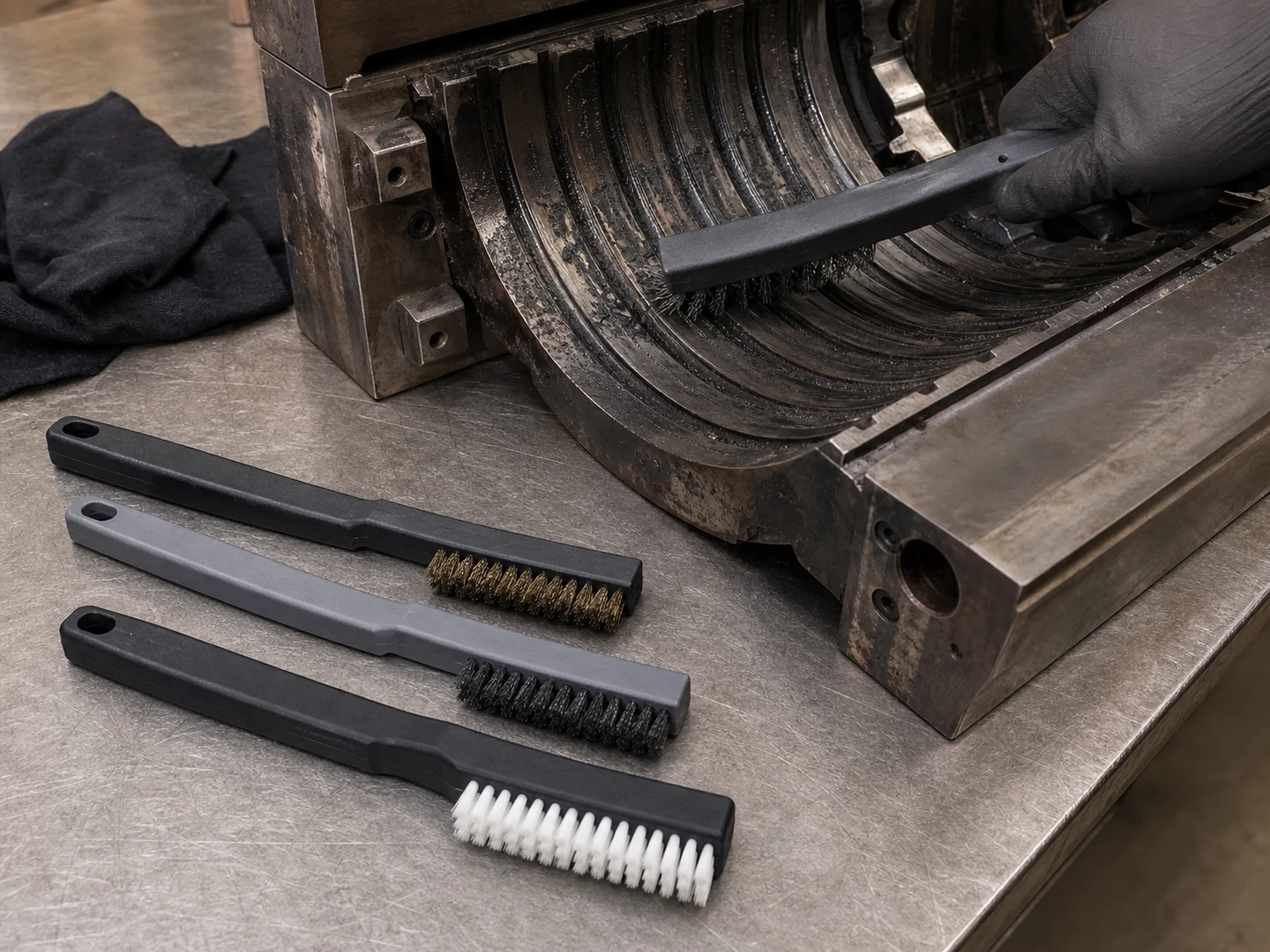
Rubber Mold Cleaning Brush
Rubber Mold Cleaning Brush for mold maintenance: clean release agent, vulcanized flash, carbon, and…
See the specification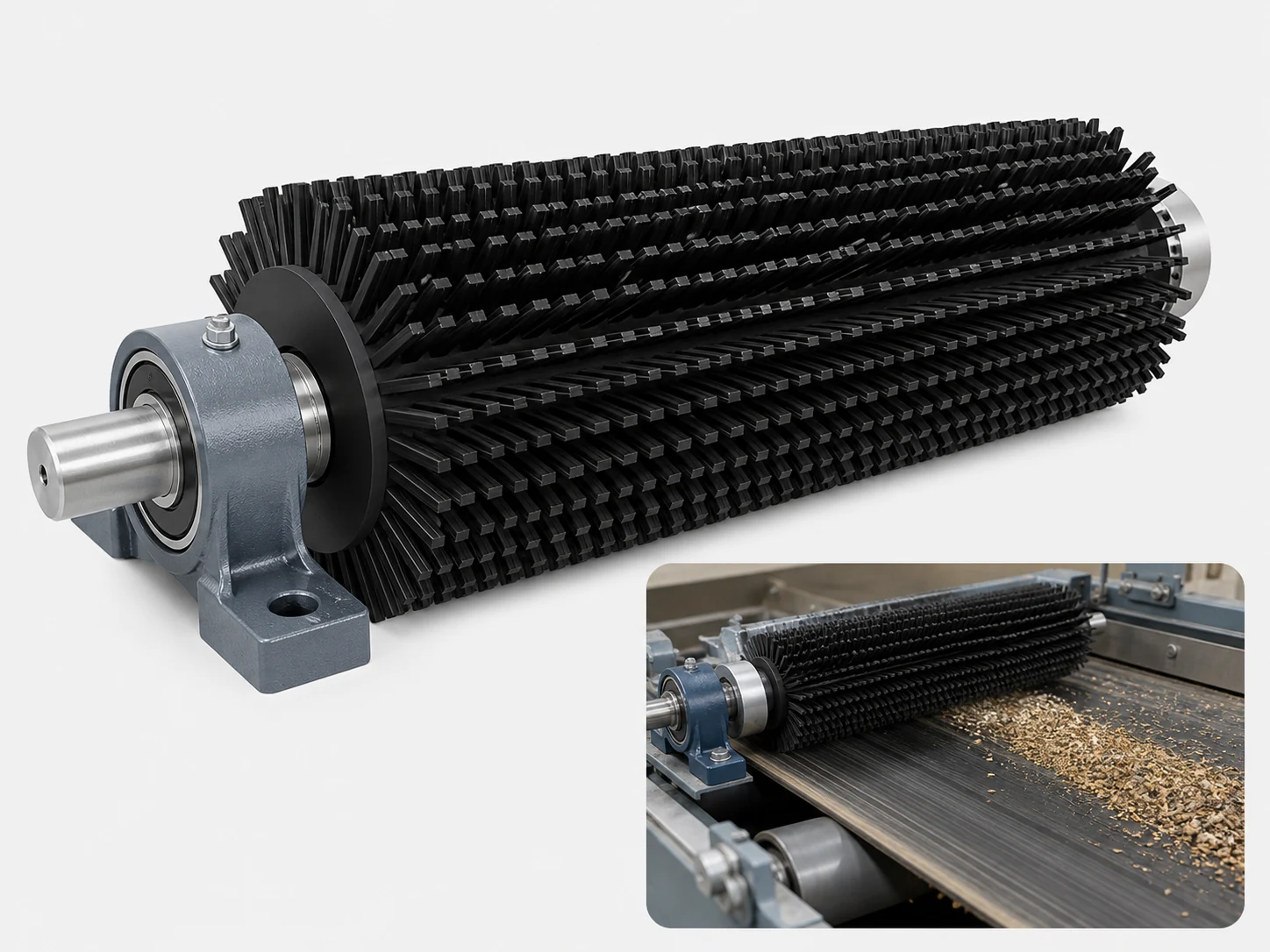
Rubber Conveyor Belt Brush
Rubber conveyor belt brush for continuous belt cleaning. Sweeps powder, crumbs, fibers, labels, film…
See the specification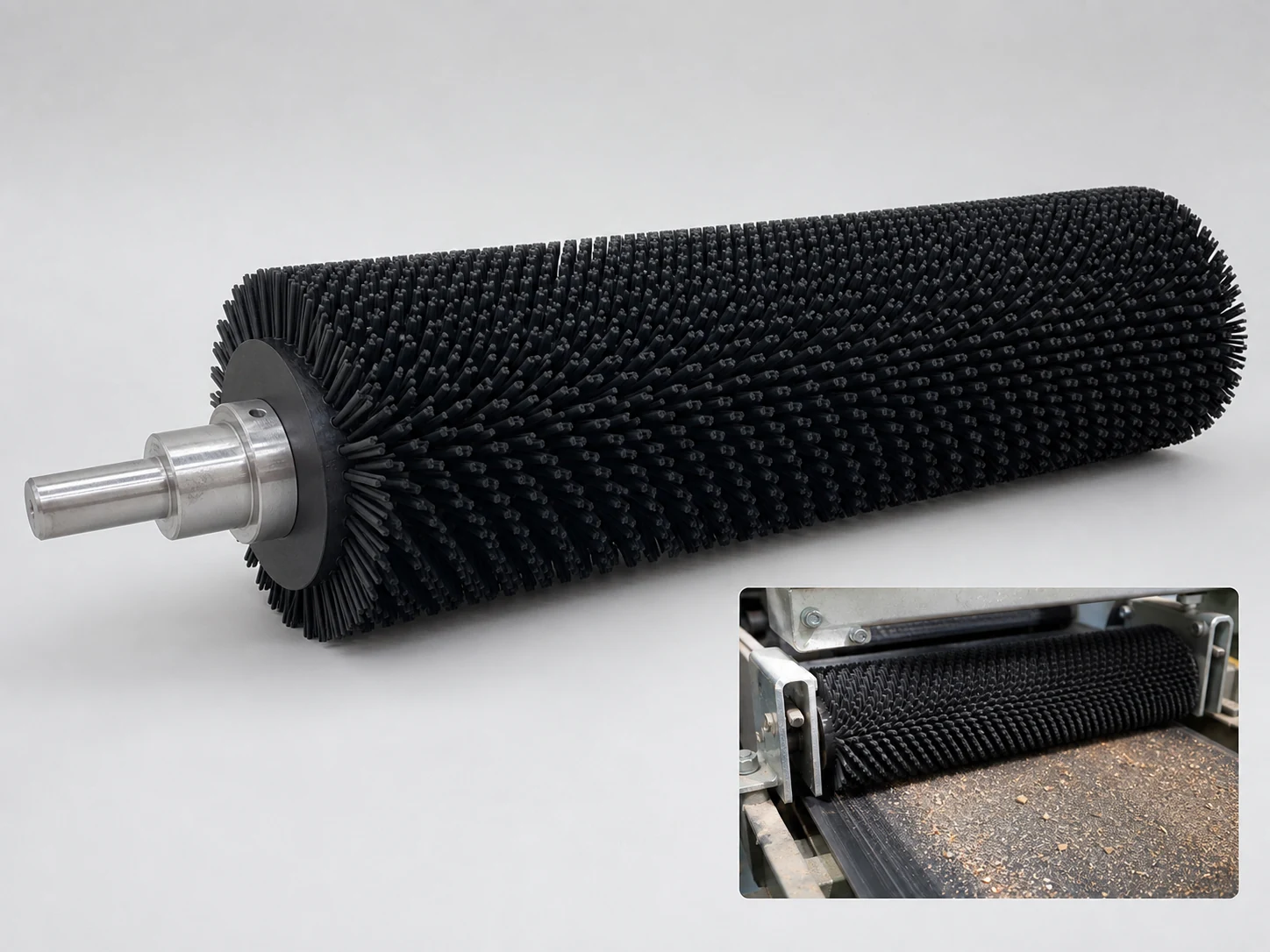
Rubber Brush Roller
Flexible rubber vanes on a driven core hold floor contact across grout lines and…
See the specification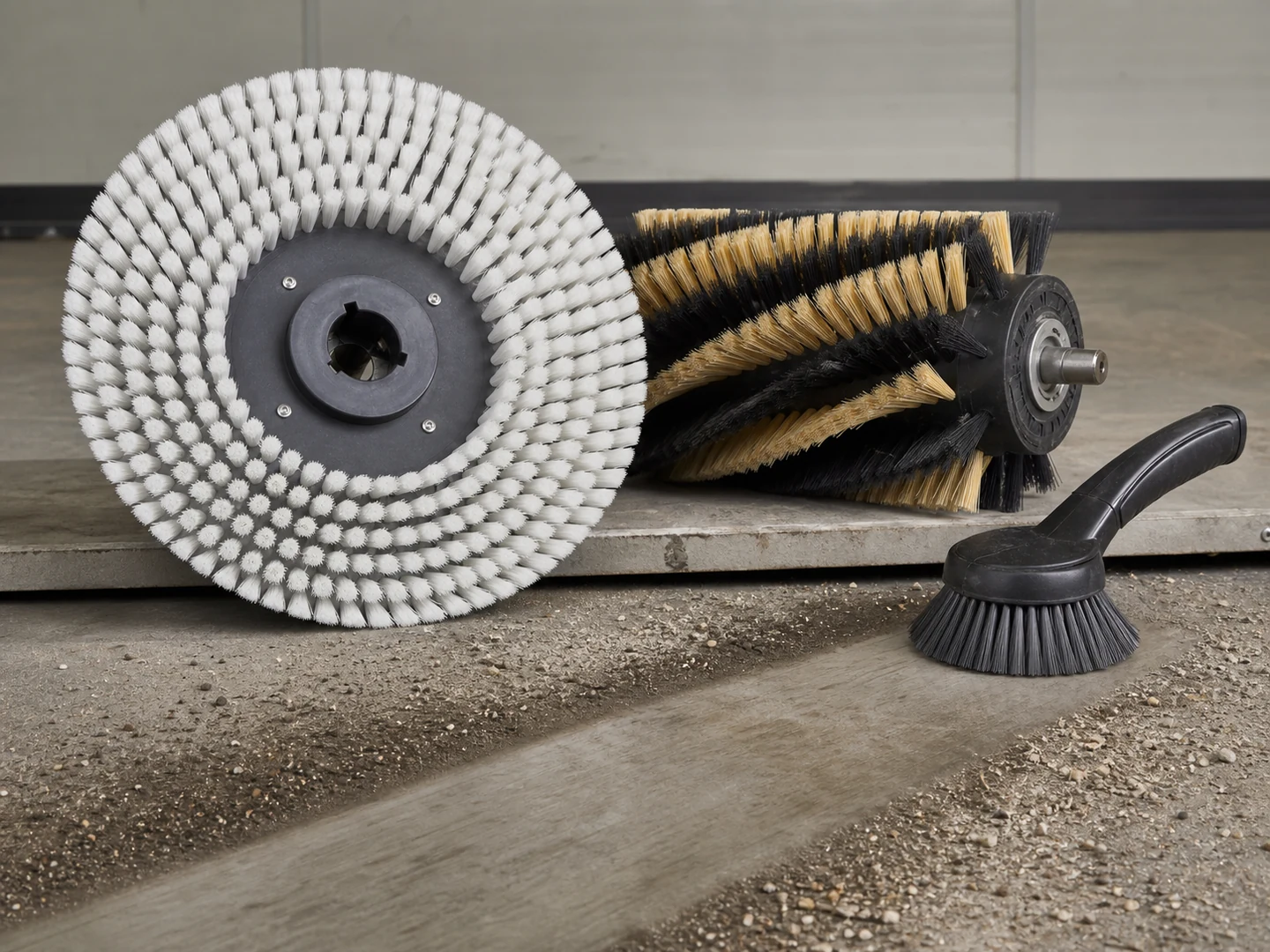
Custom Floor Scrubber Sweeper Brushes
Choose this brush type when a floor machine needs a disc, roller, main broom,…
See how this type is built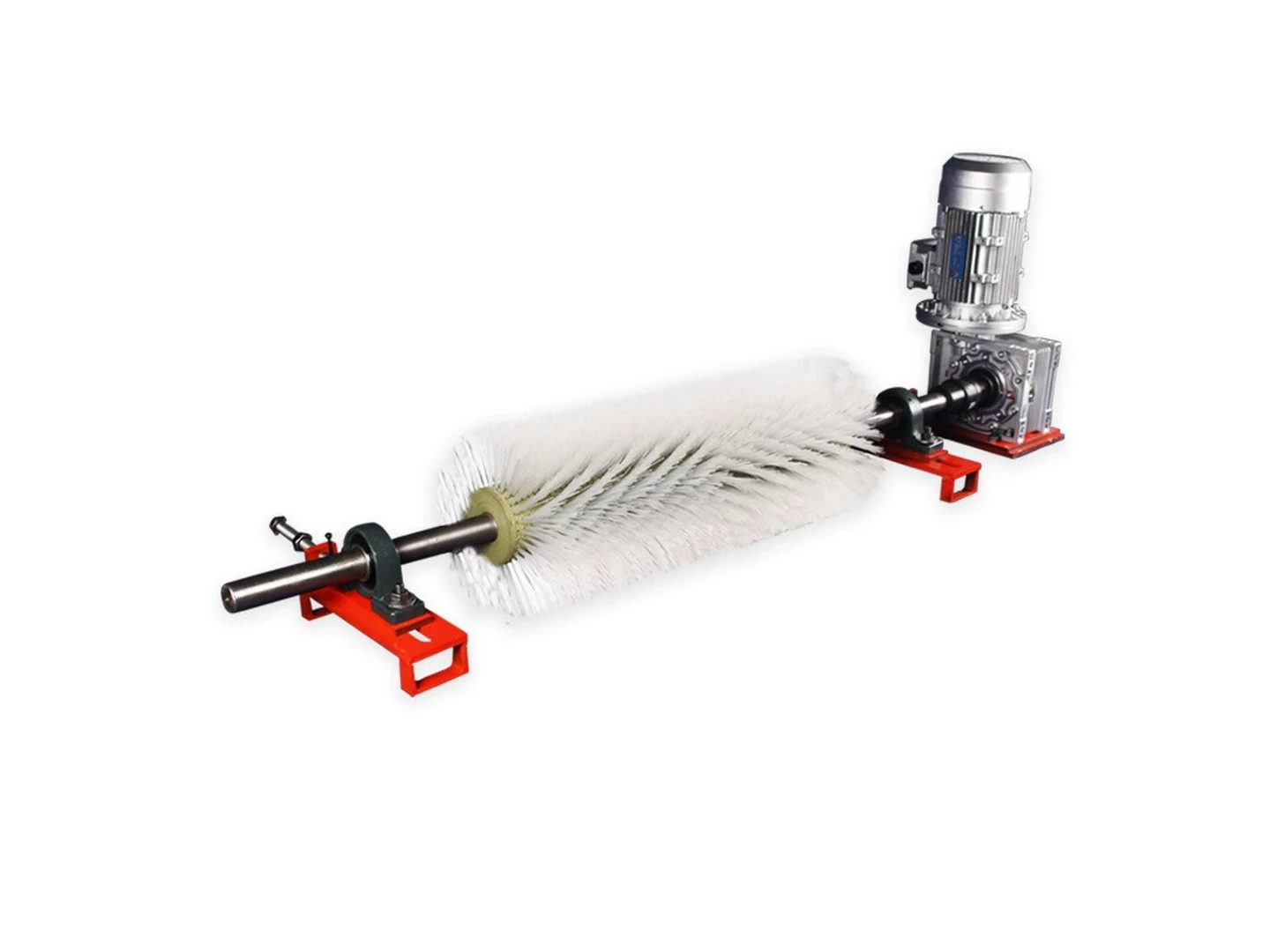
Custom Roller and Conveyor Brushes
Choose a roller or conveyor brush when a cylindrical brush must clean, wipe, guide,…
See how this type is built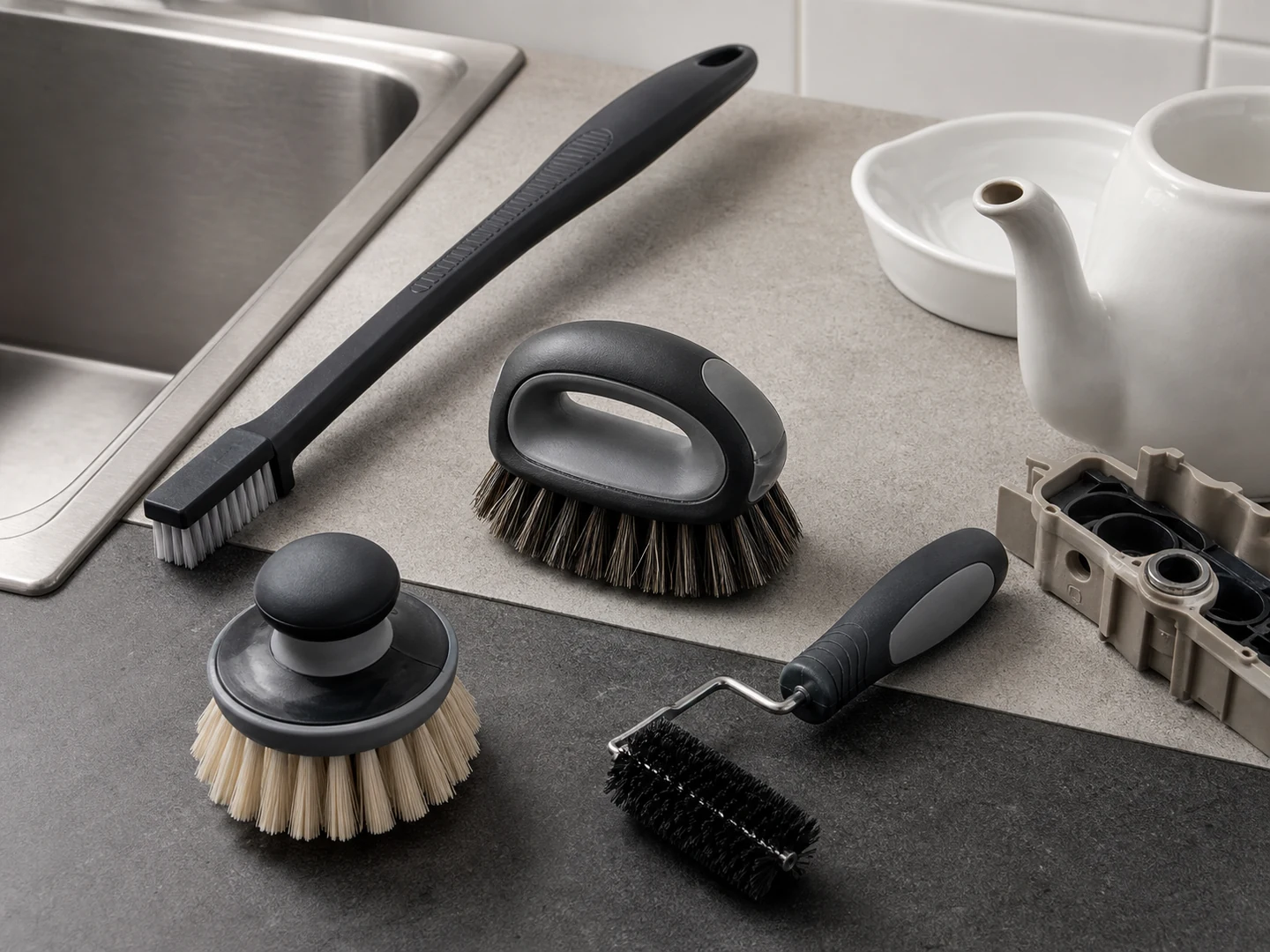
Custom Handheld Detail Brushes
Choose a handheld detail brush when you need direct control in seams, recesses, fittings,…
See how this type is built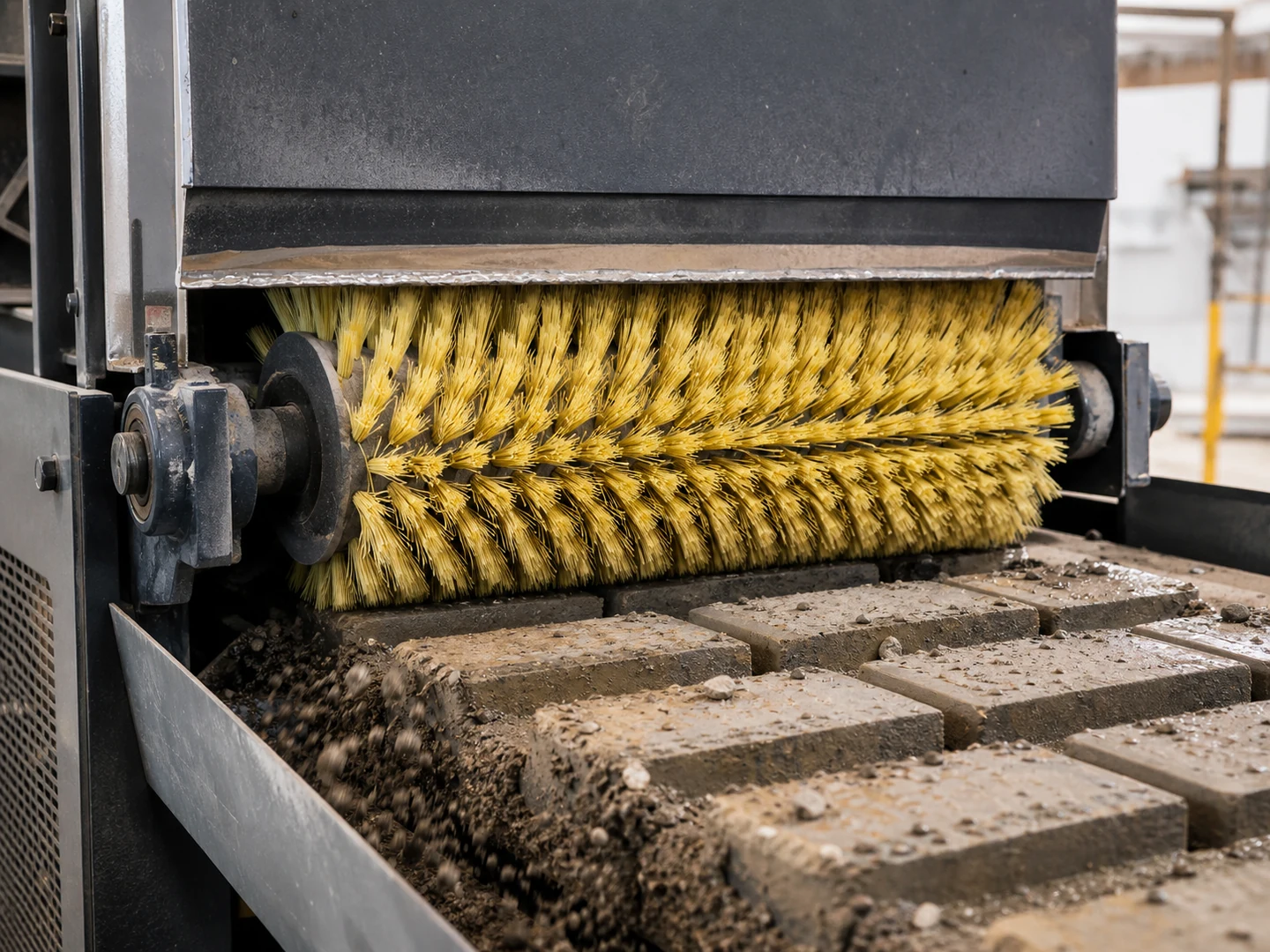
Brick, Tile & Building Material Machine Brush Use
For Brick, Tile & Building Material Machine Brush Use, the brush must reach the…
See the cleaning job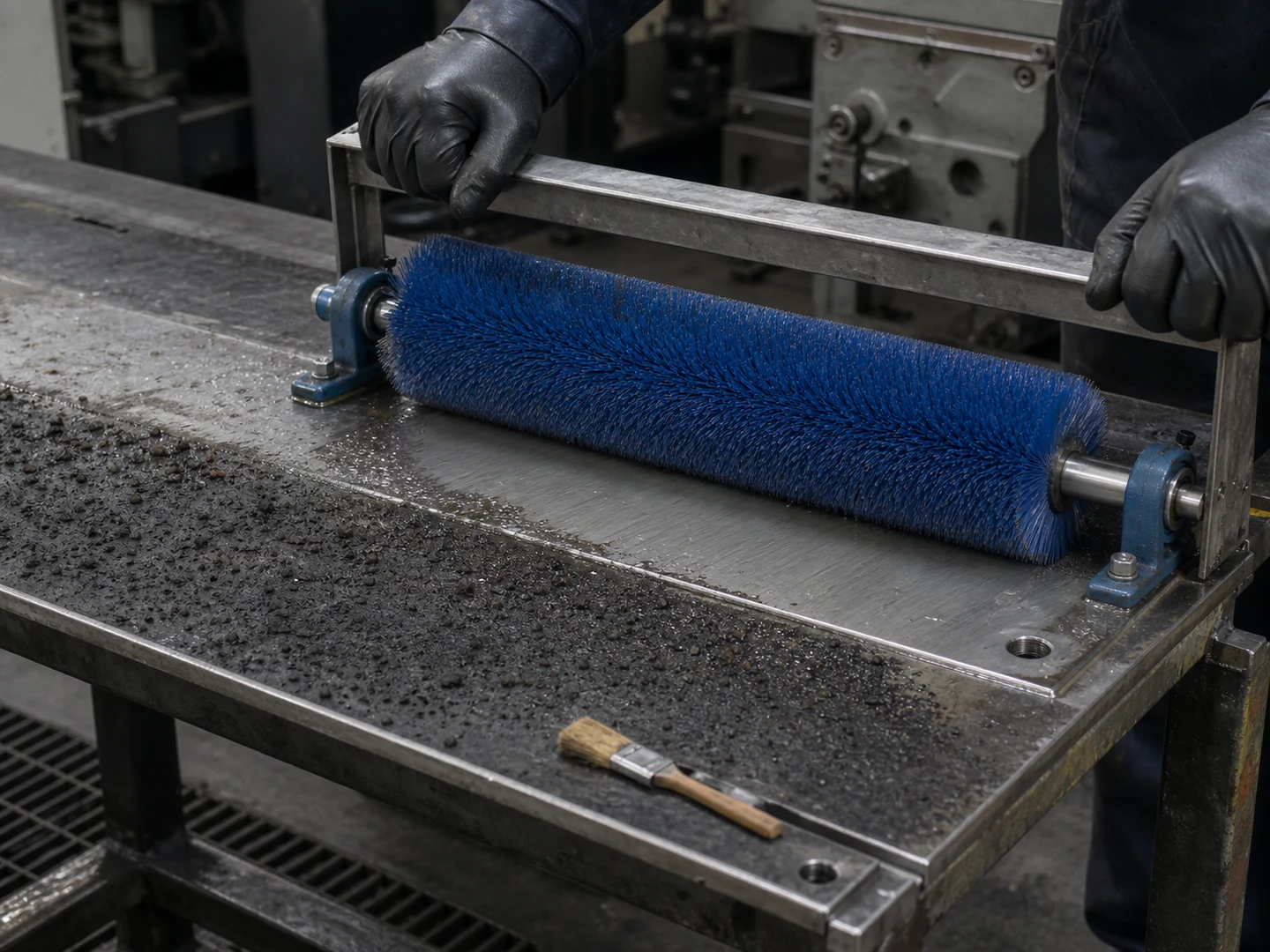
Industrial Machine Cleaning
For Industrial Machine Cleaning, the brush must reach the working area, disturb or collect…
See the cleaning jobCustom Manufacturing RFQ
Discuss This Material
Share the working surface, residue, dimensions, material direction, interface, quantity and drawing or sample photo.
Custom Brush RFQ
Request a Custom Cleaning Brush Quote
Upload a drawing, product photo, or sample photo and provide the core dimensions and cleaning conditions.
“We need a brush to remove wet residue from a stainless steel conveyor, about 800mm wide. The current brush wears quickly. We can send photos.”
“We sell drinkware and need a cleaning brush to include with the product. Quantity around 5,000 pieces.”