
Application
Gutter Cleaning
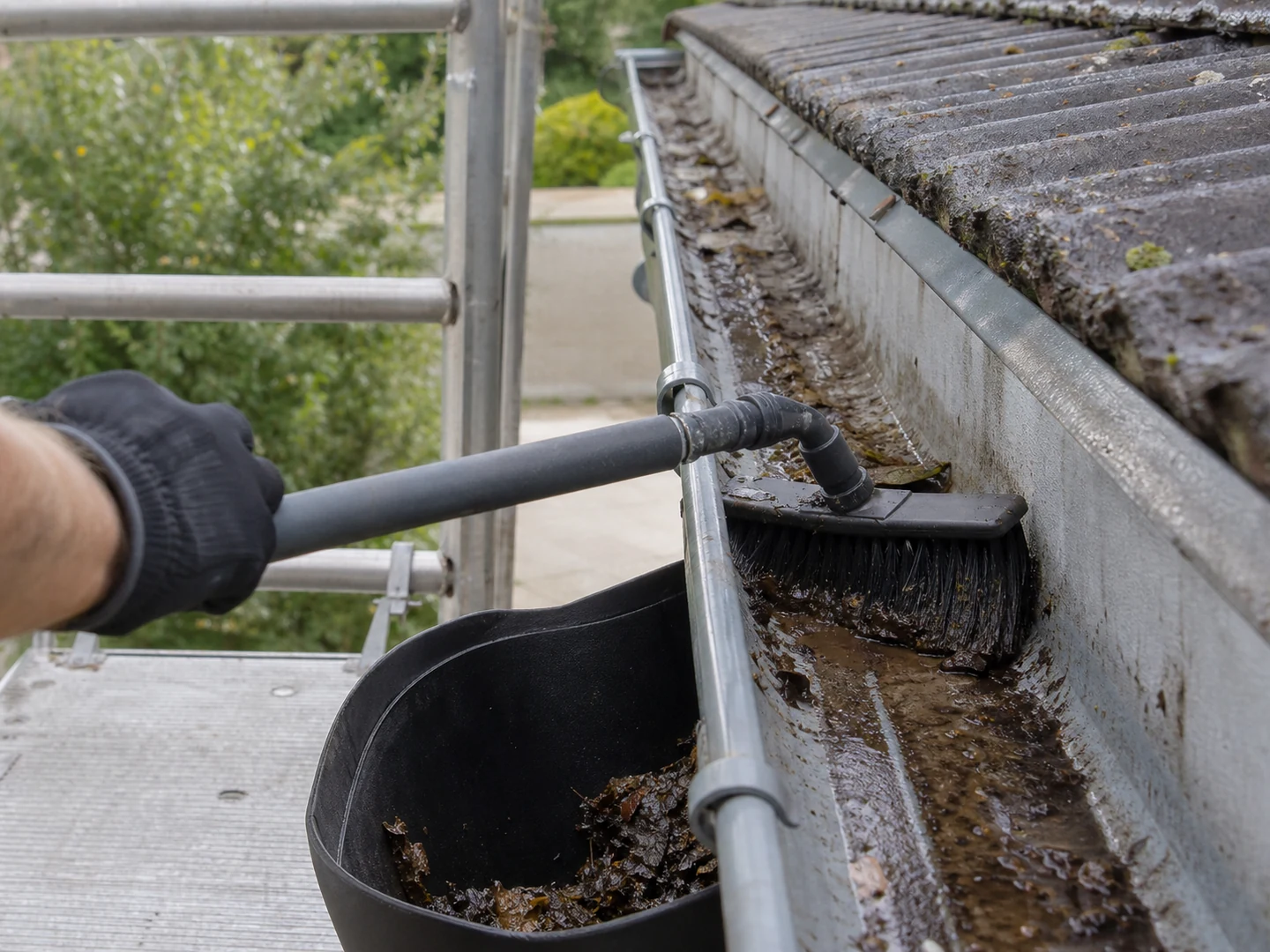
For Gutter Cleaning, the brush must reach the working area, disturb or collect leaves / moss / mud / roof granules / bird debris, and release it without creating unacceptable surface damage or process interference. Brush selection starts with access, contact motion, and the cleaning method used in the process.
At a glance
- Cleaning target
- Leaves / moss / mud / roof granules / bird debris
- Working environment
- Outdoor / Elevated Work Area / Wet Area
- Cleaning method
- Dry Brushing / Wet Brushing
- Requirements to check
- Outdoor weather resistance and worker-access safety requirements
Gutter debris is wet, heavy and sits in a channel reached from a ladder, so the brush is picked for the channel profile and downpipe bore — and for whether the gutter is painted.
What makes Gutter Cleaning different from other facility, floor and outdoor cleaning?
The main difficulty is removing dust, oil, process residue, particles, and bonded contamination from gutters, downspout entries, corners, and roof-edge channels without damaging the surface, loading the brush, or carrying contamination back into the process.
The work happens in outdoor, elevated work area and wet area against leaves, moss, mud, roof granules and bird debris.
The part people get wrong: this is not one job. The same equipment carries several targets, each with a different opening and a different residue, and one brush rarely covers them all.
What are the most common cleaning targets in Gutter Cleaning?
There are 4 distinct targets here, and the brush that suits one will usually not reach another.
| Part or area | Residue type | Cleaning requirement |
|---|---|---|
| Open Gutter Channel | Leaves, moss, mud, roof granules, bird debris | The head must reach the working face and apply even contact without marking the surface. |
| Downspout | The brush must pass the full length of the passage and hold contact with the wall without folding over at the far end. | |
| Gutter-Guard | The head must reach the working face and apply even contact without marking the surface. | |
| Valley and Outlet | The brush must wrap a projecting part and clean all round it without marking the polished finish. |
The dimensional envelope those targets impose on the brush:
| Parameter | Typical range |
|---|---|
| Cleaning target | Gutter channels, corners, outlets, and downspout-entry zones |
| Brush form | Compact hand/pole scrub head or gutter-profile brush; not a road-sweeper broom |
| Critical dimensions | Head width/profile and pole reach follow gutter width, outlet clearance, and roof access; no universal head-size range |
| Fill | Nylon, PP, or PBT selected for wet outdoor debris and gutter finish |
| Debris | Leaves, silt, moss, organic film, and loose roof runoff |
Which brush types work for each cleaning target?
Curved gutter brush, telescopic block head, narrow downpipe brush or rotary attachment.
| Cleaning target | Recommended brush type | Why it fits |
|---|---|---|
| Open Gutter Channel | Handheld Detail Brushes | A roof gutter is a long open channel worked from a ladder or off a pole, so a hand-guided head on an extension is what puts contact on the channel floor at arm’s length. |
| Downspout | Tube & Pipe Bore Brushes | A downspout is a vertical closed section that blocks at the top elbow, so a bore brush on a rod passes the full length of the pipe and breaks the plug from inside. |
| Gutter-Guard | Handheld Detail Brushes | A guard is a continuous mesh or fin laid over the channel, so a hand-guided head drawn along its length lifts the leaf mat off the top without lifting the guard off its clips. |
| Valley and Outlet | An outlet is a raised spigot standing in the channel, so a soft head wraps the spigot and clears the debris ring that forms all the way round it. |
The layouts this application is normally built in:
- Driven brush — use when dust, oil, process residue, particles, and bonded contamination needs repeatable scrubbing or controlled relative movement
- Passive or free-running brush — use for loose contamination and lower process complexity on gutters, downspout entries, corners, and roof-edge channels
- Localized hand, strip, or tube brush — use where only an edge, gap, port, or maintenance point needs contact
In practical brush terms: reach first, then residue. A brush that fits but is too soft can be stiffened; a brush that does not fit is simply the wrong tool.
What filament materials work best for Gutter Cleaning?
Firm polypropylene or nylon for wet debris; softer protected heads for painted or coated gutters.
| If the condition is… | Filament to start with | Why |
|---|---|---|
| Sensitive or coated surface | Polypropylene PP | acid, alkali, water, and detergent resistance |
| Wet, washdown, or detergent service | Nylon PA | balanced flex life and abrasion resistance |
| Bonded residue or aggressive cleaning | PA612 Nylon | low water absorption and strong bend recovery |
The constraints this application puts on the filament:
| Constraint | Value for this application |
|---|---|
| Filament hardness | Medium to Hard |
| Maximum service temperature | 80°C |
| Chemical exposure | Water, neutral detergent or outdoor biocide according to surface compatibility |
| Cleaning method | Dry Brushing, Wet Brushing |
How do I choose the right brush for my gutter equipment?
Channel profile sets the head shape, downpipe bore sets a second brush, and whether the gutter is coated caps the fill hardness.
The order that avoids rework:
- Identify the target part and measure the access opening or clearance
- Describe the residue: what it is, how thick it sits, and how strongly it holds
- Choose the construction that can physically reach that target
- Set the filament from surface risk, working temperature and cleaning chemistry
- Fix filament diameter, free trim length and density for the contact pressure you need
- Run one cycle and check the result before committing to a production quantity
Before you commit to a quantity, send the gutter channel profile, the downpipe bore, and whether the gutter is painted or coated.
When is a gutter brush the wrong tool?
A gutter vacuum or a blower clears dry leaf litter faster and from ground level. Bring the brush in for compacted silt and the downpipe — and once the downpipe is fully blocked, use a rod or auger instead.
What common mistakes should I avoid in Gutter Cleaning?
- Giving gutter length instead of the channel profile and the downpipe bore
- Changing brush material while leaving excessive engagement, poor alignment, or no discharge path unchanged
- Copying a worn brush without recording motion, direction, mounting, and the original working diameter
When a brush is running but not cleaning, start here rather than adding pressure:
| Symptom | What to change |
|---|---|
| Residue remains | Increase relative motion or discharge, then change filament diameter or density; do not add pressure before checking loading by dust, oil, process residue, particles, and bonded contamination. |
| Surface marks or scratches | Reduce engagement, use finer or softer fill, and remove trapped abrasive particles from contact with gutters, downspout entries, corners, and roof-edge channels. |
| Rapid wear or uneven cleaning | Check alignment, runout, support, motion, temperature, chemical attack, and whether the brush covers the complete working path. |
| Brush loads or redeposits residue | Open the fill pattern or add wash, vacuum, air, scraping, or a collection path so removed dust, oil, process residue, particles, and bonded contamination leaves the contact zone. |
Guides that go deeper on this
Gutter Brush vs Standard Brushes: Leaf and Sludge Buildup
Read this guideGuideGutter Cleaning Brush Mistakes in Outdoor Wet Cleaning
Read this guideGuideRoof Gutter Brush Mistakes in Leaf and Sludge Buildup
Read this guideGuideRoof Gutter Brush vs Standard Cleaning Brushes
Read this guideGuideRoof Gutter Brush: Specs for Outdoor Wet Cleaning
Read this guideGuideWhen to Use a Gutter Cleaning Brush on Roof Gutters
Read this guideContinue Exploring
Recommended Reading & Related Brush Resources
Gutter Cleaning Brush
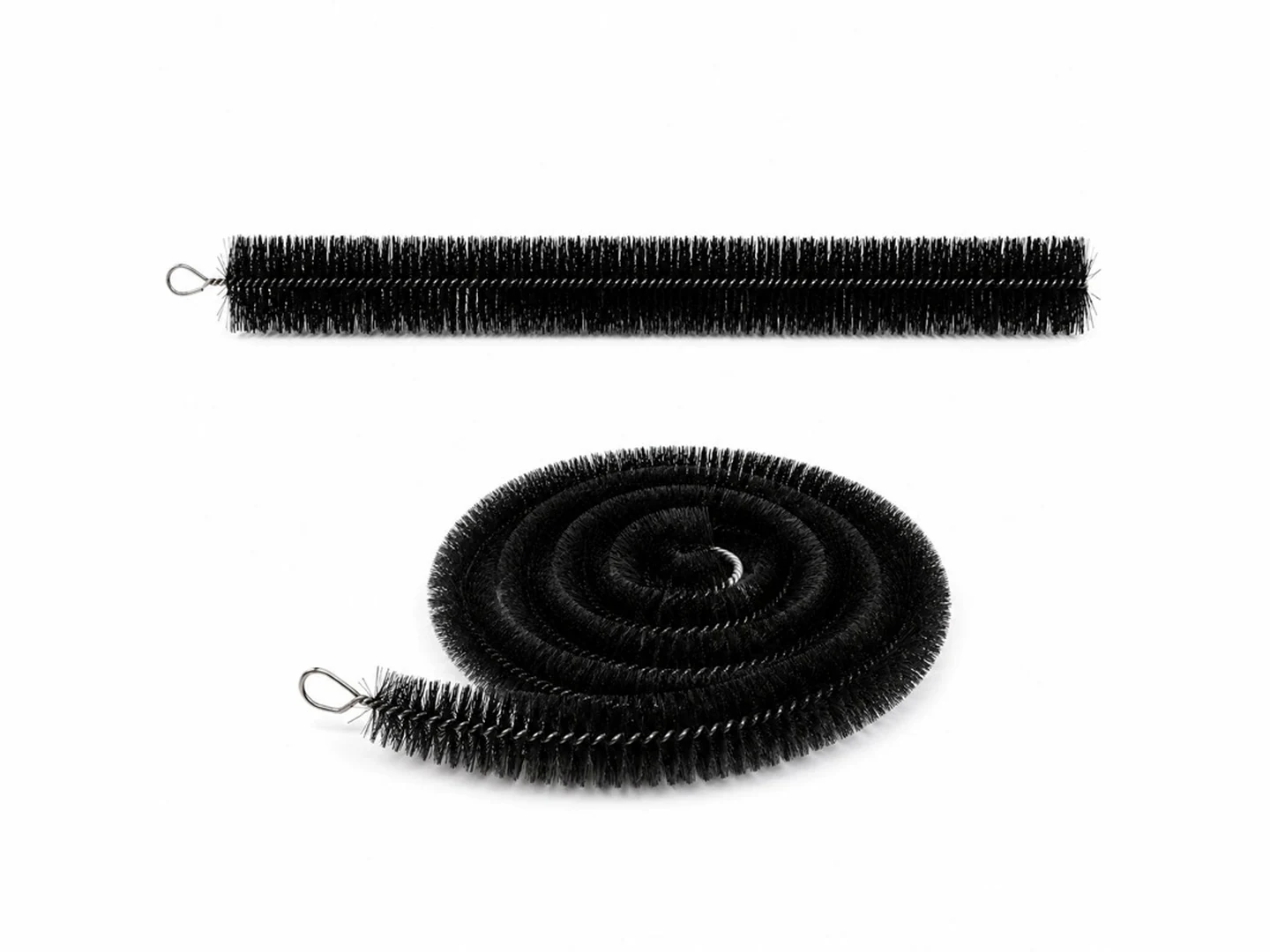
Clear rain gutters without a ladder. Pole-mountable gutter brush with stiff PP/PA fill, curved…
See the specification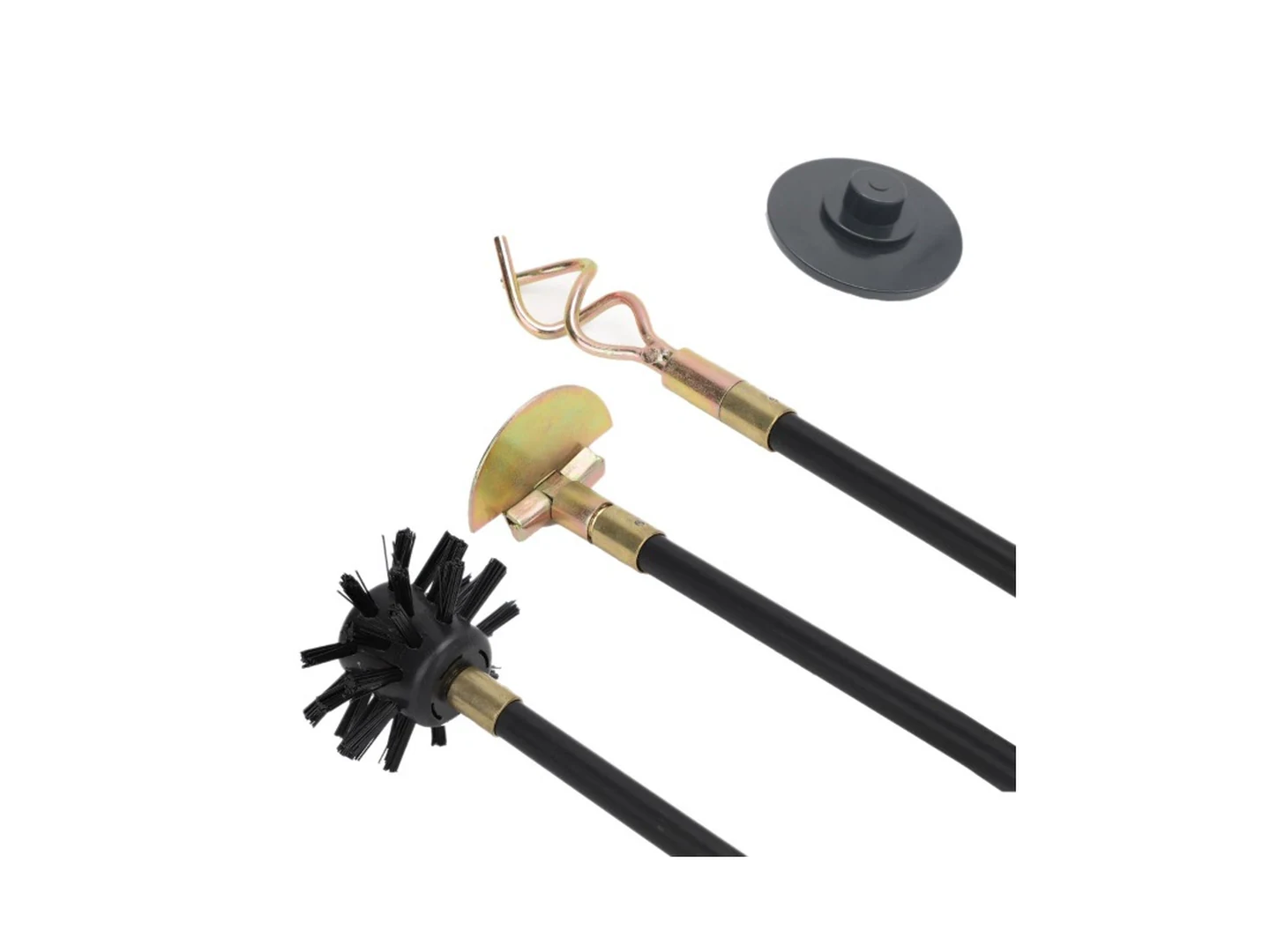
Drainage Ditch Cleaning Brush
Heavy-duty drainage ditch cleaning brushes with nylon, polypropylene, or 316 stainless wire fill. Long…
See the specification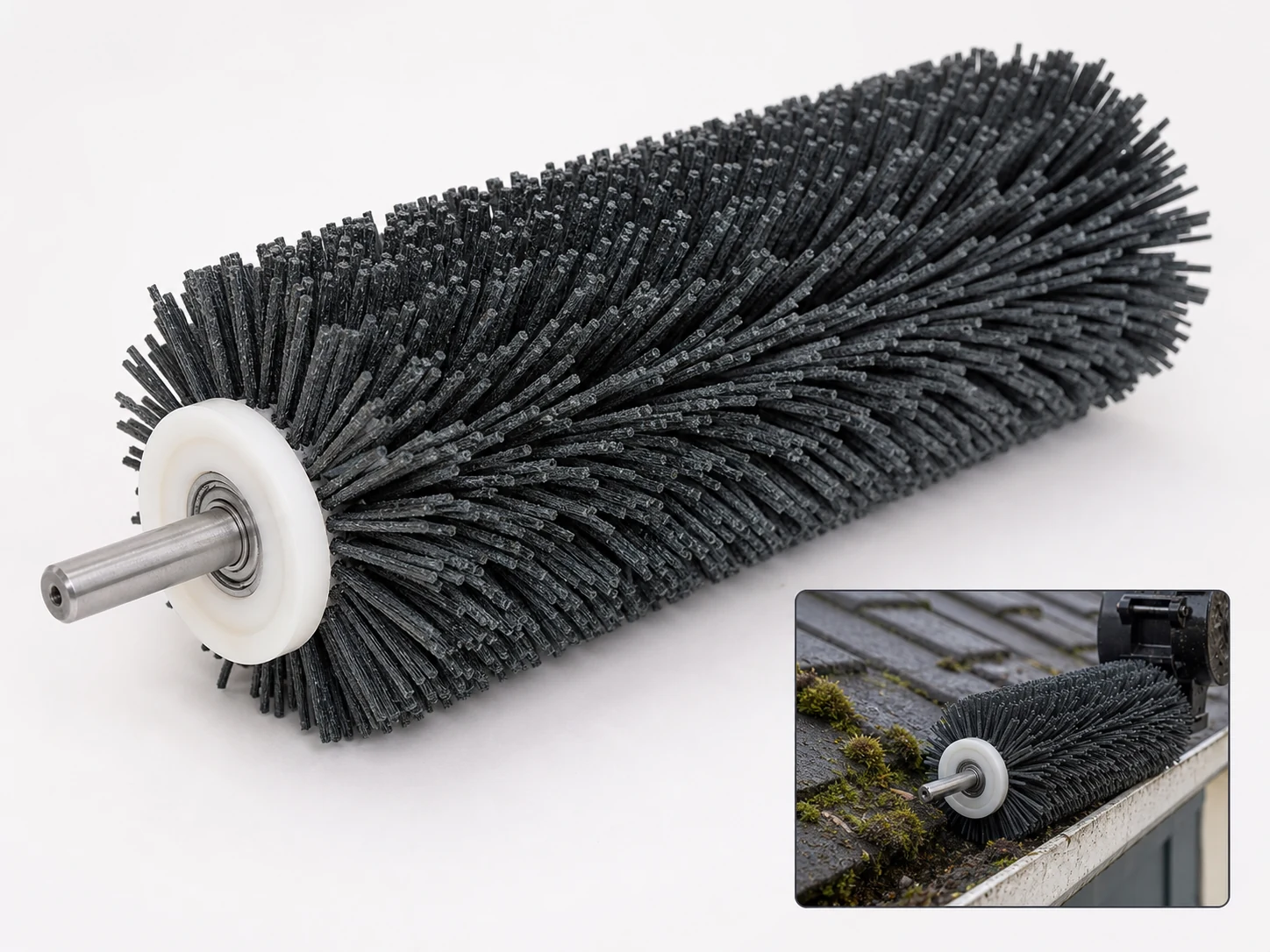
Moss Removal Brush
Remove moss, algae, and lichen from roofs, turf, gutters, and hardscapes with a stiff…
See the specification
Custom Handheld Detail Brushes
Choose a handheld detail brush when you need direct control in seams, recesses, fittings,…
See how this type is builtCustom Manufacturing RFQ
Discuss This Application
Share the working surface, residue, dimensions, material direction, interface, quantity and drawing or sample photo.
Custom Brush RFQ
Request a Custom Cleaning Brush Quote
Upload a drawing, product photo, or sample photo and provide the core dimensions and cleaning conditions.
“We need a brush to remove wet residue from a stainless steel conveyor, about 800mm wide. The current brush wears quickly. We can send photos.”
“We sell drinkware and need a cleaning brush to include with the product. Quantity around 5,000 pieces.”