
Application
Endoscope Channel Cleaning
For Endoscope Channel Cleaning, the brush must reach the working area, disturb or collect biological residue/protein/mucus, and release it without creating unacceptable surface damage or process interference. Brush selection starts with access, contact motion, and the cleaning method used in the process.
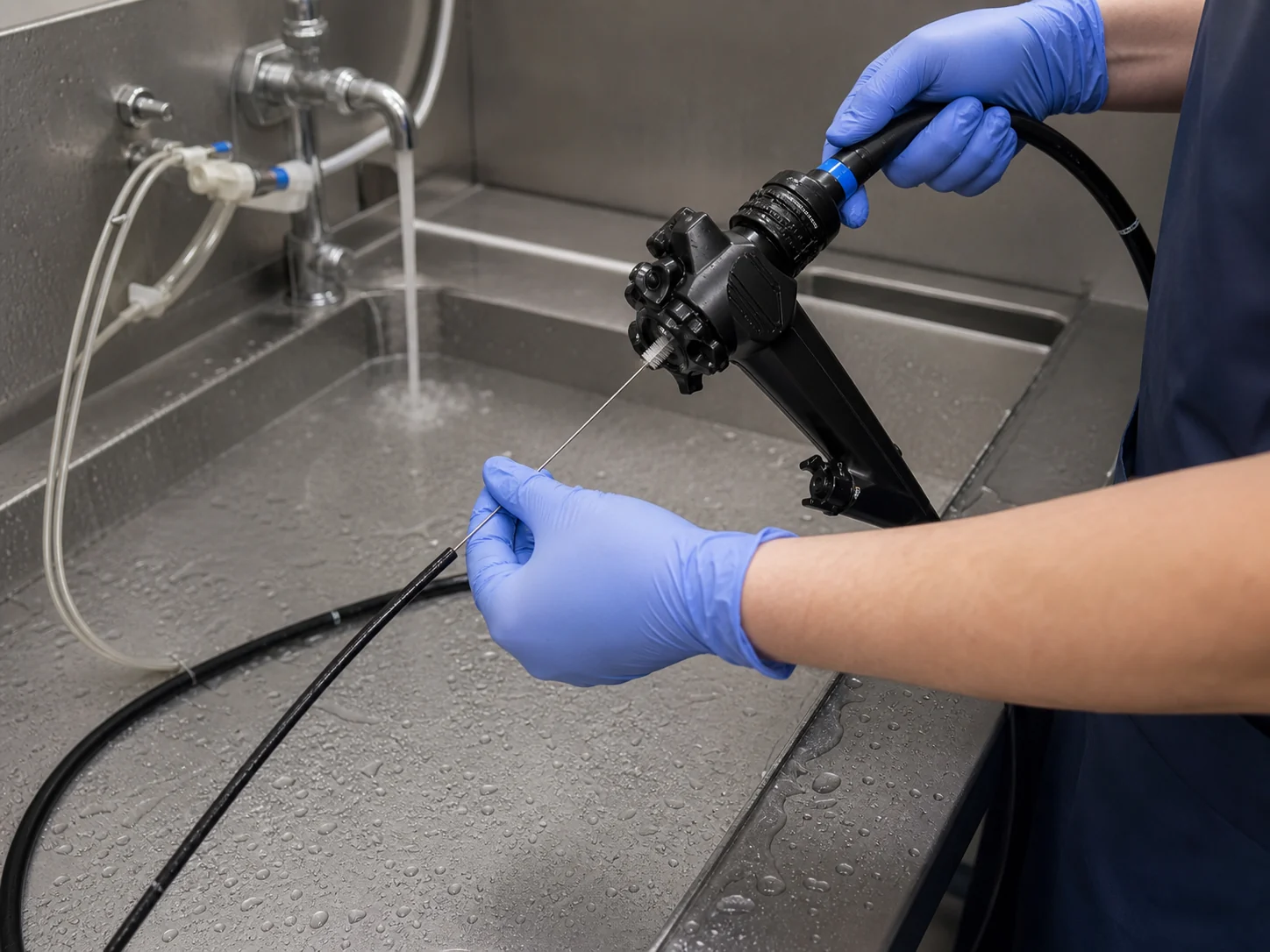
At a glance
- Cleaning target
- Biological Residue/Protein/Mucus
- Working environment
- Wet Indoor Area
- Cleaning method
- Wet Brushing / Soaking
- Requirements to check
- ISO 17664-1; AAMI ST91; Channel-Size Matching and Single-Use / Reusable Management
Endoscope channels are long, narrow and reprocessed to a validated cycle, so channel brushes are matched to each lumen’s diameter and length and used exactly as the reprocessing instructions state.
What makes Endoscope Channel Cleaning different from other medical and laboratory cleaning?
The task is to remove Biological Residue/Protein/Mucus while controlling surface damage, residue carryover, brush shedding and chemical or temperature degradation.
The work happens in wet indoor area against biological residue, protein and mucus.
The part people get wrong: this is not one job. The same equipment carries several targets, each with a different opening and a different residue, and one brush rarely covers them all.
What are the most common cleaning targets in Endoscope Channel Cleaning?
There are 5 distinct targets here, and the brush that suits one will usually not reach another.
| Part or area | Residue type | Cleaning requirement |
|---|---|---|
| Biopsy Channel | Biological Residue, Protein, Mucus | The brush must pass the full length of the passage and hold contact with the wall without folding over at the far end. |
| Suction Channel | ||
| Air and Water Channel | ||
| Elevator-Wire Channel | ||
| Distal-Tip and Valve | The head must be narrower than the opening and stiff enough to lift residue without splaying at the mouth. |
The dimensional envelope those targets impose on the brush:
| Parameter | Typical range |
|---|---|
| Contaminant | Biological Residue/Protein/Mucus |
| Required hardness | Soft–Medium |
| Maximum temperature | 90°C |
| Chemical exposure | Enzymatic Cleaner pH 6–9; High-Level Disinfectant |
| Cleaning method | Wet Brushing/Soaking |
| Environment | Wet Indoor Area |
Which brush types work for each cleaning target?
Select hand, tube, strip, roller, disc or machine-mounted geometry from access and motion.
| Cleaning target | Recommended brush type | Why it fits |
|---|---|---|
| Biopsy Channel | Tube & Pipe Bore Brushes | The biopsy channel is the largest lumen and takes the most soil, so a full-fitting bore brush is passed through it and its wall contact is what pre-clean rests on. |
| Suction Channel | The suction channel meets the biopsy channel at a Y, so the brush has to clean both legs, including the short branch that flushing bypasses. | |
| Air and Water Channel | These are the smallest lumens in the scope, so the brush is sized to them exactly: anything larger will not enter and anything smaller will not touch the wall. | |
| Elevator-Wire Channel | The elevator-wire recess is the narrow blind feature reprocessing failures are traced to, so a fine bore brush is what puts filament on its internal surface. | |
| Distal-Tip and Valve | The distal tip and valve ports are small openings with seats behind them, so a short bore-brush head enters and cleans the seat, not just the opening. |
All five are bore brushes pushed through the channel by hand at the reprocessing sink, before the scope ever reaches the washer.
In practical brush terms: reach first, then residue. A brush that fits but is too soft can be stiffened; a brush that does not fit is simply the wrong tool.
What filament materials work best for Endoscope Channel Cleaning?
PBT, and nothing harder: it survives enzymatic detergent and high-level disinfectant without swelling, which is what keeps the head at the diameter the channel was sized to.
| If the condition is… | Filament to start with | Why |
|---|---|---|
| Enzymatic detergent at pH 6–9 | PBT | no swelling, so the head keeps the diameter it was sized to |
| High-level disinfectant between patients | PBT | survives repeated cycles without losing tip form |
The constraints this application puts on the filament:
| Constraint | Value for this application |
|---|---|
| Filament hardness | Soft–Medium |
| Maximum service temperature | 90°C |
| Chemical exposure | Enzymatic Cleaner pH 6–9; High-Level Disinfectant |
| Cleaning method | Wet Brushing, Soaking |
How do I choose the right brush for my endoscope channel equipment?
Start with soft-to-medium fill, a 90°C ceiling and an enzymatic cleaner at pH 6–9, then size a brush to each lumen’s own diameter and length.
The order that avoids rework:
- Identify the target part and measure the access opening or clearance
- Describe the residue: what it is, how thick it sits, and how strongly it holds
- Choose the construction that can physically reach that target
- Set the filament from surface risk, working temperature and cleaning chemistry
- Fix filament diameter, free trim length and density for the contact pressure you need
- Run one cycle and check the result before committing to a production quantity
Before you commit to a quantity, send each channel’s diameter and length, plus the reprocessing instructions that authorise brushing them.
When is an endoscope channel brush the wrong tool?
Automated reprocessors run the validated cycle, and manual brushing is the pre-clean step named in the instructions rather than an alternative to it. A single-use channel brush is never reused, and a channel the instructions do not list as brushable is not brushed.
What common mistakes should I avoid in Endoscope Channel Cleaning?
- Choosing a channel brush by scope brand instead of by each lumen’s diameter and length
- Changing the filament while leaving excessive engagement, poor alignment or no discharge path unchanged
- Copying a worn brush without first recording its motion, direction, mounting and original working diameter
When a brush is running but not cleaning, start here rather than adding pressure:
| Symptom | What to change |
|---|---|
| Residue remains | Increase discharge or relative motion before adding pressure |
| Surface marks | Reduce engagement and use finer/softer fill |
| Rapid wear | Check alignment, temperature and chemical attack |
| Redeposition | Add wash, vacuum or collection path |
Questions this page is asked
When must an endoscope channel brush be discarded or removed for reprocessing?
Discard a single-use brush after its authorized use and remove any brush with bent shafts, loose or flattened bristles, damaged tips, retained soil or a missing component. Reprocess a reusable brush only by its own validated instructions and inspect it again before the next procedure.
What steps follow manual brushing of an endoscope channel?
Continue the device-specific flushing, rinsing, inspection and leak or cleaning-verification steps before the required high-level disinfection or sterilization cycle. Do not release the endoscope until every channel and accessory has completed the full validated sequence and drying or storage requirements.
Guides that go deeper on this
Endoscope Channel Brush vs Standard: Reprocessing Rooms
Read this guideGuideEndoscope Channel Brush: Specs for Biopsy Channel Cleaning
Read this guideGuideEndoscope Channel Brush: What Decides Diameter and Reach?
Read this guideGuideMedical Wire Brush vs Standard: Biopsy Channel Cleaning
Read this guideGuideReusable Endoscope Brush vs Standard: Instrument Channels
Read this guideContinue Exploring
Recommended Reading & Related Brush Resources

Endoscope Channel Cleaning Brush
Single-use endoscope channel cleaning brush with nylon PA bristles for manual reprocessing.
See the specification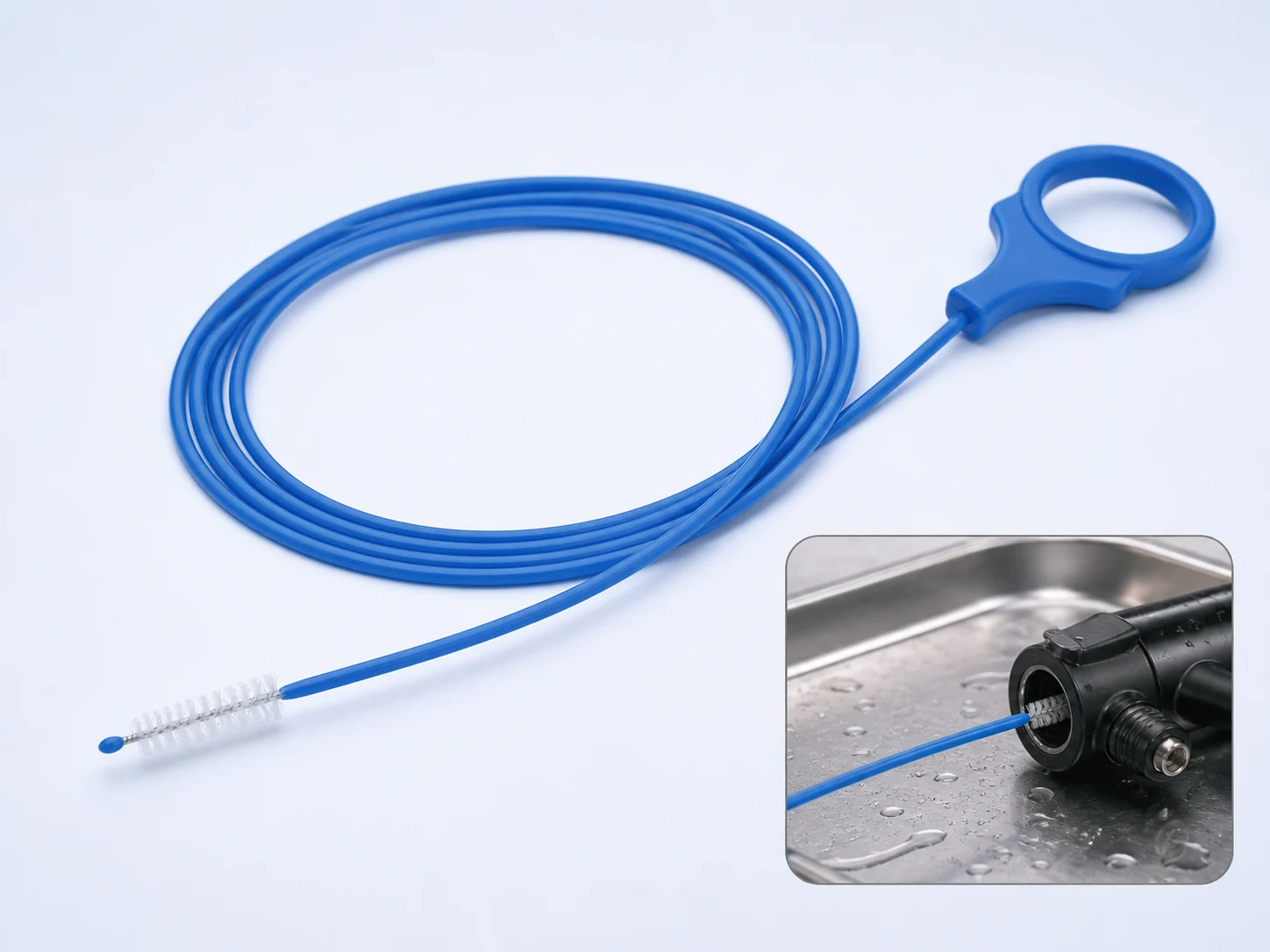
Injection Molded Endoscope Cleaning Brush
Custom injection molded endoscope cleaning brush for 2–10 mm channels. Nylon PA or PBT…
See the specification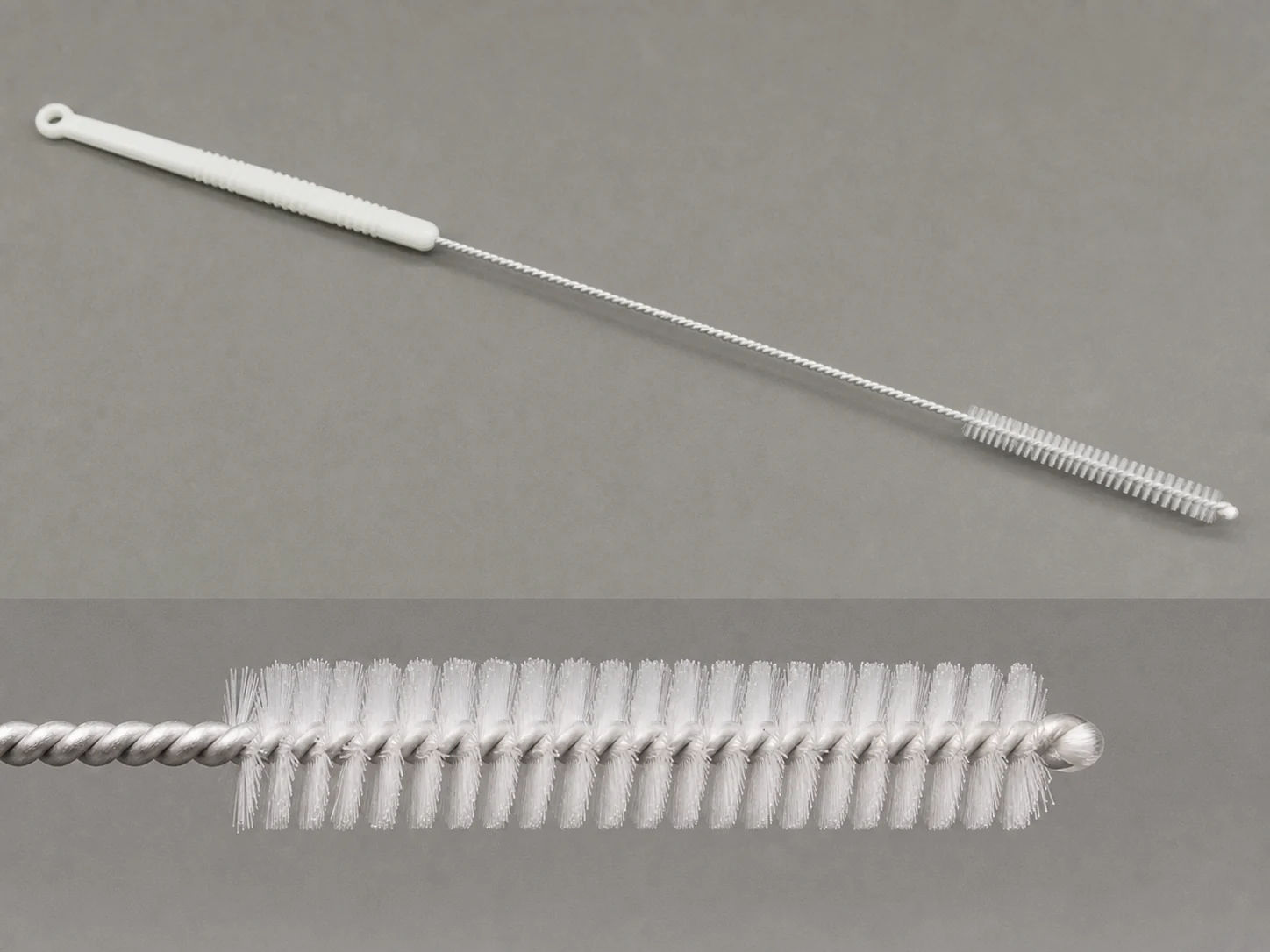
Medical Channel Brush
Manual PBT medical channel brush in 2 mm, 6 mm, and 10 mm diameters…
See the specification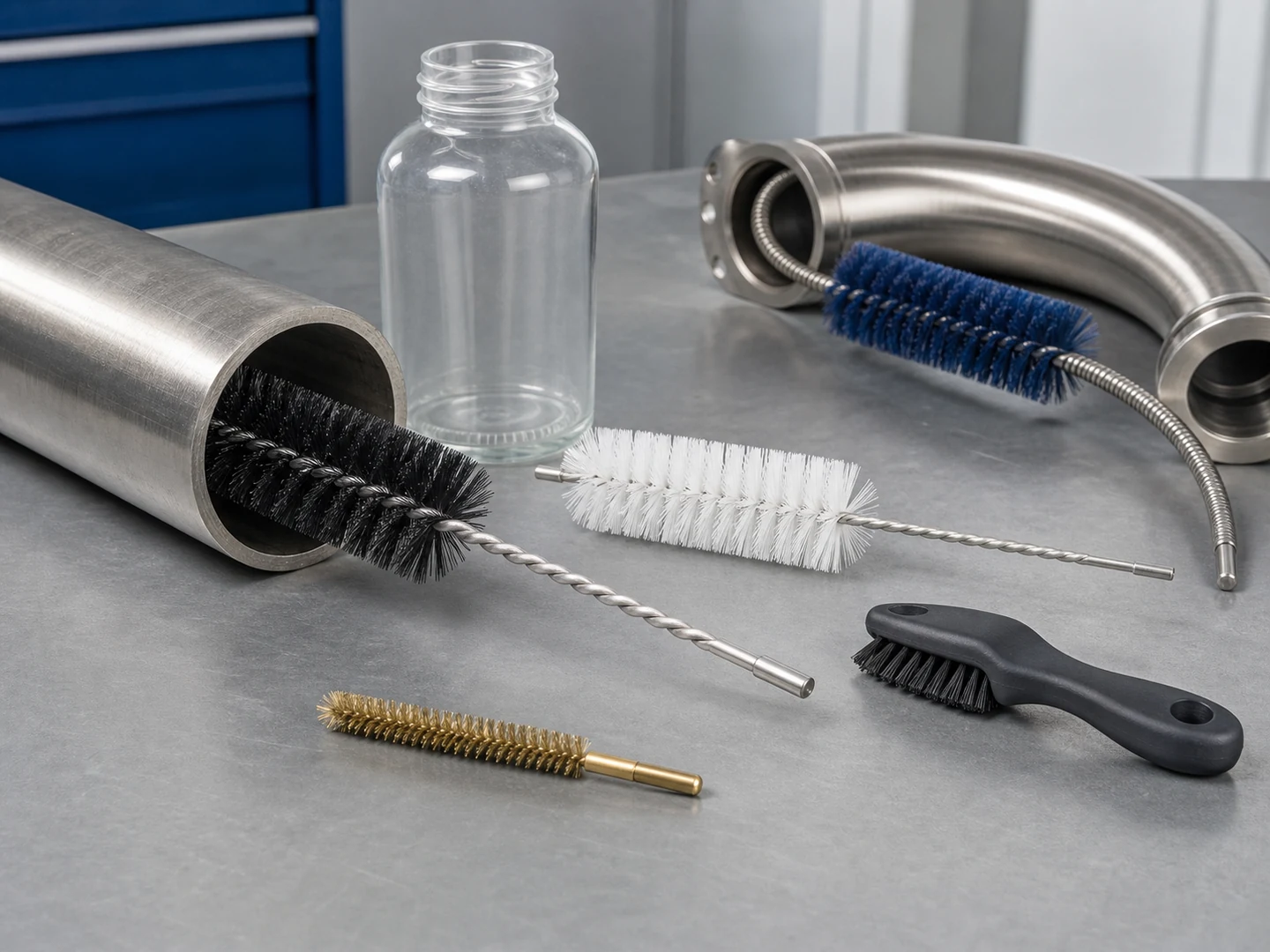
Custom Tube & Pipe Bore Brushes
Choose a tube, pipe, or bore brush when the working surface is inside a…
See how this type is builtCustom Manufacturing RFQ
Discuss This Application
Share the working surface, residue, dimensions, material direction, interface, quantity and drawing or sample photo.
Custom Brush RFQ
Request a Custom Cleaning Brush Quote
Upload a drawing, product photo, or sample photo and provide the core dimensions and cleaning conditions.
“We need a brush to remove wet residue from a stainless steel conveyor, about 800mm wide. The current brush wears quickly. We can send photos.”
“We sell drinkware and need a cleaning brush to include with the product. Quantity around 5,000 pieces.”