
Material
Wool
Natural textile fiber
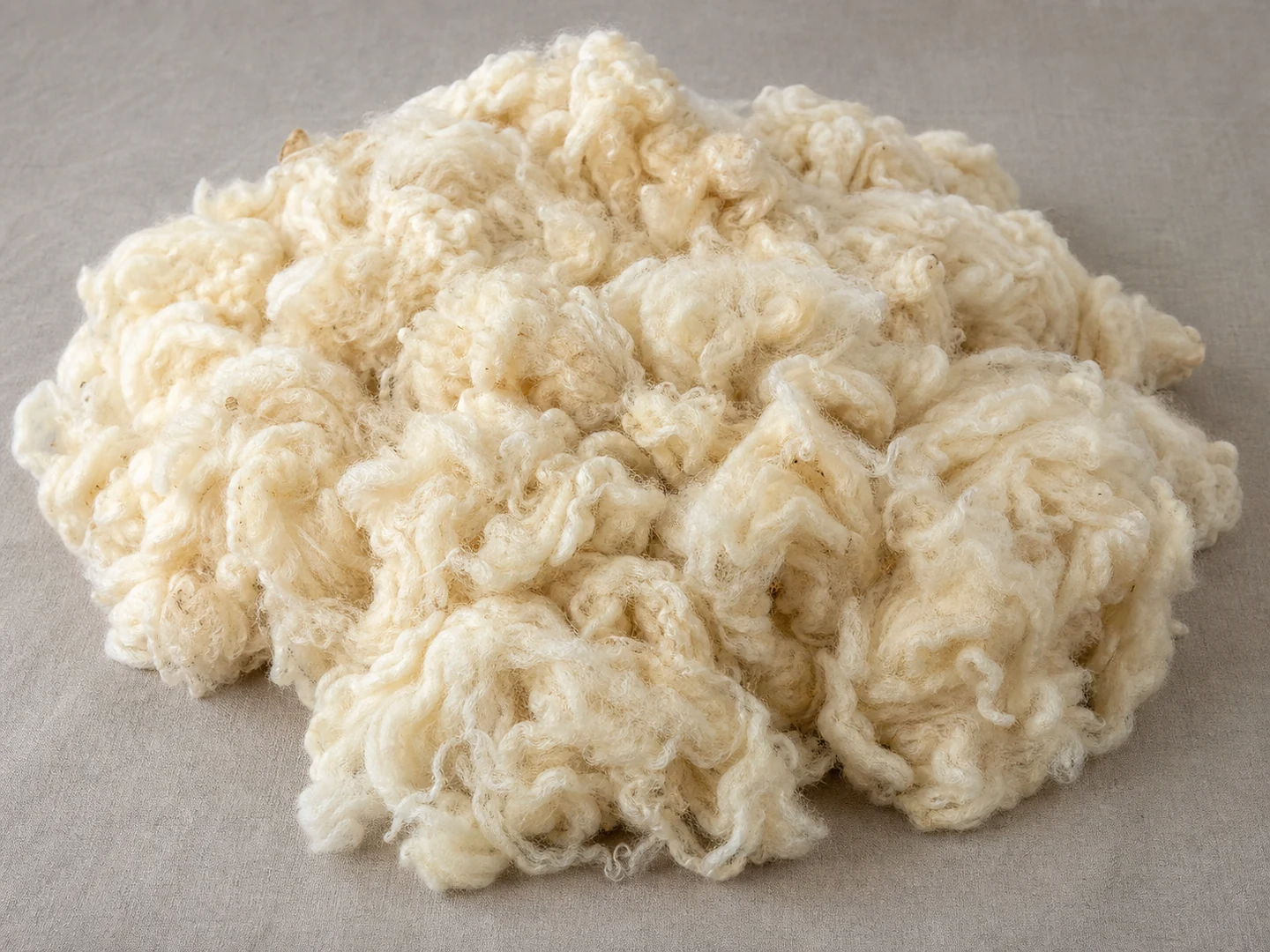
Choose Wool based on its stiffness, recovery, wear, wet-service, chemical, and temperature behavior. Material name alone is not enough to set stiffness; we also need filament diameter, free trim, density, grade, and working conditions.
Datasheet values
- Fiber diameter
- 18–40 µm
- Density
- about 1.31 g/cm³
- Moisture regain
- 14–18%
- Use temperature
- up to 100°C
- Polishing behavior
- soft with good compound retention
Wool is a protein natural fiber with natural crimp, elasticity and moisture-vapor absorption.
What is Wool, and what makes it different from other brush filaments?
Wool sits in the natural textile fiber family, supplied as wool yarn, wool mop, wool pad, felted wool and Wool buffing media, drawn in natural irregular cross-section sections and set in straight rows, helical, staggered, zoned, wavy and random fill patterns.
Wool is used in custom cleaning brushes for final buffing, polishing-compound application and gentle finishing where a soft resilient face is useful.
Where a project stalls on material choice, the comparison is normally against Felt, Cotton Yarn and Microfiber, and it turns on moisture uptake and working temperature.
Compare Wool with Felt, cotton yarn, microfiber, sisal. Change material when wet stiffness, temperature, chemical resistance, conductivity, particle shedding, or surface marking becomes the limiting factor.
What stiffness and contact pressure can I expect from Wool?
Wool is soft and springy; compaction into felt or a dense wheel increases firmness and pressure transfer, and Wool changes brush stiffness through filament diameter, free trim, density, crimp, and contact. Use finer filament and longer trim for conformable contact; use coarser filament, shorter trim, or higher density for stronger displacement or cutting.
The published filament ranges, set against the grades it competes with. These are filament figures, not finished-brush values.
| Property | Wool | Felt | Cotton Yarn | Microfiber |
|---|---|---|---|---|
| Shore hardness | Soft and springy; compaction into felt or a dense wheel increases firmness and pressure transfer. | Broad range from soft conformable pad to dense firm polishing wheel; density and thickness stated. | Not Applicable(Yarn Has No Uniform Shore/Rockwell Hardness; industry reference range) | Not Applicable(Microfiber Is Characterized by Linear Density and Fabric Structure; industry reference range) |
| Continuous temperature (°C) | 100 | 120 | 80–100 | 80–120 |
| Peak temperature (°C) | 130 | 150 | 130–150 | 140–170 |
| Water absorption, 24 h | 5–20% (Natural Fiber; industry reference range) | Not Applicable(Closed-Cell / Sheet Structure; Grade Dependent) | 7–12% (Near the Standard Moisture Regain, industry reference range) | 0.2–1.0%Material Itself ; Structure Can Absorb 3–7 Times Its Own Weight(industry reference range) |
| Filament diameter (mm) | 0.05–2.00 | Not Applicable(Sheet / Foam Structure)–Not Applicable(Sheet / Foam Structure) | 0.50–5.00 | 0.005–0.050 |
| Flexibility | Medium Flexibility(Natural Variation) | Low to High Flexibility(Structure Dependent) | High Flexibility | High Flexibility |
The part people get wrong: the number that decides scrubbing pressure is diameter over trim length, not the grade name. Two brushes in this material can behave nothing alike.
How does water affect Wool performance?
Wool holds roughly 5–20% moisture depending on grade and condition, which is why it is used where liquid has to be carried rather than pushed along.
Absorbent porous structure for wiping, washing, drying and liquid transfer.
What this means for your application: water changes the working diameter and the spring rate together, so wet performance has to be checked rather than assumed from a dry trial.
A practical check: soak a sample for an hour and re-measure the trim. If it has moved enough to change the contact band, the grade is wrong for the duty.
What temperature limits apply to Wool?
Ambient to 100°C.
Design to that answer rather than to a raw-material datasheet figure: a brush rating already accounts for fiber working under load rather than loose fiber sitting in an oven.
Where it stops working: validate with a sample if the process sits near the top of that band. If the filament takes a permanent set under load, step up to Microfiber or Felt, which hold a higher continuous temperature.
The usable limit also moves with diameter, trim and contact pressure. A fine filament under light load tolerates more than a thick one under heavy scrubbing.
What chemicals attack Wool?
Compatible with water and mild detergent; solvent and oxidizer resistance follows the fiber, foam and binder chemistry.
The same cleaner can be harmless or destructive depending on how strong it is, how hot it runs and how long it sits. Quote the concentration and the dwell time, not just the product name.
Before you commit to a quantity: Specify the exact Wool grade or alloy, filament or profile size, color, straight or crimped form, working temperature, wet or dry use, chemical exposure, surface finish, and any required material documentation.
What is the practical lower limit for filament diameter?
About 0.05 mm. Below that the filament turns fragile and breaks under ordinary contact pressure, so 0.05–2.00 mm is the working range.
Free trim runs 3–300 mm, and the two interact: a finer filament needs a shorter trim to keep useful stiffness, while a thicker one carries a longer trim and still lands pressure on the tip.
Split the range by duty: roughly 0.05–0.54 mm for light wiping, dusting and surfaces that mark easily, and 0.54–2.00 mm where residue is packed on and point pressure matters more than surface risk.
Tip treatments available on this filament: cleaning, carding, bleaching and setting.
In practical brush terms: reaching deep into a bore or crevice is a diameter problem before it is a length problem. A thicker filament on a moderate trim pushes further in before the tips fold over.
What applications typically use Wool?
Final buffing, polishing-compound application and gentle finishing where a soft resilient face is useful.
The cleaning work it is specified for most often:
- Wheel & Rim Cleaning
- Tire Cleaning
- Automotive Detail Cleaning
- Motorcycle Chain Cleaning
- Industrial Machine Cleaning
- Brick, Tile & Building Material Machine Brush Use
Brush types built with this fill:
- Custom Handheld Detail Brushes
- Custom Floor Scrubber Sweeper Brushes
If the sample comes back rejected: Moisture uptake, natural variability, shedding and cleanability can limit wool in wet hygienic or particulate-controlled processes.
How do I specify Wool for a custom brush?
A usable specification carries the construction, the filament diameter and free trim, the density and contact setting, and the service conditions: wet or dry, temperature, and what the cleaner actually is.
The mistakes that most often send a sample back:
- Selecting Wool from the material name alone without setting filament diameter, trim length, and density
- Using dry stiffness to predict wet behavior without checking moisture absorption or liquid exposure
- Ignoring trapped abrasive particles, chemical concentration, temperature, or contact motion when assessing surface risk
Reference standards behind the figures on this page: ISO 139; ISO 5079; ISO 20743.
Source: International Wool Textile Organisation — Wool Notes — fibre properties. Wool carries more fluid per gram than cotton and stays soft against a finished surface, which is why it is used for applying rather than for scrubbing. It felts irreversibly under heat, moisture and agitation together.
What else does the datasheet specify for Wool?
| Electrical behaviour | Insulating |
|---|
Questions this page is asked
How should compound loading and surface heat be controlled with wool polishing media?
On representative parts, vary compound amount, speed, pressure, movement and dwell while measuring finish, removal, workpiece temperature, pad matting, residue and fibre loss. Lock a range that meets the finish without localized heat or dried compound buildup and define cleaning or replacement triggers as the wool face changes through use.
What should be checked after cleaning and drying a reusable wool medium?
Validate the actual cleaner pH, temperature, dwell, agitation, rinse, extraction and drying method, then condition the medium before comparing dimensions, mass, thickness, softness, recovery, matting, odor, residue, fibre loss and attachment. Limit reuse to the cycles that preserve the required finish and cleanliness, and keep sanitary or particulate-controlled claims outside scope unless separately qualified.
Where these figures come from
| Property | Published value | Source |
|---|---|---|
| Chemical resistance | Compatible with water and mild detergent; solvent and oxidizer resistance follows the fiber, foam and binder chemistry. | International Wool Textile Organisation Retrieved 2026-07-20 |
| Published datasheet figures |
|
International Wool Textile Organisation Retrieved 2026-07-20 |
| Hardness and stiffness | Soft and springy; compaction into felt or a dense wheel increases firmness and pressure transfer. | International Wool Textile Organisation Retrieved 2026-07-20 |
| Limitations | Moisture uptake, natural variability, shedding and cleanability can limit wool in wet hygienic or particulate-controlled processes. | International Wool Textile Organisation Retrieved 2026-07-20 |
| Temperature resistance | Ambient to 100°C. | International Wool Textile Organisation Retrieved 2026-07-20 |
| Water resistance | Absorbent porous structure for wiping, washing, drying and liquid transfer. | International Wool Textile Organisation Retrieved 2026-07-20 |
Guides that go deeper on this
We have not written a guide specific to this one yet. The material that covers selection, filament, dimensions, maintenance and sourcing is collected in the technical resources library.
Continue Exploring
Recommended Reading & Related Brush Resources
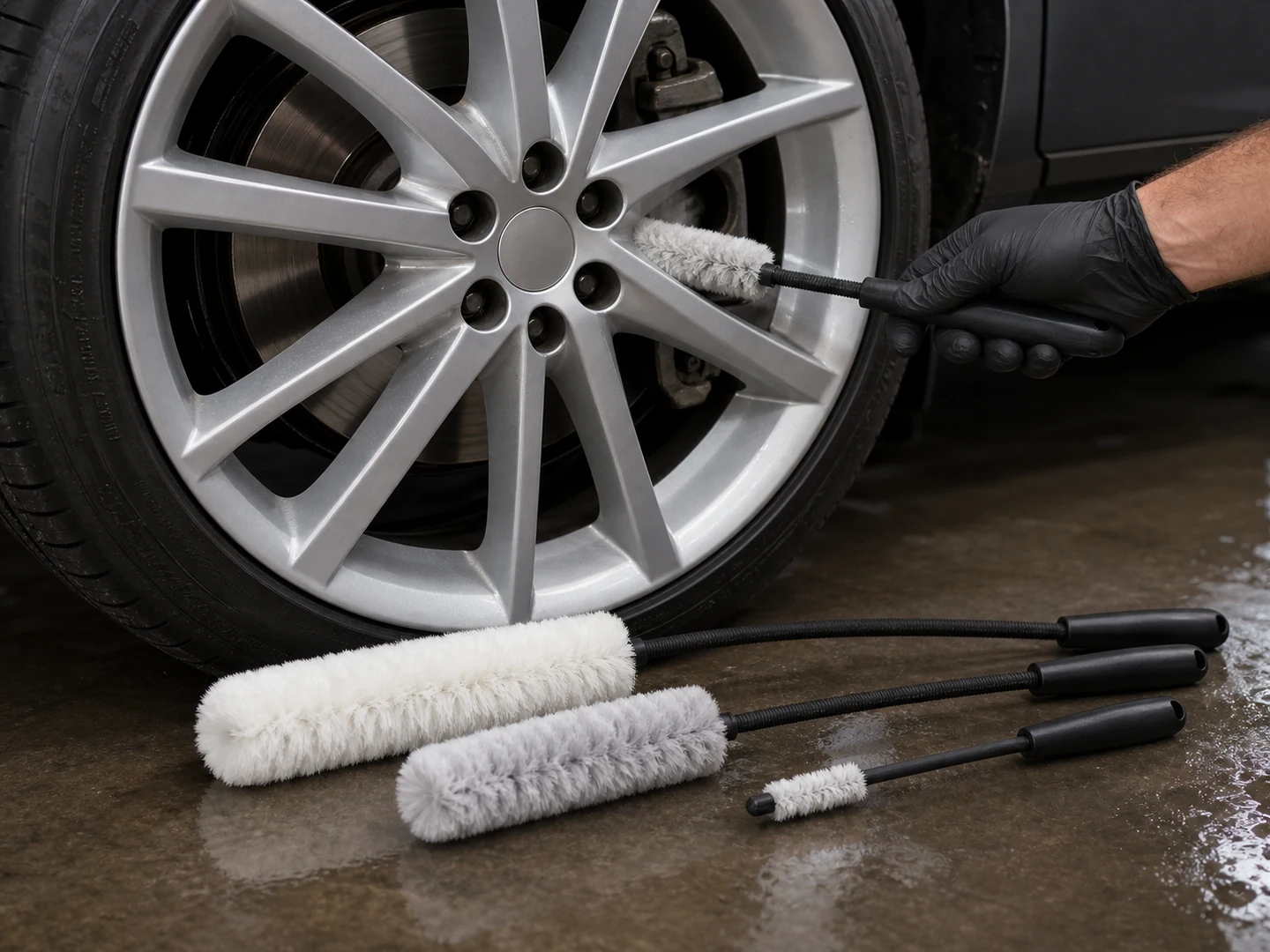
Synthetic Wool Wheel Cleaning Brush
Dense synthetic wool on a flexible twisted-wire core: the head compresses between spokes and…
See the specification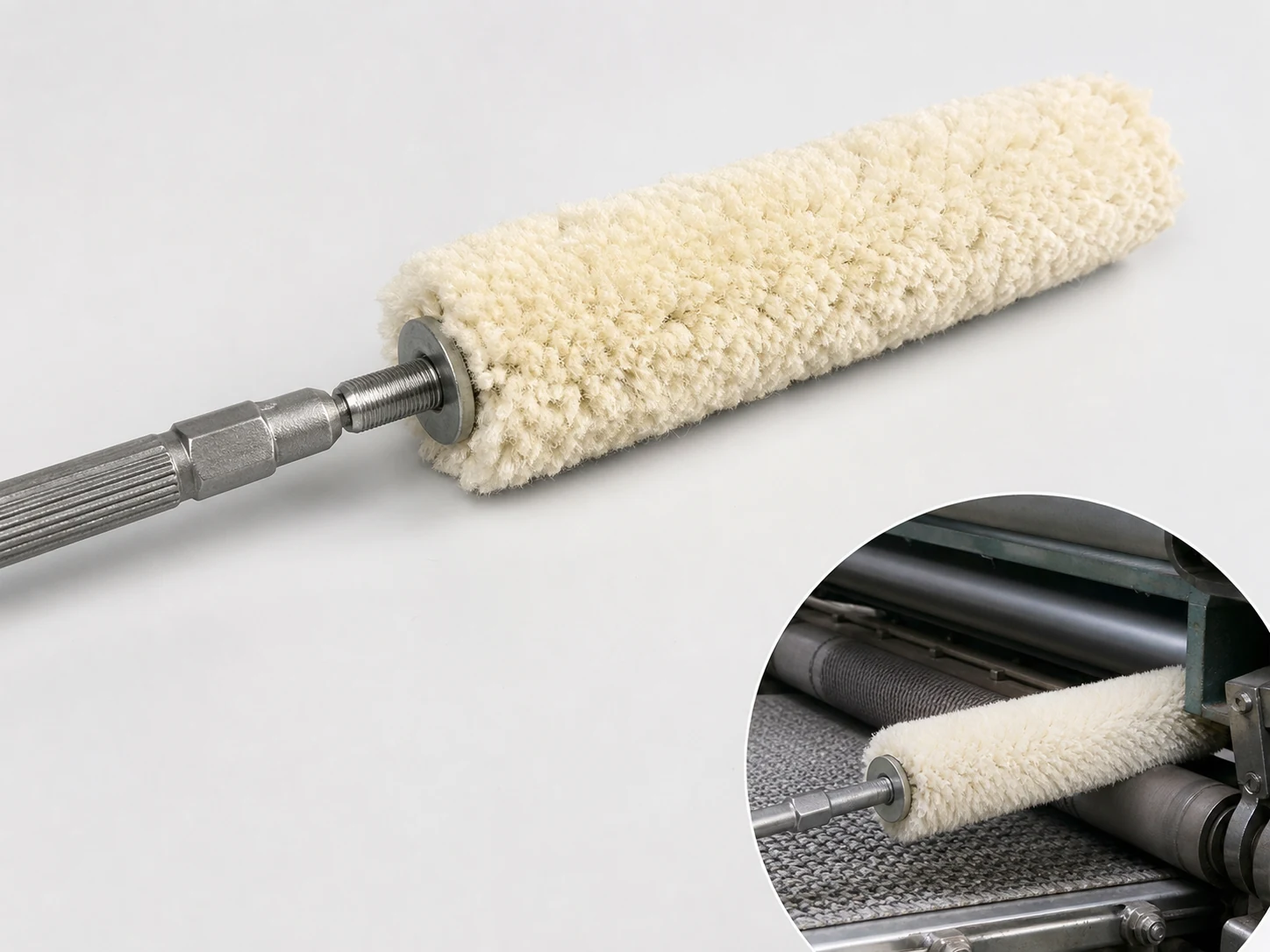
Wool Brush
Custom wool brushes for dusting, polishing, and controlled dye, wax, and adhesive application on…
See the specification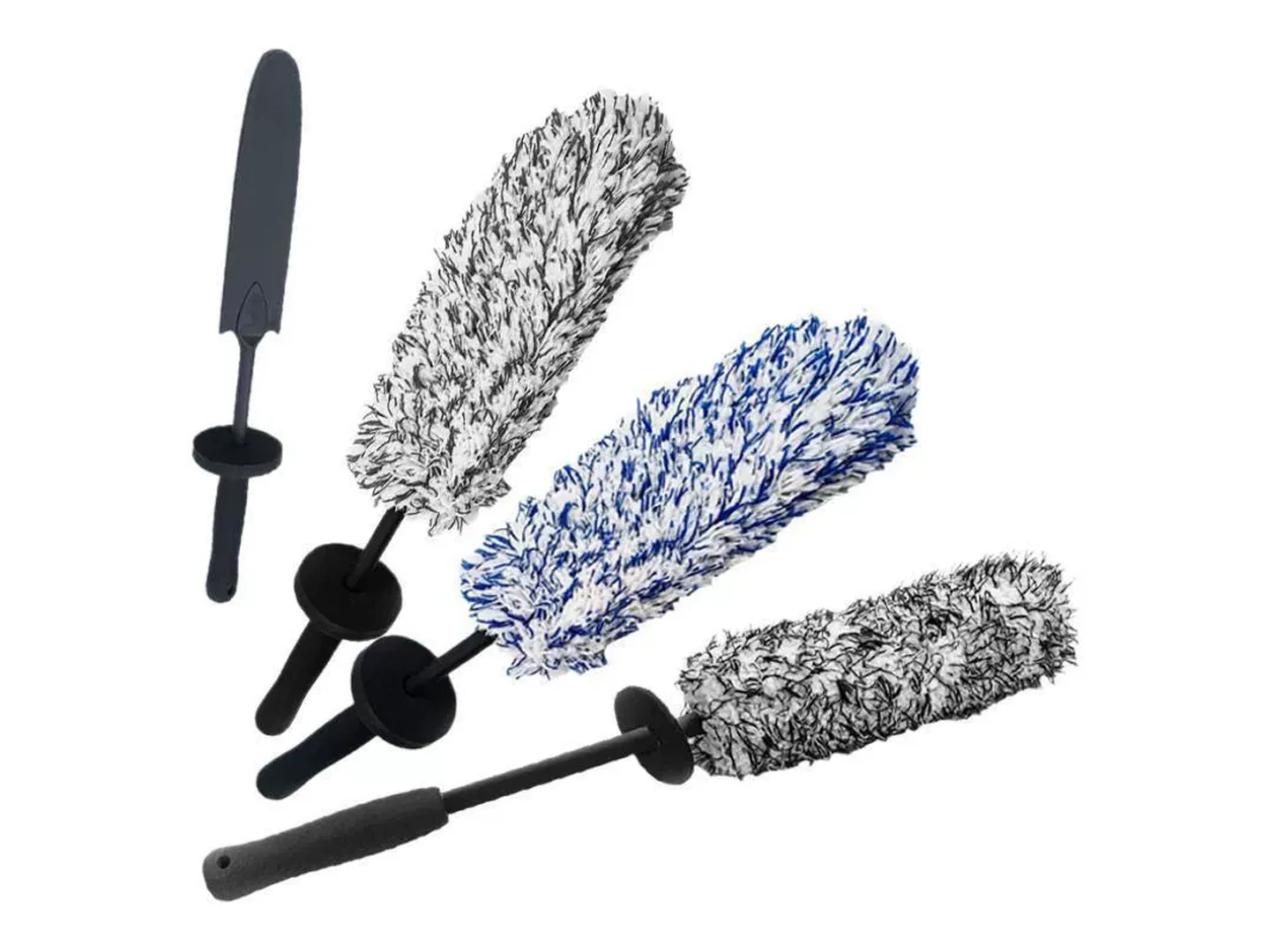
Tire Cleaning Brush
Rugged tire cleaning brush with nylon or PP filaments for sidewalls, tread grooves, and…
See the specification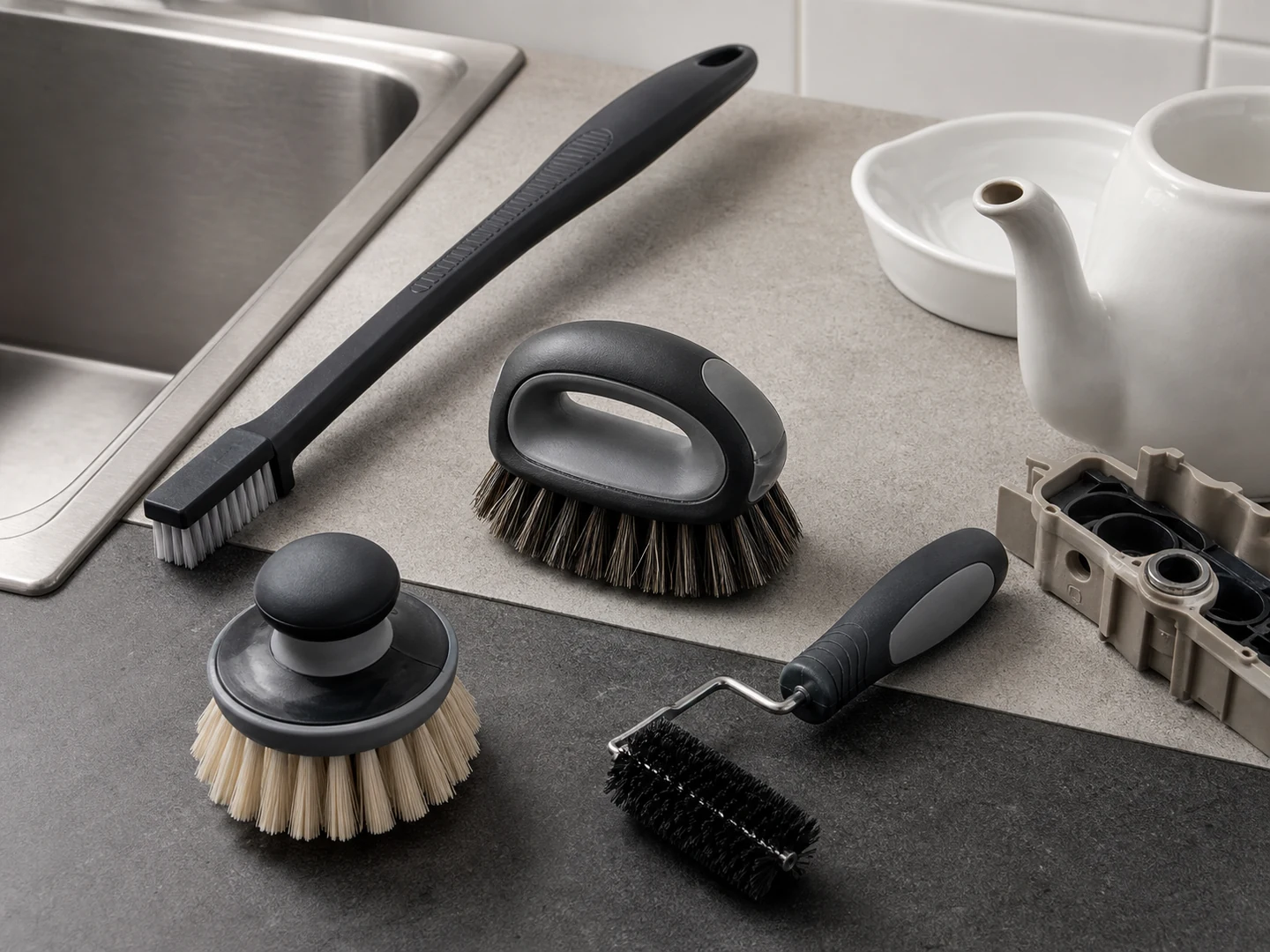
Custom Handheld Detail Brushes
Choose a handheld detail brush when you need direct control in seams, recesses, fittings,…
See how this type is built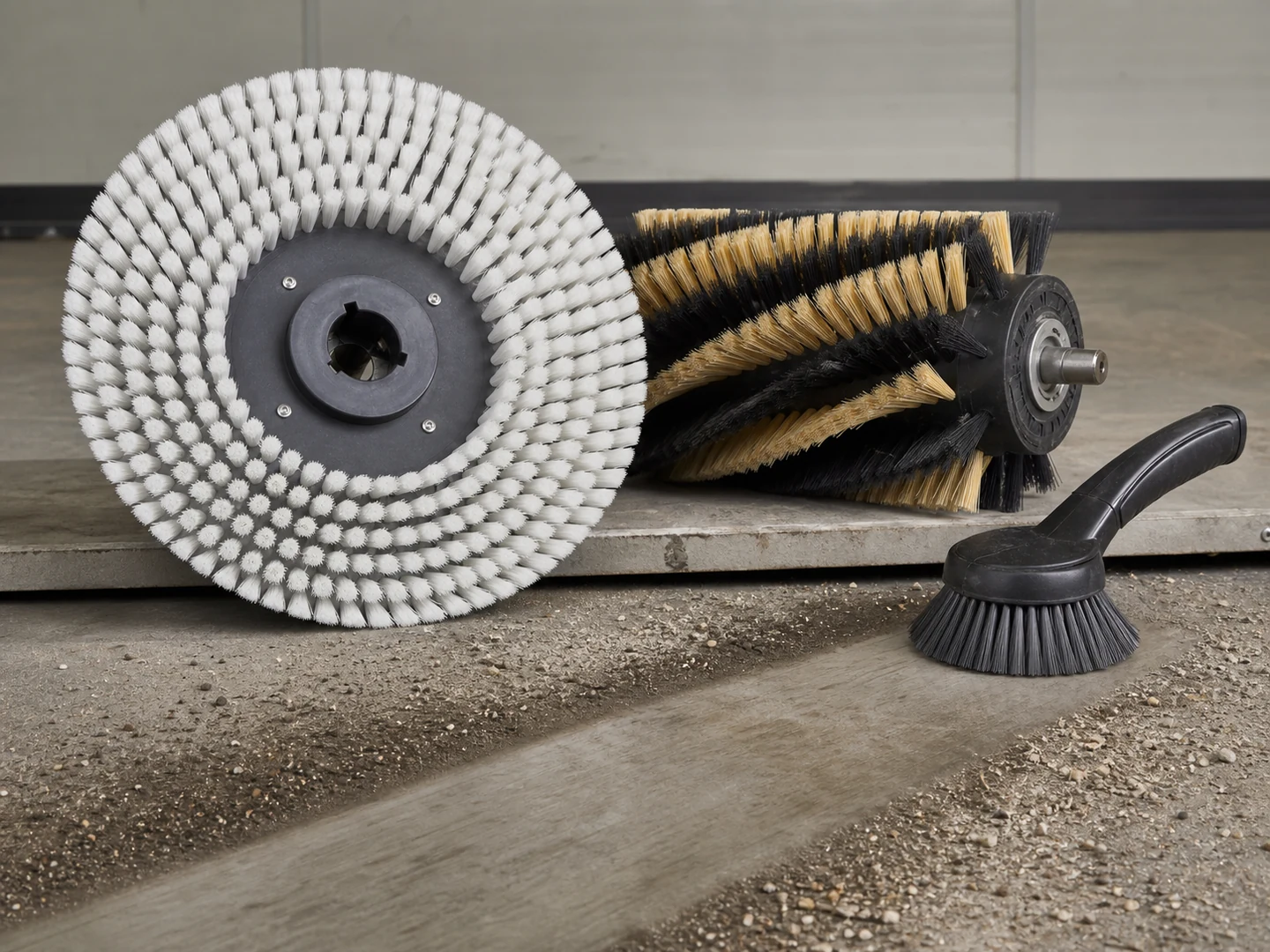
Custom Floor Scrubber Sweeper Brushes
Choose this brush type when a floor machine needs a disc, roller, main broom,…
See how this type is built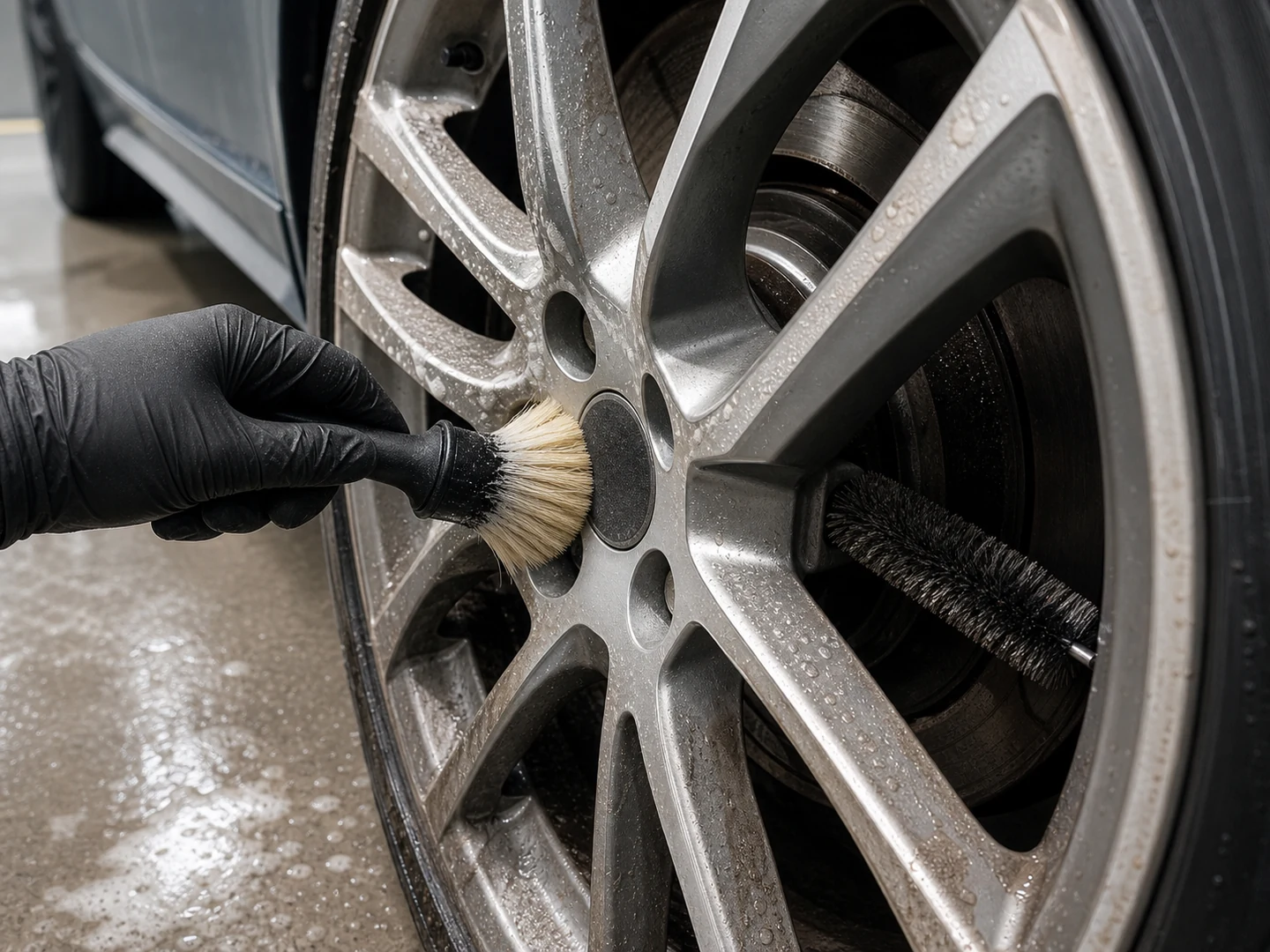
Wheel & Rim Cleaning
For Wheel & Rim Cleaning, the brush must reach the working area, disturb or…
See the cleaning job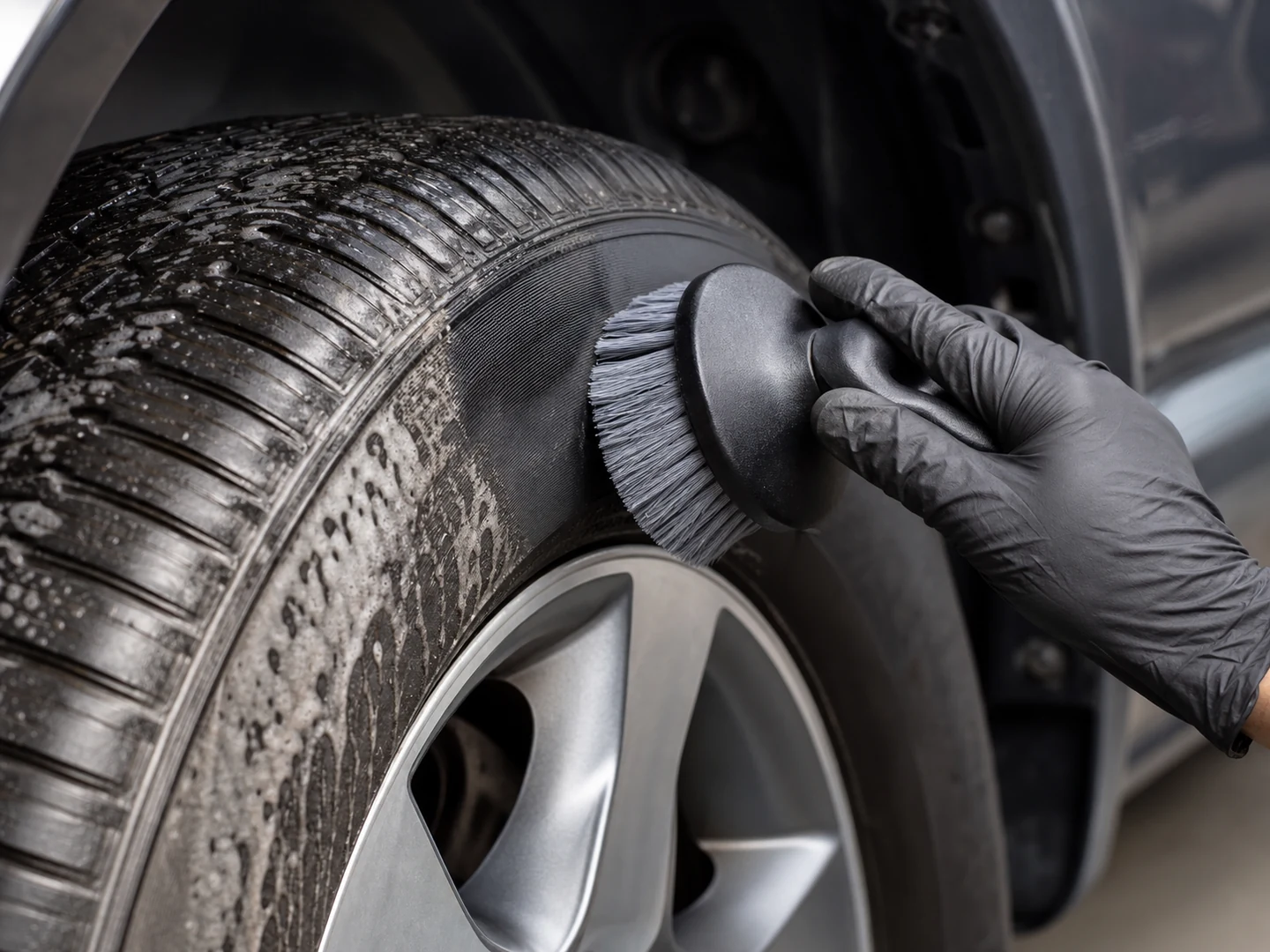
Tire Cleaning
For Tire Cleaning, the brush must reach the working area, disturb or collect silt…
See the cleaning job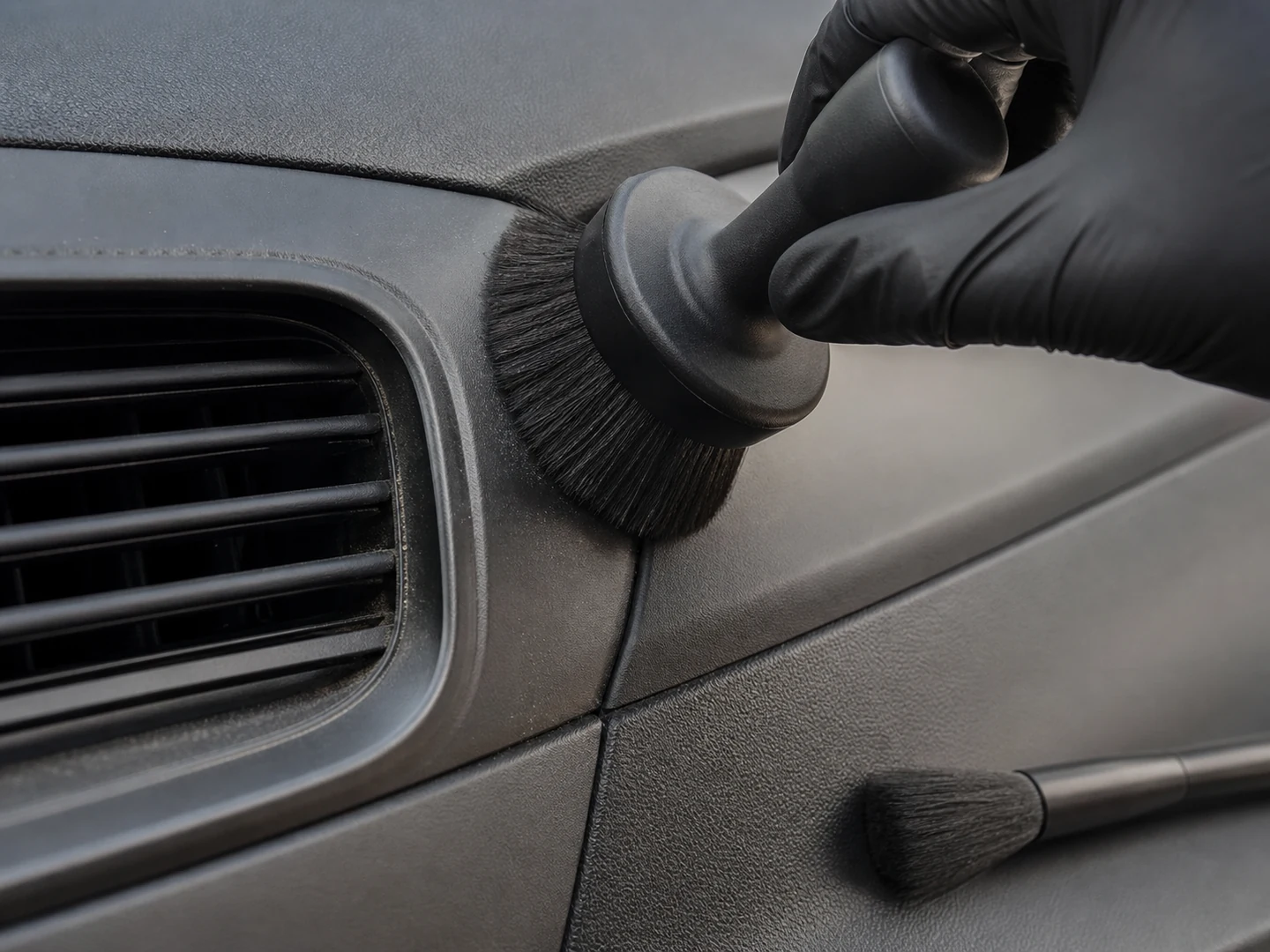
Automotive Detail Cleaning
For Automotive Detail Cleaning, the brush must reach the working area, disturb or collect…
See the cleaning jobCustom Manufacturing RFQ
Discuss This Material
Share the working surface, residue, dimensions, material direction, interface, quantity and drawing or sample photo.
Custom Brush RFQ
Request a Custom Cleaning Brush Quote
Upload a drawing, product photo, or sample photo and provide the core dimensions and cleaning conditions.
“We need a brush to remove wet residue from a stainless steel conveyor, about 800mm wide. The current brush wears quickly. We can send photos.”
“We sell drinkware and need a cleaning brush to include with the product. Quantity around 5,000 pieces.”