
Material
Tampico Fiber
Natural plant fiber
Choose Tampico Fiber based on its stiffness, recovery, wear, wet-service, chemical, and temperature behavior. Do not select stiffness from the material name alone. Specify filament diameter, free trim, density, grade, and service conditions as one set.
Datasheet values
- Fiber diameter
- 200–500 µm
- Use temperature
- up to 120°C
- Water absorption
- high
- Brush stiffness
- medium
- Chemical resistance
- good with mild acids and alkalis
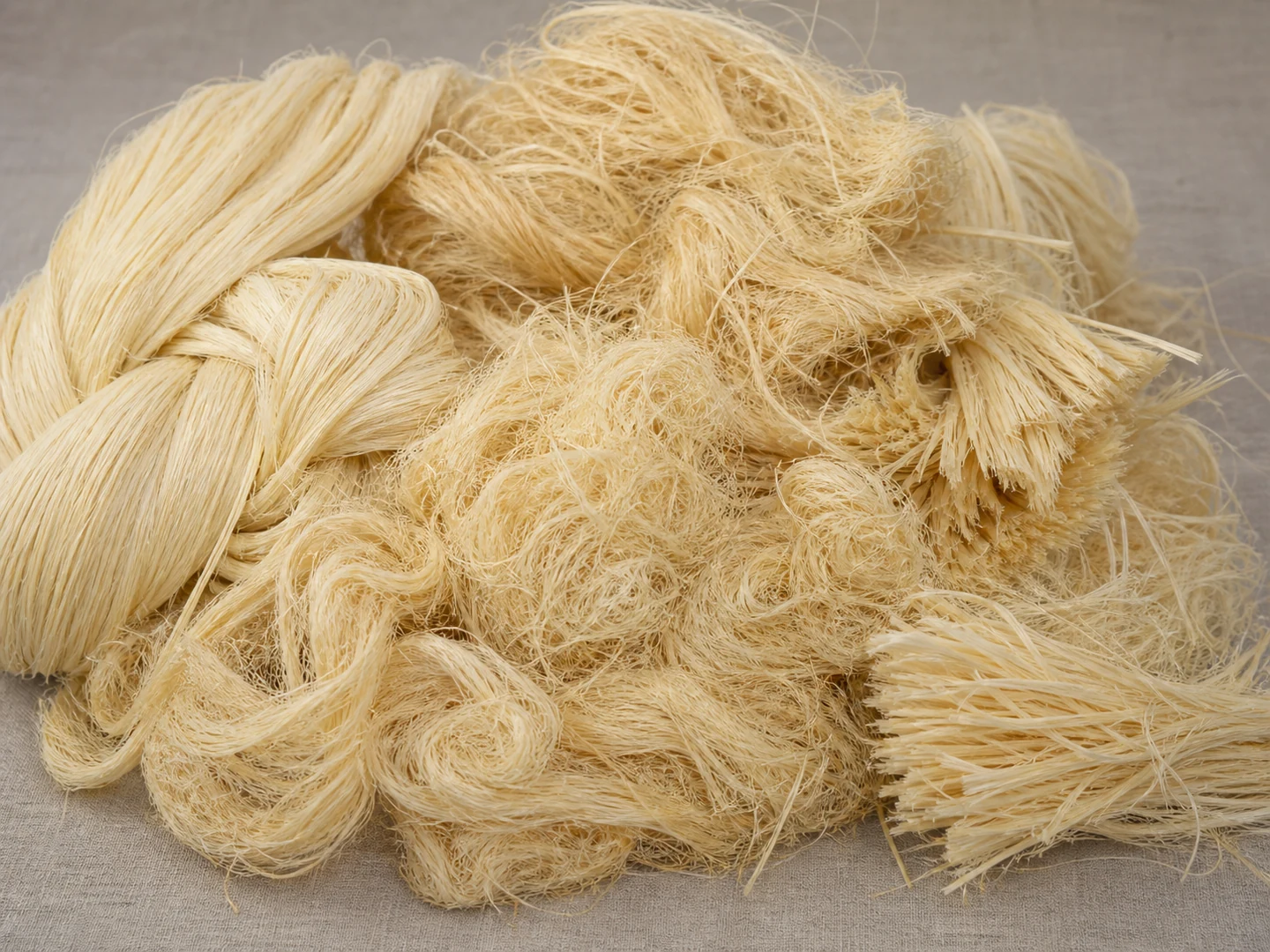
Tampico is a plant leaf fiber associated with Agave species and used as brush fill for dusting, light scrubbing, liquid spreading and polishing compound work.
What is Tampico Fiber, and what makes it different from other brush filaments?
Tampico Fiber belongs to the natural plant fiber group, supplied as natural fiber, drawn in natural porous and irregular sections and set in straight rows, staggered, zoned and random fill patterns.
Tampico Fiber is used in custom cleaning brushes for wet scrubbing, polishing-compound application, dusting and floor or deck cleaning with an absorbent plant fiber.
Compare Tampico Fiber with Compare with horsehair for softer dry contact, sisal for firmer plant-fiber scrubbing and nylon for more uniform recovery. Change material when wet stiffness, temperature, chemical resistance, conductivity, particle shedding, or surface marking becomes the limiting factor.
What stiffness and contact pressure can I expect from Tampico Fiber?
Tampico Fiber is soft to medium plant fiber with absorbent, moderately resilient contact; processed grade and blend alter stiffness. Use finer filament and longer trim for conformable contact; use coarser filament, shorter trim, or higher density for stronger displacement or cutting.
The part people get wrong: stiffness is not a property of the material on its own. A 0.50 mm filament on a 15 mm trim is stiffer than a 0.30 mm filament on a 25 mm trim in the same grade. Fix diameter and trim first, then confirm the material.
How does water affect Tampico Fiber performance?
Tampico holds roughly 10–18% moisture at equilibrium — that is the property it is chosen for: it carries water and stays pliable while it works.
Absorbent fiber that carries liquid and softens slightly when wet.
What this means for your application: the filament grows and softens as it takes on water, and tip pressure goes with it. The reach you measured dry is not the reach you get wet.
A practical check: run one wet cycle and compare tip contact against the dry state. If the wet brush leaves residue behind or no longer reaches the bottom of the bore, change the material rather than the geometry.
What temperature limits apply to Tampico Fiber?
Tampico tolerates more heat than many animal hairs, but the usable brush temperature still depends on the natural-fiber grade, moisture, holder, and process. Confirm the actual fill supplier when sustained heat matters.
The filament tables quote 70–90°C continuous and 110–130°C peak. The tighter number above is the one to build to, because a brush is loaded while it is hot.
Where it stops working: A permanent bend under load means the answer is a higher-temperature filament family, not a heavier trim.
Diameter, trim length and applied load all shift the real limit, so a thin filament touching lightly survives conditions that would flatten a thick one under pressure.
What chemicals attack Tampico Fiber?
Compatible with water and mild detergent; strong alkali, bleach and prolonged soaking shorten fiber life.
Compatibility is a function of concentration, temperature and contact time together. A short rinse in a dilute solution is a different exposure from an overnight soak in a concentrated one, even with the same chemical on the label.
Before you commit to a quantity: Specify the exact Tampico Fiber grade or alloy, filament or profile size, color, straight or crimped form, working temperature, wet or dry use, chemical exposure, surface finish, and any required material documentation.
What is the practical lower limit for filament diameter?
The floor is roughly 0.10 mm; finer than that and the filament snaps rather than flexes. In practice you are choosing inside 0.10–0.35 mm.
Free trim runs 10–180 mm, and the two interact: a finer filament needs a shorter trim to keep useful stiffness, while a thicker one carries a longer trim and still lands pressure on the tip.
Split the range by duty: roughly 0.10–0.16 mm for light wiping, dusting and surfaces that mark easily, and 0.16–0.35 mm where residue is packed on and point pressure matters more than surface risk.
Tip treatments available on this filament: cleaning, carding, bleaching, dyeing, oiling and abrasive impregnation.
In practical brush terms: reaching deep into a bore or crevice is a diameter problem before it is a length problem. A thicker filament on a moderate trim pushes further in before the tips fold over.
What applications typically use Tampico Fiber?
Wet scrubbing, polishing-compound application, dusting and floor or deck cleaning with an absorbent plant fiber.
The applications that keep coming back to this grade:
- Industrial Machine Cleaning
- Conveyor Belt Cleaning
- Screen & Sieve Cleaning
- Brick, Tile & Building Material Machine Brush Use
- Glass Surface Cleaning
- Solar Panel Cleaning
The constructions that usually carry it:
- Custom Handheld Detail Brushes
- Custom Roller and Conveyor Brushes
The trade-off: Natural variation, moisture retention and lower cutting action make it unsuitable for precision abrasive finishing or hygienic storage without drying.
How do I specify Tampico Fiber for a custom brush?
Send the brush type, filament diameter, free trim length, density, contact setting, wet or dry duty, working temperature and the actual cleaning chemistry together. Any one of them on its own leaves the stiffness undefined.
What usually goes wrong at this step:
- Selecting Tampico Fiber from the material name alone without setting filament diameter, trim length, and density
- Using dry stiffness to predict wet behavior without checking moisture absorption or liquid exposure
- Ignoring trapped abrasive particles, chemical concentration, temperature, or contact motion when assessing surface risk
Reference standards behind the figures on this page: ISO 527-1:2019; ASTM D638; ISO 62:2008; ASTM D570-22; ISO 868:2003; ASTM D2240-15(2021); ISO 4892-3:2024; ASTM G154-23; UL 94; ISO 139; ISO 5079; ISO 20743.
Source: Food and Agriculture Organization of the United Nations — Hard fibres — agave and related plant fibres. Tampico is cut from an agave leaf, so it carries water well and keeps working when wet. That absorbency is what makes it a scrubbing and polishing fibre rather than a dry-sweeping one.
What else does the datasheet specify for Tampico Fiber?
| Filament cross-section | Natural Porous / Irregular |
|---|---|
| Electrical behaviour | Anti-Static When Wet; Insulating When Dry |
Questions this page is asked
How should a Tampico brush be conditioned and stored after wet use?
Validate the actual water or mild cleaner, temperature, exposure, rinse, mechanical load and drying time, then check trim shape, stiffness, odor, discoloration, fibre loss and anchor condition over repeated cycles. Store the brush in the clean, ventilated dry state defined by that study and set a discard rule for persistent moisture, contamination or loss of function.
What should release a Tampico polishing or compound-application process?
Control compound identity and viscosity, loading amount, brush speed or stroke, pressure, dwell and workpiece temperature, then measure deposited film, finish, heat, residue and fibre shedding on representative parts. Repeat in new and worn states and define the cleaning or replacement point before retained compound hardens, transfers between jobs or drives the finish outside its acceptance band.
Guides that go deeper on this
No catalogue item for this yet
Every brush here is made to order, and this one has no catalogue entry so far. Send the working surface, the residue, the access opening and the quantity, and it is quoted through the same specification route as the rest of the range.
Custom Manufacturing RFQ
Discuss This Material
Share the working surface, residue, dimensions, material direction, interface, quantity and drawing or sample photo.
Custom Brush RFQ
Request a Custom Cleaning Brush Quote
Upload a drawing, product photo, or sample photo and provide the core dimensions and cleaning conditions.
“We need a brush to remove wet residue from a stainless steel conveyor, about 800mm wide. The current brush wears quickly. We can send photos.”
“We sell drinkware and need a cleaning brush to include with the product. Quantity around 5,000 pieces.”