Quick Answer
Nylon 612 gives strong bend recovery and low water uptake for a nylon. PBT holds stiffness very consistently in water and supports higher continuous heat. Polypropylene absorbs almost no water and offers broad acid and alkali resistance at lower operating temperature and lower recovery.
Direct Comparison
| Property | Nylon 612 | PBT / polyester | Polypropylene |
|---|---|---|---|
| Continuous brush temperature | 93°C | 140°C | 79°C |
| Short-duration temperature | 121°C | 160°C | 107°C |
| Water behavior | Low absorption for nylon; wet stiffness remains useful | Very low moisture uptake and stable wet stiffness | Does not absorb moisture or odors |
| Recovery | Excellent bend recovery and abrasion life | Good recovery without matting or whip | Good wet stiffness; lower recovery under sustained load |
| Chemical direction | Oils, greases, detergents, many cleaning fluids | Acids, alkalis, alcohols, gasoline and many solvents | Strong acids, alkalis, oils, solvents and many chemicals |
| Best use | Wet flexing, tubes, conveyors, sanitary and precision cleaning | Repeated wet cycles, fine and sanitary cleaning, higher heat | Chemical washdown, tanks, economical scrubbing |
Choose Nylon 612 When
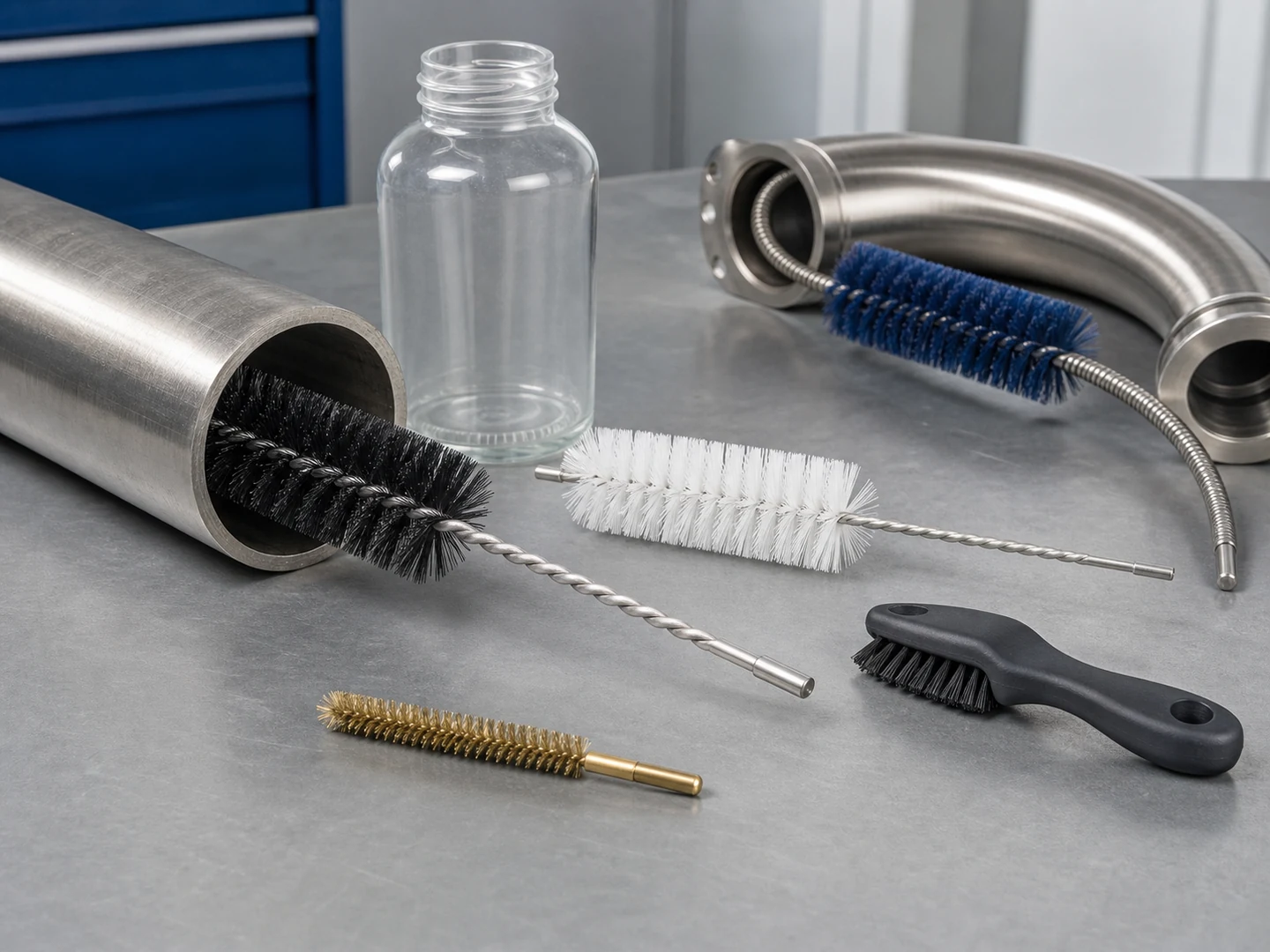
The brush flexes repeatedly, runs wet, and must return to shape. It is a strong all-round fill for tube brushes, cylinder brushes, strip brushes, and hand brushes. It also accepts abrasive loading for controlled finishing.
Choose PBT When
Stiffness must change very little between dry and wet use, the brush sees repeated wash cycles, or the operating temperature exceeds the range of standard nylon. PBT is common in fine synthetic filaments and sanitary equipment brushes.
Choose Polypropylene When
Chemical resistance and negligible moisture uptake dominate. It suits tanks, washdown equipment, acid or alkali cleaning, food-processing areas, and economical heavy filaments. Keep the process below its continuous mechanical temperature and avoid sustained high bending stress that can set the filament.
Do Not Compare Material Names Alone
A 0.20 mm nylon 612 filament with long trim can be softer than a 0.60 mm polypropylene filament with short trim. Compare diameter, trim, density, crimp, engagement, and process temperature together with the polymer.
Technical References
- Perlon — Synthetic Brush Filaments
- Celanese — Crastin / Celanex PBT
- LyondellBasell — Polymer Portfolio
- eCFR — 21 CFR 177.1500 Nylon Resins
- eCFR — 21 CFR 177.1630 Polyethylene Phthalate Polymers
Which bristle material fits this job — PA612 Nylon, PBT or Polypropylene PP?
| Material | Continuous temperature (°C) | Peak temperature (°C) | Water absorption | Hardness |
|---|---|---|---|---|
| PA612 Nylon | 90–110 | 130–150 | 0.3–0.7% | Shore D 70–80 |
| PBT | 120–140 | 160–180 | 0.05–0.20% | Shore D 80–90 |
| Polypropylene PP | 80–100 | 120–140 | ≤0.03% | Shore D 65–75 |
Figures as published by Brushtec / DuPont; Perlon. Confirm the exact grade against the supplier datasheet before ordering.
When are Tube & Pipe Bore Brushes the wrong choice?
- Tube & Pipe Bore Brushes — Use pigs, flushing, ultrasonic, chemical descaling, blasting, or a flexible cable system for long, sharply curved, or heavily scaled passages.
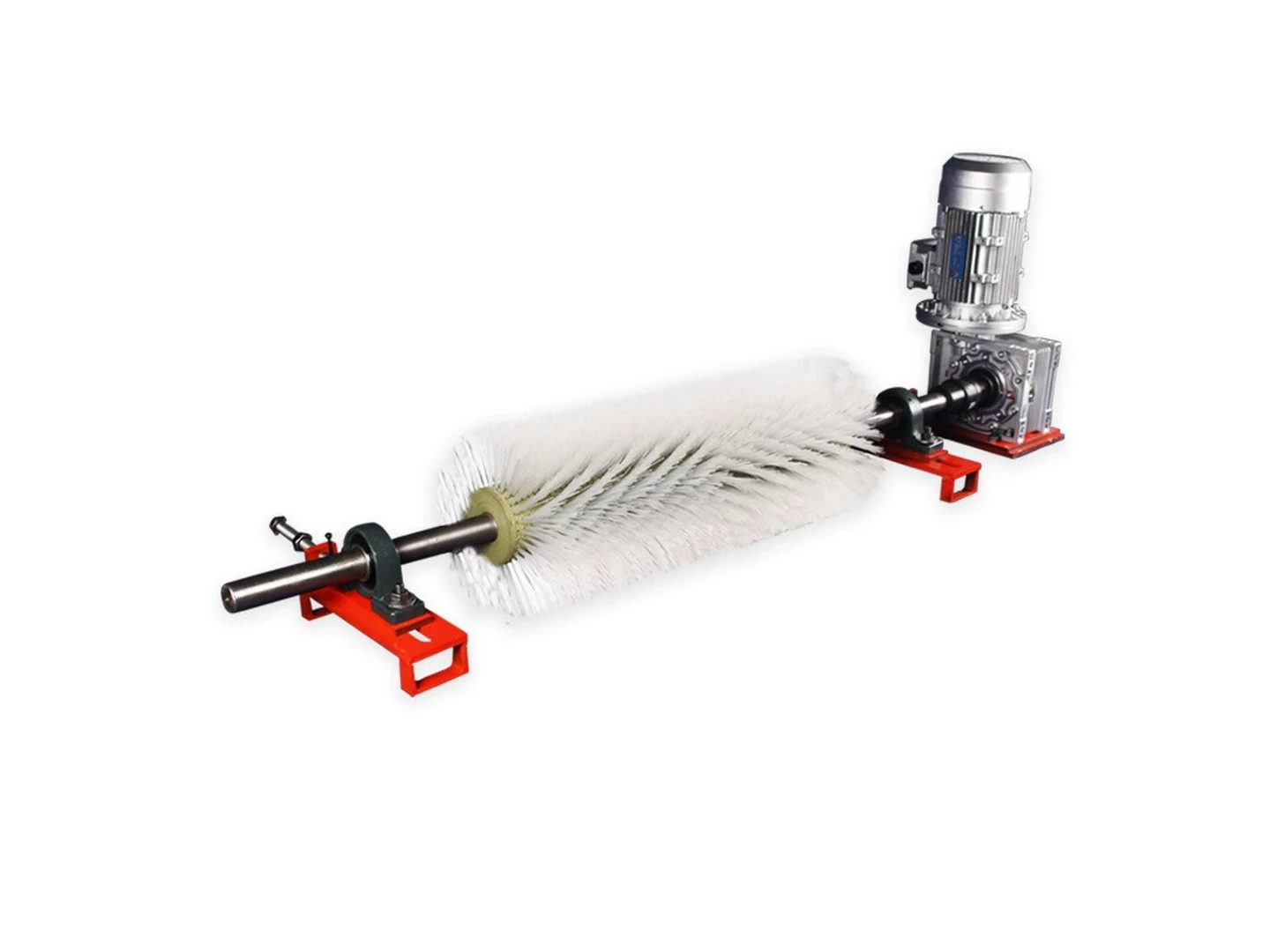
- Roller and Conveyor Brushes — Use a stationary strip brush for a fixed linear seal or wipe, or another process when rotating line contact interferes with the product or cannot discharge the residue safely.
- Handheld Detail Brushes — Use a tube brush, powered brush, scraper, wipe, sponge, or vacuum when the target is internal, heavily bonded, or highly delicate.
- PA612 Nylon — PA612 costs more than general PA6 and should be used where its wet stability, recovery or wear life creates a real process benefit.
What should replace Tube & Pipe Bore Brushes when they stop working?
- Tube & Pipe Bore Brushes — Tube and bore brushes work by radial contact inside a confined diameter; wire wheels and cups work mainly on external edges, profiles, welds, and broad surfaces.
- Roller and Conveyor Brushes — Roller and conveyor brushes hold cylindrical line contact across a working width, including helix-wound builds where the filament path is set to move loosened material toward one side; a strip brush holds the same line without rotating, so it seals or wipes but cannot carry residue along the width.
- Handheld Detail Brushes — Handheld detail brushes cover general precision cleaning; auto-detailing brushes impose tighter controls for painted, polished, leather, display, and trim surfaces.
- PA612 Nylon — Compare PA612 Nylon with PA66, PP, PBT. Change material when wet stiffness, temperature, chemical resistance, conductivity, particle shedding, or surface marking becomes the limiting factor.