What Is a Silicone Bottle Brush?
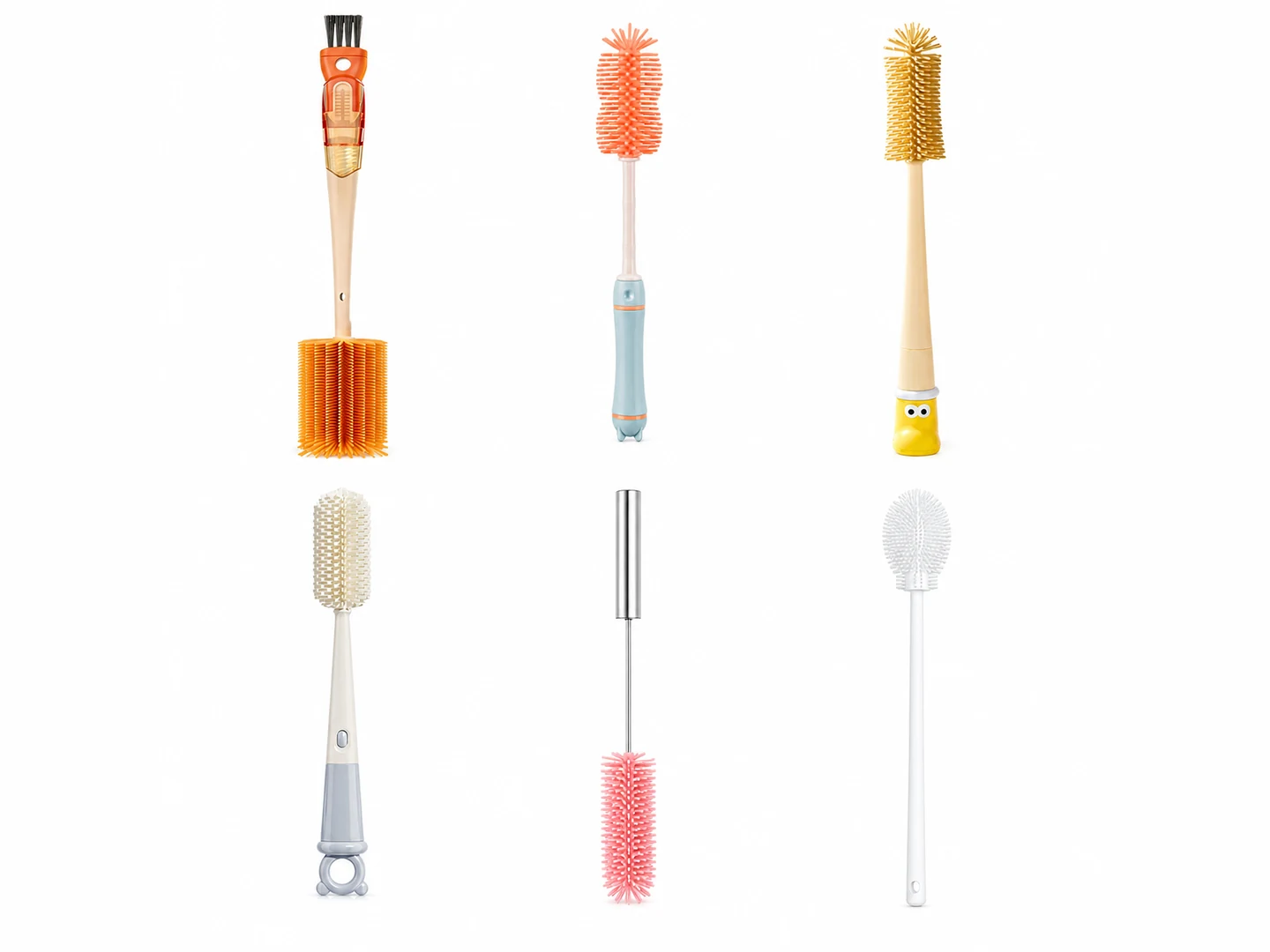
A silicone bottle brush is a cylindrical cleaning tool whose bristles are made of flexible silicone rubber instead of traditional fibers or wires. The bristles are typically molded around a central core—often stainless steel or plastic—and are engineered to be soft and pliable enough to prevent scratches, marring, or deformation on sensitive part surfaces. Silicone naturally resists many chemicals, withstands a wide temperature range, and does not absorb water or harbor bacteria the way natural fibers can, making these brushes especially useful in food, pharmaceutical, electronics, and precision manufacturing environments.
Common Types and Design Options
For kitchen cleaning examples, the FDA — Food Safety in Your Kitchen supports the distinction between normal cleaning, food handling, and hygiene habits.
For general foodborne-illness prevention language, the CDC — Preventing Food Poisoning is used as the public-health reference.
For the material or regulatory boundary in this section, the supporting reference is eCFR — 21 CFR 177.1500 Nylon Resins.
For material-selection language, this section is supported by British Plastics Federation — Thermoplastics.
For brush terminology and construction language, this section references American Brush Manufacturers Association — Brush Lingo.
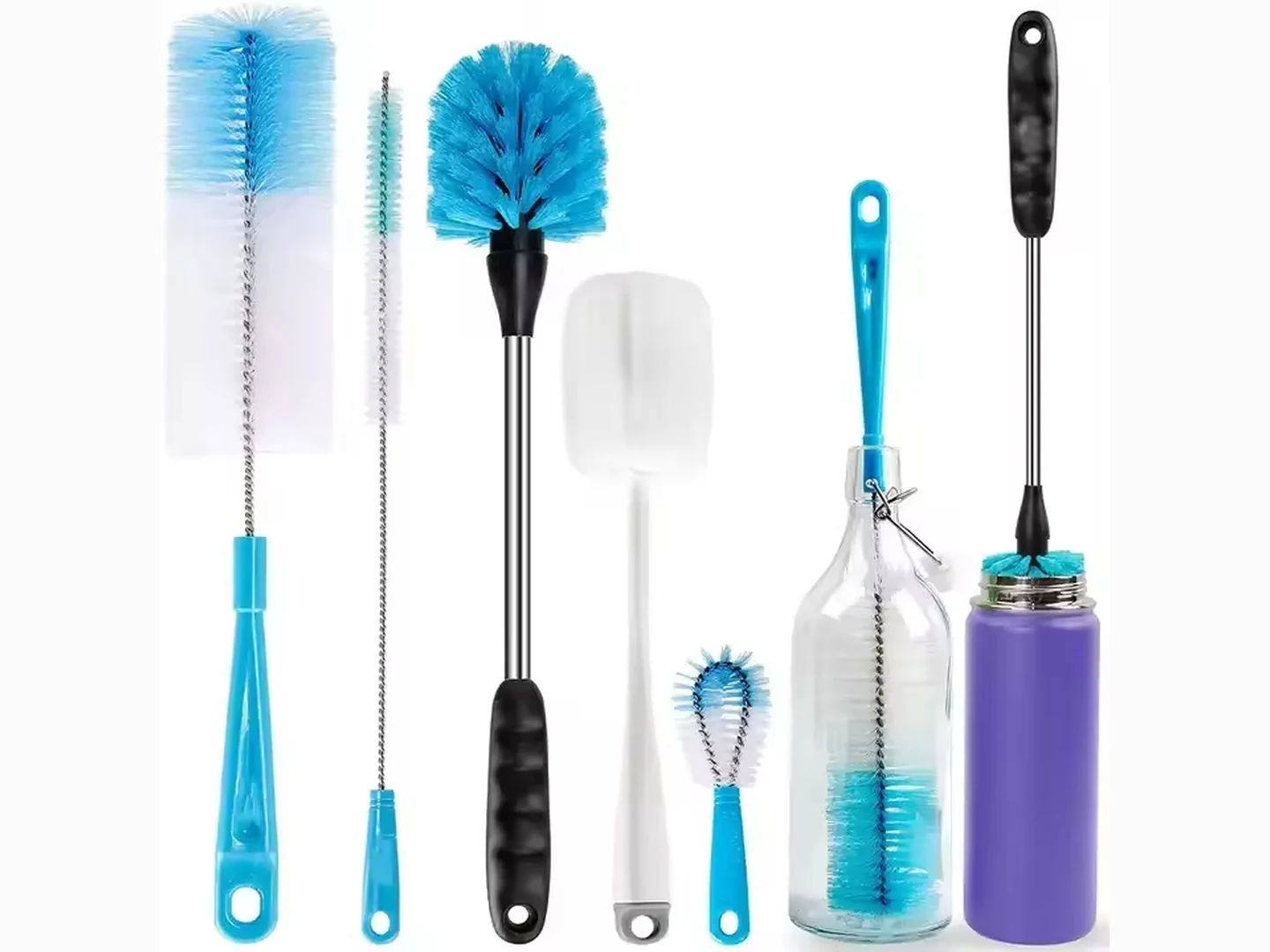
Not all silicone bottle brushes are the same. Variations in material, bristle configuration, core design, and handle attachment determine how well a brush performs in a specific cleaning task. Key design options include:
- Bristle shape: Straight, twisted, or wave‑patterned bristles affect scrubbing coverage and flow passage.
- Full‑silicone vs. cored brush: Some brushes have silicone bristles overmolded onto a central core; others may have a pure silicone stem for ultra‑flexibility.
- Core material: Stainless steel (common, corrosion‑resistant), plastic (lighter, non‑magnetic), or reinforced nylon.
- Mounting options: Fixed handle, loop handle, threaded end for machine attachment, or quick‑connect systems.
- Diameter range: From miniature brushes (a few millimeters) for capillary tubes up to large diameters (100 mm or more) for tanks and vessels.
Material Comparison: Silicone vs. Traditional Brush Filaments
Choosing the right filament material is the first step in protecting scratch‑sensitive parts. The table below compares common brush filament materials under typical cleaning conditions.
| Filament Material | Scratch Risk | Chemical Resistance | Typical Temp. Range | Durability / Life | Best When |
|---|---|---|---|---|---|
| Silicone | Lowest | Good for many solvents, acids, and bases; degrades with some oils and hydrocarbons | −60°C to ~230°C | High; resists set and tearing | Surface finish is critical; soft, non‑abrasive cleaning required |
| Nylon (abrasive or non‑abrasive) | Low to Medium | Attacked by strong acids and oxidizing agents | −40°C to ~120°C | Good; can harden over time | General bottle cleaning when scratch risk is moderate |
| Natural Fiber (Tampico, horsehair) | Low | Poor with alkalis and many solvents | Up to ~100°C (dry) | Moderate; absorbs water, may shed | Light dusting or low‑cost disposable applications |
| Metal Wire (Brass, stainless steel) | High | Good if matching alloy to environment | Very high | Very high, but can damage surfaces | Heavy rust, scale removal, or where scratching is acceptable |
Key Selection Factors for Scratch‑Sensitive Parts
Once silicone is identified as the preferred filament, several detailed factors determine which brush will work without causing damage while still cleaning effectively.
Residue Type and Adhesion
Loose powders and light dust require lower bristle density and stiffness. Sticky residues, dried adhesives, or baked‑on deposits may need a firmer silicone formulation or a brush with more aggressive bristle patterns, but still within the non‑scratch envelope. Always test on a sample part first.
Surface Sensitivity and Hardness
Match the bristle Shore hardness to the part material. A polished aluminum or coated surface may require a very soft silicone (low Shore A), while a stainless‑steel vessel with a delicate passivation layer might tolerate a slightly stiffer grade. The brush core should never contact the part; bristle length must exceed the maximum cavity depth or diameter so the core stays away from walls.
Bristle Diameter, Length, and Density
Small‑diameter brushes need a dense bristle pack to ensure even contact without missing spots. Overly long bristles can fold over and trap debris. Consider the relationship between brush OD, core OD, and the cavity ID—the brush needs enough clearance to avoid jamming but enough interference to clean effectively.
Handle, Core, and Mounting Interface
The core and handle must withstand the operating environment. Stainless steel cores (304 or 316) are standard for corrosion resistance. In magnetic or conductive environments, plastic cores may be necessary. The mounting interface—whether hand‑held twist handle, machine threaded end, or quick‑connect—must match the operator station or automated cleaning system.
Chemical Exposure and Temperature
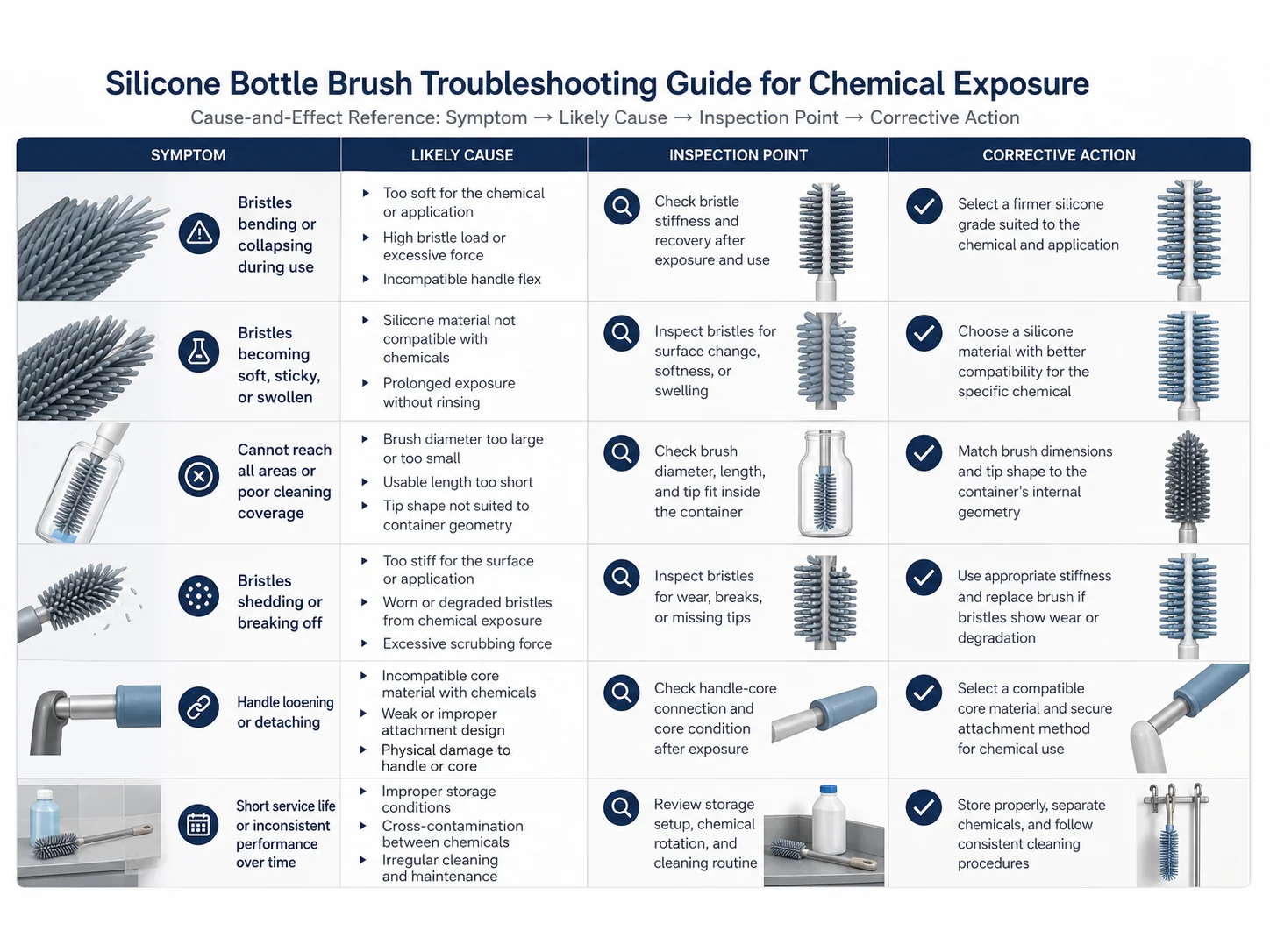
Confirm that the specific silicone compound is compatible with cleaning detergents, sanitizers, or solvents used in the process. Silicone generally handles broad pH ranges, but prolonged exposure to strong alkalis or some hydrocarbon oils can cause swelling. Temperature spikes during CIP (clean‑in‑place) or autoclaving should not exceed the brush’s stated limit.
Hygiene and Cleanability
In food, pharma, or medical settings, the brush design must support easy cleaning and sterilization. Look for one‑piece molded silicone over a sealed core to prevent bacteria entrapment. Brushes without crevices at the handle joint are easier to sanitize. Verify if the brush is rated for autoclave or chemical sterilization by the manufacturer.
Custom Sizing and Configuration
When standard catalog sizes do not fit a unique cavity geometry, custom brushes may be required. Before ordering, provide the supplier with detailed drawings showing the cavity ID, length, neck opening, and any internal features. Specify required bristle length, core material, and handling interface. Request a sample or drawing approval before full production.
Common Mistakes When Selecting Silicone Brushes
Avoid these frequent missteps to prevent damage, poor cleaning, or shortened brush life:
- Choosing by diameter alone. A brush that fits the opening may have the wrong bristle length, stiffness, or core exposure risk.
- Assuming all silicone is the same. Different silicone formulations vary in hardness, temperature resistance, and chemical compatibility.
- Overlooking core material corrosion. A stainless steel core in a chloride‑rich environment can pit or rust, contaminating parts.
- Using excessive force. Even silicone bristles can abrade if pressed too hard against a very soft surface.
- Neglecting brush maintenance. Bristles packed with dried residue lose conformability and can trap abrasive particles.
- Ignoring the neck‑to‑cavity ratio. If the brush handle cannot articulate to reach all internal surfaces, cleaning will be incomplete.
When a Silicone Bottle Brush Is Not Enough
Silicone brushes excel at non‑abrasive cleaning, but they are not a universal solution. Recognize these boundaries:
- Heavy, hardened deposits. Thick scale, carbon, or baked‑on residues may require ultrasonic cleaning, chemical soaks, or abrasive brushes with a softer substrate that can be reground or recoated.
- Sharp internal edges or burrs. Silicone bristles can tear on sharp features, leaving debris behind. A different brush type or edge‑preparation step may be needed.
- Extreme high temperatures. While silicone handles moderate heat, continuous exposure above 230°C will degrade the material. For ovens or hot dip tanks, a metal brush or alternative cleaning method is required.
- High‑pressure, high‑speed rotary cleaning. At very high rpm, silicone bristles can deform or generate heat that melts residues; consider a specialized brush designed for power tool use.
- When zero visible scratches are required on optics or precision surfaces. Even soft silicone can transport particles that cause micro‑scratching; a lint‑free wipe or cleanroom swab may be safer for final cleaning.
Final Takeaway
Selecting a silicone bottle brush for scratch‑sensitive parts is a balancing act between cleaning effectiveness and surface protection. Start by confirming silicone is the right base material for your temperature and chemical environment. Then refine by bristle hardness, core material, diameter fit, and mounting interface. Always test on a sample or low‑value part, and share a detailed cavity drawing with your supplier when a custom configuration is necessary. By checking these factors early, you minimize risk to expensive parts and keep cleaning operations consistent and repeatable.
Frequently Asked Questions
Can a silicone bottle brush be used with aggressive solvents?
Silicone generally resists many solvents, but strong hydrocarbons, chlorinated solvents, and certain petroleum‑based oils can cause swelling and loss of mechanical properties. Always consult the brush manufacturer’s chemical compatibility chart for the specific silicone formulation used.
How do I determine the correct bristle stiffness for a fragile surface?
Bristle stiffness is measured by Shore A durometer. For highly fragile surfaces (e.g., soft plastics, optical coatings), select a silicone with Shore A 30–50. For harder but still scratch‑sensitive metals, Shore A 50–70 may be acceptable. Request a sample to perform a scratch test on scrap material before buying in volume.
Is a silicone brush suitable for cleaning threaded holes?
Silicone bristles can clean lightly soiled threads, but they may lack the rigidity to dislodge compacted debris from thread roots. For deep, dirty threads, consider a nylon brush with a dedicated thread profile or a separate cleaning method before final silicone wipe.
What is the difference between food‑grade and industrial‑grade silicone brushes?
Food‑grade silicone brushes are manufactured from compounds that meet FDA or EU food‑contact regulations. They are often colored for detectability (e.g., blue) and may be certified by third‑party labs. Industrial‑grade silicones may use different pigments or processing aids not suitable for direct food contact. Verify the required certification with the supplier.
What should I check before requesting a custom‑sized silicone bottle brush?
Prepare a dimensional drawing of the cavity including minimum opening diameter, largest internal diameter, length, and any undercuts or irregularities. Specify the required bristle length, core material, handle style, operating temperature, cleaning chemicals, and acceptable bristle hardness range. Asking for an engineering drawing for approval before production is standard practice.
How should I clean and maintain a silicone brush to extend its life?
Rinse immediately after use to prevent residue drying. For food or pharma applications, follow prescribed CIP or autoclave cycles. Avoid using wire brushes or metal scrapers on the silicone bristles. Store brushes hanging or bristle-up so they dry fully and do not deform.
Does bristle density affect cleaning performance?
Yes. Higher bristle density distributes load more evenly, reducing the chance of localized high pressure that could scratch. However, very dense brushes may trap soil and require more thorough rinsing. Dense‑packed brushes also tend to be stiffer overall, so balance density with bristle softness for scratch‑sensitive work.
Are all silicone bottle brushes autoclavable?
Not necessarily. While silicone itself can withstand autoclave temperatures, the core material (especially plastic or non‑autoclavable stainless steel grades) and any adhesive joints may not. Confirm the brush is rated for autoclave use and check the maximum steam temperature and cycle time with the manufacturer.