What Is a PBT Brush and Why Use It for Scratch-Sensitive Parts?
Before ordering pBT Brush for Scratch-Sensitive Parts, define the working condition clearly enough that a supplier can build and verify the brush against the job. The most useful details are drawings, dimensions, mounting interface, filament material, stiffness, sample testing, and actual working conditions. Missing one of these points often leads to a brush that looks correct on paper but fails during installation or daily use.
A PBT brush is a tool with bristles made from polybutylene terephthalate, a thermoplastic polyester known for its mild bending stiffness, excellent resistance to many cleaning chemicals and solvents, and low moisture absorption. Unlike stiffer nylon or metal bristles, PBT filaments are less likely to leave micro-scratches on sensitive surfaces like polished metals, coated optics, glass, soft plastics, and painted finishes. This makes PBT brushes a common choice in industries such as electronics assembly, medical device cleaning, automotive finishing, and laboratory equipment maintenance.
For SI measurement and unit specification context, this section references NIST — Metric SI.
For thermoplastic material family and polymer property context, this section references British Plastics Federation — Thermoplastics.
For brush construction terminology, bristle/fill/backing/stem terms, this section references American Brush Manufacturers Association — Brush Lingo.
For scratch-sensitive work, the key advantage is the filament’s controlled softness. PBT bristles can remove dust, light residues, and process debris without altering the substrate surface roughness—provided the brush design, filament diameter, and exposure conditions are correctly matched to the task.
Common Customization Options for PBT Brushes
Before you prepare a technical quotation request, you should understand which variables you can control. A typical custom PBT brush order involves specifying:
For engineering drawing, dimensions, tolerance, thread, fit, and RFQ specification context, this section references ASME — Y14.5 Dimensioning and Tolerancing.
- Filament diameter – commonly ranges from 0.05 mm to 0.30 mm for scratch-sensitive applications; finer diameters bend more easily and are safer for polished surfaces.
- Trim length – the exposed bristle length affects stiffness, reach, and cleaning aggressiveness.
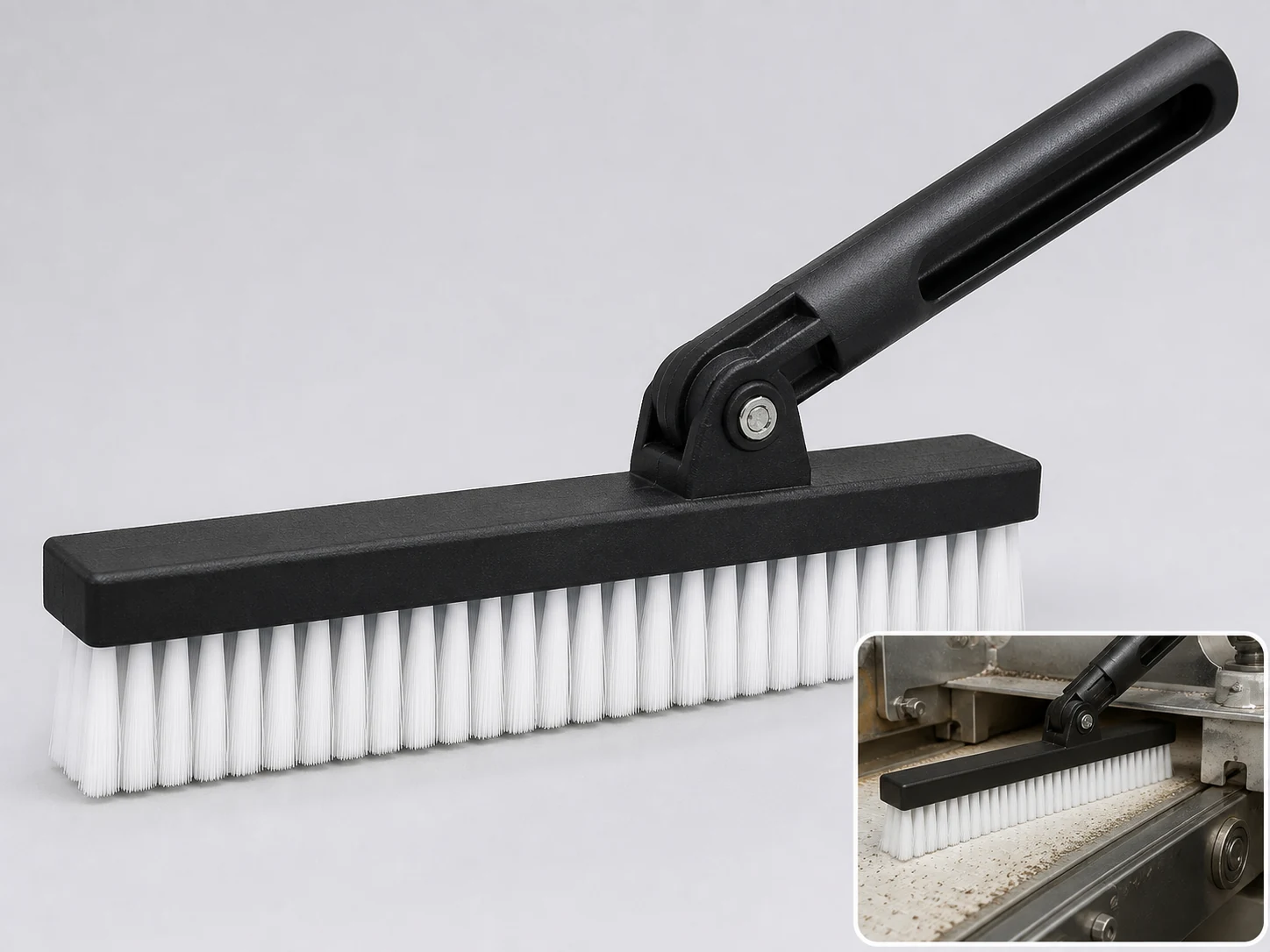
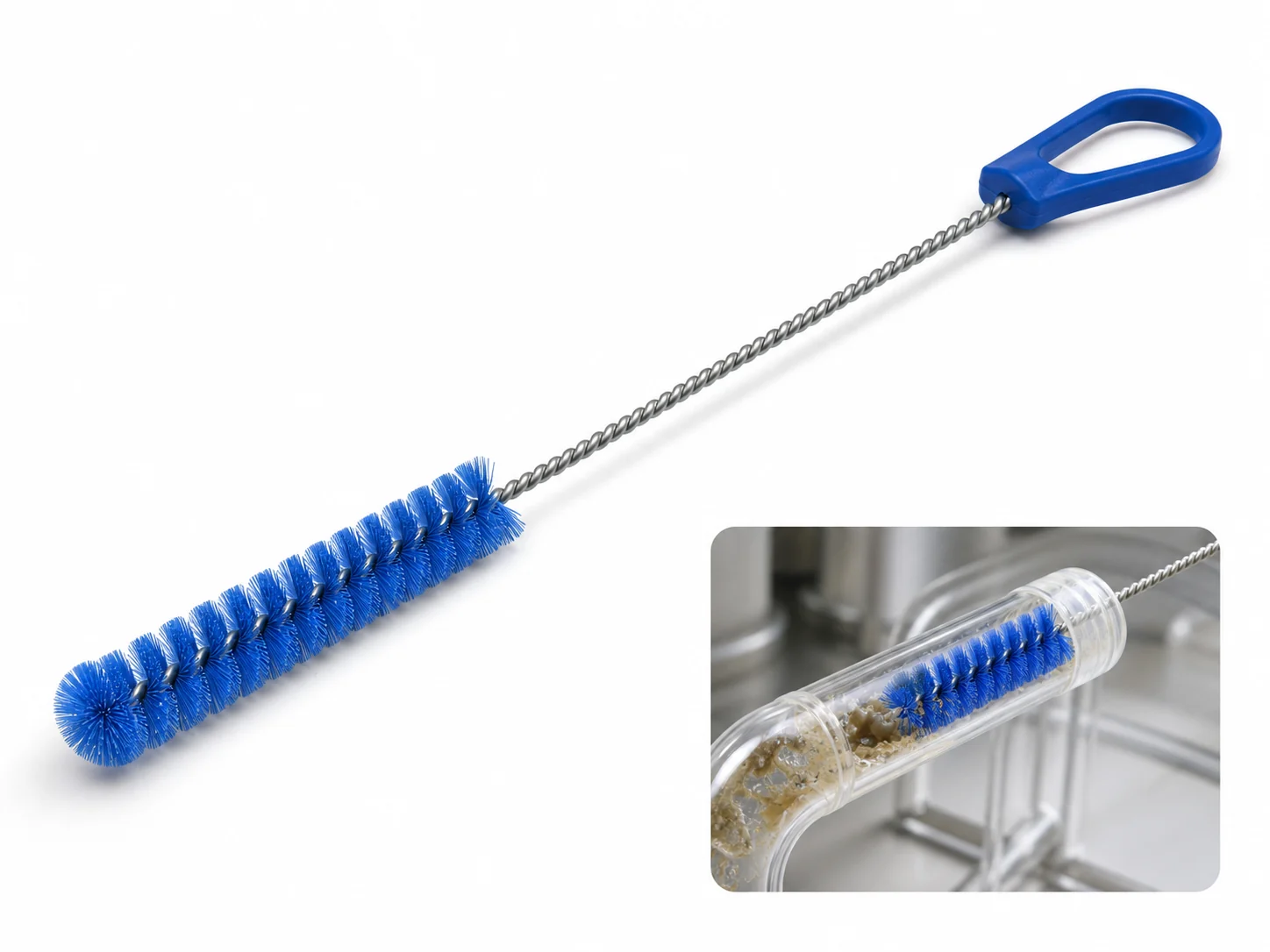
- Brush shape – cylindrical, cup, disc, tube, strip, or custom-formed shapes to match the part geometry.
- Core or handle material – stainless steel, aluminum, polypropylene, wood, or other substrates; critical when the brush will be used with chemicals or in cleanroom environments.
- Mounting interface – threaded, keyed, magnetic, quick‑release, or manually held; must match your equipment or operator ergonomics.
- Tufting pattern and density – spiral, straight, staggered, or custom arrangements; higher density can hold more cleaning agent but may reduce debris clearance.
Material and Design Comparison: PBT vs. Other Brush Filaments
| Filament Material | Scratch Risk on Sensitive Surfaces | Chemical Resistance | Heat Tolerance | Cost / Complexity | Typical Best-For |
|---|---|---|---|---|---|
| PBT | Low (safe for most polished, coated, and soft surfaces when properly specified) | Good: resists many solvents, cleaning agents, and mild acids | Up to ~140°C (bristle softening may start lower under load) | Medium | Electronics cleaning, optical surfaces, medical device finishing, automotive interior parts |
| Nylon 6/6.12 or 6.6 | Medium to high (harder when dry, can scratch unpainted metal and soft plastics) | Good; absorbs moisture, which can alter stiffness | Up to ~180°C | Low to medium | General industrial cleaning, tough debris on hard metals, high-wear applications |
| Horsehair | Low (natural softness, but inconsistent quality) | Poor; degrades with many chemicals and moisture | Low (degrades above ~60°C) | Medium | Dusting, polishing, light cleaning of antiques or soft natural materials |
| Tampico (natural fiber) | Low to medium (depends on processing) | Limited; not suitable for strong solvents or acids | Low (similar to horsehair) | Low | Low-cost dusting, rough surface cleaning, some food processing |
| Brass or steel wire | High (will scratch) | Brass may tarnish; steel can rust unless stainless | High | Low to medium | Heavy debris removal, rust scaling, weld cleaning, non-sensitive surfaces |
Note: Always verify your exact operating conditions with a sample. The table reflects general behaviour; specific PBT grades (e.g., anti-static, flame-retardant) may exhibit different properties.
How to Verify the Right PBT Brush for Your Application: A Buyer’s Checklist
Use this checklist before you finalize a custom order or approve a production sample:
- Part material and surface finish – Confirm the PBT grade and filament diameter cannot scratch your substrate. Run a scratch test on a rejected or sacrificial part.
- Residue type – Is the contaminant oily, particulate, static-charged, or dried-on? Lighter residues suit finer filaments; heavy or sticky residues may require a slightly larger diameter or a pre-wash step.
- Chemical exposure plan – List all cleaning agents, solvents, and disinfectants the brush will contact. PBT resists many common chemicals, but some strong acids or phenolic compounds can degrade it.
- Equipment interface – Provide a dimensional drawing or sample of the mounting arbor, shaft, or handle connection. Confirm tolerances and rotation direction if used with automated equipment.
- Cleanroom or hygiene requirements – If used in ISO Class cleanrooms or medical environments, ask for material certificates, cleanliness of packaging, and any anti-static treatment.
- Sample testing protocol – Define how you will evaluate the sample: number of cycles, acceptable surface roughness change, visual inspection criteria, and failure conditions.
- Maintenance expectations – Decide how the brush will be cleaned or dried between uses. Prolonged wet storage can alter PBT stiffness slightly over time.
Common Mistakes When Ordering a Custom PBT Brush
- Choosing filament diameter by guesswork – Saying “soft” isn’t enough. A 0.07 mm PBT filament behaves very differently from a 0.25 mm filament, even though both are non-metallic.
- Ignoring the core material – A chemically resistant filament is useless if the handle or core degrades in your washing process. Specify core material equally carefully.
- Overlooking wet vs. dry friction – PBT absorbs very little water, but when wet, the interface lubrication can change scratch risk. Always test under real moisture conditions.
- Assuming all PBT is the same – There are multiple PBT compound variants. Some include additives for UV stability, anti-static properties, or flame retardance. State your environmental needs explicitly.
- Skipping a full-dimension drawing review – Even small errors in overall length, brush diameter, or trim length can cause interference or poor contact. Always review a technical drawing before production.
When a PBT Brush Might Not Be Enough
A PBT brush is not the right choice in every situation. Consider an alternative if:
- You require abrasive cutting or heavy material removal – PBT is a surface-sensitive filament, not an abrasive. For deburring metal edges or removing thick coatings, a brush with embedded abrasive grit or a wire brush is necessary.
- Operating temperatures exceed 140°C continuously – At elevated temperatures, PBT filaments can soften or lose resilience. For high-temperature cleaning, aramid, nylon 6.6, or metal brushes may be more appropriate.
- Static dissipation is mandatory – Standard PBT is an insulator. If you are cleaning sensitive electronics where static discharge is a risk, you will need a carbon-filled or anti-static treated PBT grade, or a different filament such as conductive nylon.
- Strict FDA or food-contact compliance without proper documentation – While some PBT compounds can meet food-contact requirements, you must request the necessary certifications and test reports. Do not assume a standard industrial PBT brush is food‑safe.
- Chemical environment includes highly aggressive fluids – PBT is resistant to many chemicals but not to strong alkalis at high concentrations or some chlorinated solvents. Always check a chemical compatibility chart or request a lab immersion test.
Final Takeaway: Ordering with Confidence
A well-specified PBT brush can clean or process scratch-sensitive parts reliably for thousands of cycles—but only if the technical details are right from the start. Focus on filament material grade, diameter, core design, and real-world test conditions before committing to a purchase order. When you treat the RFQ as a technical verification step rather than a simple shopping list, you reduce the risk of receiving a brush that underperforms or damages your product.
Frequently Asked Questions
Can a PBT brush scratch polished metal or glass surfaces?
When correctly specified, a fine-diameter PBT brush (typically under 0.15 mm) poses very low scratch risk on most polished metals, optical glass, and coated plastics. However, always perform a controlled scratch test on an actual part, as surface hardness and coating adhesion vary.
What filament diameter should I choose for cleaning sensitive optics?
Start with a diameter between 0.05 mm and 0.10 mm. These ultra-fine filaments are soft enough to avoid surface marring while still effective at removing dust and light residues. If the brush is too limp and does not clean effectively, gradually increase the diameter in small increments.
Is PBT brush filament resistant to isopropyl alcohol (IPA) and other common solvents?
Yes. PBT exhibits good resistance to isopropyl alcohol, acetone (short-term), and many hydrocarbon solvents. For prolonged exposure or heated solvent cleaning, request a material datasheet or perform a brief immersion test to ensure no swelling or loss of stiffness.
How do I specify the core material when the brush will be used with harsh chemicals?
Match the core material to your chemical environment. Stainless steel (304 or 316) handles most solvents and mild acids. For strong acids or chlorinated solvents, polypropylene or PVDF cores may be better. Always disclose the full cleaning chemistry to your brush supplier.
Can I use a PBT brush in a cleanroom or medical device manufacturing environment?
Yes, but you must specify cleanroom-compatible materials and packaging. Ask about filament cleanliness (particle shedding), anti-static treatment if required, and whether the brush can be sterilized via autoclave, EtO, or gamma radiation. Standard commodity PBT brushes may not meet cleanliness or sterilization standards.
What is the best way to test a sample PBT brush before ordering in bulk?
Create a short test protocol that replicates your actual process: same speed, pressure, chemical exposure, and number of cycles. Inspect the surface post-test using the method you will use in production (visual, microscope, profilometer). Also check the brush for excessive bristle loss or shape deformation.
How do I maintain a PBT brush to prolong its life?
Rinse the brush with clean solvent or water after use, if compatible, to remove chemical residues. Dry it completely before storage, as prolonged dampness can slightly alter PBT stiffness. Inspect the filament tips regularly for splitting or flattening, which can indicate the brush is due for replacement or redesign.
What should I include on the RFQ drawing for a custom PBT brush?
Include overall dimensions (length, diameter, trim length), filament material and diameter, core material, mounting detail (thread size, keyway, or quick-connect spec), tufting pattern if critical, and any special treatments (anti-static, cleanroom packaging). Adding a note about the target application helps the supplier catch potential mismatches.