
Brush Type
Custom Floor Scrubber Sweeper Brushes
Floor / Sweeper Brush
Choose this brush type when a floor machine needs a disc, roller, main broom, or side brush matched to the floor texture, debris load, and machine hub.
At a glance
- How it is driven
- Machine-driven
- How it mounts
- Machine hub, spline, clutch plate, keyed shaft or side-brush center plate.
When should you choose this brush type?
Choose a floor scrubber or sweeper brush when the brush is driven by a floor machine and the job depends on deck fit, working width, downforce, or debris pickup. Compare a road-sweeper broom instead when the priority is outdoor litter pickup, gutter reach, impact resistance, and following rough pavement rather than controlled indoor scrubbing.
What are Floor Scrubber Sweeper Brushes?
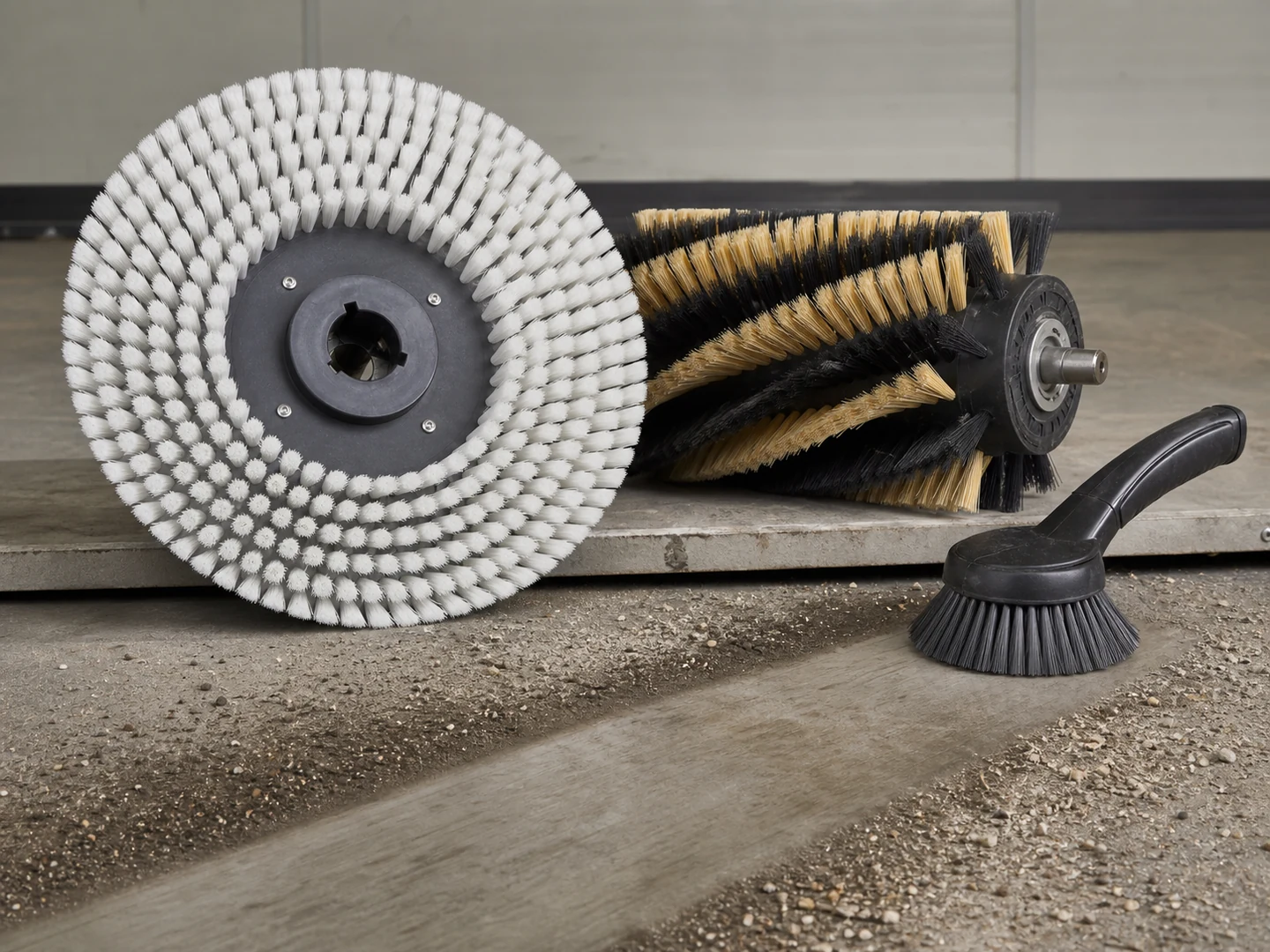
Floor scrubber and sweeper brushes convert machine rotation into repeatable contact over a broad floor area. Disc brushes work mainly with the face, cylindrical rollers work across a continuous width, main brooms lift and carry loose debris, and side brushes reach walls and gutters.
The correct structure is determined by the machine model, outside diameter, working width, hub or spline, floor surface, and whether the duty is washing, scrubbing, stripping, polishing, or dry sweeping. A brush that fits the machine but uses the wrong trim, density, or fill can leave uncleaned bands, overload the drive, or abrade the floor.
What dimensions can I customize?
| Contact setting | Set deck pressure to the machine range |
|---|---|
| Brush diameter | 100–500 mm; 500 mm; 100–700 mm |
| Working width | 200–1200 mm; 500 mm; 100–1200 mm |
| Trim length | 20–80 mm; 20–50 mm; 20–60 mm |
Where is this brush type commonly used?
Start with the job the brush needs to do, then confirm dimensions, contact direction, material, and mounting.
What configurations are available?
Disc scrub brush
A flat or slightly flared face brush for washing, scrubbing, stripping, or polishing beneath a floor machine.
Cylindrical roller brush
A shaft- or hub-mounted roller for continuous contact across the machine width and for structured or uneven floors.
Main sweeping broom
A cylindrical patterned broom that lifts debris toward the collection path; row pattern and fill mix control pickup and discharge.
Side or gutter brush
A flared disc or conical brush that reaches edges, walls, corners, and gutters outside the main brush path.
Mixed-fill assembly
Different filament materials or stiffness zones are combined where one brush must pick up both fine dust and coarse debris.
What material is right for this brush type?
Nylon PA
General scrubbing where recovery, wear resistance, and controlled surface contact are required.
Polypropylene PP
Wet sweeping and economical coarse-debris work where low moisture uptake and chemical tolerance are useful.
PBT
Wet or detergent service requiring good recovery and lower water absorption than common nylon grades.
Abrasive nylon
Stripping, deep scrubbing, and controlled surface conditioning; grit and filament size must match the floor finish.
Steel wire
Aggressive outdoor or industrial sweeping only where the surface and machine are designed for wire contact.
Filament materials to compare
What do I need to know before ordering?
Confirm the machine make and model, hub or spline drawing, brush diameter and width, rotation direction, installed clearance, floor material, wet or dry process, debris size, and customer-supplied operating speed.
Questions this page is asked
How should a new floor-machine brush contact pattern be qualified?
Set contact by the machine maker's procedure and verify an even pattern on a representative test area before extending the run. Increase contact only within the equipment limits; excessive deck load or an uneven band can accelerate fill wear, raise drive demand and damage a sensitive floor finish.
Which observations justify removing a scrubber or sweeper brush from service?
Remove and inspect it when the cleaning band becomes uneven, fill is missing or permanently folded, the hub is cracked, retention is loose, or vibration remains after debris is cleared. Compare wear at both ends or around the full disc, correct the machine or installation cause, and replace the brush when it can no longer maintain the approved pattern.
Guides that go deeper on this
Carpet Machine Brush vs Floor Scrubber Brush: Which Fits?
Read this guideGuideFloor Scrubber Brush Selection: Disc Brush vs Roller Brush
Read this guideGuideHow to Clean Brush Rollers in Floor Scrubbers and Sweepers
Read this guideGuideHow to Optimize Floor Burnisher Brushes Without Floor Damage
Read this guideGuideReproducing an OEM Replacement Brush
Read this guideNo catalogue item for this yet
Every brush here is made to order, and this one has no catalogue entry so far. Send the working surface, the residue, the access opening and the quantity, and it is quoted through the same specification route as the rest of the range.
Custom Manufacturing RFQ
Discuss This Brush Type
Share the working surface, residue, dimensions, material direction, interface, quantity and drawing or sample photo.
Custom Brush RFQ
Request a Custom Cleaning Brush Quote
Upload a drawing, product photo, or sample photo and provide the core dimensions and cleaning conditions.
“We need a brush to remove wet residue from a stainless steel conveyor, about 800mm wide. The current brush wears quickly. We can send photos.”
“We sell drinkware and need a cleaning brush to include with the product. Quantity around 5,000 pieces.”