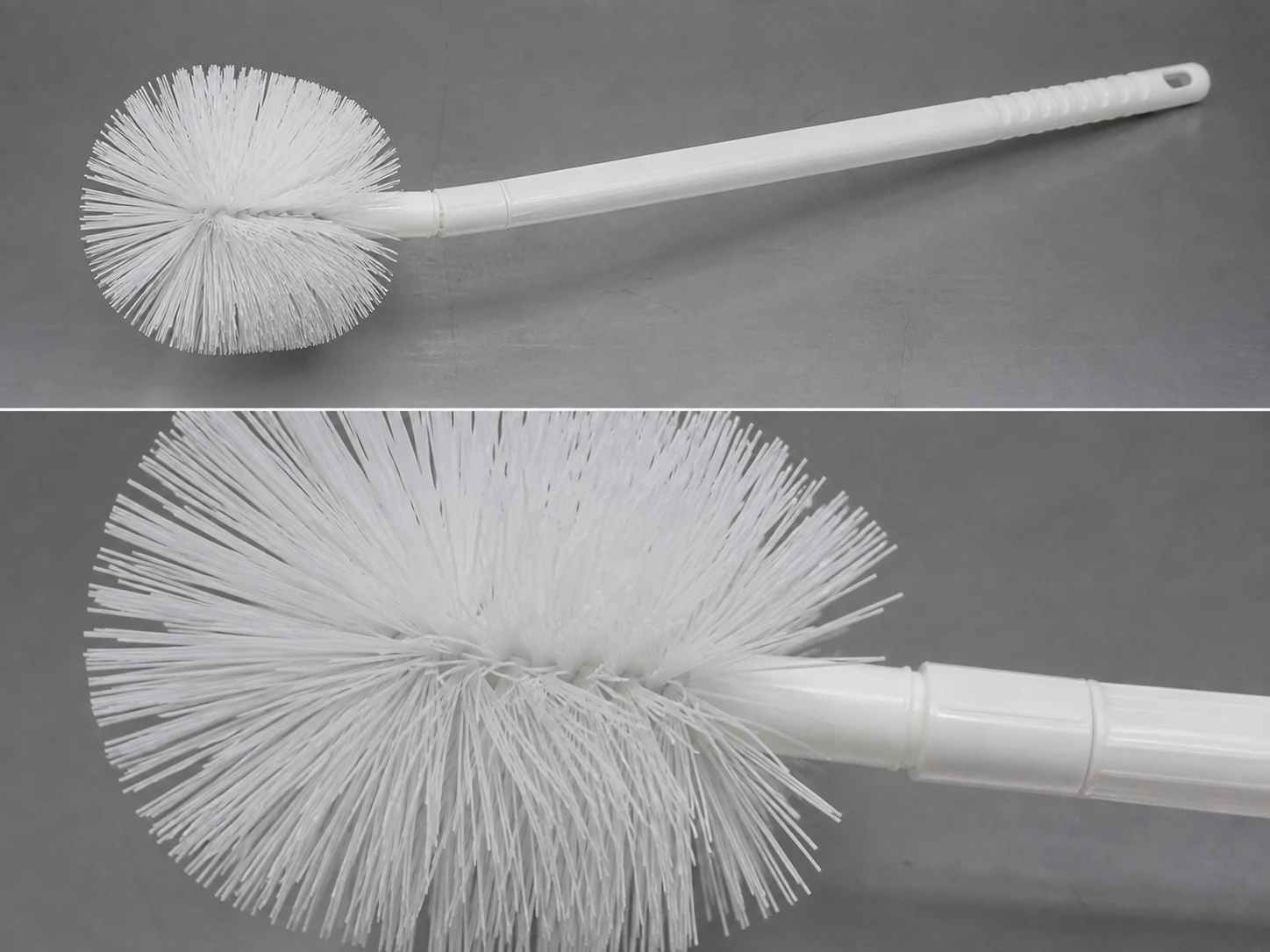
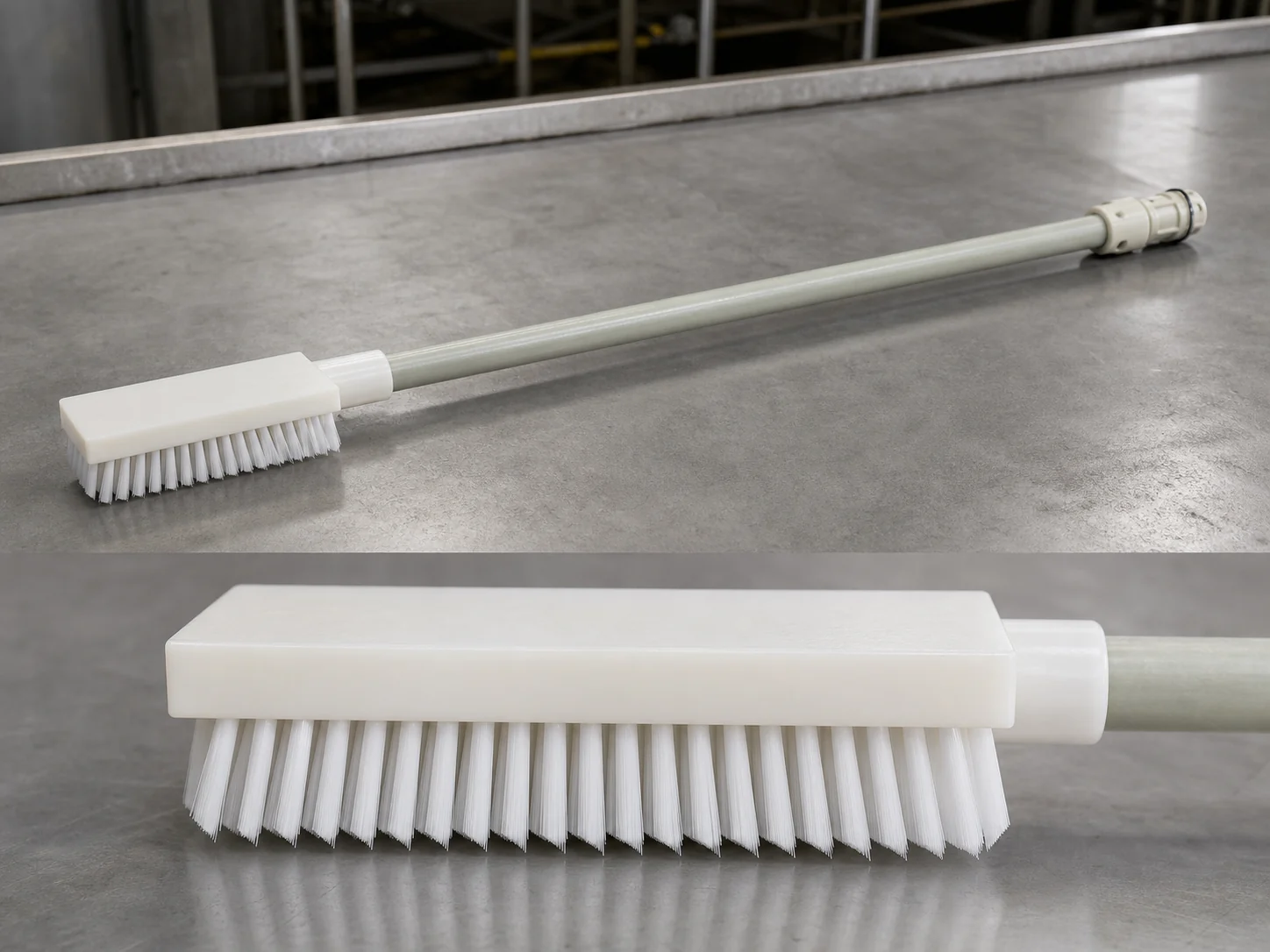
100mm PP Acid Bottle Brush
All-PP 100mm acid bottle brush with fixed 400mm handle for wide-mouth acid bottles, carboys, and chemical containers.
- Head Ø
- 100 mm
- Head length
- 250 mm
- Handle
- 400 mm

Standard & Custom Brushes · Since 2011
PRODUCT CATEGORY
Tank and vessel cleaning is defined by reach, internal wall contact and chemistry. A storage tank, chemical drum, solvent vessel and silo may all need large-area internal cleaning, but the fluid, residue and access opening change the safe brush construction.
Compare hand and long-reach tank brushes, chemical-resistant vessel brushes, drum brushes, silo dust tools and other internal-vessel cleaning products.
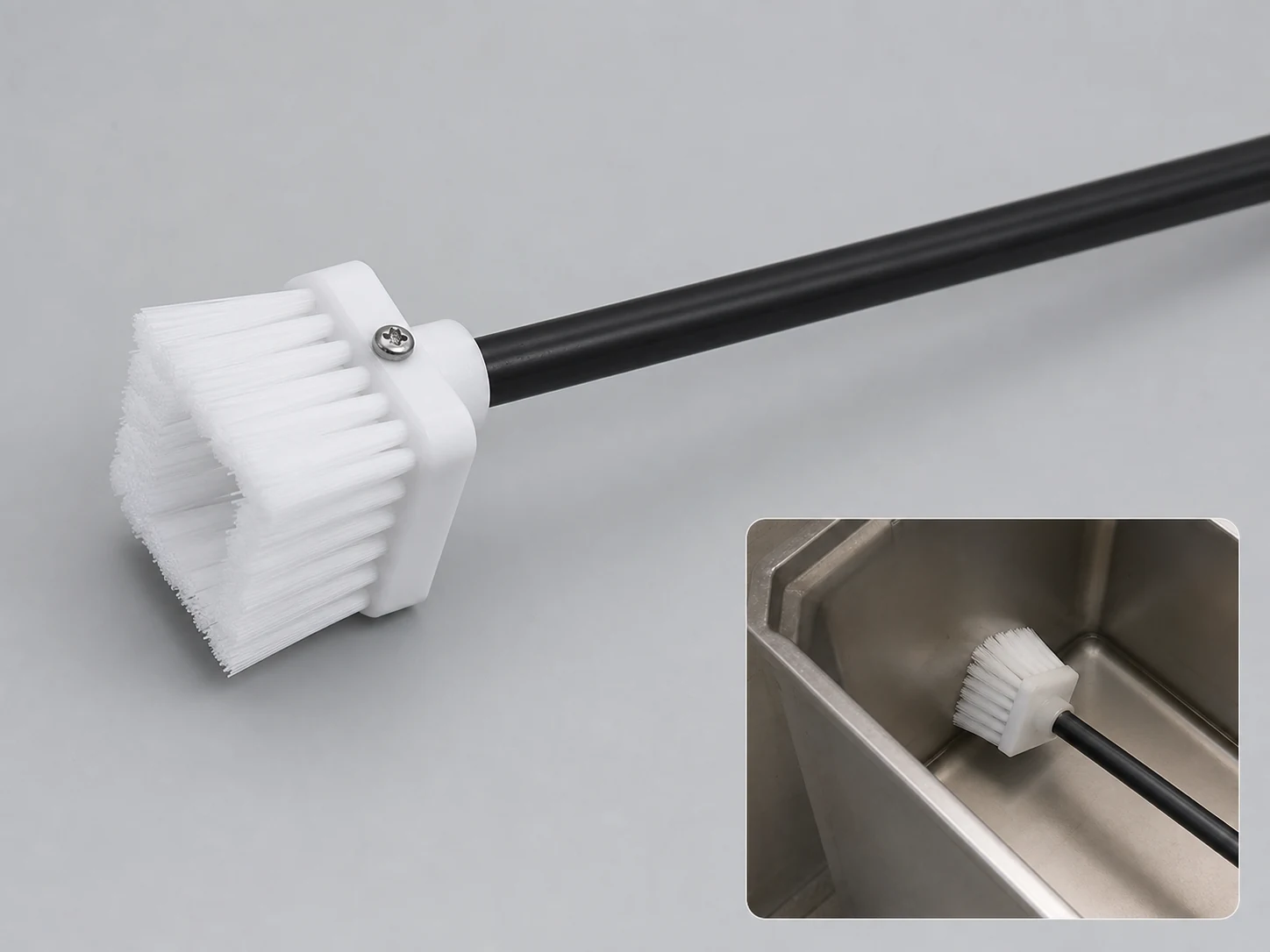
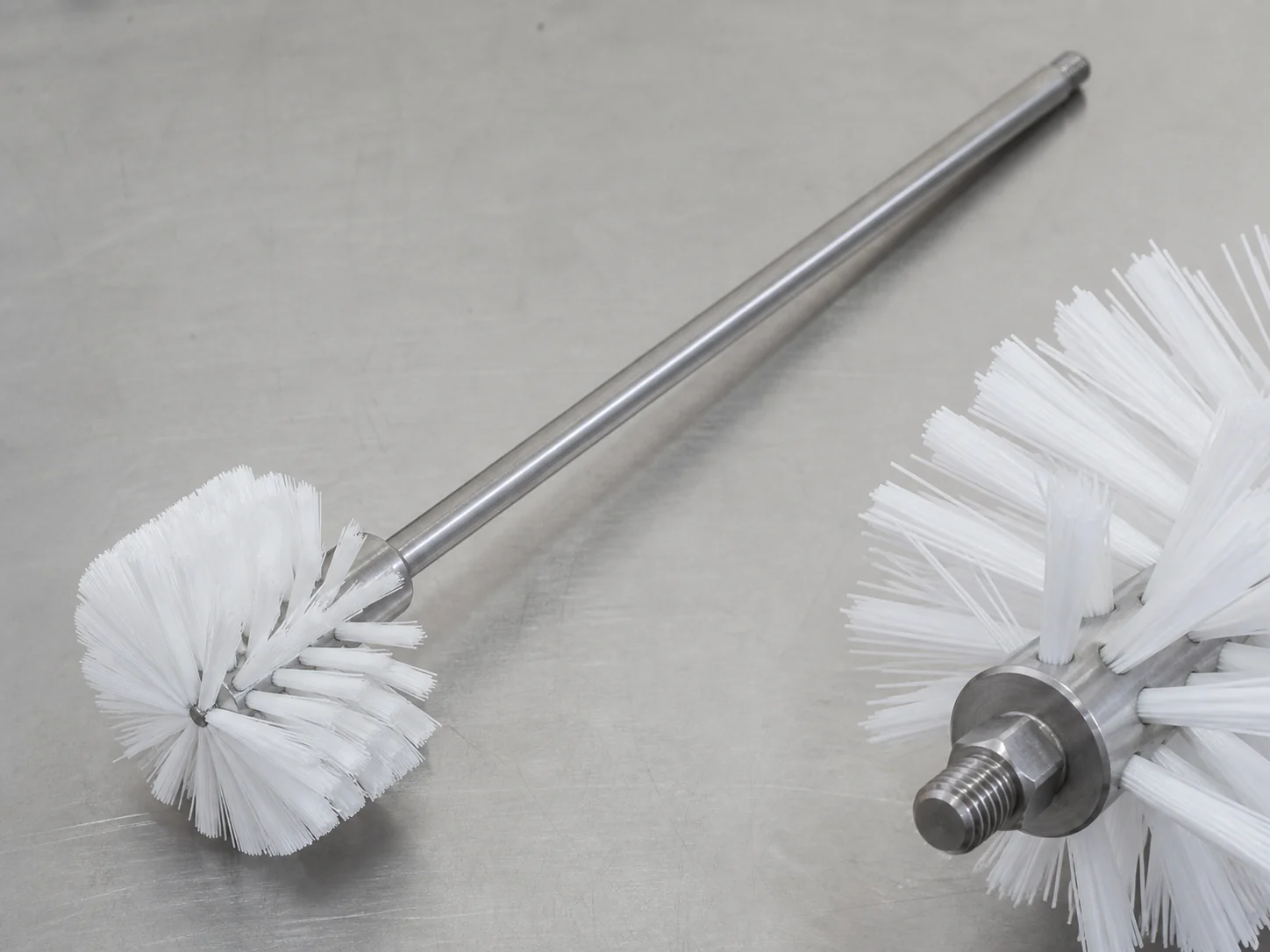

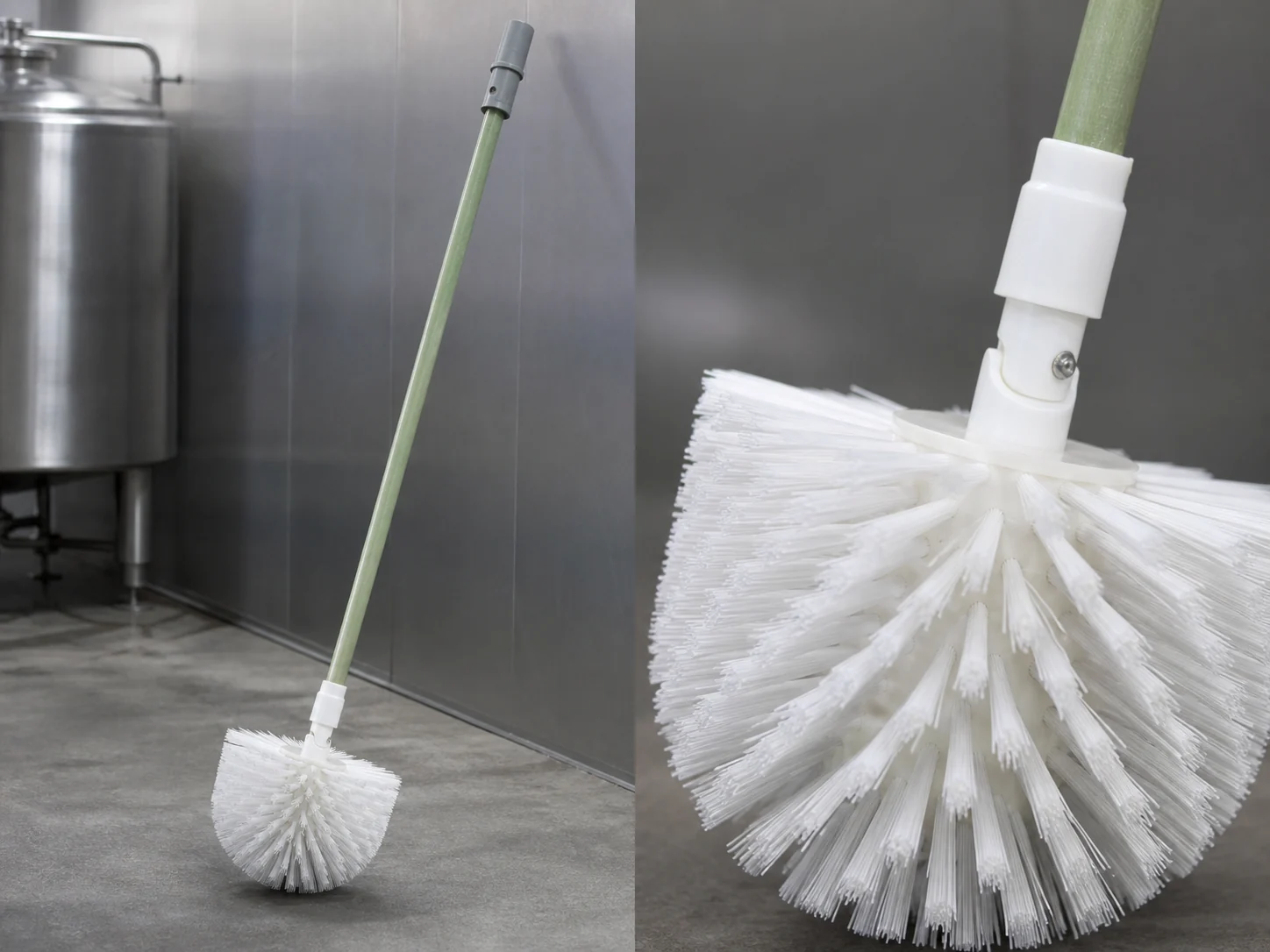
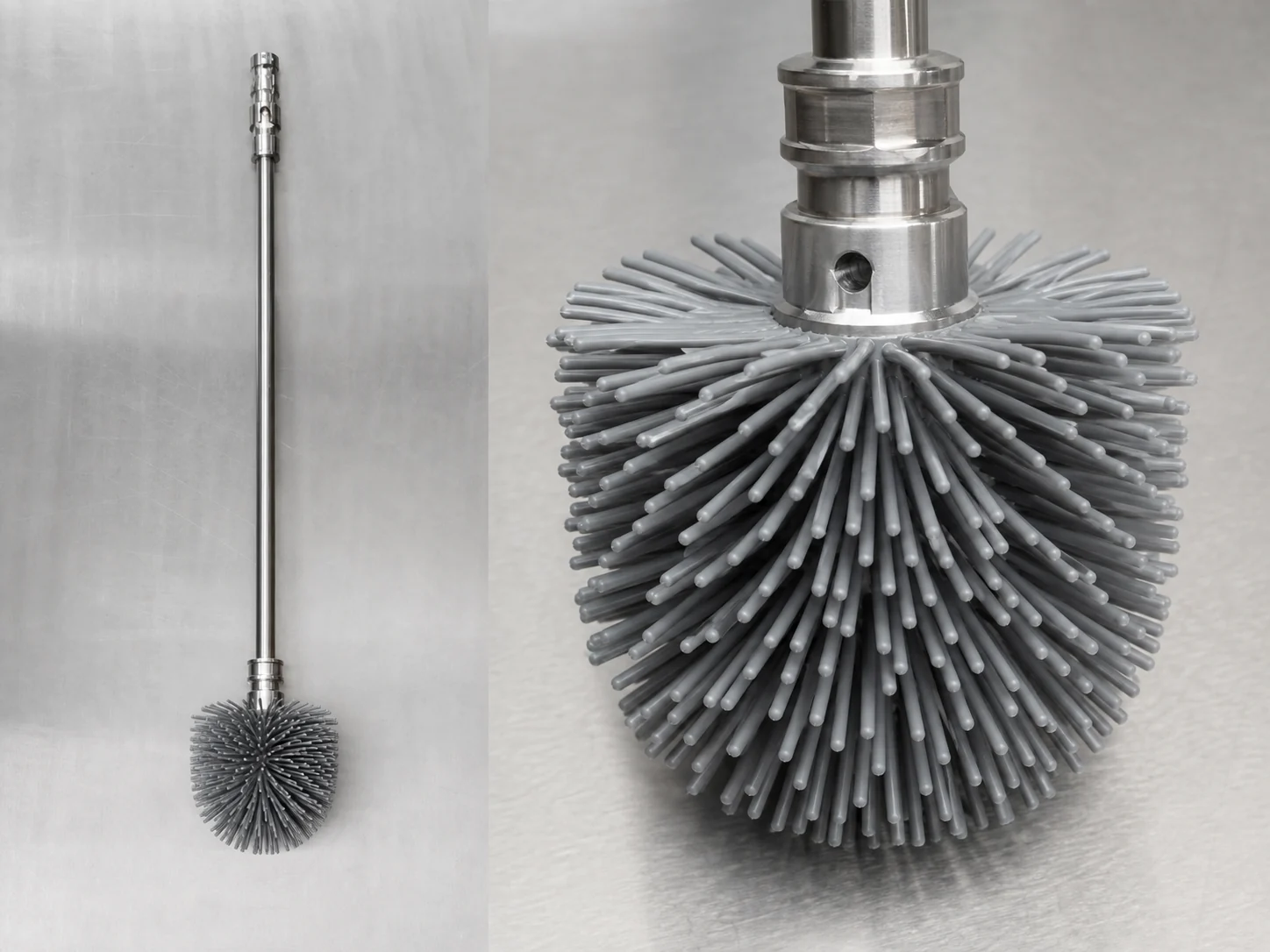
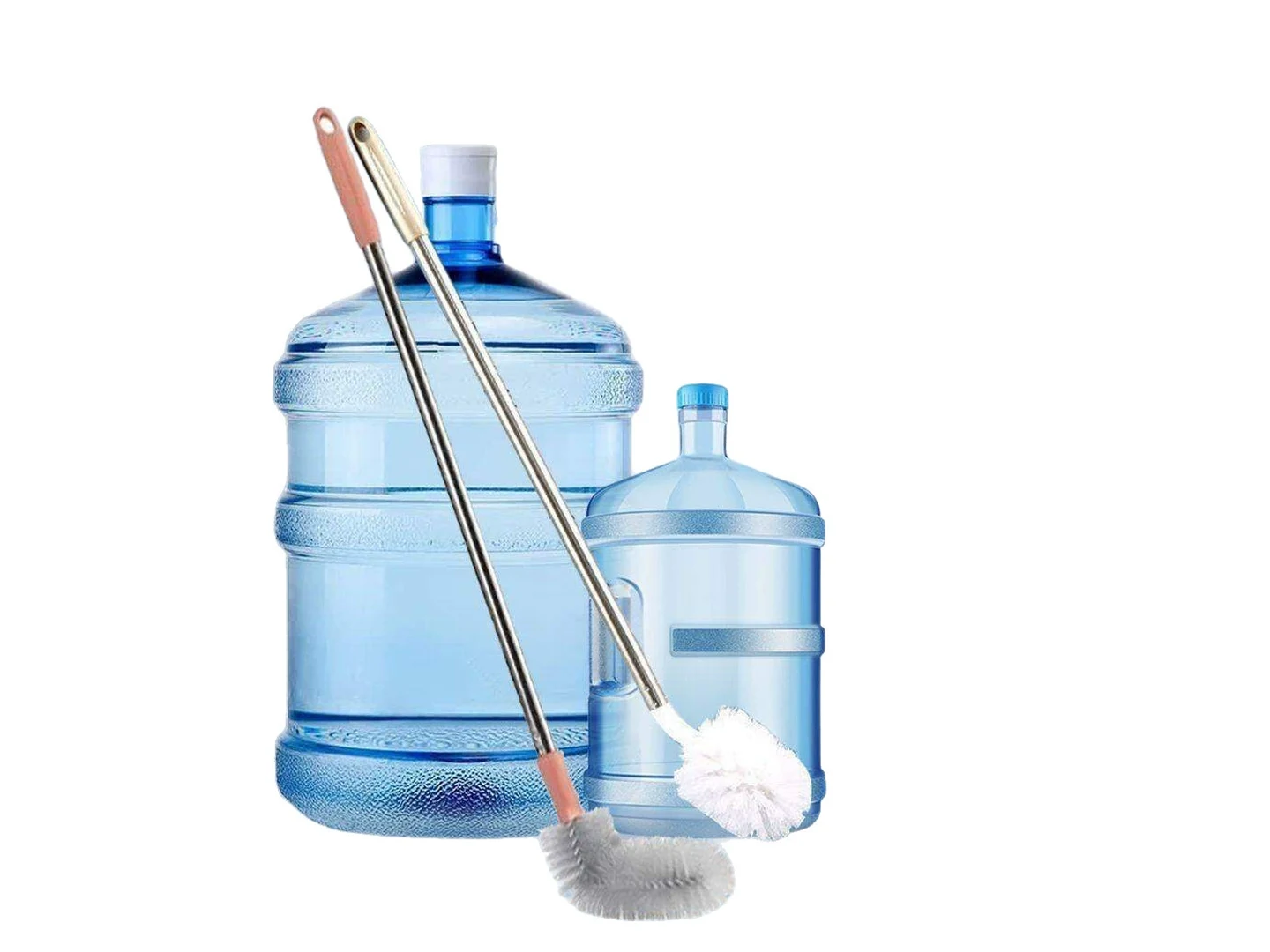
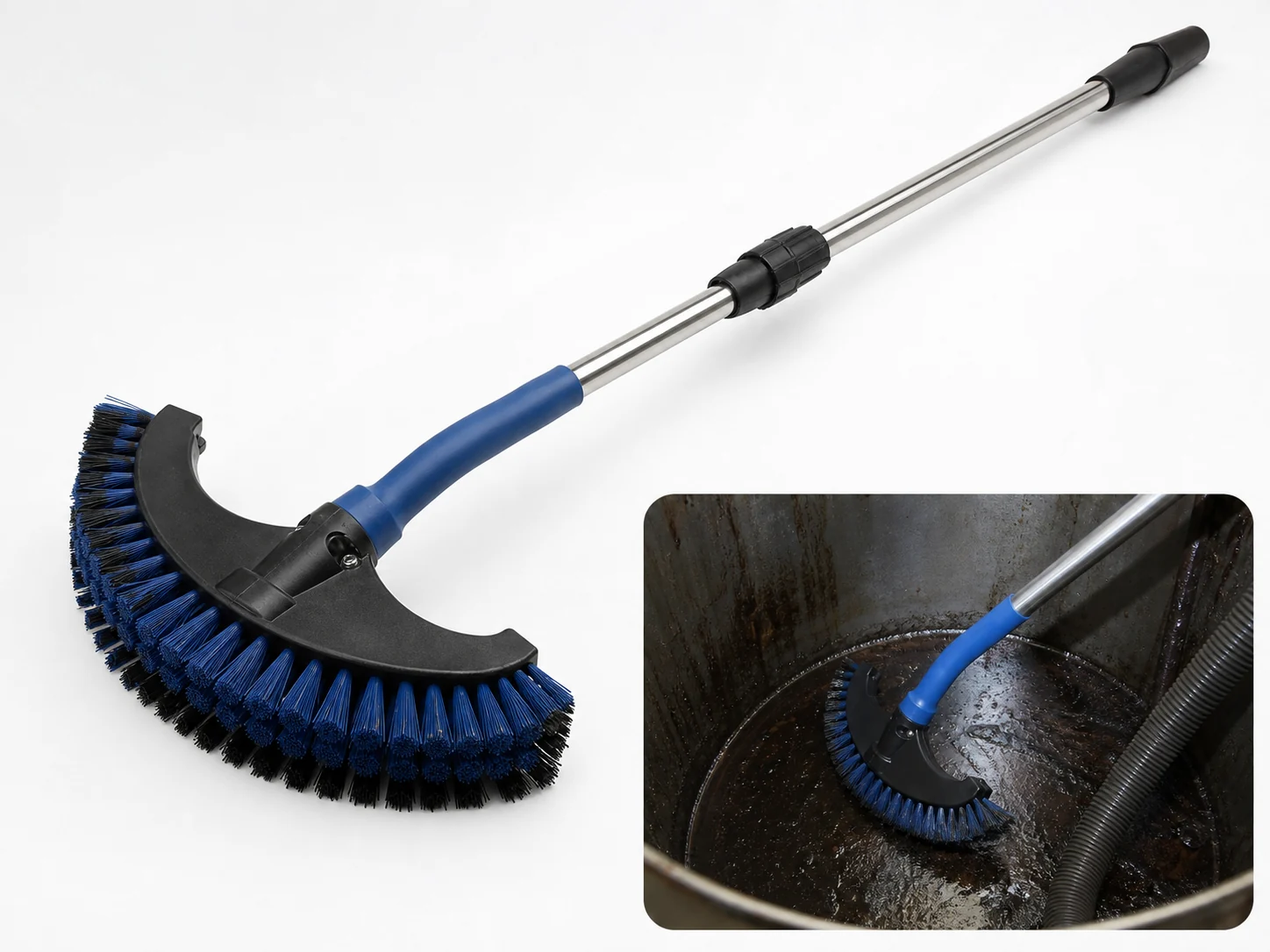
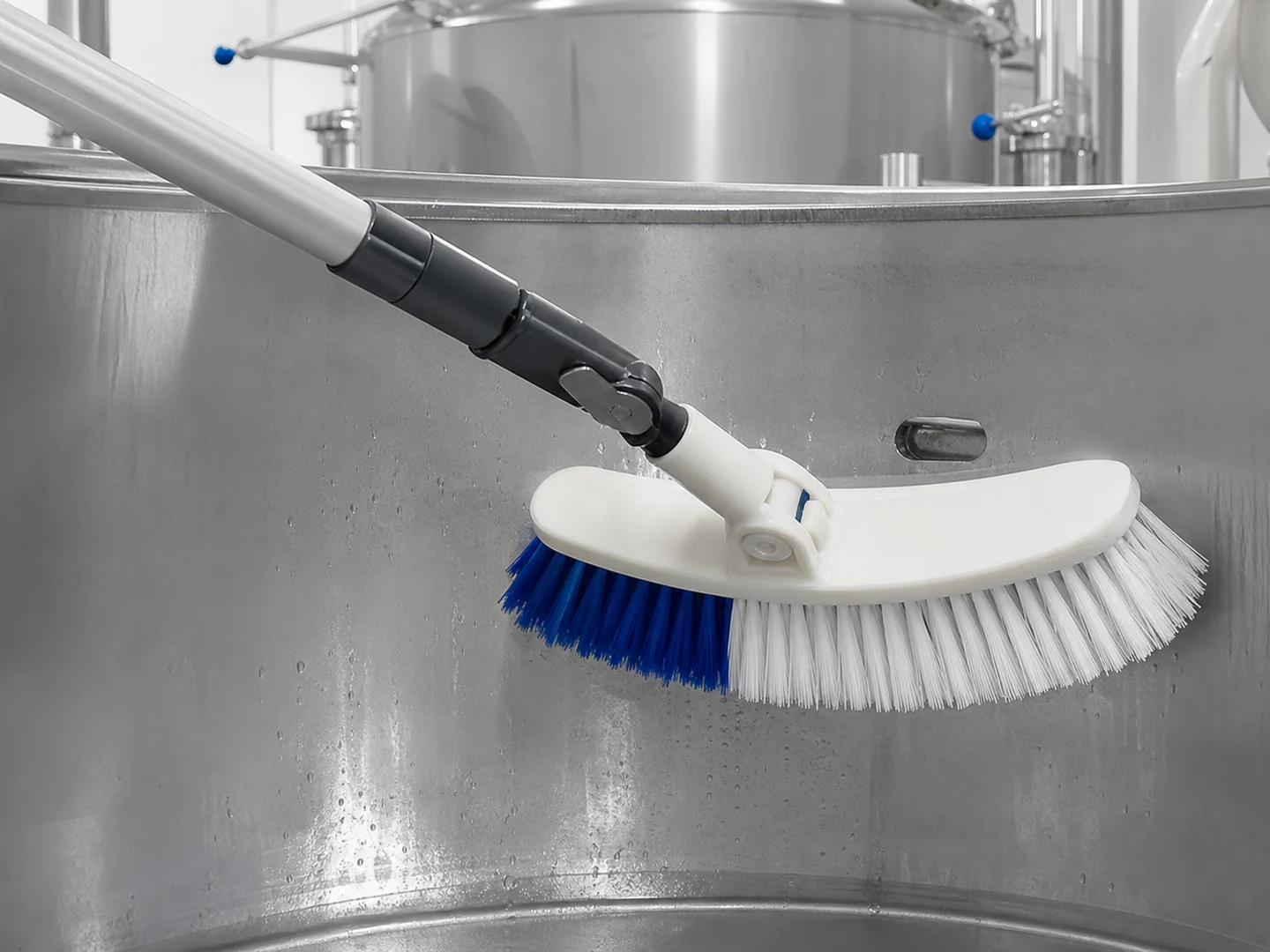
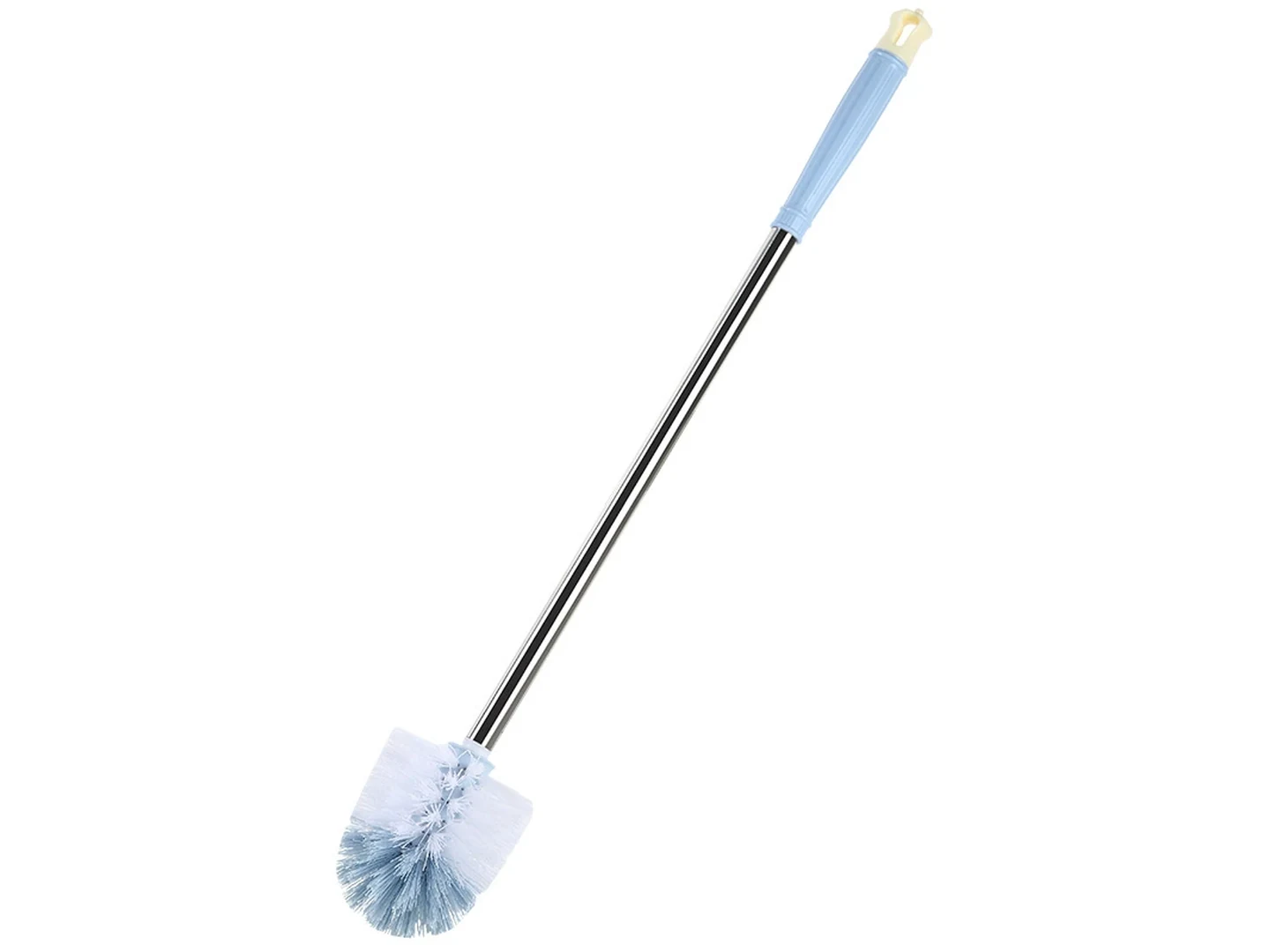
Tanks and vessels are cleaned by hand, often through an opening smaller than the inside, and often in contact with whatever the vessel held. So the brush is chosen by three things in order: the chemistry, the reach, and the shape of the inside.
| Vessel | Brush in this range | Size |
|---|---|---|
| Acid tanks and pickling baths | 200 mm PVDF acid tank brush | 80 mm head, 600 mm handle |
| Solvent vessels | 120 mm PTFE solvent vessel brush | 120 mm head, 450 mm handle |
| Chemical drums | 180 mm PP chemical drum brush | 180 mm head, 700 mm handle |
| Food and beverage storage tanks | 200 mm PBT storage tank brush; 250 mm silicone tank wall brush | 900–1,000 mm handles |
| Square and rectangular tanks | Square tank brush | 5–150 mm heads, up to 800 mm handle |
| Buckets and pails | Bucket brush | 130–250 mm head, 400–2,000 mm handle |
| Water treatment tanks and channels | Water treatment tank brush in PP or nylon | 20–120 mm heads |
| Oil tanks and machine coolant tanks | Oil tank brush with 1–5 m reach; coolant tank brush | Long reach |
The vessel's contents decide this before anything else. PP resists most acids and alkalis and is the economical choice for drums and pickling tanks. PVDF and PTFE go further: PVDF takes strong acids and many solvents, PTFE takes almost everything, including the solvents that attack other plastics. Nylon is tough and wears well but is attacked by strong acids, so it belongs on oil, coolant and water tanks. PBT and silicone suit food and beverage tanks, where the brush must rinse clean and shed nothing.
The handle and the head block count as much as the fill. A PP or PVDF block with stainless staples will not corrode in the vessel; a wooden block or a steel staple will.
With the right handle and the right head shape. Deep tanks and drums need handles of 700 mm to 2 m, and oil tanks up to 5 m. A round head suits drums and round tanks; a square or angled head reaches the corner where the wall meets the floor of a square tank. A tank brush is pushed and pulled along the wall, not scrubbed in circles, so the head is wider than it is deep.
Where the opening is small, the head has to pass it. A flexible or folding head, or a smaller head on a longer handle, is the usual answer.
A food tank brush is part of the plant's cleaning procedure. PBT and silicone are chosen because they rinse clean, stay stiff when wet and can be color-coded by area. The brush must not shed bristles into the tank, so filament retention is checked on the sample. Where the brush touches food, tell us the market and the standard you work to; food-contact testing is arranged per order, at the customer's cost.
Those of the site, first. Vessels that held chemicals, solvents or oil are confined spaces with their own entry rules, and the brush never replaces draining, neutralizing and ventilating. A long-handled brush that cleans from the opening keeps people out of the vessel where it can. Brushes used with solvents should not build up static; send the site's requirement with the enquiry.
Large tank brushes, such as drum, storage tank, bucket and water treatment brushes, start at 100 pieces per design. Smaller hand brushes start at 500.
Provide vessel material, opening size, depth, residue, cleaning fluid and temperature. We can then determine a brush that enters, reaches and survives the process.
Choose your brush type, cleaning task, material direction, and key details before sending a custom brush request.