
Material
Polyethylene Board Brush Base
Brush base material
Polyethylene Board Brush Base is evaluated as a brush component material rather than as filament. Select the component material from the working load, mating geometry, connection method, exposure conditions, and maintenance process.
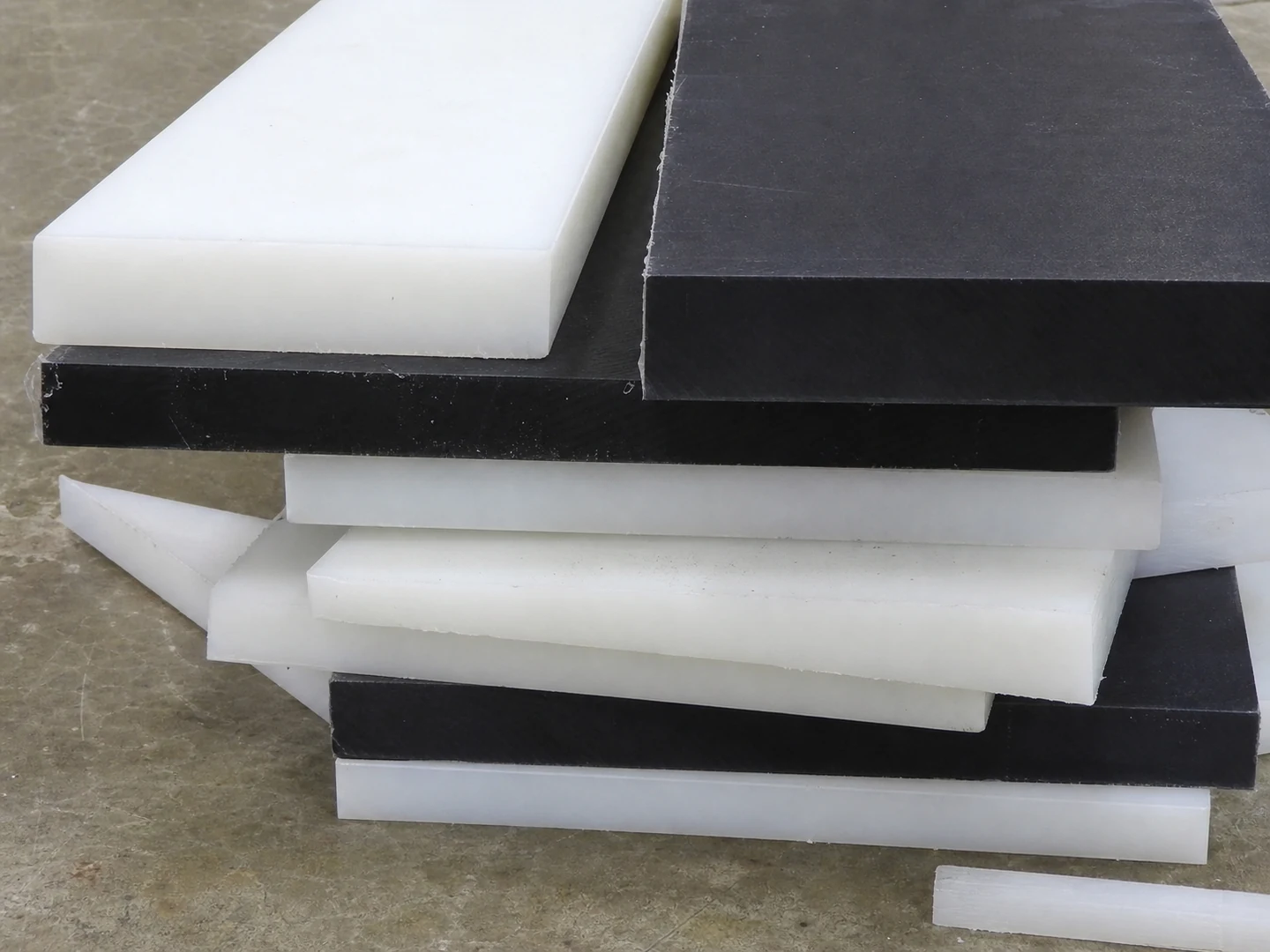
Datasheet values
- Density
- 0.94–0.96 g/cm³
- Board thickness
- 5–100 mm
- Use temperature
- -50–80°C
- Water absorption
- below 0.01%
- Machining tolerance
- ±0.2–0.8 mm
Polyethylene board is solid PE sheet, commonly HDPE, machined or fabricated as a brush base.
What is Polyethylene Board Brush Base, and what makes it different from other brush filaments?
Polyethylene Board Brush Base belongs to the brush base material group, supplied as hdpe sheet or board, machined block and welded or drilled plate backing.
Polyethylene Board Brush Base is used in custom cleaning brushes for washdown brush blocks and panels where low water uptake and corrosion resistance are priorities.
The realistic alternatives are PVC Board Brush Base and Aluminum Oxide Abrasive Nylon. What separates them here is wet stiffness and working temperature, not headline strength.
Compare Polyethylene Board Brush Base with PVC board, PP board, POM, aluminum. Change material when wet stiffness, temperature, chemical resistance, conductivity, particle shedding, or surface marking becomes the limiting factor.
What stiffness and contact pressure can I expect from Polyethylene Board Brush Base?
Polyethylene Board Brush Base is less stiff than aluminum and many engineering plastics; thickness and supports control rigidity, which is why Polyethylene Board Brush Base changes brush stiffness through filament diameter, free trim, density, crimp, and contact. Use finer filament and longer trim for conformable contact; use coarser filament, shorter trim, or higher density for stronger displacement or cutting.
Published ranges for the filament itself. Read them as a shortlist tool, not as brush performance.
| Property | Polyethylene Board Brush Base | PVC Board Brush Base | Aluminum Oxide Abrasive Nylon |
|---|---|---|---|
| Shore hardness | — | — | Carrier Shore D 70–85; Al2O3 Mohs Hardness Approximately 9 |
| Continuous temperature (°C) | — | — | 80–120 |
| Peak temperature (°C) | — | — | 140–170 |
| Water absorption, 24 h | — | — | 0.3–2.0% (Depending on Nylon Carrier, ISO 62/ASTM D570) |
| Filament diameter (mm) | — | — | 0.15–2.50 |
| Flexibility | — | — | Low to Medium Flexibility |
The part people get wrong: rigidity here controls how flat the working face stays under load, not how hard the brush scrubs. Those are two different specifications.
How does water affect Polyethylene Board Brush Base performance?
Polyethylene Board Brush Base takes up below 0.01%.
Low moisture uptake is a primary advantage.
What this means for your application: it does not take up water, so the component holds its dimensions and the fill anchorage stays tight through wet duty.
A practical check: cycle a sample through the wet process and check the fill retention afterwards. Loosening tufts mean the component moved, not the filament.
What temperature limits apply to Polyethylene Board Brush Base?
Continuous service: 60–80°C.
Where it stops working: validate with a sample if the process sits near the top of that band. If the filament takes a permanent set under load, step up to Aluminum Oxide Abrasive Nylon, which hold a higher continuous temperature.
The usable limit also moves with diameter, trim and contact pressure. A fine filament under light load tolerates more than a thick one under heavy scrubbing.
What chemicals attack Polyethylene Board Brush Base?
Resistant to many aqueous chemicals, with ESCR grades used where detergent and mechanical load act together.
The same cleaner can be harmless or destructive depending on how strong it is, how hot it runs and how long it sits. Quote the concentration and the dwell time, not just the product name.
Before you commit to a quantity: Specify the exact Polyethylene Board Brush Base grade or alloy, filament or profile size, color, straight or crimped form, working temperature, wet or dry use, chemical exposure, surface finish, and any required material documentation.
What is the practical lower limit for filament diameter?
Filament diameter does not apply to Polyethylene Board Brush Base. It is a brush component rather than the fill, so it carries no filament of its own and sets no lower diameter limit.
The dimensions that do decide it are the bore or mounting size it has to fit, its wall section or thickness, and the hole pattern that receives the fill. Those come from the machine interface, not from the cleaning task.
If the sample comes back rejected: fix the component dimensions against the equipment first, then choose the fill material and its diameter for the residue you are removing. The two are specified separately.
What applications typically use Polyethylene Board Brush Base?
Washdown brush blocks and panels where low water uptake and corrosion resistance are priorities.
The applications that keep coming back to this grade:
- Brick, Tile & Building Material Machine Brush Use
- Industrial Machine Cleaning
- Dust Removal
- Mold Cavity Cleaning
- Mining Boot Cleaning & Heavy-Duty Footwear Brush Use
- Floor Scrubbing
The constructions that usually carry it:
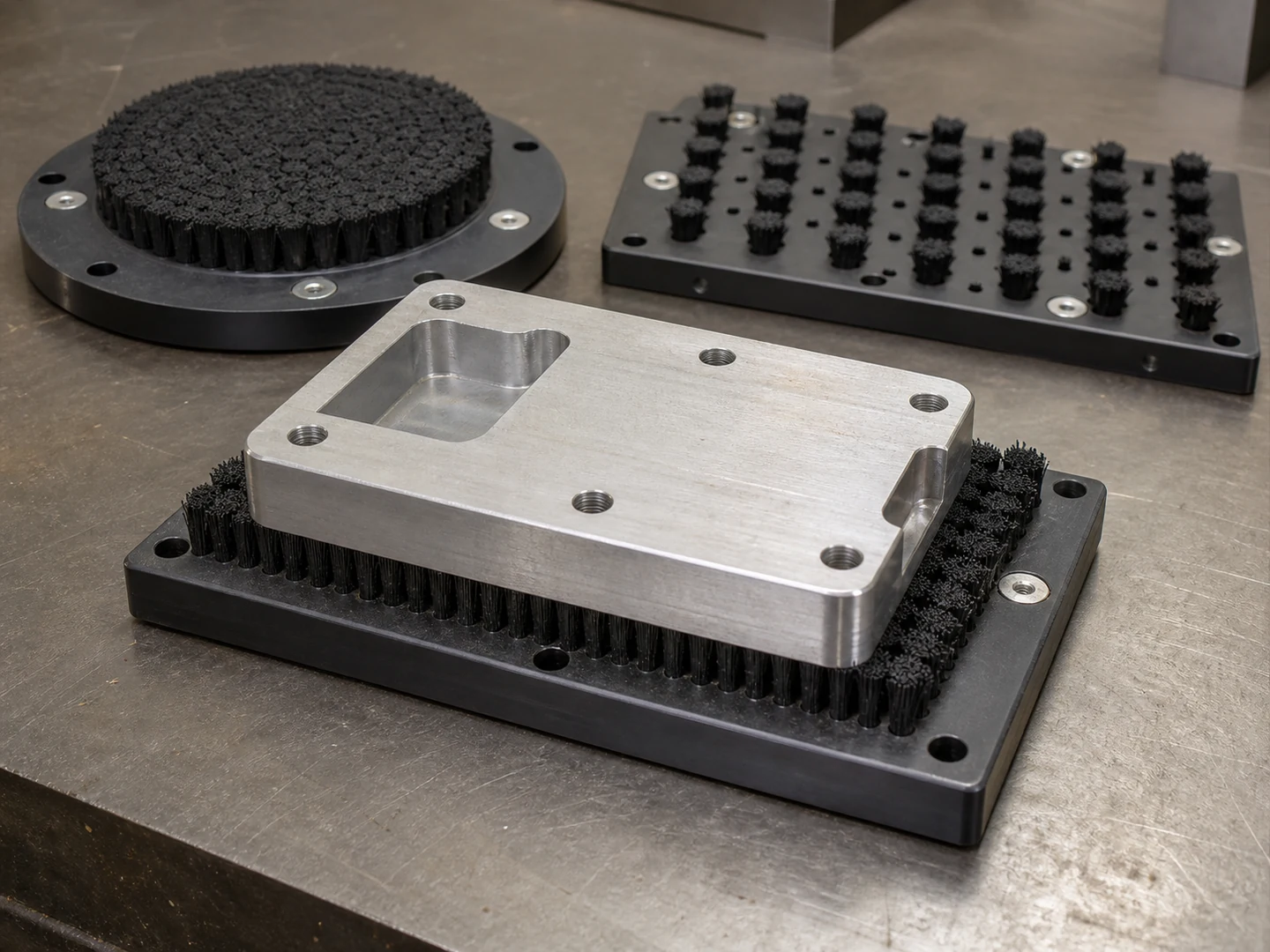
- Custom Machine Table Brush Plates
- Custom Disc Brushes
In practical brush terms: Creep, thermal expansion, and low thread strength are controlled with inserts, through-bolts, thicker sections, or supported mounting.
How do I specify Polyethylene Board Brush Base for a custom brush?
A usable specification carries the construction, the filament diameter and free trim, the density and contact setting, and the service conditions: wet or dry, temperature, and what the cleaner actually is.
The mistakes that most often send a sample back:
- Selecting Polyethylene Board Brush Base from the material name alone without setting filament diameter, trim length, and density
- Using dry stiffness to predict wet behavior without checking moisture absorption or liquid exposure
- Ignoring trapped abrasive particles, chemical concentration, temperature, or contact motion when assessing surface risk
Reference standards behind the figures on this page: ISO 527-1:2019; ASTM D638; ISO 62:2008; ASTM D570-22; ISO 868:2003; ASTM D2240-15(2021); ISO 4892-3:2024; ASTM G154-23; UL 94; ISO 139; ISO 5079; ISO 20743; ISO 13061-1; ASTM D143.
Source: LyondellBasell — Polyolefin polymer portfolio. A polyethylene block is chosen where the brush is washed down and a wood block would not survive. It is the lowest-temperature base in the range, so check the wash temperature before specifying it.
Questions this page is asked
How should a joint in a polyethylene brush board be designed and released?
Use the actual board thickness, edge distance, inserts, through-bolts, washers and backing support, then cycle installation torque, sustained and reversing brush loads and the full temperature range while measuring clamp loss, hole elongation, pull-through and warpage. Allow for thermal movement and avoid relying on unsupported cut threads unless long-term conditioned testing demonstrates adequate retention.
How should environmental stress cracking be checked in a polyethylene brush base?
Expose notched or representative stressed sections and assembled joints to the actual detergent or chemical, concentration, temperature, dwell and cycling while maintaining the intended mechanical strain. Inspect for slow cracks, whitening, crazing, permanent deformation and fastener movement and compare retained dimensions and strength, because resistance to an unstressed liquid exposure does not establish ESCR performance.
Where these figures come from
| Property | Published value | Source |
|---|---|---|
| Chemical resistance | Resistant to many aqueous chemicals, with ESCR grades used where detergent and mechanical load act together. | Perlon Retrieved 2026-07-20 |
| Published datasheet figures |
|
LyondellBasell Retrieved 2026-07-20 |
| Hardness and stiffness | Less stiff than aluminum and many engineering plastics; thickness and supports control rigidity. | Perlon Retrieved 2026-07-20 |
| Limitations | Creep, thermal expansion, and low thread strength are controlled with inserts, through-bolts, thicker sections, or supported mounting. | Perlon Retrieved 2026-07-20 |
| Temperature resistance | Continuous service: 60–80°C. | LyondellBasell Retrieved 2026-07-20 |
| Water resistance | Low moisture uptake is a primary advantage. | LyondellBasell Retrieved 2026-07-20 |
Guides that go deeper on this
We have not written a guide specific to this one yet. The material that covers selection, filament, dimensions, maintenance and sourcing is collected in the technical resources library.
Continue Exploring
Recommended Reading & Related Brush Resources
Custom Machine Table Brush Plates
Choose a machine table brush plate when a broad field of bristles must support,…
See how this type is built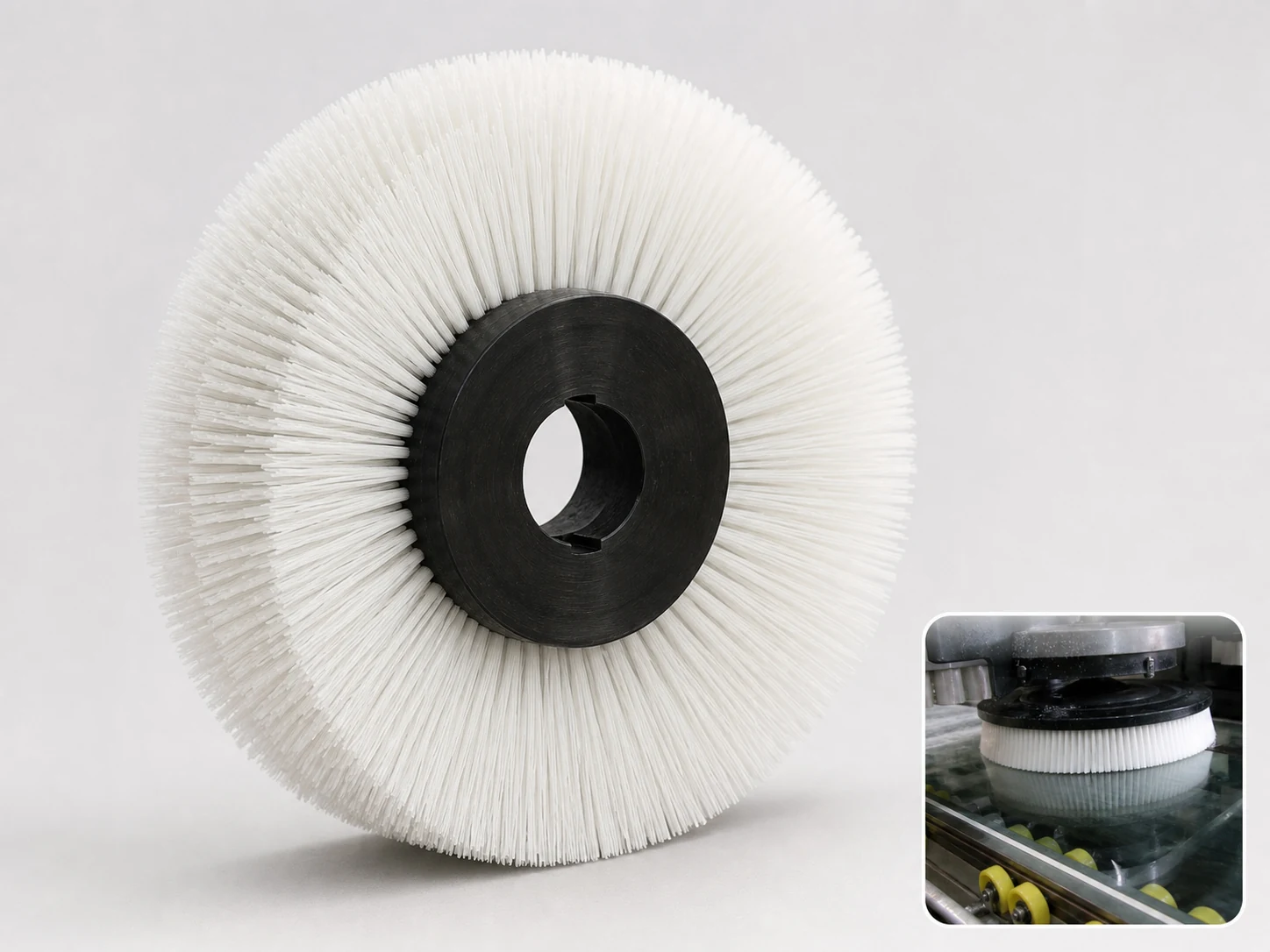
Custom Disc Brushes
Choose a disc brush when a circular face must scrub, wipe, polish, sweep, or…
See how this type is built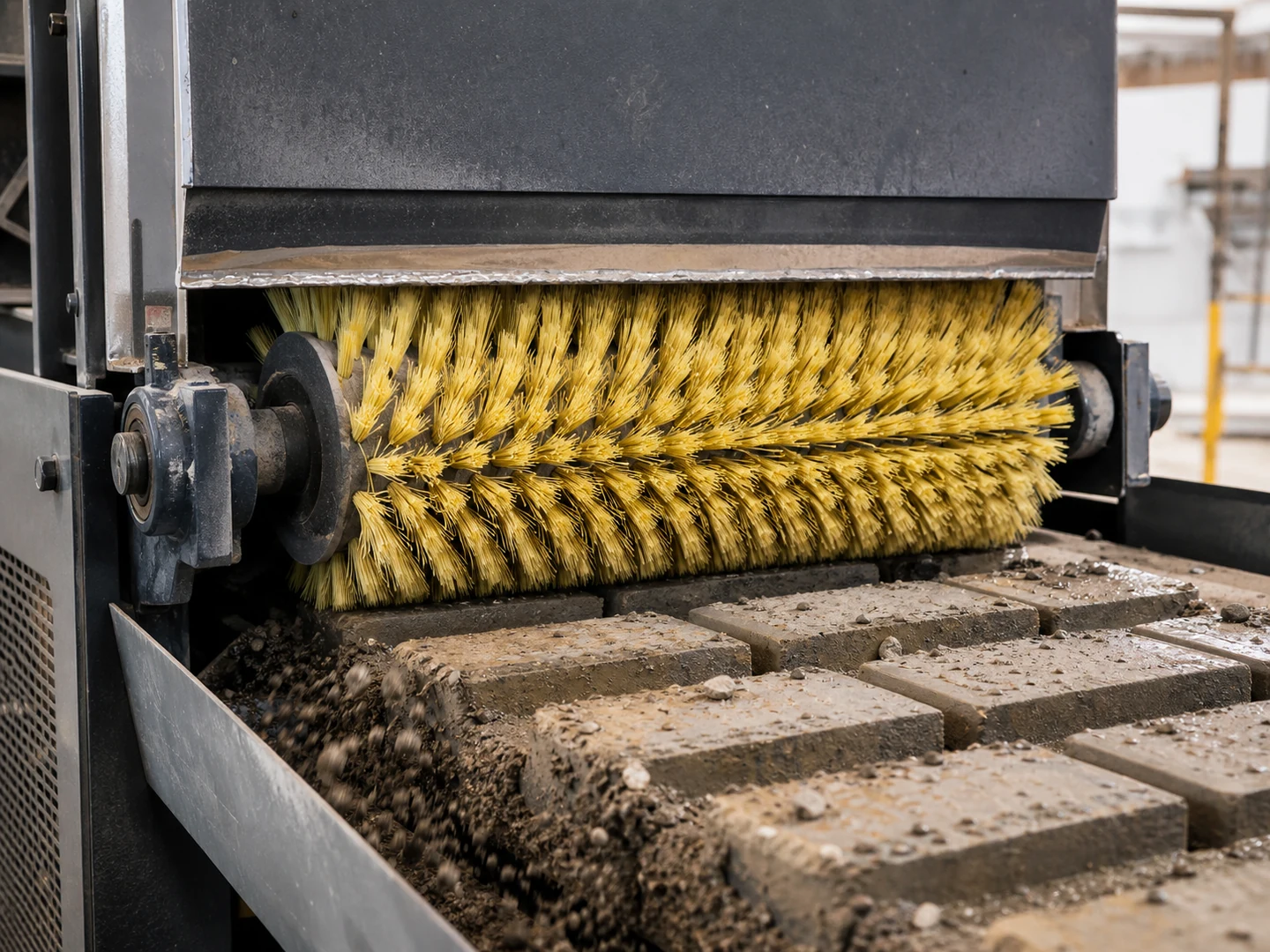
Brick, Tile & Building Material Machine Brush Use
For Brick, Tile & Building Material Machine Brush Use, the brush must reach the…
See the cleaning job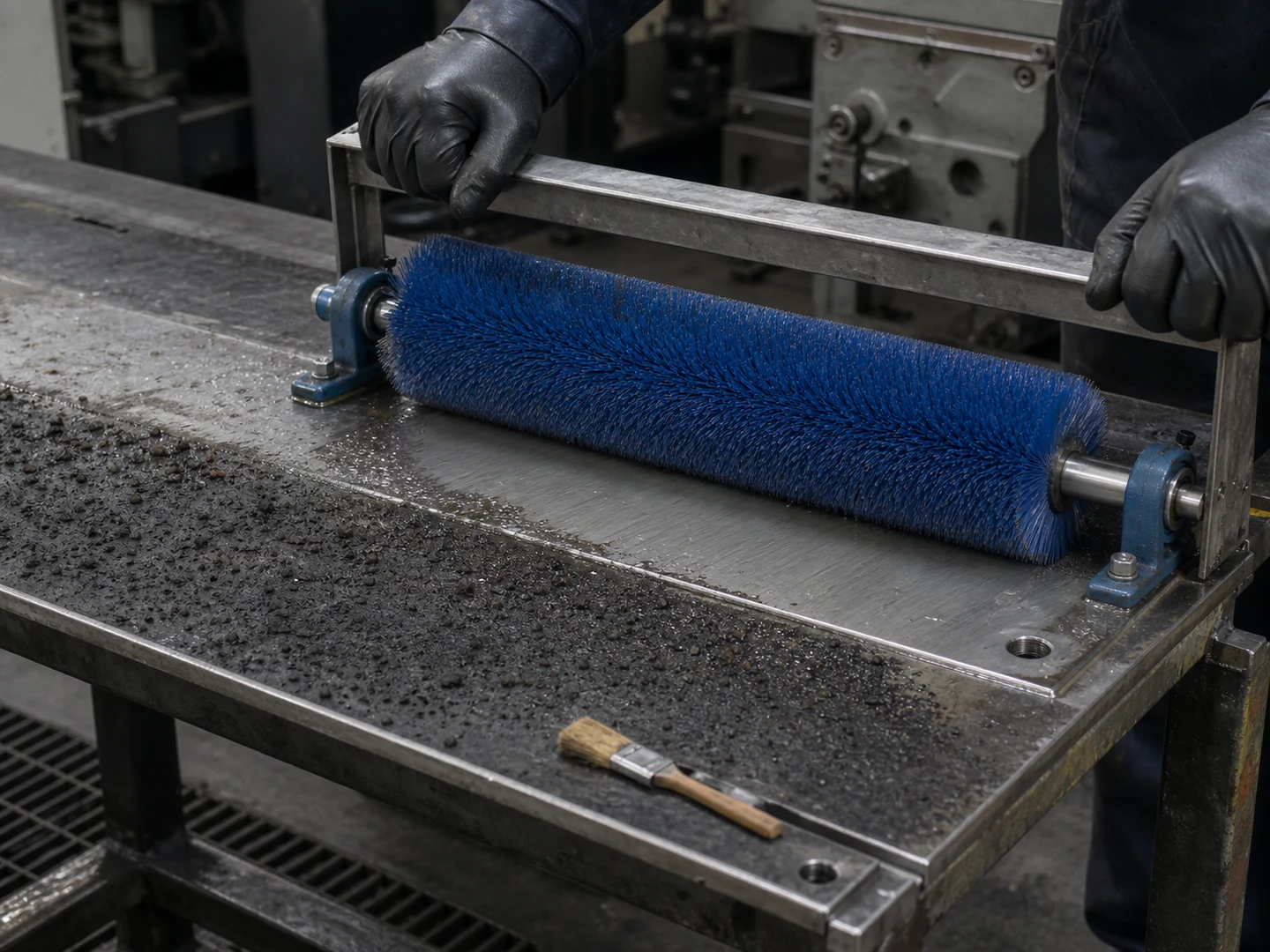
Industrial Machine Cleaning
For Industrial Machine Cleaning, the brush must reach the working area, disturb or collect…
See the cleaning jobCustom Manufacturing RFQ
Discuss This Material
Share the working surface, residue, dimensions, material direction, interface, quantity and drawing or sample photo.
Custom Brush RFQ
Request a Custom Cleaning Brush Quote
Upload a drawing, product photo, or sample photo and provide the core dimensions and cleaning conditions.
“We need a brush to remove wet residue from a stainless steel conveyor, about 800mm wide. The current brush wears quickly. We can send photos.”
“We sell drinkware and need a cleaning brush to include with the product. Quantity around 5,000 pieces.”