
Custom Cleaning Brush
Solar Panel Cleaning Brush
Soft-flagged solar panel cleaning brush for tempered-glass PV modules. Wide water-fed head, microfiber edge, telescoping handle, custom bristle systems.
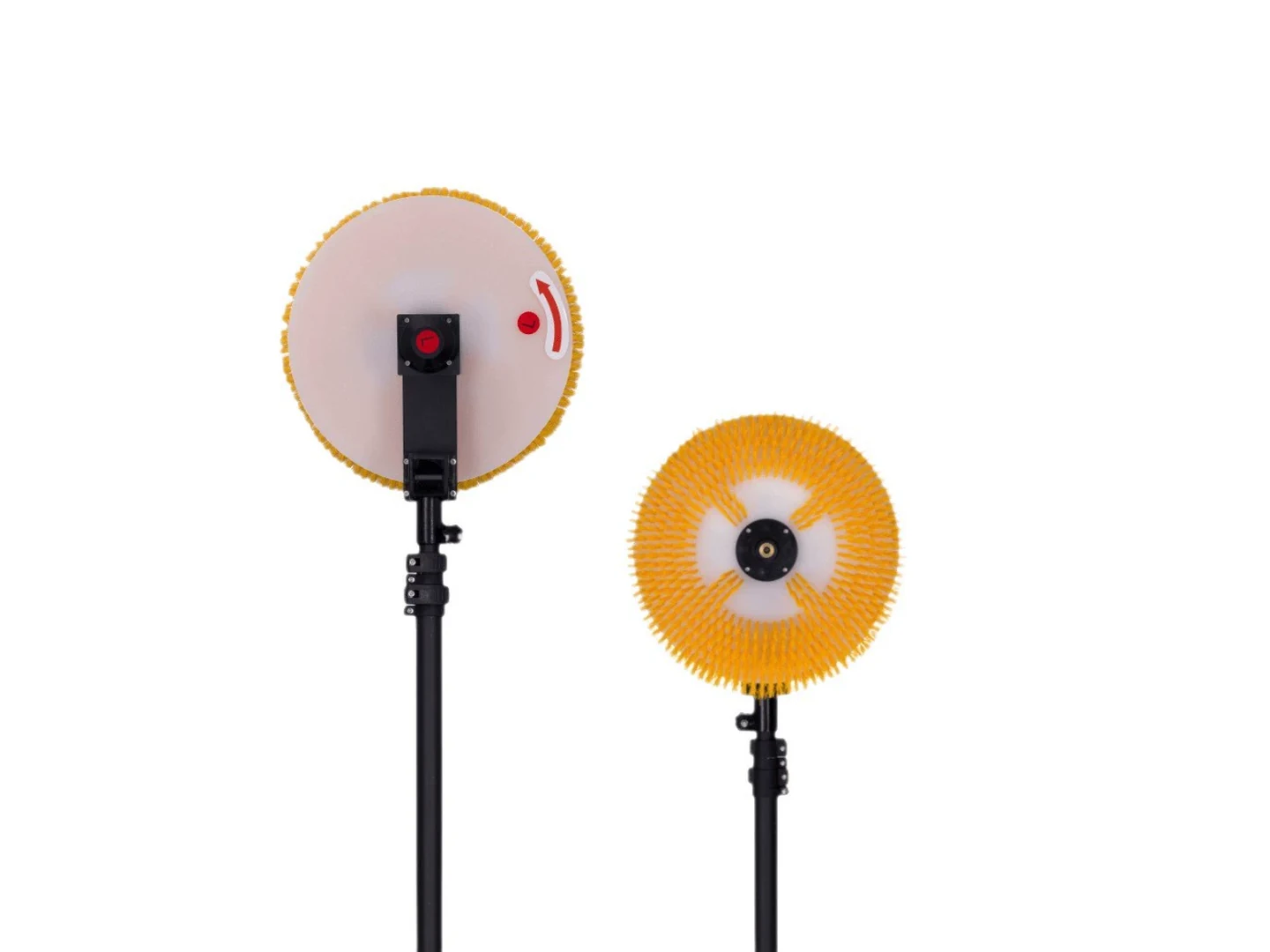
Medium brush
100 pcs
Minimum order
Worked with two hands or on a pole: chimney, gutter and pond-filter brushes, discs, cups and tank brushes.
Production lead time, once the specification is confirmed
- Up to 100 pcsWithin 7 days
- 101–5,000 pcsWithin 14 days
- 5,001–50,000 pcsWithin 21 days
- Over 50,000 pcsConfirmed with your quotation
Peak season can extend these times; the shipping date is confirmed in writing with your quotation. Sampling and shipping are quoted separately.
A wide-head, soft-flagged cleaning brush for manual washing of tempered-glass and coated photovoltaic module faces, frames, and array seams. It combines low-scratch filament contact with an optional water-fed rinse channel and a replaceable microfiber finish edge to remove dust, pollen, salt film, and bird residue without damaging anti-reflective coatings.
What can this brush do for you?
The brush is arranged around one goal: cleaning a large, tilt-mounted glass surface quickly without altering the surface that produces the power. The size, filament choice, and water path all serve that goal.
Flagged filament tips keep coatings intact
The bristle field uses crimped and flagged PBT or soft nylon filament. Each tip splits into many fine ends, so scrubbing force is distributed across a broad contact area instead of concentrated on hard points. For modules with anti-reflective or anti-soiling coatings, this reduces the micro-scratch risk that ordinary unflagging brushes can create on tempered glass.
A broader head shortens the cleaning pass count
Head widths from 300 mm to 600 mm let one pull cover most of a standard module row. A 400 mm head typically cleans a 1,000 mm wide panel in two to three overlapping vertical strokes. The result is less walking along the array, fewer ladder repositionings on a roof, and a shorter labor window for the same panel count.
Water is delivered into the brush line, not alongside it
In wet-cleaning configurations, an internal channel in the head distributes water just above the bristle row. As the brush moves down the panel, the water loosens dust and bird residue into a slurry, and the following filaments move it off the glass. Because the rinse happens inside the same pass, residue is less likely to be dry-swept from one cell to the next or left as streaking after the panel dries.
The pivot head follows the roof angle
An adjustable locking head joint keeps the bristle face flat on a 10-degree, 20-degree, or steeper installation. The operator can keep a normal pole position while the head stays in full contact with the glass. That reduces pressure on the panel’s leading edge and the lower back strain that comes from forcing a fixed-angle head into a tilted surface.
A replaceable microfiber edge finishes the pass
Most configurations accept a hook-and-loop microfiber strip across the trailing edge of the head. After the bristles have scrubbed and the water has rinsed, the strip picks up the last water film and fine dust smear. When the strip is dirty, the crew swaps or washes it without replacing the whole head.
What is a Solar Panel Cleaning Brush?
A Solar Panel Cleaning Brush is a manual wide-head washing tool used by maintenance crews, O&M teams, and service providers to keep photovoltaic module surfaces clean between deeper washes or when an automated system is not available. It is not a general scrub brush; the head shape, filament type, tip finish, and water path are all set around a single job: removing soiling from large glass panels without degrading their light-capturing surface.
In wet operation, the operator attaches a low-pressure hose to the pole or head inlet, extends the handle, and works from the top of the module toward the lower frame. The handle locks into the head through a quick coupling. Water travels through the pole or a separate feed line into the head manifold, emerges behind the bristle bank, and carries loose material downward. The bristles do the contact work, the water does the rinsing, and the microfiber strip, if fitted, clears the remaining film. In dry operation, the same head can sweep loose dust and pollen without the hose, provided the site is dry and the bristles are kept free of embedded grit.
The head structure is normally an anodized aluminum or reinforced polymer backplate that holds the filament rows straight and prevents the brush from folding under long-pole pressure. Handle sections are selected for reach and weight, because a brush on a 4-meter pole is no longer a small hand tool: every extra gram at the head is amplified at the operator’s hands.
This is a routine maintenance tool. It removes soiling that a rain shower leaves behind: dust film, pollen, fine sand, salt haze, and fresh bird or insect residue. It is not designed to break away dried concrete, remove paint overspray, or cut lichen, and it does not replace an anti-soiling coating or a cleaning chemical where one is required.
Technical Specifications
Values below describe the standard build range. Head width, bristle material, handle length, water flow, and interface are configured to the project rather than ordered as fixed stock.
| Parameter | Standard Range / Configuration |
|---|---|
| Head width | 300–600 mm; 400 mm is the common default |
| Head depth | 80–150 mm, matched to bristle row spacing and water manifold |
| Bristle material | Flagged PBT, PA6.6, or PA612; soft to medium grade |
| Bristle length | 40–70 mm, flagged toward tips |
| Bristle density | Project-specified; denser rows for fine dust, more open rows for heavy slurry release |
| Head backplate | Anodized aluminum or glass-filled polypropylene |
| Head pivot | Adjustable locking joint, common range 0–90° |
| Water feed | Internal manifold, low-pressure 1–4 bar; 1/2-inch NPT/GHT quick connect or required fitting |
| Microfiber finish edge | Replaceable strip, hook-and-loop backing, 20–40 mm wide |
| Handle | Fiberglass or anodized aluminum pole, 1.2–6.0 m fixed or telescoping sections |
| Weight | Head alone approximately 1.0–2.5 kg depending on width and water feed |
| Operating conditions | Ambient -10°C to +60°C; wet operation above 0°C to prevent freezing in the manifold |
| Brush type | Custom Handheld Detail Brushes |
| How it is driven | Hand-guided |
| Cleaning target | rooftop residential and commercial array, ground-mount and utility-scale row, and coastal and salt-spray environment cleaning |
| Surface or part | frames, edges, panels, glass, seams, channel, aluminum, and walkways |
| Residue or debris | dust, salt, pollen, haze, bird residue, leaves, bird droppings, and loose dust |
| Mounting / connection | Quick-Change Coupling / Shaft-Mounted |
Frame contact can be softened with closed-cell edge guides or rollers where the head overhangs the module and needs to slide along the aluminum frame.
Where does this brush work best?
- Rooftop residential and commercial arrays. A telescoping handle lets the operator stand on the walkway or roof ridge and clean tilted panels without kneeling on or climbing over modules.
- Ground-mount and utility-scale rows. The broad head and water-fed configuration speed up manual cleaning on sections where robotic or vehicle-mounted washers are not economical or between their scheduled passes.
- Coastal and salt-spray environments. Low-pressure flush removes salt haze before it builds into a crust; the water feed keeps salt residue moving off the glass instead of being brushed dry into the frame seams.
- Agricultural and industrial sites. Regular removal of grain chaff, pollen, fertilizer dust, soil dust, and bird droppings before soiling losses exceed the site threshold.
- Frames and fall lines. The filament length is set so tips enter the frame gutter and seam recess without the backplate banging on the aluminum edge, sweeping leaves and debris out of the lower drain line.
How do I choose the right one?
The decisions go in this order: panel geometry, contact style, water supply, reach, and site soil.
Size the head to the module width
Measure width and frame gap. A 300 mm head is more controllable on steep or difficult roof sections; a 400 mm head balances stroke count and weight for most 1,000 mm modules; a 600 mm head cuts passes on large-format modules but requires longer poles. If the head is wider than the panel, the extra bristles may ride on the frame and lose contact on the glass.
Match the filament to the coating and cleaning schedule
Use flagged PBT for tempered glass with AR coatings and for mostly dry dust removal. Choose soft PA6.12 or PA6.6 when the crew uses alkaline cleaning solution or the brush stays wet for long periods. Do not specify unflagging stiff bristles, wire fill, or abrasive nylon; hard contact is the quickest way to damage the very coating the module needs.
Choose dry or water-fed by the soil you actually remove
Dry sweeping is enough for loose dust and pollen in low-humidity climates and avoids trailing a hose. Dried bird droppings, salt film, oil haze, and humid desert dust usually need a water-fed head—wet the residue first, then scrub and rinse in the same stroke. If no water point is near the array, add a portable tank and low-pressure pump to the planning.
Set the reach from where the operator will stand
Add the distance from walkway to the module’s top edge plus a small arm reserve. A short fixed pole works on rooftop walkways; a 4–6 m telescoping pole reaches from the ground beside a single-story array. On long poles, choose the lighter head package or a fiberglass/carbon pole so control does not degrade at full extension.
Check the water pressure and connector
Specify the fitting your crew already uses. Keep pressure in the 1–4 bar range: too much pressure past the frame edge can force water into junction box and cable areas. If the source water has sand or hard particles, add a line filter; grit can clog jets and then become trapped in the flagged bristle tips.
| Site condition | Suggested configuration | Key check |
|---|---|---|
| Dry dust / pollen on coated glass | Soft flagged PBT, dry or light mist | Panel cleaning manual permits brush contact |
| Bird residue, salt, or oily film | Water-fed head, soft PA filament, microfiber edge | Water pressure, fitting, and access point |
| Steep or awkward roof | 300 mm head, lightweight handle, locking pivot | Operator reach and safe standing position |
| Heavy caked soil, lichen, or cement dust | Not a first-step brush; pre-soak and separate approved cleaning process | Module manufacturer cleaning guidance |
If the array is large enough that manual brushing becomes a full-time crew task, a motorized rotating brush or robotic cleaning system may be the better long-term choice. The solar panel cleaning brush fits the space where manual washing is still the most practical or the only permitted option.
Can I customize this brush?
Most solar panel cleaning brush orders are configured around the module size, tilt angle, and cleaning frequency. Send the module dimensions, frame height, coating type, typical soil, water pressure and connector, required reach, and preferred handle style; a panel drawing or site photo helps resolve the remaining details quickly.
Configurable items include:
- Head geometry: width, depth, straight or curved face, split or hinged head for storage, end trim shaped for frame channels.
- Bristle system: PBT, PA6.6, or PA612 filament; diameter, length, flagging ratio, row density, and mixed stiffness zones.
- Water feed: no water feed, internal manifold, jet pattern, flow rate, inlet fitting, or brush-mounted shutoff valve.
- Microfiber finish edge: strip width, hook-and-loop replacement system, washable pad, or removable wiper blade.
- Handle and coupling: fixed or telescoping length, pole material, grip, quick-release head coupling, angle adapter, and storage clip.
- Edge protection: closed-cell guides or rollers for framed modules where the head overhangs the glass.
- Marking and packaging: custom head color, logo print or pad marking, part numbering, and bulk or retail pack configuration.
For OEM or utility projects that need material declarations, inspection support, or third-party testing against the buyer’s cleaning specification, we can include those requirements in the customization scope.
What has to be checked before a solar panel cleaning brush is run safely?
How can I check whether this brush is safe for my panel coating?
Read the module manufacturer’s cleaning guidance first. If manual soft brushing is permitted, run a patch test on the corner of one panel or a spare module with the planned filament and water setting. Inspect under grazing light after the surface dries. If the coating shows fine scratches, the filament grade or operating pressure is too aggressive, and a softer flagged PBT setup should be used.
Should this brush always be used with water?
No. On dry, dusty sites in low-humidity climates, dry sweeping removes loose material quickly. But the bristle tips need to stay clean; embedded sand can scratch on the next pass. Use the water-fed mode for bird droppings, salt film, oily haze, or any soil that sticks. If the available water is hard or mineral-laden, filter it or use deionized water to prevent mineral film from replacing the dust.
What should the crew check before starting a shift?
Inspect the bristle face for embedded sand, glass chips, or matted clumps and clean it with a gentle hand comb or low-pressure rinse before touching a panel. Check the microfiber strip for grit and oil. Confirm handle locks are fully engaged, pivot locking works, and the hose fitting is tight. A dirty brush transfers yesterday’s soil to today’s panel.
Why are streaks still visible after the panel dries?
Streaks usually mean residue was spread rather than rinsed away. Soak bird droppings or salt film before brushing, work from top to bottom so the water stream moves with the brush, skip household detergents unless the module manual approves them, and let the microfiber edge capture the final film. If spots remain from water quality, switch to filtered or deionized water at the final rinse.
Can this brush remove dried cement, paint overspray, or lichen?
No. Those residues need chemical softening, low-pressure soaking, and often a specialized restoration procedure. Forcing this brush against hardened contamination can scratch the coating and make the soiling loss permanent. Use it for routine dust, pollen, sand, salt, and organic film, and treat construction or long-neglect residue as a separate job.
Is this brush suitable for flexible thin-film panels?
Only if the module manufacturer’s manual explicitly allows brush cleaning. Many flexible panels have polymer front sheets that must be cleaned with a soft sponge and water only. For those modules, choose a non-contact rinse or the manufacturer’s recommended method instead. The brush is designed for rigid tempered-glass and coated rigid modules, not for every PV surface.
Guides that go deeper on this
RELATED BRUSH RESOURCES
Recommended Reading & Related Brush Resources
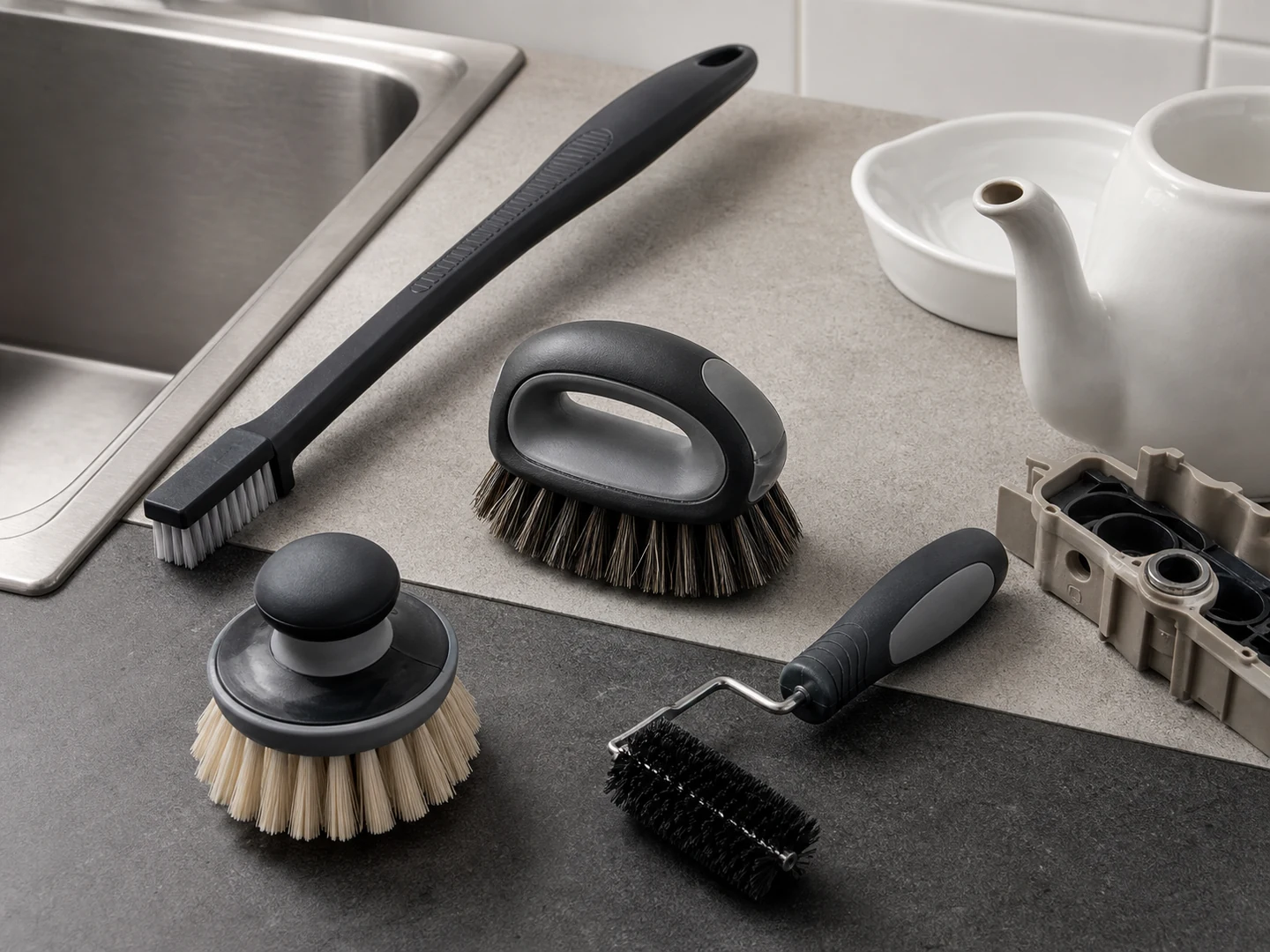
Custom Handheld Detail Brushes
Choose a handheld detail brush when you need direct control in seams, recesses, fittings,…
See how this type is built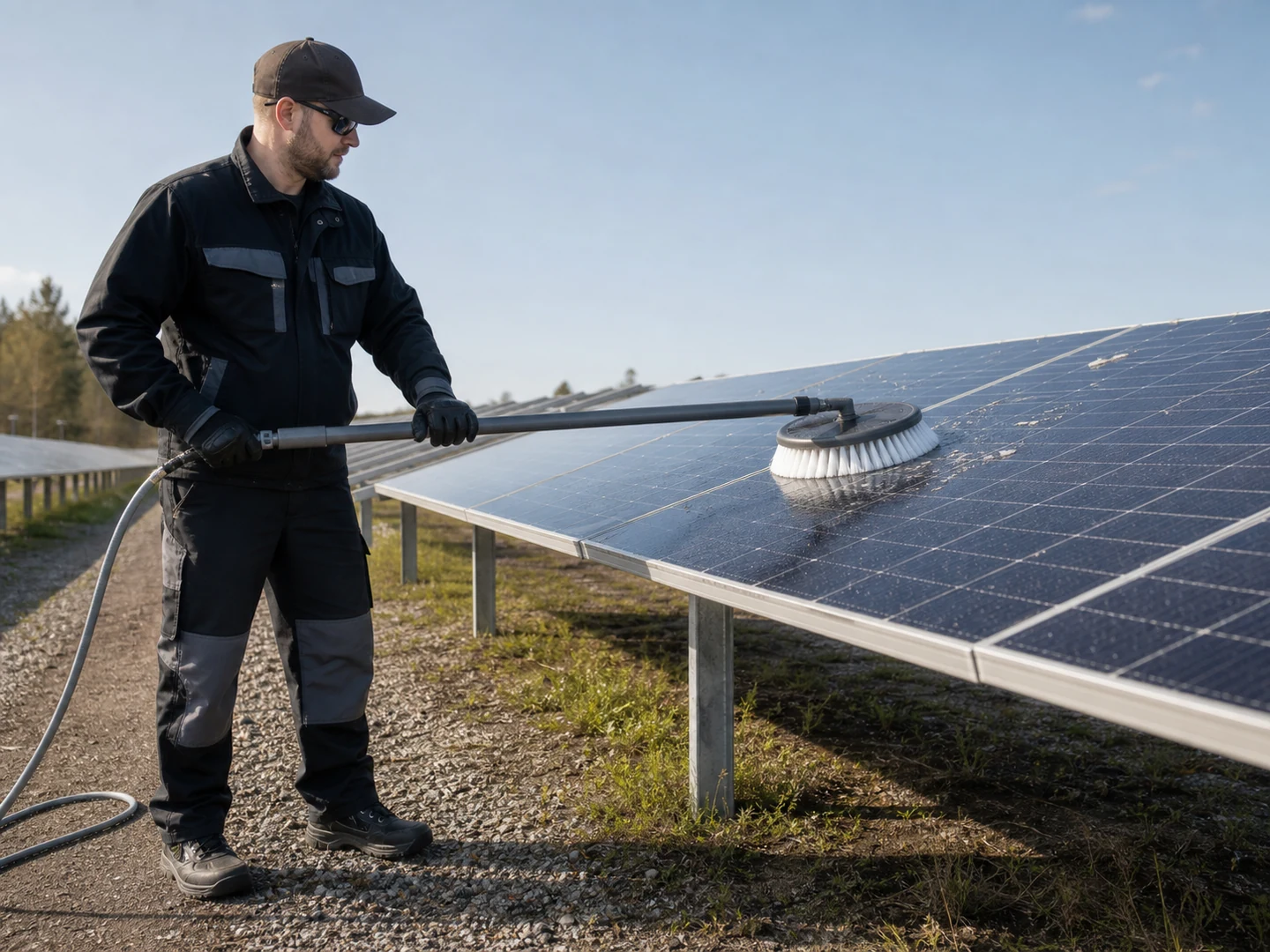
Solar Panel Cleaning
For Solar Panel Cleaning, the brush must reach the working area, disturb or collect…
See the cleaning job
PBT
Choose PBT based on its stiffness, recovery, wear, wet-service, chemical, and temperature behavior. Do…
Compare this material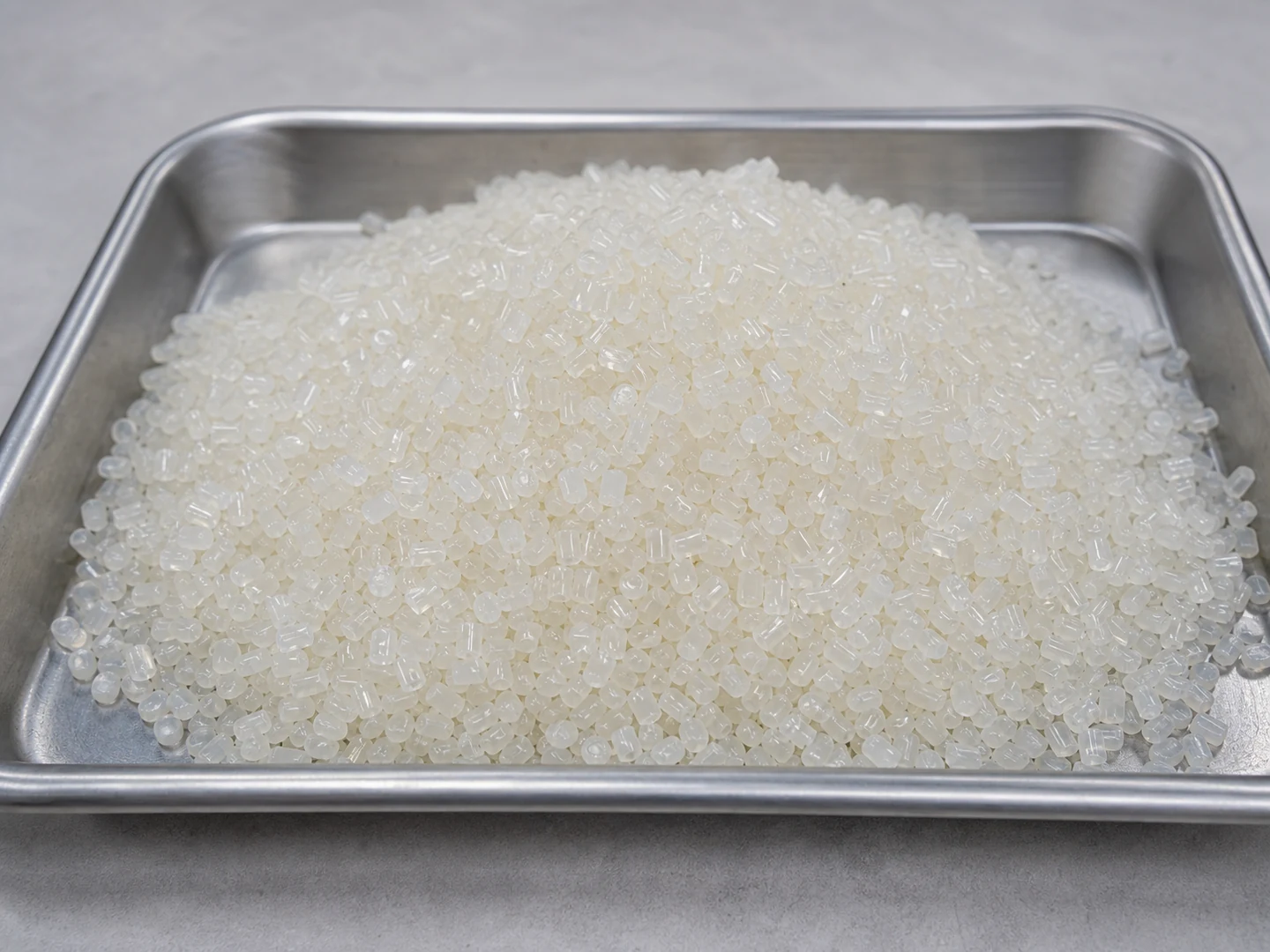
Nylon PA
Choose Nylon PA based on its stiffness, recovery, wear, wet-service, chemical, and temperature behavior.
Compare this material
Microfiber
Choose Microfiber based on its stiffness, recovery, wear, wet-service, chemical, and temperature behavior. For…
Compare this material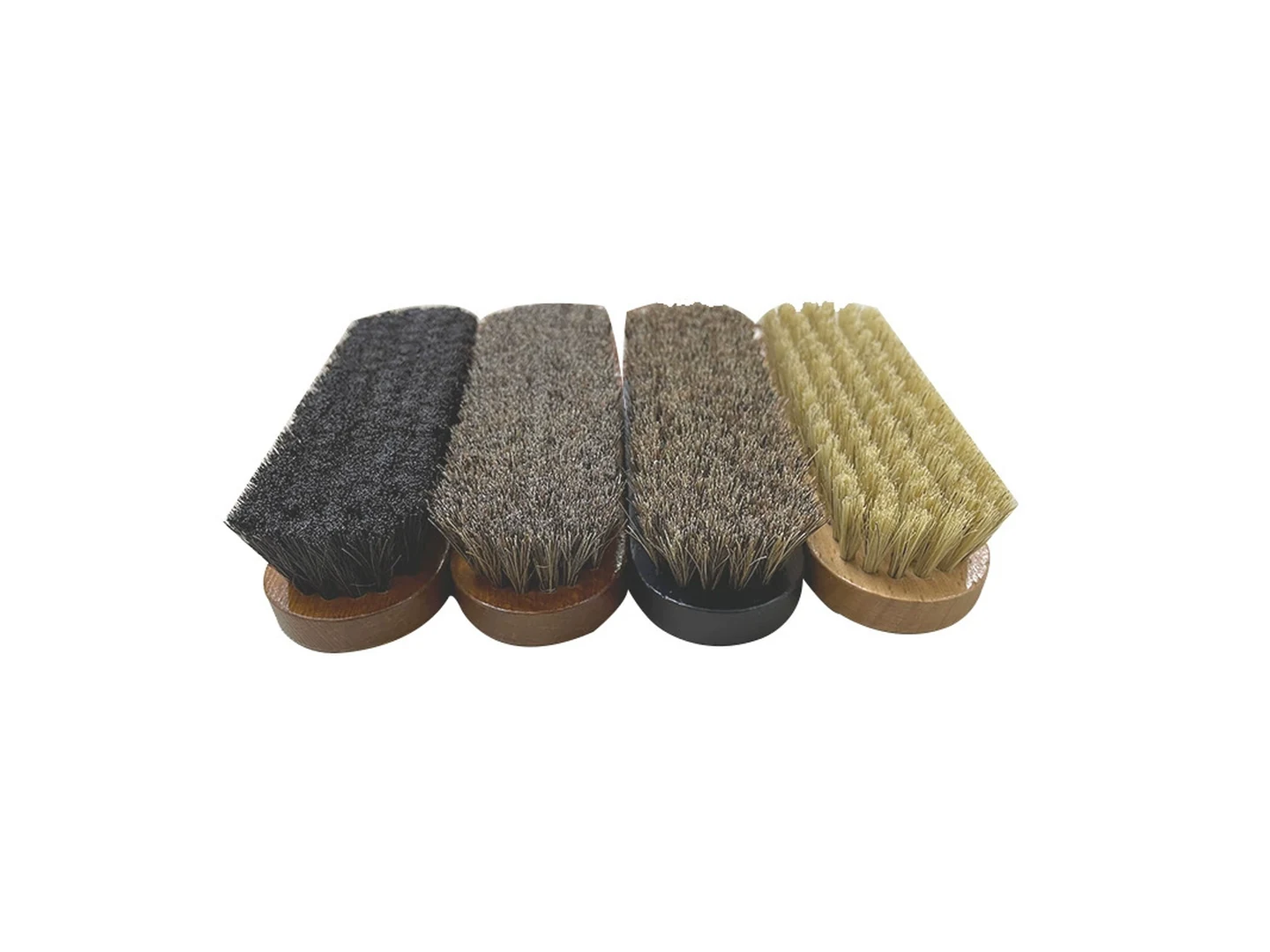
Carbon Fiber Panel Cleaning Brush
Conductive carbon fiber filament panel brush for dry dust removal from films, coated webs,…
Compare the specification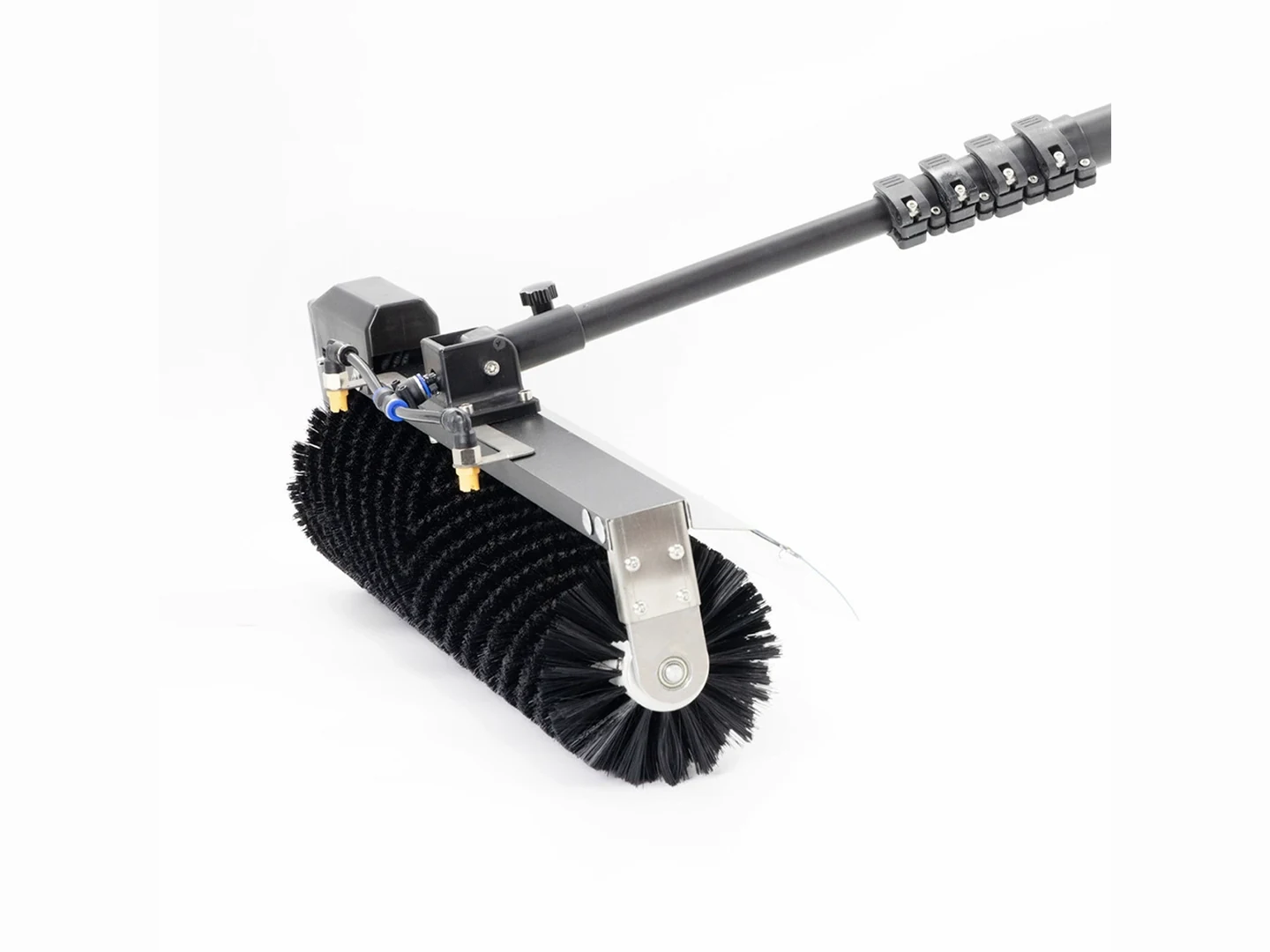
Brush Roller Dust Removal Solar Panel
Custom brush roller for dust removal on solar panels. Nylon filament, 300–4500 mm working…
Compare the specification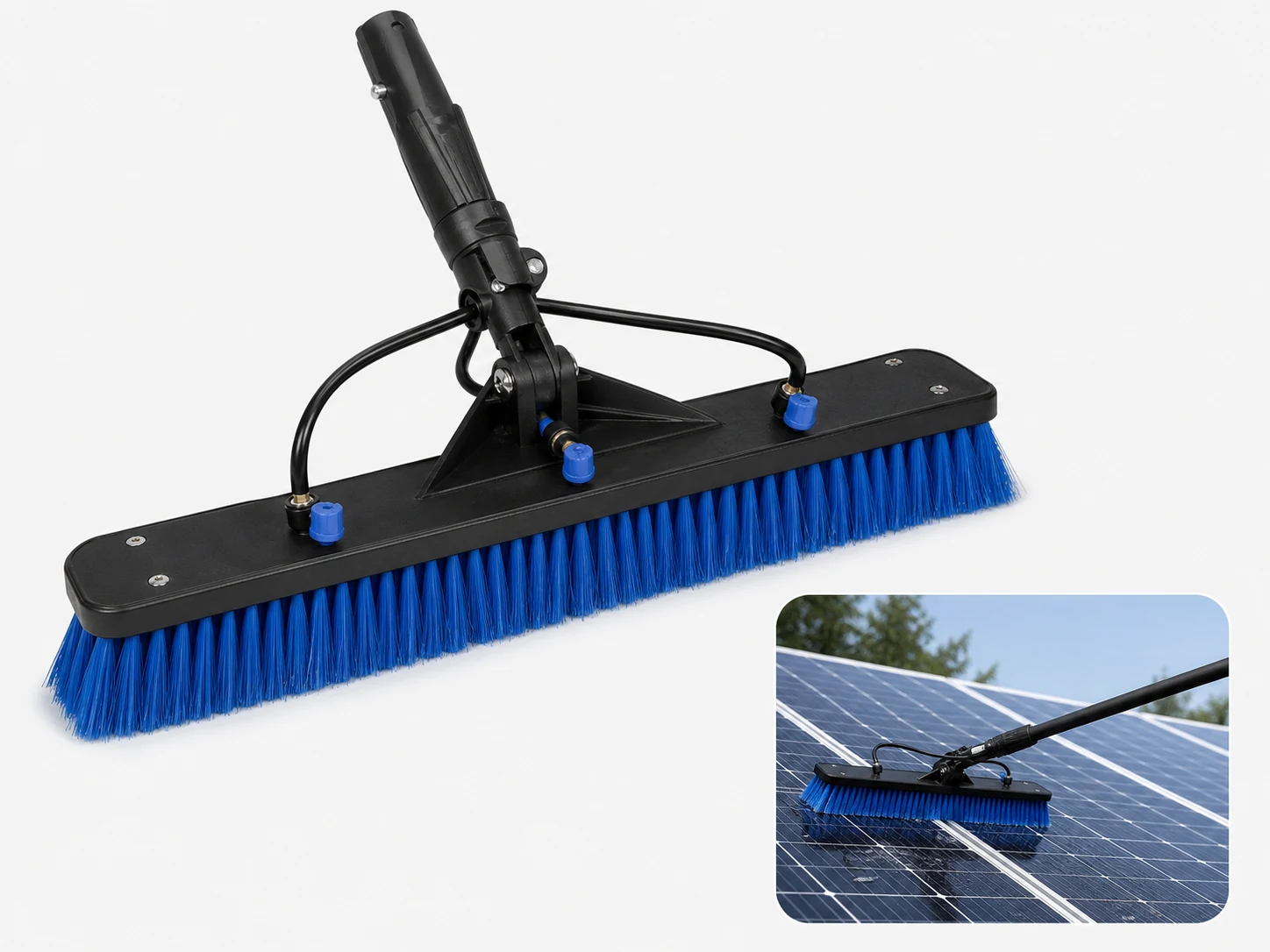
Glass Solar Panel Brush
Custom glass solar panel brush with soft nylon or PBT filaments for dust, pollen,…
Compare the specificationCustom Manufacturing RFQ
Describe Your Application
Please include the main sizes, application, residue, preferred material, interface, quantity, and any drawing or sample available.
Drawing or photo optional — it speeds things up, it does not gate the enquiry.
Custom Brush RFQ
Send Your Brush Project
Upload a drawing, product photo, or sample photo and provide the core dimensions and cleaning conditions.
“We need a brush to remove wet residue from a stainless steel conveyor, about 800mm wide. The current brush wears quickly. We can send photos.”
“We sell drinkware and need a cleaning brush to include with the product. Quantity around 5,000 pieces.”