
Custom Cleaning Brush
Carbon Fiber Panel Cleaning Brush
Conductive carbon fiber filament panel brush for dry dust removal from films, coated webs, glass, and carbon fiber panels.
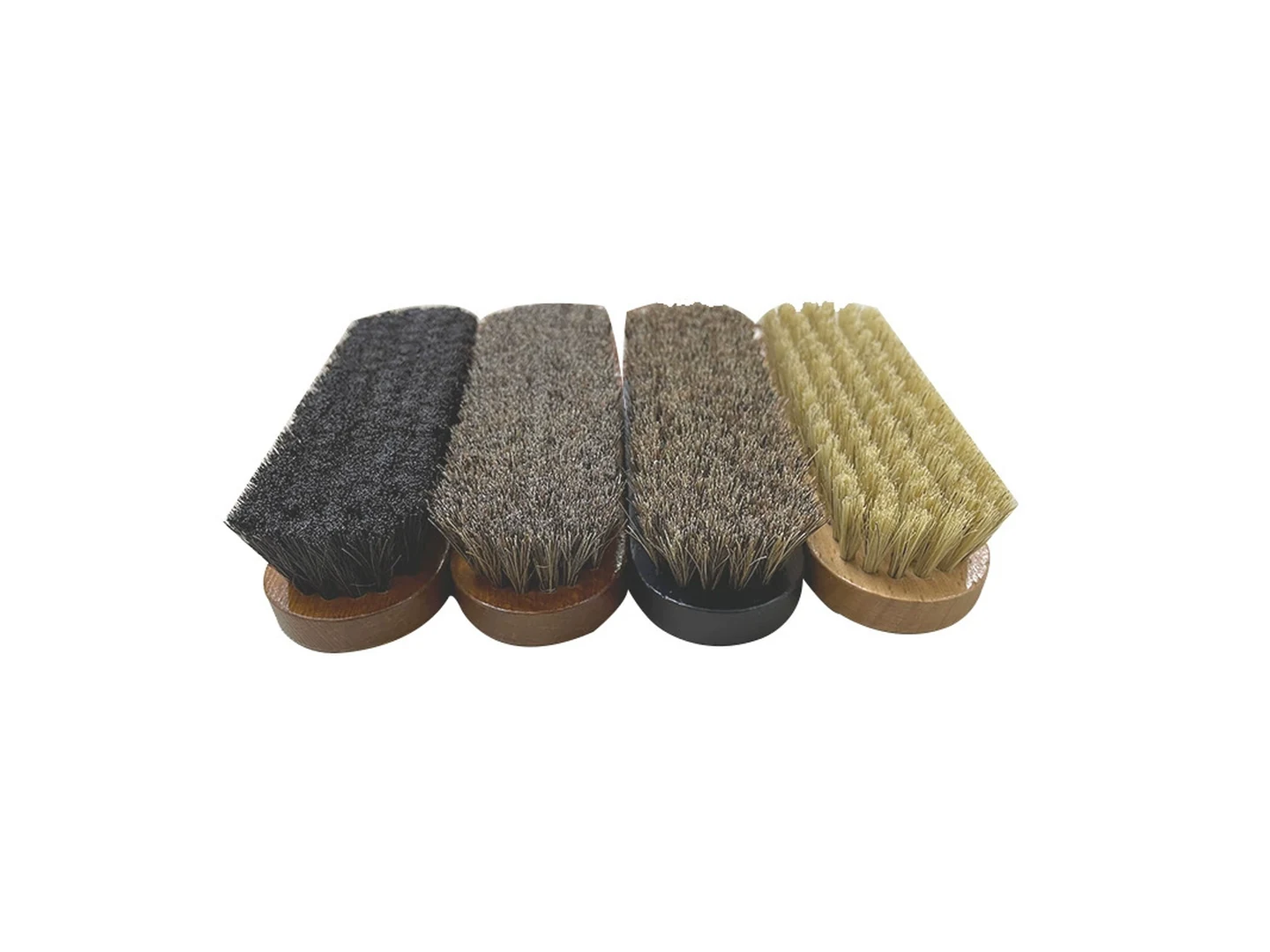
Medium brush
100 pcs
Minimum order
Worked with two hands or on a pole: chimney, gutter and pond-filter brushes, discs, cups and tank brushes.
Production lead time, once the specification is confirmed
- Up to 100 pcsWithin 7 days
- 101–5,000 pcsWithin 14 days
- 5,001–50,000 pcsWithin 21 days
- Over 50,000 pcsConfirmed with your quotation
Peak season can extend these times; the shipping date is confirmed in writing with your quotation. Sampling and shipping are quoted separately.
A flat-surface production cleaning brush built around a carbon fiber filament fill, designed for dry removal of dust and static-attracted contaminants from panels, films, coated webs, and glass. When configured with a grounded handle or strip connection, the conductive fill keeps loosened particles from re-settling after the brush passes — a common quality problem on carbon fiber composite panels and other charge-prone surfaces.
What can this brush do for you?
Conductive fill stops static re-attraction during the pass
Insulating nylon or hair fills build a triboelectric charge as they sweep, and that charge can pull dust straight back onto the panel. The carbon fiber filament fill provides a low-resistance path from the contact face toward a grounded handle, backing bar, or ground cord. Once that path is connected, the brush removes the charge mechanism that makes dust cling in the first place, not just the visible particles.
Fine filament tips protect coated and polished surfaces
Individual carbon fiber filaments are only a few microns thick, so the working face flexes under light contact instead of scoring the substrate. Across a coated film, ITO glass, clear acrylic, or a finished composite skin, the contact spreads across thousands of fine tips — enough to lift fine particles, not enough to gouge the coating.
Wide straight trim covers more panel in a single pass
The head is built with a straight, even trim across its width, so the operator draws one clean band instead of repeated overlapping wipes. Wider heads cut pass counts on large sheets and panels, while consistent fill density across the face prevents the streaking that uneven hand wiping leaves behind.
Tips reach channels, frame gaps, and shallow recesses
A longer trim lets the filament ends enter low-profile channels, panel seams, frame transitions, and edge gaps without the handle contacting the surface. Flat wipes and foam pads lose contact in these areas; the flexible tips follow the small geometry and pull dust out instead of packing it in.
Replaceable strip keeps the tool in service
The filament row can be supplied as a replaceable strip. When the cleaning face shows splay, embedded contamination, or uneven trim, the strip is swapped without replacing the entire handle or reworking the mounting. That turns replacement into a simple plant-level consumable change.
What is a Carbon Fiber Panel Cleaning Brush?
A Carbon Fiber Panel Cleaning Brush is a dry-contact cleaning tool whose working face is made from rows of carbon fiber filament bundles anchored in a handle, backing bar, or channel. In production it sits between material handling and the next critical step — coating, lamination, printing, inspection, or bonding — where loose particles on a flat surface create defects.
The operator draws the brush in one direction with the filament tips just touching the panel. The fine tips dislodge loose dust, fiber debris, and handling particles. Because the fill is conductive, a configuration with a grounded handle or strip connection prevents the brush itself from becoming a charge generator, which is the usual failure of synthetic-bristle panel brushes.
This is a light-contact tool, not a scrub brush. It removes dry, unbonded particles. It will not remove cured adhesive, heavy grease, release agents, or contamination that has been pressed into the surface, and it should not be used with hard pressure or on wet surfaces unless the specific construction has been defined for that process.
Carbon fiber filament is stable in dry production environments and sheds very little material under normal use. The practical limits come from the handle material, the filament anchoring, and the process environment — not from the filament itself. These variables are specified at ordering, so the brush matches the bench or line it will run on.
Technical Specifications
The table shows the standard configuration and the range most panel-cleaning projects fall into. Each row can be adjusted to the panel size, contact surface, and static-control requirement.
| Parameter | Standard / Options |
|---|---|
| Cleaning fill | Carbon fiber filament bundles, straight trim |
| Alternative fill | Conductive nylon PA, antistatic nylon, or microfiber for non-conductive, scratch-critical uses |
| Head width | 50–400 mm; custom widths in 10 mm increments |
| Trim length | 15–60 mm from strip face to filament tip |
| Overall length | 250–600 mm for hand-held panel work; machine-mount lengths to print |
| Handle / backing | Static-dissipative polypropylene, anodized aluminum channel, or grounded metal bar |
| Grounding option | Ground cord, grounding lug, or conductive connection for active static discharge |
| Filament density | Standard, dense, or extra-dense fill across the working face |
| Row configuration | Single row, double row, or triple row |
| Operating conditions | Dry process use; standard polymer handle rated for ambient -20 °C to 80 °C; metal backing option for higher temperature or fixed mounting |
| Replacement | Replaceable filament strip or fully integrated head |
| Brush type | Custom Handheld Detail Brushes |
| How it is driven | Hand-guided |
| Cleaning target | flat panel and touch panel manufacturing, carbon fiber composite panel and prepreg operation, and film and sheet converting cleaning |
| Surface or part | panels, glass, composite, edges, sheets, flat panels, channel, and fixtures |
| Residue or debris | carbon, fiber, dust, particles, loose particles, release agent, adhesive, and heavy grease |
| Mounting / connection | Fixed |
Width and trim are the two numbers to verify first: width controls pass coverage, trim controls how much the tips flex and how far they reach into gaps.
Where does this brush work best?
- Flat panel and touch panel manufacturing: removing dust from glass, ITO-coated surfaces, and polarizer film before lamination or final assembly.
- Carbon fiber composite panels and prepreg operations: lifting loose carbon dust and handling debris from cured skins, panels, and layup fixtures before bonding or coating. The conductive fill avoids adding charge to an already static-prone surface.
- Film and sheet converting: cleaning PET, polycarbonate, acrylic, and coated film just before printing, coating, or laminating stations.
- Glass processing: final dust removal from architectural, automotive, or display glass before inspection, edge sealing, or coating.
- Solar and electronics module assembly: cleaning cells, backing sheets, and conductive films where loose particles cause lamination or electrical-contact defects.
How do I choose the right one?
Start with the fill and the static requirement
If particles re-adhere after a pass, or the panel is in an ESD-controlled process, choose carbon fiber or conductive nylon with a grounded handle or ground connection. If static is not an issue and the surface is optically critical, microfiber or antistatic nylon may be a better contact choice — but those fills will not provide the same discharge path.
Match head width to the panel and access space
A good starting point is a head width that lets the operator cover the panel in two to four parallel passes with light overlap. Too wide on a small part makes corner work clumsy; too narrow adds passes and raises the chance of streaking. Also check the narrowest frame, clamp, or guide clearance — the head must fit everywhere the operator needs to clean.
Set trim length for flex and reach
For rigid flat panels, a shorter trim in the 15–35 mm range gives firmer contact and a cleaner edge. If the panel has channels, seams, or frame transitions, a longer trim lets the tips bend into those low areas without pressing the handle down. Very long trim on a wide head can splay and lose uniform contact, so long reach should be paired with the correct density.
Select the handle or mounting for the process
Bench cleaning uses a hand-held handle; a repeatable line position usually calls for a fixed aluminum channel or strip mounted beside the panel path. If active static discharge is required, specify the grounding cord or lug and verify the operator or fixture has a proper ground path.
Use a different tool when the job is no longer dry dust removal
Switch to wet wipes, solvent cleaning, or a nylon scrub brush when the contaminant is oil, release agent, uncured resin, adhesive residue, or anything that must be dissolved or mechanically scraped. Switch to a cylindrical roller brush or inline ionizing air system when the panel moves continuously at line speed and a hand tool cannot keep contact consistent. This brush solves loose, dry particle problems — not bonded contamination.
Can I customize this brush?
Most panel-cleaning brushes are specified to the panel and the line, not taken from stock. To configure one, provide the panel dimensions, surface coating, residue type, whether static discharge is required, access clearances, number of passes desired, process temperature, and any chemical exposure. A simple drawing or panel sample shortens the discussion.
We can adjust:
- Fill material: carbon fiber, conductive nylon PA, antistatic nylon, or microfiber, with the conductivity specified by project
- Cleaning face geometry: head width, trim length, filament density, row count, straight or feathered trim
- Handle / backing: hand-held length and grip, static-dissipative polymer, anodized aluminum, grounded metal bar, or machine-mount strip
- Grounding path: ground cord, lug, conductive backing, or bare connection for fixed installations
- Replacement scheme: replaceable strip, tool-free clip head, or fully integrated assembly
- Marking and packaging: custom color, part marking, cleanroom bagging, bulk pack, or kit packing
If your project requires conductivity verification, material declarations, inspection reports, or third-party testing support, these can be arranged for the specific configuration at the customization stage.
Which filament survives the cleaning chemicals a carbon fiber panel cleaning brush meets?
How can I tell whether static re-attraction is the reason dust remains on the panel?
Clean a panel as usual, then hold a thin piece of plastic film or a lightweight tissue close to the surface without touching it. If the material is pulled toward the panel or clings, the surface still carries enough charge to re-attract dust. In that case the brush should use conductive fill with a verified ground path, not just a conductive-looking handle.
What contact pressure should operators use?
Use just enough pressure for the filament tips to touch the surface across the full head width. Heavy pressure bends the filaments, splays the trim, and can mark soft coatings. If the process needs strong force to remove the contamination, the contaminant is not loose dust and a different cleaning step is required.
Can this brush be cleaned and reused between panel lots?
Yes. Blow the cleaning face with ionized air or use a gentle vacuum to remove collected dust between jobs. Do not soak the brush in solvent unless the handle, anchoring compound, and filament were specified for solvent exposure. Replace the strip or head when the tips show permanent bend, the trim becomes uneven, or contamination is embedded in the fill.
Will carbon fiber filaments scratch clear polycarbonate or coated film?
Under normal light contact, no. The filaments are fine enough to flex under the pressure used for dust removal. However, if hard particles become trapped in the filament face, the brush can carry those particles across the surface like an abrasive carrier. Inspect and clean the face between jobs, and on highly scratch-critical surfaces request a sample test with the actual substrate before full rollout.
Does this brush remove release agent, oil, or partially cured resin from carbon fiber panels?
No. It removes loose, dry particles only. Release agents, oil films, and uncured or partially cured resin bond to the surface and require solvent wiping, a wet process, or a different mechanical cleaning step before the brush is useful. Using more pressure with the brush does not make it remove bonded contamination.
Can I use this brush on a wet surface or with cleaning solution?
Standard configurations are dry-use only. Moisture can clump dust in the filaments and may attack the handle, adhesive, or backing if those materials were not specified for wet exposure. If the process needs damp or wet cleaning, state the liquid and contact time at the specification stage so the construction can be selected for it.
Guides that go deeper on this
Custom Manufacturing RFQ
Describe Your Application
For an accurate quotation, please provide the main dimensions, material preference, working surface, residue, quantity, and a drawing or photo.
Drawing or photo optional — it speeds things up, it does not gate the enquiry.
Custom Brush RFQ
Send Your Brush Project
Upload a drawing, product photo, or sample photo and provide the core dimensions and cleaning conditions.
“We need a brush to remove wet residue from a stainless steel conveyor, about 800mm wide. The current brush wears quickly. We can send photos.”
“We sell drinkware and need a cleaning brush to include with the product. Quantity around 5,000 pieces.”