
Custom Cleaning Brush
Fiber Optic Connector Cleaning Brush
Precision soft-bristle brush for cleaning 0.6 mm guide pin holes in fiber optic connectors. Removes dust, lint, and polishing residue without scratching.
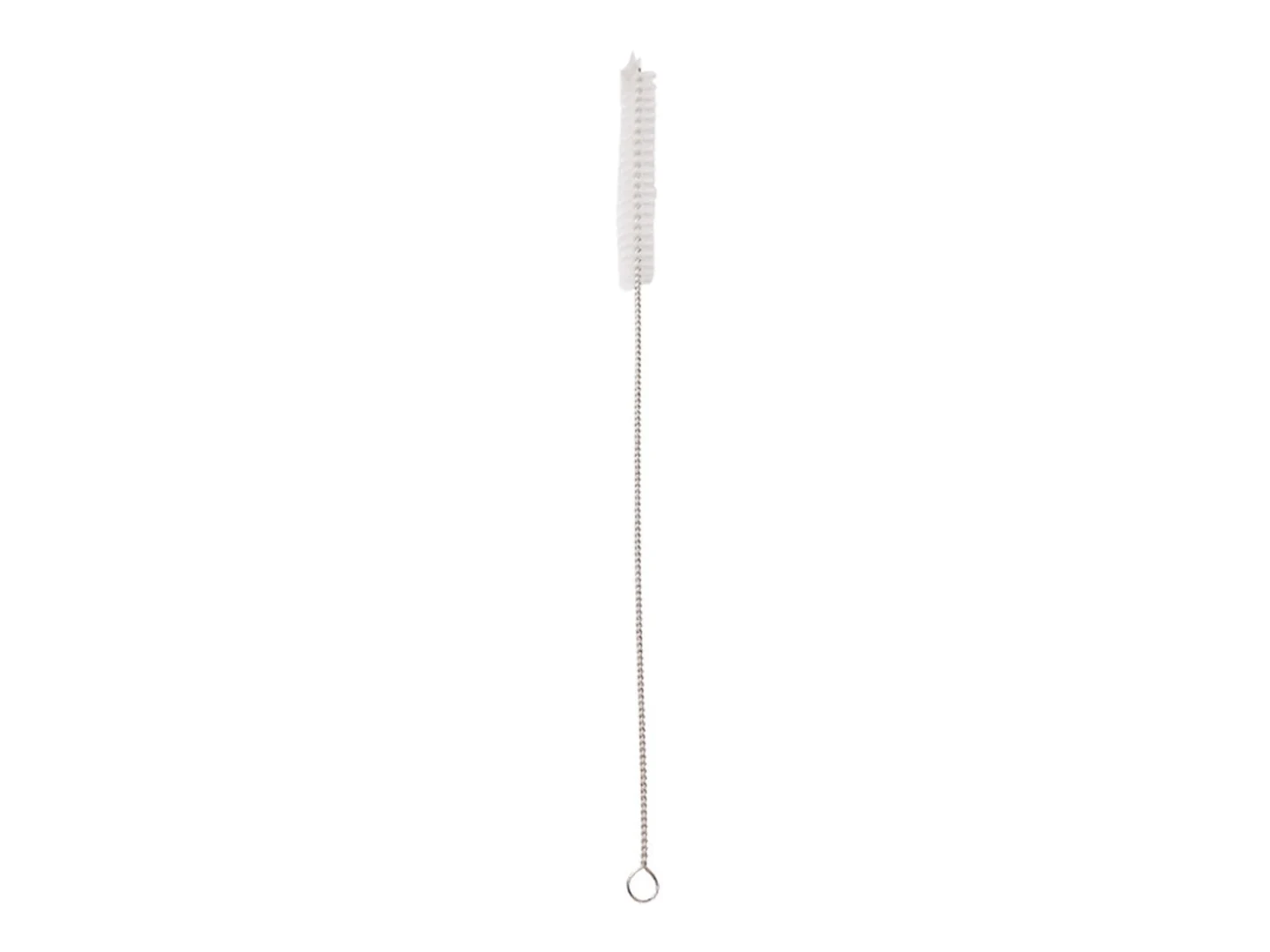
Small brush
500 pcs
Minimum order
Held in one hand: tube, bottle, detail and swab brushes — including long-handled ones with a small head.
Production lead time, once the specification is confirmed
- Up to 500 pcsWithin 7 days
- 501–50,000 pcsWithin 14 days
- Over 50,000 pcsWithin 21 days
Peak season can extend these times; the shipping date is confirmed in writing with your quotation. Sampling and shipping are quoted separately.
A precision cleaning brush engineered for the alignment guide pin holes of MT, MPO, and MTP fiber optic connectors. It removes dust, lint, polishing residue, and static-attracted particles that cause insertion failures and misalignment, while protecting the ferrule and alignment surfaces from scratching.
What can this brush do for you?
Clears Guide Pin Holes Without Damaging the Ferrule
The 0.6 mm soft-bristle fill enters the alignment guide pin holes of MT/MPO connectors and dislodges contaminants with gentle rotation. Unlike stiff tools or improperly sized brushes, the soft nylon filaments conform to the hole walls and remove debris without enlarging the hole, scratching the ceramic or polymer ferrule, or leaving behind bristle fragments.
Removes the Particles That Cause Insertion Failures
Dust, lint, polishing compound, flux residue, and static-attracted debris inside a guide pin hole can prevent the alignment pin from seating fully, increase insertion force, and create angular misalignment between fibers. This brush removes those particles at the source, helping maintain reliable connector mating and optical performance.
Reaches the Full Depth of Standard Guide Pin Holes
The bristle section is sized to enter the complete bore depth of typical MT/MPO guide pin holes, so cleaning is not limited to the opening. This ensures that contaminants packed at the bottom of the hole are also removed, which is where insertion problems often originate.
Non-Conductive and Low-Lint Contact for Optical Environments
The soft nylon bristles are non-conductive and shed minimal lint, making the brush safe for use in fiber optic assembly areas, cleanrooms, and electrostatic discharge (ESD) sensitive environments where metallic or abrasive tools are not acceptable.
Comfortable Precision Control for Repetitive Cleaning
The 100–150 mm overall length provides a balance between reach and fine motor control, allowing technicians to clean multiple connectors quickly without hand fatigue. The lightweight construction and slim profile suit high-volume production and field maintenance tasks.
What is a Fiber Optic Connector Cleaning Brush?
A Fiber Optic Connector Cleaning Brush is a small hand tool designed specifically for cleaning the alignment guide pin holes found in multi-fiber connectors such as MT, MPO, and MTP. These connectors use precision-machined holes to accept alignment guide pins that ensure accurate lateral and angular positioning of the fiber array when two connectors are mated. Any contamination inside these holes—dust, lint, polishing residue, or static-attracted particles—can cause the pin to bind, seat imperfectly, or transfer debris onto the ferrule face, degrading optical performance.
The brush uses an extremely fine, soft-bristle fill (typically nylon) mounted on a slender core. During cleaning, the operator inserts the brush tip into the guide pin hole and rotates it gently. The soft filaments sweep the inner walls without abrading the hole surface or generating conductive particles. The brush is intended for dry particulate removal; it is not designed to clean the polished optical end face, which requires a dedicated end-face cleaner such as a cassette, swab, or pen.
In production environments, this brush is used after ferrule polishing, before connector mating, and during routine maintenance of patch cords, adapters, and test equipment. It is a low-cost, reusable tool that helps prevent connector damage and costly rework.
Technical Specifications
The following specifications represent our standard configuration for MT/MPO guide pin hole cleaning. All parameters can be customized to your connector geometry and process requirements.
| Parameter | Value / Options |
|---|---|
| Brush diameter | 0.6 mm (standard for MT/MPO guide pin holes); other diameters available from 0.3 mm to 1.5 mm |
| Bristle length (insertion depth) | 8–15 mm, selected to reach full hole depth; custom lengths available |
| Overall length | 100–150 mm (standard); longer or shorter handles can be supplied |
| Bristle material | Soft nylon (low abrasion, non-conductive); optional solvent-resistant or static-dissipative grades |
| Handle / core | Stainless steel wire core with PP or POM handle; fully plastic option for metal-free applications |
| Tip configuration | Straight cylindrical tip; tapered or rounded tip available for easier insertion |
| Connector compatibility | MT, MPO, MTP, and other connectors with circular guide pin holes; custom profiles for non-standard ferrules |
| Cleaning method | Dry use recommended for particulate removal; solvent-compatible versions available for IPA or other cleaners |
| Operating environment | Suitable for cleanroom, ESD-sensitive, and general fiber optic assembly areas |
| Brush type | Custom Handheld Detail Brushes |
| How it is driven | Hand-guided |
| Cleaning target | mt/mpo/mtp connector production and termination, fiber optic patch cord and harness assembly, and cleaning of guide pin hole cleaning |
| Surface or part | holes, connectors, pins, walls, ports, precision housings, cable, and cavities |
| Residue or debris | fiber, particles, dust, lint, polishing residue, static-attracted particles, and polishing compound |
| Mounting / connection | MT, MPO, MTP, and other connectors with circular guide pin holes; custom profiles for non-standard ferrules |
All values are standard options and can be adjusted during quoting. If your connector uses a non-standard guide pin hole diameter or depth, provide the hole dimensions and we will match the brush profile accordingly.
Where does this brush work best?
- MT/MPO/MTP connector production and termination: after polishing the ferrule, polishing compound and glass particles can lodge in the guide pin holes. This brush removes them before assembly and testing.
- Fiber optic patch cord and harness assembly: before mating connectors, cleaning guide pin holes prevents insertion damage and maintains alignment accuracy.
- Cleaning of guide pin holes in adapters, bulkhead connectors, and test ports: these holes can collect dust over time; regular brushing restores smooth operation.
- Maintenance of fiber inspection and test equipment: connectors on test leads, launch cables, and measurement ports require clean guide pin holes to ensure accurate measurements.
- Static-sensitive electronics and optical subassemblies: the non-conductive brush is safe for cleaning small cavities and alignment features in photonic devices and precision housings where conductive brushes are prohibited.
How do I choose the right one?
Match the brush diameter to your guide pin hole
Measure the inside diameter of the guide pin hole with a precision pin gauge. The brush diameter should be slightly smaller than the hole to allow insertion without compression, but large enough for the bristles to contact the walls. Our standard 0.6 mm brush fits the 0.7 mm nominal holes used in many MT/MPO connectors. If your holes are different, we can produce a custom diameter.
Confirm the required insertion depth
The bristle section must be as long as the hole is deep, or slightly longer. This ensures the contamination at the bottom is removed. Standard guide pin holes in MT ferrules are typically 8–12 mm deep; our standard bristle length covers that range. For longer or through-holes, specify the depth.
Select bristle and core materials for your environment
For most cleanroom and fiber optic assembly areas, soft nylon on a stainless steel core is the standard choice. If your process prohibits metal tools, choose a fully plastic core and handle. If you plan to use isopropyl alcohol or another solvent, select a solvent-resistant nylon grade. For ESD-sensitive areas, we can provide static-dissipative filaments.
Know when not to use this brush
Do not use a bristle brush on the optical fiber end face. The polished end face is a precision optical surface and will be scratched or contaminated by bristle contact. Use a dedicated end-face cleaning cassette, swab, or click-style cleaner for that surface. Also, if the guide pin hole contains hardened epoxy, cured adhesive, or other bonded residue, a brush will not remove it; use an appropriate chemical or mechanical method after verifying that it does not damage the ferrule.
Can I customize this brush?
Yes. We can adjust nearly every aspect of this brush to match your connector style, cleaning procedure, and environment. To define your configuration, provide the connector type (e.g., MT, MPO, MTP), guide pin hole diameter and depth, cleaning environment (cleanroom, ESD, solvent use), and desired handle style. A sample connector or drawing greatly speeds up the specification.
We can modify:
- Structure and dimensions: brush diameter from 0.3 mm to 1.5 mm, or as required; bristle length and overall length to fit your access and ergonomic needs; tip shape straight, tapered, rounded, or custom profile for insertion ease.
- Materials: bristle filament in various nylon grades, solvent-resistant, static-dissipative, or heat-stabilized options; core in stainless steel wire, coated wire, or plastic (PEEK, POM) for metal-free environments; handle in PP, POM, ergonomic overmolded designs, color-coded or marked.
- Finishing and packaging: handle color coding for connector type identification; laser marking or pad printing of part numbers, logos, or traceability codes; bulk packaging, individual poly bags, or custom kits with end-face cleaning tools.
If your project requires material declarations, inspection reports, or third-party testing, we can assist with those requirements during the customization process.
How long does a fiber optic connector cleaning brush last, and how is it cleaned between runs?
Can I use this brush to clean the fiber end face?
No. The polished optical end face requires a dedicated fiber end-face cleaning tool such as a cleaning cassette, swab, or click pen. Using a bristle brush on the end face can scratch the surface and leave debris that degrades optical performance. Use this brush only for the guide pin holes and non-optical alignment features.
How do I know when the guide pin hole is clean enough?
Inspect the hole with a fiber inspection scope or microscope after brushing. No visible particles, lint, or residue should remain. You can also test insertion with a clean, known-good guide pin: it should slide in smoothly without resistance or scraping. If any contamination is visible or the pin binds, repeat the brushing or use a solvent-assisted cleaning stick designed for the hole.
Can I clean with isopropyl alcohol?
Yes, if the brush is specified as solvent-compatible. Our standard soft nylon bristles tolerate isopropyl alcohol for light solvent-assisted cleaning. However, confirm with our engineering team before using aggressive solvents, as they can degrade bristle or handle materials. For dry particulate removal, no solvent is needed.
How often should I replace the brush?
Inspect the brush before each shift or cleaning session. Look for splayed or bent bristles, loss of filament density, or a damaged core. If the brush no longer enters the hole smoothly or if bristles are visibly worn or contaminated, replace it. A worn brush may leave bristle fragments inside the connector, which is worse than the original debris.
Can this brush be used for other small holes, such as electrical connector contacts?
It can be used for cleaning similar precision holes and cavities, provided the diameter and depth are compatible and the bristle material is appropriate for the surface and cleaning requirement. For electrical contacts, verify that the brush is non-conductive and free of residues that could affect electrical performance. If the application involves static-sensitive components, request a static-dissipative filament version.
Guides that go deeper on this
Fiber Optic Connector Brush on Terminal Blocks: What Fits?
Read this guideGuideFiber Optic Connector Brush: Material and Size for Contacts
Read this guideGuideFiber Optic Connector Brush: Which Fibre Won't Hold Charge?
Read this guideGuideNatural Fiber vs Synthetic Brush Filament
Read this guideGuideTire Lubricant Swab Head: Cotton or Synthetic Fiber?
Read this guideCustom Manufacturing RFQ
Describe Your Application
For an accurate quotation, please provide the main dimensions, material preference, working surface, residue, quantity, and a drawing or photo.
Drawing or photo optional — it speeds things up, it does not gate the enquiry.
Custom Brush RFQ
Send Your Brush Project
Upload a drawing, product photo, or sample photo and provide the core dimensions and cleaning conditions.
“We need a brush to remove wet residue from a stainless steel conveyor, about 800mm wide. The current brush wears quickly. We can send photos.”
“We sell drinkware and need a cleaning brush to include with the product. Quantity around 5,000 pieces.”