
Material
Abrasive Nylon
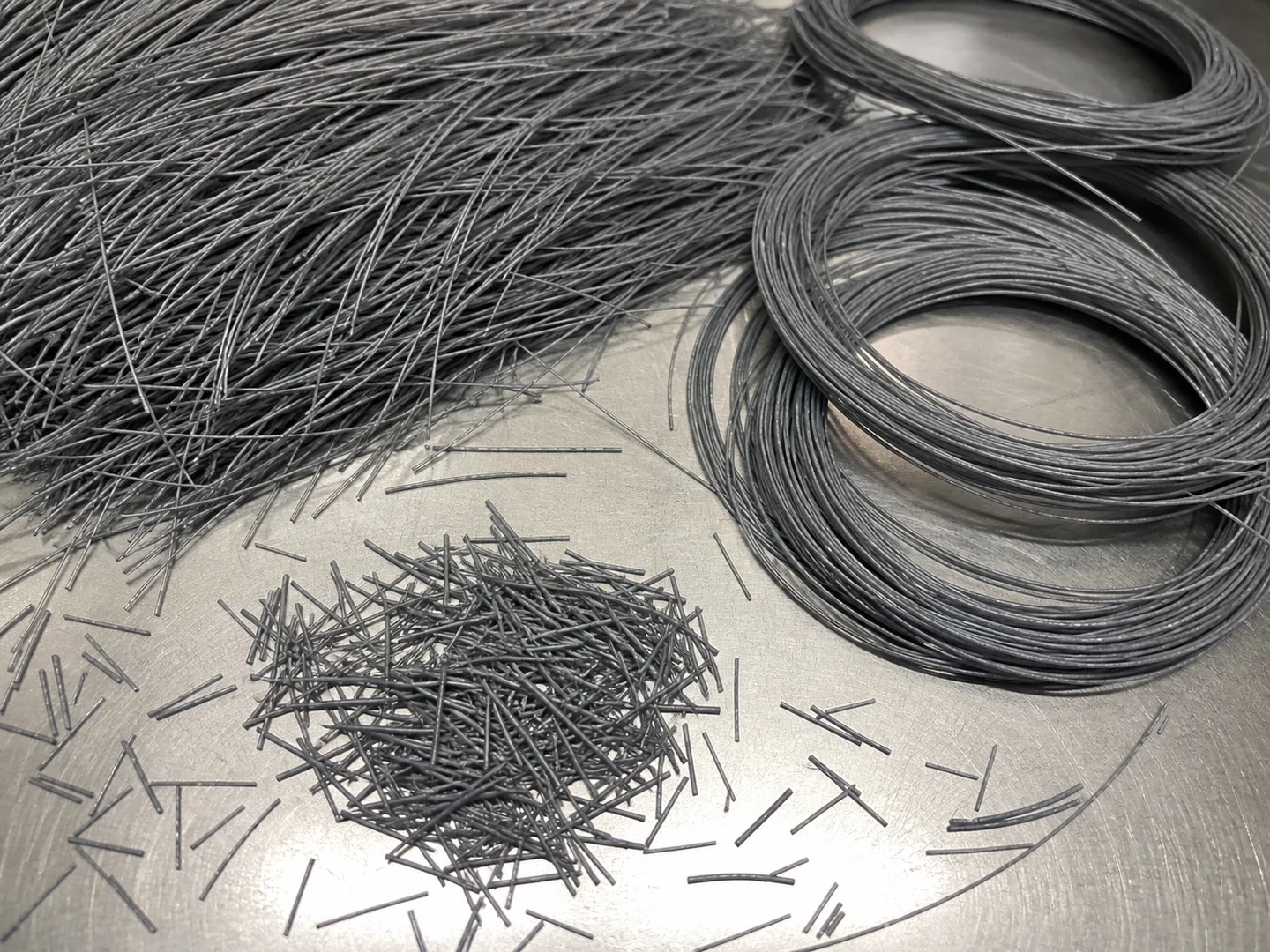
Abrasive-filled polyamide filament
Choose Abrasive Nylon based on its stiffness, recovery, wear, wet-service, chemical, and temperature behavior. Material name alone is not enough to set stiffness; we also need filament diameter, free trim, density, grade, and working conditions.
Datasheet values
- Abrasive grit
- 46–1,000 grit
- Filament diameter
- 0.20–1.80 mm
- Abrasive loading
- 20–40% by weight
Abrasive nylon suspends mineral grit in a polyamide filament so fresh abrasive is exposed as the polymer wears.
What is Abrasive Nylon, and what makes it different from other brush filaments?
Abrasive Nylon belongs to the abrasive-filled polyamide filament group, supplied as abrasive filament, wheel, disc and roller fill, drawn in round, triangular, cross-shaped, hollow, star-shaped and rectangular sections and set in straight rows, helical, staggered, zoned, wavy and random fill patterns.
Abrasive Nylon is used in custom cleaning brushes for edge blending, light deburring, oxide removal and surface preparation on metal, wood, plastic and machined bores.
The realistic alternatives are Polypropylene PP, PBT and PET Polyester. What separates them here is moisture uptake and working temperature, not headline strength.
Compare Abrasive Nylon with PP, PBT, PET. Change material when wet stiffness, temperature, chemical resistance, conductivity, particle shedding, or surface marking becomes the limiting factor.
What stiffness and contact pressure can I expect from Abrasive Nylon?
Abrasive Nylon is abrasive filament; stiffness and cutting level is controlled by PA base, grit type, grit size, filament diameter and trim height. It Abrasive Nylon changes brush stiffness through filament diameter, free trim, density, crimp, and contact. Use finer filament and longer trim for conformable contact; use coarser filament, shorter trim, or higher density for stronger displacement or cutting.
Published ranges for the filament itself. Read them as a shortlist tool, not as brush performance.
| Property | Abrasive Nylon | Polypropylene PP | PBT | PET Polyester |
|---|---|---|---|---|
| Shore hardness | Abrasive filament; stiffness and cutting level is controlled by PA base, grit type, grit size, filament diameter and trim height. | Shore D 65–75 | Shore D 80–90 | Shore D 80–90 |
| Continuous temperature (°C) | 120 | 80–100 | 120–140 | 120–150 |
| Peak temperature (°C) | 150 | 120–140 | 160–180 | 170–190 |
| Water absorption, 24 h | 0.1–1.0% (24 h; industry reference range) | ≤0.03% (24h, ISO 62/ASTM D570) | 0.05–0.20% (24h, ISO 62/ASTM D570) | 0.10–0.30% (24h, ISO 62/ASTM D570) |
| Filament diameter (mm) | 0.20–1.80 | 0.08–3.00 | 0.03–2.00 | 0.04–1.50 |
| Flexibility | Medium to High Flexibility | Medium Flexibility | Medium to High Flexibility | Medium Flexibility |
The part people get wrong: stiffness is not a property of the material on its own. A 0.50 mm filament on a 15 mm trim is stiffer than a 0.30 mm filament on a 25 mm trim in the same grade. Fix diameter and trim first, then confirm the material.
How does water affect Abrasive Nylon performance?
Abrasive Nylon takes up 0.1–1.0% (24 h; industry reference range).
PA6 and PA66 absorb moisture; PA610, PA612 and PA12 retain stiffness better in wet service; this moisture response matters in edge blending, light deburring, oxide removal and surface preparation on metal, wood, plastic and machined bores.
What this means for your application: moisture uptake is low enough to ignore in service, which is why this grade holds its stiffness through washdown.
A practical check: run one wet cycle and compare tip contact against the dry state. If the wet brush leaves residue behind or no longer reaches the bottom of the bore, change the material rather than the geometry.
What temperature limits apply to Abrasive Nylon?
Continuous service: 90–120°C.
The filament tables quote 120°C continuous and 150°C peak. The tighter number above is the one to build to, because a brush is loaded while it is hot.
Where it stops working: validate with a sample if the process sits near the top of that band. If the filament takes a permanent set under load, step up to PET Polyester or PBT, which hold a higher continuous temperature.
Diameter, trim length and applied load all shift the real limit, so a thin filament touching lightly survives conditions that would flatten a thick one under pressure.
What chemicals attack Abrasive Nylon?
It stands up to water, oils, mild detergents and dilute alkalis.
What degrades it: strong mineral acids, phenols and strong oxidizers.
Compatibility is a function of concentration, temperature and contact time together. A short rinse in a dilute solution is a different exposure from an overnight soak in a concentrated one, even with the same chemical on the label.
Before you commit to a quantity: Specify the exact Abrasive Nylon grade or alloy, filament or profile size, color, straight or crimped form, working temperature, wet or dry use, chemical exposure, surface finish, and any required material documentation.
What is the practical lower limit for filament diameter?
The floor is roughly 0.20 mm; finer than that and the filament snaps rather than flexes. In practice you are choosing inside 0.20–1.80 mm.
Free trim runs 3–300 mm, and the two interact: a finer filament needs a shorter trim to keep useful stiffness, while a thicker one carries a longer trim and still lands pressure on the tip.
Split the range by duty: roughly 0.20–0.6 mm for light wiping, dusting and surfaces that mark easily, and 0.6–1.80 mm where residue is packed on and point pressure matters more than surface risk.
Tip treatments available on this filament: end rounding, tapered-tip grinding, silicone-oil coating, anti-static coating and antibacterial coating.
In practical brush terms: reaching deep into a bore or crevice is a diameter problem before it is a length problem. A thicker filament on a moderate trim pushes further in before the tips fold over.
What applications typically use Abrasive Nylon?
Edge blending, light deburring, oxide removal and surface preparation on metal, wood, plastic and machined bores.
The applications that keep coming back to this grade:
- Ceramic Glaze Line & Tile Brush Use
- Polishing
- Surface Finishing
- Deburring & Edge Breaking
- Tile Grout Cleaning
- Household Dish, Teapot & Kitchen Detail Cleaning
The constructions that usually carry it:
- Custom Wheel Brushes
- Custom Floor Scrubber Sweeper Brushes
- Custom Roller and Conveyor Brushes
- Custom Tube & Pipe Bore Brushes
The trade-off: Exposed grit can change a surface finish, and high heat or aggressive chemicals can weaken the polymer carrier.
How do I specify Abrasive Nylon for a custom brush?
Send the brush type, filament diameter, free trim length, density, contact setting, wet or dry duty, working temperature and the actual cleaning chemistry together. Any one of them on its own leaves the stiffness undefined.
What usually goes wrong at this step:
- Selecting Abrasive Nylon from the material name alone without setting filament diameter, trim length, and density
- Using dry stiffness to predict wet behavior without checking moisture absorption or liquid exposure
- Ignoring trapped abrasive particles, chemical concentration, temperature, or contact motion when assessing surface risk
Reference standards behind the figures on this page: ISO 527-1:2019; ASTM D638; ISO 62:2008; ASTM D570-22; ISO 868:2003; ASTM D2240-15(2021); ISO 4892-3:2024; ASTM G154-23; UL 94; ISO 6344 series; ISO 13061-1; ASTM D143.
Source: Perlon — Abrasive Filaments. Public manufacturer or material data supports the material form and performance direction used on this page.
What else does the datasheet specify for Abrasive Nylon?
| Filament cross-section | Round/Triangular/Cross-Shaped/Hollow/Star-Shaped/Rectangular |
|---|---|
| Electrical behaviour | Insulating |
Questions this page is asked
What belongs in an abrasive-nylon filament specification besides grit size?
Identify the carrier polymer and grade, abrasive mineral, nominal grit designation and its standard, abrasive loading or product series, filament diameter and shape, color coding if controlled and lot or formulation-change traceability. Record the brush trim, density and construction separately, because the same grit label can cut differently when any part of that filament-and-brush system changes.
How is a safe cutting window established for an abrasive-nylon brush?
Start within the brush and machine manufacturers' rated speed and guard requirements, then vary speed, contact penetration or pressure, feed, dwell, direction and coolant on representative workpieces. Measure cycle result, surface temperature, dimensional change, brush wear, filament loss and machine load, and lock only the range that meets both the finish and safety criteria.
Which workpiece checks should release an abrasive-nylon process?
Set limits for the actual objective, such as residual burr height or root, edge radius, roughness, coating removal, substrate loss and critical dimensions, and inspect for heat marks, scratches, embedded abrasive, loose filament and transferable debris. Validate cleaning after brushing where contamination matters and repeat the measurements across representative incoming variation and brush wear states.
Where these figures come from
| Property | Published value | Source |
|---|---|---|
| Hardness and stiffness | Abrasive filament; stiffness and cutting level is controlled by PA base, grit type, grit size, filament diameter and trim height. | Evonik Retrieved 2026-07-20 |
| Limitations | Exposed grit can change a surface finish, and high heat or aggressive chemicals can weaken the polymer carrier. | Perlon Retrieved 2026-07-20 |
| Temperature resistance | Continuous service: 90–120°C. | Perlon Retrieved 2026-07-20 |
| Water resistance | PA6 and PA66 absorb moisture; PA610, PA612 and PA12 retain stiffness better in wet service; this moisture response matters in edge blending, light deburring, oxide removal and surface preparation on metal, wood, plastic and machined bores. | Evonik Retrieved 2026-07-20 |
| Material definition | Abrasive nylon suspends mineral grit in a polyamide filament so fresh abrasive is exposed as the polymer wears. | Perlon Retrieved 2026-07-20 |
Guides that go deeper on this
Abrasive Nylon Grit and Filament Selection
Read this guideGuideAbrasive Nylon vs Wire Brush: Which Fits Your Application?
Read this guideGuideAcid Alkali Brush Roller for Oxide Removal: How Aggressive?
Read this guideGuideBrush Pressure and Speed for a Consistent Surface Finish
Read this guideGuideBusbar Cleaning Brushes for Lithium Battery Module Assembly
Read this guideGuideCross-Hole Deburring: What Reaches the Intersection?
Read this guideGuideDeburring Brush Selection: Filament Type and Feed Rate Matching
Read this guideGuideDeburring: Matching Brush Feed Rate to Surface Finish Target
Read this guideGuideEngine Bay Cleaning Brush: Specs for Wheel Barrels
Read this guideGuideExtending Abrasive Nylon Brush Life with Proper Technique
Read this guideGuideHow to Choose Anodizing Line Cleaning Brush
Read this guideGuideHow to Choose Composite Deburring Brush
Read this guide24 guides are indexed against this one. The rest are in the technical resources library.
Continue Exploring
Recommended Reading & Related Brush Resources
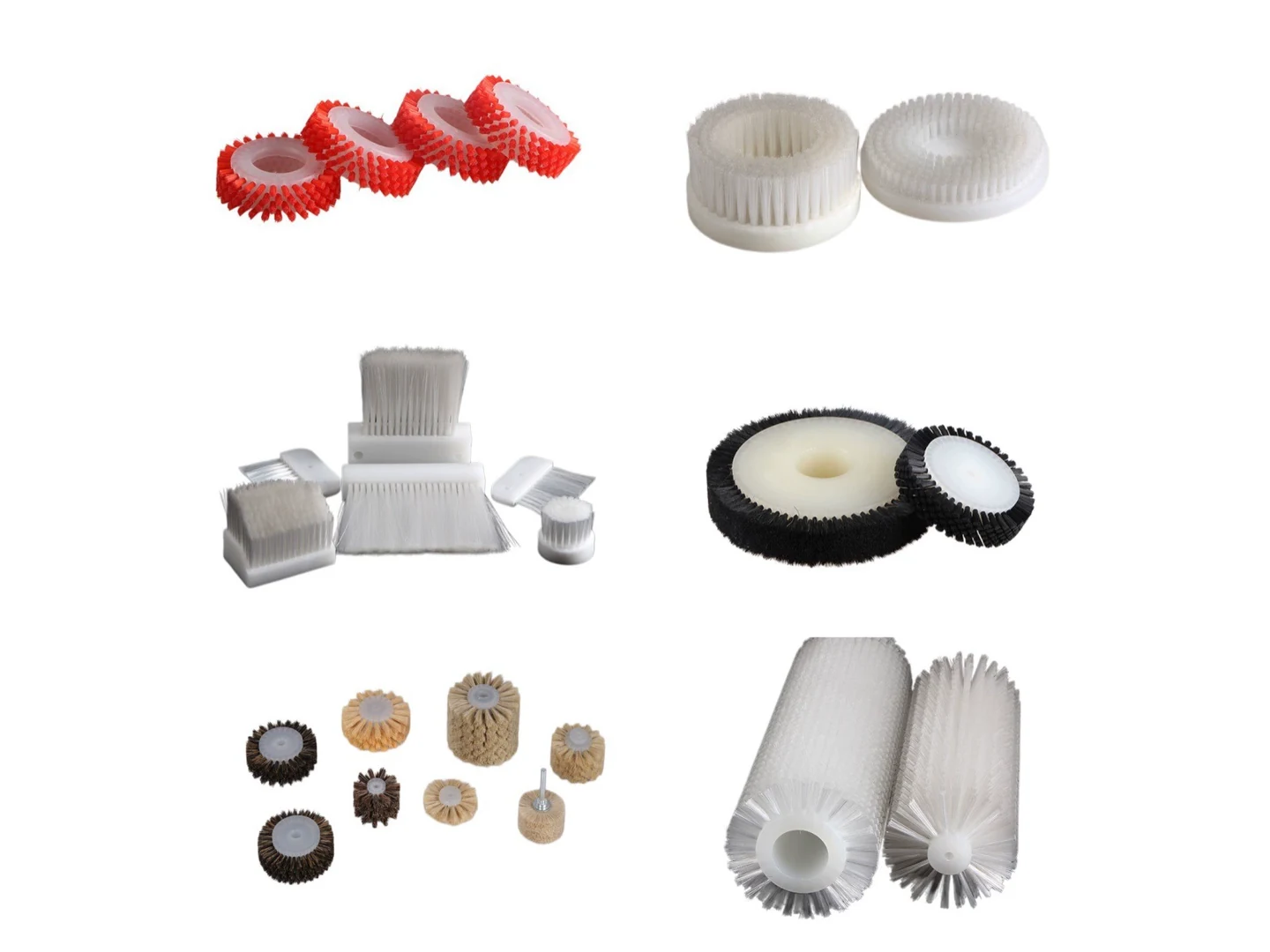
Nylon Brush Wheel
Nylon PA filaments work at the tips, so the wheel lifts oxide and loose…
See the specification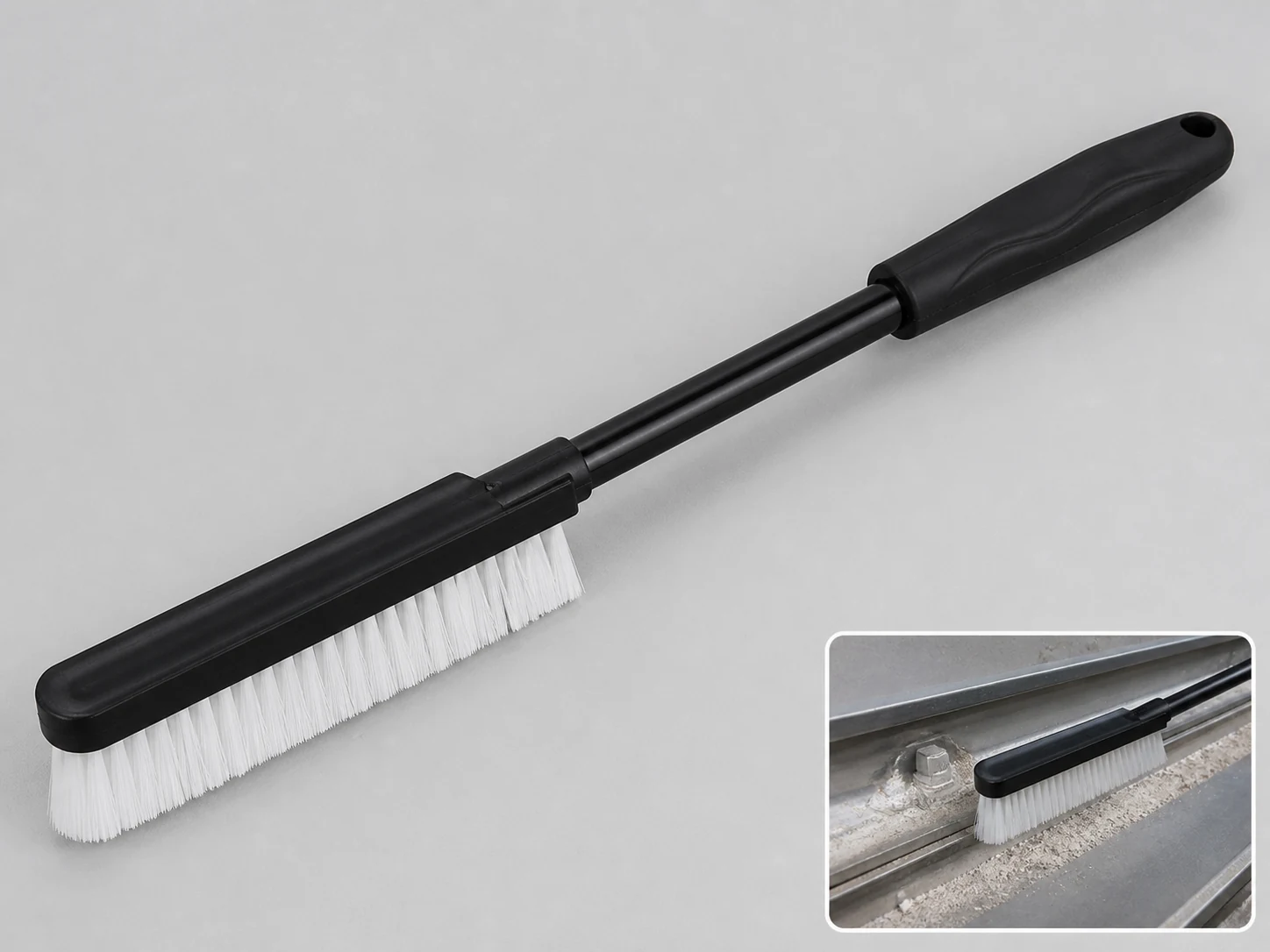
Nylon Dust Removal Brush
Custom Nylon PA dust removal brushes for panels, profiles, slots, and equipment surfaces. Fine…
See the specification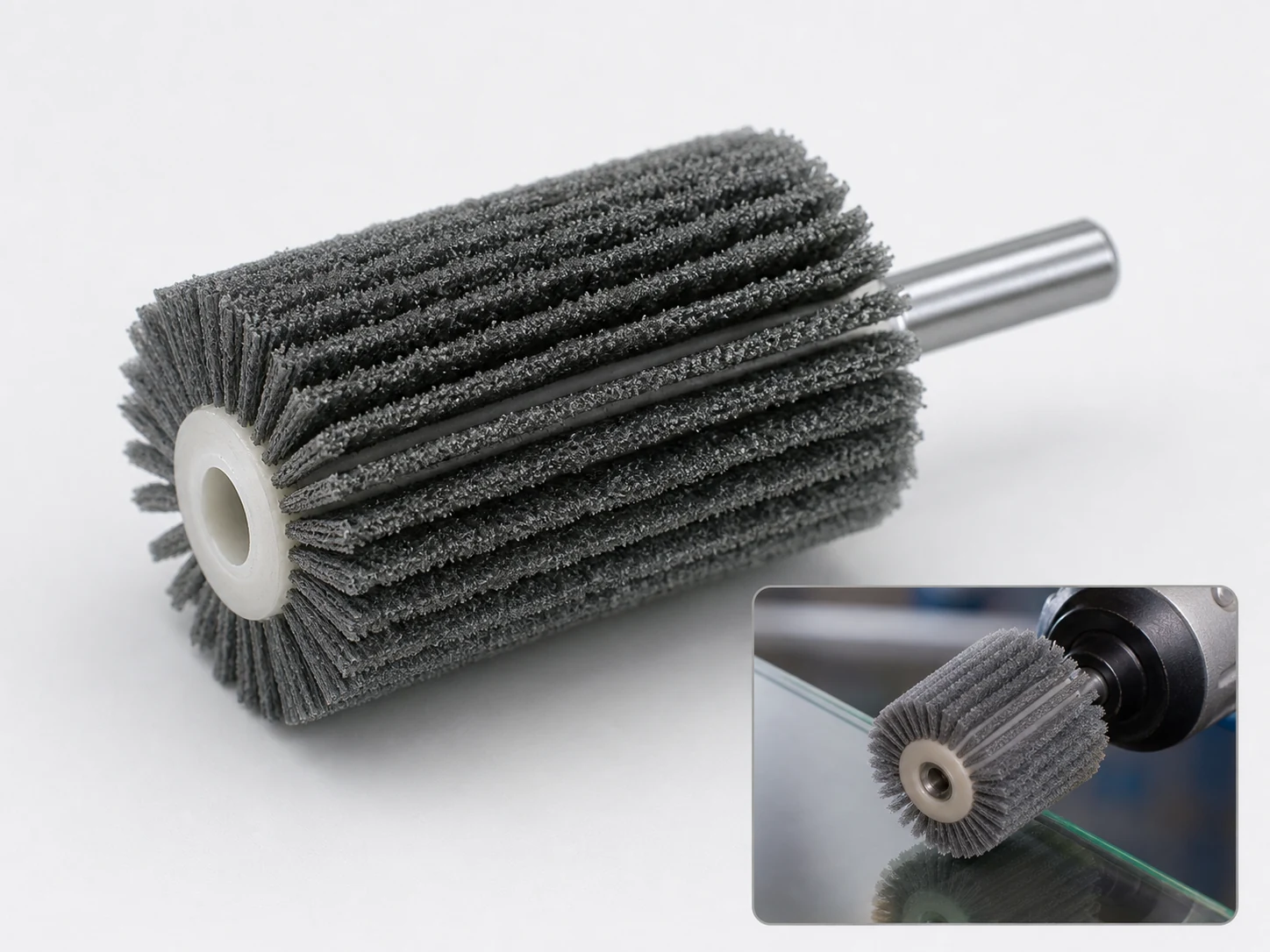
Abrasive Brush Glass
Machine-mounted abrasive nylon brush for glass frosting, edge deburring and residue removal. Silicon carbide…
See the specification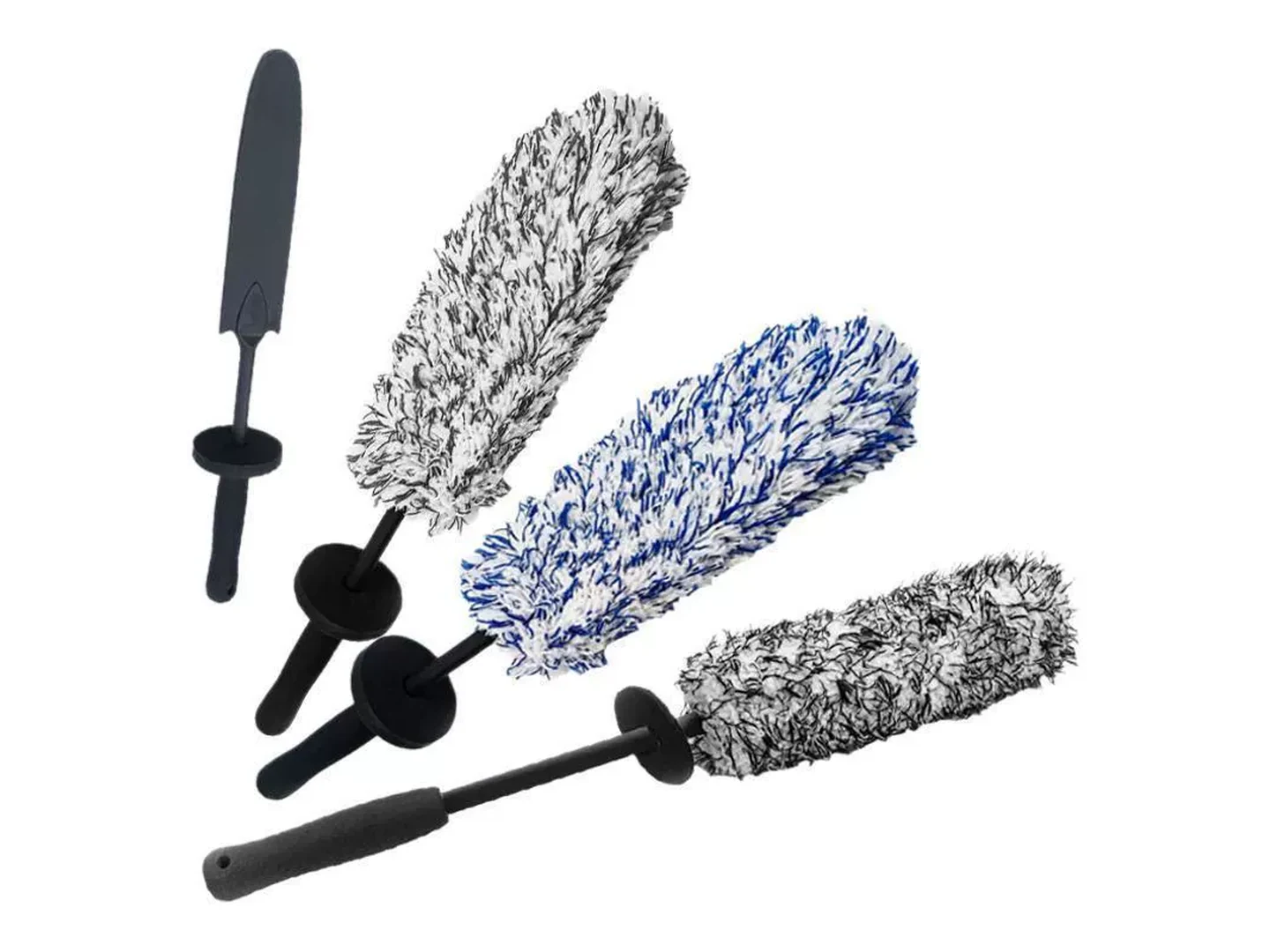
Custom Wheel Brushes
Choose a wheel brush when a rotating narrow face or edge must clean profiles,…
See how this type is built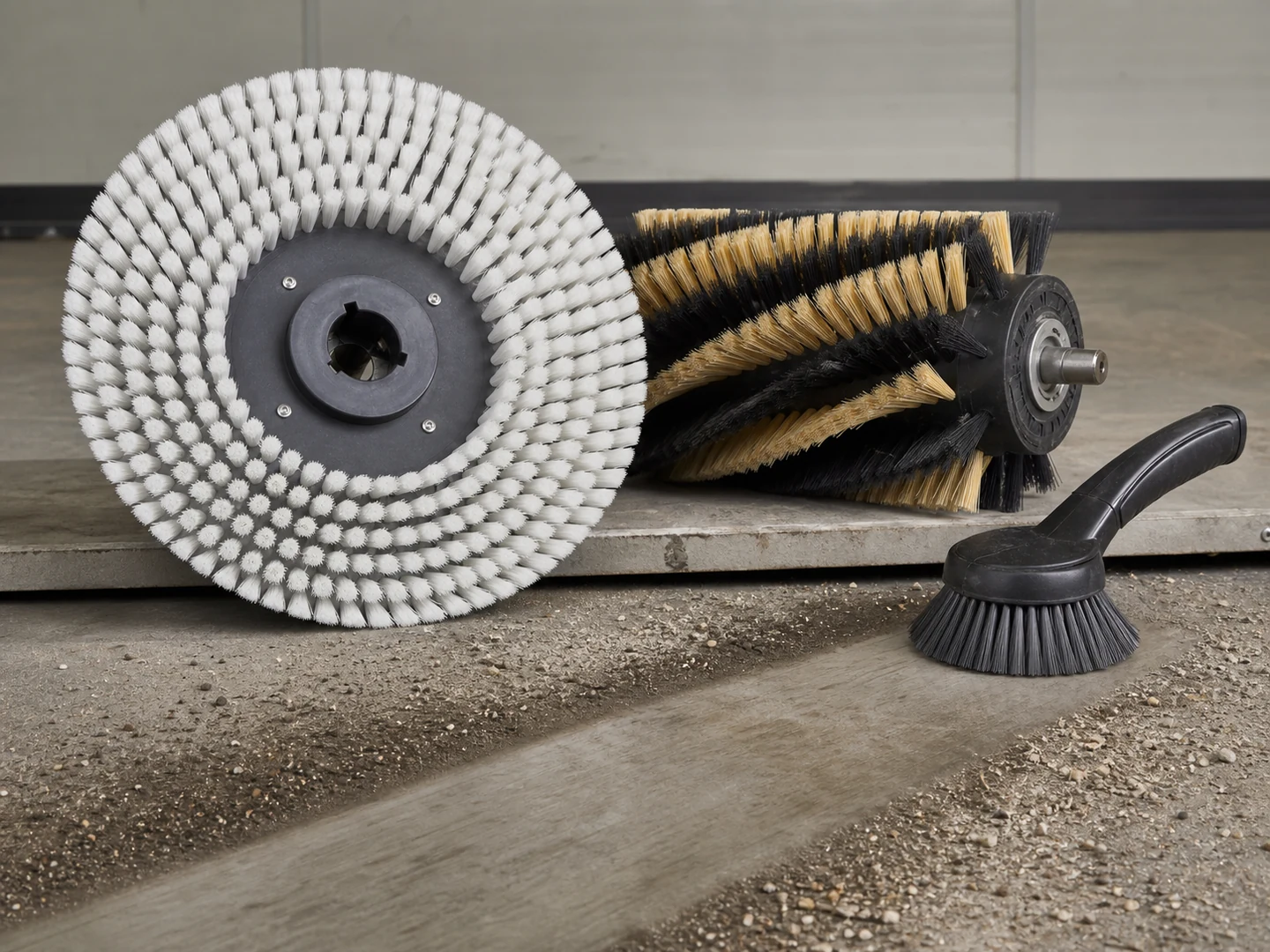
Custom Floor Scrubber Sweeper Brushes
Choose this brush type when a floor machine needs a disc, roller, main broom,…
See how this type is built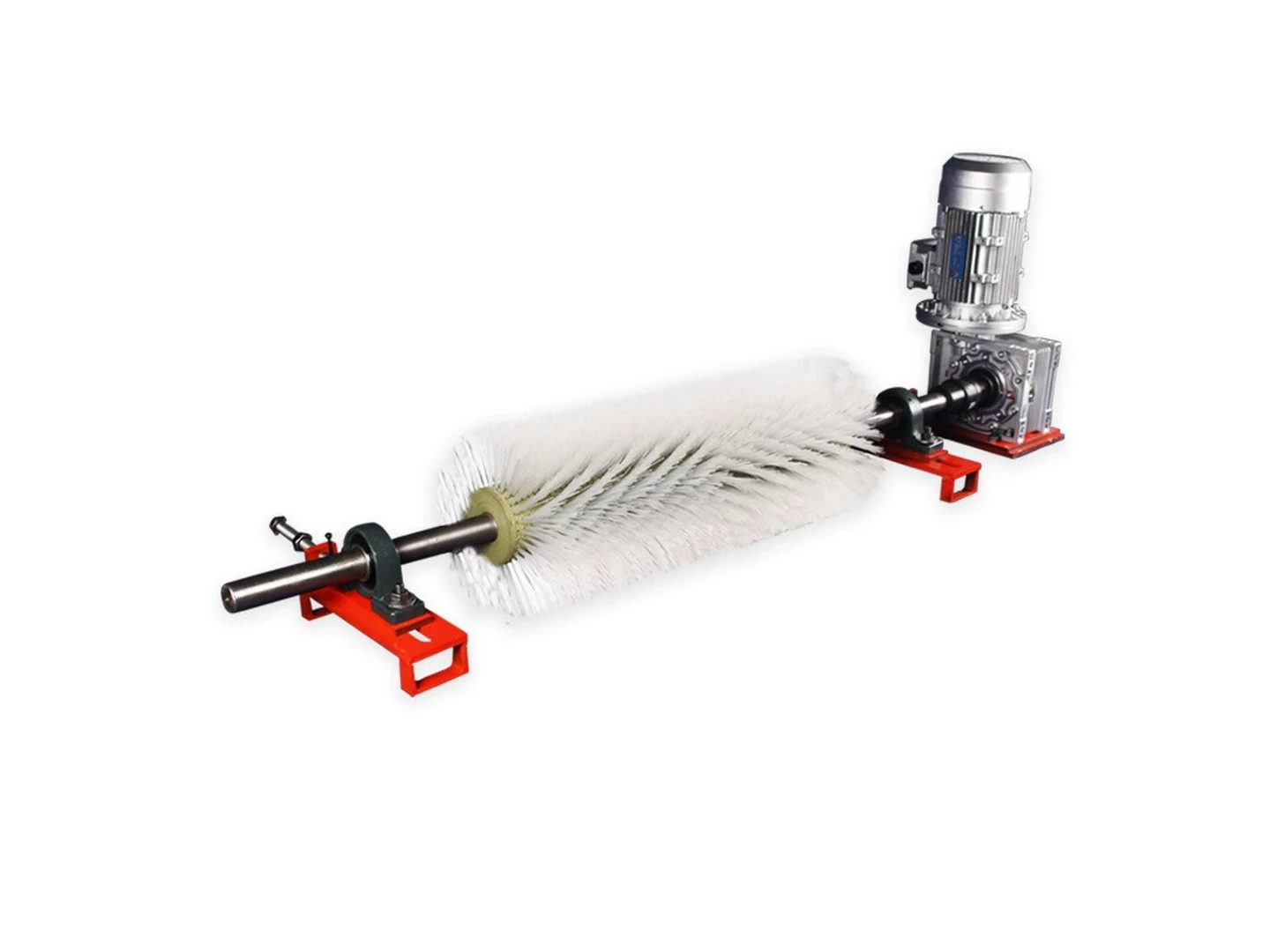
Custom Roller and Conveyor Brushes
Choose a roller or conveyor brush when a cylindrical brush must clean, wipe, guide,…
See how this type is built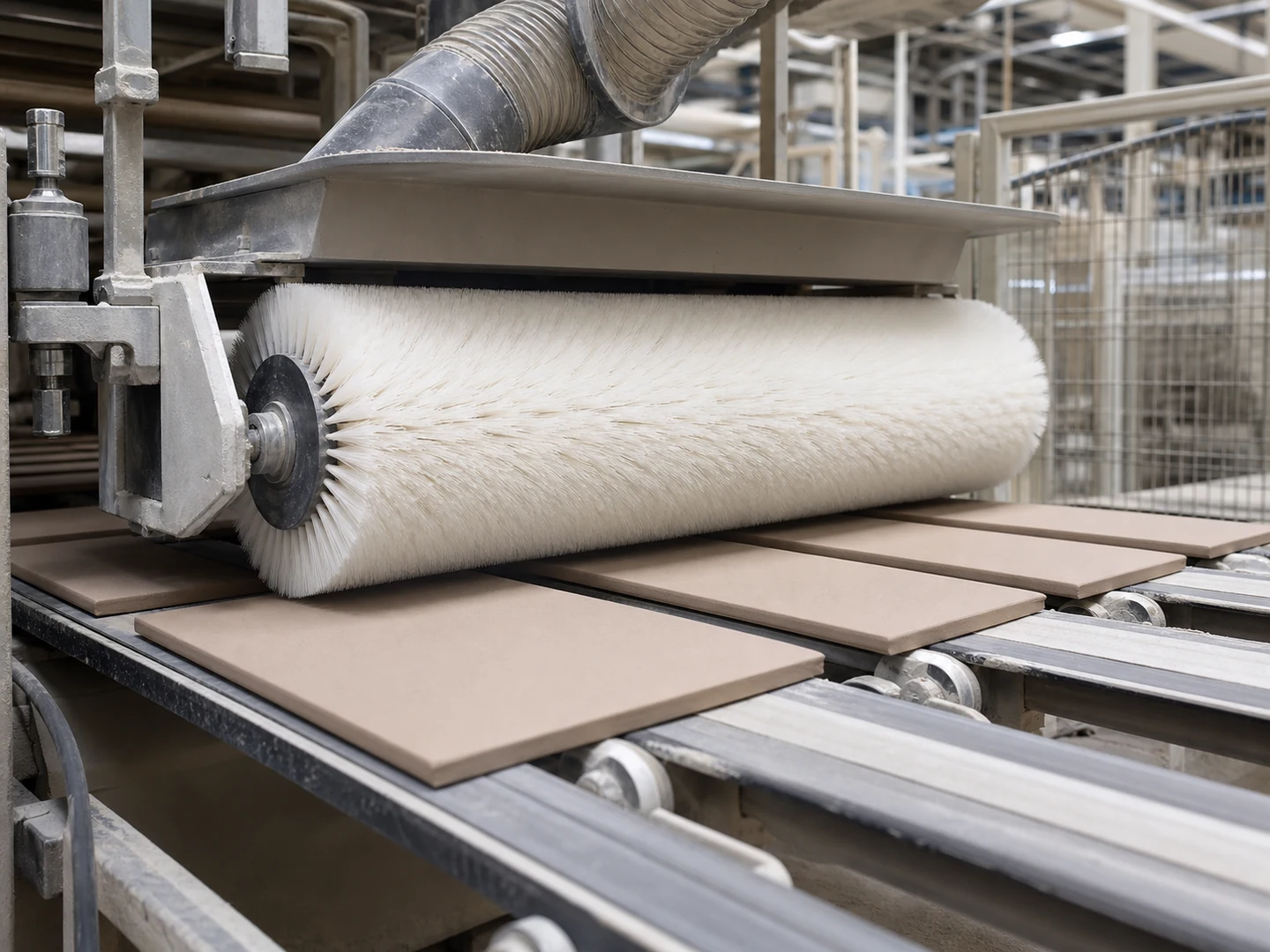
Ceramic Glaze Line & Tile Brush Use
Ceramic Glaze Line & Tile Brush Use is a process-use page rather than a…
See the cleaning job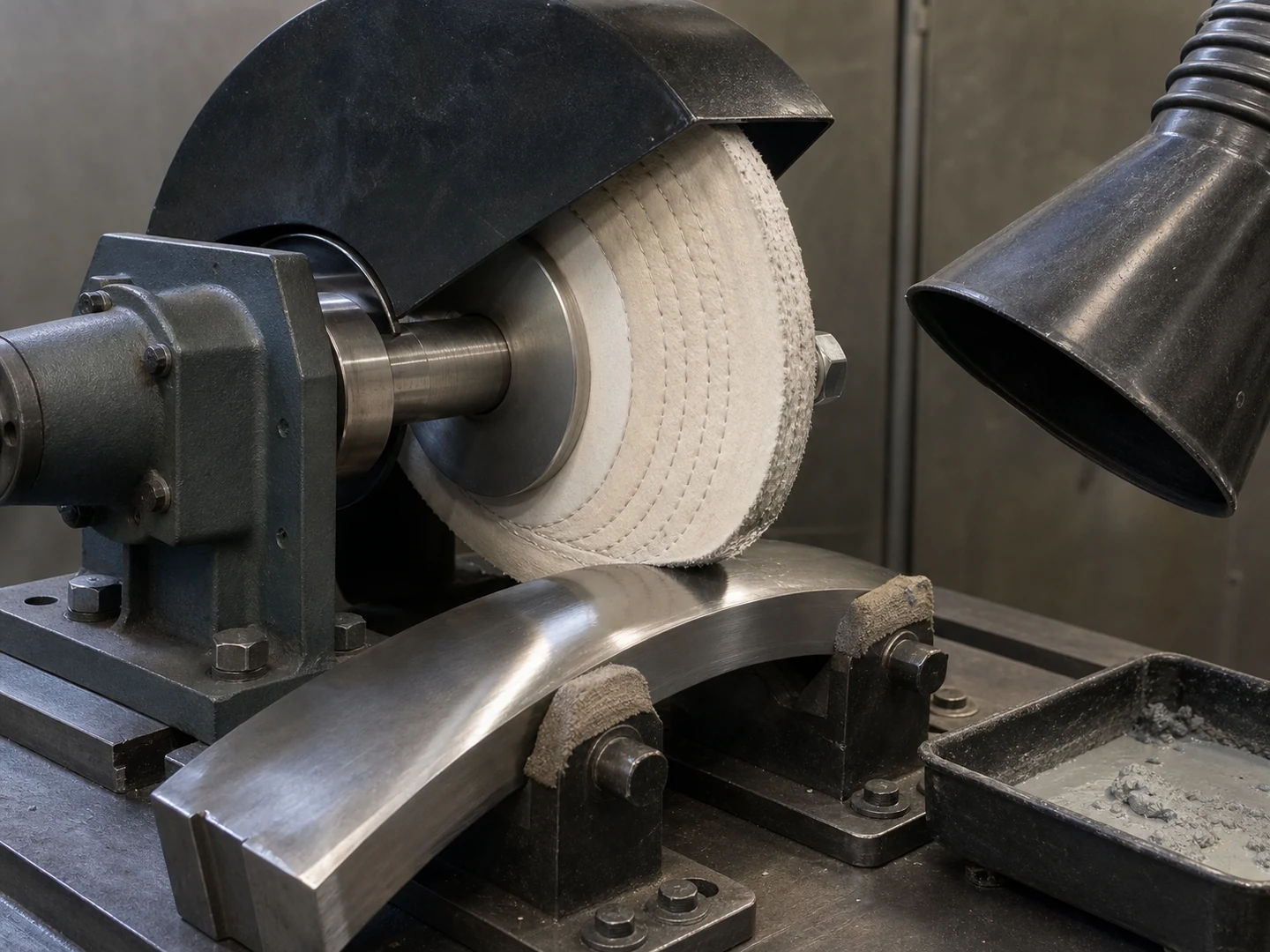
Polishing
Polishing is a process-use page rather than a general cleaning category.
See the cleaning jobCustom Manufacturing RFQ
Discuss This Material
Share the working surface, residue, dimensions, material direction, interface, quantity and drawing or sample photo.
Custom Brush RFQ
Request a Custom Cleaning Brush Quote
Upload a drawing, product photo, or sample photo and provide the core dimensions and cleaning conditions.
“We need a brush to remove wet residue from a stainless steel conveyor, about 800mm wide. The current brush wears quickly. We can send photos.”
“We sell drinkware and need a cleaning brush to include with the product. Quantity around 5,000 pieces.”