What Is a Deburring Brush?
A de‑burring brush is a rotary or oscillating finishing tool that uses abrasive‑impregnated filaments to remove thin burrs, sharp edges, and micro‑fins from machined parts. Unlike rigid cutting tools, the filaments flex under load, allowing the brush to follow part contours and reach into complex geometries without altering critical dimensions. In automated or manual set‑ups, the brush tip speed, feed rate, and pressure determine how aggressively the filaments cut and how uniformly the edge breaks.
Key Filament Types: Abrasive Nylon and Ceramic
Abrasive Nylon Filaments
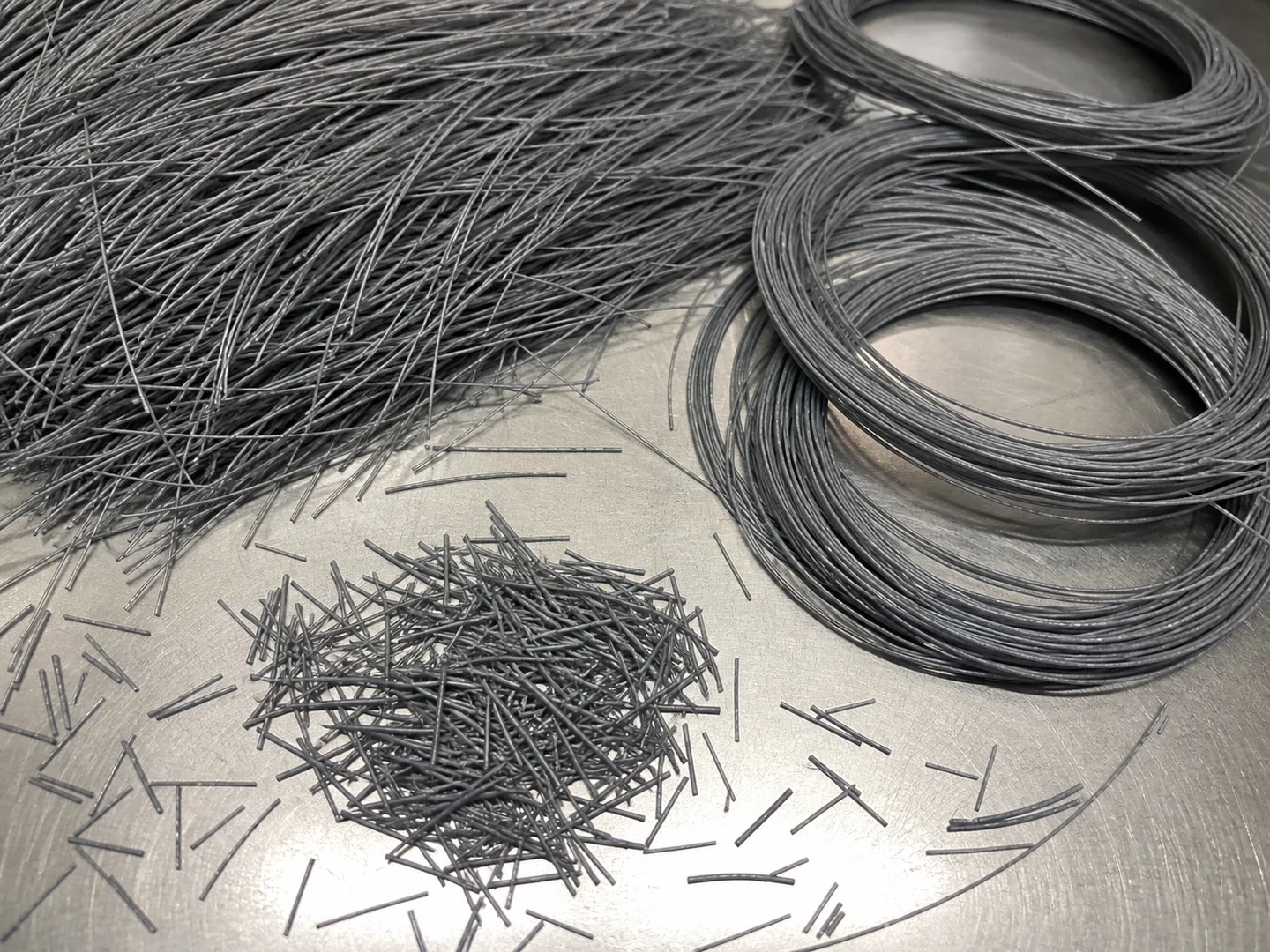
Abrasive nylon filaments are extruded nylon loaded with silicon carbide, aluminum oxide, or diamond grit. The nylon matrix provides compliance, so the filament bends to conform to workpiece shapes while the exposed grit does the cutting. These are available in round, rectangular, or crimped shapes and in a range of grit sizes (from coarse to extra‑fine). Abrasive nylon excels at light‑to‑medium duty edge blending, surface finishing, and de‑burring of soft to medium‑hard materials such as aluminum, brass, mild steel, and plastics. Because the filament wears gradually and exposes fresh grit, it delivers consistent performance over its life.
Ceramic Filaments
Ceramic filaments are made from extruded alumina‑based fibers that are hard, stiff, and temperature‑resistant. They are typically impregnated with very fine abrasive grains or rely on the filament’s own hardness for cutting action. Ceramic brushes are used when high cutting aggression is needed on harder workpiece materials (hardened steels, stainless steel, titanium) or when high heat generation would soften nylon. They maintain stiffness better at elevated temperatures and can be run at higher speeds and pressures without melting. However, ceramic filaments are less compliant than nylon, making them less forgiving on delicate geometries or thin walls.
Cross‑Hole Deburring vs. Edge Deburring
Burrs inside cross‑drilled holes and burrs along external edges behave very differently and call for distinct brush designs. The table below summarizes the main selection differences.
| Factor | Cross‑Hole Deburring | Edge Deburring |
|---|---|---|
| Typical brush style | Ball‑end, stem‑mounted, or long‑reach brushes; often small diameters | Cup, wheel, end‑brush, or disc shapes; wider face |
| Filament choice | Abrasive nylon most common; ceramic only for very hard materials in accessible holes | Both abrasive nylon and ceramic widely used; choice depends on workpiece hardness and required finish |
| Access limitations | Must fit inside small bores (Ø3 mm and up); requires compliance to reach root of intersection | Generally open access; brush can be mounted on CNC, robot, or bench motor |
| Wear pattern | Filament tip wear is critical; short brush life if filaments break prematurely | Face or edge wear; brush can be re‑dressed or advanced to maintain cutting action |
| Process control | Often requires precise dwell time and overlapping toolpath to ensure full burr removal | Speed, feed rate, and pressure are primary levers; easier to monitor visually |
How to Select a Brush Based on Burr Size and Workpiece Material
The starting point is to characterize the burr. Thin, rolled‑over burrs (under 0.05 mm) can be removed with a fine‑grit abrasive nylon brush and moderate pressure. Thicker, root‑attached burrs (0.1 mm and above) usually demand a coarser grit, a stiffer ceramic filament, or a larger wire‑type brush. Workpiece material then narrows the choice:
- Aluminum and non‑ferrous metals — Abrasive nylon with aluminum‑oxide or silicon‑carbide grit prevents galling and leaves a smooth finish. Ceramic is rarely needed unless burrs are very large or the alloy is especially abrasive.
- Mild and alloy steels — Abrasive nylon with silicon carbide handles most edge blending tasks. For batch processing of hard spots or scale, ceramic may reduce cycle time.
- Stainless steel, titanium, and superalloys — Ceramic filaments resist heat buildup and cut more aggressively. Use them when nylon would degrade quickly or when a wire brush could smear rather than cut.
- Plastics and composites — Only abrasive nylon should be used; ceramic is too aggressive and can fracture or melt the surface.
Grit size selection follows the same logic: coarse grit (80–120) for heavy burr removal, medium (180–240) for general edge breaking, and fine (320 and above) for final finishing or burrs under 0.03 mm.
Critical Process Parameters: Speed, Feed Rate, and Pressure
The filament type sets the usable window for each parameter, but success depends on balancing all three.
- Speed (RPM and tip speed) — Abrasive nylon filaments generate the best cutting action at moderate tip speeds (typically 300–900 m/min for dry operation). Too slow and the filaments rub without cutting; too fast and the nylon can melt or the grit can glaze. Ceramic filaments tolerate and often require higher tip speeds (600–1,500 m/min) because they depend on impact energy to break burrs. Always verify the brush’s maximum safe RPM.
- Feed rate — Feed rate controls contact time. For edge de‑burring on a CNC machine, a feed of 0.5–2.0 m/min is common, but it must be adjusted to allow the filaments to flex and recover. Cross‑hole de‑burring often uses slower, controlled feeds (0.1–0.5 m/min) with a dwell at the intersection.
- Pressure (depth of engagement) — A light touch is essential; forcing a brush deep into the workpiece shortens filament life and may break ceramic filaments. Set the interference—how far the brush face overlaps the part—just enough to achieve the desired edge break. Typically, 0.5–1.5 mm interference for cup brushes and 0.2–0.5 mm for stem‑mounted brushes is a practical starting range.
These numbers are starting points; always validate on a few sample parts and adjust until the burr is removed without visible filament damage on the brush.
Common Mistakes in Deburring Brush Selection
- Using the same brush for every material. A nylon‑silicon‑carbide brush that works well on aluminum may load up fast on steel or overheat on stainless.
- Ignoring filament shape. Round filaments are more compliant; rectangular filaments cut more aggressively. Mixing up the shape leads to either incomplete de‑burring or excessive edge wear.
- Setting speed too high for nylon. Over‑speeding creates friction heat that softens the filament and dulls the grit, turning a cutting brush into a polishing brush.
- Applying too much pressure. Pushing a brush harder does not remove burrs faster—it just bends filaments beyond their elastic limit and causes premature failure.
- Skipping a wear‑compensation strategy. Brush filaments wear down. Without tool‑touch‑off, periodic advance, or adaptive control, part‑to‑part consistency drifts over a batch.
When Abrasive Flow Deburring (AFM) Is the Better Option
Deburring brushes work well on accessible external edges and large‑diameter internal intersections, but they hit a physical limit when passages are very small, deep, or geometrically tortuous. If you are trying to de‑burr internal intersections in parts with hole diameters below 3 mm, blind cavities, or multiply intersecting channels, abrasive flow de‑burring (AFM) often delivers more uniform results. AFM extrudes a viscous, abrasive‑laden media through the part, reaching features no brush can contact. It is also the better choice when the required edge radius tolerance is very tight (±0.01 mm or less) across hundreds of intersections. Consider AFM when:
- Internal cross‑holes are smaller than 3 mm in diameter.
- The part contains long, curved or blind channels.
- Edge quality specifications demand a Class‑1 or similar aerospace‑level radius with full documentation.
- Cycle time for manual or CNC brushing becomes uneconomical due to part count or complexity.
Brushing and AFM are complementary; many shops use brushes for external edges and AFM for internal passages in the same part.
Final Takeaway
Start with the burr: measure its thickness, check the workpiece material, and decide if you need compliance (nylon) or stiffness (ceramic). Then pick the brush shape that matches the access—cup or wheel for edges, stem or ball for cross‑holes. Dial in speed, feed, and pressure by observing filament behavior, not just cycle time. And if the geometry pushes beyond what a brush can reliably reach, move the discussion to abrasive flow de‑burring. A systematic, burr‑first selection process avoids re‑work, excess consumable cost, and unhappy operators.
Frequently Asked Questions
Can I use the same deburring brush for aluminum and steel?
It is not recommended. Abrasive nylon brushes with silicon‑carbide grit can handle mild steel, but they wear faster and may load differently than on aluminum. Using the same brush risks cross‑contamination and inconsistent finish. Designate separate brushes or switch to ceramic for steel if production volumes justify it.
How do I know if my feed rate is too high?
Look for incomplete burr removal at the trailing side of the part, or shiny spots where filaments rubbed without cutting. Also, excessive brush vibration or chatter indicates the filaments do not have time to flex and recover. Reduce feed rate in small increments until burr removal is uniform.
What grit size should I start with for general edge breaking on mild steel?
A medium grit (180–240) in an abrasive nylon cup brush is a safe starting point. It removes most thin burrs while leaving a smooth edge. Move to a coarser grit (80–120) only if the burr persists after adjusting speed and pressure.
Is a ceramic brush always better for high‑volume production?
Not always. Ceramic filaments last longer in hard‑metal applications but are less compliant and can damage delicate edges or thin walls. They also cost more upfront. Evaluate on a per‑part basis: if abrasive nylon meets the burr‑removal spec and lasts an acceptable number of cycles, it is usually the more forgiving and lower‑cost choice.
Can a deburring brush replace electrochemical deburring?
In most cases, no. Electrochemical deburring (ECD) is designed for very fine, targeted edge rounding with no mechanical force, especially on internal intersections that brushes cannot reach reliably. Brushes can achieve similar edge radii, but only where mechanical access exists and part geometry allows filament contact.
How often should I replace an abrasive nylon brush?
There is no fixed hour count. Replace the brush when filaments become too short to maintain the required interference, when grit is completely worn away (filament surface looks smooth), or when burr removal is no longer achieved even after adjusting speed/feed. Keeping a log of parts per brush helps forecast change intervals.
What is the difference between a crimped and straight filament in an abrasive nylon brush?
Crimped filaments hold more abrasive compound, give a softer feel, and are often preferred for finishing and light de‑burring. Straight filaments tend to be stiffer and cut more aggressively. Choose crimped for surface blending and fine de‑burring; choose straight for heavier edge breaking.
Can I use a deburring brush on a hand drill?
Yes, for occasional use or low‑volume jobs, a portable abrasive nylon cup or wheel brush can be used. However, controlling speed, feed, and pressure manually is difficult, so consistency will suffer. For production parts, CNC or robotic applic ation is strongly preferred.
Which bristle material fits this job — Abrasive Nylon, Nylon PA or AISI 304 Stainless Steel Wire?
| Material | Continuous temperature (°C) | Peak temperature (°C) | Water absorption | Hardness |
|---|---|---|---|---|
| Abrasive Nylon | 120 | 150 | 0.1–1.0% | Abrasive filament; stiffness and cutting level is controlled by PA base, grit type, grit size, filament diameter and trim height. |
| Nylon PA | 93 | 121 | 0.3–9% by PA grade and conditioning | Medium to firm; filament diameter and trim length control bending force. |
| AISI 304 Stainless Steel Wire | 400 | 500 | 0% | Rockwell B 70–95 depending on temper and cold work |
Figures as published by Perlon; Brushtec / DuPont; Alleima. Confirm the exact grade against the supplier datasheet before ordering.
When is Abrasive Nylon the wrong choice?
- Abrasive Nylon — Exposed grit can change a surface finish, and high heat or aggressive chemicals can weaken the polymer carrier.
- Nylon PA — The nylon family spans several grades, so heat, moisture and chemical limits should follow the selected PA resin rather than a generic nylon value.
- AISI 304 Stainless Steel Wire — Avoid using AISI 304 as the default in marine, brine, hypochlorite, and persistent chloride environments; use AISI 316 when higher pitting and crevice-corrosion resistance is required.
What should replace Abrasive Nylon when it stops working?
- Abrasive Nylon — Compare Abrasive Nylon with PP, PBT, PET. Change material when wet stiffness, temperature, chemical resistance, conductivity, particle shedding, or surface marking becomes the limiting factor.
- Nylon PA — Compare Nylon PA with PP, PBT, PET. Change material when wet stiffness, temperature, chemical resistance, conductivity, particle shedding, or surface marking becomes the limiting factor.
- AISI 304 Stainless Steel Wire — Use AISI 316 stainless steel wire for chloride, marine, dairy, beverage, chemical washdown, or higher pitting-resistance requirements. Use carbon steel for dry aggressive cutting and brass or abrasive nylon for lower marking risk.