
Custom Cleaning Brush
Dryer Vent Cleaning Brush
Flexible dryer vent cleaning brush clears lint, dust, and pet hair from 3–6 inch ducts. Modular rods reach 1–10 m. Nylon/PP fill, manual or drill drive.
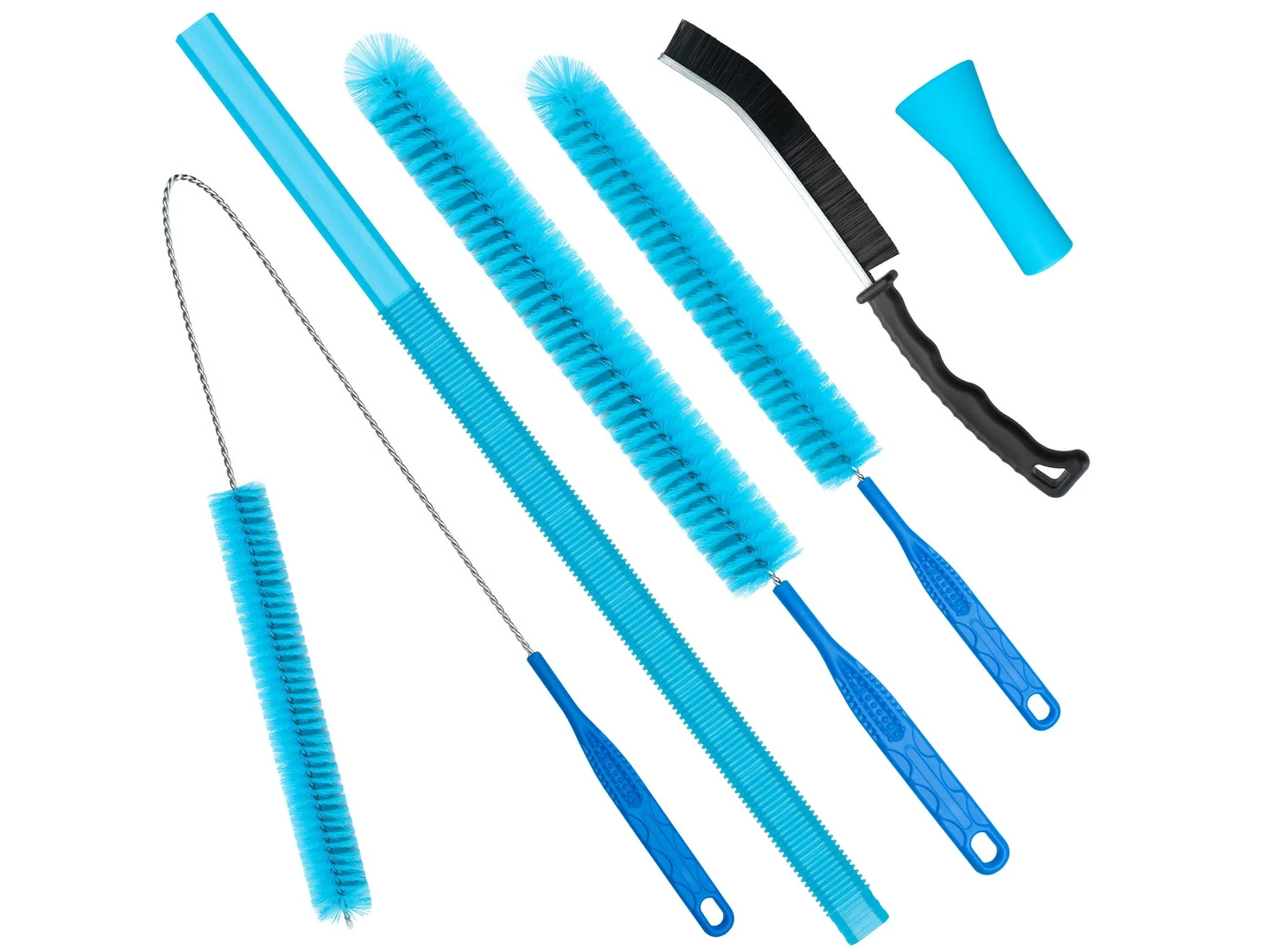
Medium brush
100 pcs
Minimum order
Worked with two hands or on a pole: chimney, gutter and pond-filter brushes, discs, cups and tank brushes.
Production lead time, once the specification is confirmed
- Up to 100 pcsWithin 7 days
- 101–5,000 pcsWithin 14 days
- 5,001–50,000 pcsWithin 21 days
- Over 50,000 pcsConfirmed with your quotation
Peak season can extend these times; the shipping date is confirmed in writing with your quotation. Sampling and shipping are quoted separately.
A rod-driven cleaning brush for dryer exhaust ducts and similar lint-laden vent runs. It clears lint, dust, pet hair, and loose fiber from 3–6 inch ducts using flexible nylon or polypropylene filaments on modular rods that extend from 1 to 10 meters, and can be worked by hand or attached to a low-speed rotary drive.
What can this brush do for you?
Follows the actual duct path, not just the straight sections
Dryer vents rarely run in a clean straight line. The flexible rod core and short rod sections let the head bend through 90° elbows, vertical risers, and offset transitions without locking in place. Because the brush returns to the duct center after each bend, the operator can keep working from one access point instead of disconnecting every joint.
Keeps filament pressure on the wall instead of skating over it
The brush outside diameter can be set slightly larger than the duct’s inside diameter. As the head travels, the flexible filaments deflect against the wall and drag the lint film with them. Near-size contact wipes surface dust; 5–20% oversize creates the scrubbing pressure required for compacted lint in seams, elbows, and screw points.
Sweeps lint without scratching galvanized, aluminum, or semi-rigid duct
Nylon PA and polypropylene filaments are firm enough to pull accumulated lint but soft enough for galvanized steel, aluminum, and semi-rigid vent wall. The open filament pattern releases lint when the brush is withdrawn, so the tool removes the layer it just lifted instead of packing it ahead of the head.
Builds reach one rod section at a time
Rod sections of 0.4–1.0 m join to match the distance from the dryer connection to the exterior hood. The operator adds only the length the run actually requires, which keeps the assembled tool stiffer and easier to control than one oversized continuous rod.
Works as a manual tool or a low-speed rotary brush
Used alone, the rod is pushed, pulled, and twisted by hand. With a rotary shaft adapter, the same brush head can be driven at low speed by a drill, which speeds up longer runs and heavier lint. Manual twisting remains the safer choice inside foil transition sleeves and older duct joints.
What is a Dryer Vent Cleaning Brush?
A Dryer Vent Cleaning Brush is a duct-cleaning tool built around a central rod that carries a radial or spiral arrangement of flexible polymer filaments. The operator inserts the head into the duct, then pushes, pulls, and rotates it along the full run to strip lint, dust, pet hair, and loose fiber from the interior wall. The brush restores airflow by clearing the layer that builds up during normal dryer operation; it does not remove or replace the duct itself.
Typical use starts by disconnecting the dryer and removing the exterior termination hood when possible. The brush is worked from one or both ends until the withdrawn rods show only clean contact. Lint that has been loosened must then be captured with a vacuum or removed at the hood. Moisture, grease, chemical residue, or dislodged solid objects are outside the tool’s job; those conditions need to be corrected before or after brushing.
Technical Specifications
The values below describe standard production configurations for this dryer vent cleaning brush. All parameters can be adjusted to the duct layout during ordering.
| Parameter | Value / Options |
|---|---|
| Duct diameter range | 76–152 mm (3–6 in) inside diameter |
| Brush outside diameter | 102–140 mm, selected to duct ID with 0–20% oversize |
| Flexible reach | 1–10 m assembled from modular rod sections |
| Rod section length | 0.4–1.0 m per section |
| Rod / core material | Stainless steel rod or solid nylon rod |
| Filament material | Nylon PA or polypropylene PP |
| Filament diameter | 0.25–0.80 mm |
| Drive type | Manual push-pull / rotation or rotary shaft for low-speed drill |
| Debris suited | Lint, dust, pet hair, loose fabric fiber, light powder |
| Rod coupling | Threaded or quick-lock connection, configurable |
| Brush type | Custom Tube & Pipe Bore Brushes |
| How it is driven | Hand-guided |
| Cleaning target | residential 4-inch dryer exhaust line, property maintenance, and commercial laundromat and laundry-service duct run cleaning |
| Surface or part | vents, walls, elbows, dryer vents, seams, aluminum, bends, and connectors |
| Residue or debris | lint, dust, hair, loose fibers, fiber, grease, and chemical residue |
| Mounting / connection | Manual push-pull / rotation or rotary shaft for low-speed drill; Threaded or quick-lock connection, configurable |
Where does this brush work best?
This brush is built for routine contact cleaning of dryer exhaust paths where lint is the main residue.
- Residential 4-inch dryer exhaust lines from the laundry appliance to an exterior louvered hood, including straight runs, 45° and 90° elbows, and short vertical rises.
- Property maintenance across apartments, condos, and rental units where scheduled dryer vent cleaning is performed before the lint layer restricts airflow.
- Commercial laundromat and laundry-service duct runs where volume lint is removed between more aggressive service intervals.
- Semi-rigid aluminum and galvanized vent runs where wire or abrasive fill would catch seams or score the wall surface.
- Preventive maintenance in dry lint-and-dust environments; the brush is not intended for wet, grease-laden, or high-temperature exhaust systems.
How do I choose the right one?
Start with the actual duct ID, not the nominal label
A nominal 4-inch aluminum duct may measure slightly under or over 4 inches at the crimped seam. Measure the inside diameter at the narrowest point the brush must pass. For rigid metal duct, the brush OD can be 0–20% larger than that smallest number. For flexible foil or thin-wall plastic transition, keep the brush at or just above duct ID so it does not catch and tear the sleeve.
Choose filament material and thickness from the residue
Light dust and fresh lint come off with 0.25–0.40 mm nylon filaments. Compacted lint, pet hair, and material packed into seams respond better to 0.50–0.80 mm nylon or PP fill, which holds shape under higher push force. Both materials are non-scratching on galvanized steel and aluminum; PP is the lower moisture-uptake option if the run sees condensation.
Decide between manual and rotary drive
Manual push-pull and twist is enough for ducts up to roughly 3 m with easy access. For longer runs, multi-bend layouts, or heavier debris, specify the rotary shaft and a low-speed drill coupler. Keep rotation at a controlled low speed; high-speed whipping can hammer the rods against elbow seams and damage flexible sections.
Match the interference to the cleaning job
| Condition | Configuration that fits |
|---|---|
| Light dust on rigid metal duct | Near-size OD, 0.25–0.40 mm nylon filaments, manual rods |
| Compacted lint or pet hair | 5–20% oversize, 0.50–0.80 mm nylon or PP, optional rotary drive |
| Flexible foil transition included | Near-size OD only, manual twist or very low rpm |
| Long multi-bend run | Modular sections, rotary shaft, centering guide where available |
Know what this brush is not for
A solid blockage, bird nest, crushed section, or burned-on grease needs extraction, repair, or chemical treatment before this brush. Hard scale or creosote requires a wire chimney brush. If the duct contains only loose powder, a vacuum or compressed-air blowout may be faster; this brush is the right choice for adhered lint film that needs wall contact to release.
Can I customize this brush?
Every duct layout is different, so this brush is configured around the actual run rather than sold only in fixed diameters.
Brush head
- Outside diameter and oversize relative to the measured duct ID
- Filament material, diameter, and trim length
- Fill pattern: radial, spiral, forward-only, or dual-direction head
- Centering guide or rounded tip for smoother travel through elbows
Rod and reach
- Rod material: stainless steel or solid nylon
- Section length and total assembled reach
- Connector style: threaded or quick-lock
- Flexible hinge points for sharp offsets
Drive and control
- Manual T-handle, loop grip, or straight extension
- Hex shank or rotary shaft for low-speed drill drive
- Directional lock when the brush is inserted from one end only
Identification and packaging
- Custom color, printed logo, or batch marking on the handle or rod
- Bulk rod-only packaging or complete kit with drill adapter
- Individual bag, retail sleeve, or project-specific packing
To start a custom configuration, provide the duct inside diameter, total run length, number and angle of bends, duct material, current residue, and whether you plan to work manually or with a drill. A photo of the access point and the exterior hood helps confirm rod length breaks and the right connector.
If your cleaning program requires material documentation, inspection records, or third-party testing, those can be addressed as part of the custom project scope.
How do you confirm a dryer vent cleaning brush has actually cleaned the surface?
Do I need to remove the exterior vent hood before brushing?
When possible, yes. Removing the louvered hood or termination cap keeps the brush from catching on the damper and lets loosened lint fall free. If the hood cannot be removed, brush toward it slowly and stop before the damper, then clear remaining debris from the exterior side with a vacuum or by hand.
Should I wet the brush or add detergent to loosen lint?
No. Adding water turns lint into a thick paste that can pack the duct and make extraction harder. Use the brush dry, then capture loosened debris with a vacuum at the interior end or a bag over the exterior opening.
How do I check that the brush is actually contacting the duct wall?
You should feel steady light resistance as the head travels. When you withdraw the rods, look for a visible lint roll on the filaments. If the brush slides through with no resistance and comes back clean, remeasure the duct and verify the brush OD; it may be undersized. A camera inspection gives final confirmation of wall condition.
Does one brush diameter work for a 4-inch and a 6-inch duct?
Not effectively. A brush sized for a 4-inch duct will only contact one side of a 6-inch duct and will leave lint on the opposite wall. Use a brush matched to each duct diameter, or work the larger duct in sections with a brush sized for the smaller passage first.
What should I inspect on the brush before each use?
Check that all rod sections thread or lock fully, the filaments are not flattened or melted, and the rotary adapter is tight if used. Look for bends in the stainless rod or permanent kinks in a polymer rod. If the filament fan-out no longer returns to its original diameter, replace the head; flattened filaments slide through without contacting the wall.
Can I work from both ends of the duct on the same job?
Yes. In many installations the best pattern is to push from the dryer connection toward the hood, then insert from the exterior and work back. If the exterior hood is not removable, leave the last few centimeters for a vacuum or hand check. Working from both ends reduces the chance of pushing a lint plug ahead of the brush.
Guides that go deeper on this
RELATED BRUSH RESOURCES
Recommended Reading & Related Brush Resources
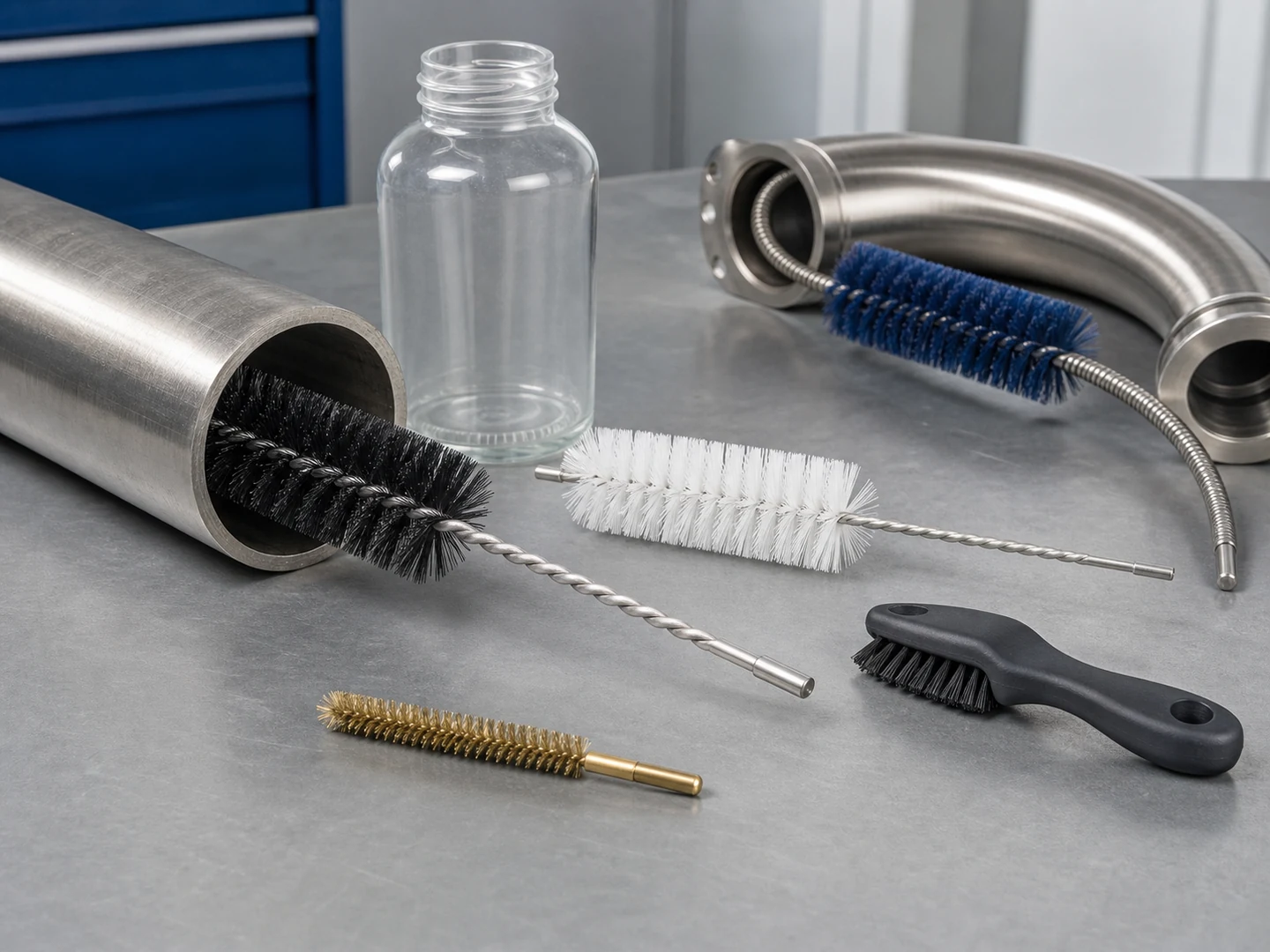
Custom Tube & Pipe Bore Brushes
Choose a tube, pipe, or bore brush when the working surface is inside a…
See how this type is built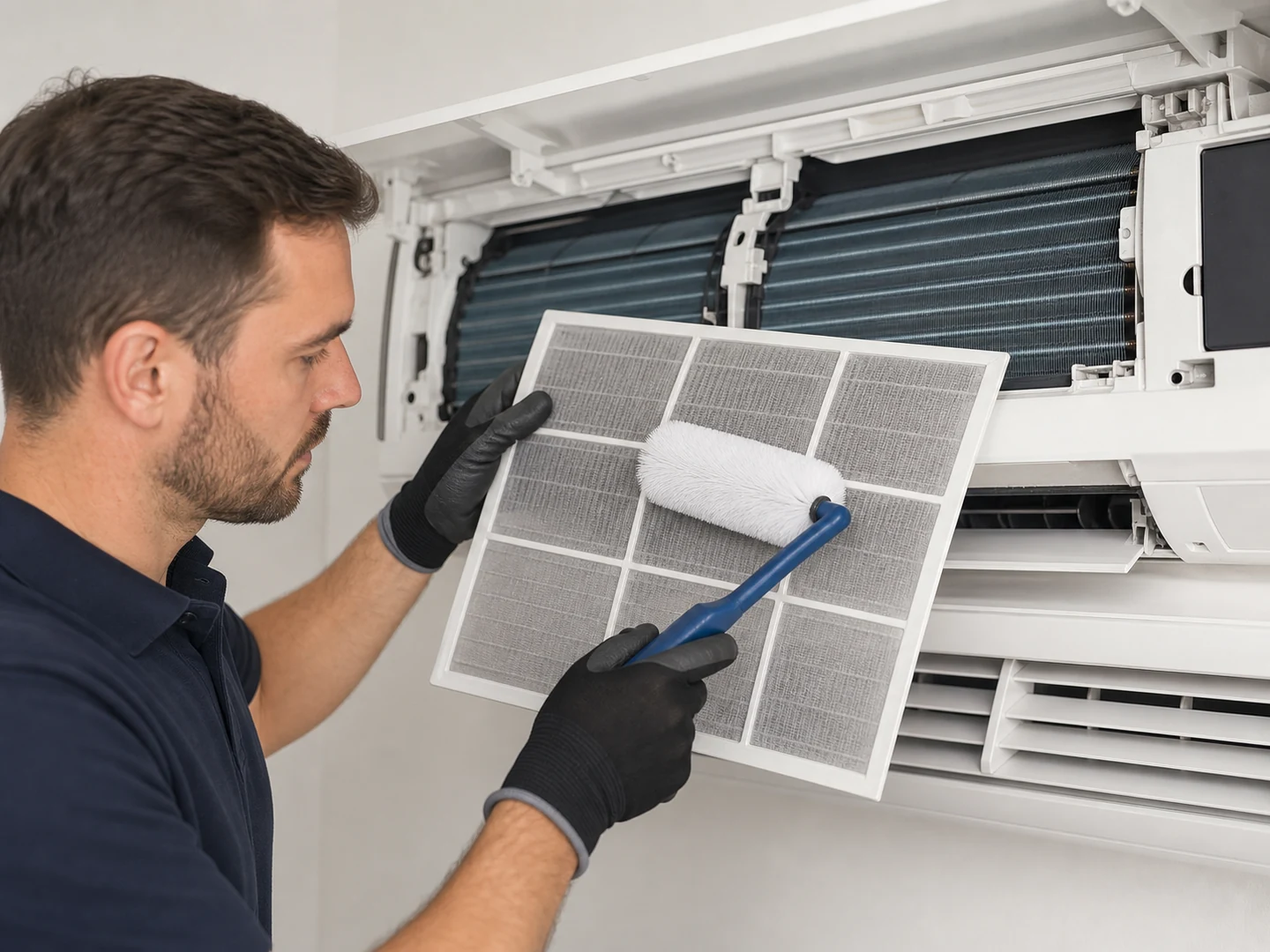
Air Conditioner Filter, Vent & Fin Cleaning
For Air Conditioner Filter, Vent & Fin Cleaning, the brush must reach the working…
See the cleaning job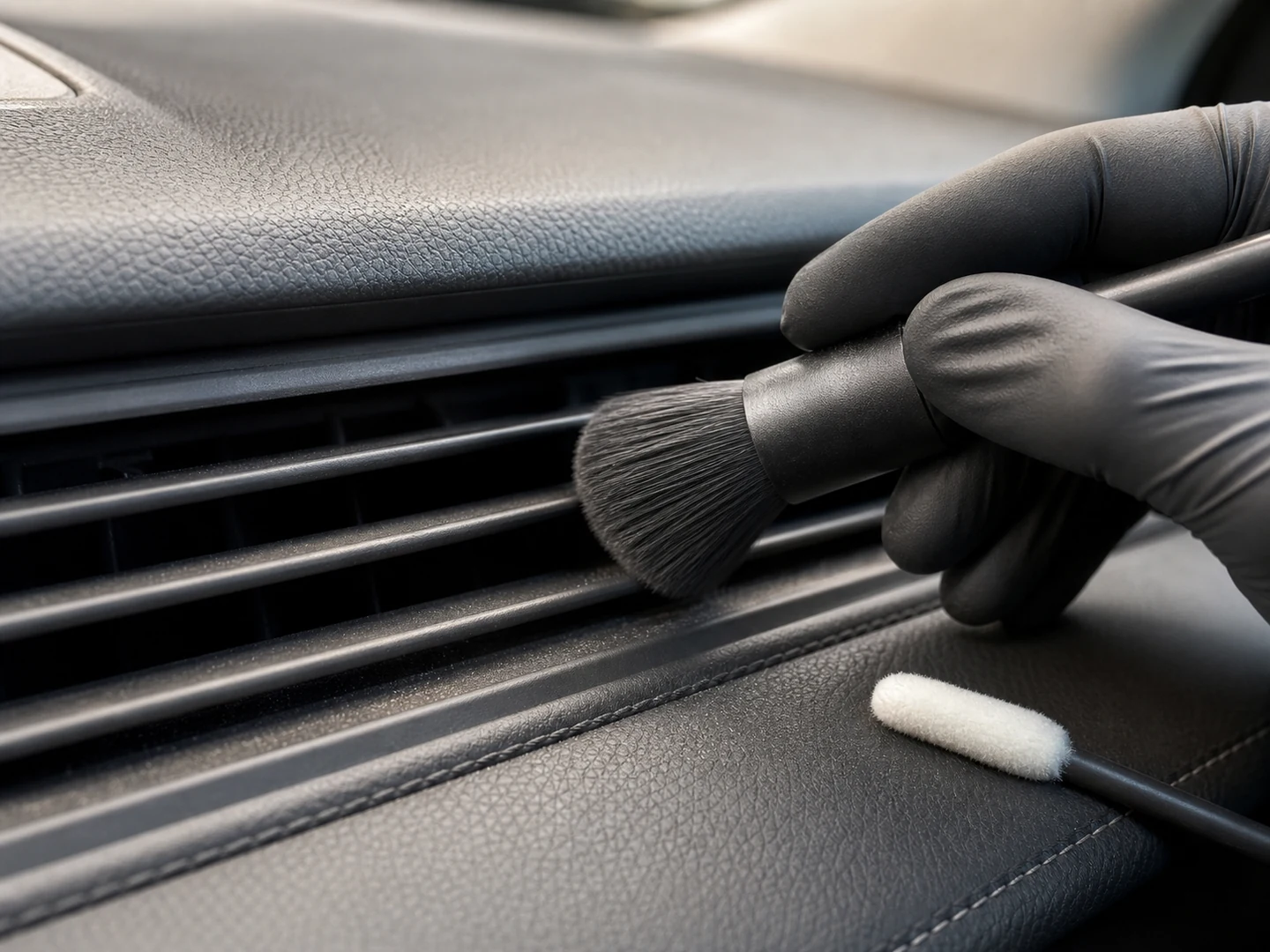
Car Interior Vent Cleaning
For Car Interior Vent Cleaning, the brush must reach the working area, disturb or…
See the cleaning job
Appliance Cleaning
For Appliance Cleaning, the brush must reach the working area, disturb or collect dust…
See the cleaning jobCustom Manufacturing RFQ
Describe Your Application
Please include the main sizes, application, residue, preferred material, interface, quantity, and any drawing or sample available.
Drawing or photo optional — it speeds things up, it does not gate the enquiry.
Custom Brush RFQ
Send Your Brush Project
Upload a drawing, product photo, or sample photo and provide the core dimensions and cleaning conditions.
“We need a brush to remove wet residue from a stainless steel conveyor, about 800mm wide. The current brush wears quickly. We can send photos.”
“We sell drinkware and need a cleaning brush to include with the product. Quantity around 5,000 pieces.”