
Application
Golf Club Cleaning
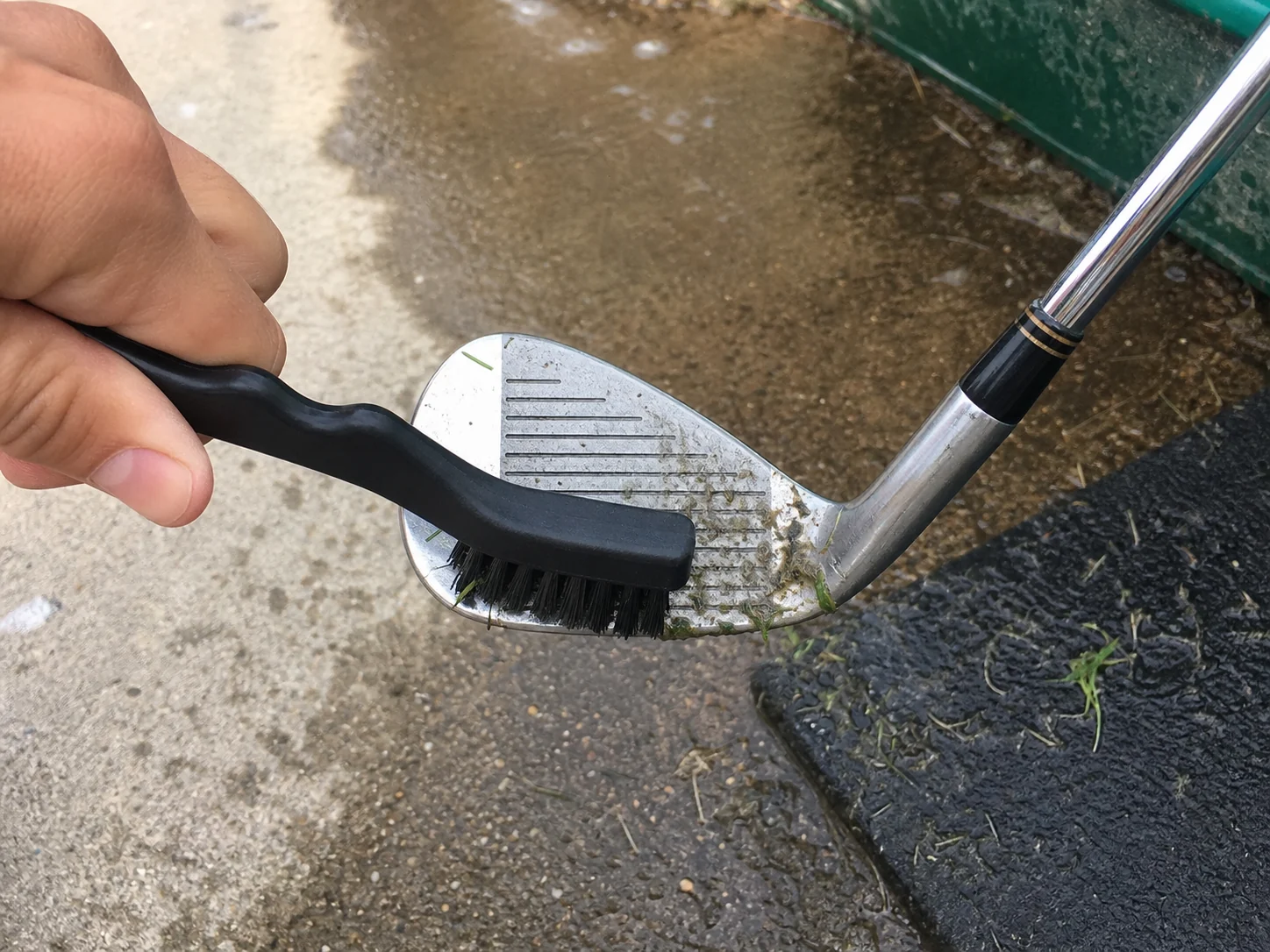
For Golf Club Cleaning, the brush must reach the working area, disturb or collect soil/grass clippings/sand particles/light rust staining, and release it without creating unacceptable surface damage or process interference. Access, contact movement, and the selected cleaning method determine which brush structure will work.
At a glance
- Cleaning target
- Soil/Grass Clippings/Sand Particles/Light Rust Staining
- Working environment
- Outdoor / Wet Indoor Area
- Cleaning method
- Wet Brushing
- Requirements to check
- Surface Compatibility with Plating / Coatings / Carbon-Fiber Shafts; Low Scratching
Grooves control spin, so cleaning a club is a performance job: grooves are cleared along their length, and the brush changes when it moves from a wedge face to a putter finish or a grip.
What makes Golf Club Cleaning different from other facility, floor and outdoor cleaning?
The task is to remove Soil/Grass Clippings/Sand Particles/Light Rust Staining while controlling surface damage, residue carryover, brush shedding and chemical or temperature degradation.
The work happens in outdoor and wet indoor area against soil, grass clippings, sand particles and light rust staining.
The part people get wrong: the surface, the residue and the access opening decide the brush together. Fix on any one of them alone and the geometry comes out wrong.
What are the most common cleaning targets in Golf Club Cleaning?
The work breaks into 5 targets. They look similar from outside the machine and behave nothing alike at the brush.
| Part or area | Residue type | Cleaning requirement |
|---|---|---|
| Clubface and Groove | Soil, Grass Clippings, Sand Particles, Light Rust Staining | The head must be narrower than the opening and stiff enough to lift residue without splaying at the mouth. |
| Iron and Wedge | The head must reach the working face and apply even contact without marking the surface. | |
| Putter | ||
| Grip | ||
| Golf-Shoe and Accessory |
The dimensional envelope those targets impose on the brush:
| Parameter | Typical range |
|---|---|
| Contaminant | Soil/Grass Clippings/Sand Particles/Light Rust Staining |
| Required hardness | Medium |
| Maximum temperature | 60°C |
| Chemical exposure | Water; Neutral Detergent pH 6–9 |
| Cleaning method | Wet Brushing |
| Environment | Outdoor/Wet Indoor Area |
Which brush types work for each cleaning target?
Select hand, tube, strip, roller, disc or machine-mounted geometry from access and motion.
| Cleaning target | Recommended brush type | Why it fits |
|---|---|---|
| Clubface and Groove | Handheld Detail Brushes | The grooves are what hold spin, so a narrow head goes into the groove and clears it rather than polishing the land between grooves. |
| Iron and Wedge | An iron head has a sole, a hosel and a cavity that all hold turf and sand, so a hand-guided head reaches each of them without scratching the plating. | |
| Putter | A putter face is milled and marks visibly, so a soft hand-guided head is used at a pressure that will not disturb the mill pattern. | |
| Grip | A grip is textured rubber that loses tack once it clogs, so a hand-guided head works the texture and lifts the film out of it. | |
| Golf-Shoe and Accessory | Spikes and soles hold packed turf in deep recesses, so a stiff hand-guided head is what breaks it out from between the cleats. |
All hand brushes, used wet at the wash station or dry out of the bag. Nothing here is mounted or driven.
In practical brush terms: reach first, then residue. A brush that fits but is too soft can be stiffened; a brush that does not fit is simply the wrong tool.
What filament materials work best for Golf Club Cleaning?
Nylon for grooves on plated or coated heads, brass wire only on unplated forged irons where light rust staining has to come off; steel wire takes the finish away with the dirt.
| If the condition is… | Filament to start with | Why |
|---|---|---|
| Plated or coated heads and grooves | Nylon PA | clears the groove without touching the plating |
| Unplated forged irons with light rust staining | Brass Wire | softer than the steel it cleans, so it lifts the stain and not the finish |
The constraints this application puts on the filament:
| Constraint | Value for this application |
|---|---|
| Filament hardness | Medium |
| Maximum service temperature | 60°C |
| Chemical exposure | Water; Neutral Detergent pH 6–9 |
| Cleaning method | Wet Brushing |
How do I choose the right brush for my golf club equipment?
Start with medium fill, a 60°C ceiling and water, then change the fill when you move from a wedge face to a putter finish or a grip.
The sequence that gets a usable sample first time:
- Identify the target part and measure the access opening or clearance
- Describe the residue: what it is, how thick it sits, and how strongly it holds
- Choose the construction that can physically reach that target
- Set the filament from surface risk, working temperature and cleaning chemistry
- Fix filament diameter, free trim length and density for the contact pressure you need
- Run one cycle and check the result before committing to a production quantity
Before you commit to a quantity, say which parts the brush serves — face grooves, sole, putter or grip — and the finish on each.
When is a golf club brush the wrong tool?
A soak in warm soapy water lifts most of what sits in the grooves before anything touches the face. Rust pitting and a worn groove edge are refinishing or replacement questions, and a wire brush on a soft putter or a coated finish leaves marks that stay.
What common mistakes should I avoid in Golf Club Cleaning?
- Ordering one brush for face grooves, a putter finish and a grip, which tolerate different stiffness
- Changing the filament while leaving excessive engagement, poor alignment or no discharge path unchanged
- Copying a worn brush without first recording its motion, direction, mounting and original working diameter
When a brush is running but not cleaning, start here rather than adding pressure:
| Symptom | What to change |
|---|---|
| Residue remains | Increase discharge or relative motion before adding pressure |
| Surface marks | Reduce engagement and use finer/softer fill |
| Rapid wear | Check alignment, temperature and chemical attack |
| Redeposition | Add wash, vacuum or collection path |
Questions this page is asked
When is a metal-filled brush inappropriate for a golf club head?
Do not use it on paint, plating, polished inserts, multi-material joints, soft faces or raw finishes unless the club maker explicitly permits that contact. Start with a damp cloth and soft nylon brush, trial an inconspicuous area, and stop for finish transfer, scratching or exposed bonding edges.
How can grooves be wet-cleaned without soaking the rest of a golf club?
Apply a small amount of water or permitted mild cleaner to the face or brush while keeping liquid out of the hosel, ferrule, shaft, adjustable ports and headcover. Wipe and dry the head immediately, inspect joints and coatings, and store the club only when the head, shaft, grip and cover are fully dry.
What separates cleaning a golf-club groove from altering it?
Cleaning removes packed soil and grass while preserving the original groove walls, edges, width and depth. Avoid files, scoring tools or sharp picks that cut metal, and do not leave a substance on the face to influence ball movement during play.
Guides that go deeper on this
We have not written a guide specific to this one yet. The material that covers selection, filament, dimensions, maintenance and sourcing is collected in the technical resources library.
No catalogue item for this yet
Every brush here is made to order, and this one has no catalogue entry so far. Send the working surface, the residue, the access opening and the quantity, and it is quoted through the same specification route as the rest of the range.
Custom Manufacturing RFQ
Discuss This Application
Share the working surface, residue, dimensions, material direction, interface, quantity and drawing or sample photo.
Custom Brush RFQ
Request a Custom Cleaning Brush Quote
Upload a drawing, product photo, or sample photo and provide the core dimensions and cleaning conditions.
“We need a brush to remove wet residue from a stainless steel conveyor, about 800mm wide. The current brush wears quickly. We can send photos.”
“We sell drinkware and need a cleaning brush to include with the product. Quantity around 5,000 pieces.”