
Application
Tire Cleaning
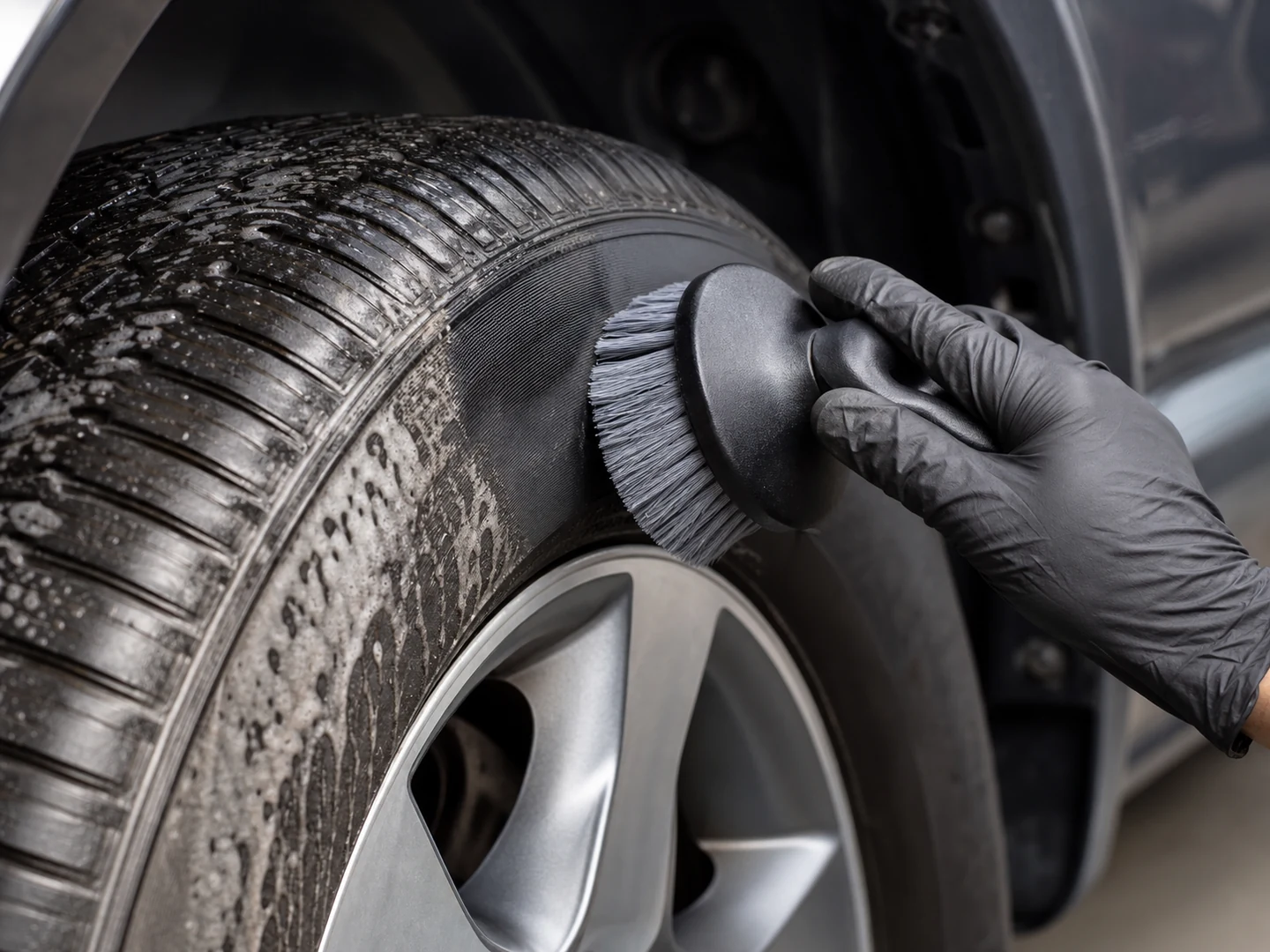
For Tire Cleaning, the brush must reach the working area, disturb or collect silt and sand/road grime/rubber wax layer, and release it without creating unacceptable surface damage or process interference. The brush structure must match the access path, contact movement, and cleaning process.
At a glance
- Cleaning target
- Silt and Sand/Road Grime/Rubber Wax Layer
- Working environment
- Wet Indoor Area / Outdoor
- Cleaning method
- Wet Brushing
- Requirements to check
- Automotive Surface-Care SOP; Avoid Contaminating Brake Components
Tire cleaning is about stripping the old dressing layer, not only the soil, so the brush works the sidewall and tread shoulder with firm short trim and never touches the wheel finish.
What makes Tire Cleaning different from other automotive and transportation cleaning?
The main difficulty is removing brake dust, road film, grease, mud, carbon, and loose particles from paint, wheels, tires, chains, vents, grills, and vehicle details without damaging the surface, loading the brush, or carrying contamination back into the process.
The work happens in wet indoor area and outdoor against silt and sand, road grime and rubber wax layer.
The part people get wrong: the residue tells you the filament, but the access opening tells you the construction. Get them in that order and the shortlist is short.
What are the most common cleaning targets in Tire Cleaning?
4 targets, each with its own opening, residue and contact requirement.
| Part or area | Residue type | Cleaning requirement |
|---|---|---|
| Tire Sidewall | Silt and Sand, Road Grime, Rubber Wax Layer | The head must reach the working face and apply even contact without marking the surface. |
| Tread and Groove | The head must be narrower than the opening and stiff enough to lift residue without splaying at the mouth. | |
| Whitewall and Raised-Letter | The head must reach the working face and apply even contact without marking the surface. | |
| Pre-Dressing Surface Preparation | The face must stay flat against the surface so the whole working width contacts, with filament soft enough not to mark it. |
The dimensional envelope those targets impose on the brush:
| Parameter | Typical range |
|---|---|
| Filament diameter | 0.10–0.50 mm; 0.30–1.00 mm |
| Overall length | 180–450 mm; 150–400 mm |
| Working length | 30–250 mm; 60–200 mm |
| Head size | 10–250 mm |
| Trim length | 10–80 mm |
Which brush types work for each cleaning target?
Short-trim block or curved hand brush sized to the sidewall and tread shoulder.
| Cleaning target | Recommended brush type | Why it fits |
|---|---|---|
| Tire Sidewall | Handheld Detail Brushes | A sidewall is a curved face carrying moulded lettering, so the head has to follow the curve and reach into the raised detail rather than ride over it. |
| Tread and Groove | Grooves hold stones and packed grit, so a narrow head enters the groove and lifts it out instead of pressing it deeper into the tread. | |
| Whitewall and Raised-Letter | A whitewall stains and shows every mark, so a hand-guided head lets the operator work the white band alone without carrying black film across it. | |
| Pre-Dressing Surface Preparation | Dressing will not hold over old silicone, so a flat head is used first to break the whole face evenly and give the new dressing something to key to. |
The layouts this application is normally built in:
- Driven brush — use when brake dust, road film, grease, mud, carbon, and loose particles needs repeatable scrubbing or controlled relative movement
- Passive or free-running brush — use for loose contamination and lower process complexity on paint, wheels, tires, chains, vents, grills, and vehicle details
- Localized hand, strip, or tube brush — use where only an edge, gap, port, or maintenance point needs contact
In practical brush terms: reach first, then residue. A brush that fits but is too soft can be stiffened; a brush that does not fit is simply the wrong tool.
What filament materials work best for Tire Cleaning?
Firm nylon or polypropylene, rubber nubs or short durable synthetic fill; avoid metal contact.
| If the condition is… | Filament to start with | Why |
|---|---|---|
| Sensitive or coated surface | Nylon PA | balanced flex life and abrasion resistance |
| Wet, washdown, or detergent service | Microfiber | fine particle pickup on sensitive surfaces |
| Bonded residue or aggressive cleaning | Wool | soft compound retention and polishing |
The constraints this application puts on the filament:
| Constraint | Value for this application |
|---|---|
| Filament hardness | Hard |
| Maximum service temperature | 70°C |
| Chemical exposure | Neutral-to-Alkaline Cleaner pH 7–12 |
| Cleaning method | Wet Brushing |
How do I choose the right brush for my tire equipment?
Short firm trim on the sidewall and tread shoulder, sized so the head never reaches the wheel face — that clearance is the specification.
Work through it in this order:
- Identify the target part and measure the access opening or clearance
- Describe the residue: what it is, how thick it sits, and how strongly it holds
- Choose the construction that can physically reach that target
- Set the filament from surface risk, working temperature and cleaning chemistry
- Fix filament diameter, free trim length and density for the contact pressure you need
- Run one cycle and check the result before committing to a production quantity
Before you commit to a quantity, send the sidewall height and tread width, and say whether the brush will contact the wheel face.
When is a tire brush the wrong tool?
A degreaser and a rinse handle a lightly soiled tire, and a heavily browned sidewall needs chemistry to break the old dressing before brushing helps at all. The brush should never be what touches an adjacent painted or coated wheel face.
What common mistakes should I avoid in Tire Cleaning?
- Not stating whether the brush will contact the wheel face, which changes the fill from firm to protected
- Changing brush material while leaving excessive engagement, poor alignment, or no discharge path unchanged
- Copying a worn brush without recording motion, direction, mounting, and the original working diameter
When a brush is running but not cleaning, start here rather than adding pressure:
| Symptom | What to change |
|---|---|
| Residue remains | Increase relative motion or discharge, then change filament diameter or density; do not add pressure before checking loading by brake dust, road film, grease, mud, carbon, and loose particles. |
| Surface marks or scratches | Reduce engagement, use finer or softer fill, and remove trapped abrasive particles from contact with paint, wheels, tires, chains, vents, grills, and vehicle details. |
| Rapid wear or uneven cleaning | Check alignment, runout, support, motion, temperature, chemical attack, and whether the brush covers the complete working path. |
| Brush loads or redeposits residue | Open the fill pattern or add wash, vacuum, air, scraping, or a collection path so removed brake dust, road film, grease, mud, carbon, and loose particles leaves the contact zone. |
Questions this page is asked
What should be inspected before aggressively brushing a tire sidewall?
Check the tire maker's markings and inspect for cuts, cracking, bulges, exposed material, loose repair products and damaged lettering before cleaning. Do not treat a structural or age-related condition as removable soil, and stop if brushing opens a defect or removes required markings.
How can the sidewall be checked before a new tire dressing is applied?
Use the approved cleaner and brush cycle, rinse until the defined residue endpoint is reached, and allow the sidewall to dry as required by the dressing instructions. Inspect textured letters and grooves for remaining brown film, cleaner or loose grit so the new dressing is not applied over contamination.
Which controls keep tire-cleaning soil away from wheels, paint and brakes?
Use a dedicated tire brush and controlled application that prevents cleaner and loosened dressing from reaching brake friction surfaces or a finish for which the chemistry is not approved. Rinse and inspect the brush away from paint tools, and replace it if embedded grit or oily residue cannot be removed.
Guides that go deeper on this
Conveyor Belt Brushes: How Much Carryback Comes Off?
Read this guideGuideHow to Choose a Tire Mold Groove Cleaning Brush
Read this guideGuideHow to Choose the Right Tire Brush for Mold Grooves
Read this guideGuideHow to Choose Tire Mold Vent Cleaning Brush
Read this guideGuideTire Brush: Specs for Sidewall Cleaning
Read this guideGuideTire Brushes for Washing, Scrubbing and Retreading: Which Fill?
Read this guideGuideTire Cleaning Brush Mistakes in Retreading Prep
Read this guideGuideTire Mold Brush: Which Wire Lifts Rubber Without Marking?
Read this guideGuideTire Mold Cleaning Brush: Which Wire Clears Vents Safely?
Read this guideGuideTire Mold Cleaning Brushes: Residue Without Mold Damage
Read this guideGuideTire Mold Groove Cleaning: Brush Hardness vs Mold Geometry
Read this guideGuideTire Mold Sidewall Brush vs Standard: Mold Grooves
Read this guide15 guides are indexed against this one. The rest are in the technical resources library.
Continue Exploring
Recommended Reading & Related Brush Resources
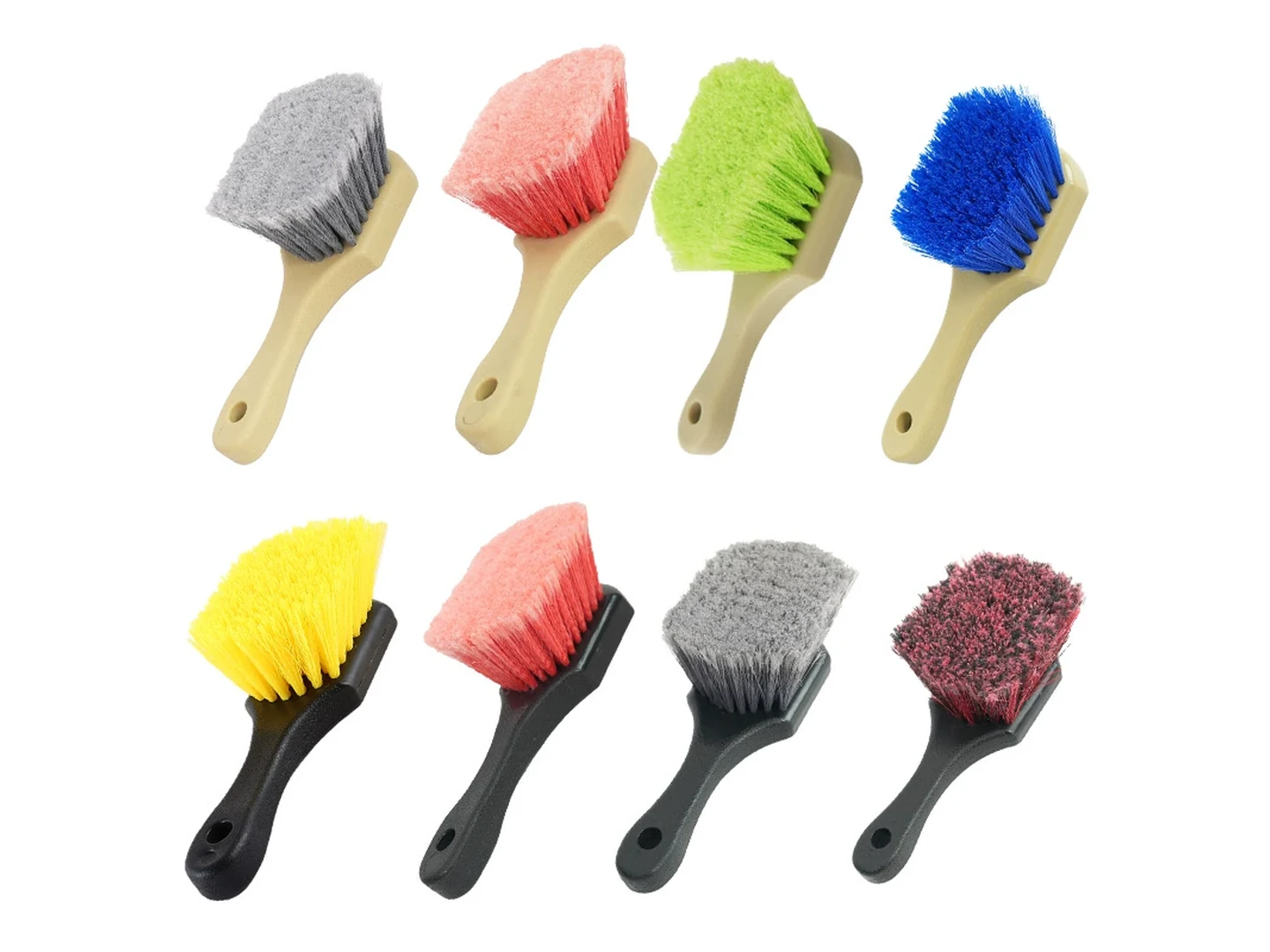
Cleaning Brush Mold Tire
Custom tire mold cleaning brush with PA66/PA6 nylon filament shaped to follow tread grooves,…
See the specification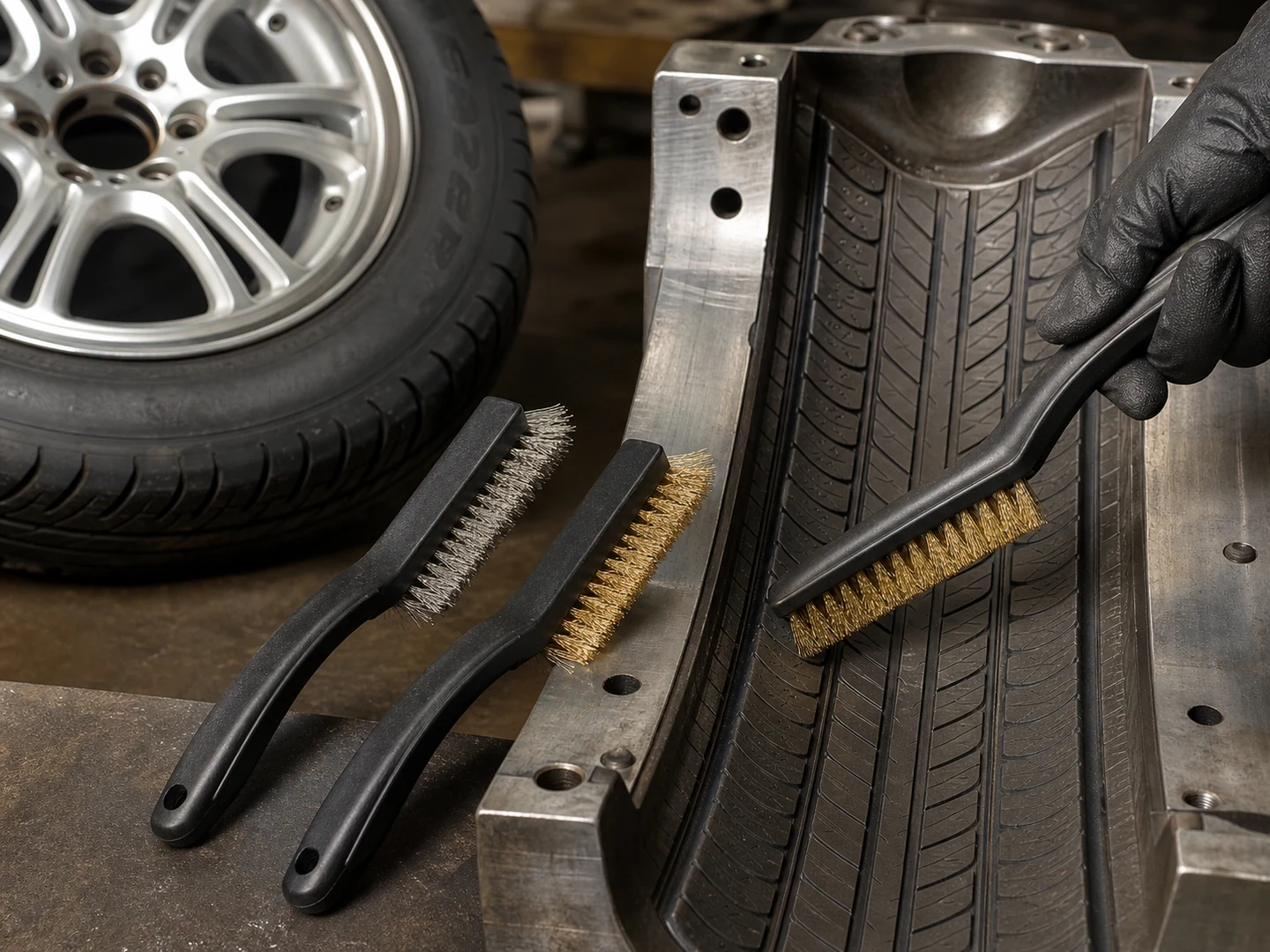
Stainless Steel Brass Mold Tire Brush
316 stainless steel and brass wire mold tire brush in cup, wheel, or end…
See the specification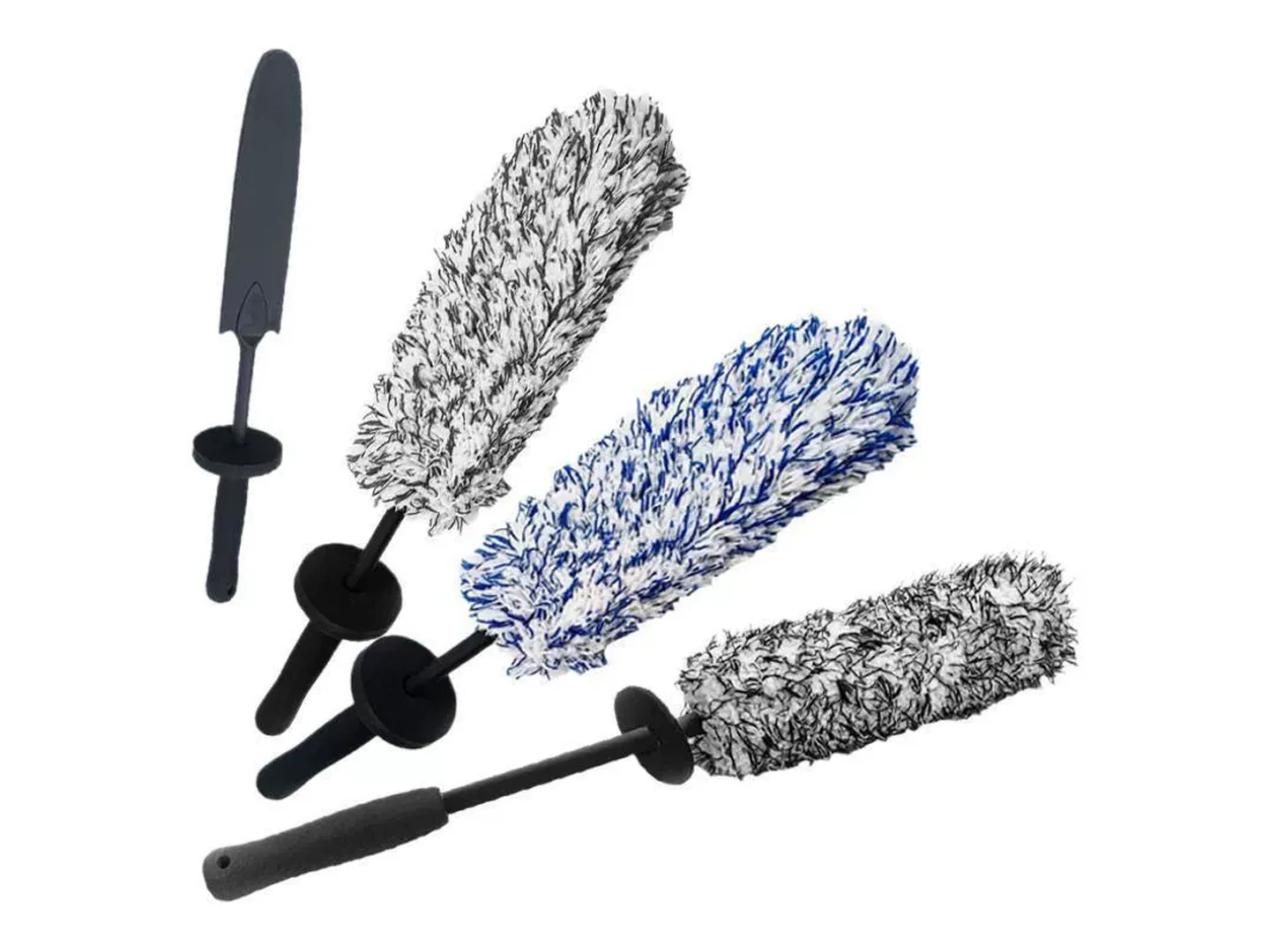
Tire Cleaning Brush
Rugged tire cleaning brush with nylon or PP filaments for sidewalls, tread grooves, and…
See the specification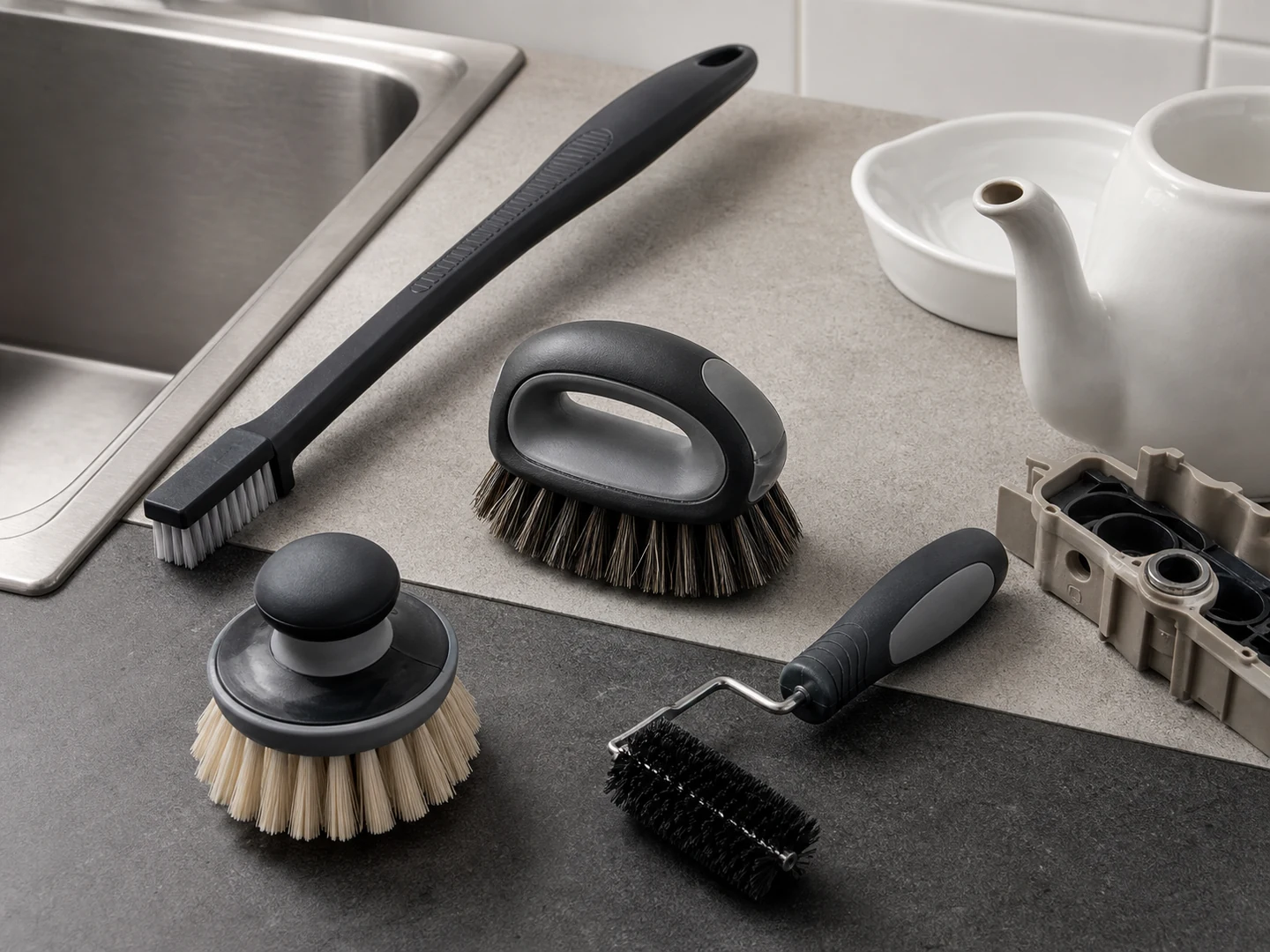
Custom Handheld Detail Brushes
Choose a handheld detail brush when you need direct control in seams, recesses, fittings,…
See how this type is builtCustom Manufacturing RFQ
Discuss This Application
Share the working surface, residue, dimensions, material direction, interface, quantity and drawing or sample photo.
Custom Brush RFQ
Request a Custom Cleaning Brush Quote
Upload a drawing, product photo, or sample photo and provide the core dimensions and cleaning conditions.
“We need a brush to remove wet residue from a stainless steel conveyor, about 800mm wide. The current brush wears quickly. We can send photos.”
“We sell drinkware and need a cleaning brush to include with the product. Quantity around 5,000 pieces.”