
Custom Cleaning Brush
Wire Tire Brush
Steel wire tire brush for tire mounting, repair, and wheel service. Choose carbon, stainless, or brass wire with custom face size, gauge, and handle.
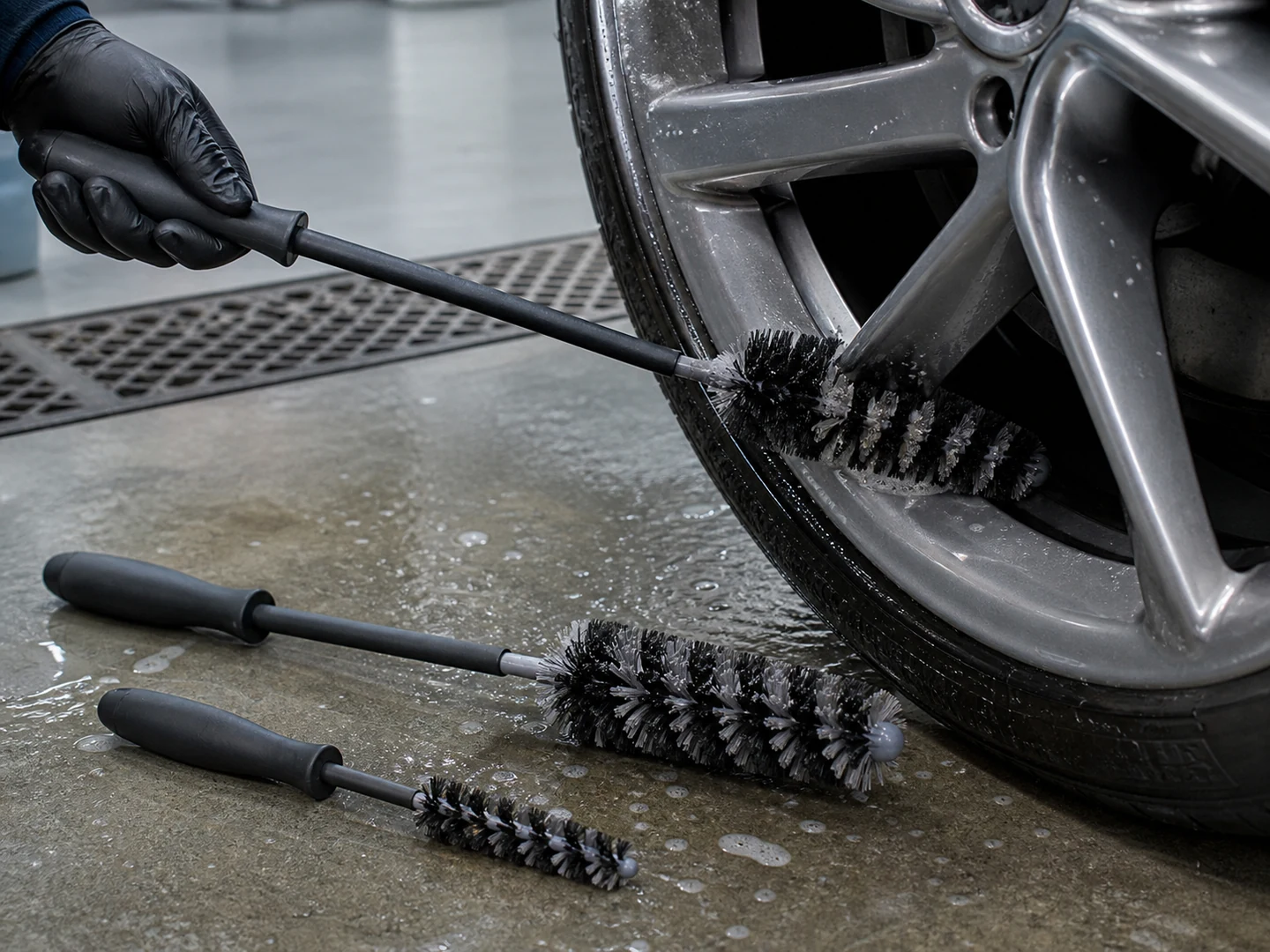
Small brush
500 pcs
Minimum order
Held in one hand: tube, bottle, detail and swab brushes — including long-handled ones with a small head.
Production lead time, once the specification is confirmed
- Up to 500 pcsWithin 7 days
- 501–50,000 pcsWithin 14 days
- Over 50,000 pcsWithin 21 days
Peak season can extend these times; the shipping date is confirmed in writing with your quotation. Sampling and shipping are quoted separately.
A hand-held wire tire brush for tire shops, fleet bays, and wheel service work that breaks loose caked brake dust, rust scale, road film, mud, rubber bloom, and old bead sealer from tire sidewalls, bead seats, rim flanges, hubs, and lug areas while keeping the operator in direct control of contact pressure.
What can this brush do for you?
Cut through caked wheel and tire deposits
Crimped wire tips concentrate force at the end of each bristle, so hardened brake dust, dried mud, and rubber bloom come off in a few strokes instead of smearing across the surface. The open wire face keeps cutting because the loosened material does not pack into the fill.
Follow the bead seat and rim flange instead of skipping over them
The brush face can be built narrow or shaped to work into the recess between the tire bead and rim, around lug pockets, and into the rim drop center. Wire tips at the correct trim length reach into pits and crevices that a rag, scraper, or plastic brush slides over.
Keep pressure controlled for rubber and painted surfaces
Hand use means the operator feels the resistance and can ease off before the wire digs into a sidewall or scratches a clear coat. Thinner wire diameters and brass fill make the same brush gentler on soft rubber, coated wheels, and aluminum rims.
Shed debris instead of loading up
Loosened rubber, dirt, and rust fall clear between the wire rows, so the face continues cutting across multiple wheels without needing to be picked clean or banged out between jobs.
Stand up to typical tire shop fluids and solvents
Steel or stainless wire and a solid mounted block tolerate tire soaps, bead lubricants, degreasers, and solvent wipes. If the brush will be used wet or near road salt, stainless wire protects the tool itself from rusting between jobs.
What is a Wire Tire Brush?
A wire tire brush is a hand-guided wheel and tire service brush with steel, stainless steel, or brass wire fill set into a rigid brush block. Tire technicians use it around the mounted or dismounted wheel: across the sidewall, along the bead area, into the rim flange, and around the hub before a tire is installed, balanced, or repaired. The wire fill reaches into rust pits, tire lettering recesses, and rim gaps that a flat tool skims over.
Most wire tire brushes are built with crimped wire, which gives each bristle a wavy spring profile and keeps the tips from working loose as quickly as straight wire. The face may be flat for sidewall sweeping or narrowed and angled for bead pockets and lug recesses. A long handle keeps hands away from tire-machine pinch points and brake dust while giving enough leverage to scrub the lower sidewall and rim without squatting.
This is a surface preparation and loose deposit removal tool, not a powered descaler. At the correct wire gauge and pressure, it will break light rust and film off wheel surfaces, but it is not a substitute for a tire buffer in puncture repair or for a powered cup brush when heavy scale has to be removed quickly.
Technical Specifications
Final dimensions, wire grade, and handle are set to the wheel sizes and service procedure. These are the standard design ranges we work from.
| Parameter | Value / Options |
|---|---|
| Brush face length | 90–180 mm, sized to tire sidewall width or rim diameter |
| Brush face width | 20–40 mm; wider for sidewall sweeping, narrower for bead and lug access |
| Wire material | Carbon steel, stainless steel, or brass |
| Wire diameter | 0.20–0.35 mm; thinner for rubber and painted surfaces, thicker for rust scale |
| Wire form | Crimped standard, straight, or twisted fill |
| Trim length | 18–28 mm; shorter trim is stiffer, longer trim reaches bead pockets and rim gaps |
| Rows of wire | 3–6 rows, spacing set to debris type and flex requirement |
| Face profile | Flat, convex, angled, or shaped to rim and bead geometry |
| Handle | Hardwood, PP or TPR overmolded, steel-backed, or long handle; overall length 240–360 mm |
| Block material | Wood, plastic, or steel backing selected for solvent and impact exposure |
| Operating environment | Compatible with common tire soaps, bead lubricants, and degreasers; stainless option for wet, salty, or washdown use |
| Brush type | Custom Handheld Detail Brushes |
| How it is driven | Hand-guided |
| Cleaning target | tire mounting and balancing bay, tire repair and puncture inspection, and commercial fleet and truck tire service cleaning |
| Surface or part | rims, sidewalls, roads, hubs, recesses, tire beads, tire sidewalls, and profiles |
| Residue or debris | rust, brake dust, mud, rubber bloom, scale, road film, rust scale, and corrosion |
| Mounting / connection | Fixed |
Where does this brush work best?
- Tire mounting and balancing bays: clean bead seats, rim flanges, and drop centers before new tires are seated on the wheel.
- Tire repair and puncture inspection: remove road film, rubber bloom, and loose rubber around the injury before locating the puncture and buffing the repair area.
- Commercial fleet and truck tire service: scrub heavy sidewall deposits, brake dust, and hub-area corrosion on steer, drive, and trailer wheels.
- Off-road and agricultural equipment: dislodge dried mud, embedded gravel, and crop debris packed between the bead and rim.
- Wheel refinishing and restoration: knock loose flaking paint, surface rust, and old balance-weight adhesive from steel and cast wheels before abrasive or chemical treatment.
- Trailer and seasonal vehicle preparation: clean wheels and tire beads before storage or remounting where corrosion has started from road salt.
How do I choose the right one?
Start with the wheel surface and the residue, because those determine wire material, gauge, and trim. Then check the face and handle against the routine motion in your bay.
Pick the wire material for the wheel surface
- Carbon steel is the standard workhorse for steel wheels, rusted rims, and heavy brake dust.
- Brass wire is softer and less likely to scratch coated or aluminum wheels; use it when appearance matters more than fast metal removal.
- Stainless steel combines corrosion resistance with good stiffness for wet bays, wheel wash areas, and marine-adjacent fleets.
Set wire diameter and trim length to the cleaning job
Thin wire, 0.20–0.25 mm, works well on rubber sidewalls, lettering, and painted rims because it flexes before cutting. Thick wire, 0.30–0.35 mm, is the choice for rust scale and hardened mud on steel wheels. Long trim reaches into recesses; short trim transfers more hand pressure to the surface for flat scrubbing.
Match face size and handle to the workspace
A wide 5–6 row block clears large truck or trailer sidewalls faster. A compact 3-row block is easier to work around lug pockets, hub fixtures, and bead areas. Long-handle versions keep the operator farther from the tire machine and brake dust; short-handle blocks give more precise pressure inside wheel arches.
| If your condition is | Recommended wire tire brush |
|---|---|
| Rusted steel wheels, heavy mud | Carbon steel, 0.30–0.35 mm, medium fill, 20–22 mm trim |
| Aluminum or coated wheels, light film | Brass wire, 0.20–0.25 mm, low-to-medium fill |
| Rubber sidewall film and rubber bloom | Steel or brass, 0.20–0.25 mm, light hand pressure |
| Bead seat and rim gap debris | Narrow face, 3–4 rows, 25–28 mm trim |
| Wide truck or trailer sidewalls | Wide face, 5–6 rows, 20–24 mm trim |
Know when to use a powered brush instead
If the rim has heavy, continuous rust scale or the job volume is high, a power cup wire brush for an angle grinder will remove material faster than a hand brush. For a polished or clear-coated wheel, skip steel wire entirely and use brass or a non-wire brush. For the inner liner during a puncture repair, use the tire buffer specified by your repair procedure rather than a hand wire brush.
Can I customize this brush?
Every wheel profile creates a different access problem, so we build wire tire brushes to the rim diameter, bead pocket, wheel finish, residue mix, and workflow. To set up a quote or sample, send the wheel size and material, whether you are cleaning steel, aluminum, or chrome wheels, the main deposits you need to remove, the chemicals used in the bay, and the preferred handle length or style.
Configurable elements include:
- Face geometry — length, width, number of rows, flat or shaped profile, angled end for bead work
- Wire fill — carbon steel, stainless steel, or brass; wire diameter, crimp profile, trim length, fill density
- Block and ferrule — wood, plastic, or steel backing; row angle; reinforced mounting plate
- Handle — material, length, ergonomic grip, hang hole, steel ferrule, or custom-molded branding area
- Color and marking — handle color, laser or pad-printed logo, part number, or color-coded wire material identification
- Packaging — bulk boxes, poly bags, retail cards, private-label sleeves, or project-specific labeling
When the order requires project-specific material documentation, inspection records, or third-party testing, we can support those requirements during the customization phase.
Which filament survives the cleaning and still lasts on a wire tire brush?
Can I use this brush on aluminum or chrome wheels?
Yes, if you choose the right wire. Carbon steel wire can scratch clear coat and leave fine steel particles that later rust on the wheel. For aluminum, coated, or chrome surfaces, order brass or stainless wire in a thinner diameter and use light pressure.
Should this brush be used on the inner liner during puncture repair?
No. Inner liner repair preparation is done with a tire buffer and repair cleaner. A hand wire brush does not create the correct texture and can damage the liner. Keep this brush on sidewalls, beads, rims, hubs, and outer wheel surfaces.
How do I know when the brush should be replaced?
Check the wire rows between jobs. If the bristles have flattened, bent over, or shortened noticeably, if the face no longer springs back, or if the handle ferrule or block is loose, replace the brush. Worn brushes shed more broken wire and cut less effectively.
What pressure should I use on a painted or rubber surface?
Use light-to-moderate hand pressure and let the wire tips work. If the surface shows scratches, wire marks, or color transfer, the wire is too stiff, the trim is too short, or the pressure is too high. Move to brass wire or a thinner gauge.
Does brushing take the place of bead sealer removal or chemical cleaning?
No. Brushing removes loose rust, dirt, and film, but cured bead sealer, heavy rust scale, and adhesives usually need a chemical remover or a powered rotary brush. After brushing, wipe the rim and inspect the bead seat for remaining residue before mounting.
How do I keep a carbon steel wire brush from rusting in a wet tire bay?
Rinse and dry the brush after solvent exposure, and do not store it wet against the rim or floor. If the brush will be used under washdown conditions or road salt, specify stainless steel wire and a rust-resistant handle ferrule.
Guides that go deeper on this
Wire Brushes for Tires: Which Wire Won't Cut the Rubber?
Read this guideGuideNon-Sparking Wire Brush: Brass, Bronze or Beryllium Copper?
Read this guideGuideNylon Cup Brushes: Polishing or Cleaning, and What Fill?
Read this guideGuideSponge Cup Brushes: Cleaning, Absorbing or Polishing?
Read this guideGuideTire Mold Cleaning Brush: Which Wire Clears Vents Safely?
Read this guideCustom Manufacturing RFQ
Describe Your Application
For an accurate quotation, please provide the main dimensions, material preference, working surface, residue, quantity, and a drawing or photo.
Drawing or photo optional — it speeds things up, it does not gate the enquiry.
Custom Brush RFQ
Send Your Brush Project
Upload a drawing, product photo, or sample photo and provide the core dimensions and cleaning conditions.
“We need a brush to remove wet residue from a stainless steel conveyor, about 800mm wide. The current brush wears quickly. We can send photos.”
“We sell drinkware and need a cleaning brush to include with the product. Quantity around 5,000 pieces.”