
Application
Solar Panel Cleaning
For Solar Panel Cleaning, the brush must reach the working area, disturb or collect dust/bird droppings/pollen/salt-spray deposits, and release it without creating unacceptable surface damage or process interference. The available access and required motion should be reviewed together with the cleaning method.
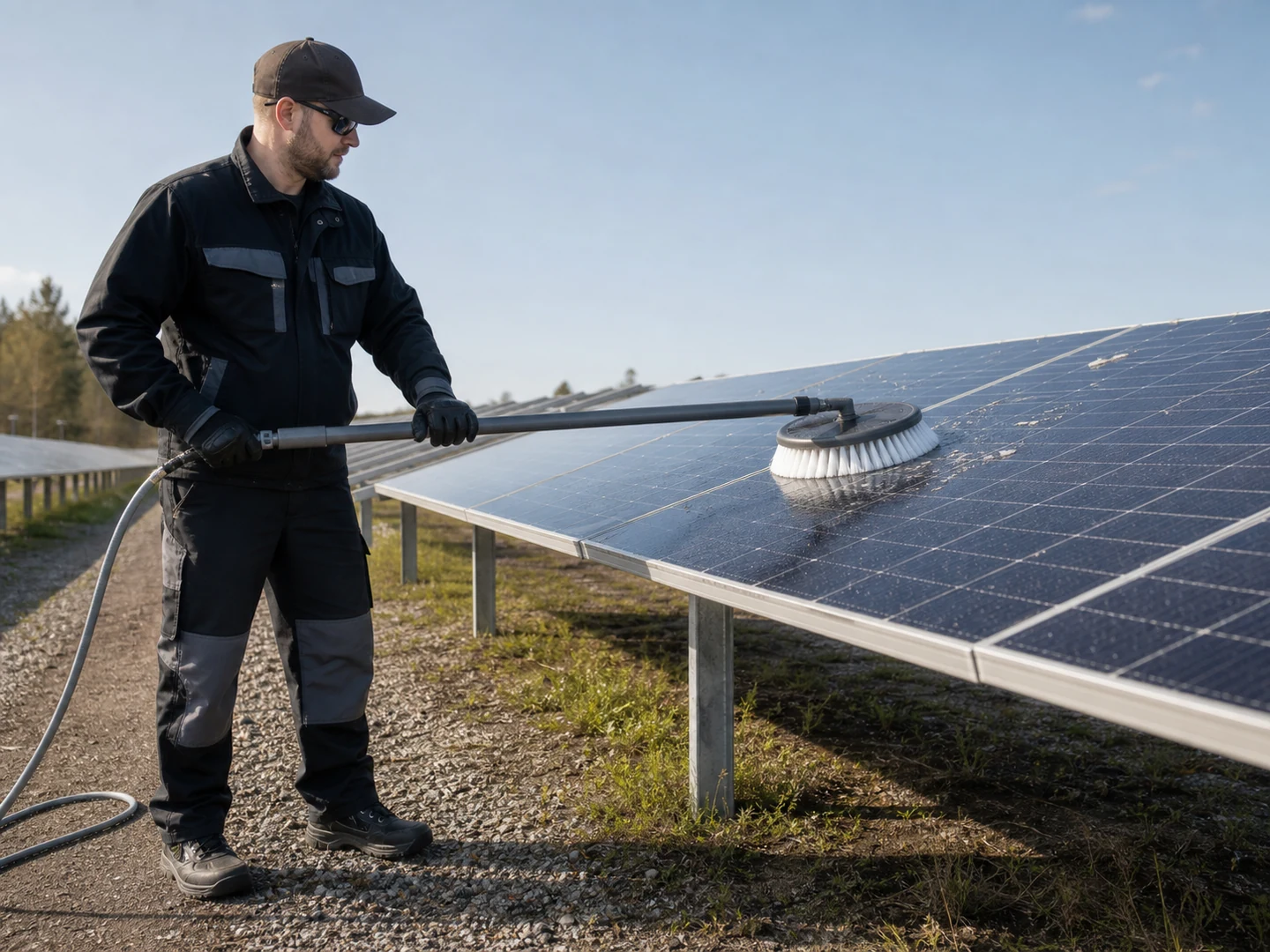
At a glance
- Cleaning target
- Dust/Bird Droppings/Pollen/Salt-Spray Deposits
- Working environment
- Outdoor
- Cleaning method
- Dry Brushing / Wet Brushing
- Requirements to check
- Low-Scratch Requirements for Component Surfaces; Outdoor UV-Weathering Requirements
Solar glass carries an anti-reflective coating, and scratching it costs more output than the soil ever did, so panel brushes are specified soft first and for reach second.
What makes Solar Panel Cleaning different from other facility, floor and outdoor cleaning?
The main difficulty is removing dust, mineral film, fingerprints, process particles, and water spots from glass, coated panels, photovoltaic modules, and smooth sheets without damaging the surface, loading the brush, or carrying contamination back into the process.
The work happens in outdoor against dust, bird droppings, pollen and salt-spray deposits.
The part people get wrong: the residue tells you the filament, but the access opening tells you the construction. Get them in that order and the shortlist is short.
What are the most common cleaning targets in Solar Panel Cleaning?
5 targets, each with its own opening, residue and contact requirement.
| Part or area | Residue type | Cleaning requirement |
|---|---|---|
| Rooftop Solar Panel | Dust, Bird Droppings, Pollen, Salt-Spray Deposits | The face must stay flat against the surface so the whole working width contacts, with filament soft enough not to mark it. |
| Utility-Scale Solar Farm | Mineral scale and hard water deposits | The head must reach the working face and apply even contact without marking the surface. |
| Desert Dust and Sand Removal | Dust, powder and compacted fines | |
| Bird-Dropping and Organic-Soil Removal | Soil, mud and packed aggregate fines | |
| Wet Algae and Coastal-Salt | Algae, biofilm, salt-spray deposits |
What the equipment leaves you to work inside:
| Parameter | Typical range |
|---|---|
| Working width | 300–4500 mm |
| Brush diameter | 80–350 mm |
| Trim length | 30–100 mm |
| Filament diameter | 0.15–0.35 mm |
| Surface pressure | 0.5–3 N/cm² |
Which brush types work for each cleaning target?
Long roller, paired robotic roller, disc head or water-fed block brush.
| Cleaning target | Recommended brush type | Why it fits |
|---|---|---|
| Rooftop Solar Panel | Handheld Detail Brushes | A module is a flat glass face reached from the edge, so a flat head on a pole keeps its full width down and covers the panel in straight overlapping passes. |
| Utility-Scale Solar Farm | At farm scale the constraint is water and time per row, so the brush has to release the soil in one pass rather than be worked back and forth. | |
| Desert Dust and Sand Removal | Desert dust is sharp, so the brush has to lift it clear of the glass rather than drag it across, which is what scratches the anti-reflective coating. | |
| Bird-Dropping and Organic-Soil Removal | Droppings bond hard and sit in spots, so a hand-guided head can be held on that spot after soaking instead of scrubbing the whole module. | |
| Wet Algae and Coastal-Salt | Coastal film is thin, wet and covers the whole face, so an even hand pass with soft filament breaks it without pressure anywhere. |
How the brush is usually carried on the machine:
- Driven brush — use when dust, mineral film, fingerprints, process particles, and water spots needs repeatable scrubbing or controlled relative movement
- Passive or free-running brush — use for loose contamination and lower process complexity on glass, coated panels, photovoltaic modules, and smooth sheets
- Localized hand, strip, or tube brush — use where only an edge, gap, port, or maintenance point needs contact
In practical brush terms: match the construction to the access before anything else. A geometry that cannot reach the target will not be rescued by a better filament.
What filament materials work best for Solar Panel Cleaning?
Soft nylon/PBT/PP or approved natural-fiber blend with UV and water data; corrosion-resistant core for wet systems.
| If the condition is… | Filament to start with | Why |
|---|---|---|
| Sensitive or coated surface | Nylon PA | balanced flex life and abrasion resistance |
| Wet, washdown, or detergent service | PBT | stable wet stiffness and low moisture uptake |
| Bonded residue or aggressive cleaning | Carbon Fiber | conductive static-control contact |
What the duty rules out before you start comparing grades:
| Constraint | Value for this application |
|---|---|
| Filament hardness | Soft |
| Maximum service temperature | 80°C |
| Chemical exposure | Water; Neutral Detergent pH 6–8 |
| Cleaning method | Dry Brushing, Wet Brushing |
How do I choose the right brush for my solar panel equipment?
Softness is fixed first because the coating is the asset. Row length and panel size then decide between a roller, a disc and a water-fed head.
Work through it in this order:
- Identify the target part and measure the access opening or clearance
- Describe the residue: what it is, how thick it sits, and how strongly it holds
- Choose the construction that can physically reach that target
- Set the filament from surface risk, working temperature and cleaning chemistry
- Fix filament diameter, free trim length and density for the contact pressure you need
- Run one cycle and check the result before committing to a production quantity
Before you commit to a quantity, send the panel dimensions, the row length, the coating type, and the panel maker’s cleaning limit.
When is a solar panel brush the wrong tool?
Deionised water with no contact at all is the preferred method on most utility arrays, and rainfall does a large share of the work. A panel with a damaged anti-reflective coating or a cracked cell should not be brushed, and no dry brush belongs on a dusty desert array.
What common mistakes should I avoid in Solar Panel Cleaning?
- Not stating the panel’s coating and the manufacturer’s cleaning limit before any contact is proposed
- Changing brush material while leaving excessive engagement, poor alignment, or no discharge path unchanged
- Copying a worn brush without recording motion, direction, mounting, and the original working diameter
If the brush is already in service and the result is wrong, work from the symptom:
| Symptom | What to change |
|---|---|
| Residue remains | Increase relative motion or discharge, then change filament diameter or density; do not add pressure before checking loading by dust, mineral film, fingerprints, process particles, and water spots. |
| Surface marks or scratches | Reduce engagement, use finer or softer fill, and remove trapped abrasive particles from contact with glass, coated panels, photovoltaic modules, and smooth sheets. |
| Rapid wear or uneven cleaning | Check alignment, runout, support, motion, temperature, chemical attack, and whether the brush covers the complete working path. |
| Brush loads or redeposits residue | Open the fill pattern or add wash, vacuum, air, scraping, or a collection path so removed dust, mineral film, fingerprints, process particles, and water spots leaves the contact zone. |
Questions this page is asked
Which document controls brush use on a photovoltaic module?
Identify the module manufacturer, model, glass or antireflective coating, exposed surfaces and installed electrical configuration, then use that model's current cleaning and maintenance instructions. Do not transfer a brush material, wet-contact method or rear-surface procedure from another module family when its coating, seal or connector limits differ.
How should a solar-panel brush method be qualified before full-array use?
Use a cool representative module or approved test section and hold water quality, wetting, brush material, load, speed, passes and rinse constant under the module procedure. Inspect the dry surface in suitable light for scratches, coating change, residue, edge-seal stress and trapped deposits, and stop if the tool sheds or approaches live or sealed interfaces.
What evidence should trigger photovoltaic-module cleaning?
Use site inspection together with monitored soiling or unexplained performance loss, deposit type, rain history, water availability and safe access instead of relying only on elapsed time. Record the before-and-after condition and energy response so the site can refine its threshold without cleaning more often than the coating and module instructions permit.
Guides that go deeper on this
Solar Glass Panel Brush Mistakes on Coated Glass
Read this guideGuideSolar Panel and Glass Cleaning Brush Design
Read this guideGuideSolar Panel Glass Cleaning: Which Roller Brushes Leave No Haze?
Read this guideGuideDoes Flat Glass Washing Need a Suction-Mounted Cup Brush?
Read this guideGuideHow to Choose Solar Panel Anti-Static Brush
Read this guideGuideSolar Panel Brush Technique: Non-Damaging Cleaning Pattern
Read this guideGuideSolar Panel Cleaning Brush: Non-Damaging on Coated Glass
Read this guideGuideSolar Panel Cleaning Brushes: Soft Bristles for Coated Glass
Read this guideGuideSolar Panel Frame Brushes: Corrosion and Dirt Removal
Read this guideGuideWhich Glass Washing Brush Roller Suits Flat Glass Washing?
Read this guideGuideWhich Strip Brushes Suit a Solar Panel Cleaning System?
Read this guideContinue Exploring
Recommended Reading & Related Brush Resources
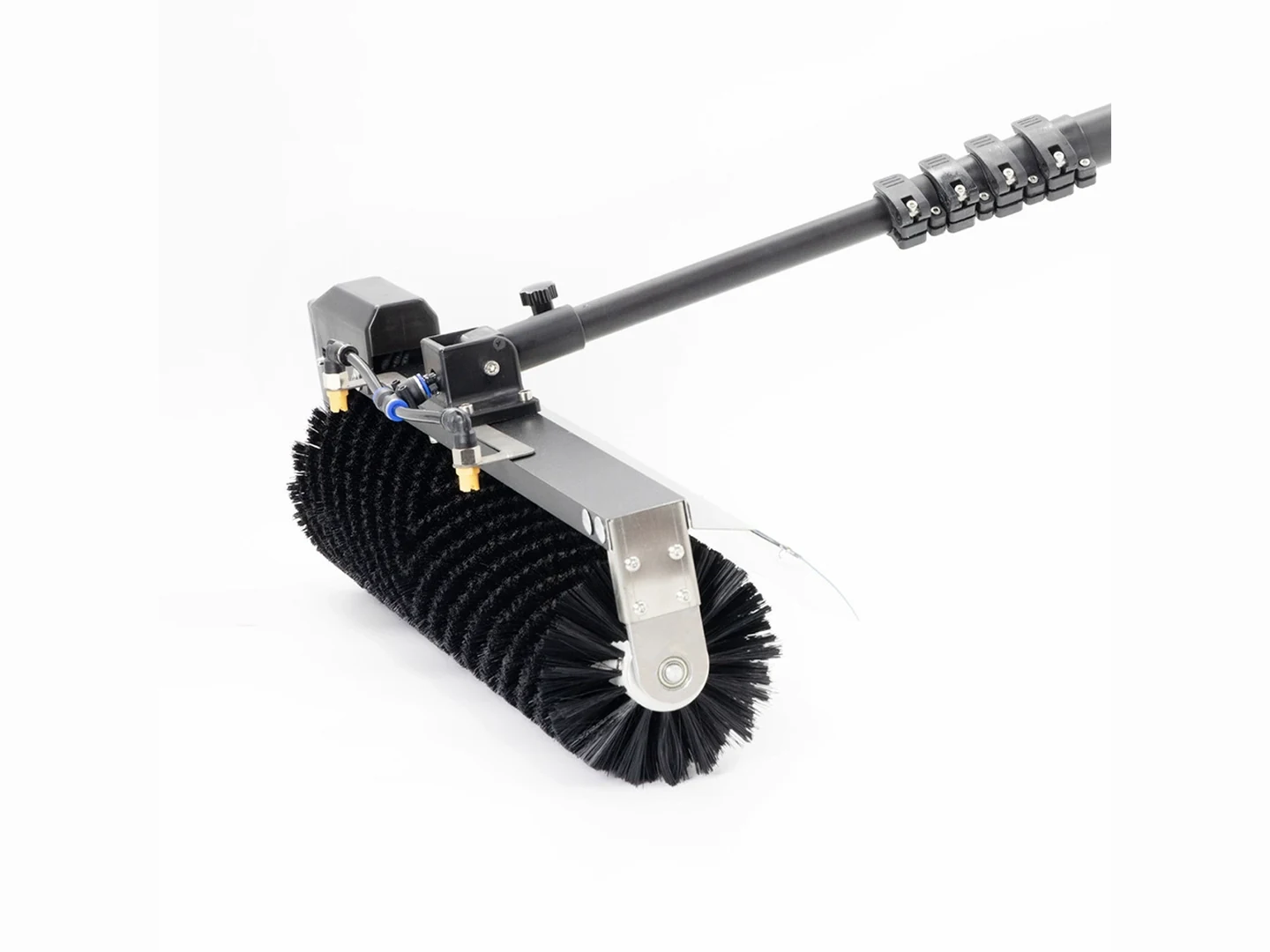
Brush Roller Dust Removal Solar Panel
Custom brush roller for dust removal on solar panels. Nylon filament, 300–4500 mm working…
See the specification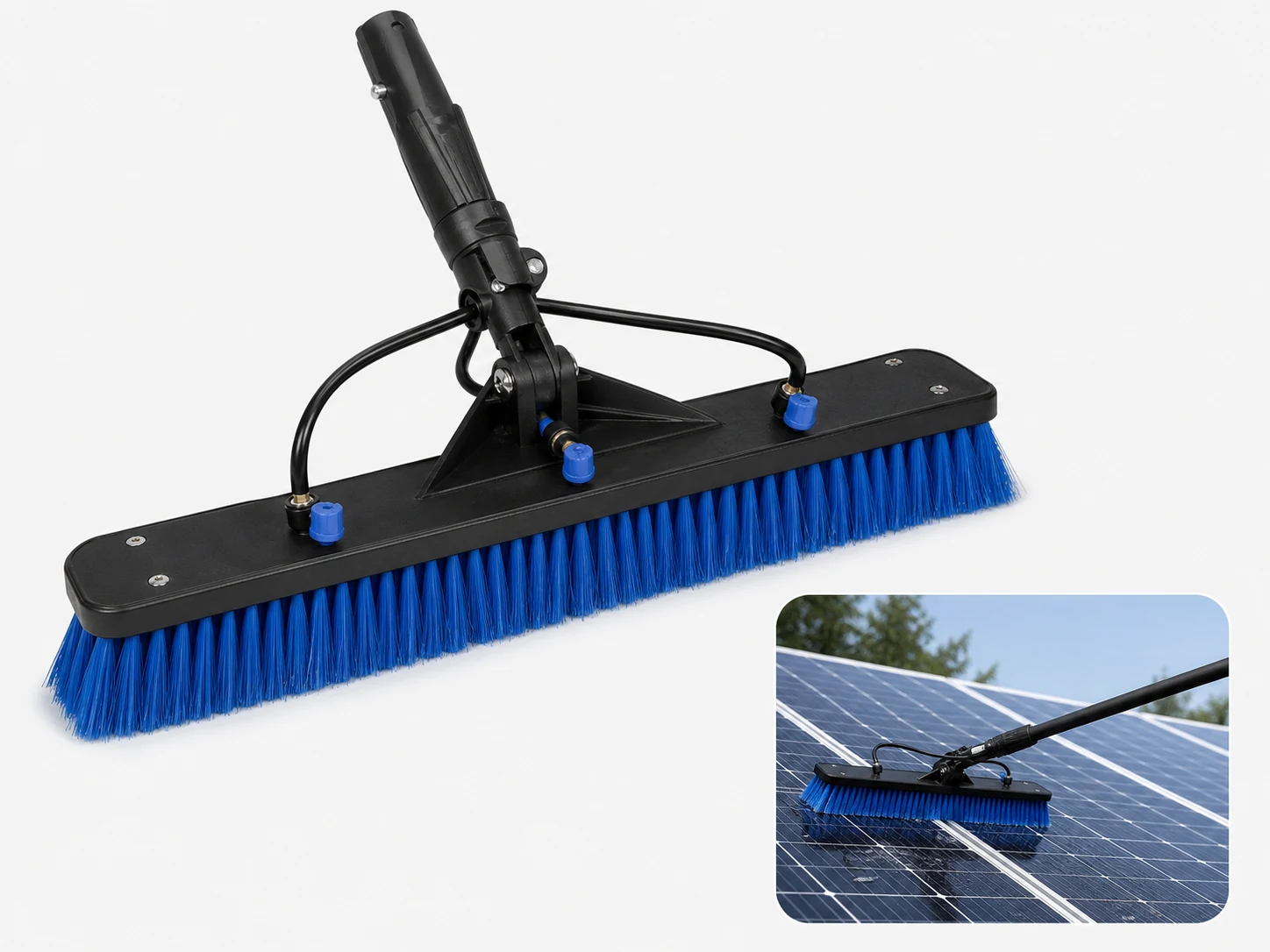
Glass Solar Panel Brush
Custom glass solar panel brush with soft nylon or PBT filaments for dust, pollen,…
See the specification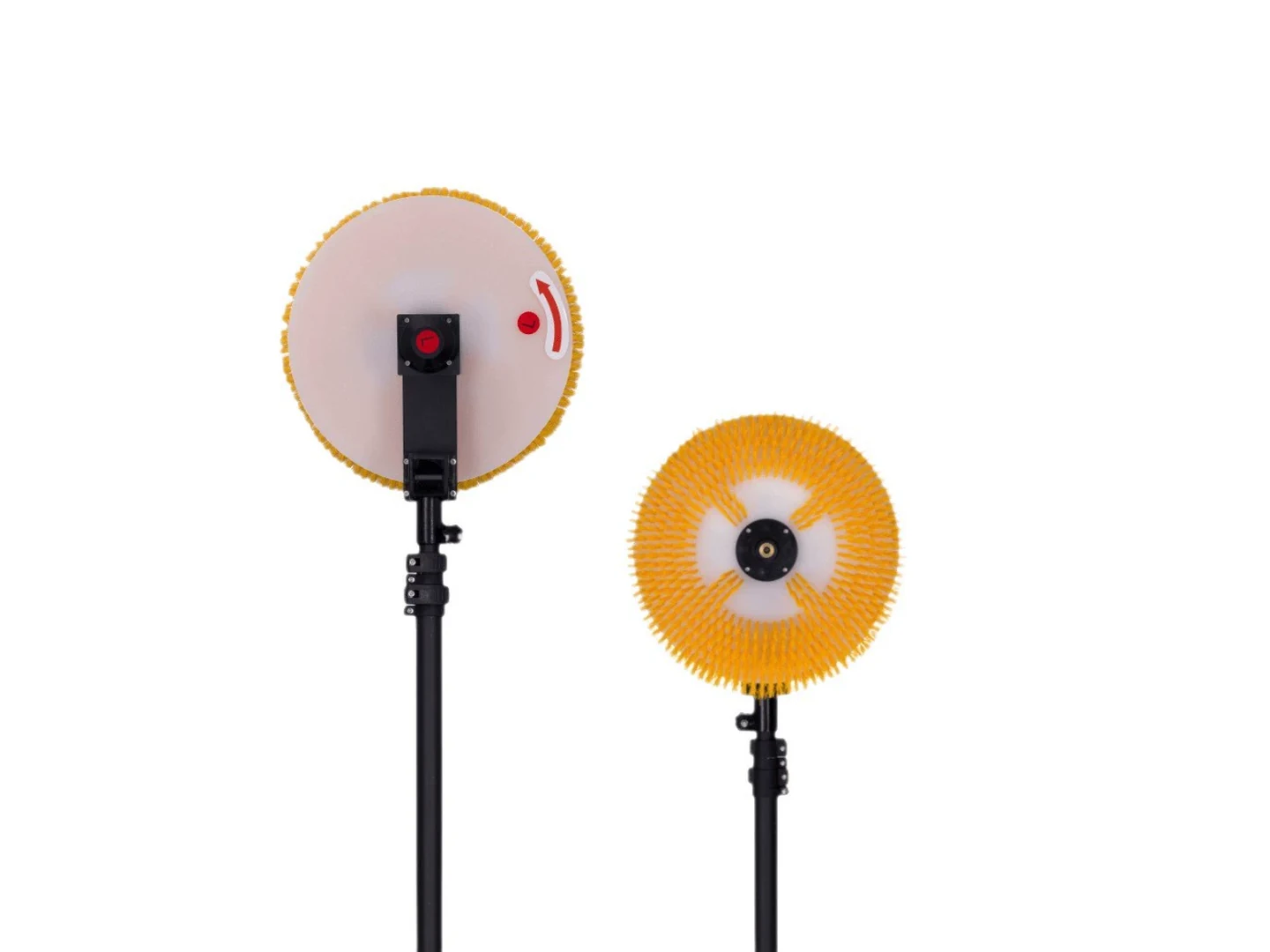
Solar Panel Cleaning Brush
Soft-flagged solar panel cleaning brush for tempered-glass PV modules. Wide water-fed head, microfiber edge,…
See the specification
Custom Handheld Detail Brushes
Choose a handheld detail brush when you need direct control in seams, recesses, fittings,…
See how this type is built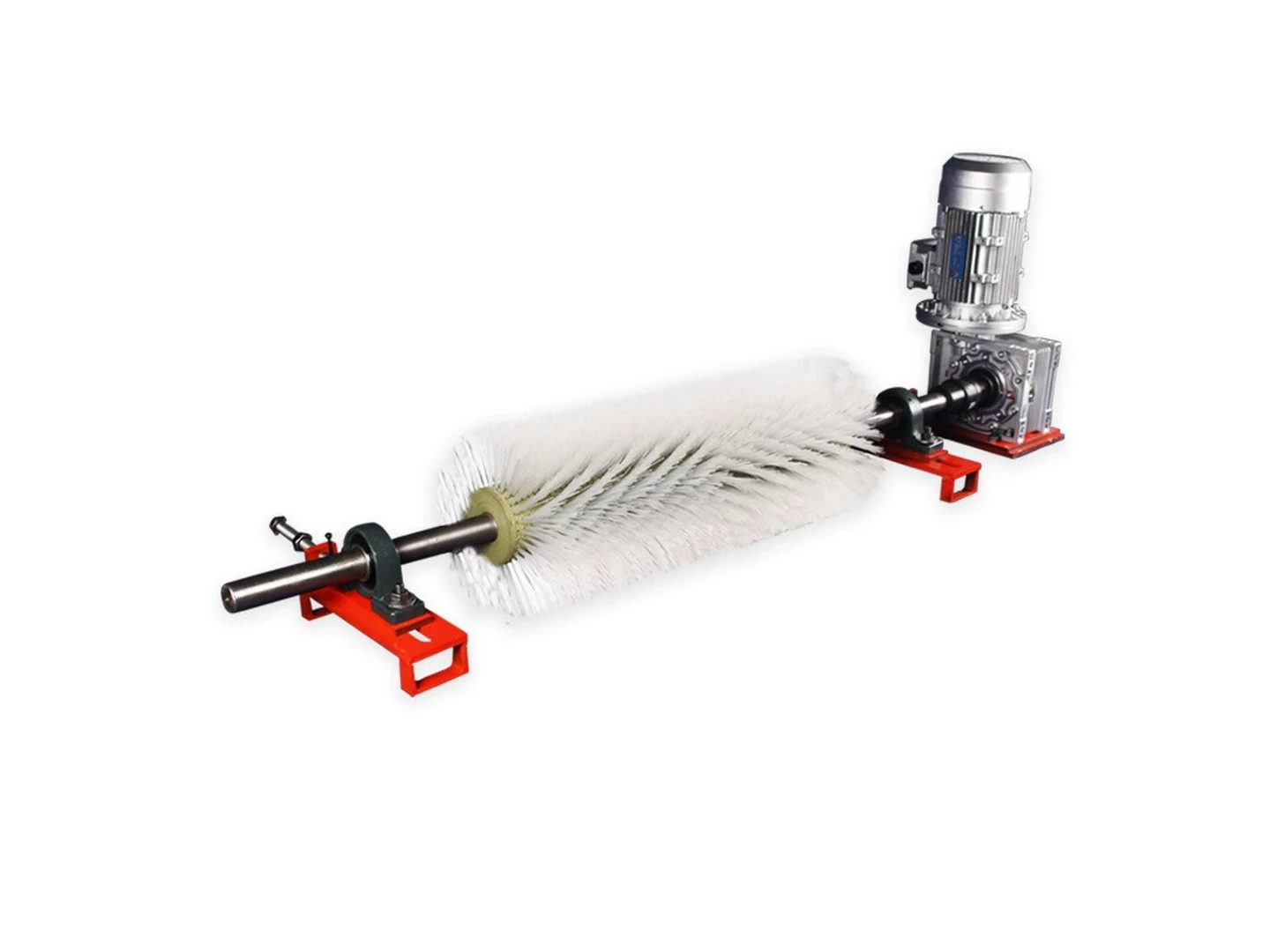
Custom Roller and Conveyor Brushes
Choose a roller or conveyor brush when a cylindrical brush must clean, wipe, guide,…
See how this type is built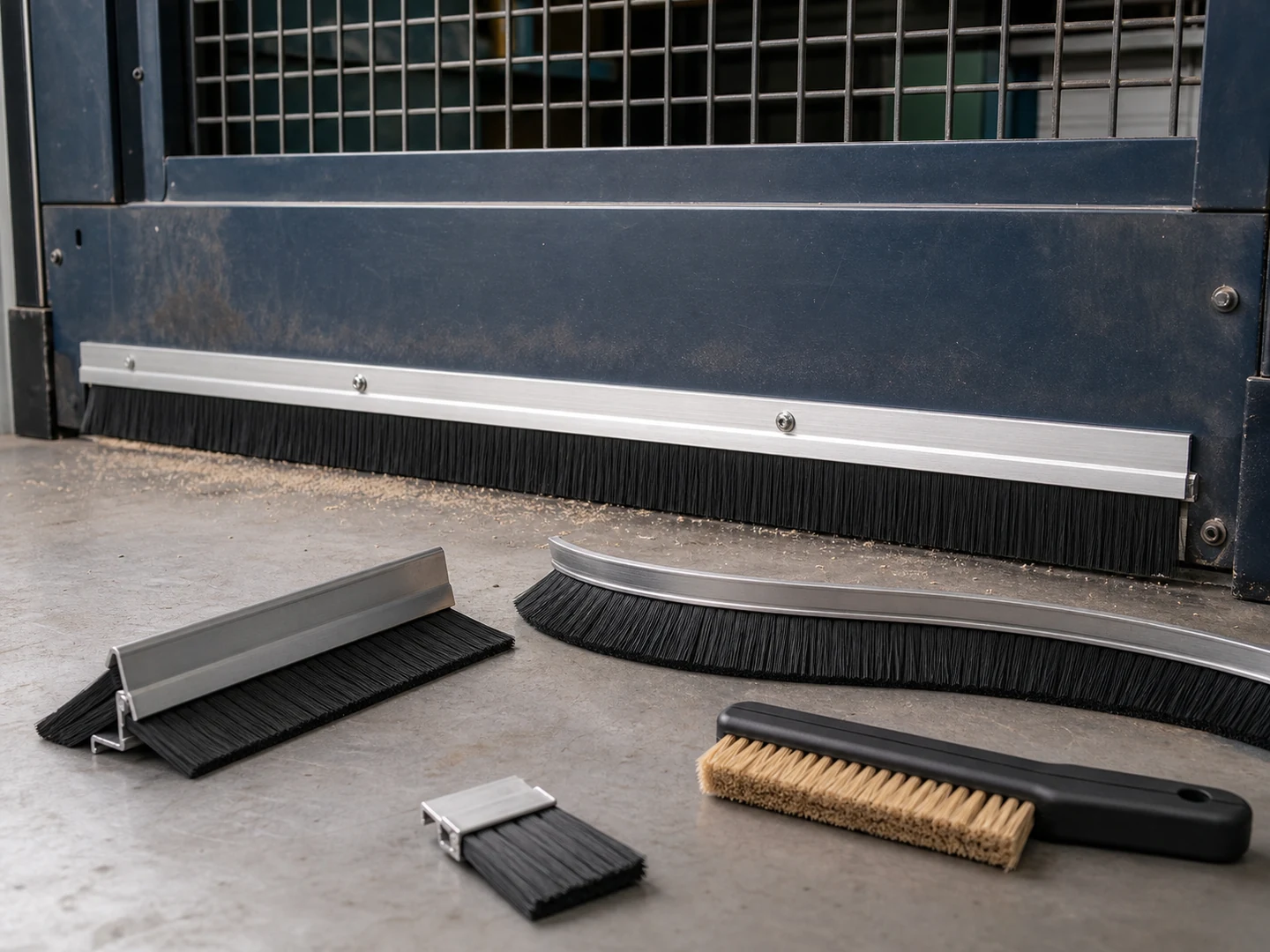
Custom Strip Seal Brushes
Choose a strip seal brush when a continuous line of filament must seal, wipe,…
See how this type is built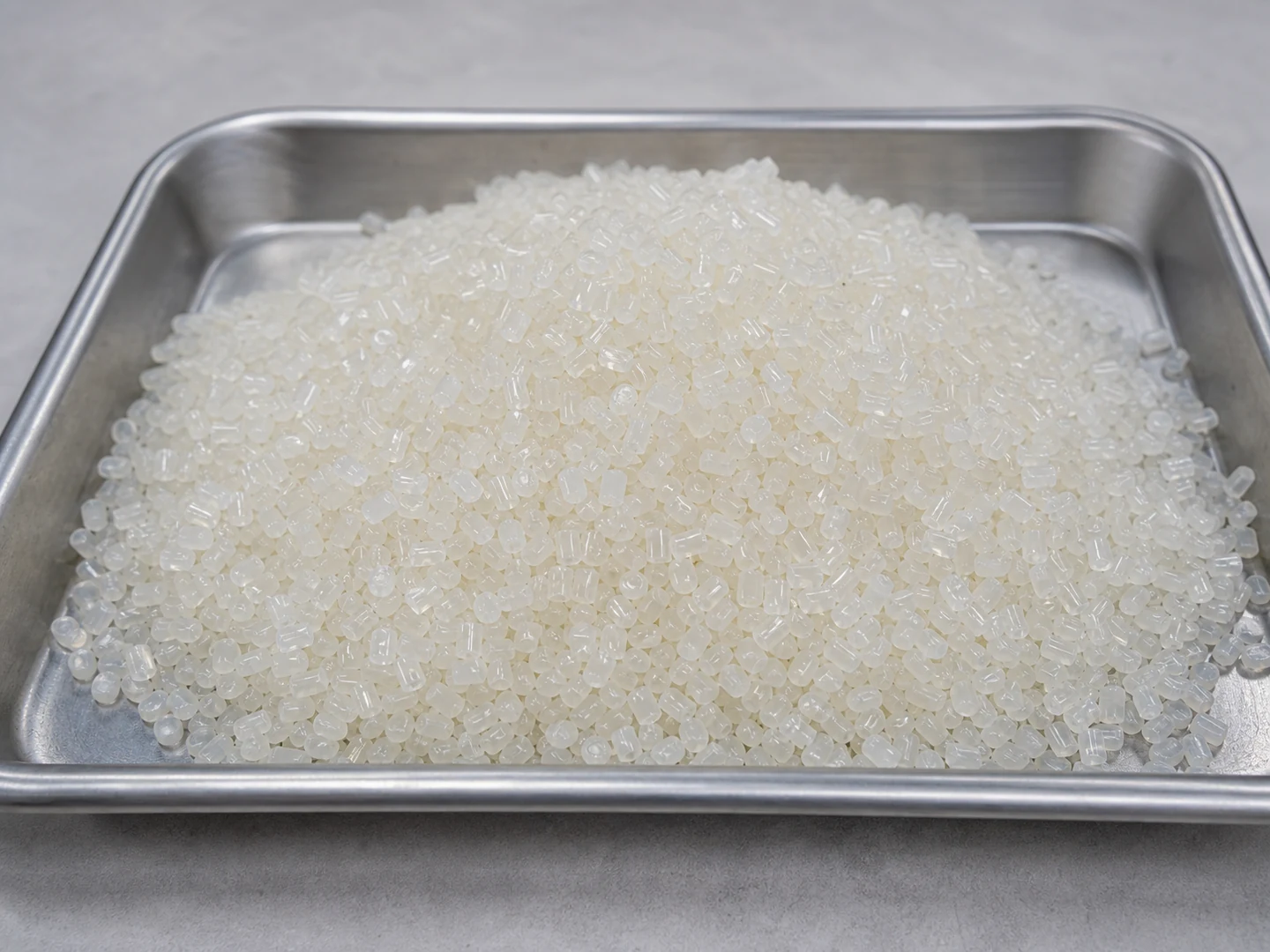
Nylon PA
Choose Nylon PA based on its stiffness, recovery, wear, wet-service, chemical, and temperature behavior.
Compare this material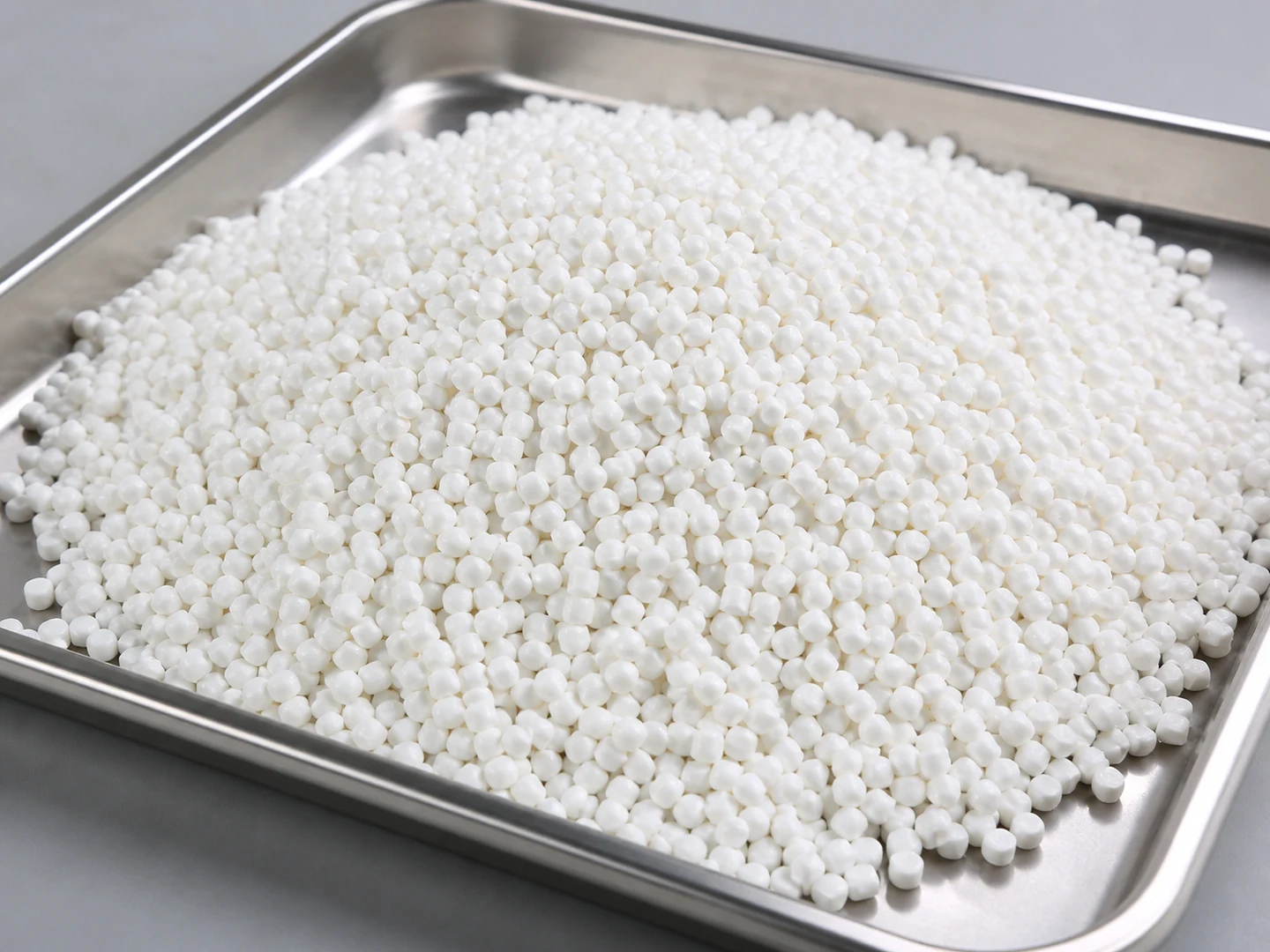
PBT
Choose PBT based on its stiffness, recovery, wear, wet-service, chemical, and temperature behavior. Do…
Compare this materialCustom Manufacturing RFQ
Discuss This Application
Share the working surface, residue, dimensions, material direction, interface, quantity and drawing or sample photo.
Custom Brush RFQ
Request a Custom Cleaning Brush Quote
Upload a drawing, product photo, or sample photo and provide the core dimensions and cleaning conditions.
“We need a brush to remove wet residue from a stainless steel conveyor, about 800mm wide. The current brush wears quickly. We can send photos.”
“We sell drinkware and need a cleaning brush to include with the product. Quantity around 5,000 pieces.”