What Is a Solar Frame Cleaning Brush?
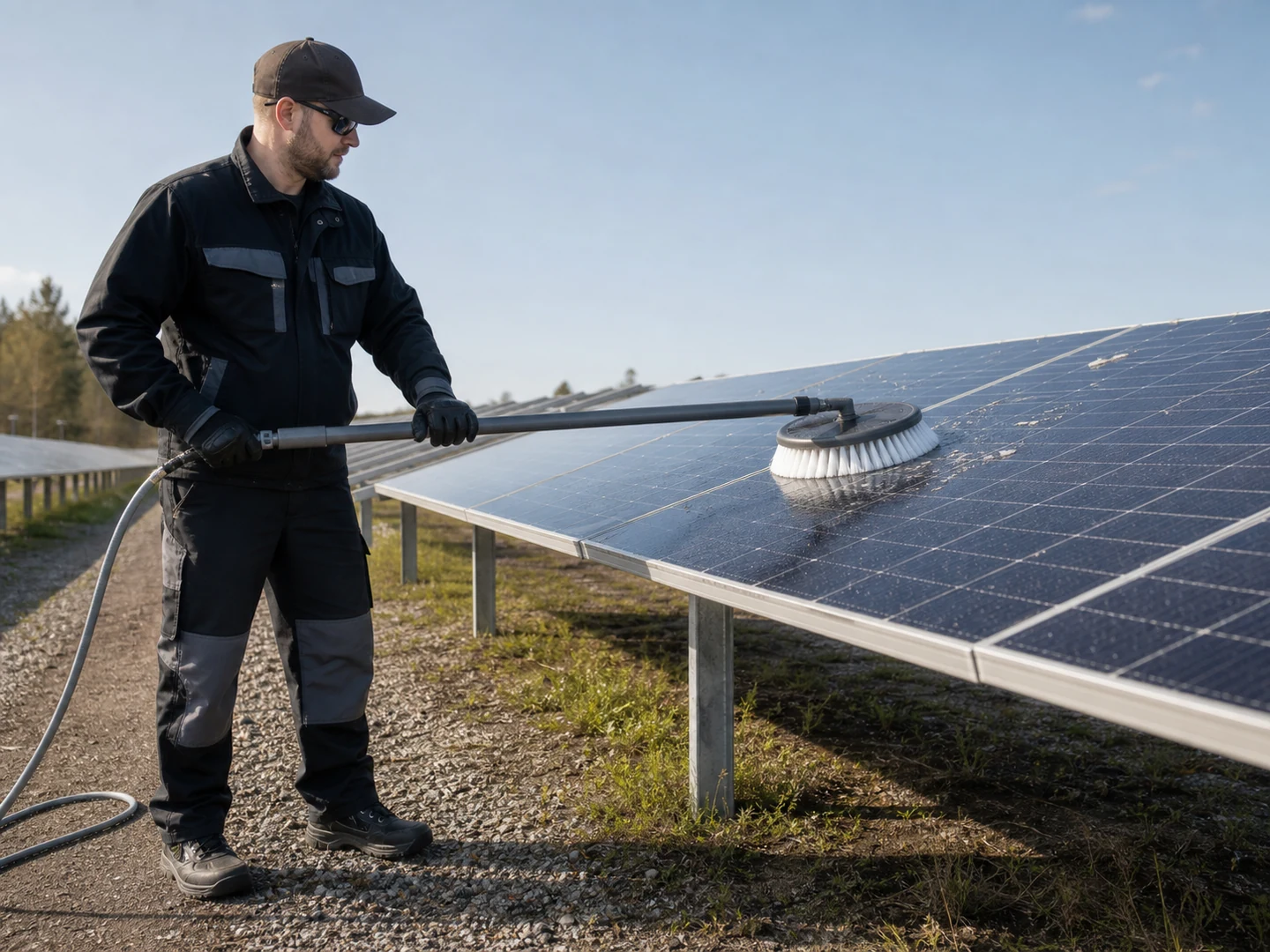
A solar frame cleaning brush is a specialized hand tool or pole-mounted attachment designed to clean the exposed edges, channels, and mounting rails of solar panel aluminum frames. Unlike general-purpose wire brushes, these brushes are selected to avoid scratching the protective anodized layer, to reduce the risk of galvanic corrosion, and to operate safely near energized DC circuits. They come in multiple bristle materials—most commonly brass, stainless steel, and nylon—each suited to different levels of dirt, oxidation, and electrical isolation requirements.
Why Frame Cleaning Matters for Corrosion Prevention
Solar panel frames are typically made of anodized aluminum, which resists corrosion under normal outdoor conditions. However, accumulated dirt, bird droppings, road grime, and salt spray can trap moisture against the metal surface. Over time, this creates micro-environments where the anodized layer can break down and pitting corrosion can start. In severe cases, especially where dissimilar metals meet (such as steel mounting hardware), galvanic corrosion can compromise clamping force and structural integrity. Regular cleaning of frame edges and drainage channels removes these corrosive deposits before they cause lasting damage.
Common Brush Materials for Solar Frame Cleaning
Choosing the right bristle material is the most important decision when selecting a solar frame cleaning brush. Each option has a different hardness, conductivity, and risk profile.
Brass wire brushes are soft enough to be safe on anodized aluminum, non-sparking, and effective at removing light oxidation and surface dirt. They are often the preferred choice for routine frame maintenance when electrical conductors are not directly exposed.
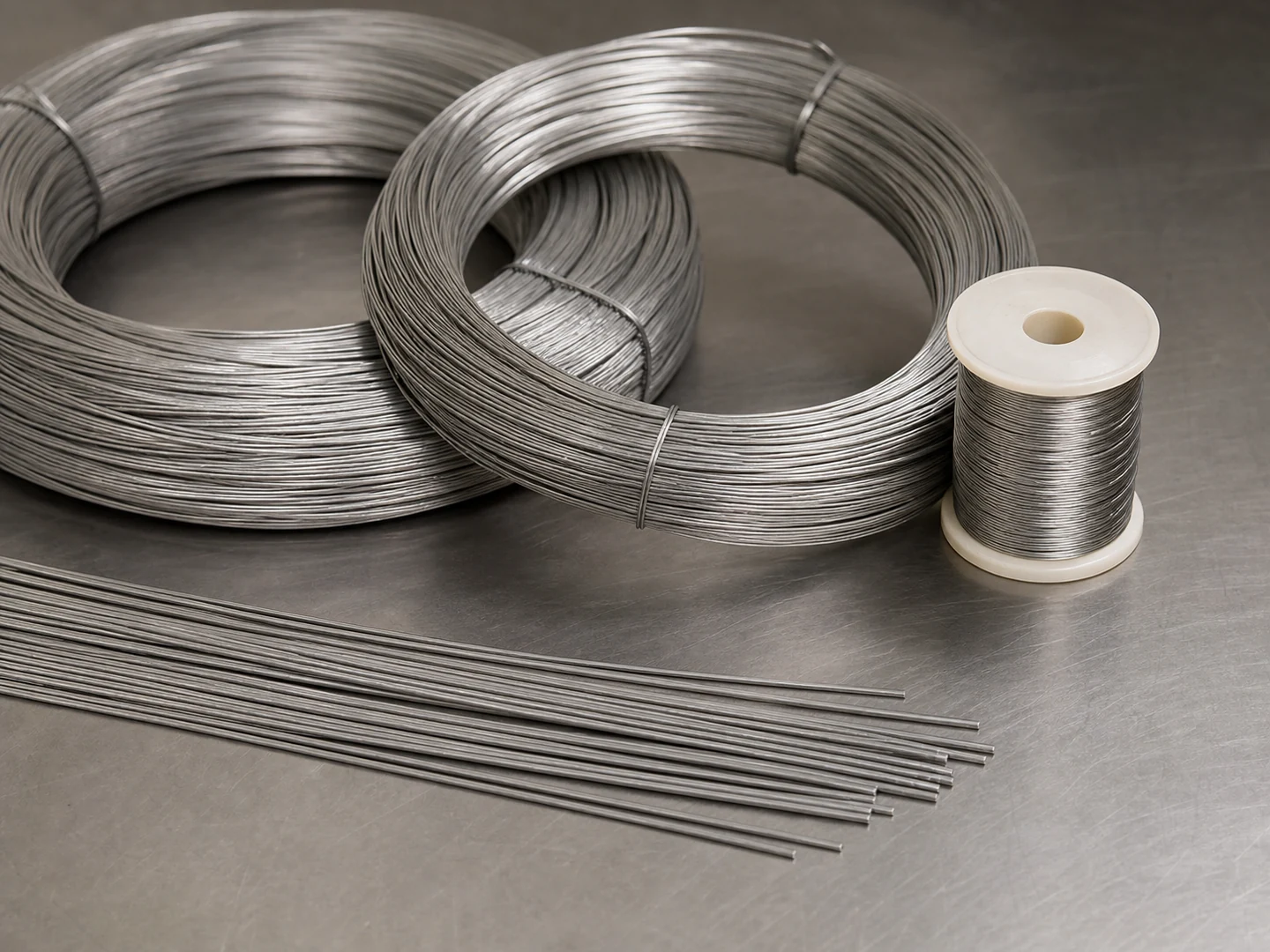
Stainless steel wire brushes are harder and more aggressive. They can scrub off tough stains, rust transfer from steel hardware, and built-up oxides, but they can also scratch the anodized layer if used with too much pressure. They require caution around live electrical components because they are conductive.
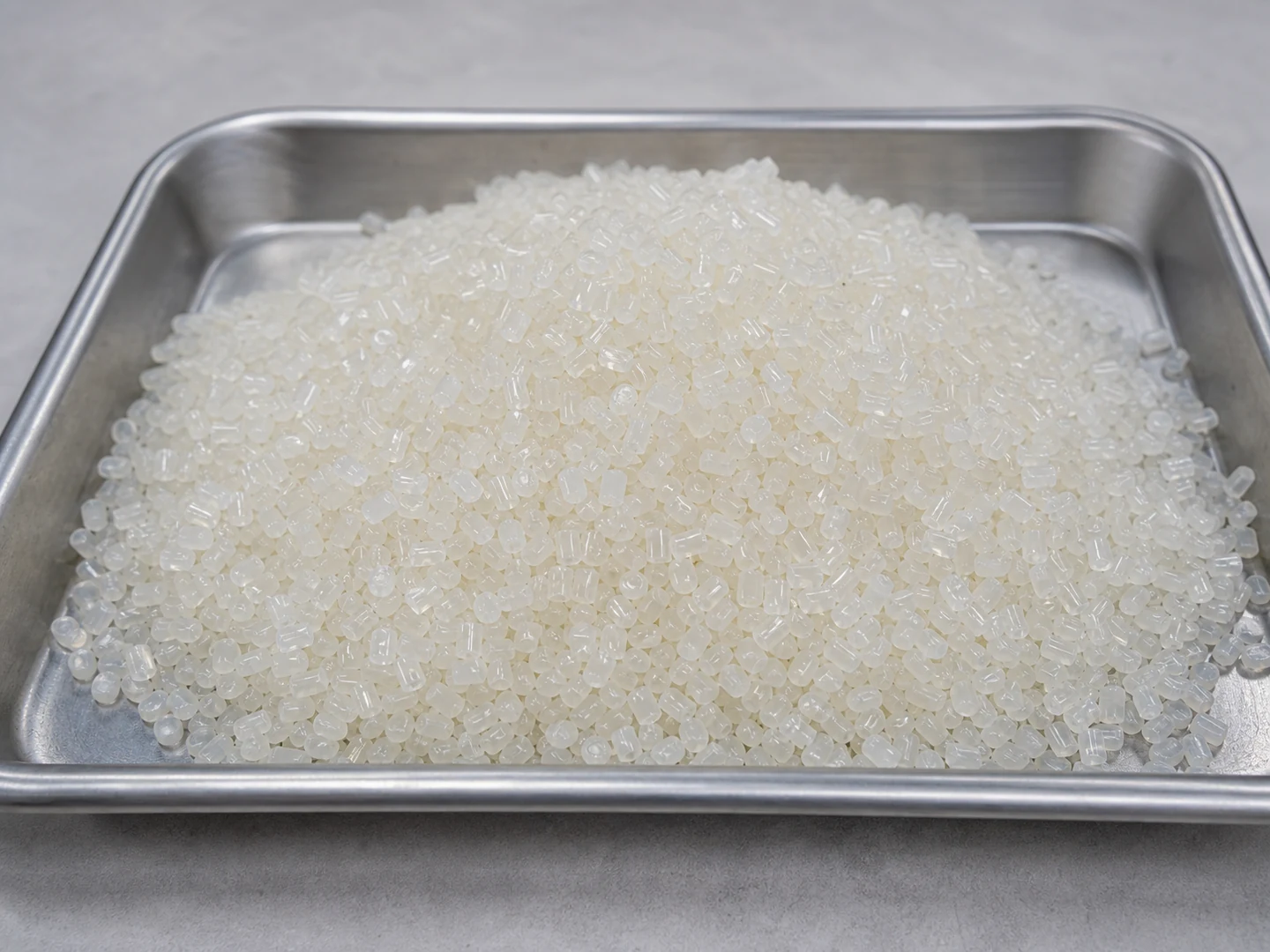
Nylon brushes are non-metallic, non-conductive, and softer than either metal option. They are ideal for light dust removal and for use near exposed conductors, junction boxes, or microinverters where electrical safety is a top priority. They will not remove heavy corrosion or rust stains.
Other less common variants include bronze brushes (similar to brass) and composite abrasive brushes for heavy-duty restoration, but these three cover most field needs.
Brass vs. Stainless vs. Nylon: Material Comparison Table
| Material | Hardness | Conductive | Best for | Risk to Anodized Frame | Electrical Safety | Typical Use Case |
|---|---|---|---|---|---|---|
| Brass wire | Soft | Yes | Light oxidation, general dirt | Low | Moderate – avoid live terminals | Routine frame edge cleaning |
| Stainless steel wire | Hard | Yes | Heavy staining, rust transfer | High if misused | Low – keep away from wiring | Restoration, severe corrosion removal |
| Nylon bristle | Soft to medium | No | Light dust, near electronics | Very low | High | Sensitive areas, live panel cleaning |
Electrical Safety: Non-Conductive Tools Near Live Panels
During daylight hours, solar panels produce DC voltage. Even a single panel can present a shock hazard. When cleaning frames, it is critical to avoid metal tool contact with junction boxes, cables, or damaged backsheets. Nylon brushes or brushes with insulated handles reduce the risk of completing a circuit through the tool to the technician.
Best practices include:
- Use a non-conductive fiberglass or insulated extension pole if cleaning from the ground.
- Inspect brush handles for cracks that could expose a metal core.
- Avoid wet cleaning methods when using a metal-bristle brush, as water can increase conductivity.
- Treat all panels as live unless the system is fully de-energized and locked out.
- Wear appropriate PPE, including insulated gloves if working near exposed conductors.
How to Choose the Right Brush for Your Solar Array
Start by assessing the typical frame condition across your site. For most arrays in non-industrial, low-salt environments, a soft brass or nylon brush used a few times per year keeps frames free of corrosive dirt without damaging the anodizing. Select a brush based on these factors:
- Level of soiling: Light dust → nylon or brass; stubborn rust stains or pitting → stainless with extreme care.
- Access method: Ground-level pole-mount (roller brush or angled brush) vs. walkway/manual on rooftop.
- Electrical clearance: If working near live wires, choose a non-conductive nylon brush or an insulated tool.
- Frequency: High-frequency cleaning favors softer bristles that minimize wear on the frame over thousands of cycles.
- Warranty requirements: Some module manufacturers specify approved cleaning methods. Using an aggressive steel brush could void frame or coating warranties.
Common Mistakes When Cleaning Solar Frames
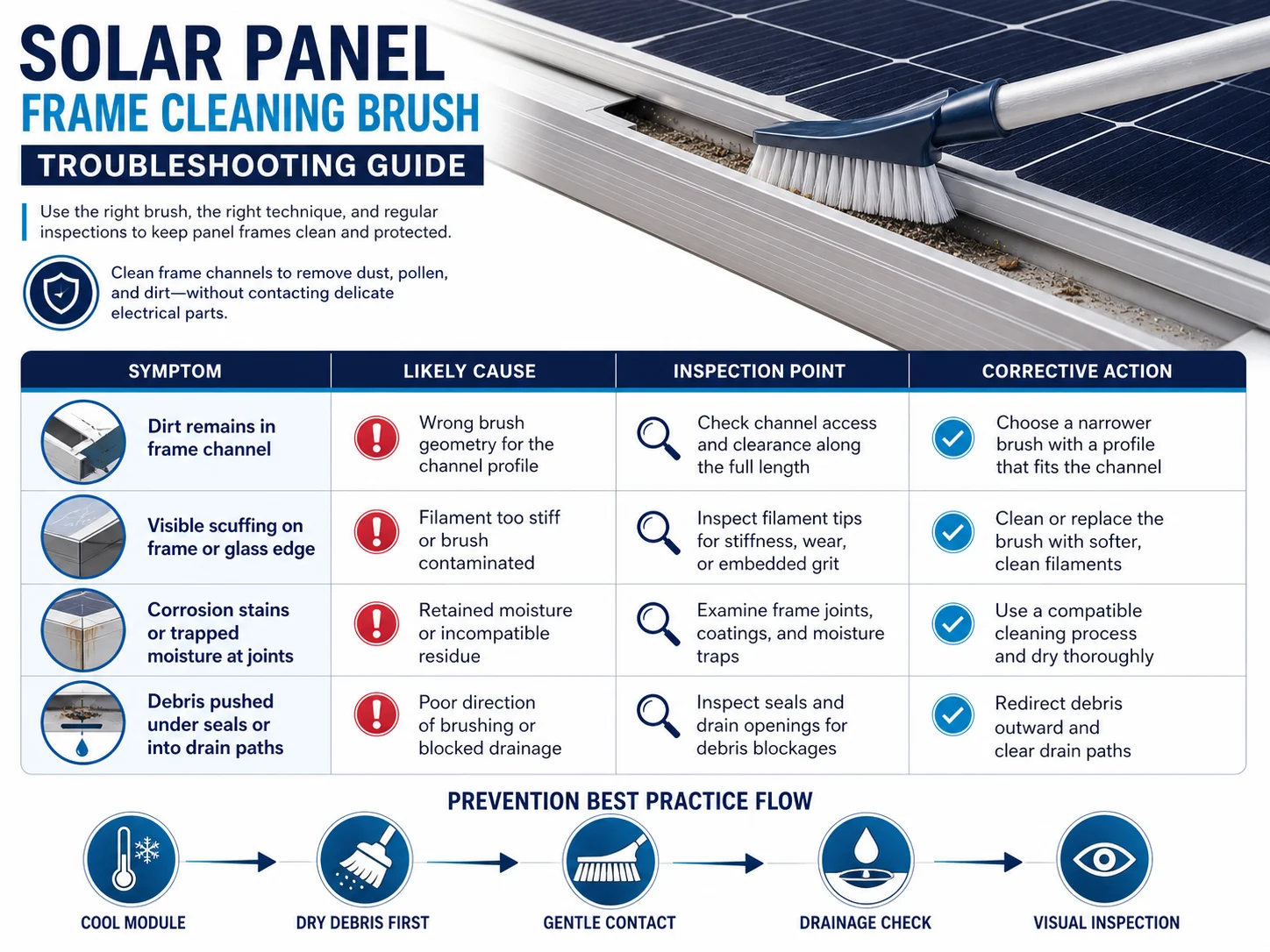
- Using a standard steel wire brush: Even a quick pass can create deep scratches that expose bare aluminum to moisture and accelerate corrosion.
- Ignoring electrical isolation: Allowing the brush or pole to contact live terminals can cause shock or arc faults. Always route the tool away from junction boxes.
- Applying too much pressure with any metal brush: Gentle, repeated strokes are safer than heavy downward force, which can gouge the aluminum.
- Not rinsing after cleaning: Loose debris and metal particles left on the frame can create new corrosion cells. Follow up with a low-pressure water rinse (if safe) or a dry wipe.
- Using the same brush on multiple metals: Cross-contamination from steel hardware to aluminum frames can embed iron particles and cause localized rust spots.
When Annual Professional Cleaning Is Sufficient
Not every solar site needs a dedicated frame cleaning brush program. If visual inspections show only light, loose dust and no signs of corrosion, pitting, or staining around clamps, an annual or semi-annual professional cleaning using deionized water and soft brushes may be enough to maintain frame health. Professional services also include module glass cleaning, which often provides a clearer view of the frame edges during the same visit.
Consider stepping up to a manual frame brush program when:
- You notice white chalky residue (aluminum oxide) on frames.
- Mounting hardware shows rust bleeding onto the frame.
- The site is near coastal salt spray, heavy agriculture dust, or industrial fallout.
- Warranty terms require documented frame cleaning at specific intervals.
Final Takeaway: Balancing Corrosion Prevention and Safety
A solar frame cleaning brush is a low-tech tool with a high-payoff role in preventive maintenance. Start with the least aggressive option that suits your electrical safety needs—often a brass or nylon brush for most sites. Inspect frames regularly, correlate cleaning frequency with soiling rate, and always prioritize worker safety around live DC circuits. By keeping frame edges and channels clear of dirt and moisture, you extend the life of the aluminum structure and preserve the mechanical integrity of your solar investment.
Frequently Asked Questions
Can I use a steel wire brush on solar panel frames?
Standard carbon steel wire brushes are not recommended because they can scratch through the anodized layer and leave iron particles that rust. If you must remove heavy corrosion, use a stainless steel brush with light pressure and follow up with a thorough rinse and inspection.
What is the safest brush for cleaning frames near live panels?
Nylon brushes are the safest because they are non-conductive. If you must use a metal brush, ensure the tool has an insulated handle and keep it well away from junction boxes, cables, and connectors.
How often should I clean solar panel frames?
Frame cleaning frequency depends on working conditions and process limits. For most ground-mounted systems in clean environments, a once-a-year inspection and spot cleaning is enough. In dusty, coastal, or agricultural areas, scheduled frame cleaning may help prevent corrosion buildup.
Does frame cleaning improve panel efficiency?
Frame cleaning alone does not directly increase power output, but it protects the structural components that hold the panels at the correct angle. Dirty glass reduces efficiency; frame cleaning is usually a separate step focused on longevity rather than energy production.
Can I use a power washer with a brush attachment on solar frames?
High-pressure water can damage seals, force water into junction boxes, and strip protective coatings. Use only low-pressure water (such as a garden hose) and a soft brush, and avoid spraying directly at cable entry points or behind the module.
Does dirt on frames cause corrosion?
Dirt itself is not corrosive, but it holds moisture and pollutants against the aluminum surface. Over time, this promotes a localized breakdown of the anodized layer and can lead to pitting or galvanic corrosion, especially where different metals are in contact.
Do I need special training to clean solar panel frames?
Basic frame cleaning with a hand brush requires no special certification, but workers must be trained in electrical safety awareness for PV systems. For utility-scale sites or when using pole-mounted tools near high-voltage DC strings, site-specific safety training is essential.
What should I do if I see white powder on my aluminum frames?
White powder is typically aluminum oxide, an early sign of corrosion. Clean the area with a soft brass or nylon brush and rinse. If the powder returns quickly, inspect nearby steel hardware for rust and consider applying an anti-corrosion treatment approved by the module manufacturer.
Technical References
Which bristle material fits this job — Nylon PA, AISI 304 Stainless Steel Wire or Conductive Nylon?
| Material | Continuous temperature (°C) | Peak temperature (°C) | Water absorption | Hardness |
|---|---|---|---|---|
| Nylon PA | 93 | 121 | 0.3–9% by PA grade and conditioning | Medium to firm; filament diameter and trim length control bending force. |
| AISI 304 Stainless Steel Wire | 400 | 500 | 0% | Rockwell B 70–95 depending on temper and cold work |
| Conductive Nylon | 80–110 | 130–160 | 0.5–2.5% | Shore D 75–88 |
| Brass Wire | 150–200 | 250–300 | 0% | Rockwell B 40–90 |
Figures as published by Brushtec / DuPont; Alleima. Confirm the exact grade against the supplier datasheet before ordering.
When is Nylon PA the wrong choice for solar panel?
- Nylon PA — The nylon family spans several grades, so heat, moisture and chemical limits should follow the selected PA resin rather than a generic nylon value.
- AISI 304 Stainless Steel Wire — Avoid using AISI 304 as the default in marine, brine, hypochlorite, and persistent chloride environments; use AISI 316 when higher pitting and crevice-corrosion resistance is required.
- Conductive Nylon — A material label without resistance data, conditioning, grounding and particle testing is insufficient for ESD or clean-process claims.
- Brass Wire — Avoid on stainless surfaces where copper contamination is restricted and on delicate coatings that mark under metal contact.
What should replace Nylon PA for solar panel?
- Nylon PA — Compare Nylon PA with PP, PBT, PET. Change material when wet stiffness, temperature, chemical resistance, conductivity, particle shedding, or surface marking becomes the limiting factor.
- AISI 304 Stainless Steel Wire — Use AISI 316 stainless steel wire for chloride, marine, dairy, beverage, chemical washdown, or higher pitting-resistance requirements. Use carbon steel for dry aggressive cutting and brass or abrasive nylon for lower marking risk.
- Conductive Nylon — Compare Conductive Nylon with Anti-static filament, carbon fiber, stainless conductive filament, standard PA6. Change material when wet stiffness, temperature, chemical resistance, conductivity, particle shedding, or surface marking becomes the limiting factor.
- Brass Wire — Compare Brass Wire with Steel wire, stainless wire, nylon. Change material when wet stiffness, temperature, chemical resistance, conductivity, particle shedding, or surface marking becomes the limiting factor.