
Application
Food Equipment Cleaning
For Food Equipment Cleaning, the brush must reach the working area, disturb or collect flour dust/dough debris, and release it without creating unacceptable surface damage or process interference. Choose the brush structure from the available access, contact direction, and cleaning process.
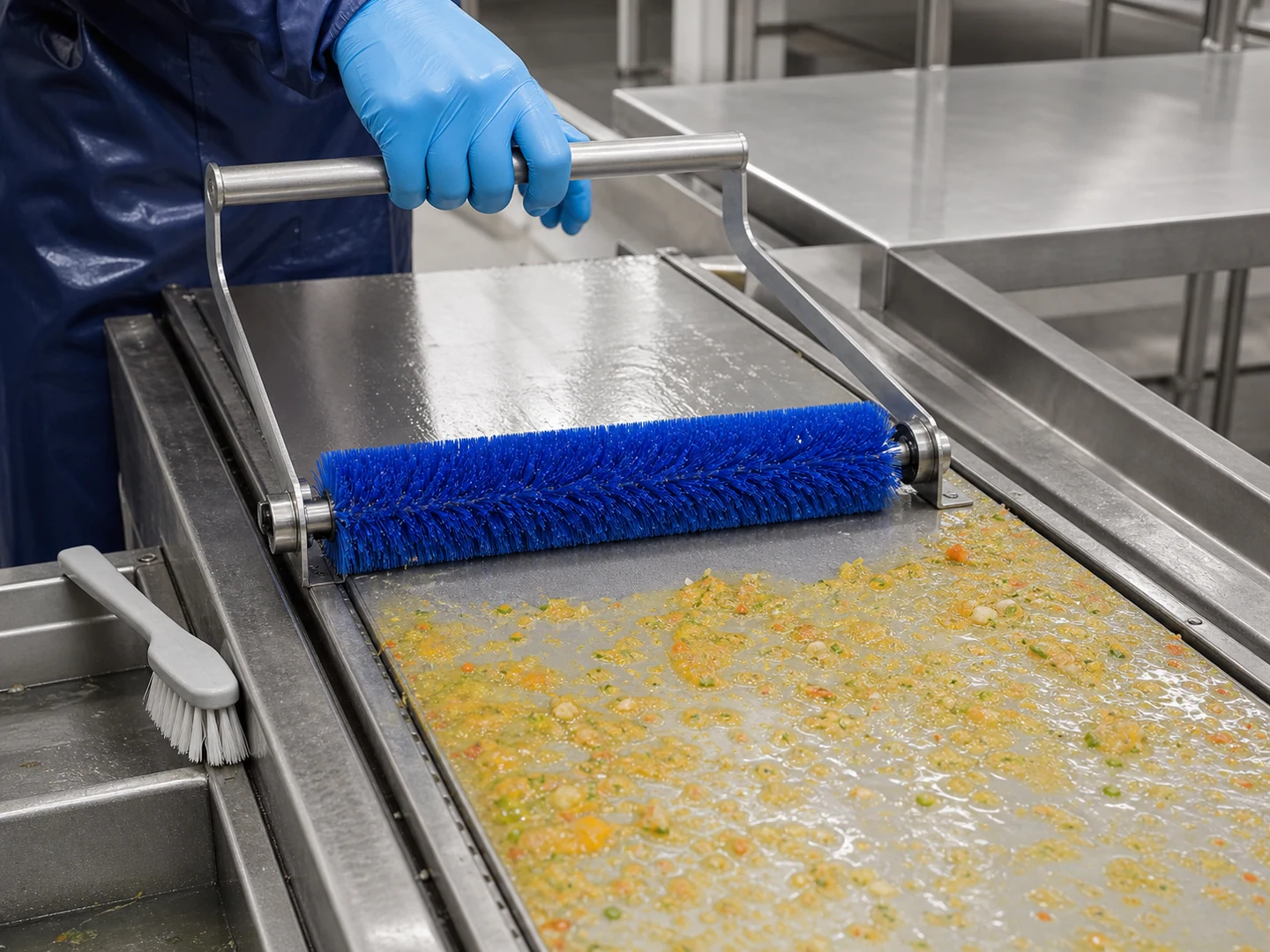
At a glance
- Cleaning target
- Flour Dust/Dough Debris
- Working environment
- Dry Indoor Area / Hazardous Area
- Cleaning method
- Dry Brushing / Wet Brushing
- Requirements to check
- FDA 21 CFR; EU 10/2011; HACCP; Dust-Accumulation Control
Food equipment is cleaned to a written sanitation procedure, so the brush is chosen for the geometry it must reach and for filament and core materials that the procedure’s chemistry and contact class allow.
What makes Food Equipment Cleaning different from other food and beverage cleaning?
The main difficulty is removing crumbs, flour, fat, protein, syrup, dough, and product film from food equipment, belts, trays, tanks, containers, and process parts without damaging the surface, loading the brush, or carrying contamination back into the process.
The work happens in dry indoor area and hazardous area against flour dust and dough debris.
The part people get wrong: this is not one job. The same equipment carries several targets, each with a different opening and a different residue, and one brush rarely covers them all.
What are the most common cleaning targets in Food Equipment Cleaning?
There are 6 distinct targets here, and the brush that suits one will usually not reach another.
| Part or area | Residue type | Cleaning requirement |
|---|---|---|
| Food Conveyor and Belt | Food debris, grease film, protein residue, biofilm | The brush must span the working width and hold even contact along the whole face while the surface moves under it. |
| Mixer and Agitator | Dough and batter build-up, dried protein, fat deposits | The head must reach the working face and apply even contact without marking the surface. |
| Slicer and Cutter | Protein residue, fat, product particles, blade build-up | |
| Tank and Vat | Product residue, protein film, fat deposits, biofilm | The head must pass the neck or opening, then expand against the internal wall and reach the base curve. |
| Drain and Floor Detail | Food waste, grease, biofilm, standing-water soil | The brush must cover a large area per pass and keep even pressure across the whole width. |
| Packaging-Machine | Product dust, adhesive, film debris, grease | The head must reach the working face and apply even contact without marking the surface. |
What the equipment leaves you to work inside:
| Parameter | Typical range |
|---|---|
| Filament diameter | 0.30–0.80 mm; 0.25–0.80 mm |
| Overall length | 200–600 mm; 150–600 mm |
| Head width | 130–250 mm; 50–300 mm |
| Working width / head size | 20–2,000 mm |
| Wash temperature | 20–85°C |
Which brush types work for each cleaning target?
Roller, strip, block, tube or tank brush matched to the equipment geometry and sanitation procedure.
| Cleaning target | Recommended brush type | Why it fits |
|---|---|---|
| Food Conveyor and Belt | Roller and Conveyor Brushes | The belt is the surface every product touches, so a roller brush working while it runs keeps the carryover off without taking the line down. |
| Mixer and Agitator | Handheld Detail Brushes | A mixer bowl and its paddle are a set of curves and welds where dough hangs, so a hand-guided head follows each one instead of bridging across it. |
| Slicer and Cutter | A slicer is built around a blade, so cleaning stays hand work with a head that reaches the guard and carrier while keeping the operator clear of the edge. | |
| Tank and Vat | Bottle & Container Brushes | A vat is entered from the top only, so a container brush sized to that opening reaches the wall and the base radius from a single access point. |
| Drain and Floor Detail | Handheld Detail Brushes | Drains and floor junctions are cleaned last and grow biofilm first, so a hand head is used to work the channel and the grate corners deliberately. |
| Packaging-Machine | A packer is a dense frame of formers, sealing jaws and guides, so a hand-guided head is the only way between them without stripping the machine. |
How the brush is usually carried on the machine:
- Driven brush — use when crumbs, flour, fat, protein, syrup, dough, and product film needs repeatable scrubbing or controlled relative movement
- Passive or free-running brush — use for loose contamination and lower process complexity on food equipment, belts, trays, tanks, containers, and process parts
- Localized hand, strip, or tube brush — use where only an edge, gap, port, or maintenance point needs contact
In practical brush terms: match the construction to the access before anything else. A geometry that cannot reach the target will not be rescued by a better filament.
What filament materials work best for Food Equipment Cleaning?
PBT, polypropylene, PA612 or other documented filament; stainless or polymer cores chosen based on chemistry and contact classification.
| If the condition is… | Filament to start with | Why |
|---|---|---|
| Sensitive or coated surface | Nylon PA | balanced flex life and abrasion resistance |
| Wet, washdown, or detergent service | Polypropylene PP | acid, alkali, water, and detergent resistance |
| Bonded residue or aggressive cleaning | PBT | stable wet stiffness and low moisture uptake |
What the duty rules out before you start comparing grades:
| Constraint | Value for this application |
|---|---|
| Filament hardness | Soft–Medium |
| Maximum service temperature | 80°C |
| Chemical exposure | No Added Medium or Neutral Detergent pH 6–8 |
| Cleaning method | Dry Brushing, Wet Brushing |
How do I choose the right brush for my food equipment equipment?
Read the sanitation procedure first — it fixes the filament grade and the contact class — then size each head to its own component geometry.
The order that avoids rework:
- Identify the target part and measure the access opening or clearance
- Describe the residue: what it is, how thick it sits, and how strongly it holds
- Choose the construction that can physically reach that target
- Set the filament from surface risk, working temperature and cleaning chemistry
- Fix filament diameter, free trim length and density for the contact pressure you need
- Run one cycle and check the result before committing to a production quantity
Before you commit to a quantity, send the contact geometry for each part and the sanitation procedure the brush has to work inside.
When is a food equipment brush the wrong tool?
CIP and COP systems cover the closed circuits and every part that can be dropped into a tank; the brush covers the open geometry between them. Where the sanitation procedure names a method for a surface, that method decides, not the brush.
What common mistakes should I avoid in Food Equipment Cleaning?
- Naming the machine without the sanitation procedure, which sets both the filament and the contact class
- Changing brush material while leaving excessive engagement, poor alignment, or no discharge path unchanged
- Copying a worn brush without recording motion, direction, mounting, and the original working diameter
If the brush is already in service and the result is wrong, work from the symptom:
| Symptom | What to change |
|---|---|
| Residue remains | Increase relative motion or discharge, then change filament diameter or density; do not add pressure before checking loading by crumbs, flour, fat, protein, syrup, dough, and product film. |
| Surface marks or scratches | Reduce engagement, use finer or softer fill, and remove trapped abrasive particles from contact with food equipment, belts, trays, tanks, containers, and process parts. |
| Rapid wear or uneven cleaning | Check alignment, runout, support, motion, temperature, chemical attack, and whether the brush covers the complete working path. |
| Brush loads or redeposits residue | Open the fill pattern or add wash, vacuum, air, scraping, or a collection path so removed crumbs, flour, fat, protein, syrup, dough, and product film leaves the contact zone. |
Questions this page is asked
What must be defined before brushing near food-machine rollers or drives?
Use the machine-specific sanitation and hazardous-energy procedure to identify when power, pneumatic, hydraulic, thermal and stored mechanical energy must be isolated. Do not infer permission for hand brushing at an in-running nip or behind a removed guard from a brush's powered or fixed-contact classification.
Which records should control reusable brushware on food equipment?
Record the brush identity, assigned zone, fill and core materials, compatible cleaning cycle, inspection criteria and replacement or retirement event. Review the assignment when equipment, product allergen, cleaner, temperature or brush construction changes so earlier validation is not applied to a new condition silently.
Continue Exploring
Recommended Reading & Related Brush Resources
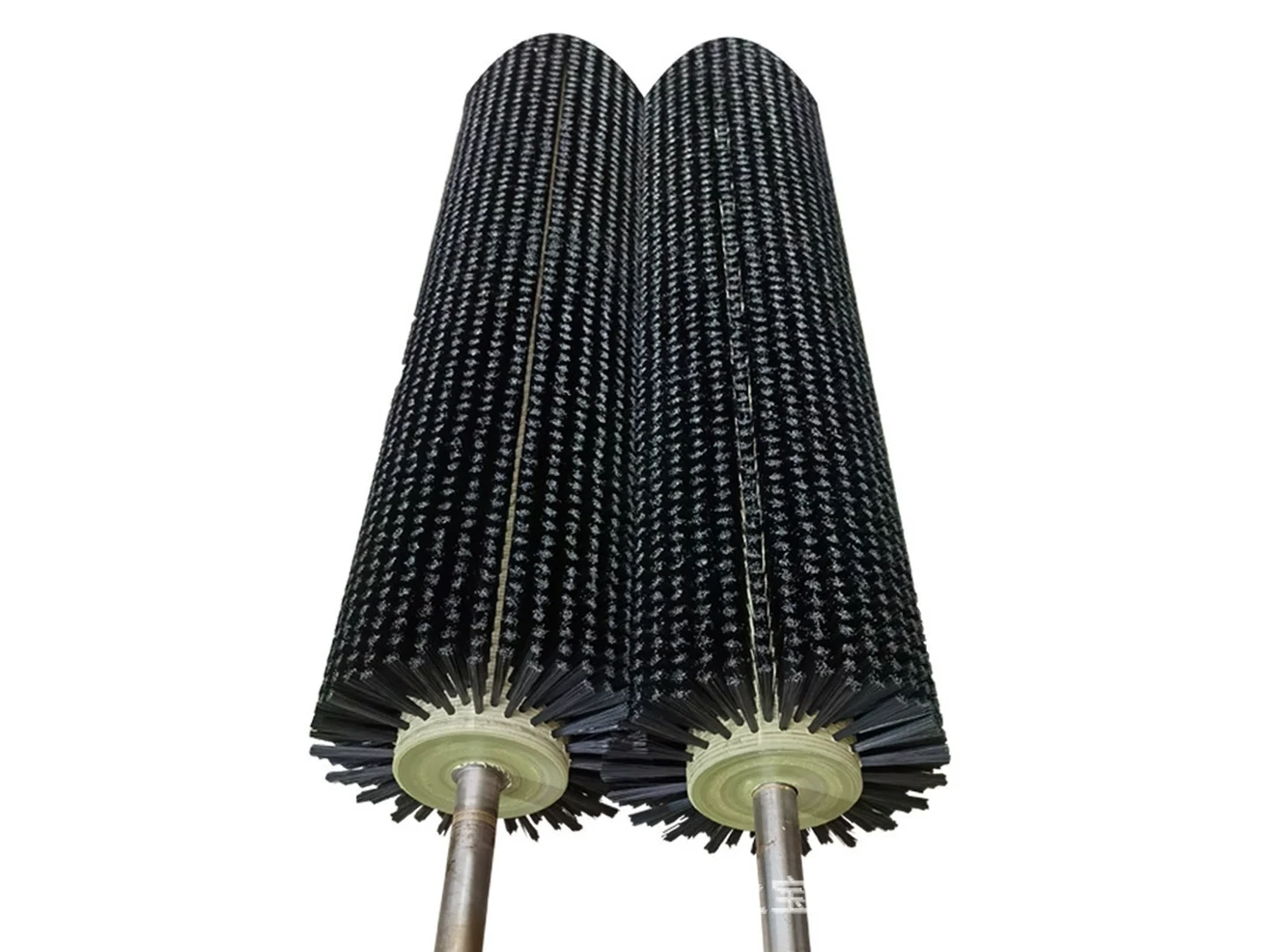
Food Equipment Cleaning Brush
Food-safe PBT or PP fill in an open, drainable construction that survives hot washdown…
See the specification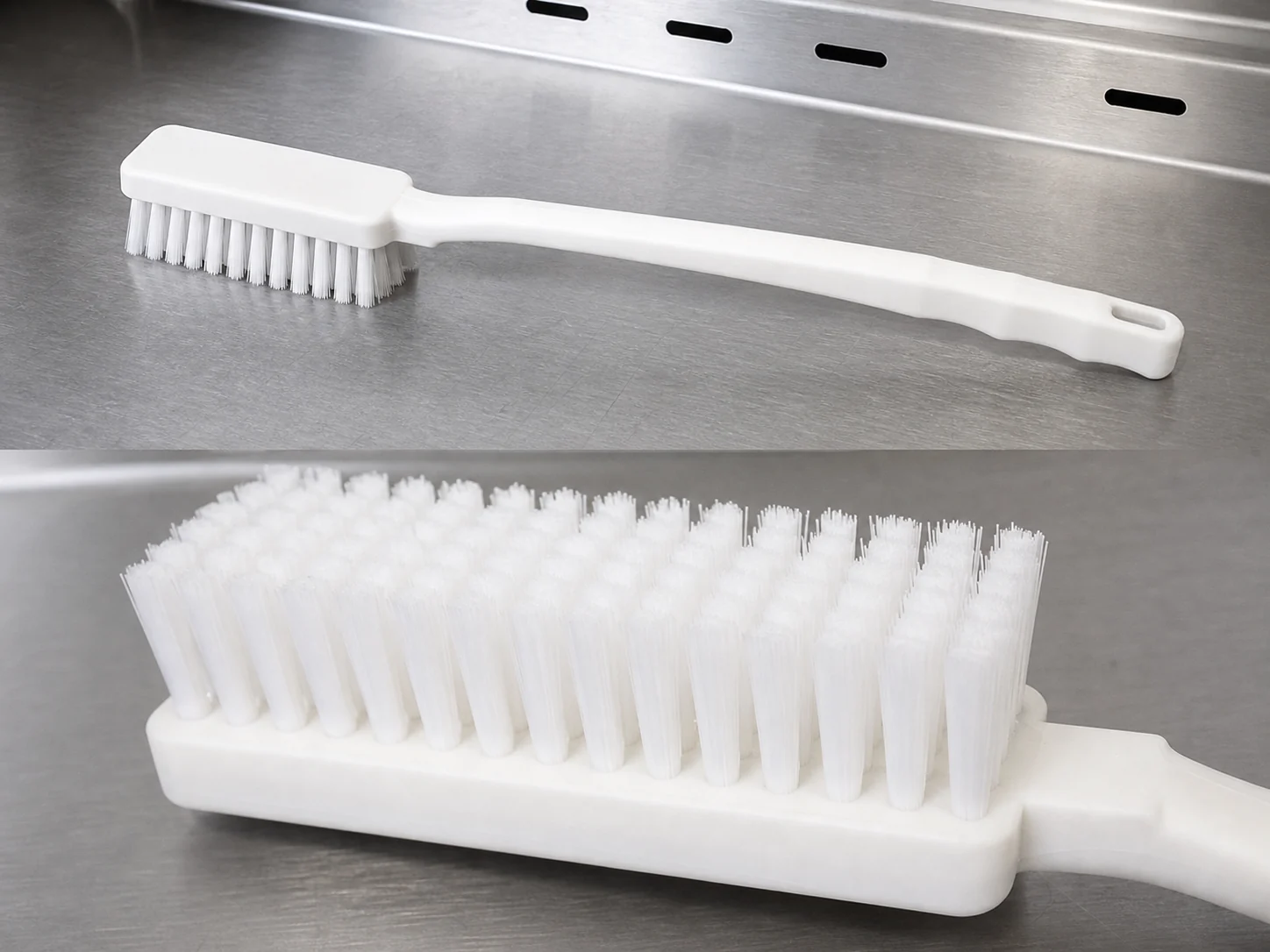
PBT Food Equipment Hand Brush
Rectangular PBT food equipment hand brush with PP handle for washing conveyors, trays, tanks,…
See the specification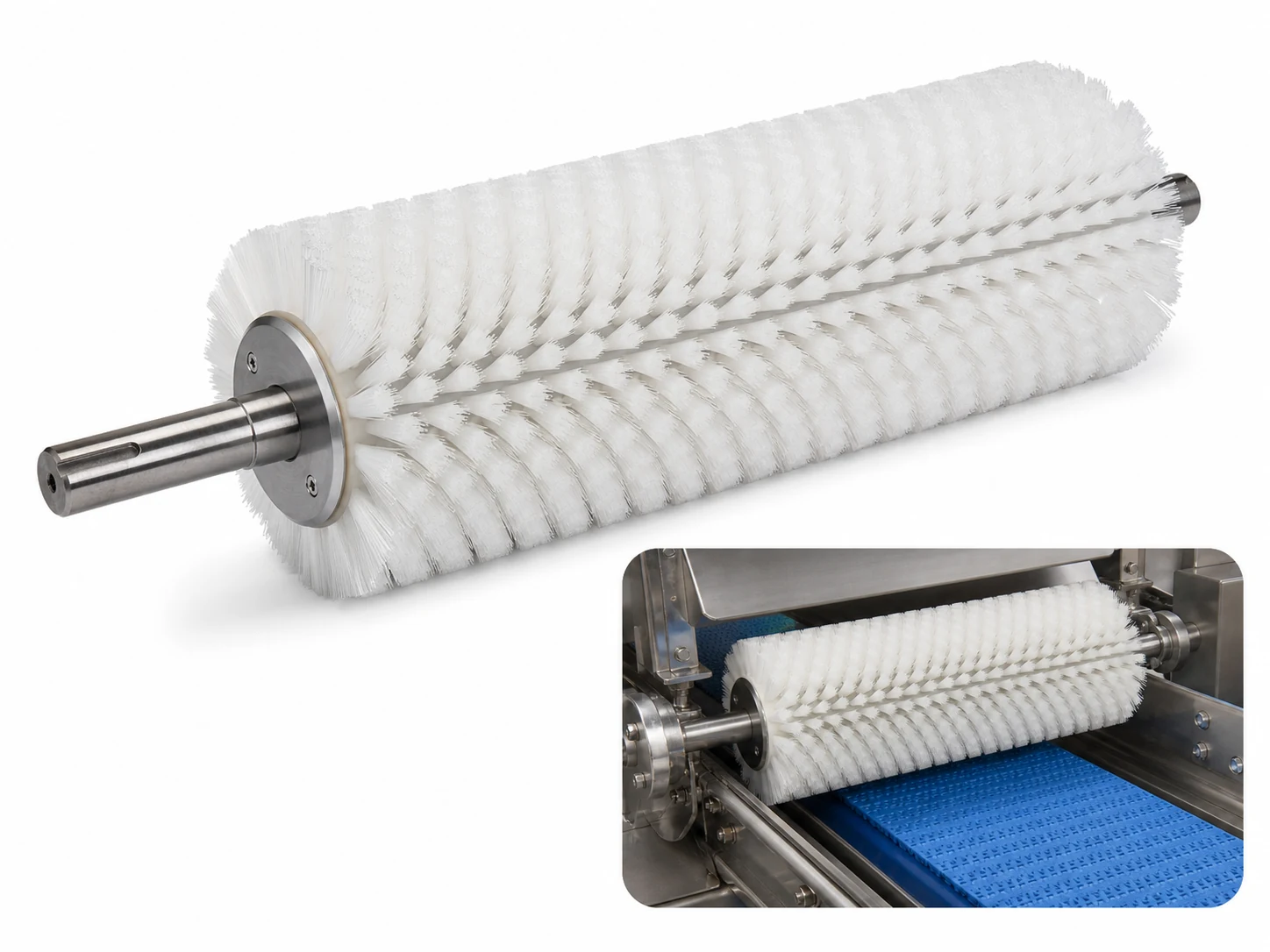
Cleaning Brush Food Processing Conveyor Belt
Shaft-mounted conveyor belt cleaning brush for powder, crumb, oil, and sticky carryback. PBT, PP,…
See the specification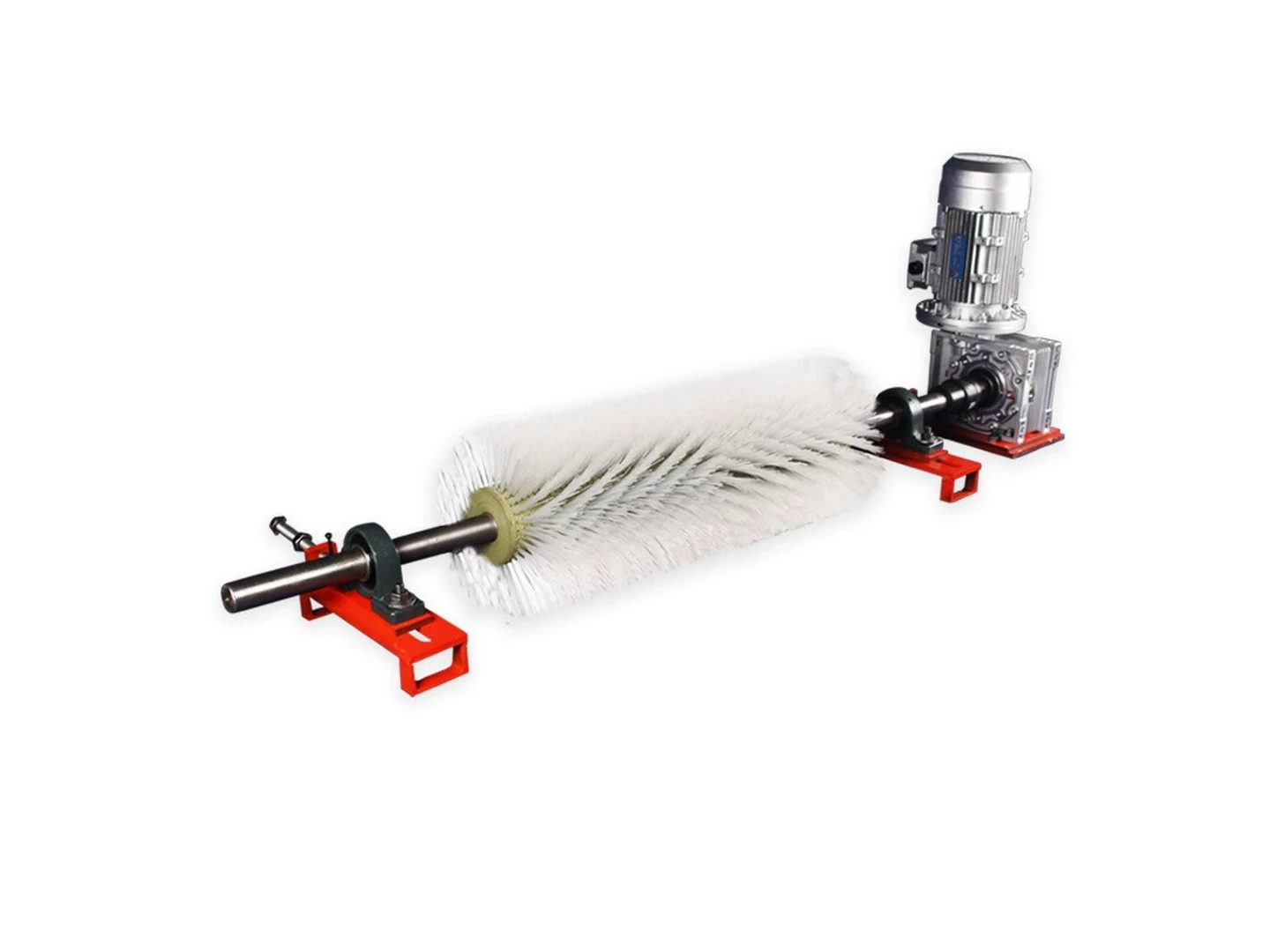
Custom Roller and Conveyor Brushes
Choose a roller or conveyor brush when a cylindrical brush must clean, wipe, guide,…
See how this type is built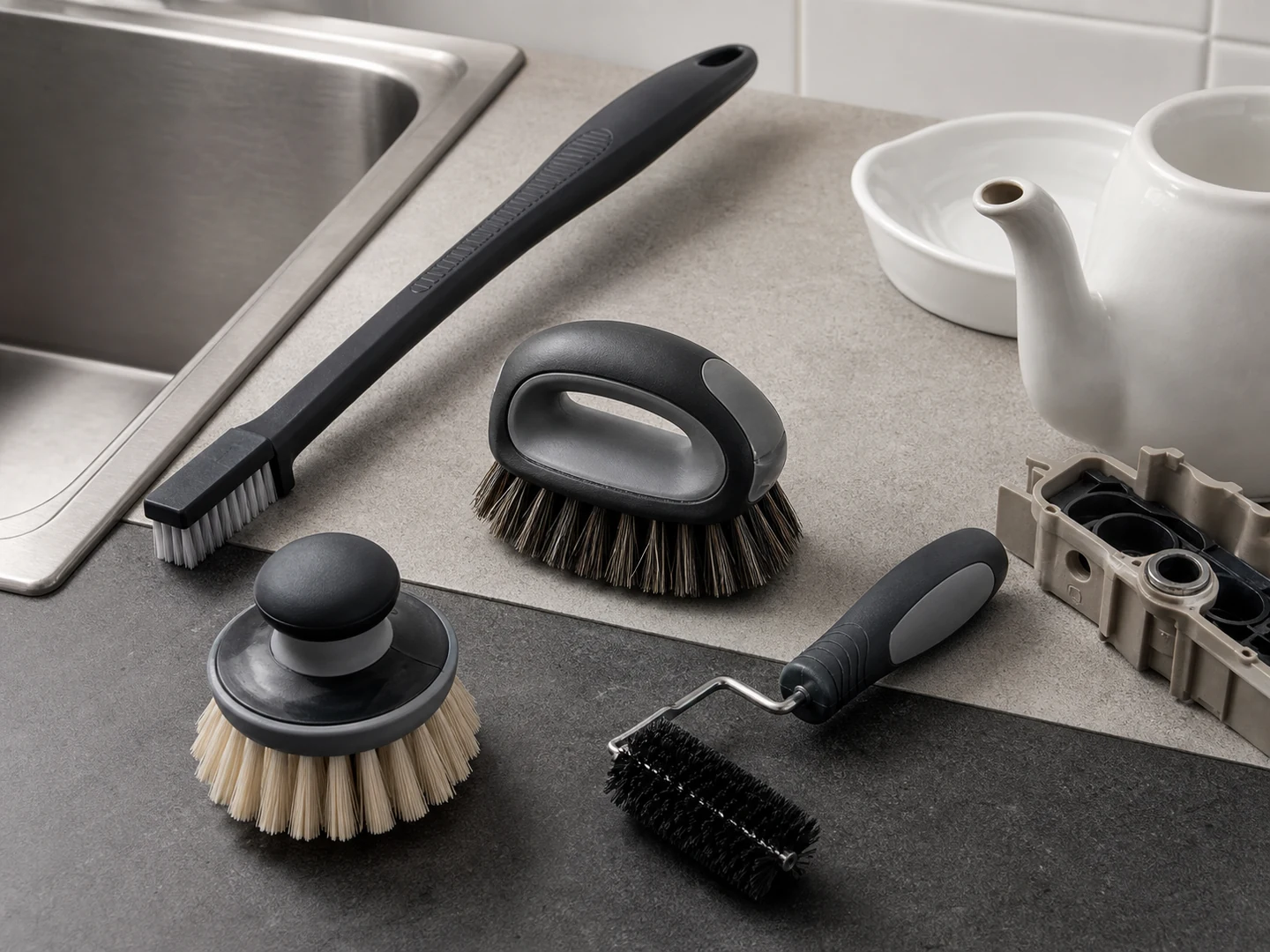
Custom Handheld Detail Brushes
Choose a handheld detail brush when you need direct control in seams, recesses, fittings,…
See how this type is built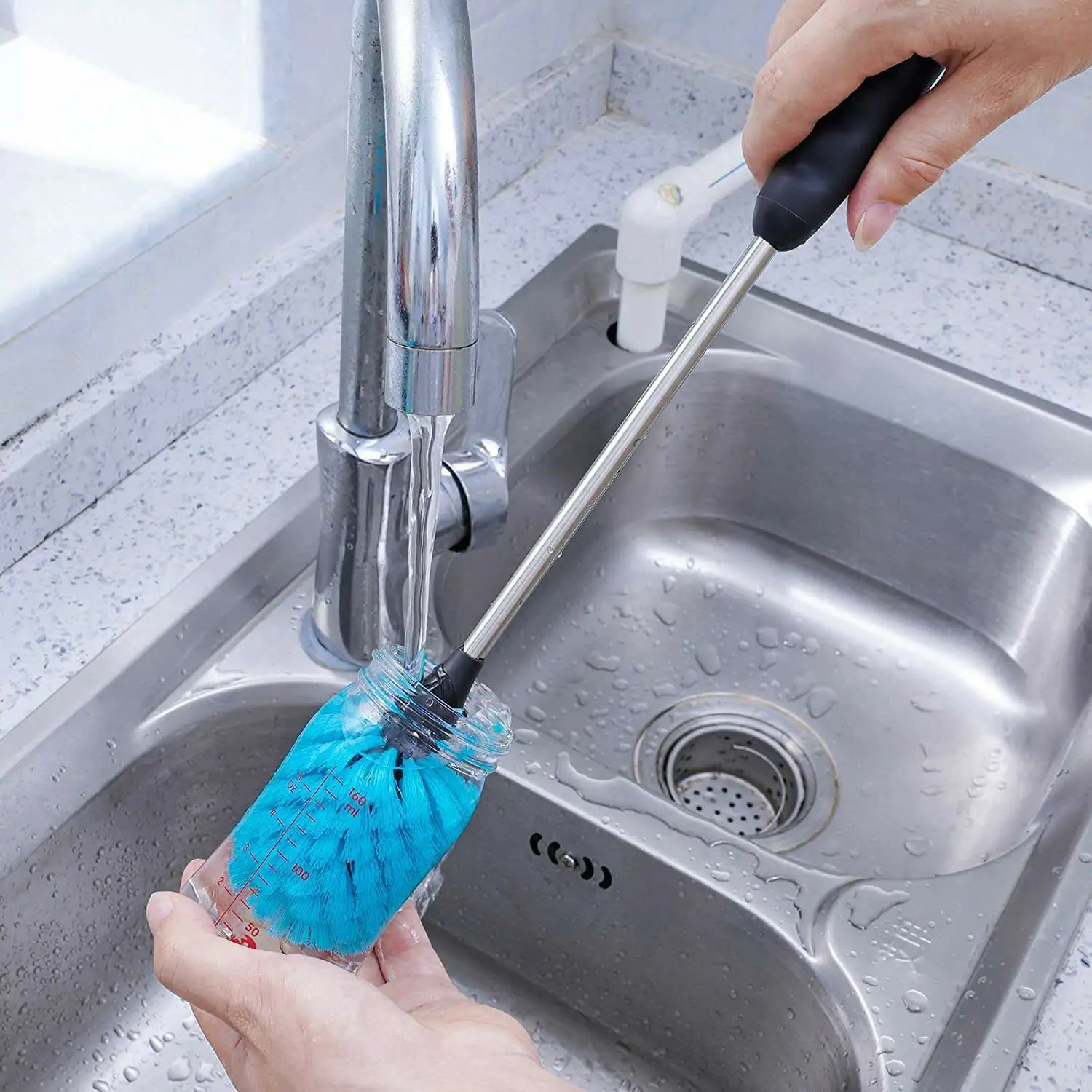
Custom Bottle & Container Brushes
Choose a bottle or container brush when the head must pass through an opening…
See how this type is built
PBT
Choose PBT based on its stiffness, recovery, wear, wet-service, chemical, and temperature behavior. Do…
Compare this material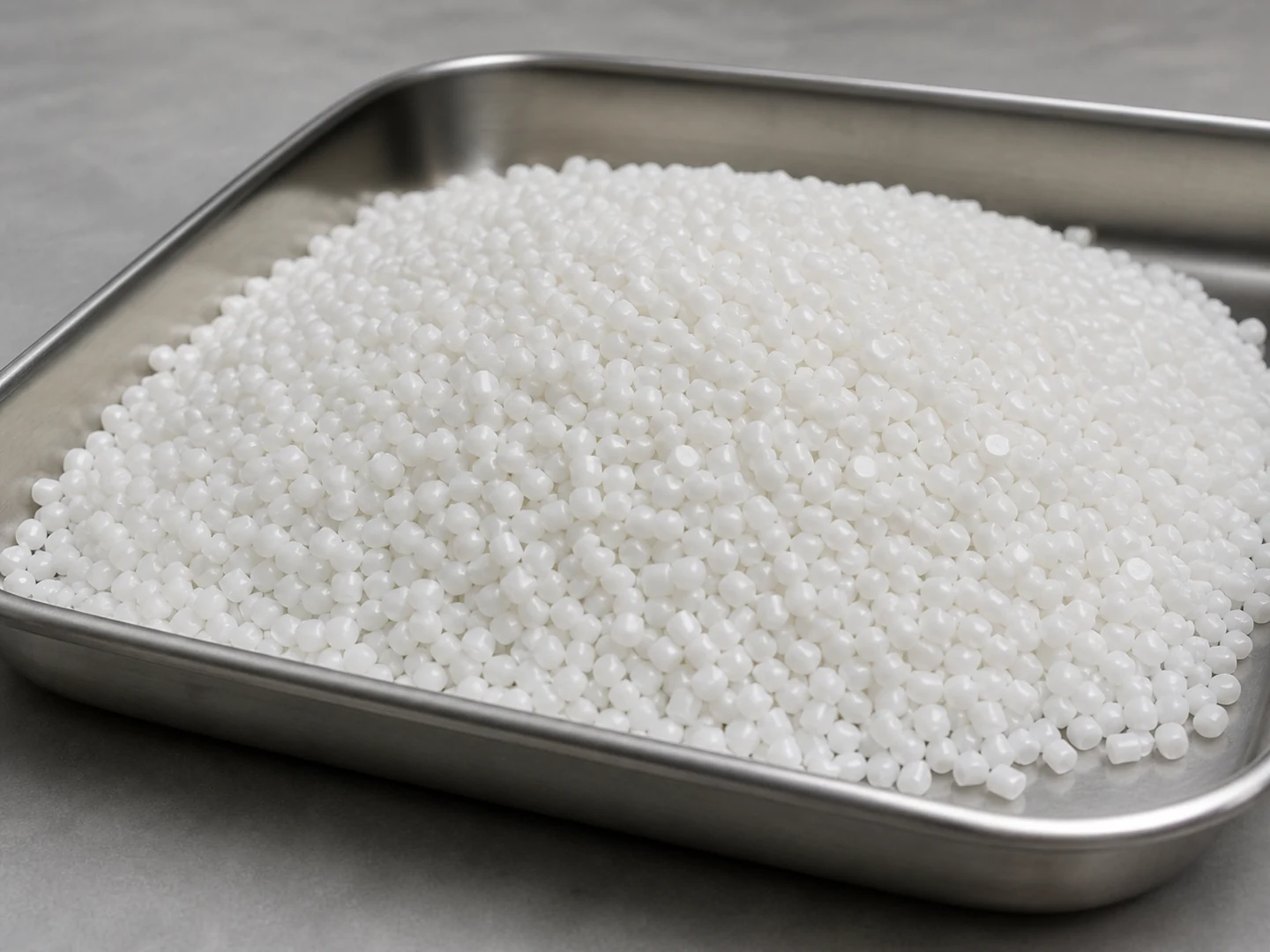
Polypropylene PP
Choose Polypropylene PP based on its stiffness, recovery, wear, wet-service, chemical, and temperature behavior.…
Compare this materialCustom Manufacturing RFQ
Discuss This Application
Share the working surface, residue, dimensions, material direction, interface, quantity and drawing or sample photo.
Custom Brush RFQ
Request a Custom Cleaning Brush Quote
Upload a drawing, product photo, or sample photo and provide the core dimensions and cleaning conditions.
“We need a brush to remove wet residue from a stainless steel conveyor, about 800mm wide. The current brush wears quickly. We can send photos.”
“We sell drinkware and need a cleaning brush to include with the product. Quantity around 5,000 pieces.”