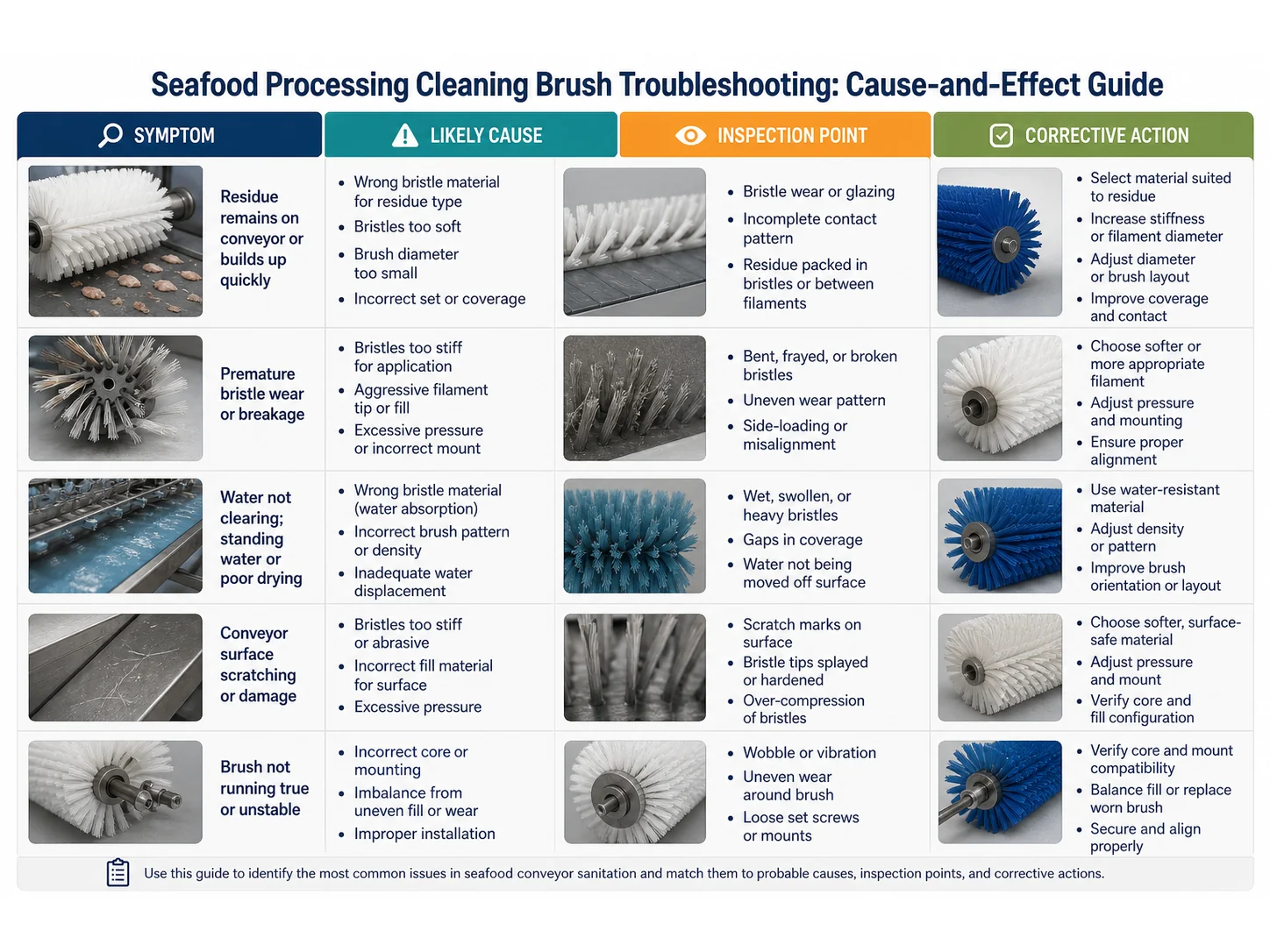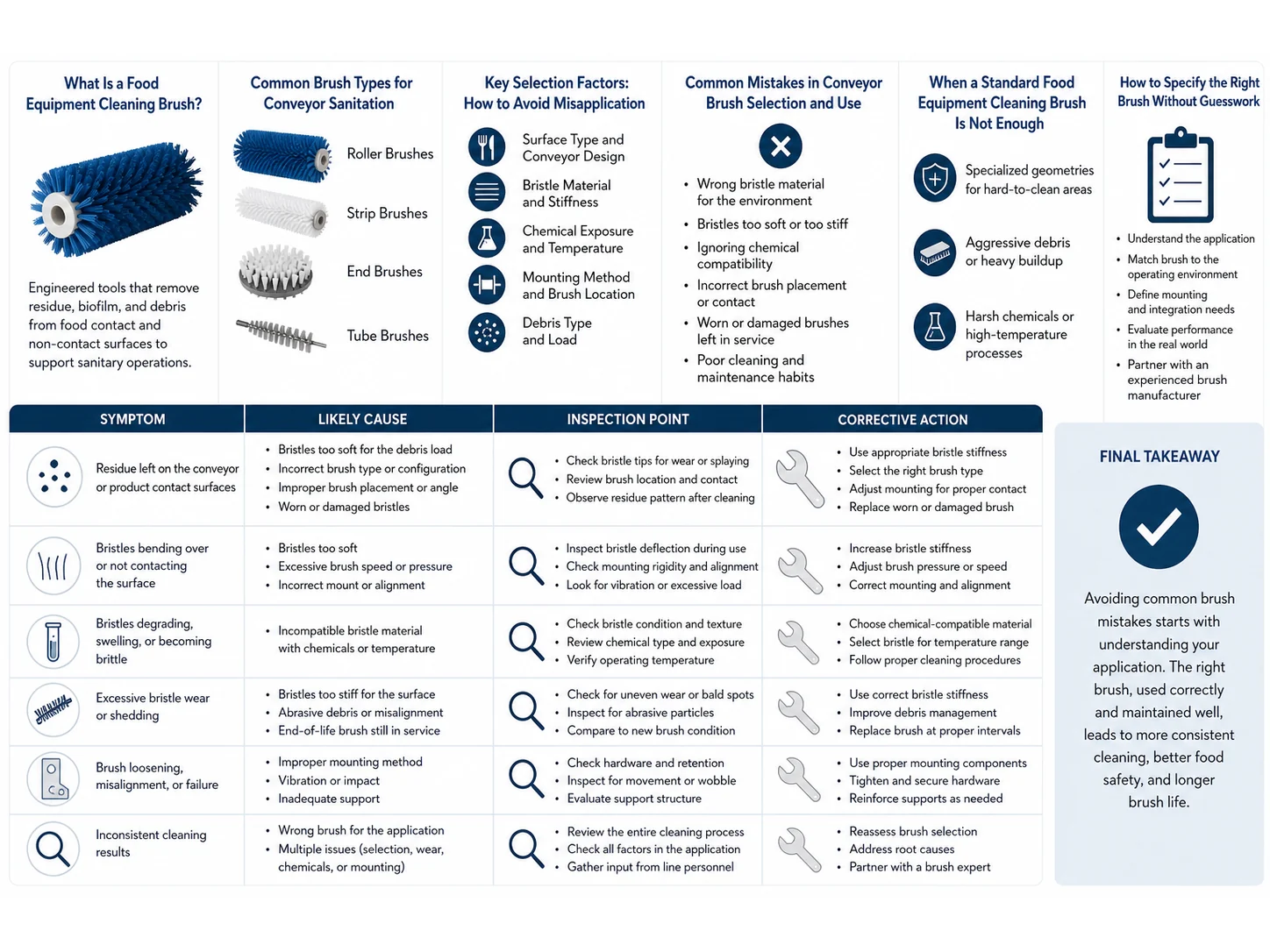
What Is a Food Equipment Cleaning Brush?
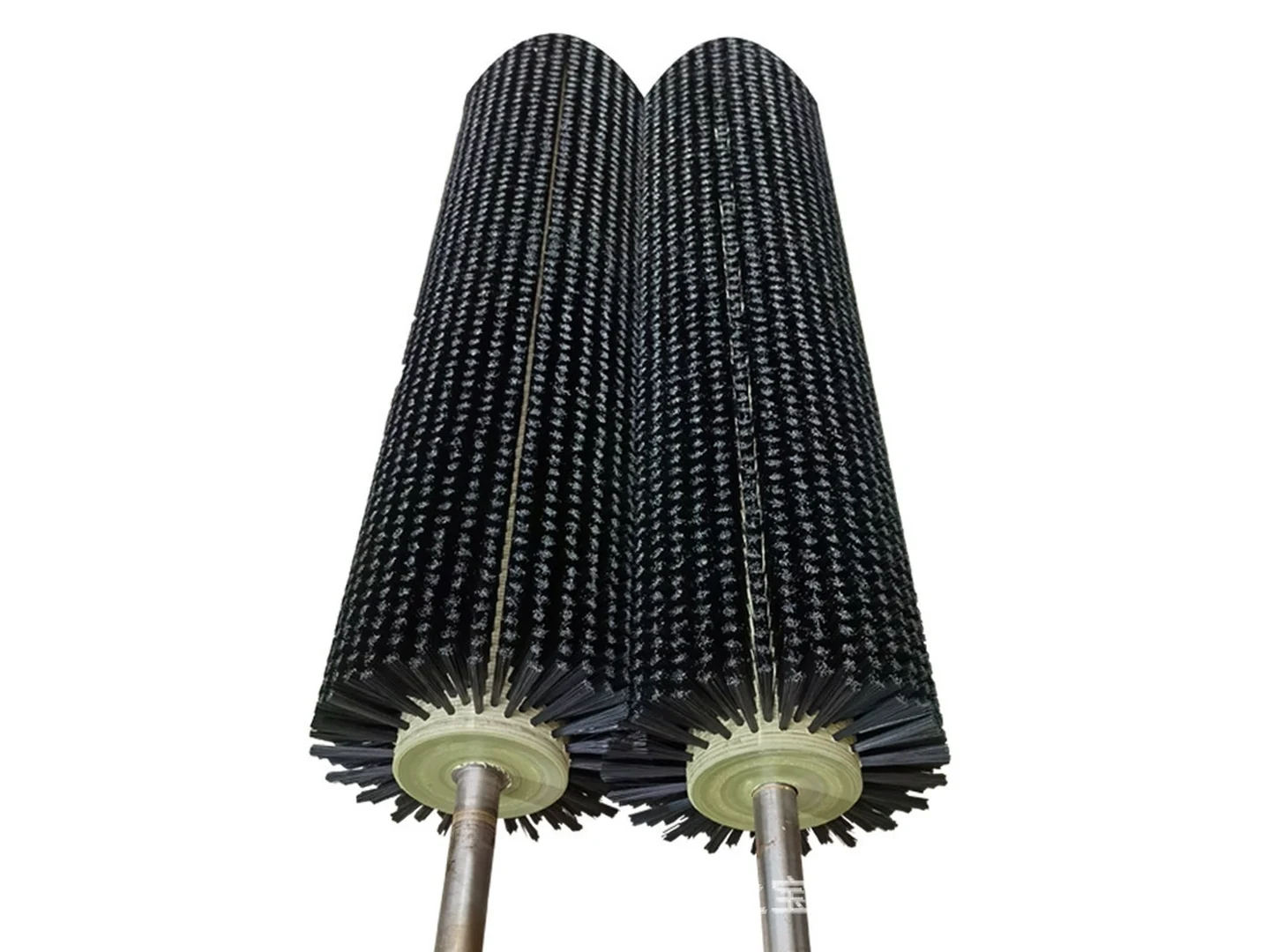
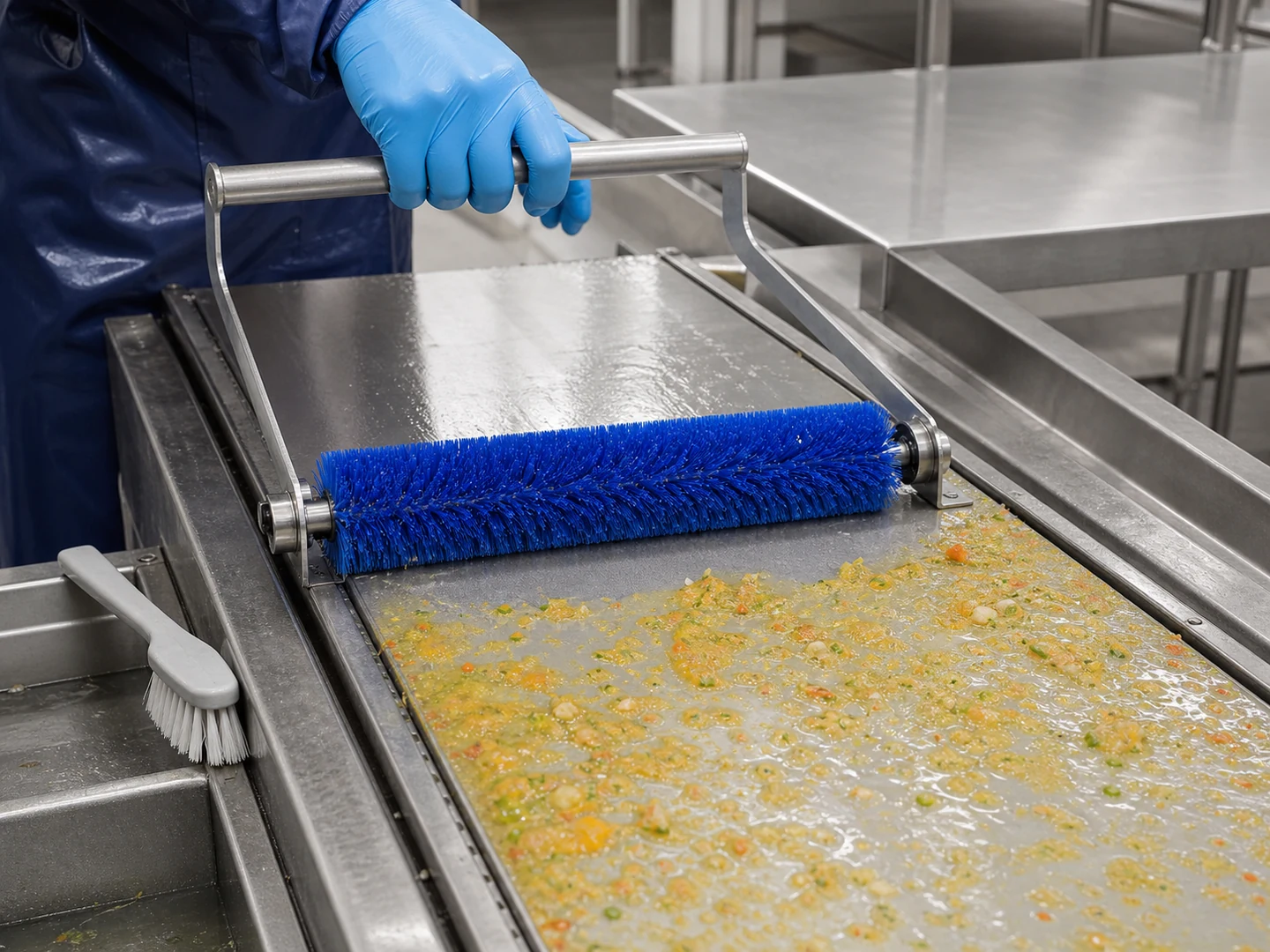
A food equipment cleaning brush is a bristled component used to scrub, sweep, or polish product-contact surfaces, often in automated conveyor systems. Unlike general‑purpose brushes, these must meet strict hygiene standards: they resist chemicals, shed minimal fibers, and usually carry FDA‑compliant materials. In conveyor sanitation, they are typically mounted as static strip brushes, rotary roller brushes, or inserted into pipe/tube cleaning systems.
For food-manufacturing equipment and wet food zones, eCFR — 21 CFR Part 117 Human Food CGMP and Preventive Controls is the production-side CGMP and preventive-controls reference.
For food-service sanitation language, the FDA — Food Code is the reference point for food safety terminology rather than a brush manufacturer’s preference.
For the material or regulatory boundary in this section, the supporting reference is eCFR — 21 CFR 177.1500 Nylon Resins.
For the material or regulatory boundary in this section, the supporting reference is eCFR — 21 CFR 177.1520 Olefin Polymers.
For the material or regulatory boundary in this section, the supporting reference is eCFR — 21 CFR 177.1630 Polyethylene Phthalate Polymers.
For the safety point in this section, the relevant OSHA reference is OSHA — Machine Guarding.
The primary role is mechanical cleaning action—breaking the bond between residue and belt or roller surface—often in combination with water, detergents, or sanitizers. When specified correctly, they remove allergens, prevent cross‑contamination, and extend belt life.
Common Brush Types for Conveyor Sanitation
Most food equipment cleaning brushes used on conveyors fall into these categories. Each is chosen for a specific cleaning need and interface with the line.
- Roller Brushes: Rotating cylindrical brushes that scrub belts, rollers, or product surfaces in‑line. Often motor‑driven.
- Strip Brushes: Straight brushes with a metal or plastic channel that mount along a conveyor frame to sweep debris or direct product.
- Coil Brushes: Twisted‑in‑wire brushes for cleaning the inside of pipes, tubes, or small openings; sometimes used on conveyor side‑guides.
- Disc / Cup Brushes: Used in handheld or automated stations for detail work on tight corners or crevices.
Roller brushes and strip brushes are the most common for conveyor belt cleaning due to their continuous contact and ease of integration into washdown systems.
Key Selection Factors: How to Avoid Misapplication
A poor brush choice is often rooted in a single overlooked factor. Use the table below to align brush properties with your sanitation task.
| Factor | What to Compare | Typical Mistake | How to Avoid It |
|---|---|---|---|
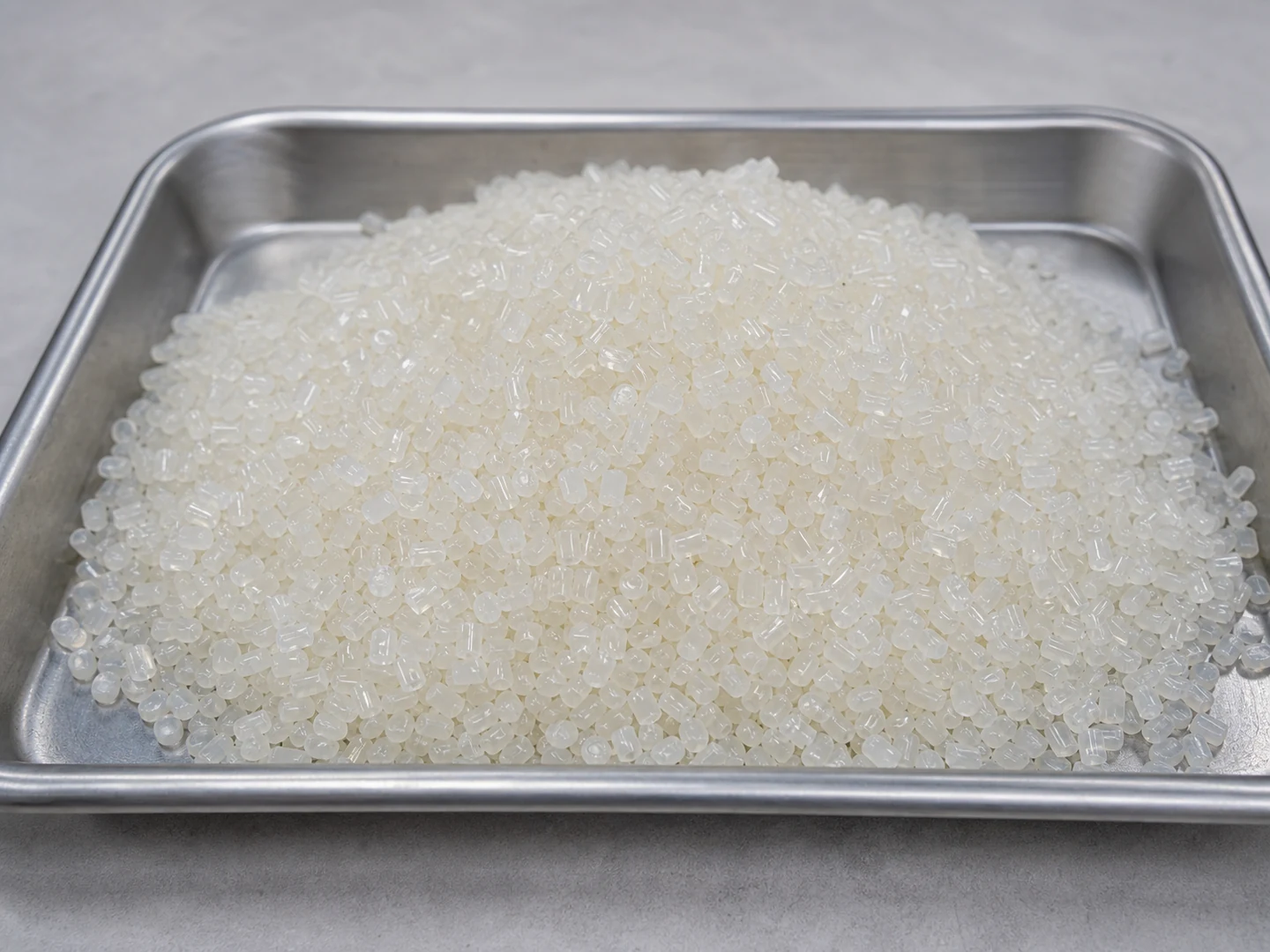
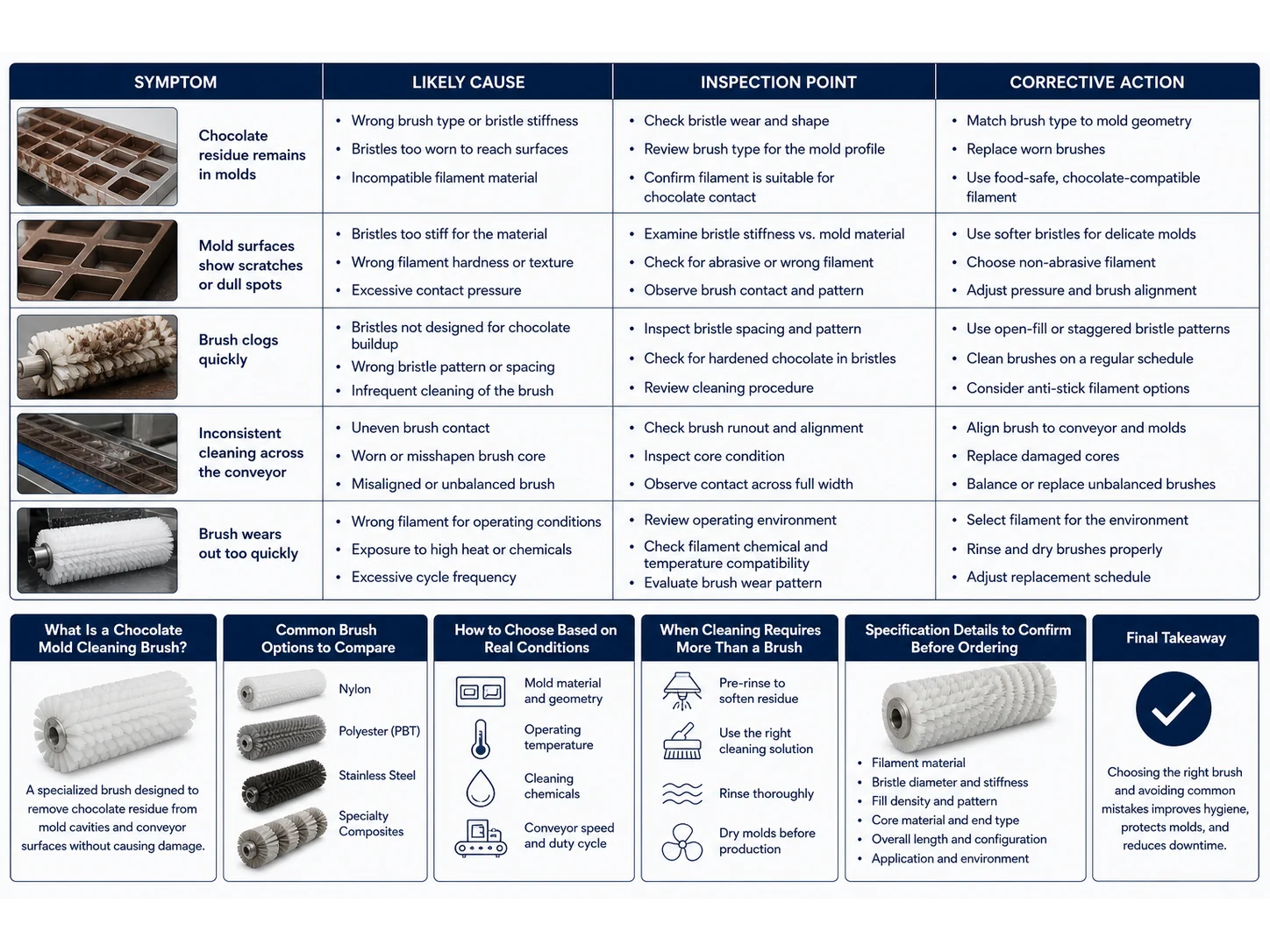
| Bristle Material | Nylon, Polyester, PBT, Polypropylene, Tampico, abrasive‑grit nylon | Using a material that absorbs water or chemicals, swells, and loses stiffness | Match material to chemical exposure (e.g., PBT for high alkalinity) and wet environment; avoid natural fibers unless dry or low‑moisture |
| Stiffness / Filament Diameter | Soft, Medium, Hard (measured by diameter in mils) | Choosing too soft—leaves residue; too hard—damages belt surface or creates scratches that harbor bacteria | Test with the actual residue and belt material; start medium and adjust |
| Brush Diameter / Overall Length | OD for roller brushes; length for strip brushes | Brush too large hits guards or framework; too small misses the belt edge | Measure exact mounting envelope and belt width; allow for run‑out and adjustment |
| Mounting Method | Shaft‑mounted, clamp‑on, bolt‑on, keyed, quick‑release | Hard‑to‑remove brush delays sanitization and increases downtime | Specify mounting that matches cleaning frequency; quick‑release for daily removal |
| Core / Handle Material | Stainless steel, aluminum, plastic, fiberglass | Corroding core in washdown environment contaminates product | Use 304 or 316 stainless for wet areas; avoid aluminum if exposed to chlorine cleaners |
| Bristle Pattern / Density | Straight, spiral, convoluted; face width, rows | Dense pattern traps debris instead of shedding it | Match pattern to residue type: open patterns for sticky or stringy waste; dense for fine powders |
Common Mistakes in Conveyor Brush Selection and Use
These errors surface repeatedly in food plants, often as the root cause of failed sanitation audits or unexpected belt wear.
- Guessing the bristle stiffness without a sample test. Over‑stiff brushes score plastic modular belts, creating micro‑grooves that trap pathogens. Under‑stiff brushes leave a film. Always run a trial with your actual residue and belt material before finalizing a purchase order.
- Ignoring chemical compatibility. A brush that looks fine may lose 40% of its stiffness after two weeks of CIP or foaming‑cleaner exposure. Ask the supplier for chemical resistance data; if unavailable, test submerged coupons.
- Ordering by generic “food grade” without verifying FDA specifics. “Food grade” is not a regulated standard. For direct food contact, verify 21 CFR compliance for the specific polymer and colorant. For incidental contact, clarify acceptable limits.
- Choosing a one‑size‑fits‑all brush across multiple lines. Different residues (dough, oil, protein, sugar) require different filament materials, diameters, and patterns. A single brush inventory often means compromised cleaning on several lines.
- Neglecting the mounting hardware in the buy. A perfectly specified brush that vibrates loose or doesn’t fit the existing bracket creates an immediate safety and sanitation hazard. Always specify the complete assembly.
- Overlooking brush replacement triggers. Brushes are consumables. Worn brushes lose surface contact and become contamination sources. Define measurable wear limits (bristle length, diameter reduction) and inspection frequency.
- Assuming any brush is compatible with metal‑detectable requirements. Metal‑detectable filaments are a separate specification. Standard brushes shed fragments that can pass undetected into product. If your plant uses metal detection, specify metal‑detectable or x‑ray‑visible bristles.
When a Standard Food Equipment Cleaning Brush Isn’t Enough
A brush is part of a system. It cannot replace good line design, proper CIP fluid dynamics, or manual detail cleaning. Recognize these boundaries:
- Heavy baked‑on carbon or caramelized sugar: Mechanical brushing alone may not remove it; consider steam, soak tanks, or high‑pressure spray in combination.
- Allergen‑free validation: Brushes can retain allergens in the filament base. Where validated allergen clean is required, you need a dedicated, color‑coded brush set and perhaps a validated wash‑off procedure, not just a brush swap.
- Sanitary design gaps in the conveyor itself: A brush cannot clean unreachable hollow rollers, unsealed bearings, or poorly welded frame joints. Address those design issues first.
- Extremely narrow or curved surfaces: Custom brush shapes or alternative cleaning tools (e.g., high‑pressure jet nozzles, ultrasonic baths) may be necessary.
- When a supplier drawing review is mandatory: For any custom brush that touches product, insist on a dimensional drawing with tolerances, material specs, and a sample for in‑plant testing before cutting a purchase order for production quantities.
How to Specify the Right Brush Without Guesswork
Turn buyer errors into a repeatable specification process. Use this checklist the next time you send an RFQ:
- Residue description: What is being removed? (e.g., sticky dough, oily film, dry powder)
- Belt material and surface finish: (e.g., polypropylene modular, stainless steel mesh, smooth PVC)
- Wet or dry environment? Continuous washdown, intermittent, or dry wipe?
- Chemicals used: Cleaners, sanitizers, concentrations, and contact time.
- Temperature range: Both ambient and washdown temperature.
- Mounting envelope: Maximum available space for brush diameter and length.
- Shaft or bracket details: Diameter, keyway, drive method, existing fasteners.
- Required brush speed: RPM or surface feet per minute.
- Food contact classification: Direct, incidental, or non‑contact.
- Any detection requirement: Metal detectable, x‑ray visible, or standard.
- Wear life expectation: Desired change interval vs. line access windows.
Provide these details to your brush manufacturer and request a drawing and sample for pilot testing before committing to a full order.
Final Takeaway
The most expensive food equipment cleaning brush is the one that fails a sanitation audit, causes a line shutdown, or leaves contamination in your product. Avoid mistakes by treating the brush as a critical process component—not a commodity. Start with a residue‑and‑surface analysis, test bristle material and stiffness, verify chemical compatibility, and define clear inspection and replacement criteria. A small investment in proper specification pays off in food safety, uptime, and long‑term brush performance.
Frequently Asked Questions
What bristle material is best for a wet, acidic washdown environment?
How do I know if my brush is too stiff for my belt?
Check for belt surface scratching, unusual wear patterns, or if the belt material changes color (indicating friction heat). A quick test: press the brush lightly against a scrap piece of belt while wet, then inspect under a flashlight for any visible marks.
Can the same roller brush work for both oily and dry residue?
Rarely. Oily residues often require a softer, absorbent filament with an open pattern, while dry powders need stiffer filaments to prevent packing. Using one brush type for both usually results in poor cleaning of at least one residue type.
Do I need metal-detectable bristles on a conveyor brush that doesn’t directly contact food?
If the brush is located above an open product zone or could shed fragments that fall onto product, yes. Many plants standardize on metal-detectable or x-ray-visible brushes anywhere near the open line to simplify detection and audit compliance.
How often should I replace a conveyor cleaning brush?
There is no universal number. Set a wear limit: when bristle length reduces by 30–40% from new, or when you notice a drop in cleaning performance (residue rings, vibration). Inspect weekly and log observations; most plants replace roller brushes every 3–12 months depending on duty cycle.
What’s the difference between a strip brush and a roller brush for belt cleaning?
A strip brush is stationary and typically acts as a scraper or guide along the belt edge; a roller brush actively rotates against the belt surface to scrub it. Roller brushes are more common for primary cleaning, while strip brushes are used for side containment or secondary wiping.
Can I use a food equipment cleaning brush in a freezer tunnel?
Yes, but specify bristle material that remains flexible at low temperatures (e.g., polypropylene or special nylon blends) and a core material that won’t become brittle. Also, account for ice buildup, which may require a wider trim length to maintain contact.
Is it safe to order a custom brush without a drawing review?
No. Custom brushes carry tolerance risks. Always require a dimensioned drawing that shows overall length, diameter, bore, keyway, and bristle face width. Compare it to your equipment’s actual measurements before approving production.