
Material
AISI 304 Stainless Steel Wire
Stainless steel wire
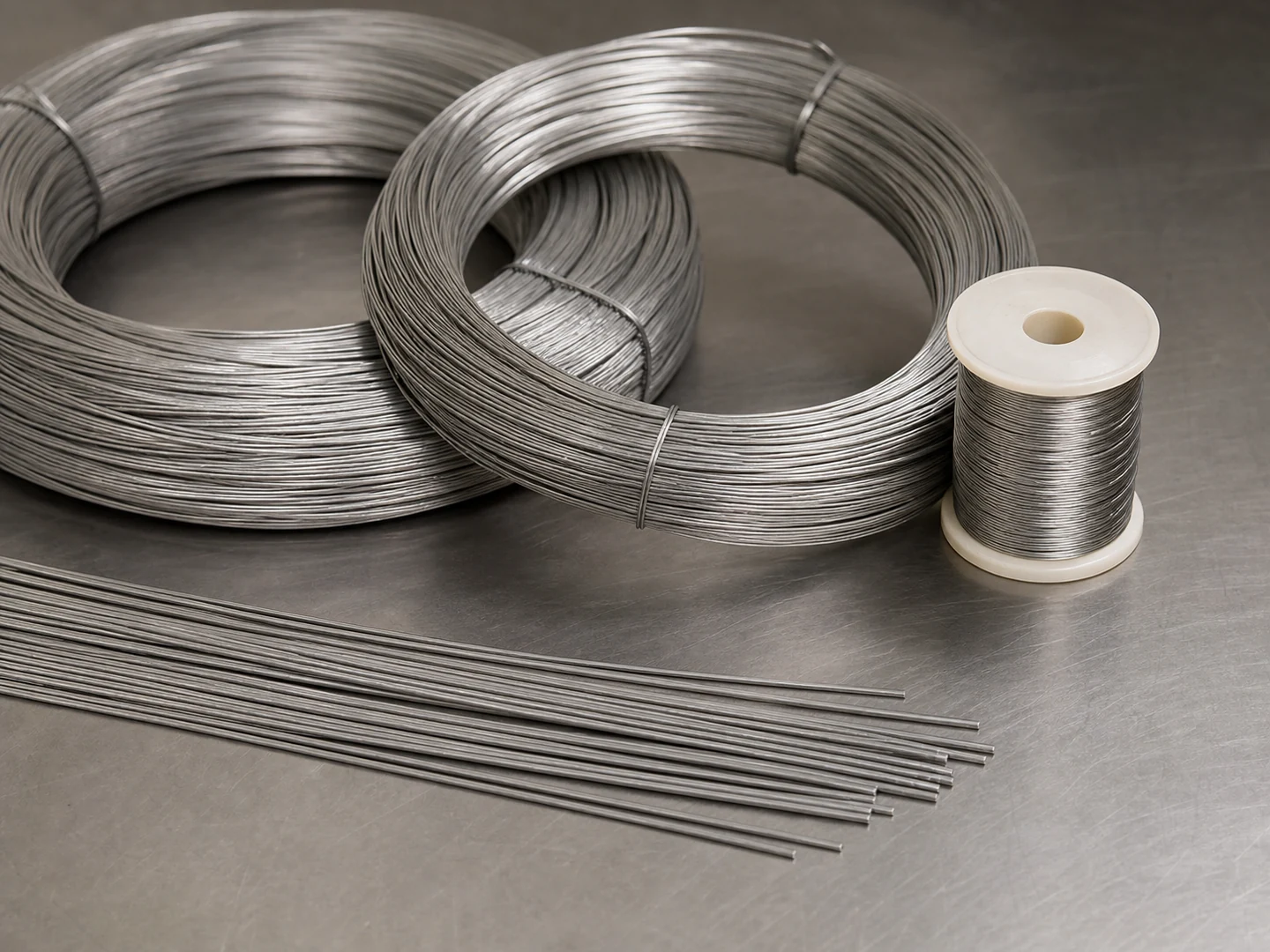
Choose AISI 304 Stainless Steel Wire based on its stiffness, recovery, wear, wet-service, chemical, and temperature behavior. Do not select stiffness from the material name alone. Specify filament diameter, free trim, density, grade, and service conditions as one set.
Datasheet values
- Density
- about 8.0 g/cm³
- Wire diameter
- Set by required brush stiffness and supplier capability
- Hardness
- Depends on wire temper and cold work
- Temperature use
- Alloy data extend to elevated temperatures, but finished-brush service depends on wire temper, anchoring, hub, atmosphere, speed and load
- Corrosion behavior
- Good general corrosion resistance; chloride pitting and crevice corrosion require review
- Standards
- ASTM/UNS/EN/JIS grade designations should be confirmed for the supplied wire
AISI 304 is an austenitic chromium-nickel stainless steel. In brush wire, corrosion behavior and stiffness are controlled by alloy grade, wire temper, diameter, crimp, and the mounting system.
What is AISI 304 Stainless Steel Wire, and what makes it different from other brush filaments?
AISI 304 Stainless Steel Wire is the general-purpose stainless fill, supplied straight, crimped or twisted for wheel, cup, end, roller and bore brushes. It resists ordinary corrosion and will not transfer carbon steel onto the workpiece.
AISI 304 stainless steel wire is a chromium-nickel austenitic brush filament for general wet cleaning, food equipment, metal finishing, tube cleaning, and corrosion-resistant brush constructions where chloride exposure is limited.
Where a project stalls on material choice, the comparison is normally against AISI 316 Stainless Steel Wire, Carbon Steel Wire and Brass Wire, and it turns on working temperature.
Use AISI 316 stainless steel wire for chloride, marine, dairy, beverage, chemical washdown, or higher pitting-resistance requirements. Use carbon steel for dry aggressive cutting and brass or abrasive nylon for lower marking risk.
What stiffness and contact pressure can I expect from AISI 304 Stainless Steel Wire?
AISI 304 Stainless Steel Wire is rockwell B 70–95 is typical for annealed to cold-worked brush-wire conditions; final stiffness is geometry-dependent, and AISI 304 wire produces firm tip contact. Finer wire, longer trim, and crimped form improve conformity; coarser wire, shorter trim, higher density, and higher motion increase cutting action and surface risk.
The published filament ranges, set against the grades it competes with. These are filament figures, not finished-brush values.
| Property | AISI 304 Stainless Steel Wire | AISI 316 Stainless Steel Wire | Carbon Steel Wire | Brass Wire |
|---|---|---|---|---|
| Shore hardness | Rockwell B 70–95 depending on temper and cold work | Rockwell B 70–95 depending on temper and cold work | Rockwell C 40–60 (Drawn / Heat-Treated Condition) | Rockwell B 40–90 (Alloy and Cold-Worked Condition) |
| Continuous temperature (°C) | 400 | 400 | 200–300 | 150–200 |
| Peak temperature (°C) | 500 | 500 | 350–450 | 250–300 |
| Water absorption, 24 h | 0% | 0% | 0% | 0% |
| Filament diameter (mm) | 0.03–1.00 | 0.03–1.00 | 0.05–1.20 | 0.05–0.80 |
| Flexibility | Low to medium flexibility | Low to medium flexibility | Low Flexibility | Medium Flexibility |
The part people get wrong: the number that decides scrubbing pressure is diameter over trim length, not the grade name. Two brushes in this material can behave nothing alike.
How does water affect AISI 304 Stainless Steel Wire performance?
AISI 304 wire absorbs no water at all; its wet-service question is whether the passive layer holds in the actual chemistry.
Zero water absorption; corrosion resistance depends on chloride level, crevices, contamination, passivation, and the holder alloy.
What this means for your application: dry and wet contact pressure are identical, because nothing swells. What varies with the fluid is corrosion, and 304 is the grade that starts to struggle once chlorides are involved.
A practical check: expose a sample to the real solution at the real temperature for a shift and look for pitting or tea-staining, not for movement in the trim.
What temperature limits apply to AISI 304 Stainless Steel Wire?
AISI 304 alloy data show capability at elevated temperature, but that is not a finished-brush service rating. For a brush, wire temper, anchoring, adhesive, hub, atmosphere, speed, and contact load set the usable temperature.
Design to that answer rather than to a raw-material datasheet figure: a brush rating already accounts for wire working under load rather than bare wire held at temperature with nothing pushing on it.
Where it stops working: validate with a sample if the process sits near the top of that band. A permanent bend under load means the answer is a higher-temperature filament family, not a heavier trim.
The usable limit also moves with diameter, trim and contact pressure. A fine filament under light load tolerates more than a thick one under heavy scrubbing.
What chemicals attack AISI 304 Stainless Steel Wire?
Good general corrosion resistance. More susceptible than AISI 316 to chloride pitting and crevice corrosion; not the preferred grade for marine salt, brine, hypochlorite, or persistent chloride washdown.
The same cleaner can be harmless or destructive depending on how strong it is, how hot it runs and how long it sits. Quote the concentration and the dwell time, not just the product name.
Before you commit to a quantity: Specify AISI 304 / UNS S30400 / EN 1.4301 / JIS SUS304, wire diameter, straight or crimped form, temper, passivation condition, operating temperature, chemical exposure, mounting material, and required material certificate.
What is the practical lower limit for filament diameter?
About 0.03 mm. Below that the filament turns fragile and breaks under ordinary contact pressure, so 0.03–1.00 mm is the working range.
Free trim runs 3–200 mm, and the two interact: a finer filament needs a shorter trim to keep useful stiffness, while a thicker one carries a longer trim and still lands pressure on the tip.
Split the range by duty: roughly 0.03–0.27 mm for light wiping, dusting and surfaces that mark easily, and 0.27–1.00 mm where residue is packed on and point pressure matters more than surface risk.
Tip treatments available on this filament: straight or crimped wire, pickled and passivated, electropolished and degreased.
In practical brush terms: reaching deep into a bore or crevice is a diameter problem before it is a length problem. A thicker filament on a moderate trim pushes further in before the tips fold over.
What applications typically use AISI 304 Stainless Steel Wire?
General wet industrial cleaning, food-equipment cleaning with controlled chemistry, weld and scale removal, tube cleaning, and corrosion-resistant strip or wheel brushes.
The cleaning work it is specified for most often:
- Heat Exchanger Tube Cleaning
- Pipe Robot Brush Attachment Use
- Hose Cleaning
- Tube & Pipe Cleaning
- Steel Rust Removal
- CPAP Hose Cleaning
Brush types built with this fill:
- Custom Tube & Pipe Bore Brushes
- Custom Handheld Detail Brushes
- Custom Cup Brushes
- Custom Spring Brushes
The trade-off: Avoid using AISI 304 as the default in marine, brine, hypochlorite, and persistent chloride environments; use AISI 316 when higher pitting and crevice-corrosion resistance is required.
How do I specify AISI 304 Stainless Steel Wire for a custom brush?
A usable specification carries the construction, the filament diameter and free trim, the density and contact setting, and the service conditions: wet or dry, temperature, and what the cleaner actually is.
The mistakes that most often send a sample back:
- Selecting Stainless Steel Wire from the material name alone without setting filament diameter, trim length, and density
- Using dry stiffness to predict wet behavior without checking moisture absorption or liquid exposure
- Ignoring trapped abrasive particles, chemical concentration, temperature, or contact motion when assessing surface risk
Reference standards behind the figures on this page: ISO 6892-1; ASTM E8/E8M; ASTM B117; ASTM A580/A580M.
Source: Alleima — Sanmac 304/304L Material Datasheet. Alleima supports the alloy corrosion and elevated-temperature behavior. Do not convert alloy gas-corrosion limits directly into a universal brush assembly limit.
What else does the datasheet specify for AISI 304 Stainless Steel Wire?
| Filament cross-section | Round / crimped round / flat wire |
|---|---|
| Electrical behaviour | Electrically conductive metal wire |
Questions this page is asked
How should surface contamination be controlled with a 304 wire brush?
Use tools dedicated to compatible stainless work, keep them away from carbon-steel debris, and control lubricant, handling and storage so free iron or other metals are not embedded in the brush or part. After brushing, inspect and clean the surface by the specified stainless procedure and apply pickling or passivation only when the validated surface condition and governing process require it.
Where these figures come from
| Property | Published value | Source |
|---|---|---|
| Chemical resistance | Strong corrosion resistance in water, detergents and many industrial cleaning environments. | Alleima Retrieved 2026-07-21 |
| Published datasheet figures |
|
Alleima Retrieved 2026-07-21 |
| Hardness and stiffness | Very firm metallic wire; Rockwell/shored hardness is controlled by 304/316/steel-wire grade and wire temper. | Alleima Retrieved 2026-07-21 |
| Limitations | Not for soft plastic, glass, PCB, coated solar glass or polished paint. | Alleima Retrieved 2026-07-21 |
| Temperature resistance | Suitable for high-temperature brushing above polymer-filament ranges. | Alleima Retrieved 2026-07-21 |
| Water resistance | Metal wire does not absorb water; alloy and holder corrosion resistance control wet service. | Alleima Retrieved 2026-07-21 |
Guides that go deeper on this
Continue Exploring
Recommended Reading & Related Brush Resources
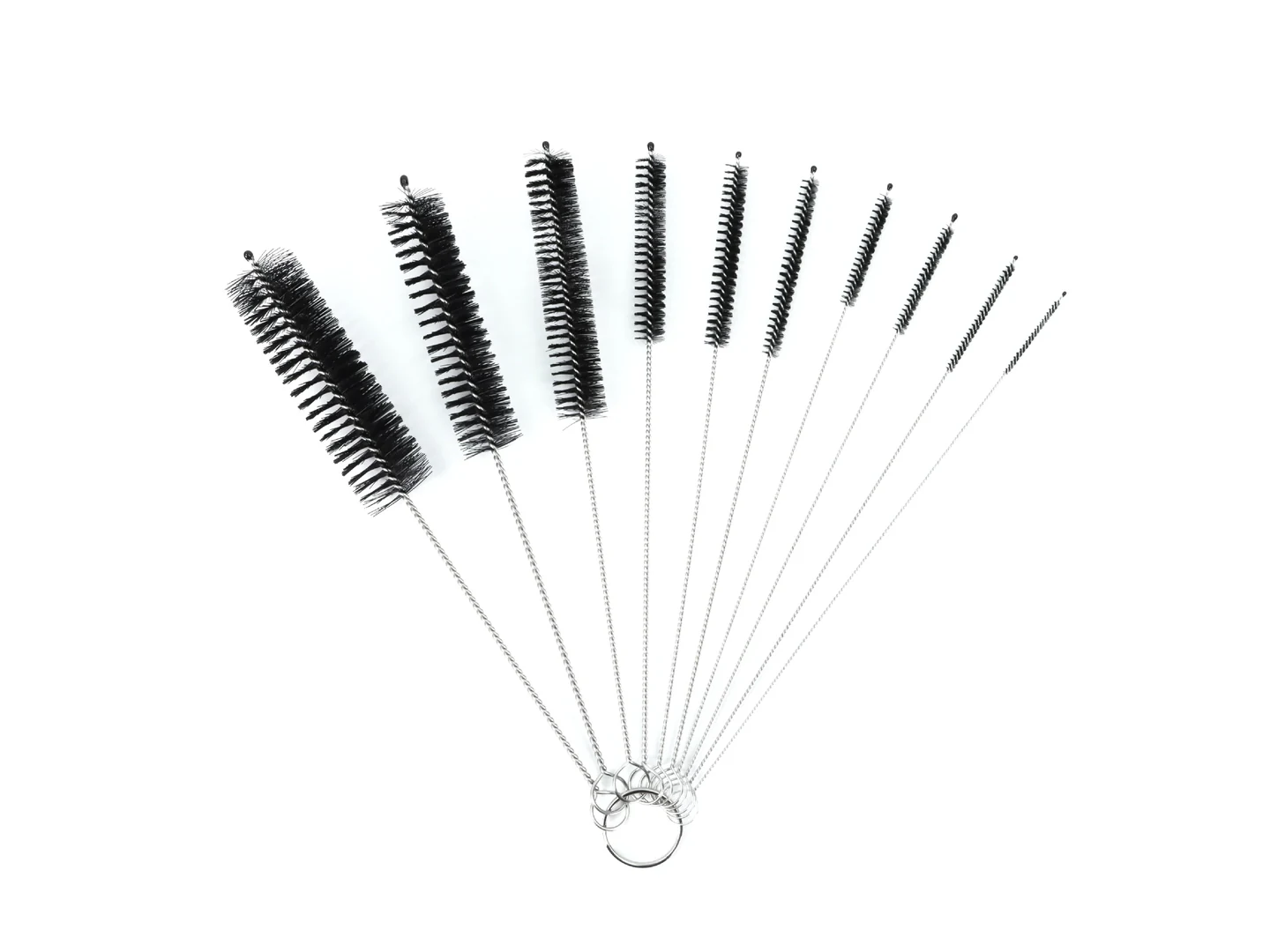
10-Pack Multipurpose Nylon Brushes Set 304 Stainless Steel
10 nylon detail brushes with 304 stainless steel handles and mixed profiles for appliance…
See the specification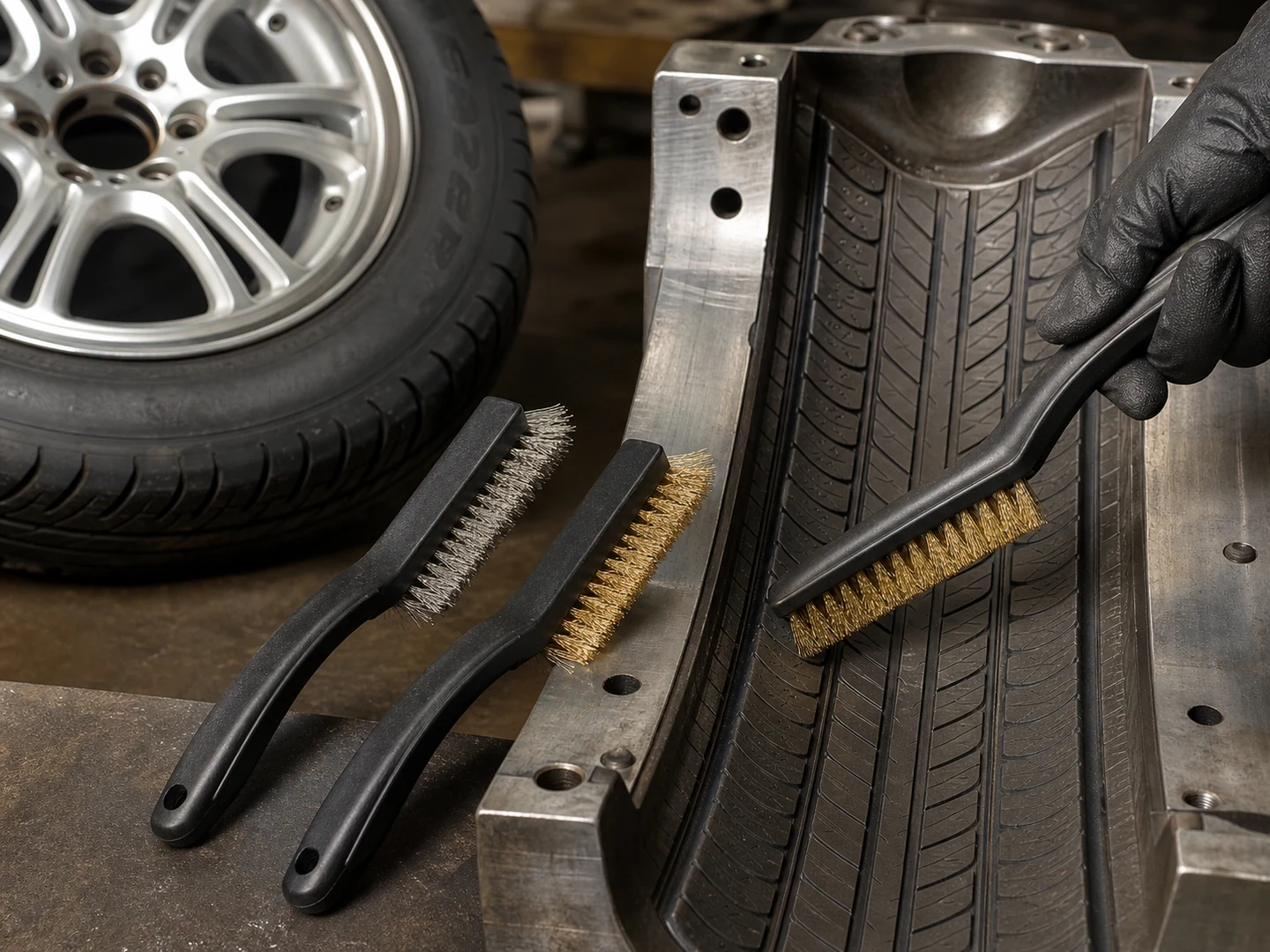
Stainless Steel Brass Mold Tire Brush
316 stainless steel and brass wire mold tire brush in cup, wheel, or end…
See the specification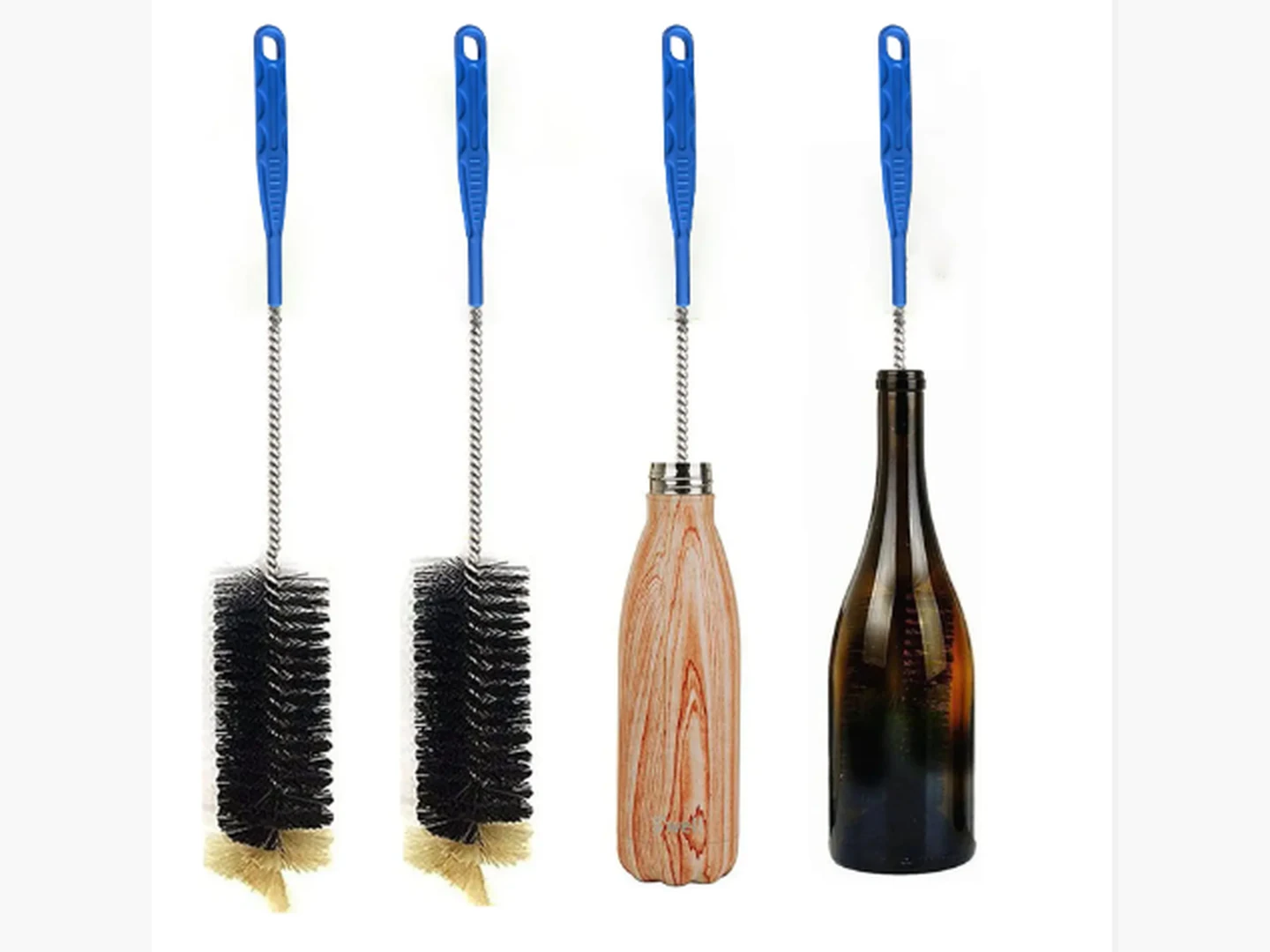
Stainless Steel Bottle Brush
Custom stainless steel bottle brushes with 304/316 wire for hard scale, biofilm, and dried…
See the specification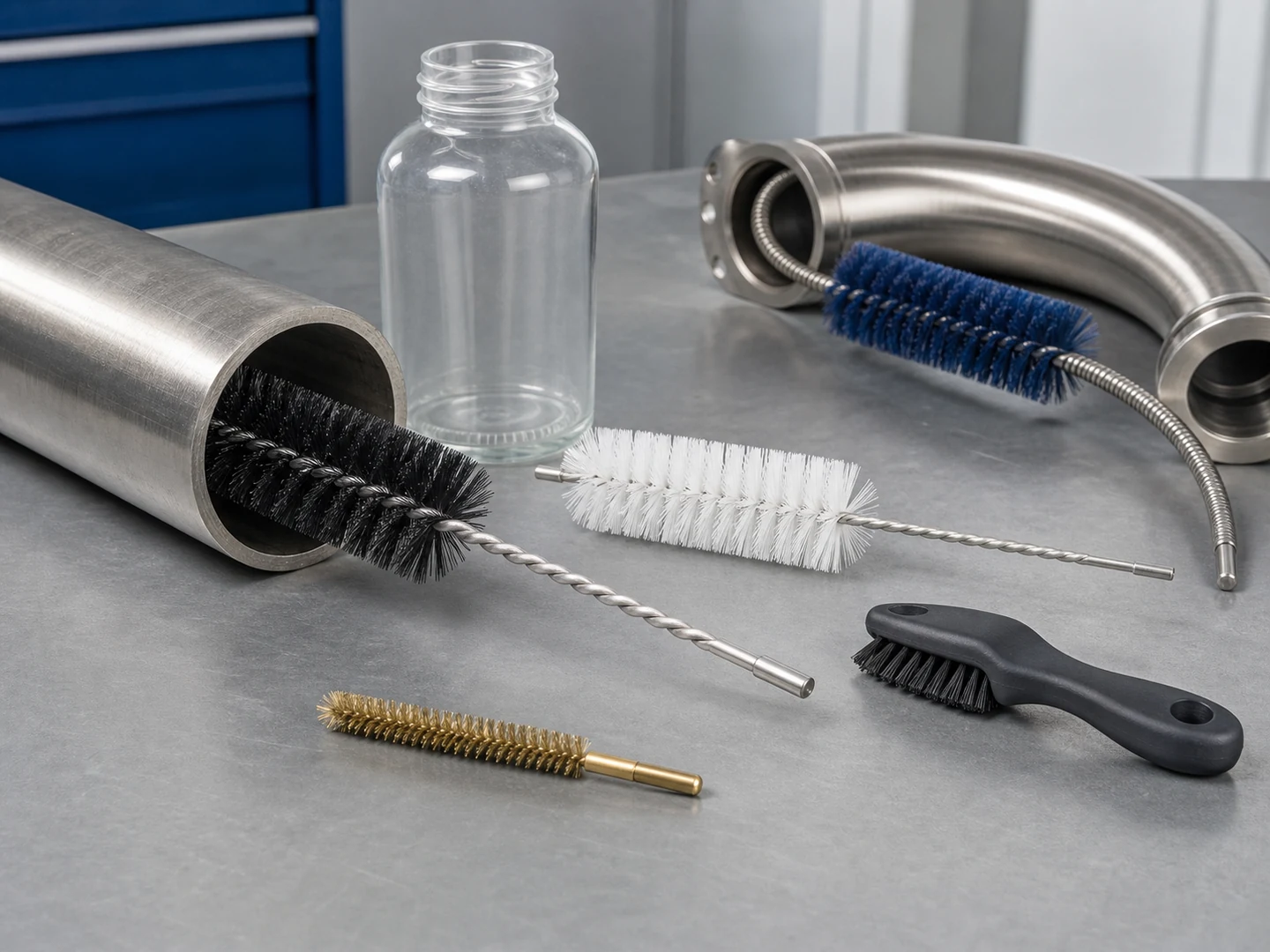
Custom Tube & Pipe Bore Brushes
Choose a tube, pipe, or bore brush when the working surface is inside a…
See how this type is built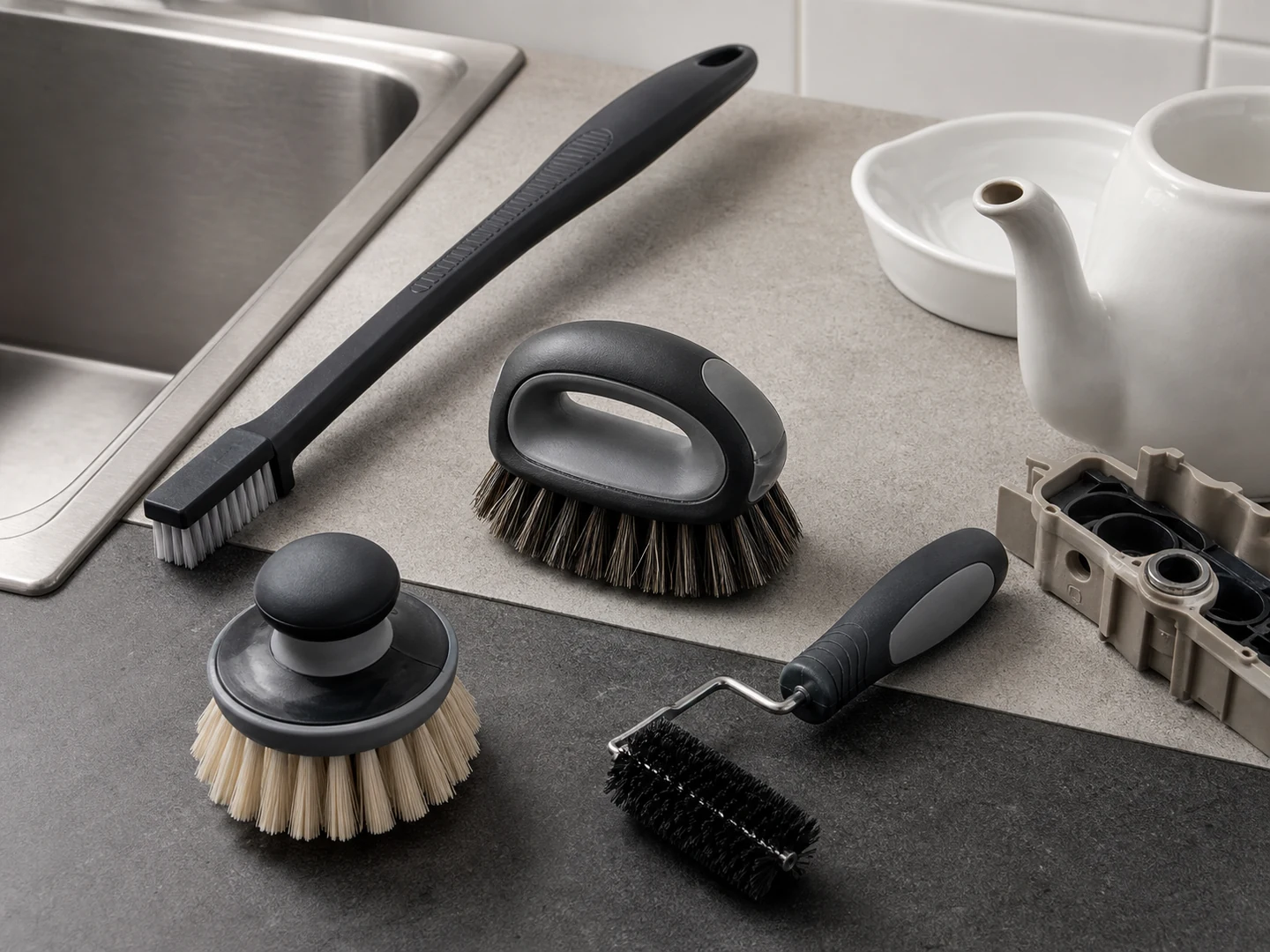
Custom Handheld Detail Brushes
Choose a handheld detail brush when you need direct control in seams, recesses, fittings,…
See how this type is built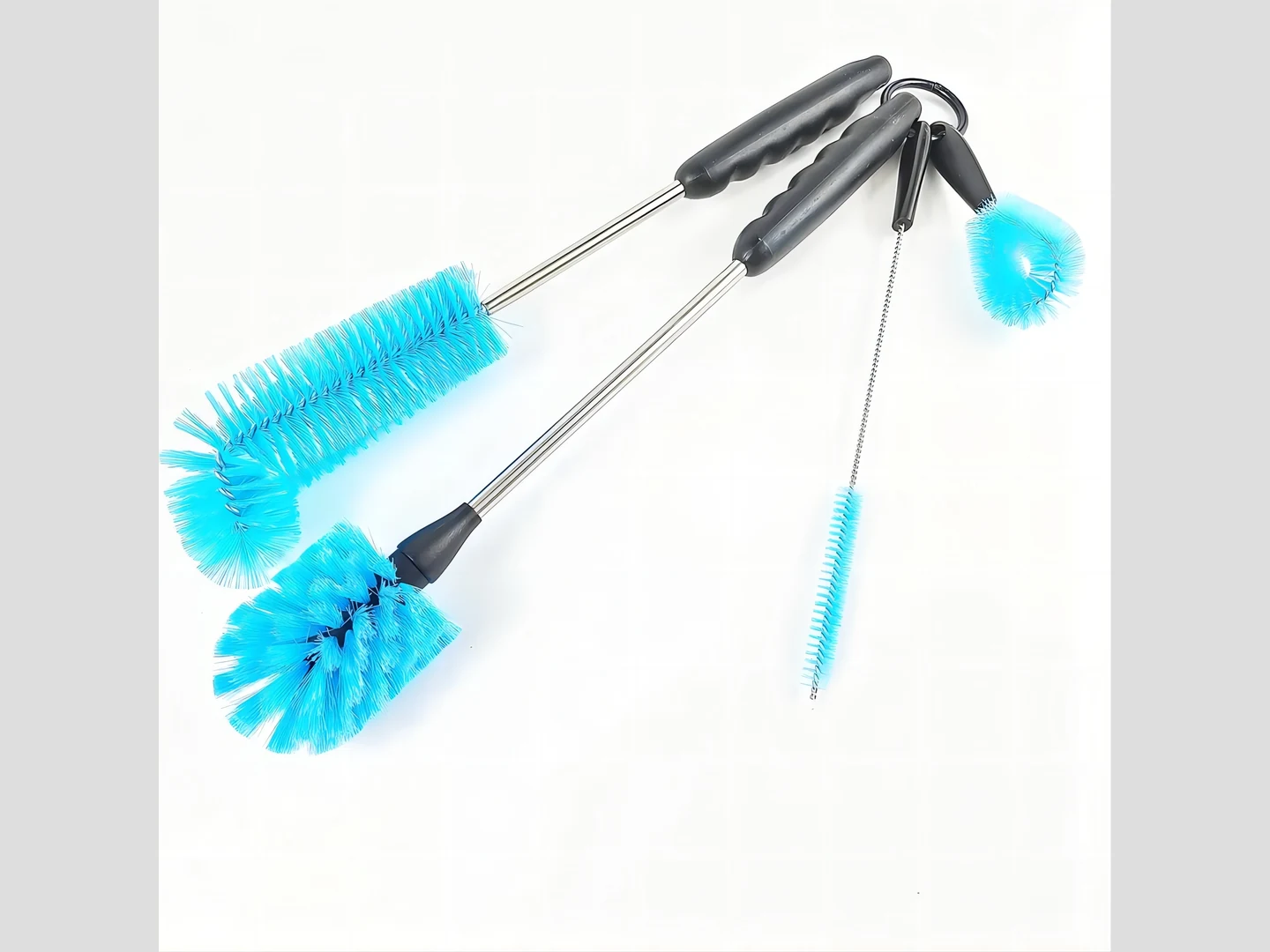
Custom Cup Brushes
Choose a cup brush when a rotating brush face must cover a broader flat…
See how this type is built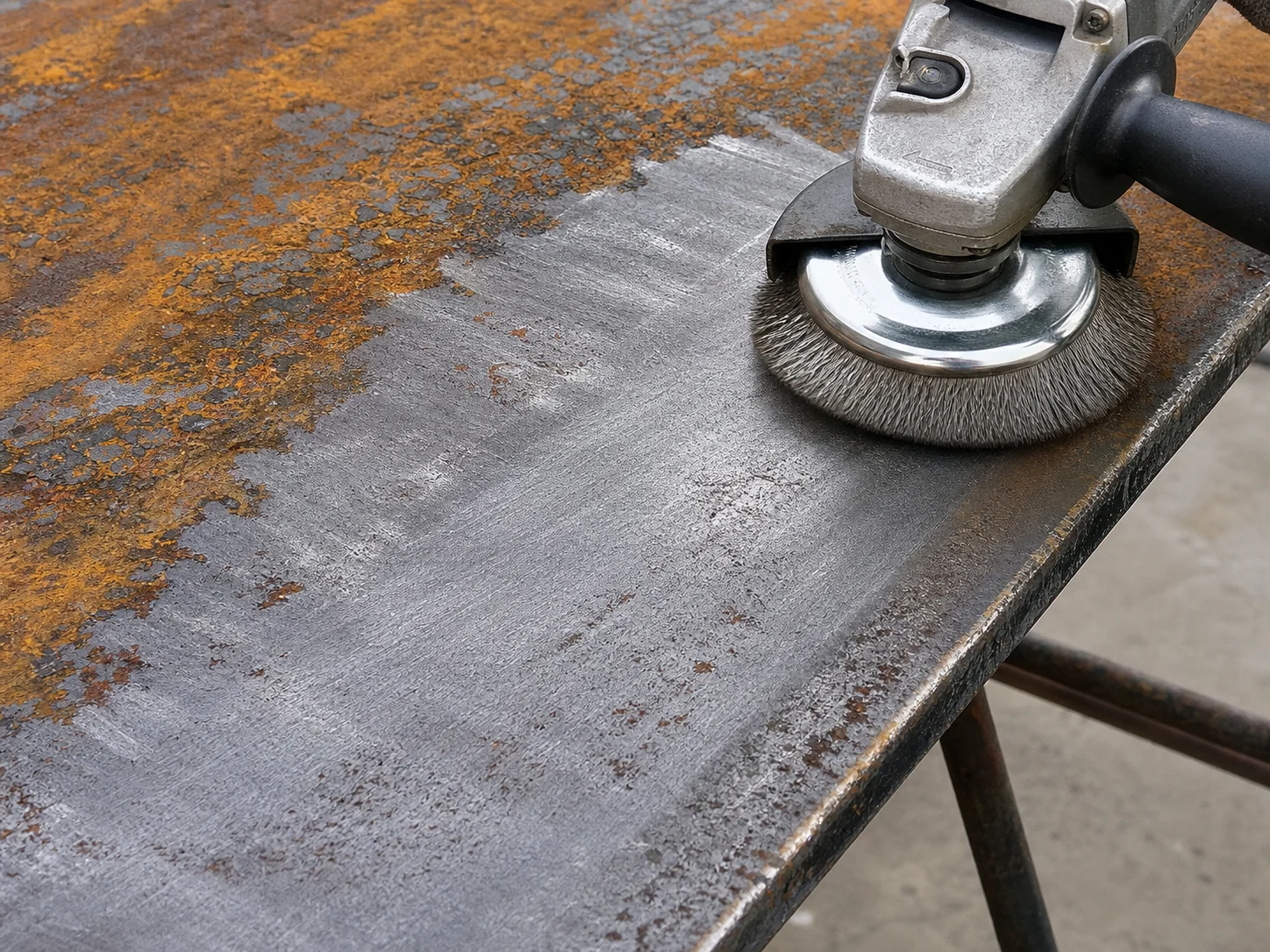
Steel Rust Removal
For Steel Rust Removal, the brush must reach the working area, disturb or collect…
See the cleaning job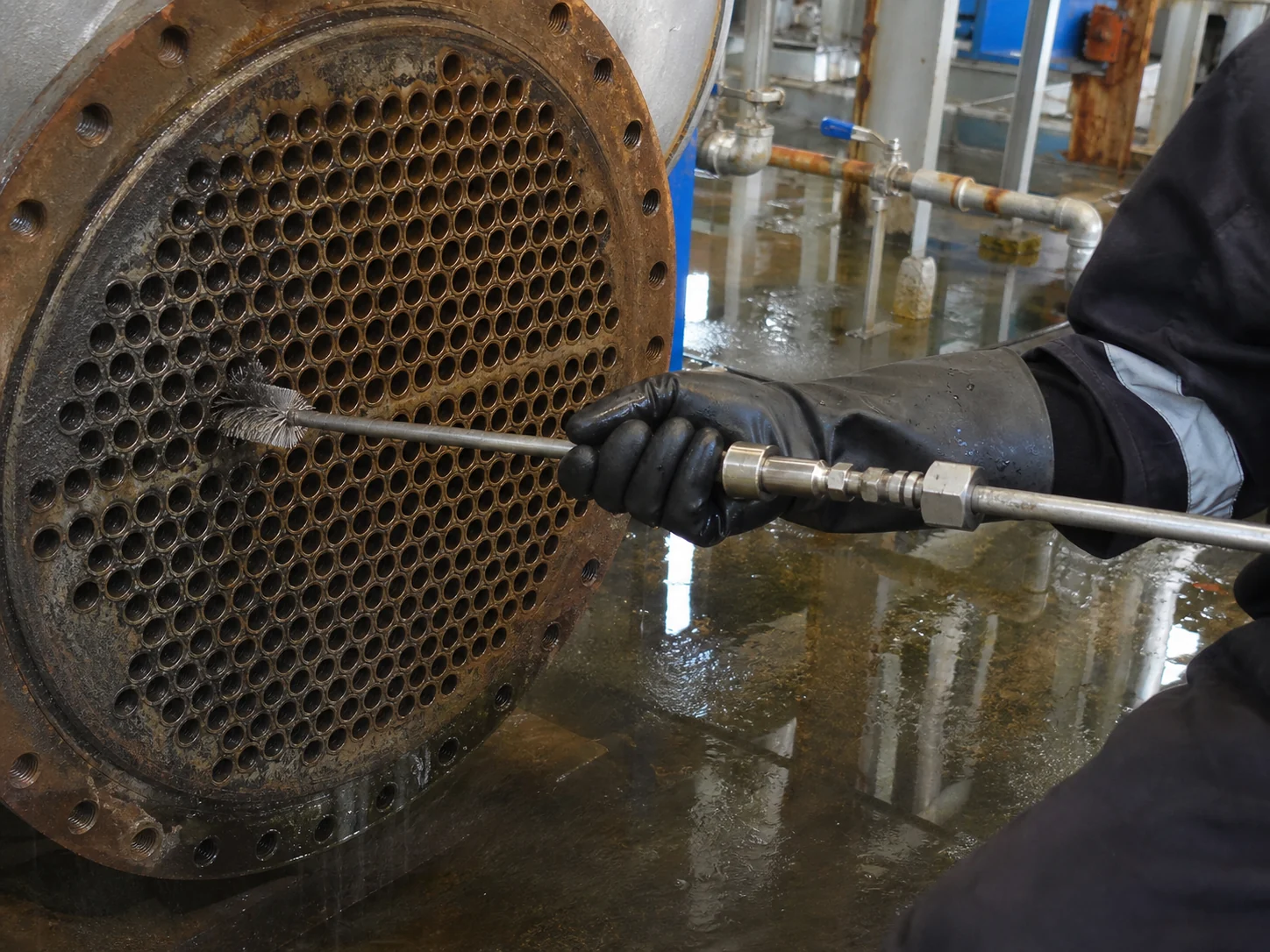
Heat Exchanger Tube Cleaning
For Heat Exchanger Tube Cleaning, the brush must reach the working area, disturb or…
See the cleaning jobCustom Manufacturing RFQ
Discuss This Material
Share the working surface, residue, dimensions, material direction, interface, quantity and drawing or sample photo.
Custom Brush RFQ
Request a Custom Cleaning Brush Quote
Upload a drawing, product photo, or sample photo and provide the core dimensions and cleaning conditions.
“We need a brush to remove wet residue from a stainless steel conveyor, about 800mm wide. The current brush wears quickly. We can send photos.”
“We sell drinkware and need a cleaning brush to include with the product. Quantity around 5,000 pieces.”