
Brush Type
Custom Modular Brushes
Segment / Modular Brush
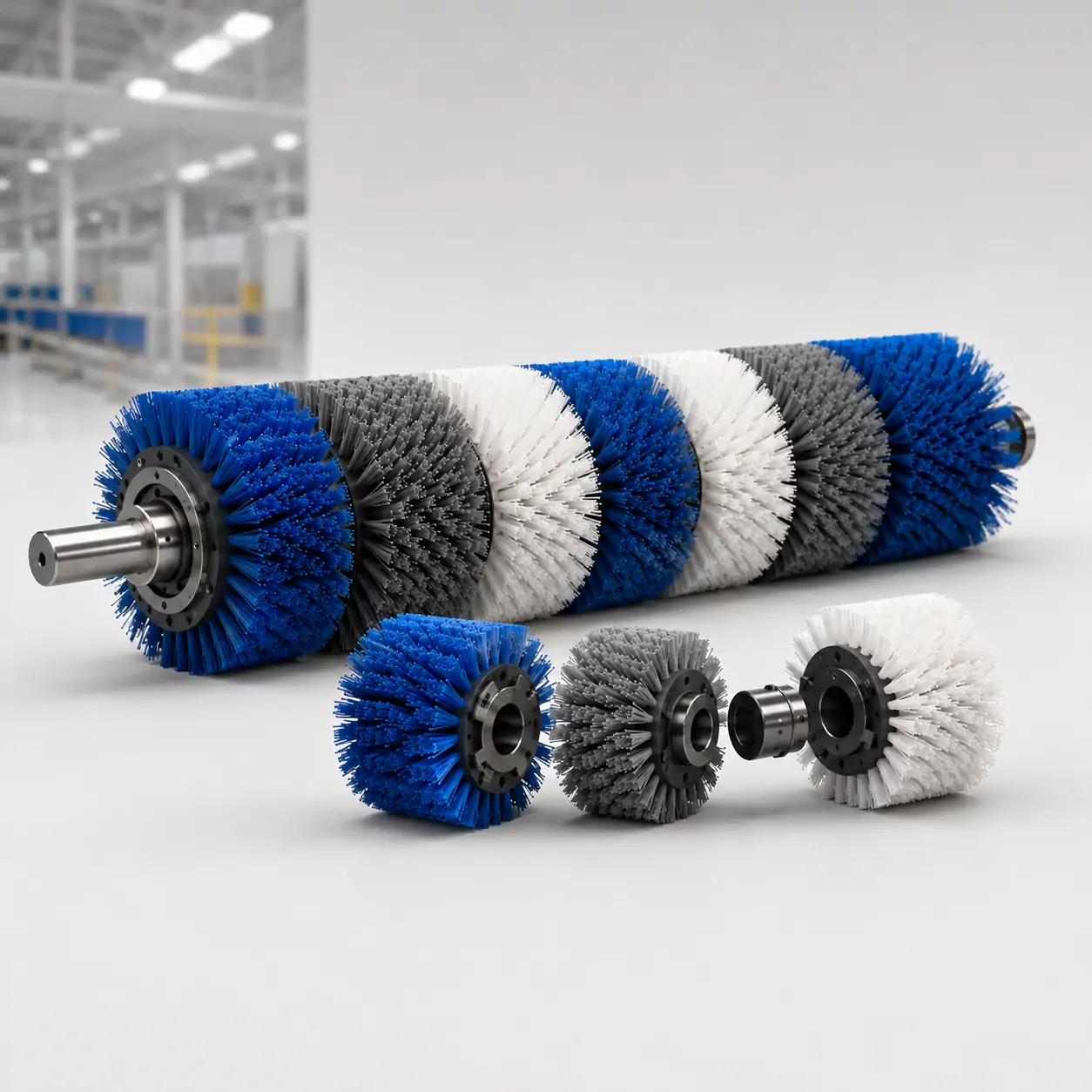
Choose a modular brush when the working surface is large, wear is uneven, access is restricted, or replacement must be limited to individual brush sections.
At a glance
- How it is driven
- Machine-driven
- How it mounts
- Snap-Fit
When should you choose this brush type?
Choose a modular brush when a long roller, plate, broom, or brush field benefits from replaceable rings, segments, or cassettes. A one-piece machine-table plate or roller is simpler when the full working width uses the same fill and wear pattern and there is no maintenance advantage in replacing sections separately.
What are Modular Brushes?
Modular brushes divide a long roller, plate, broom, or brush field into rings, segments, cassettes, or snap-fit units. Each module contributes part of the working width and can be replaced, mixed, or rearranged without manufacturing one permanent full-length assembly.
Module width, locating features, hub or carrier, alignment, fill pattern, and interface tolerances determine whether the assembled brush runs evenly and maintains continuous contact. The design must prevent gaps, movement between modules, and incorrect installation order.
What dimensions can I customize?
| Head diameter | 80 mm |
|---|---|
| Head or working length | 500 mm |
| Mounting interface | Snap-Fit |
Where is this brush type commonly used?
Start with the job the brush needs to do, then confirm dimensions, contact direction, material, and mounting.
What configurations are available?
Stacked brush rings
Individual annular sections are assembled on a shaft or core to create the required width and pattern.
Replaceable cassettes
Brush strips or blocks are installed in a frame and removed from the service side.
Split or snap-fit modules
Sections install around an existing shaft or in equipment where axial access is limited.
Mixed-fill modules
Different materials or stiffness levels are placed only where each duty occurs.
Wear-zone replacement system
High-contact modules can be replaced independently from low-wear sections.
What material is right for this brush type?
Nylon PA or PBT
General modular cleaning, wiping, and sweeping with reliable recovery.
Polypropylene PP
Economical wet and coarse-debris modules in suitable temperature and chemical conditions.
Wire or abrasive filament
Localized aggressive modules where the surface and process allow them.
Soft wiping filament
Low-marking modules for sensitive panels or dust control.
Filament materials to compare
What do I need to know before ordering?
Provide the carrier or shaft drawing, total working width, module width and quantity, locating and locking features, fill pattern, rotation or travel direction, surface and residue, replacement access, balance or runout requirement, and quantity of spare modules.
Questions this page is asked
What rotating checks follow partial replacement of a modular brush roll?
Confirm every new module is fully seated and restrained, then measure profile, runout and any balance parameter required for the complete assembly's mass and speed. Make a guarded low-speed run and stop for rubbing, axial migration or new vibration before restoring process contact.
What proves that a replacement brush module is functionally interchangeable?
Match the controlled base, lock, fill material, trim, density, orientation, mass and relevant compliance rather than relying on nominal dimensions alone. Inspect transition gaps and run representative material across the replaced zone to confirm continuous contact, debris flow and surface result without a local load step.
Guides that go deeper on this
We have not written a guide specific to this one yet. The material that covers selection, filament, dimensions, maintenance and sourcing is collected in the technical resources library.
Continue Exploring
Recommended Reading & Related Brush Resources
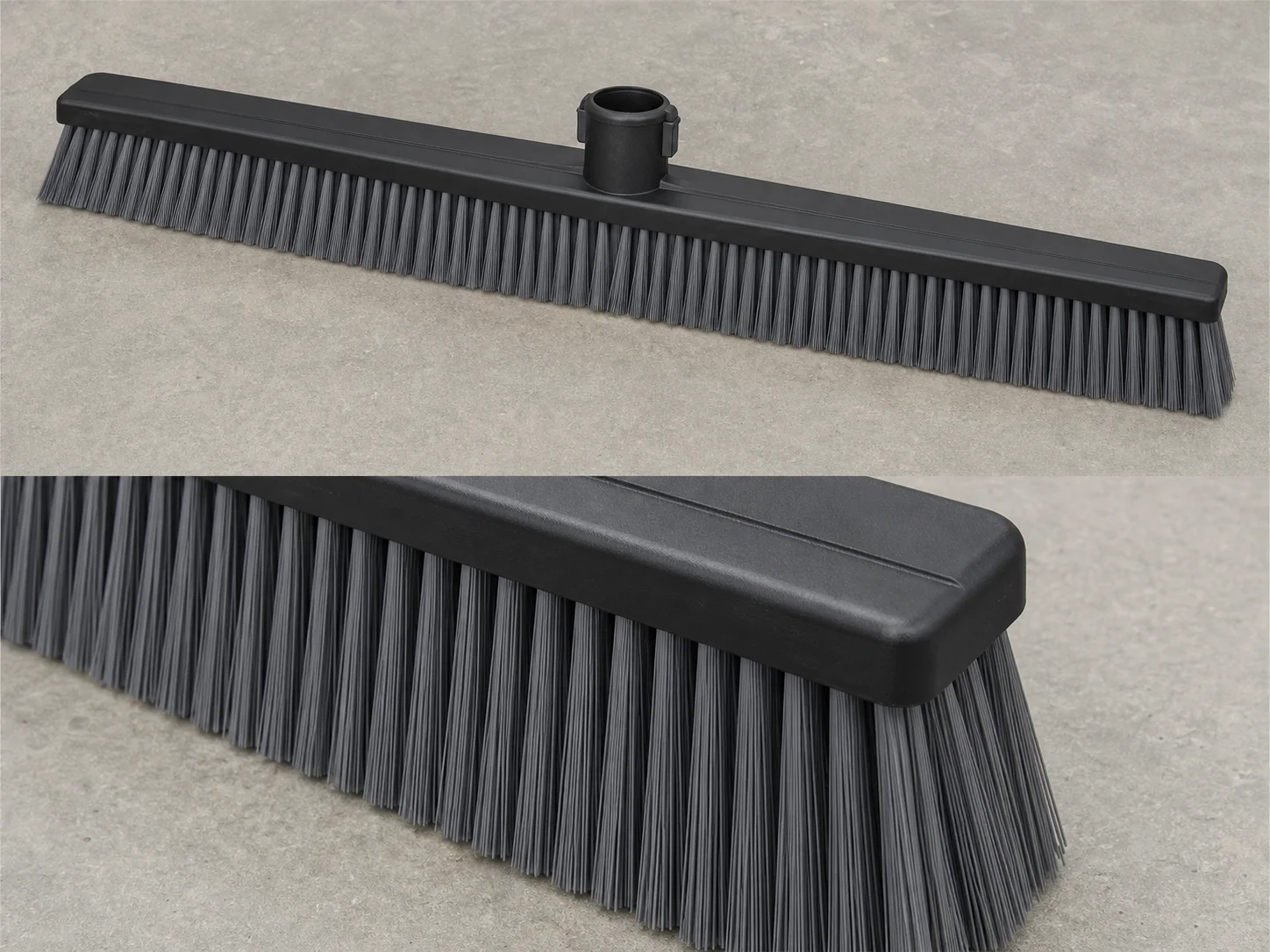
500mm PA66 Sweeper Module Brush
500 mm PA66 sweeper module brush with snap-fit PP base for truck-mounted and ride-on…
See the specification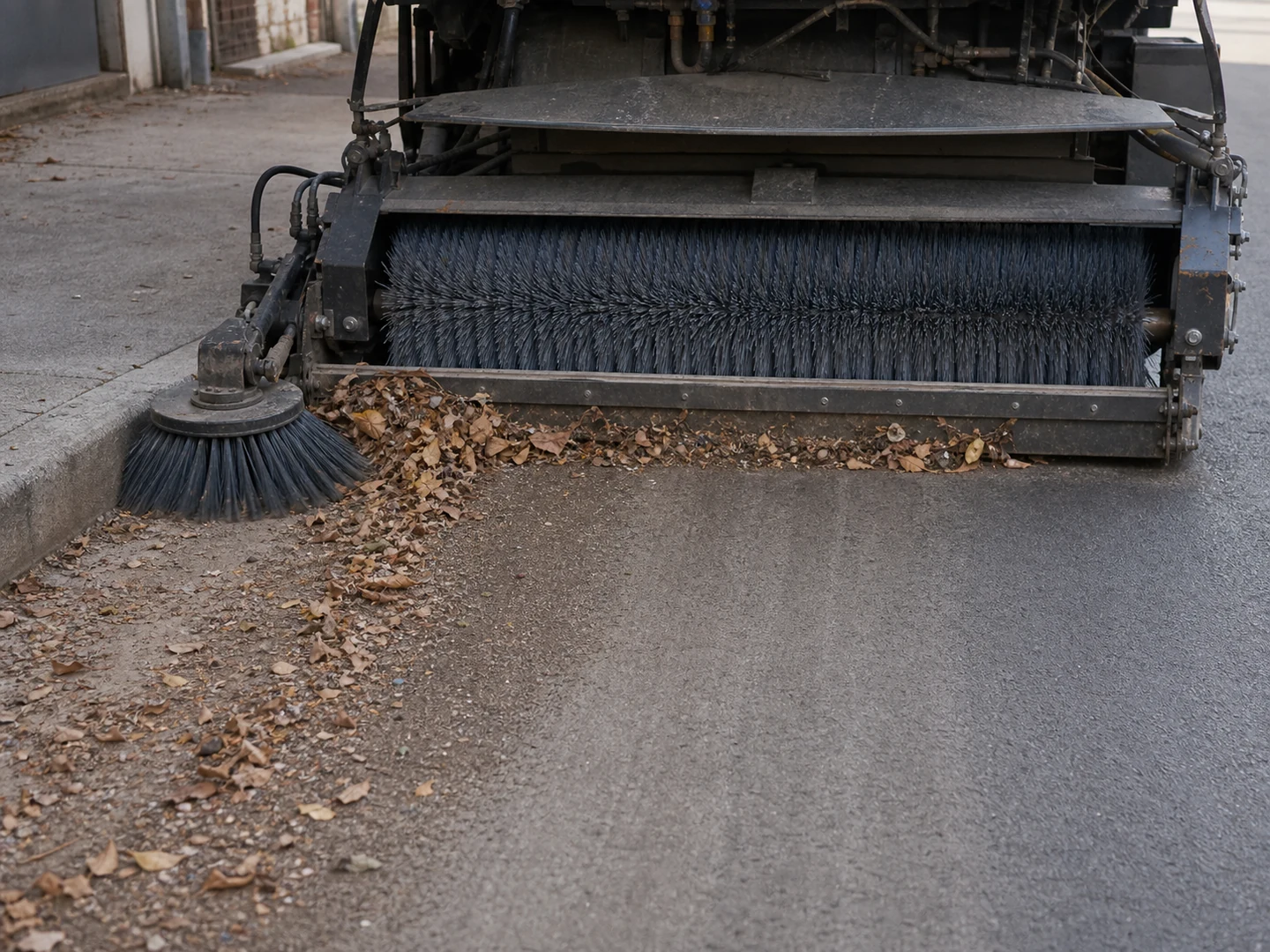
Road Sweeping
For Road Sweeping, the brush must reach the working area, disturb or collect sand…
See the cleaning job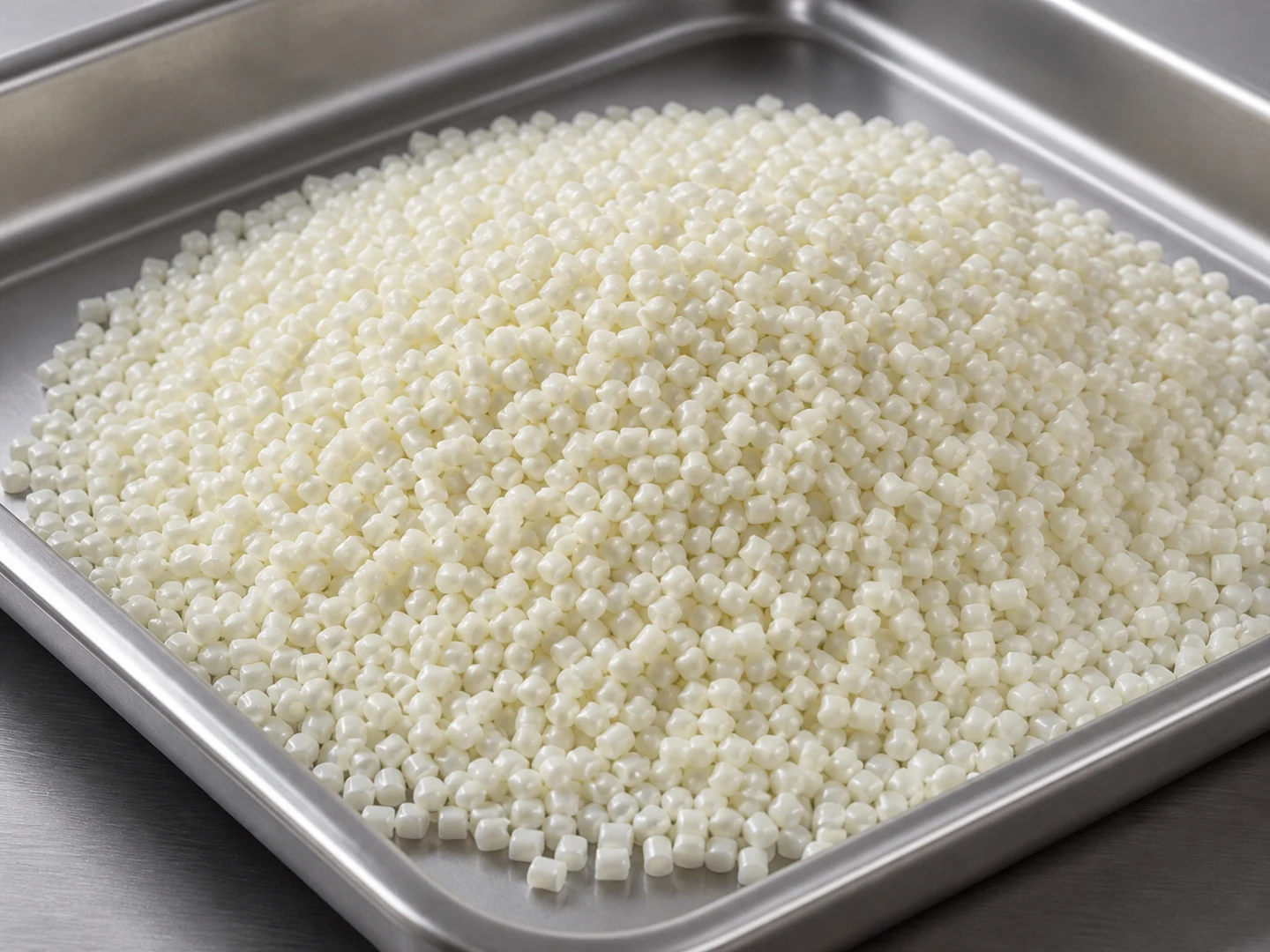
PA66 Nylon
Choose PA66 Nylon based on its stiffness, recovery, wear, wet-service, chemical, and temperature behavior.
Compare this materialCustom Manufacturing RFQ
Discuss This Brush Type
Share the working surface, residue, dimensions, material direction, interface, quantity and drawing or sample photo.
Custom Brush RFQ
Request a Custom Cleaning Brush Quote
Upload a drawing, product photo, or sample photo and provide the core dimensions and cleaning conditions.
“We need a brush to remove wet residue from a stainless steel conveyor, about 800mm wide. The current brush wears quickly. We can send photos.”
“We sell drinkware and need a cleaning brush to include with the product. Quantity around 5,000 pieces.”