
Custom Cleaning Brush
500mm PA66 Sweeper Module Brush
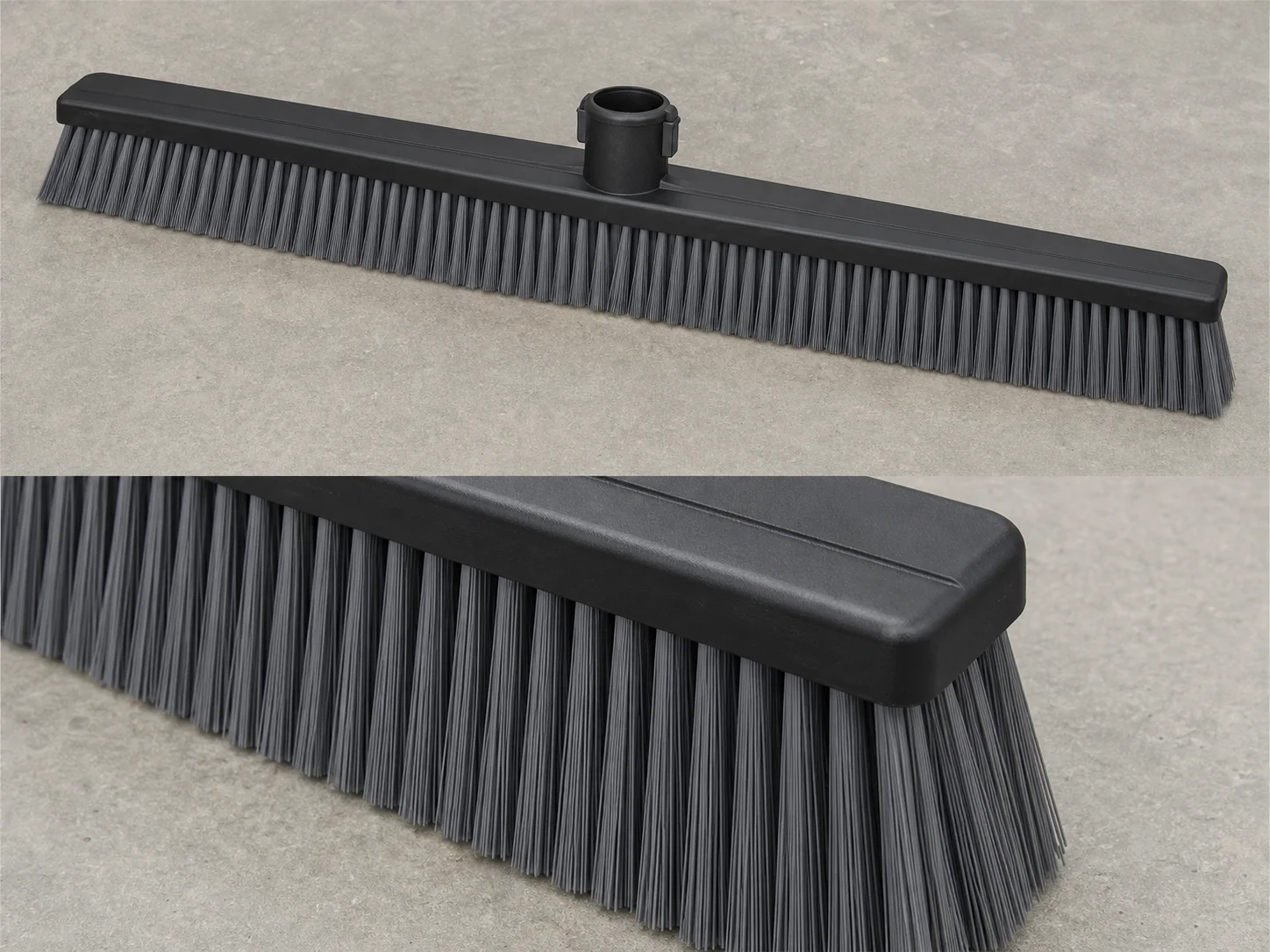
500 mm PA66 sweeper module brush with snap-fit PP base for truck-mounted and ride-on sweepers. Custom bristle trim, diameter, and mounting fit.
Small brush
500 pcs
Minimum order
Held in one hand: tube, bottle, detail and swab brushes — including long-handled ones with a small head.
Production lead time, once the specification is confirmed
- Up to 500 pcsWithin 7 days
- 501–50,000 pcsWithin 14 days
- Over 50,000 pcsWithin 21 days
Peak season can extend these times; the shipping date is confirmed in writing with your quotation. Sampling and shipping are quoted separately.
The 500mm PA66 Sweeper Module Brush is a replaceable bristle segment for the roller core of truck-mounted and compact road sweepers. The 500 mm rectangular module uses PA66 nylon filament on a polypropylene base with a snap-fit connection, built to collect dust, sand, gravel, leaves, and loose debris from asphalt and concrete at street-cleaning speed.
What can this brush do for you?
A 500 mm Working Strip That Completes a Full Sweep Pattern
Each module covers a 500 mm length of the brush roll. Installed end to end, the segments create a continuous sweeping strip across the full machine width, so dust and debris do not slip through gaps between modules. The rectangular PP base keeps the bristle rows aligned and stable while the roller turns.
PA66 Filament That Springs Back After Every Road Contact
Road sweeping means the bristle tips strike asphalt, joints, and small stones thousands of times per shift. PA66 nylon holds its stiffness, resists flex fatigue, and returns to shape quickly after each impact. The result is steady bristle contact through the full rotation, not a bristle row that lies down after the first pass.
Snap-Fit Base Lets a Worn Segment Be Pulled and Replaced Fast
The polypropylene backing strip is molded with a snap-fit edge that seats into a matching channel or cassette on the sweeper core. A worn module can be pulled out and a fresh one pressed in without removing the brush assembly. Shorter changeover time keeps the machine back on the route instead of parked at the yard.
Bristle Rows Direct Loose Material Toward the Pickup Zone
With the correct trim length, filament diameter, and row spacing, the PA66 bristles lift sand, fine gravel, leaves, and loose litter into the path of the hopper or vacuum pickup rather than pushing material ahead of the brush. This reduces repeated passes and leaves a cleaner edge along curbs and travel lanes.
Durable Enough for Municipal and Heavy Commercial Duty
PA66 is selected because it withstands abrasive road surfaces, wet conditions, and common fuel and oil runoff better than many general-purpose filaments. The module is designed as a service part: it wears gradually and predictably, which helps fleets plan replacement intervals instead of dealing with sudden brush failure.
What is a 500mm PA66 Sweeper Module Brush?
A 500mm PA66 Sweeper Module Brush is one of the replaceable bristle segments that make up the main broom of a mechanical road or yard sweeper. The operator does not hold this brush; it mounts into the rotating brush core above the sweeping deck, and the bristle tips contact the pavement as the core spins.
The module itself is a 500 mm long, 80 mm wide rectangular strip. PA66 nylon bristles project from the lower face in one or more rows, while the upper face carries the molded polypropylene snap-fit profile that locks the segment into the machine channel or cassette. When the brush roll rotates, each row flicks loose material from the surface into the machine collection path. Multiple modules are fitted side by side to cover the full broom width.
This configuration is a consumable wear component, not a complete brush assembly. It suits core-style sweepers designed for segmented replacement. Before fitting, the snap profile, segment pitch, bristle trim, and deck clearance all need to match the machine. On most routes, the correct installation will have the bristle tips deflecting slightly against the road surface under the machine brush-down pressure, not being flattened against the base.
Technical Specifications
The standard configuration is listed below. All dimension-dependent parameters can be adjusted to the machine.
| Parameter | Standard / Option |
|---|---|
| Module length | 500 mm |
| Base width | 80 mm |
| Base material | Polypropylene (PP) |
| Bristle material | PA66 nylon filament |
| Filament diameter | 0.80–1.60 mm, project-selected |
| Bristle trim length | 150–350 mm from base, set to machine deck clearance |
| Row configuration | Single or multi-row; row count and pitch matched to pickup zone |
| Mounting | Molded snap-fit profile for compatible channel or cassette; geometry confirmed by sample or drawing |
| Segment profile | Rectangular, 500 × 80 mm |
| Service environment | Wet or dry road sweeping; verify compatibility with concentrated washing chemicals and high-pressure detergent systems |
| Color | Natural, black, or custom color |
| Brush type | Custom Modular Brushes |
| How it is driven | Machine-driven, mounted in the equipment |
| Cleaning target | municipal street sweeping fleet, construction and site-access road, and industrial estate cleaning |
| Surface or part | roads, asphalt, roller, concrete, channel, gutters, streets, and terminals |
| Residue or debris | dust, gravel, leaves, sand, loose debris, litter, dried mud, and wood chips |
| Mounting / connection | Molded snap-fit profile for compatible channel or cassette; geometry confirmed by sample or drawing |
Where does this brush work best?
- Municipal street sweeping fleets on asphalt and concrete roads where sand, winter grit, leaves, and litter accumulate in travel lanes and gutters.
- Construction and site-access roads where loose gravel, dried mud, and wood chips need daily clearing to keep vehicles moving.
- Industrial estates, distribution yards, and intermodal terminals with open-air hardstand areas exposed to dust and packaging debris.
- Airport apron and parking apron sweeping where dust, rubber particles, and small foreign-object debris require regular mechanical collection on runway-adjacent hardstand.
The brush performs best on dry or damp loose debris. It is not a wet scrubbing brush and is not intended to remove bonded stains, cured material, or heavy wet slurry by itself.
How do I choose the right one?
Four checks will get the best performance from the module.
Check the mounting system before anything else
Even though this is a 500 mm module, the snap-fit geometry is the make-or-break dimension. Measure the receiving channel width and retention slot position on the core, or send an existing module sample and a drawing. Confirm the segment depth and locking shoulder locations match before ordering a quantity.
Match filament diameter to the debris you sweep
Use 0.80–1.00 mm filament for fine dust and smooth asphalt where light flicking action cleans well. Move to 1.20–1.60 mm filament for gravel, construction spoils, leaf mats, or regular gutter debris, where thicker bristles resist bending and maintain the flick angle. Mixed diameters are possible in project-specific rows.
Set trim length from the deck, not the supplier catalog
Bristle trim is determined by the distance from the underside of the base to the road at the machine normal brush-down setting. The tips should make positive contact without being forced flat. If the trim is too short, the roller may not reach the surface; if it is too long, the bristles fold sideways and the module wears unevenly and pushes debris.
Think about replacement pattern
PA66 wears predictably, but it still shortens. Fleet operators should record brush-down pressure and track module wear per route. Higher row density and thicker filament extend the interval on abrasive routes while producing a firmer brush feel on the road. When it is time to replace, change the full set across a roller section to keep the contact line even.
When to use a different brush
- The machine core uses bolted, clamped, or welded segments rather than snap-fit channels. A snap-fit module will not secure reliably; specify an alternate base.
- The main debris is hardened or bonded material such as packed clay, scale, or stone baked into asphalt. A steel wire or mixed wire and poly module is more appropriate for cutting through it.
- The application is a walk-behind floor sweeper or a manual broom. This module is a machine-mounted service part for rotating cores.
Can I customize this brush?
Yes. The 500 mm length is the standard segment, but the product is normally configured to the machine. A customer-specific module can be built once we know the machine model or see the old segment.
- Snap-fit geometry: tab width, shoulder depth, retainer lip shape, end notches, and clip spacing matched to the core channel.
- Module dimensions: 500 mm standard, other segment lengths and base widths for non-standard roller pitch, plus base thickness changes for channel depth.
- Bristle system: PA66 filament diameter, trim length, row count, tuft spacing, fill density, and color. Optional UV-stabilized or low-temperature-impact nylon grades for special routes.
- Base material: PP as standard; reinforced or slightly modified PP where extra impact or cold-weather toughness is needed.
- Marking and packaging: part number printing, batch and lot marking, bulk cartons, shrink-wrapped sets, or individually labeled modules.
To define the configuration, send the roller core or brush cassette drawing, a sample worn module if available, deck clearance or bristle trim, typical debris type, and the number of modules per roller. If the project needs material declarations, inspection reports, or third-party testing for a bid package, we can support those requirements during project confirmation.
Which filament survives the cleaning and still lasts on a 500mm PA66 sweeper module brush?
How do I verify that my core accepts this snap-fit module?
Remove one existing segment and inspect the mating surface. A snap-fit core will show a continuous receiving channel, retention lip, or clip slot with no bolt holes in the segment itself. Compare the old segment cross-section and clip shoulder with the proposed module. If the old segment was bolted or clamped through its base, this snap-fit module is the wrong mounting style.
Can one worn module be replaced next to newer modules?
You can, but the sweep pattern will not be perfectly uniform. A new module has longer bristles and will take more load than an adjacent worn module. For even wear and a straight contact line, replace all modules in the affected roller section at the same service point. If you must mix, trim-match the replacement to the remaining old modules, not to a factory-new length.
How do I know when a PA66 module should be taken out of service?
Measure remaining bristle length from the base and compare it with the original trim length listed for your machine. If the bristles have shortened to the point that the roller no longer reaches the road at the normal brush-down setting, or if the tips are heavily split and flared to one side, replace the module. Also check the PP base for cracked snap tabs or a loose fit in the channel; those are immediate replacement conditions.
Does this module handle de-icing salt and road washing chemicals?
PA66 is used regularly in wet street sweeping and tolerates normal road moisture and diluted de-icing runoff. That does not mean it is immune to every chemical. If the route flushes the brush with concentrated acid-based cleaners, solvents, or high-pressure washing agents, confirm the exact chemical with us so the nylon grade and base material are checked for compatibility before the fleet relies on the module.
Will this brush remove oil stains, chewing gum, or compacted soil?
No. The module is designed to collect loose surface debris: dust, sand, small stones, leaves, and litter. It does not cut or dissolve bonded contamination. Compacted mud should be loosened by water or a scarifying pass first, and gum, oil stains, and cured paint require chemical or other dedicated equipment. Expecting PA66 to remove these will only accelerate wear without cleaning the surface.
Should the bristles be trimmed in the field when they wear unevenly?
No. Hand trimming changes the factory tip finish, creates uneven ends, and shifts the contact point so the module no longer matches adjacent segments. The practical correction is rotation: move modules between positions to level wear, then replace them when below the wear limit.
Guides that go deeper on this
We have not written a guide specific to this one yet. The material that covers selection, filament, dimensions, maintenance and sourcing is collected in the technical resources library.
Custom Manufacturing RFQ
Describe Your Application
For a custom quote, we need the key dimensions, surface or part, residue, material preference, quantity, and reference image or drawing.
Drawing or photo optional — it speeds things up, it does not gate the enquiry.
Custom Brush RFQ
Send Your Brush Project
Upload a drawing, product photo, or sample photo and provide the core dimensions and cleaning conditions.
“We need a brush to remove wet residue from a stainless steel conveyor, about 800mm wide. The current brush wears quickly. We can send photos.”
“We sell drinkware and need a cleaning brush to include with the product. Quantity around 5,000 pieces.”