
Application
Dust Removal
For Dust Removal, the brush must reach the working area, disturb or collect loose dust / lint / fibers / fine particles, and release it without creating unacceptable surface damage or process interference. The suitable brush structure depends on access, the required contact motion, and the cleaning method.
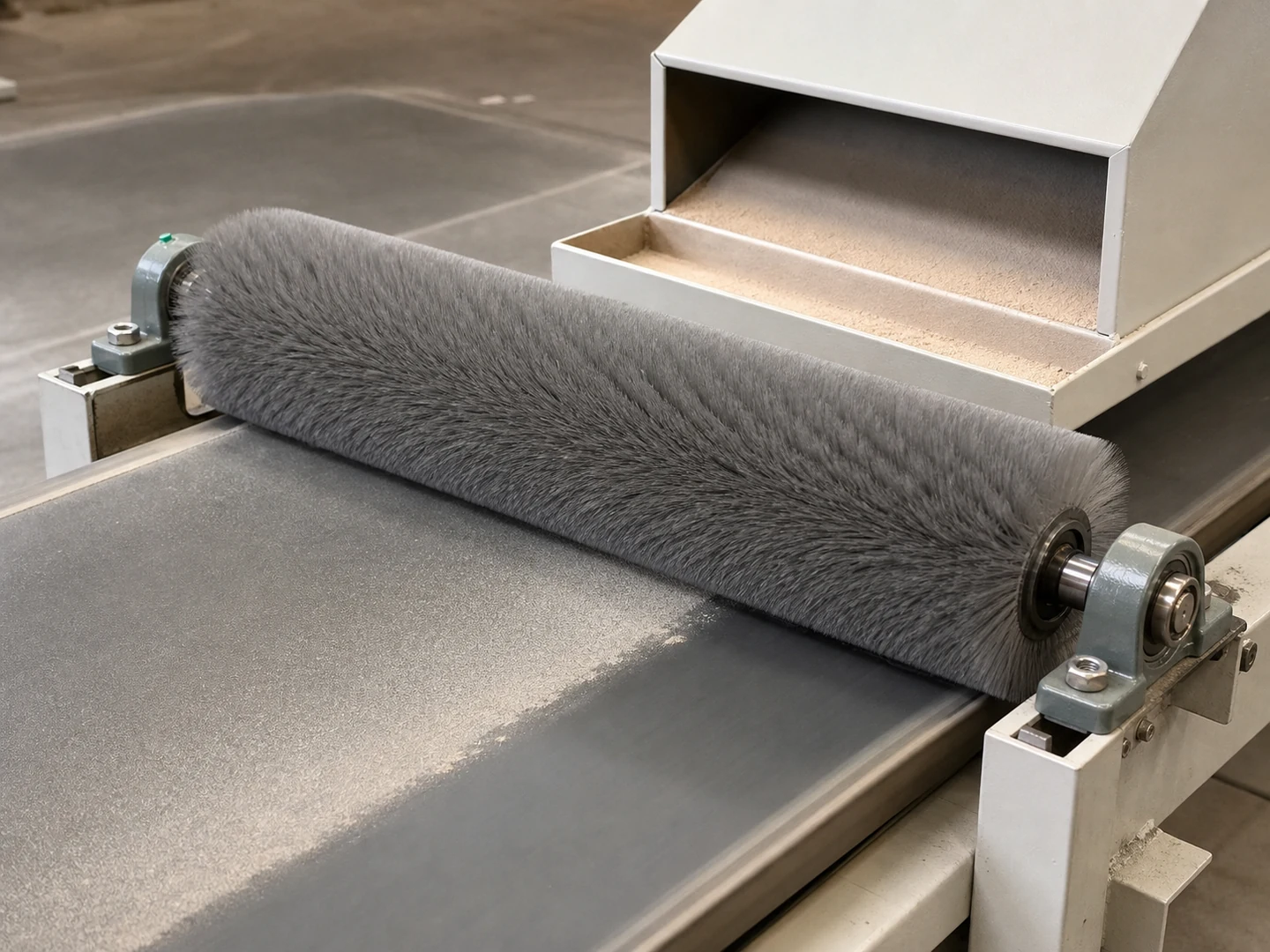
At a glance
- Cleaning target
- Loose dust / lint / fibers / fine particles
- Working environment
- Indoor Dry Area / Workshop / Electronics Area
- Cleaning method
- Dry Brushing / Vacuum-Assisted Cleaning
- Requirements to check
- ESD controls under IEC 61340 where electrostatic-sensitive equipment is involved
Dust is a static problem before it is a cleaning problem: whether the particles are conductive, combustible or food-grade decides the filament, and grounding decides whether the brush works at all.
What makes Dust Removal different from other industrial and manufacturing cleaning?
The main difficulty is removing dust, oil, process residue, particles, and bonded contamination from panels, profiles, slots, webs, conveyors, and accessible equipment surfaces without damaging the surface, loading the brush, or carrying contamination back into the process.
The work happens in indoor dry area, workshop and electronics area against loose dust, lint, fibers and fine particles.
The part people get wrong: this is not one job. The same equipment carries several targets, each with a different opening and a different residue, and one brush rarely covers them all.
What are the most common cleaning targets in Dust Removal?
There are 5 distinct targets here, and the brush that suits one will usually not reach another.
| Part or area | Residue type | Cleaning requirement |
|---|---|---|
| Fine Particulate Dust Removal | Dust, powder and compacted fines | The head must reach the working face and apply even contact without marking the surface. |
| Static-Sensitive Dust Removal | ||
| High-Temperature Dust Removal | ||
| Food-Powder Dust Removal | ||
| Bulk-Material Dust Removal |
What the equipment leaves you to work inside:
| Parameter | Typical range |
|---|---|
| Filament diameter | 0.30–2.00 mm; 0.10–1.27 mm |
| Trim length | 10–40 mm; 25–100 mm |
| Overall length | 150–600 mm; 120–1000 mm |
| Working size | 10–1,000 mm |
| Contact deflection | 1–10 mm |
| Operating temperature | -20–100°C |
Which brush types work for each cleaning target?
Strip, roller, detail brush, plate brush or grounded static-control brush.
| Cleaning target | Recommended brush type | Why it fits |
|---|---|---|
| Fine Particulate Dust Removal | Handheld Detail Brushes | Fine dust travels with whatever airflow the tool makes, so a hand-guided head lets the operator sweep toward collection instead of throwing it back into the room. |
| Static-Sensitive Dust Removal | On a static-sensitive part the risk is the discharge, not the dust, so the brush stays hand-guided and its filament is chosen to dissipate rather than hold charge. | |
| High-Temperature Dust Removal | Hot surfaces cannot be reached with a cloth or a hand, so a handled head keeps the operator back while heat-stable filament does the contact. | |
| Food-Powder Dust Removal | Food powder has to be swept without introducing a new contaminant, so a hand-guided head with a cleanable block is used and kept to its own zone. | |
| Bulk-Material Dust Removal | Bulk dust settles thick and stays loose, so a broad hand-guided head moves volume per stroke and keeps it going in one direction. |
How the brush is usually carried on the machine:
- Driven brush — use when dust, oil, process residue, particles, and bonded contamination needs repeatable scrubbing or controlled relative movement
- Passive or free-running brush — use for loose contamination and lower process complexity on panels, profiles, slots, webs, conveyors, and accessible equipment surfaces
- Localized hand, strip, or tube brush — use where only an edge, gap, port, or maintenance point needs contact
In practical brush terms: match the construction to the access before anything else. A geometry that cannot reach the target will not be rescued by a better filament.
What filament materials work best for Dust Removal?
Soft nylon/PBT, natural fiber, microfiber or documented conductive filament chosen based on surface and static risk.
| If the condition is… | Filament to start with | Why |
|---|---|---|
| Sensitive or coated surface | Nylon PA | balanced flex life and abrasion resistance |
| Wet, washdown, or detergent service | Polypropylene PP | acid, alkali, water, and detergent resistance |
| Bonded residue or aggressive cleaning | PBT | stable wet stiffness and low moisture uptake |
What the duty rules out before you start comparing grades:
| Constraint | Value for this application |
|---|---|
| Filament hardness | Soft |
| Maximum service temperature | 80°C |
| Chemical exposure | No added medium or compatible neutral cleaner |
| Cleaning method | Dry Brushing, Vacuum-Assisted Cleaning |
How do I choose the right brush for my dust removal equipment?
Classify the dust first — conductive, combustible or food-grade — because that fixes the filament and the grounding before geometry is discussed.
The order that avoids rework:
- Identify the target part and measure the access opening or clearance
- Describe the residue: what it is, how thick it sits, and how strongly it holds
- Choose the construction that can physically reach that target
- Set the filament from surface risk, working temperature and cleaning chemistry
- Fix filament diameter, free trim length and density for the contact pressure you need
- Run one cycle and check the result before committing to a production quantity
Before you commit to a quantity, say whether the dust is conductive, combustible or food-grade, and send the surface and reach dimensions.
When is a dust removal brush the wrong tool?
Vacuum extraction captures dust instead of redistributing it, which is what a brush alone always does. In a combustible-dust area an ungrounded brush is an ignition risk, so bonded and grounded extraction is the method and the brush only supports it.
What common mistakes should I avoid in Dust Removal?
- Not stating whether the dust is conductive or combustible, which is what sets the filament and the grounding
- Changing brush material while leaving excessive engagement, poor alignment, or no discharge path unchanged
- Copying a worn brush without recording motion, direction, mounting, and the original working diameter
If the brush is already in service and the result is wrong, work from the symptom:
| Symptom | What to change |
|---|---|
| Residue remains | Increase relative motion or discharge, then change filament diameter or density; do not add pressure before checking loading by dust, oil, process residue, particles, and bonded contamination. |
| Surface marks or scratches | Reduce engagement, use finer or softer fill, and remove trapped abrasive particles from contact with panels, profiles, slots, webs, conveyors, and accessible equipment surfaces. |
| Rapid wear or uneven cleaning | Check alignment, runout, support, motion, temperature, chemical attack, and whether the brush covers the complete working path. |
| Brush loads or redeposits residue | Open the fill pattern or add wash, vacuum, air, scraping, or a collection path so removed dust, oil, process residue, particles, and bonded contamination leaves the contact zone. |
Questions this page is asked
How should an ESD dust brush be verified after installation?
Measure the end-to-end path from the working fill through the holder and bond to the designated ground using the site's ESD control plan, specified instrument and environmental conditions. Repeat after wear, cleaning, reconnection and low-humidity exposure, since conductive fibres do not prove that the assembled brush remains grounded in service.
What should a dust-removal trial prove about released particles?
Run representative dust at the actual brush direction, speed, engagement and extraction airflow, then measure or inspect residual surface contamination, airborne escape, redeposition and accumulation near bearings or guards. Accept the arrangement only when loosened particles reach the intended collector and brush shedding remains within the process limit.
Guides that go deeper on this
Custom Brush Rollers for Dust Removal from Plastics and Film
Read this guideGuideElectronics Cleaning Brush: Material and Size for PCB Dust
Read this guideGuideHow to Choose ESD Brush for PCB Dust Removal
Read this guideGuidePrecision and Delicate Surface Brush Design
Read this guideGuideWhat Do Plastic Processing Lines Demand From a Brush Roller?
Read this guideGuideWhich Dust Removal Brushes Suit a Battery Conveyor Line?
Read this guideGuideAnti-Static Brush for PCBs: How Fast Does Charge Drain?
Read this guideGuideAnti-Static Carbon Fiber Printing Brush: When Does It Make Sense?
Read this guideGuideAnti-Static Printing Brush: Which Fibre Dissipates the Charge?
Read this guideGuideCement Conveyor Cleaning Brush: Roller or Strip, and What Fill?
Read this guideGuideCeramic Green Body Brushes: Soft Fill That Won't Damage
Read this guideGuideCopper and Aluminum Foil Brushes: Dust Without Scratches
Read this guide34 guides are indexed against this one. The rest are in the technical resources library.
Continue Exploring
Recommended Reading & Related Brush Resources
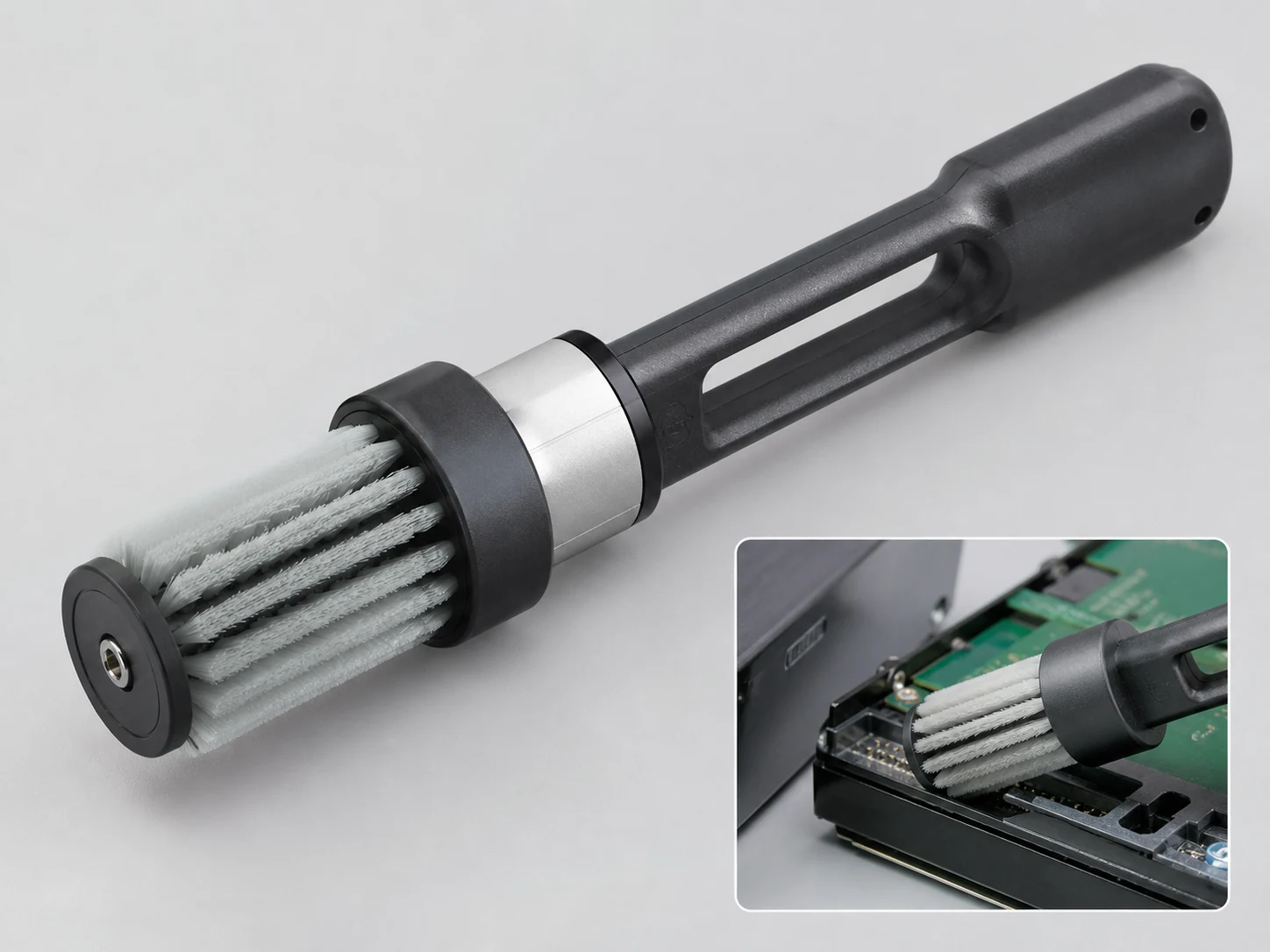
Dust Removal Lithium Battery Brush
Dry-contact brush for lithium battery electrode manufacturing. Removes powder, metal fines, and coating particles…
See the specification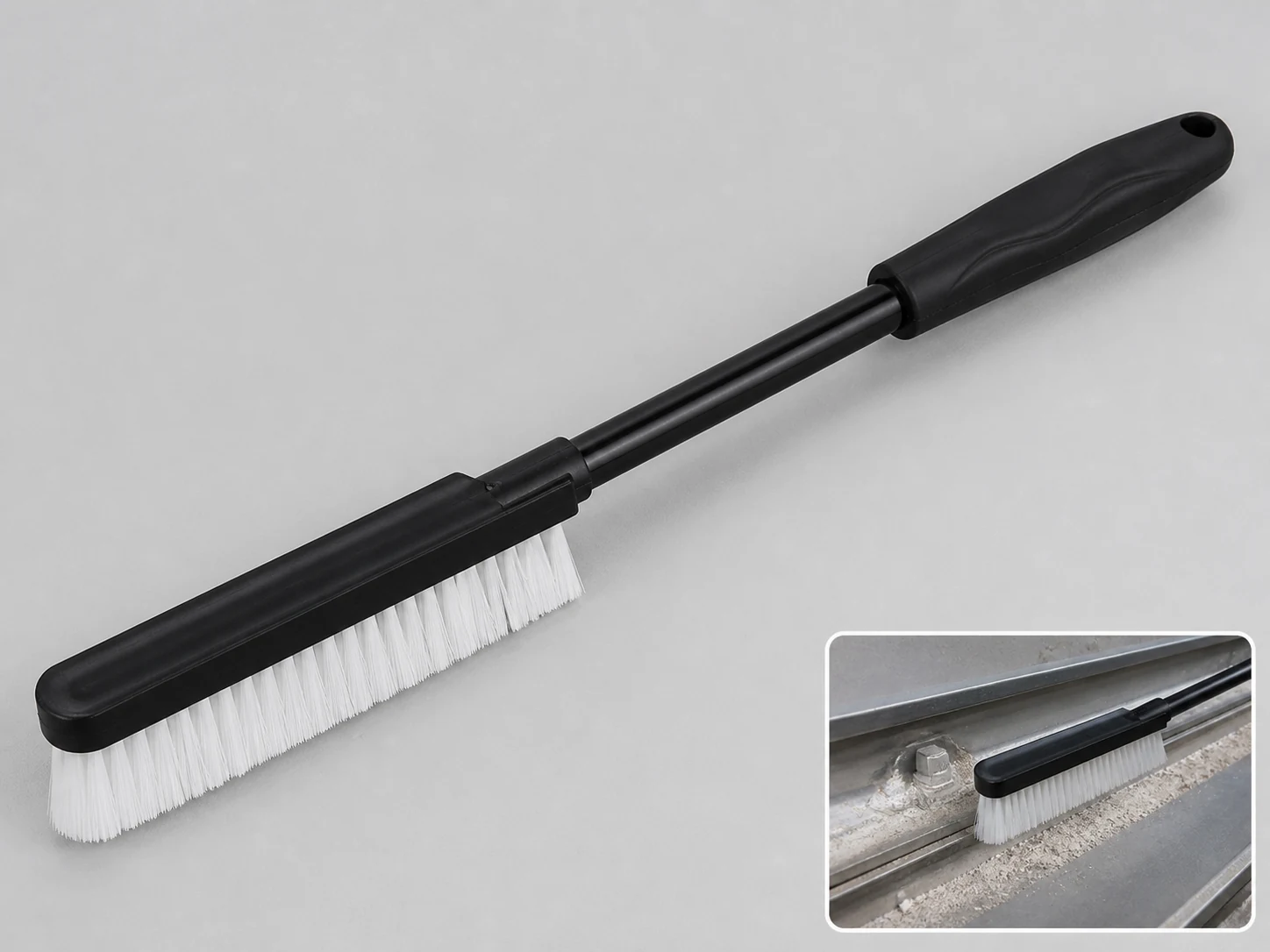
Nylon Dust Removal Brush
Custom Nylon PA dust removal brushes for panels, profiles, slots, and equipment surfaces. Fine…
See the specification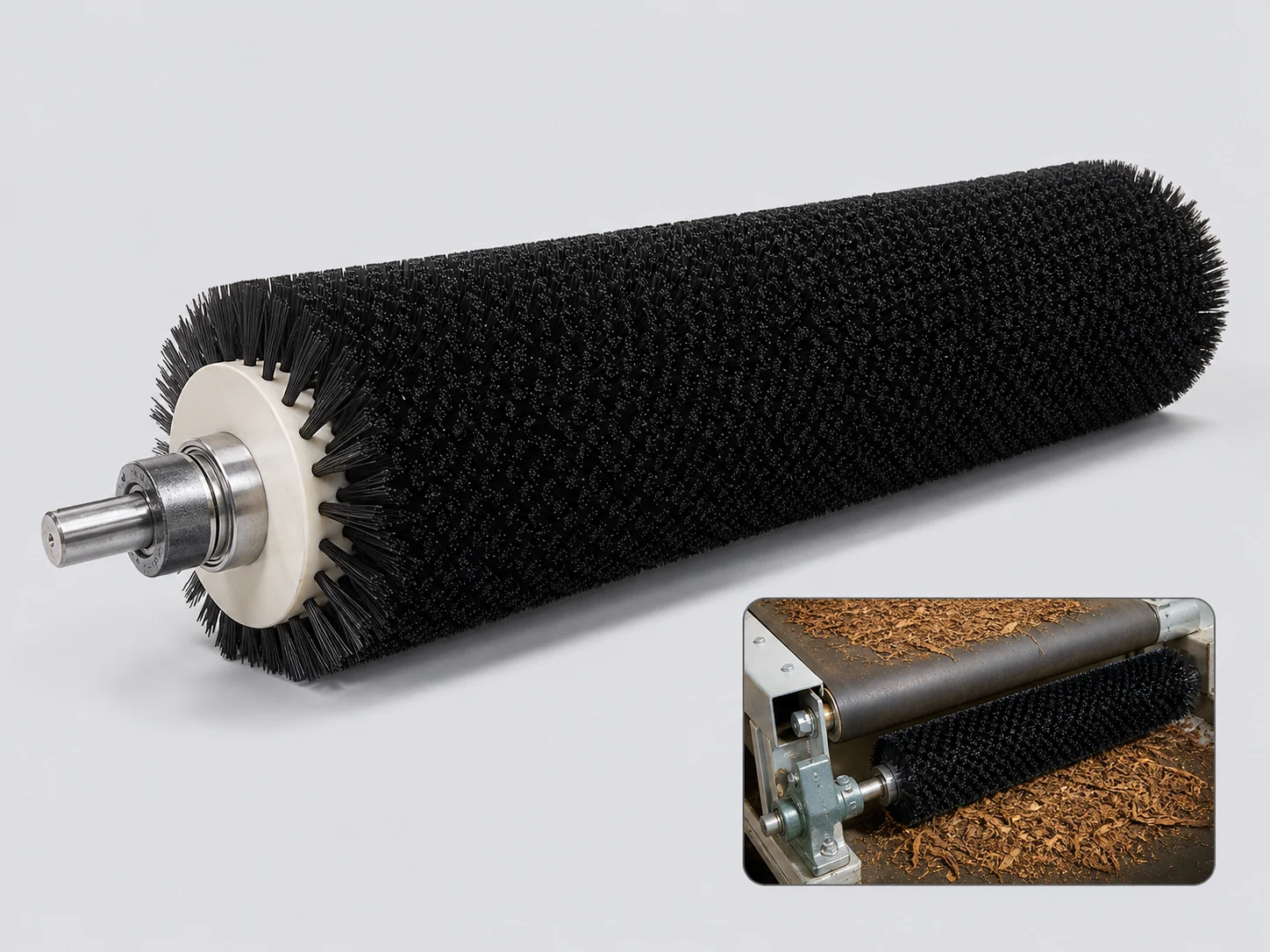
Nylon Dust Removal Tobacco Brush
Dry-use nylon fill from 0.05 mm reaches tobacco dust in guides, gaps and panel…
See the specification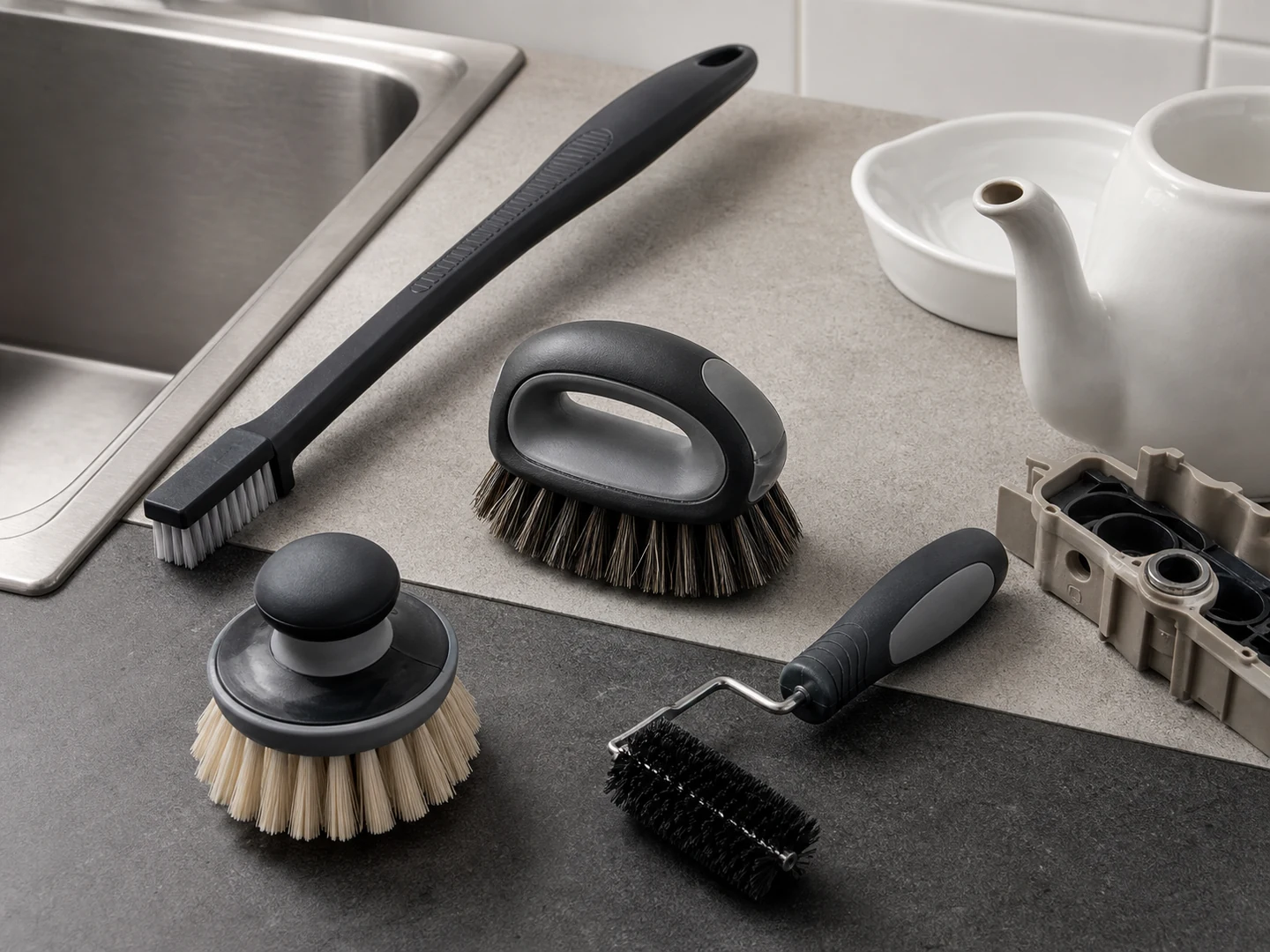
Custom Handheld Detail Brushes
Choose a handheld detail brush when you need direct control in seams, recesses, fittings,…
See how this type is built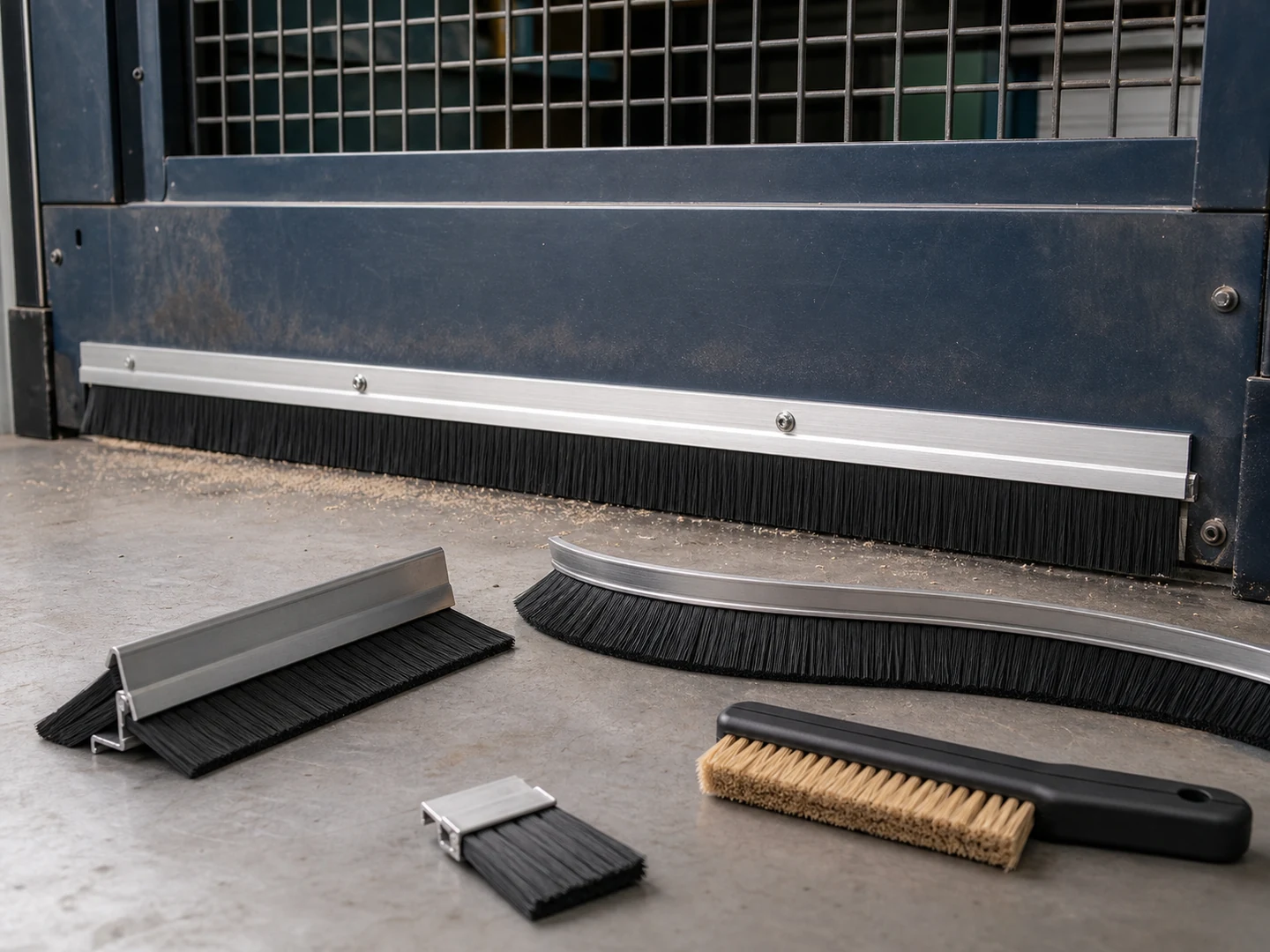
Custom Strip Seal Brushes
Choose a strip seal brush when a continuous line of filament must seal, wipe,…
See how this type is built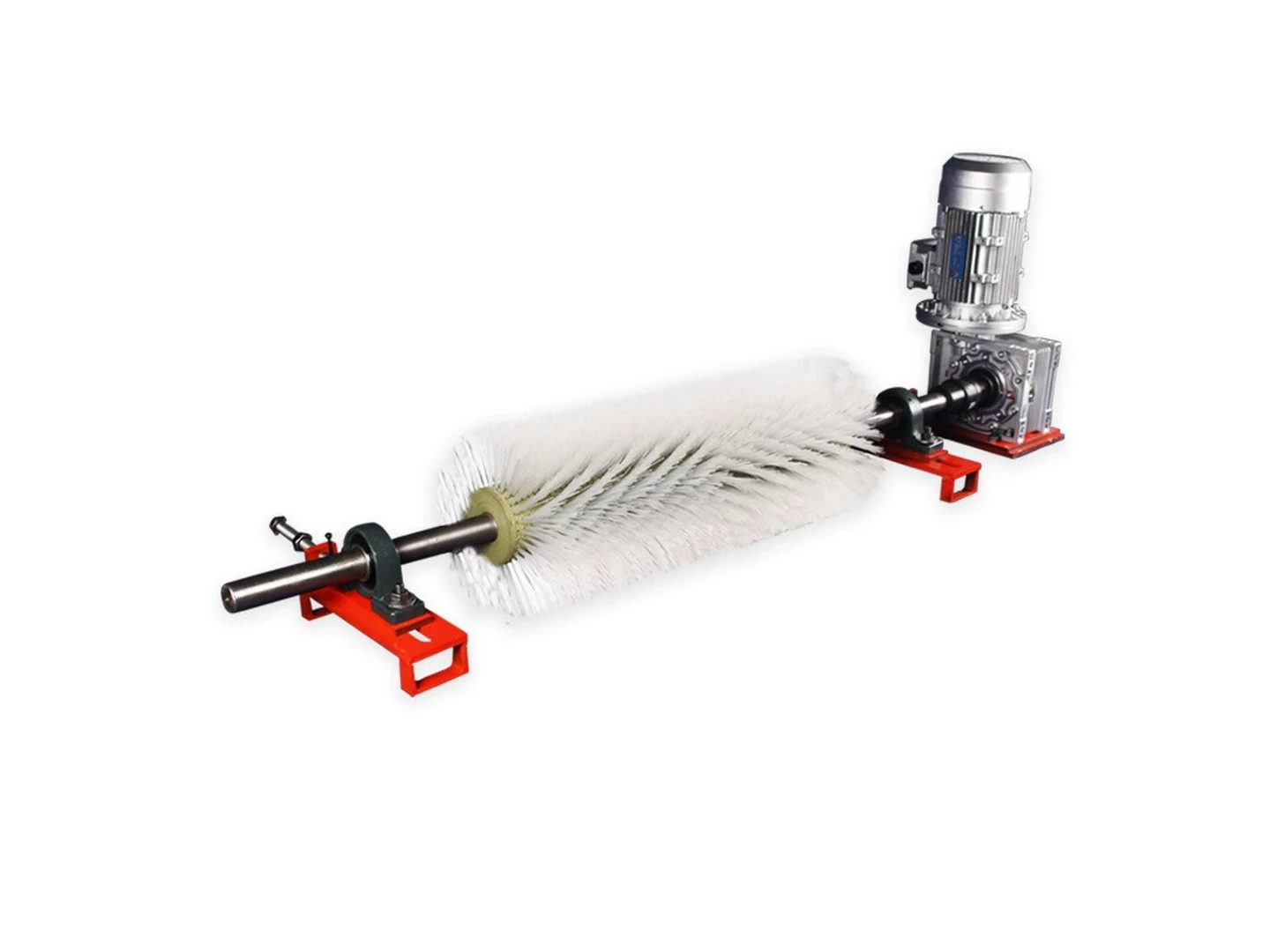
Custom Roller and Conveyor Brushes
Choose a roller or conveyor brush when a cylindrical brush must clean, wipe, guide,…
See how this type is built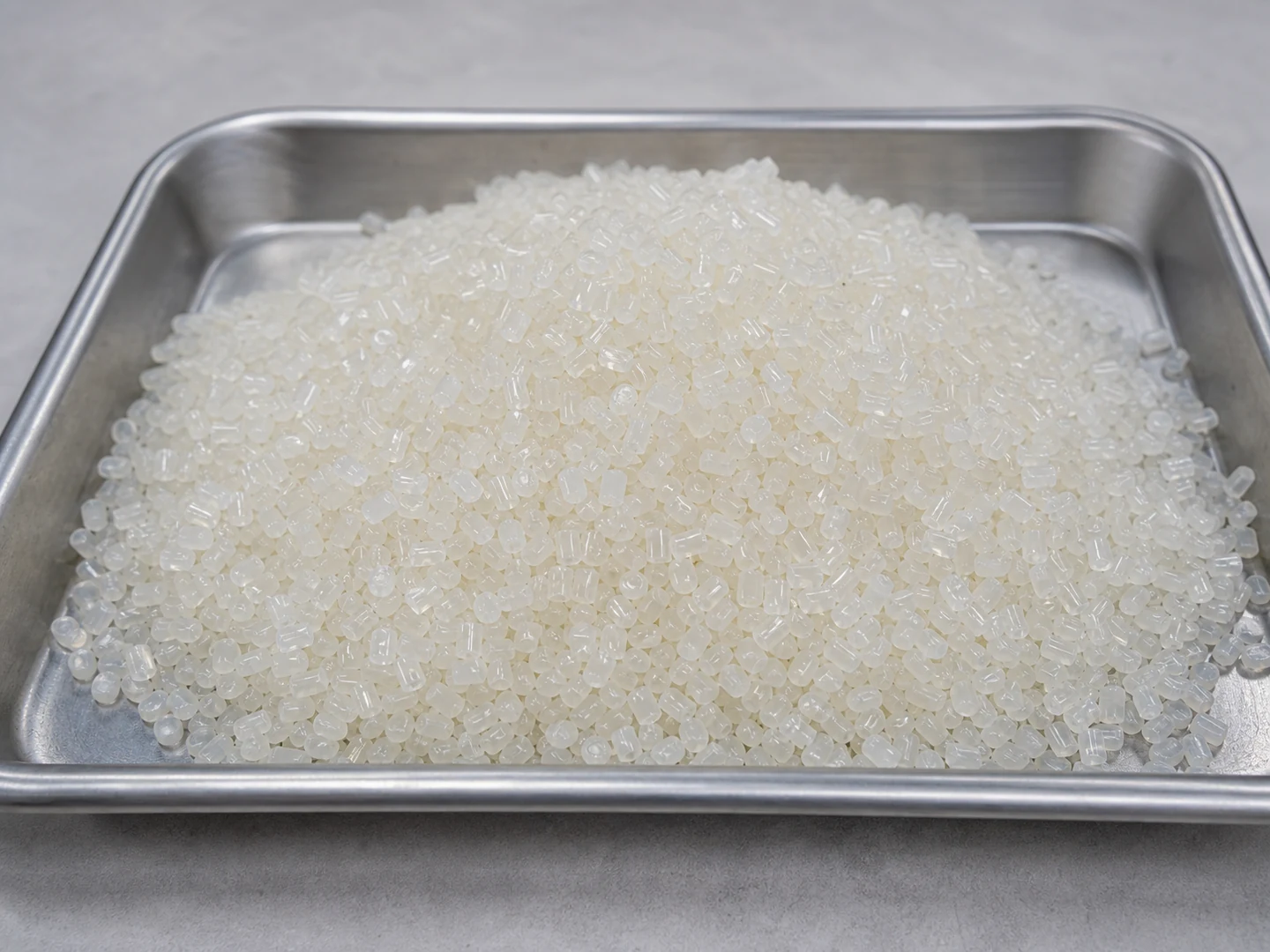
Nylon PA
Choose Nylon PA based on its stiffness, recovery, wear, wet-service, chemical, and temperature behavior.
Compare this material
PBT
Choose PBT based on its stiffness, recovery, wear, wet-service, chemical, and temperature behavior. Do…
Compare this materialCustom Manufacturing RFQ
Discuss This Application
Share the working surface, residue, dimensions, material direction, interface, quantity and drawing or sample photo.
Custom Brush RFQ
Request a Custom Cleaning Brush Quote
Upload a drawing, product photo, or sample photo and provide the core dimensions and cleaning conditions.
“We need a brush to remove wet residue from a stainless steel conveyor, about 800mm wide. The current brush wears quickly. We can send photos.”
“We sell drinkware and need a cleaning brush to include with the product. Quantity around 5,000 pieces.”