
Custom Cleaning Brush
Pipe Cleaning Brush
Pipe cleaning brushes for bores from 3.2 to 50.8 mm. Nylon PA or 316 stainless steel wire fill, single or threaded stems. For tubes, ports, and hoses.
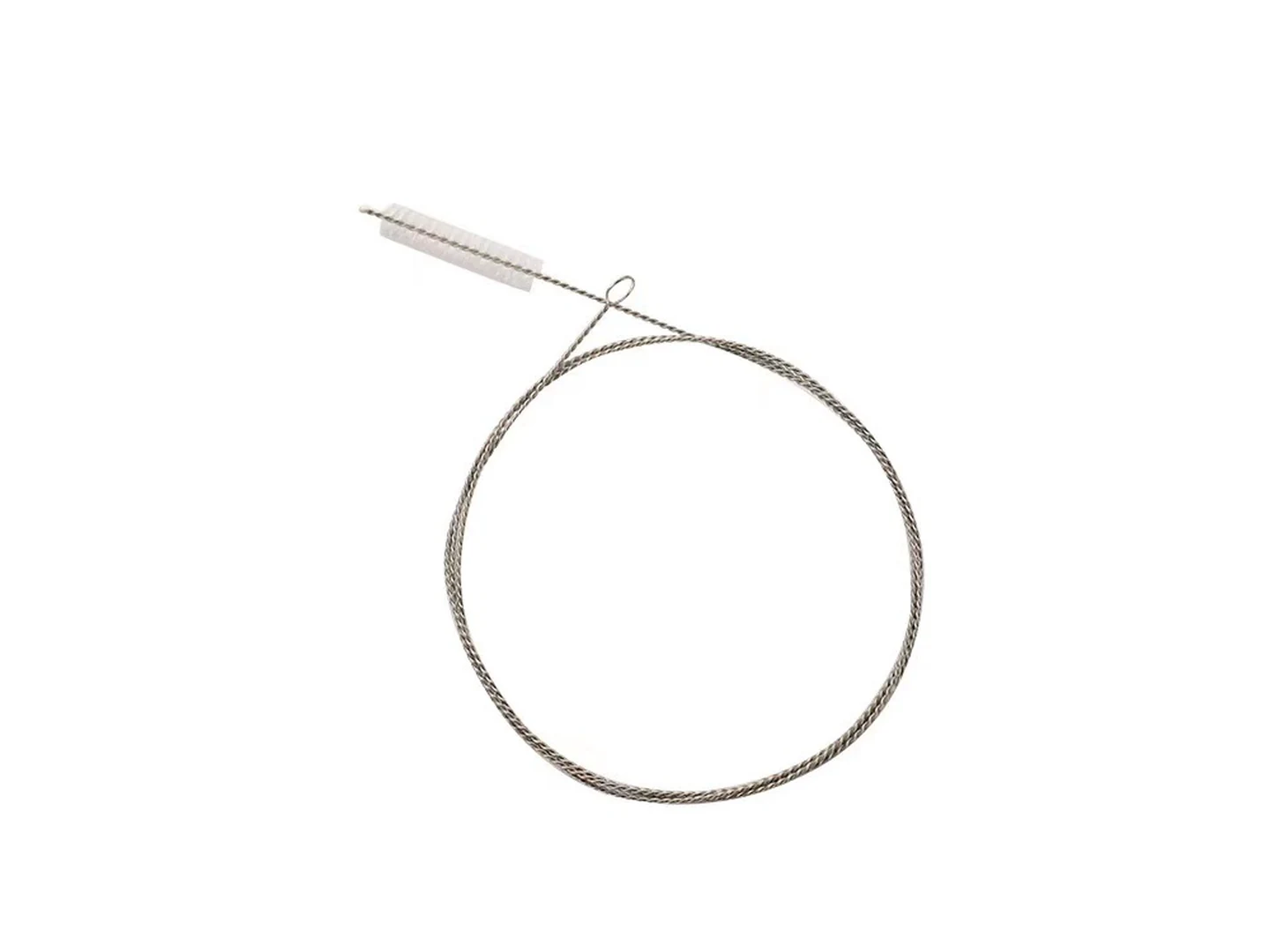
Small brush
500 pcs
Minimum order
Held in one hand: tube, bottle, detail and swab brushes — including long-handled ones with a small head.
Production lead time, once the specification is confirmed
- Up to 500 pcsWithin 7 days
- 501–50,000 pcsWithin 14 days
- Over 50,000 pcsWithin 21 days
Peak season can extend these times; the shipping date is confirmed in writing with your quotation. Sampling and shipping are quoted separately.
A hand-guided pipe cleaning brush for internal bores, tubes, ports, channels, and hoses, built with selectable nylon PA or 316 stainless steel wire fill and multiple stem mounting options.
It removes oil films, powder, biological residue, scale, rust, chips, and burrs from passages with brush ODs from 3.2 mm to 50.8 mm.
What can this brush do for you?
Reach inside bores and maintain contact on the full wall
Fill diameters from 3.2 mm to 50.8 mm and brush sections from 25 mm to 127 mm let the tool follow short port walls or longer tube runs while the radial filament pattern keeps contact around the entire circumference. Blind spots at the bottom of a cross-drilled port or along the top of a horizontal tube are controlled by the brush geometry, not by how hard the operator pushes.
Choose wiping or scrubbing contact
Near-size fill works as a wiping action for coolant films, light oils, powder, and loose deposits. Oversizing flexible polymer fill by 5–20% creates actual scrubbing pressure against the bore wall, while wire fill runs at lower interference to avoid excessive stem torque or surface digging. One pipe brush platform can be built for either contact mode.
Match the fill to the residue
Nylon PA fill removes soft films, powder, biological residue, and light oil without scratching softer or plated surfaces. 316 stainless steel wire fill handles rust, scale, chips, burrs, and baked-on deposits in metal tubes and fittings. The fill is not a cosmetic choice; it sets what the brush can remove and what it leaves behind.
Adapt the stem to the way you drive it
Single-stem construction suits hand use and general maintenance; double-stem, threaded, loop, ring, and flexible extension options support drill or chuck mounting, machine heads, pull cords, and angled access paths. The brush fits your existing cleaning motion instead of forcing a new one.
Order the reach your passage actually requires
Overall lengths from 152 mm to 406 mm plus adjustable brush section placement let the working zone reach the deepest point of a manifold, heat exchanger tube, or long fitting while the operator still holds a stable working end.
What is a Pipe Cleaning Brush?
A Pipe Cleaning Brush is a cylindrical internal-cleaning tool that uses radial fill around a central stem to remove deposits from bores, tubes, ports, channels, hoses, and other internal passages. It exists for one reason: reaching a space that open brushes and wipes cannot contact and working the inner wall until the residue releases.
Most configurations use a twisted or wound wire stem that holds the fill in place. The fill may be nylon PA, PBT, brass, stainless steel, carbon steel, or abrasive nylon, and the stem may be straight, bent, threaded, looped, or flexible. In use, the brush is pushed, pulled, or rotated through the passage so the filament ends wipe or scrape the bore surface.
The tool is sized by bore ID, brush section length, and overall reach, not by the outside diameter of the pipe. Two pipes with the same OD can have very different internal passages, and the wrong internal fit will either bind or leave residue untouched.
A pipe cleaning brush is a mechanical cleaning step. It removes attached material so a flush, rinse, or inspection can finish the job. It does not dry, sterilize, or replace process cleaning in hygienic lines.
Technical Specifications
The standard building ranges below cover most tube, port, and hose maintenance jobs. Actual values are set to the minimum bore ID and the contact mode your application requires.
| Parameter | Value / Options |
|---|---|
| Brush OD | 3.2–50.8 mm, selected to bore ID and contact mode |
| Brush section length | 25–127 mm |
| Overall length | 152–406 mm |
| Filament diameter | 0.08–0.25 mm, finer for wiping and narrow bores, coarser for stiffer scrubbing |
| Fill material | Nylon PA, PBT, brass, stainless steel, carbon steel, abrasive nylon |
| Stem style | Single stem, double stem, threaded, loop, ring, flexible extension |
| Stem material | 316 stainless steel wire standard, other grades for specific corrosion or process needs |
| Contact setting | Near-size for wiping; 5–20% oversize for flexible polymer scrubbing; lower interference with wire |
| Motion / drive | Hand push-pull and rotation, drill or chuck mounting, machine rotation, or pull-through depending on stem |
| Process environment | Fill and stem grade selected for detergent, coolant, solvent, temperature, wet or dry exposure |
| Brush type | Custom Tube & Pipe Bore Brushes |
| How it is driven | Hand-guided |
| Cleaning target | hydraulic and pneumatic manifold, copper tube and fitting preparation, and heat exchanger cleaning |
| Surface or part | tubes, ports, bores, pipes, passages, channel, hoses, and walls |
| Residue or debris | scale, powder, burrs, chips, biological residue, oil, rust, and coolant |
| Mounting / connection | Hand push-pull and rotation, drill or chuck mounting, machine rotation, or pull-through depending on stem |
Where does this brush work best?
- Hydraulic and pneumatic manifolds with cross-drilled ports that trap chips, burrs, and dried coolant.
- Copper tube and fitting preparation where stainless steel wire fill removes oxidation, flux residue, and loose scale before soldering or pressing.
- Heat exchanger, condenser, and boiler tubes where scale and deposit films reduce heat transfer.
- Food and beverage transfer lines and fill ports where soft films, powder, or biological residue need routine mechanical removal with a rinseable fill.
- Maintenance and repair of drains, hoses, and small channels where a cloth or sponge cannot reach.
How do I choose the right one?
Start with the narrowest internal diameter the brush must pass through, not the nominal pipe size. Then set the brush OD by contact mode: near-size for wiping, 5–20% oversize for flexible polymer scrubbing, and lower interference for wire fill.
For fill selection, use this quick match:
| Residue or surface condition | First fill choice |
|---|---|
| Oil, coolant film, powder, light biological film | Nylon PA or PBT |
| Rust, scale, chips, burrs, carbonized deposits on metal | 316 stainless steel wire |
| Copper fitting oxidation before soldering | Stainless steel wire at lower interference |
| Delicate, plated, or coated bores | Nylon or softer polymer at near-size contact |
Then choose the filament diameter within the 0.08–0.25 mm range. Finer filaments are better for wiping, narrow bores, and surface-sensitive parts; coarser filaments apply stiffer scrubbing action. Wire fill requires lower oversize than polymer fill because metal filaments do not deflect the same way.
Match the stem to how you will drive the brush. Hand use works with a single straight stem or a loop/ring pull. Powered rotation needs a shank or threaded end that fits the drill, chuck, or machine head. Bent or flexible extensions suit passages that are not straight. Check that the overall length lets the working section reach the deepest point while the operator holds the tool safely and with control.
When another tool is a better fit: bores below 3.2 mm generally need a micro tube brush or a swab. Heavy weld scale or thick uniform mineral scale may be faster with powered abrasive brushing or chemical descaling before finishing with this brush. Very long, non-rigid lines may need a pull-through brush with a cord on both ends rather than a rigid stem.
Can I customize this brush?
Pipe cleaning brushes are built to the passage, not picked from a fixed size. To define a custom configuration, provide the minimum bore ID, the length of the area to be brushed, total reach, any bends or port intersections, surface material, residue type, cleaning chemical or temperature, and the desired drive method.
We can adjust:
- Fill material and filament diameter
- Brush OD and brush section length
- Overall length and stem length
- Stem style: single, double, threaded, loop, ring, or flexible extension
- Stem material and coating
- Handle or mounting end shape
- Color and marking for identification
- Packaging, from bulk to individual bag or kit
If your project requires material declarations, inspection records, or third-party testing support, we can assist with those requirements during the customization process.
Which filament survives the cleaning chemicals a pipe cleaning brush meets?
How can I tell whether I need a near-size or oversize brush?
If the residue is a film that wipes off with light contact, near-size fill is usually enough. If it needs pressure to break loose, oversize the polymer fill by 5–20%. Wire fill should start at lower interference and be increased only after a test pass, because excessive wire interference can dig into the bore or twist a long stem.
Can the same brush be used in wet and dry passages?
Yes, if the fill and stem are selected for both conditions. Stainless steel wire works in wet and dry service. Nylon PA absorbs some moisture and softens slightly when wet, so a brush sized dry may behave differently in a flooded tube. Specify wet, humid, or steam exposure when the brush is specified.
How do I clean and inspect the brush after use?
Rinse the fill with a process-compatible cleaner to remove trapped debris, then check the stem for bends and the fill for missing, flattened, or collapsed filaments. If the brush no longer contacts the bore evenly, or if the stem has a permanent set, replace it before the next cleaning cycle.
How do I know when the bore is clean?
After brushing, run a white wipe or borescope through the passage. On bare metal, the wall should be free of visible film and the wipe should come back without residue. On coated or plated surfaces, check that the coating is still intact and that no residue remains in the threads, corners, or port intersections.
When should I use chemical descaling or a flush instead of a brush?
If the deposit is thick, uniform scale across a long run, or located beyond the brush reach, chemical descaling or high-pressure flushing may be more efficient. A brush is the better choice for attached deposits in accessible passages, localized scale, chips, burrs, and film that flushing alone will not remove.
Is nylon or wire safer for plated or coated pipes?
Nylon PA is generally the safer choice for plated, coated, or soft metal passages. Wire fill removes rust and scale well but can score or strip a coating if the interference is too high. For copper pipe preparation, stainless steel wire at lower interference removes oxidation without the aggressive digging of higher interference. Test on a sample section before committing the full order.
Guides that go deeper on this
Drain Pipe Brush: Specs for Curved Pipes
Read this guideGuideDrain Pipe Brush: Specs for Food and Beverage Tubing
Read this guideGuideDrain Pipe Brush: Specs for Small Internal Diameters
Read this guideGuideLong Handle Pipe Brush: Specs for Curved Pipes
Read this guideGuideLong Handle Pipe Brush: Specs for Food and Beverage Tubing
Read this guideGuideLong Handle Pipe Brush: Specs for Small Internal Diameters
Read this guideGuideTube Brush Stroke Length and Frequency for Internal Pipe Cleaning
Read this guideRELATED BRUSH RESOURCES
Recommended Reading & Related Brush Resources
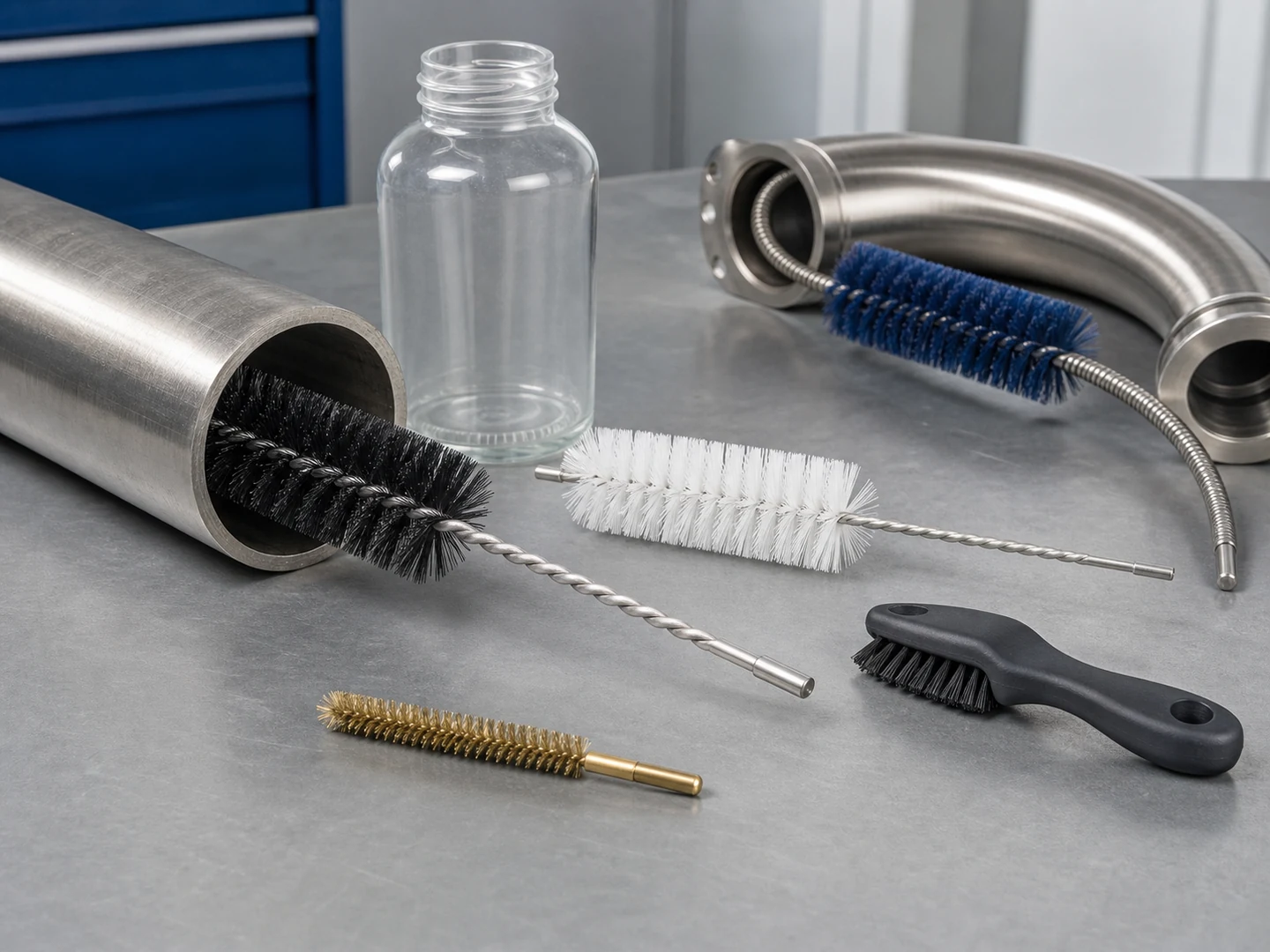
Custom Tube & Pipe Bore Brushes
Choose a tube, pipe, or bore brush when the working surface is inside a…
See how this type is built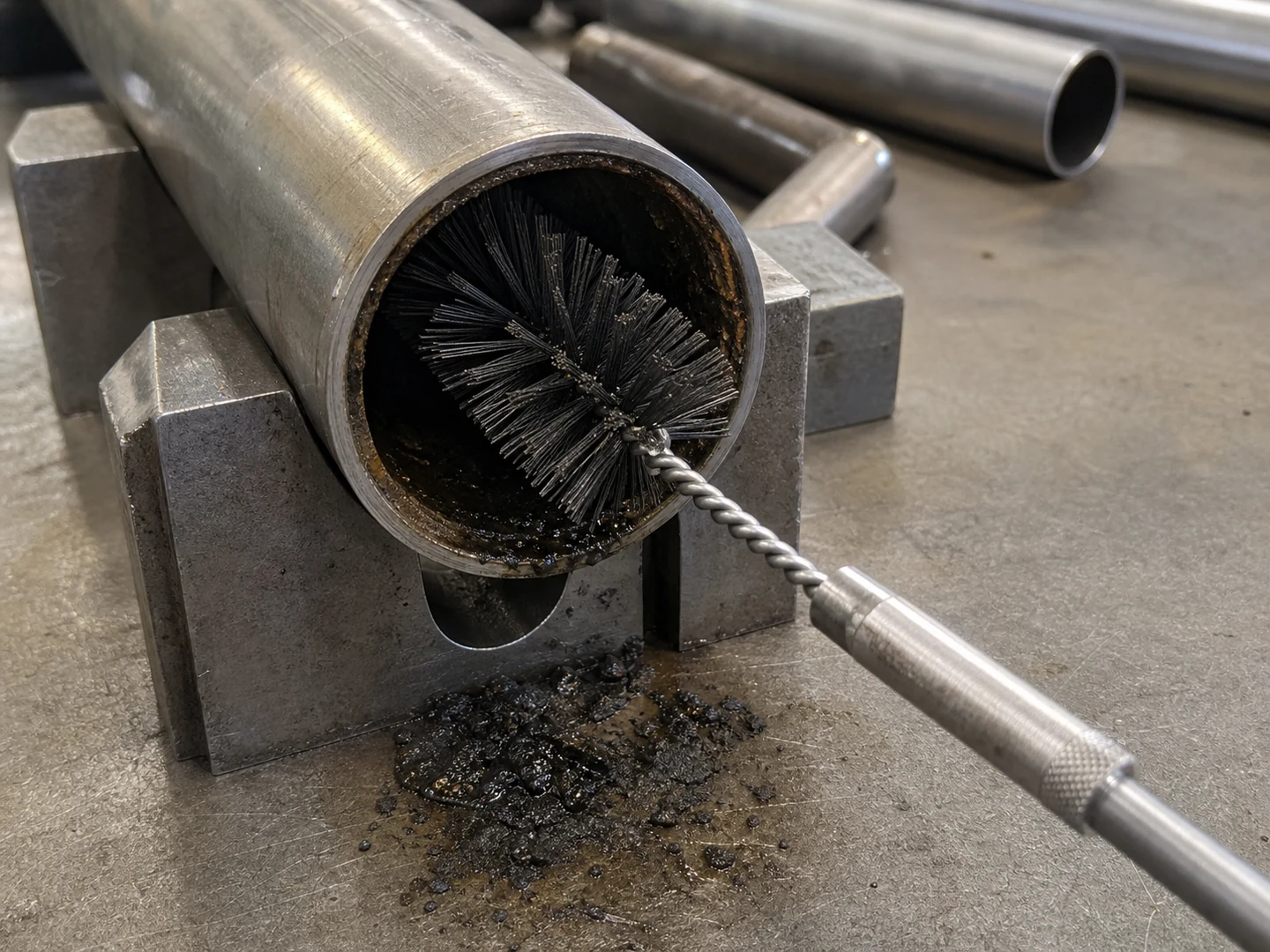
Tube & Pipe Cleaning
For Tube & Pipe Cleaning, the brush must reach the working area, disturb or…
See the cleaning job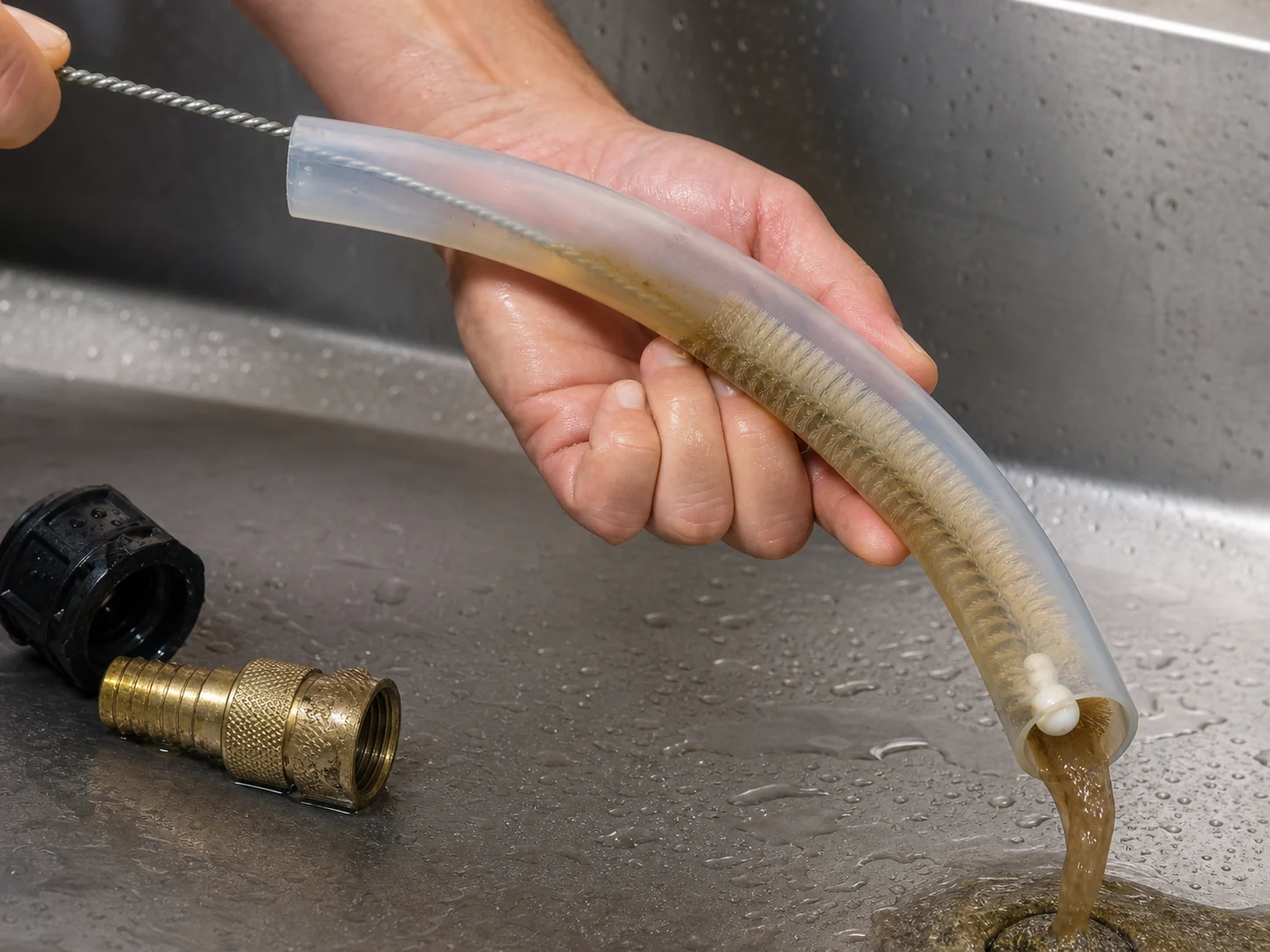
Hose Cleaning
For Hose Cleaning, the brush must reach the working area, disturb or collect oil…
See the cleaning job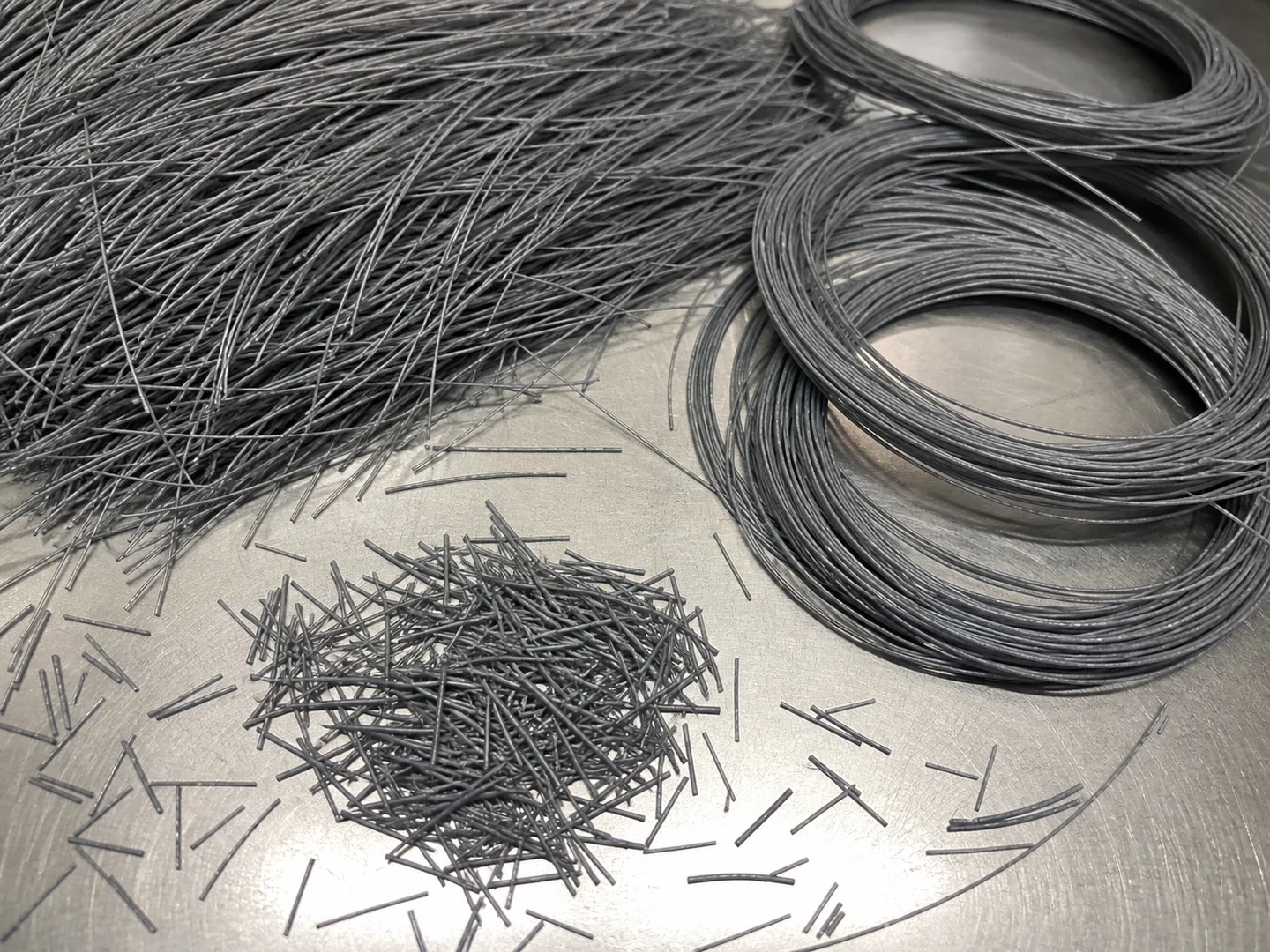
Abrasive Nylon
Choose Abrasive Nylon based on its stiffness, recovery, wear, wet-service, chemical, and temperature behavior.
Compare this material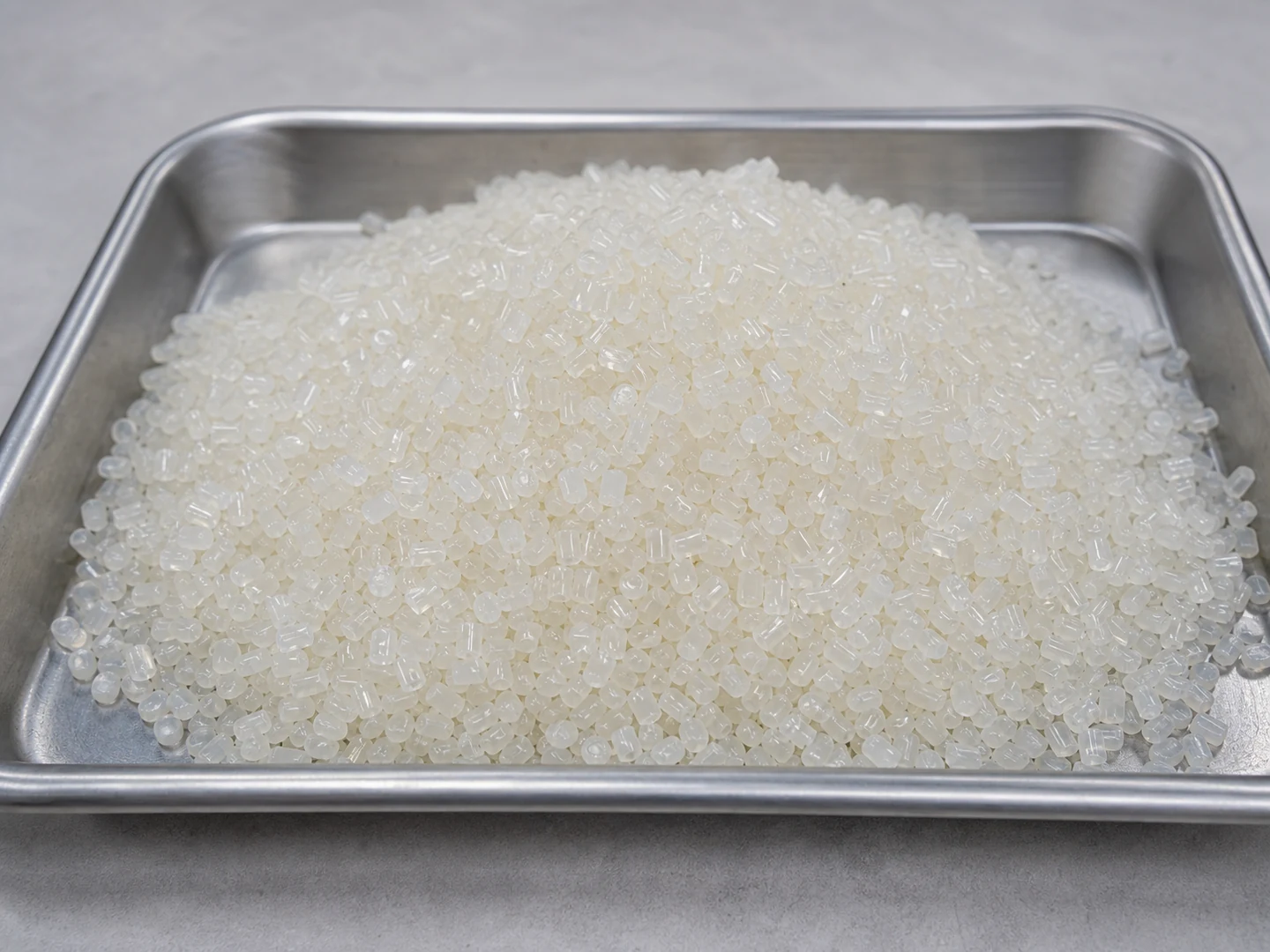
Nylon PA
Choose Nylon PA based on its stiffness, recovery, wear, wet-service, chemical, and temperature behavior.
Compare this material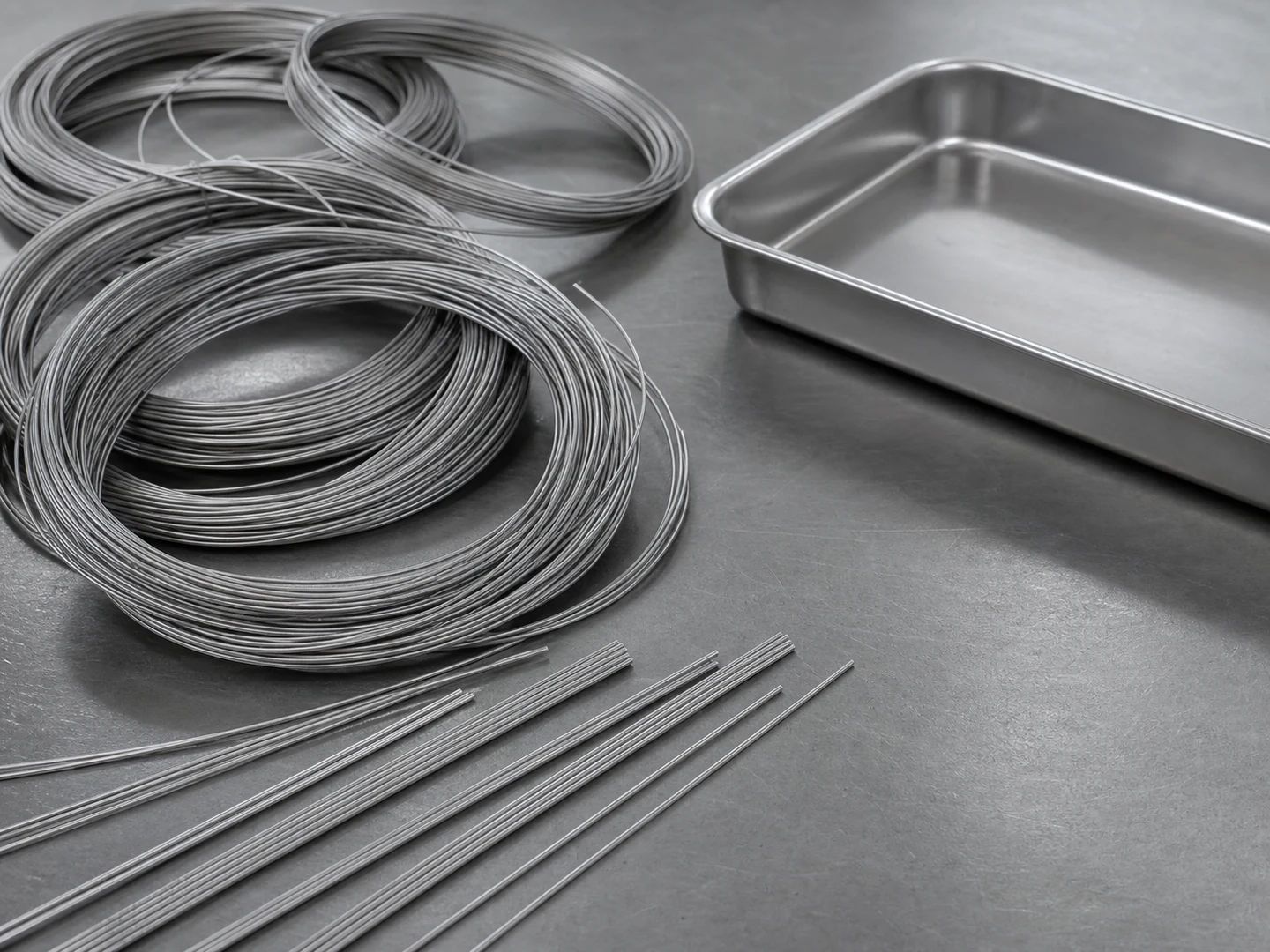
AISI 316 Stainless Steel Wire
Choose AISI 316 Stainless Steel Wire based on its stiffness, recovery, wear, wet-service, chemical,…
Compare this material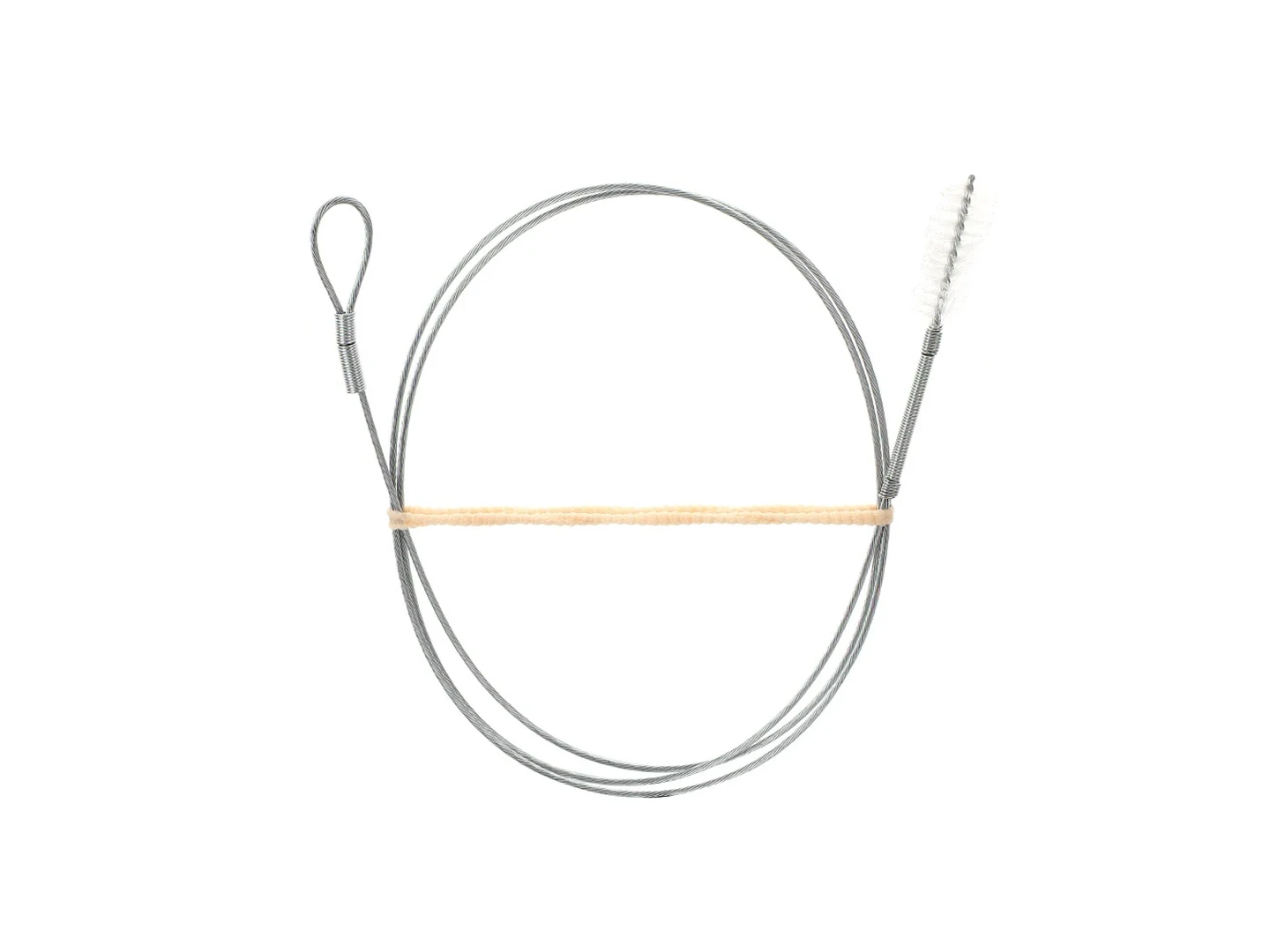
Pipe Cleaner Brush
Custom pipe cleaner brushes for tube and bore cleaning. Brass wire or nylon PA…
Compare the specification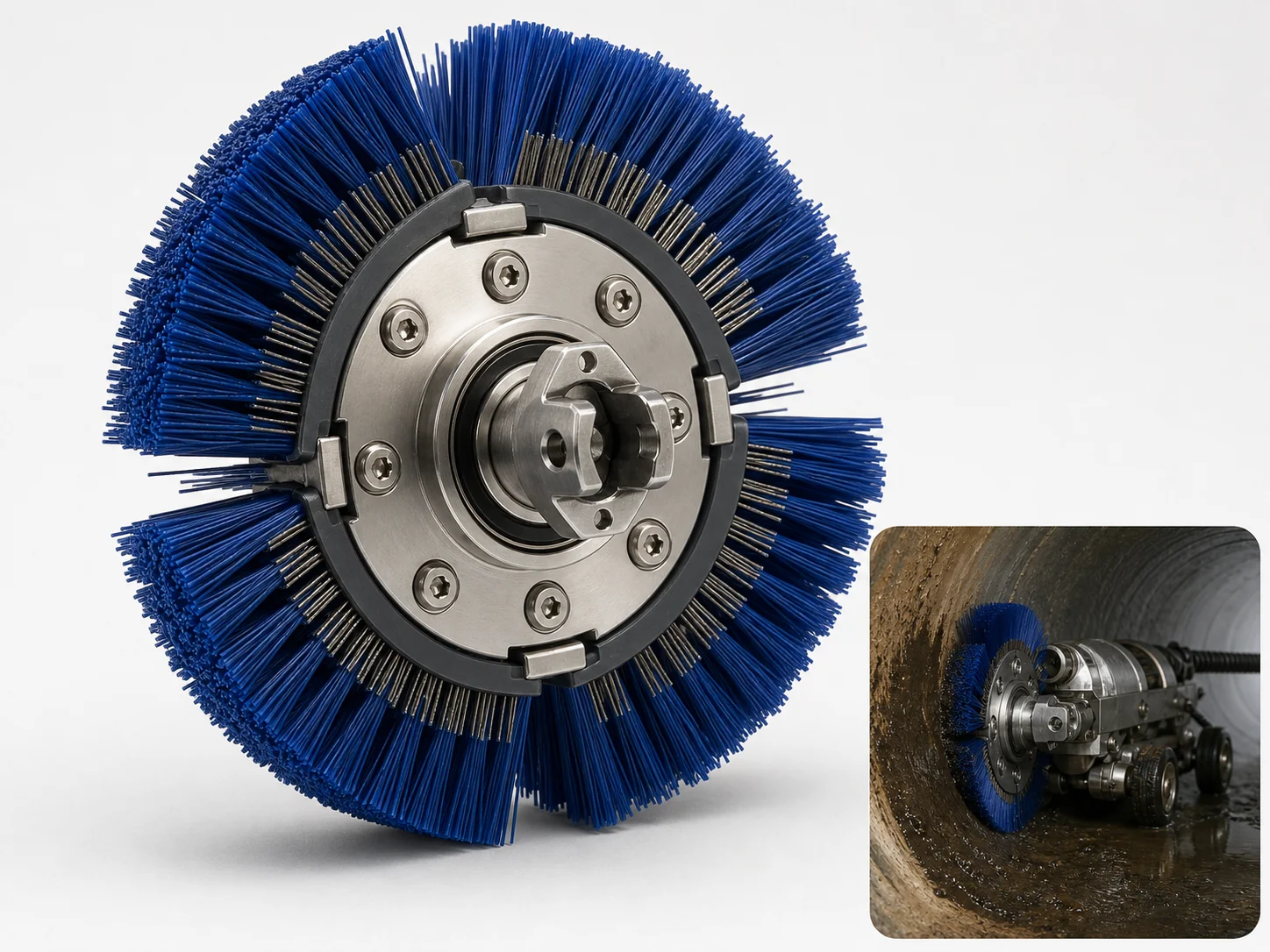
Pipe Robot Brush Attachment
Custom pipe robot brush attachments built to your robot's drive interface and pipe geometry.
Compare the specificationCustom Manufacturing RFQ
Describe Your Application
Please include the main sizes, application, residue, preferred material, interface, quantity, and any drawing or sample available.
Drawing or photo optional — it speeds things up, it does not gate the enquiry.
Custom Brush RFQ
Send Your Brush Project
Upload a drawing, product photo, or sample photo and provide the core dimensions and cleaning conditions.
“We need a brush to remove wet residue from a stainless steel conveyor, about 800mm wide. The current brush wears quickly. We can send photos.”
“We sell drinkware and need a cleaning brush to include with the product. Quantity around 5,000 pieces.”