Quick Answer
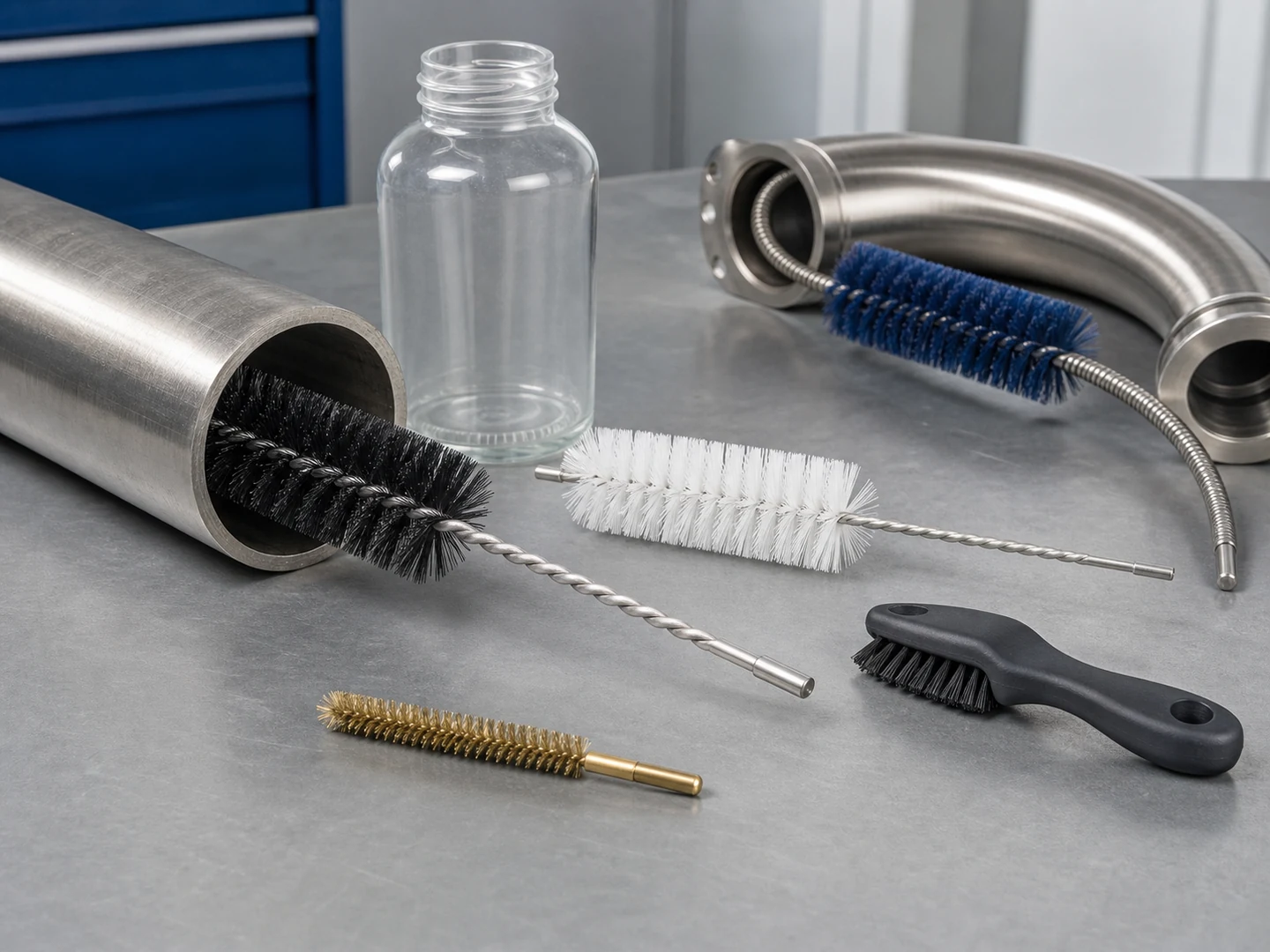
Internal cleaning succeeds when the filament tips reach every wall and the brush can pass through the full geometry without jamming. Bore diameter alone is not enough: include length, bends, steps, ports, bottom shape, residue, and access direction.
Map the Internal Geometry
- Straight through-hole: single or double stem, push/pull or powered rotation.
- Blind hole: radial or fan tip that reaches the bottom without a cut stem.
- Cross-hole: side contact or abrasive nylon that reaches the intersecting edge.
- Curved tube: flexible stem, cable, pull-through brush, or fluid-assisted system.
- Stepped bore: tapered or multi-diameter brush section.
- Threaded port: brush diameter and filament selected to enter the root without damaging the crest.
Residue and Surface Matrix
| Residue | Surface | Brush direction |
|---|---|---|
| Dust / chips | Metal, polymer, glass | Fine nylon, PBT, horsehair, air-assisted brush |
| Oil film | Metal or polymer | Nylon 612, PBT, polypropylene with detergent flow |
| Carbon / baked residue | Durable metal | Stainless, carbon steel, brass, or abrasive nylon |
| Rust / scale | Ferrous metal | Carbon steel, stainless steel, or coarse abrasive nylon |
| Light burrs | Machined bore or cross-hole | Abrasive nylon selected by grit and desired edge radius |
| Sensitive polished channel | Glass, coated metal, medical/polymer device | Fine polymer fill and protected tip |
Stem, Tip, and Connector
Single stem suits small diameters and hand cleaning. Double stem adds torsional strength for denser powered brushes. A loop supports manual pull-through use. A cut stem fits a drill or collet. Threads connect to rods, flexible shafts, and tube-cleaning machines. A fan, radial, tied, or protected tip controls bottom contact and entry.
Process Limits
Do not force a brush through a sharp bend or reduced port. A brush that is too small leaves untouched bands; one that is too large folds, jams, or breaks the stem. Long unsupported stems can whip at speed. Use guides, flexible shafts, or lower equipment speed when the stem length exceeds the stable driven span.
Inspection Plan
Inspect the complete circumference, bottom, ports, and thread roots. Record cleaning passes, fluid, speed, brush wear, trapped debris, surface finish, and any broken filament. For production cleaning, use a go/no-go gauge or marked brush size so operators do not substitute a smaller brush.
Technical References
- CDC — Cleaning, Guideline for Disinfection and Sterilization in Healthcare Facilities
- American Brush Manufacturers Association — Brush Lingo
- NIST — Metric SI Units
Which bristle material fits this job — PA612 Nylon, Abrasive Nylon or AISI 304 Stainless Steel Wire?
| Material | Continuous temperature (°C) | Peak temperature (°C) | Water absorption | Hardness |
|---|---|---|---|---|
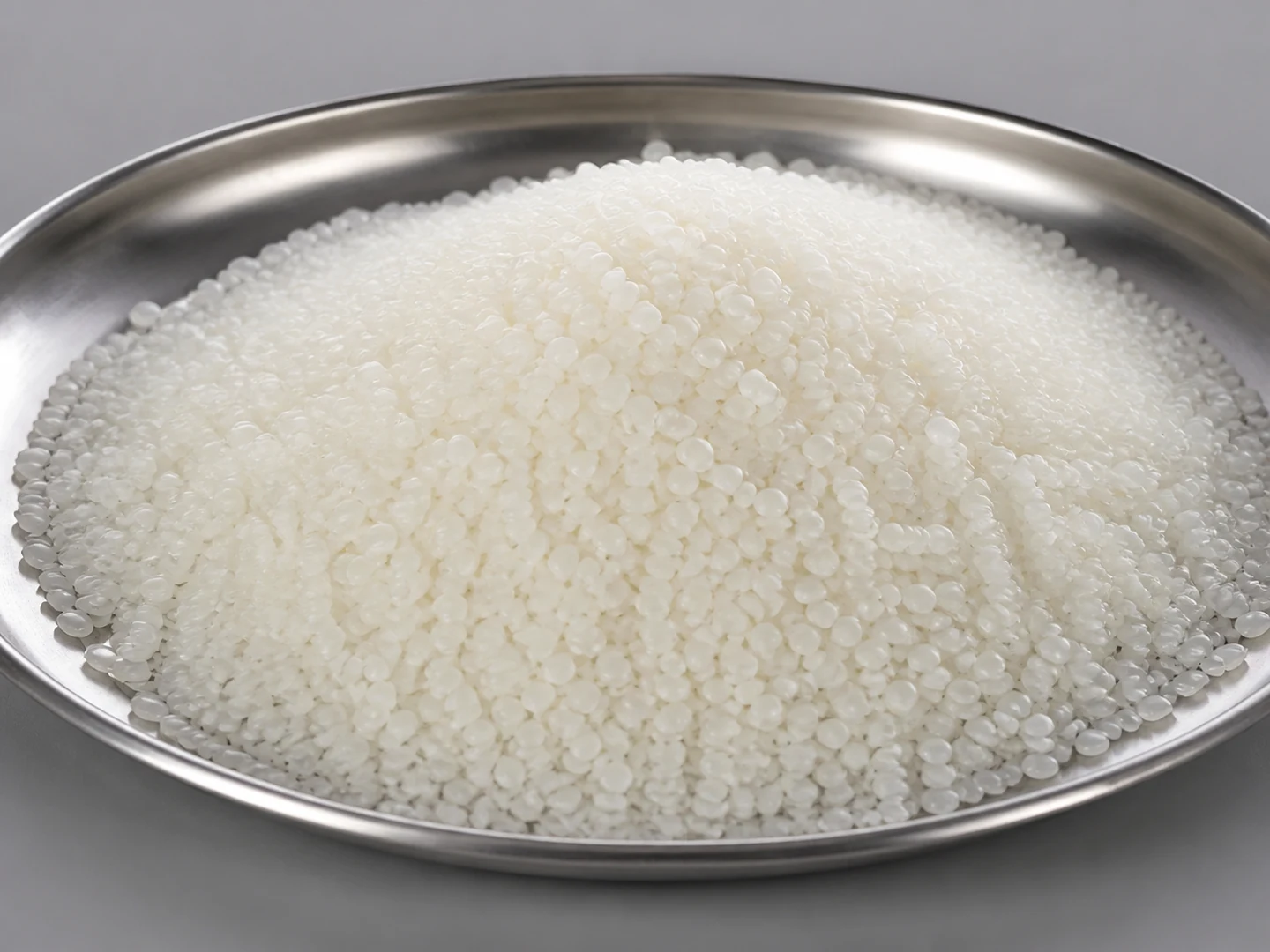
| PA612 Nylon | 90–110 | 130–150 | 0.3–0.7% | Shore D 70–80 |
| Abrasive Nylon | 120 | 150 | 0.1–1.0% | Abrasive filament; stiffness and cutting level is controlled by PA base, grit type, grit size, filament diameter and trim height. |
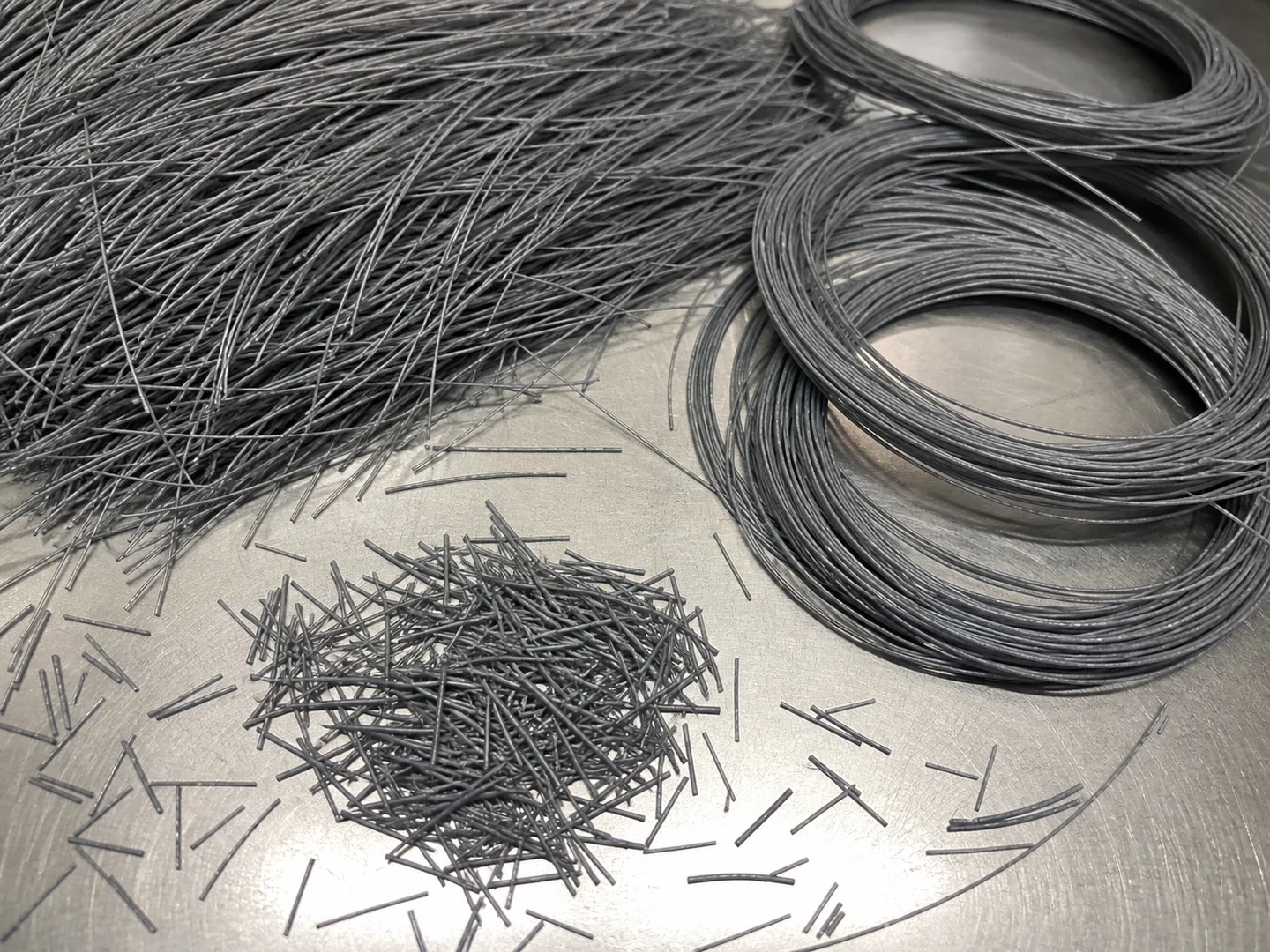
| AISI 304 Stainless Steel Wire | 400 | 500 | 0% | Rockwell B 70–95 depending on temper and cold work |
| AISI 316 Stainless Steel Wire | 400 | 500 | 0% | Rockwell B 70–95 depending on temper and cold work |
Figures as published by Brushtec / DuPont; Perlon; Alleima. Confirm the exact grade against the supplier datasheet before ordering.
When are Tube & Pipe Bore Brushes the wrong choice?
- Tube & Pipe Bore Brushes — Use pigs, flushing, ultrasonic, chemical descaling, blasting, or a flexible cable system for long, sharply curved, or heavily scaled passages.
- PA612 Nylon — PA612 costs more than general PA6 and should be used where its wet stability, recovery or wear life creates a real process benefit.
- Abrasive Nylon — Exposed grit can change a surface finish, and high heat or aggressive chemicals can weaken the polymer carrier.
- AISI 304 Stainless Steel Wire — Avoid using AISI 304 as the default in marine, brine, hypochlorite, and persistent chloride environments; use AISI 316 when higher pitting and crevice-corrosion resistance is required.
What should replace Tube & Pipe Bore Brushes when they stop working?
- Tube & Pipe Bore Brushes — Tube and bore brushes work by radial contact inside a confined diameter; wire wheels and cups work mainly on external edges, profiles, welds, and broad surfaces.
- PA612 Nylon — Compare PA612 Nylon with PA66, PP, PBT. Change material when wet stiffness, temperature, chemical resistance, conductivity, particle shedding, or surface marking becomes the limiting factor.
- Abrasive Nylon — Compare Abrasive Nylon with PP, PBT, PET. Change material when wet stiffness, temperature, chemical resistance, conductivity, particle shedding, or surface marking becomes the limiting factor.
- AISI 304 Stainless Steel Wire — Use AISI 316 stainless steel wire for chloride, marine, dairy, beverage, chemical washdown, or higher pitting-resistance requirements. Use carbon steel for dry aggressive cutting and brass or abrasive nylon for lower marking risk.