
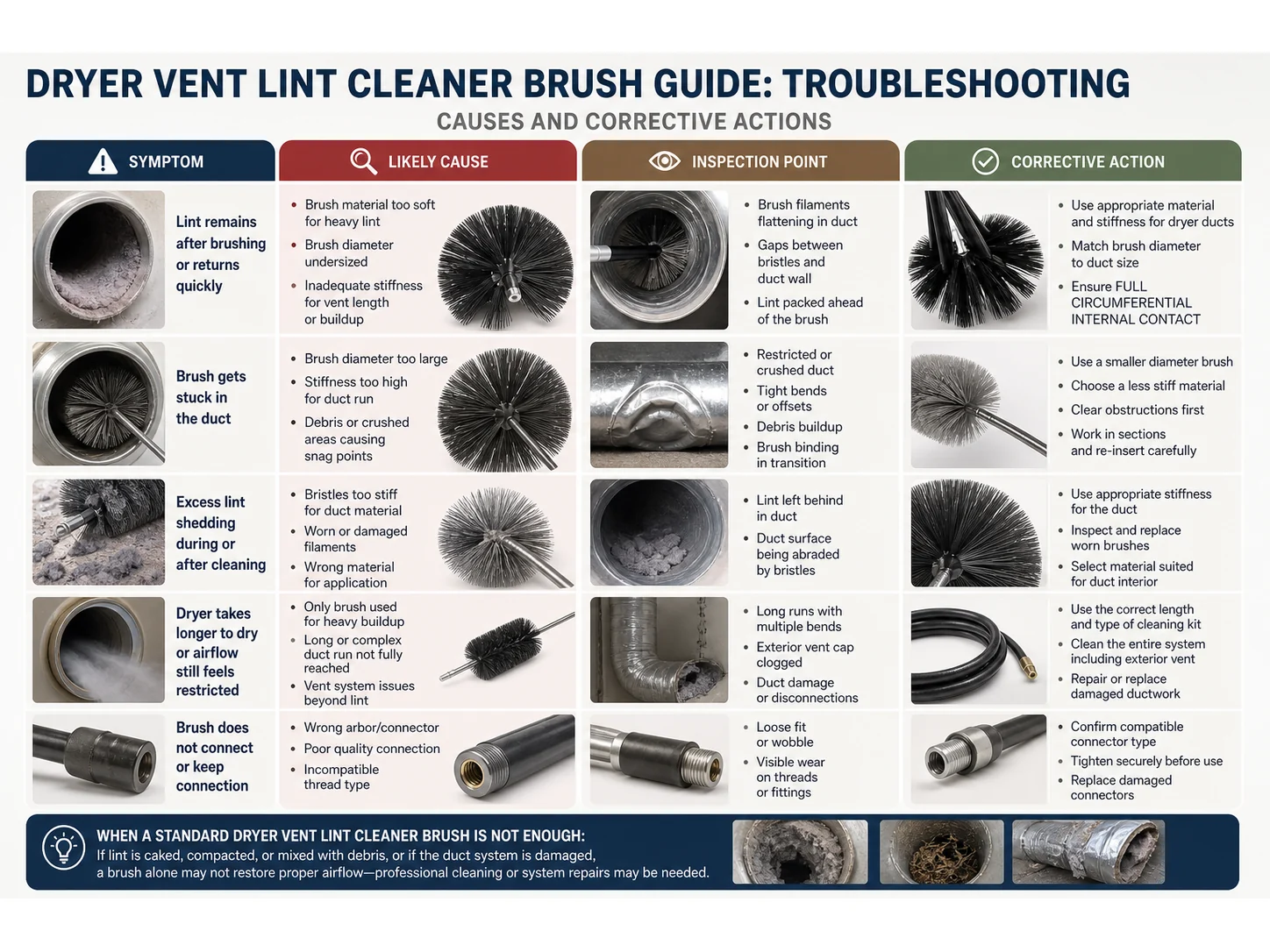
What Is a Dryer Vent Lint Cleaner Brush?
A dryer vent lint cleaner brush consists of a core—typically a flexible shaft, rigid rod, or drill‑compatible spindle—surrounded by bristles arranged to scrub the inside walls of a duct. The brush is pushed or rotated through the vent run to dislodge compacted lint and pull it back toward the opening. Unlike a general‑purpose chimney brush or a soft dusting tool, a dryer vent brush must balance bristle stiffness with surface sensitivity: it must bite into greasy, matted lint without scratching or puncturing thin‑wall aluminum, foil, or plastic ducts.
Common Materials and What They Mean for Dryer Ducts
Bristle material is the most important starting point because it determines which duct surfaces the brush can touch safely and how aggressively it cleans.
- Nylon: Semi‑stiff filaments with good flex recovery. Nylon resists moisture and most household chemicals. It works well in rigid metal ducts and semi‑rigid aluminum, but very heavy baked‑on lint may require more bite.
- Polypropylene: Stiffer than standard nylon and often more chemical‑resistant. Polypropylene brushes are common in food‑grade and hygienic environments, but in dryer vents they offer a step up in stiffness for heavily matted lint without immediately turning to steel.
- Horsehair / Tampico: Natural bristles that are soft and pliable. They are gentle enough for foil‑type flexible ducts but lack the stiffness to break up packed lint. Usually reserved for sensitive or historical ductwork where scratching is unacceptable.
- Stainless Steel Wire: Very aggressive, durable, and corrosion‑resistant. Suitable for rigid galvanized steel or cast‑iron ducts in commercial or industrial exhaust runs. Must never be used on flexible plastic or foil duct because the wires can tear through the wall immediately.
- Brass‑Coated Steel Wire: Similar aggression to stainless steel but with slightly lower spark risk. Still too aggressive for flexible or thin‑wall residential duct. Sometimes chosen for bakery or chemical exhaust where a non‑sparking conductive brush is required.
Material, Size, and Stiffness Comparison
The table below summarizes the key differences so you can match the brush to your dryer duct type and lint condition.
| Brush Type | Typical Duct Compatibility | Stiffness Profile | Risk of Duct Damage | Best For |
|---|---|---|---|---|
| Nylon | Rigid metal, semi‑rigid aluminum | Medium | Low | Routine maintenance, moderately packed lint |
| Polypropylene | Rigid metal, semi‑rigid aluminum | Medium‑high | Low | Heavily matted lint, frequent cleaning cycles |
| Horsehair / Tampico | Flexible foil, very thin aluminum | Soft | Very low | Sensitive or historical ducts, light dust |
| Stainless Steel Wire | Rigid galvanized steel, cast iron | High | High | Heavy industrial buildup, scale, long straight runs |
| Brass‑Coated Steel Wire | Rigid steel, commercial exhaust | High | High | Non‑sparking heavy cleaning, bakery/chemical |
In addition to material, diameter must match the duct. Common residential dryer vent diameters are 4 or 5 inches; commercial vents may be 6 inches or larger. A brush that is too small will miss the walls, while one that is too large can jam or buckle in corrugated flex duct. Stiffness is not just bristle material—it is also a product of bristle diameter, length, and density. A nylon brush with very thick, short filaments can be stiffer than a polypropylene brush with thin, long filaments.
How to Choose the Right Brush: Key Decision Factors
Walk through these questions before selecting a dryer vent lint cleaner brush. They move beyond “nylon vs. wire” and focus on real operating conditions.
- Duct material and wall thickness: Foil flex duct requires a soft or medium brush. Rigid metal can handle polypropylene or, for hardened deposits, stainless steel wire.
- Lint condition and residue type: Dry, fluffy lint is easy. Greasy, sticky lint—common in commercial laundry or kitchen makeup air vents—demands a stiffer bristle that will not mat down.
- Vent configuration: Long runs, multiple 90‑degree elbows, or corrugated walls increase friction. A flexible‑core brush can navigate bends, but a stiff brush on a rigid rod may bind. In corrugated flex, a soft‑to‑medium bristle reduces the risk of snagging.
- Cleaning method: Manual rod pushes require a brush that can be controlled without rotation. Drill‑powered systems multiply speed and torque, so a brush with a secure centering hub and a flexible shaft is needed to prevent whipping and hole‑punching.
- Frequency and hygiene: In food plants, bakeries, or clean‑room makeup vents, you may need a brush that can be autoclaved or regularly sanitized. Polypropylene or stainless steel can withstand chemical washdowns; natural bristles cannot.
- Custom length or diameter: When off‑the‑shelf diameters do not match, a manufacturer can alter the brush O.D. and shaft length. Provide the clear inside diameter of the duct, not the outside, and specify whether the brush should pass through fire‑dampers or cross‑section transitions.
Setup and Usage Factors for Dryer Vent Cleaning
Even the correct brush will perform poorly if the setup is wrong.
- Secure the duct connection: Disconnect power to the dryer, pull the machine away from the wall, and detach the vent from the dryer outlet and the wall cap. The brush should always travel from the inside toward the outside whenever possible, pushing debris out rather than into the home or laundry area.
- Check for obstructions first: Shine a flashlight into the duct or use a phone camera to check for large blockages, bird nests, or crushed sections. If the duct is completely plugged, a brush alone may not break through; a duct auger or pro‑grade vacuum extraction may be needed beforehand.
- Match rotation speed to the core: When using a drill brush, keep rpm low (around 400–800) to prevent the shaft from kinking or the bristles from flaring out and scoring the duct walls. For manual rods, add one section at a time and rotate gently in a consistent direction to keep the brush centered.
- Expect residue release: Dryer lint is often loaded with fine particulates. Wear a dust mask and eye protection. Have a shop‑vac ready at the exit point to catch loose debris as it is pushed out.
Common Mistakes When Selecting or Using a Dryer Vent Brush
- Picking a brush by brand or cost drivers alone: A low-cost nylon‑bristle kit may seem adequate until it ball‑up inside a hot, greasy duct. Base decisions on material, measured duct diameter, and the type of residue you actually see.
- Using a wire brush on flexible foil or plastic duct: Even “soft” wire ends will snag corrugations, create tears, or puncture thin‑wall material. Once a duct is perforated, air leaks degrade dryer performance and can exhaust moisture and carbon monoxide into the living space.
- Choosing the wrong diameter: A brush that is ½ inch too small leaves a ring of lint on the walls that becomes a new fire hazard. A brush that is too large can jam, requiring disassembly of the duct to retrieve it. Always measure the narrowest section of the run, not just the outlet collar.
- Forcing a stiff brush through tight bends: If you feel sudden resistance, stop. Back the brush out and inspect. A brush with a too‑stiff core can kink permanently, or the bristles can fold over and wedge the tool in place.
- Neglecting post‑cleaning inspection: After brushing, use a mirror or a phone camera to verify that walls are clean and no bristles are left behind. Loose bristles can become ignition points inside the lint‑laden duct.
- Overlooking hygienic requirements in commercial settings: A brush used in a restaurant makeup‑air vent that later touches a bakery exhaust runs the risk of cross‑contamination. Document brush materials and cleaning logs if you operate under HACCP or GMP guidelines.
When a Standard Dryer Vent Lint Cleaner Brush Is the Wrong Choice
A brush works by mechanical contact. It cannot solve every dryer duct problem.
- Completely packed or rock‑hard lint plugs: If the duct is more solid than fluffy, a brush may only poke a small hole. A duct auger, pneumatic whip, or professional rotary extraction head is the next step.
- Bird, rodent nests, or heavy pest debris: Brushes can push nests deeper and compact them further. Special extraction grabs or professional duct cleaning services are safer and faster.
- Duct sections that are crushed, disconnected, or heavily corroded: A brush cannot repair a duct. If cleaning reveals damaged sections, they must be replaced. Using a brush inside a partially disconnected joint can push lint into wall cavities, creating a hidden fire risk.
- Need for sanitization or odor control: Brushes remove particulate but do not kill mold, bacteria, or mildew. If musty odors persist, a fog‑applied antimicrobial treatment specific to dryer ducts may be needed after mechanical cleaning.
- Very long commercial runs or roof‑mounted terminations: When the duct exceeds 25–30 feet with multiple riser sections, a brush on a standalone rod set may lack the torque and reach. In these cases, consider a powered rotary cleaning system or a professional contractor with duct inspection cameras.
Final Takeaway
Choosing a dryer vent lint cleaner brush comes down to three measurements: the clear inside diameter of the duct, the stiffness required to break loose the actual residue, and a core that follows the vent path without causing damage. Soft‑bristle brushes protect flexible foil; polypropylene and nylon handle most rigid‑metal residential vents; and wire brushes stay in the industrial toolbox. Measure twice, match the brush to the duct surface, and always inspect after cleaning. When the lint is more like concrete, or the duct is damaged, a brush alone is not enough—bring in the right extraction equipment or a qualified professional.
Frequently Asked Questions
How do I measure my dryer duct to choose the right brush diameter?
Measure the inside diameter of the duct at its most accessible point—usually where it connects to the dryer or the wall cap. If you have a rigid metal duct, a tape measure works fine. For flex duct, gently compress the wire coil to get the true inside opening. Choose a brush that is ¼ to ½ inch smaller than the measured inside diameter so it can move freely without jamming.
Can I use a dryer vent brush with a drill?
Yes, many brushes are designed with a ¼‑inch hex shaft that fits a cordless drill. Keep the speed low (under 800 rpm), use a variable‑speed trigger, and never force the brush through a bend. A drill‑driven brush can clean faster, but the torque also increases the risk of kinking a flexible shaft or puncturing thin‑wall duct if the brush catches.
Will a wire brush damage my dryer vent?
It depends on the duct material. A stainless steel or brass‑coated wire brush will almost certainly tear through foil flex or plastic vent. It can also scratch semi‑rigid aluminum heavily enough to create burrs that trap lint. Wire brushes should only be used inside rigid galvanized steel or cast‑iron ducts where wall thickness and metal strength are adequate.
How often should I clean my dryer vent with a brush?
For a typical household laundry, once per year is a good baseline. If the dryer is used daily, the household has pets, or the vent run is longer than 15 feet, cleaning every 6 months reduces fire risk and improves drying performance. Commercial dryers often require monthly cleaning. Set a calendar reminder and take a photo after cleaning to track buildup patterns.
What is the difference between a chimney brush and a dryer vent brush?
Chimney brushes are usually much stiffer (often all‑wire) and sized for larger diameters. They are designed to scrape hard creosote from masonry or metal flues, not soft lint from thin‑wall ducts. Using a chimney brush in a dryer vent can dent, crack, or tear the duct. Stick with a brush labeled for dryer vent or lint cleaning.
My brush got stuck in the vent. How do I remove it?
Stop applying force. Reverse the brush gently while rotating it slowly in the opposite direction of the jam. If it does not budge, try pushing a smaller, flexible rod from the opposite end to nudge the bristles free. Never pull hard on the rod; you risk breaking the core and leaving the brush lodged inside. If it remains stuck, you may need to disassemble a duct joint to retrieve it safely.
Can I use the same brush for dryer vents and bathroom exhaust fans?
It is possible, but not ideal. Dryer vent brushes tend to be larger in diameter and stiffer. A 4‑inch dryer brush is too big for most 3‑inch bathroom ducts. Using an undersized brush in a dryer vent leaves residue; using a stiff brush in a small plastic fan duct can crack the housing. It is safer and more effective to keep separate brushes sized for each application.
Is a longer brush always better?
No. A brush that is too long can be difficult to control, especially through bends. A brush head length of 4 to 8 inches gives enough contact area for most residential runs without losing maneuverability. For very long straight commercial runs, you may want a longer brush head, but always ensure the additional length does not increase friction to the point that the rod or shaft binds.
Technical References
- USFA — Heating Fire Safety
- USFA — Clothes Dryer Fire Safety Flyer
- OSHA — 1910.23 Ladders
- CPSC — Carbon Monoxide Information Center
- HSE — Safe Working on Roofs
Which bristle material fits this job — Nylon PA, AISI 304 Stainless Steel Wire or Horsehair?
| Material | Continuous temperature (°C) | Peak temperature (°C) | Water absorption | Hardness |
|---|---|---|---|---|
| Nylon PA | 93 | 121 | 0.3–9% by PA grade and conditioning | Medium to firm; filament diameter and trim length control bending force. |
| AISI 304 Stainless Steel Wire | 400 | 500 | 0% | Rockwell B 70–95 depending on temper and cold work |
| Horsehair | 60–80 | 100–120 | 8–15% | — |
| Brass Coated Wire | 200 industry reference range | 250 industry reference range | — | Firm non-ferrous metallic wire; softer than carbon/stainless steel wire and less aggressive on softer metal parts. |
| Polypropylene PP | 80–100 | 120–140 | ≤0.03% | Shore D 65–75 |
Figures as published by Brushtec / DuPont; Alleima; Perlon. Confirm the exact grade against the supplier datasheet before ordering.
What should replace Tube & Pipe Bore Brushes for dryer vent brush?
- Tube & Pipe Bore Brushes — Tube and bore brushes work by radial contact inside a confined diameter; wire wheels and cups work mainly on external edges, profiles, welds, and broad surfaces.
- Nylon PA — Compare Nylon PA with PP, PBT, PET. Change material when wet stiffness, temperature, chemical resistance, conductivity, particle shedding, or surface marking becomes the limiting factor.
- AISI 304 Stainless Steel Wire — Use AISI 316 stainless steel wire for chloride, marine, dairy, beverage, chemical washdown, or higher pitting-resistance requirements. Use carbon steel for dry aggressive cutting and brass or abrasive nylon for lower marking risk.
- Horsehair — Compare Horsehair with Boar bristle, goat hair, microfiber. Change material when wet stiffness, temperature, chemical resistance, conductivity, particle shedding, or surface marking becomes the limiting factor.