
Custom Cleaning Brush
Road Sweeper Brush
Rotating main broom in PP, nylon PA or carbon steel wire, configured to your sweeper model, debris mix and curb-edge conditions across the full path.
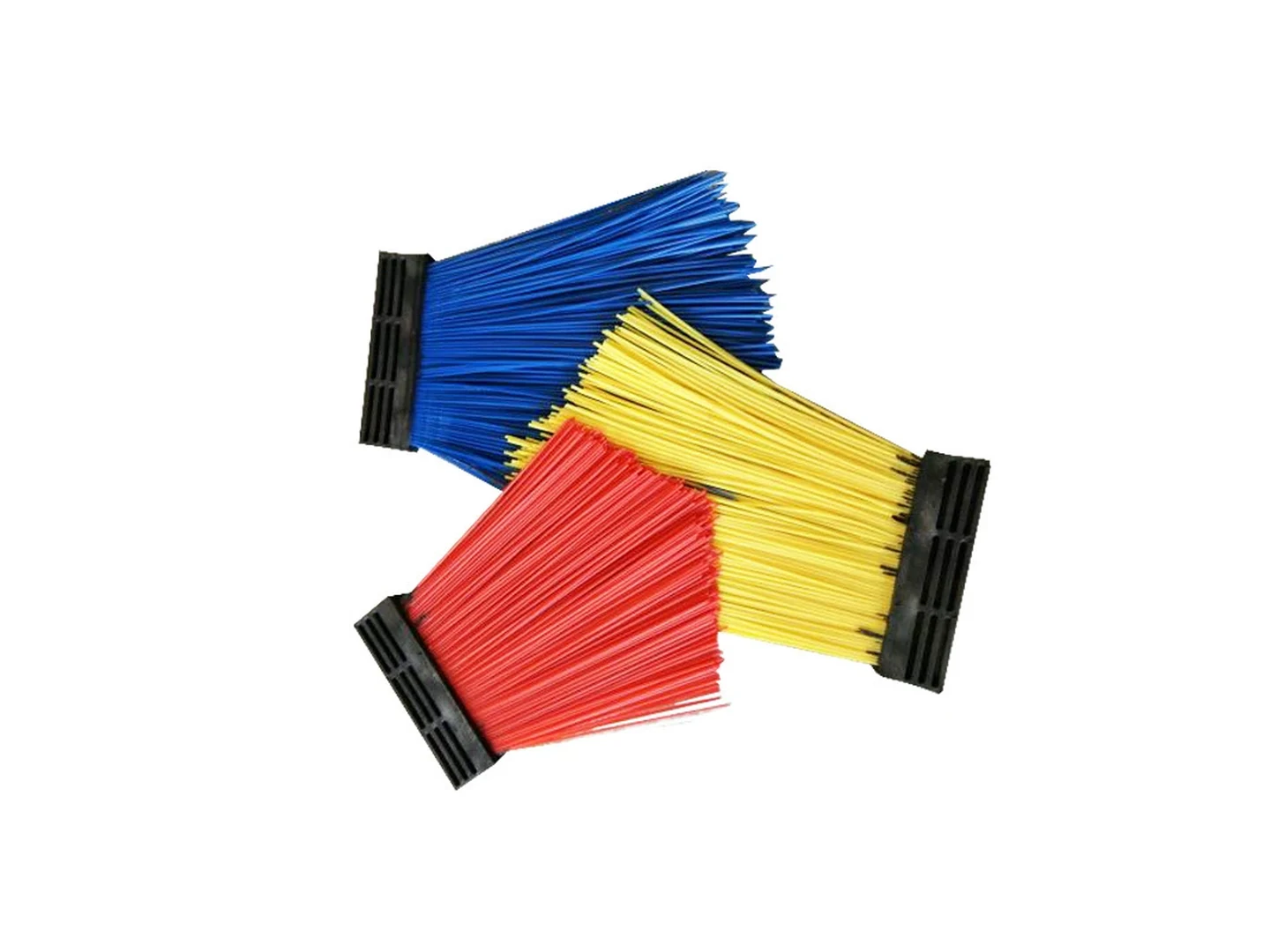
Large-format brush
100 pcs
Minimum order
Built one at a time on a core or channel: full-width rollers, sweeper brooms and long strip.
Production lead time, once the specification is confirmed
- Up to 100 pcsWithin 20 days
- 101–1,000 pcsWithin 30 days
- Over 1,000 pcsConfirmed with your quotation
Peak season can extend these times; the shipping date is confirmed in writing with your quotation. Sampling and shipping are quoted separately.
The road sweeper brush is a rotating main broom built for street, parking lot, and pavement sweeping machines. It clears dust, sand, gravel, leaves, litter, and packed mud across the full cleaning path and can be configured to your sweeper model, debris mix, and curb-edge conditions.
What can this brush do for you?
Pulls Fine Dust and Heavy Debris into the Pickup Path
Polypropylene and nylon filaments rotate against the road surface and flick fine particles, sand, and light litter toward the hopper or vacuum intake. Carbon steel wire sections break up packed mud and compacted debris so the machine does not carry it along under the broom.
Covers the Full Sweeper Width Without Dead Zones
Stacked wafers build a working width from 700 to 1800 mm with continuous filament contact across the machine path. A consistent 25 to 50 mm ground contact band keeps the broom engaged with the road from one side of the sweep path to the other, so no center strip is left behind.
Works Along Curb Lines and Gutter Channels
The full-width contact lets the broom reach the curb edge and pull accumulated sand, leaf debris, and road film out of the gutter channel. On machines with a separate gutter broom, this main broom receives the transferred material and keeps it moving toward the pickup point instead of allowing it to scatter back into the road.
Mounts to Your Machine Without Modification
The core interface is produced to your sweeper’s drive lug, key, spline, tube, or wafer stack configuration. Rotation direction is set during assembly, so the broom engages the drive correctly and the fill pattern throws debris in the intended direction from the first pass.
Wears Evenly and Can Be Rebuilt Section by Section
Wafers or sections are available in widths from 25 to 100 mm. On many assemblies, worn sections near the curb side or center can be replaced individually instead of discarding the entire broom. This keeps sweeping quality consistent and lowers the real cost per shift.
What is a Road Sweeper Brush?
A road sweeper brush is the main rotating broom mounted under or behind a street sweeping machine. It contacts the paved surface along the bottom of the broom, rotates against the direction of travel, and moves dust, sand, gravel, leaves, litter, and mud into the machine’s hopper or vacuum pickup path.
The brush is assembled from circular wafers or sections pressed onto a steel core. Each wafer holds the fill material—polypropylene, nylon PA, carbon steel wire, or a mixed combination—and the wafers together form the full sweeping width. Filament length, diameter, and fill pattern determine how much material the broom carries and how it releases material into the pickup system.
This is a wear part. Filament length is consumed on every shift, and the ground contact pattern must be checked when the broom is first installed and again after the break-in period. On most truck-mounted, compact, or towed sweepers, this main broom works together with a separate gutter or side broom that digs material out of the curb line and places it in the main broom’s path.
It is not a hand tool, a small walk-behind accessory, or a substitute for a gutter broom. It is selected for the machine, the sweep width, the surface, and the debris profile of the route.
Technical Specifications
The table shows the configuration ranges we build to for road sweeper main brooms. Final dimensions, materials, and fill pattern are confirmed against your sweeper model and debris profile.
| Parameter | Typical Range / Options |
|---|---|
| Main broom working width | 700–1800 mm, built to the machine frame and pickup opening |
| Broom outside diameter | 320–700 mm |
| Wafer / section width | 25–100 mm, stacked to build the full width |
| Filament diameter | 0.50–2.50 mm, selected by fill material and debris type |
| Fill materials | Polypropylene PP, nylon PA, carbon steel wire, or mixed fill |
| Core interface | Machine-specific drive lug, key, spline, tube, or wafer stack |
| Fill pattern | Chevron, window, sand wedge, patrol, full fill, or mixed wafer layout |
| Ground contact band | 25–50 mm measured contact at the road surface |
| Rotation | Directional; left or right rotation matched to the sweeper drive |
| Core construction | Steel core with end plates and drive fitting, coated or bare as specified |
| Operating environment | Dry and wet paved surfaces; material grade selected for exposure and temperature |
| Brush type | Custom Road Sweeper Brooms |
| How it is driven | Machine-driven, mounted in the equipment |
| Cleaning target | municipal street route, curb line and gutter, and construction, paving and roadworks site cleaning |
| Surface or part | roads, streets, gutters, curbs, carbon steel, hoppers, edges, shoulders, and pavement |
| Residue or debris | sand, mud, litter, leaves, dust, gravel, carbon, fine dust, and particles |
| Mounting / connection | Directional; left or right rotation matched to the sweeper drive |
If you are replacing an existing broom, send the old broom’s core drawing or a clear photo set of the end plates and drive fitting. That removes most fit risk before production.
Where does this brush work best?
- Municipal street routes — asphalt and concrete roads, intersections, crosswalks, and parking lanes carrying daily dust, sand, litter, and leaf accumulation.
- Curb lines and gutters — compacted sand, road film, and coarse debris that collect where water and traffic push material to the road edge.
- Construction and paving sites — haul roads, entry aprons, and freshly paved or milled surfaces with loose aggregate, dried mud, and tracked soil.
- Highway maintenance and paved shoulders — wind-blown sand, tire debris, litter, and leaves along shoulders, rest areas, and interchange ramps.
- Industrial and commercial yards — distribution centers, ports, logistics yards, and large paved compounds with fine dust, spilled product, and litter.
- Seasonal cleanup — spring sand and gravel left by winter de-icing, fall leaves, and tracked mud after rain or snowmelt.
How do I choose the right one?
Start with the machine, not the material. A broom that matches the route but not the core will not run.
Match the core interface and dimensions first
Record the sweeper make and model, broom part number if available, overall working width, outside diameter, and the core interface type. The exact lug pattern, keyway size, spline count, or tube bore must match the drive. A broom that fits the width but not the core will not run.
Select fill material by debris and surface
| Route conditions | Starting fill | What to check |
|---|---|---|
| Fine dust, sand, light litter | Polypropylene PP or mixed PP/nylon | Economical and moisture resistant; monitor wear on abrasive surfaces |
| Wet leaves, road film, abrasive aggregate | Nylon PA or mixed nylon/PP | Better abrasion resistance and recovery; higher cost justified on heavy routes |
| Packed mud, compacted soil, hardened deposits | Carbon steel wire or mixed wire/nylon | Breaks up encrusted material; avoid on decorative or polished surfaces |
| Seasonally mixed routes | Mixed fill with replaceable wafers | Adjusts to changing debris without buying a full second broom |
These are starting points. The final fill can be tuned after a trial period on the actual route.
Choose the fill pattern for your pickup system
Vacuum and regenerative air sweepers often perform better with open patterns such as window or sand wedge, which allow airflow through the broom and help large debris enter the hopper. Mechanical broom sweepers may use full fill or chevron layouts that carry material toward the pickup inlet. If you are replacing a pattern that already works on your route, send a photo or drawing of the existing layout.
Set the ground contact band correctly
Start within the 25–50 mm contact range on flat ground and follow the sweeper manual. Too deep bends the filaments, increases power draw, and shortens life. Too shallow leaves a film of dust or a streak behind the machine. Check the band after the first shift and recheck whenever the broom is changed.
When a road sweeper brush is not the right tool
- Hard-caked oil, carbon, or chemical deposits may need flushing, scraping, or a specialty cleaning process first; the broom is not a grinder.
- Interlocking or decorative pavers that cannot tolerate wire fill should be swept with PP or nylon and reduced contact pressure.
- Unpaved or severely rutted surfaces will damage filaments prematurely; use a mechanical broom with appropriate fill or a different cleaning method.
- Curbside material outside the main broom’s reach still requires a gutter or side broom; the main broom cannot cover that path by itself.
Can I customize this brush?
Road sweeper brushes are machine-specific wear parts. Send the sweeper make and model, year, broom part number, existing core drawing or end-plate photos, working width, outside diameter, debris profile, and any route conditions such as wet leaves or packed mud. We will confirm the interface and fill before production.
Typical customization variables include:
- Working width and outside diameter matched to the machine frame and pickup opening.
- Core interface: drive lug, key, spline, tube, or wafer stack, including end plates and rotation direction.
- Fill materials: polypropylene PP, nylon PA, carbon steel wire, and mixed wafer combinations.
- Filament diameter, crimp style, and density to control stiffness and debris release.
- Fill pattern: chevron, window, sand wedge, patrol, full fill, or a custom layout based on your route.
- Wafer / section width and replacement segment construction for field service.
- Marking and packaging: part number identification, color coding, pallet configuration, or route-based packing.
If your project requires material declarations, inspection documentation, or third-party testing against a purchasing specification, we can support those requirements during the customization process.
Which filament lasts longest on a road sweeper brush?
How do I identify the correct core interface when ordering a replacement road sweeper brush?
Remove the old broom or take clear photos of both end plates, the drive lug, keyway, or spline. Measure the core bore, overall wafer stack width, and outside diameter. If you have the machine plate or the old part number, include it. Two brooms of the same width can still have different interfaces, so the end fitting detail is the critical check.
What is the difference between a main road sweeper brush and a gutter broom?
The main broom covers the full machine width and moves debris toward the hopper or vacuum pickup. A gutter broom works at the curb edge, digging material out of the gutter and placing it in the main broom’s path. Most machines need both, and one cannot do the other’s job.
Can I run a directional broom in reverse to use more of the filament?
Do not reverse a directional broom unless the manufacturer’s marking and your sweeper manual allow it. Reversing can fold or pull the filaments, change the debris throw direction, and reduce pickup. If you want a non-directional assembly, specify that during customization so the fill pattern is built for it.
How do I check that the ground contact band is set correctly?
Park the sweeper on a flat, clean concrete surface with the broom lowered. Measure the contact band along the broom length; it should be 25 to 50 mm and reasonably even from side to side. Uneven contact causes one-sided wear and missed strips. Adjust the broom height or suspension according to the sweeper manual and recheck after the first few sweeps.
Can a steel wire fill be used on decorative concrete or pavers?
Steel wire is aggressive and can leave visible scuffing on decorative, polished, or colored surfaces. Use polypropylene or nylon fill for those applications and keep the contact band at the shallow end of the range. On plain asphalt and concrete, wire fill is acceptable when the broom height and rotation are set correctly.
How do I know when a road sweeper brush needs replacement?
Measure the shortest remaining filament length from the wafer face and compare it with the machine’s wear limit. If the wafer or core begins to show in the contact band, or if the sweeper leaves streak lines, throws dust, or requires repeated passes, the broom is near the end of its service life. Keeping spare wafers for the curb-side and high-wear sections can return the broom to full performance without replacing the entire assembly.
Guides that go deeper on this
Custom Manufacturing RFQ
Describe Your Application
Send the key measurements, cleaning requirement, residue, material direction, mounting method, quantity, and drawing or photo.
Drawing or photo optional — it speeds things up, it does not gate the enquiry.
Custom Brush RFQ
Send Your Brush Project
Upload a drawing, product photo, or sample photo and provide the core dimensions and cleaning conditions.
“We need a brush to remove wet residue from a stainless steel conveyor, about 800mm wide. The current brush wears quickly. We can send photos.”
“We sell drinkware and need a cleaning brush to include with the product. Quantity around 5,000 pieces.”