
Custom Cleaning Brush
300x2200mm PP Road Sweeper Main Brush
300x2200mm PP road sweeper main brush with powder-coated steel core and quick-change coupling for wet or dry street debris. Configurable fill and trim.
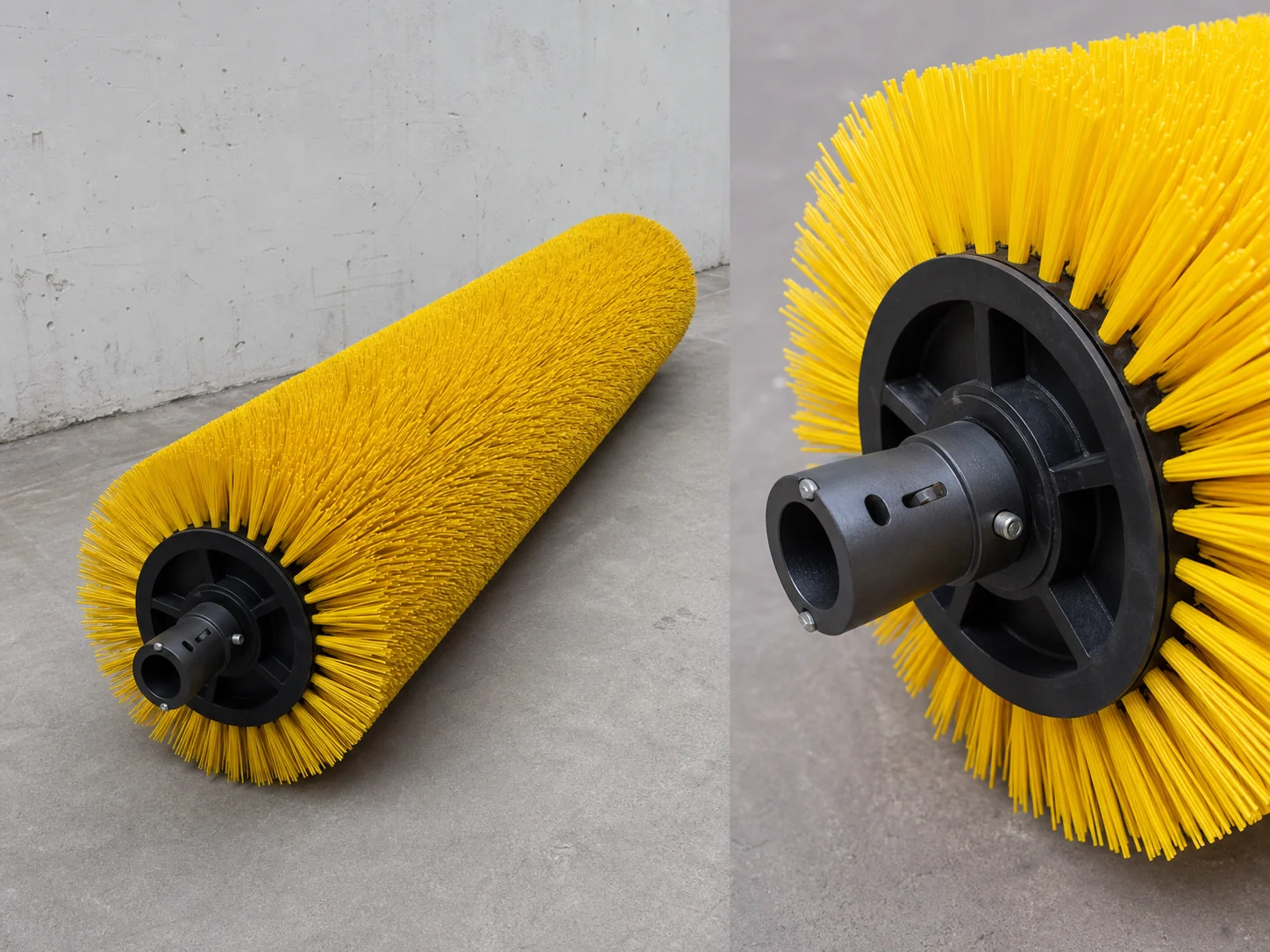
Large-format brush
100 pcs
Minimum order
Built one at a time on a core or channel: full-width rollers, sweeper brooms and long strip.
Production lead time, once the specification is confirmed
- Up to 100 pcsWithin 20 days
- 101–1,000 pcsWithin 30 days
- Over 1,000 pcsConfirmed with your quotation
Peak season can extend these times; the shipping date is confirmed in writing with your quotation. Sampling and shipping are quoted separately.
A 300 × 2200 mm polypropylene main brush for road sweepers that clears dust, sand, gravel, leaves, litter and loose roadside debris across the full sweeping path. The brush combines a powder-coated carbon steel core, dense PP filament fill and quick-change coupling for fast replacement on municipal and industrial sweeping routes.
What can this brush do for you?
Holds a full-width contact line over road crowns and irregular pavement
The 2,200 mm working length carries an even bristle fill and trim, so the brush keeps consistent contact from one end plate to the other. Weak or uneven fill leaves a center streak behind the sweeper. This brush is built to sweep flat road, crown, patches and small surface variations without skipping the middle of the lane.
Works wet or dry without the bristles flattening
Polypropylene filament absorbs very little moisture and recovers its shape after flexing. Wet leaves, slush, sand and grit do not mat the bristles down the way natural fiber can. The powder-coated core gives the steel tube an additional barrier against moisture and de-icing salts on wet routes.
Clears mixed street debris without premature filament loss
PP handles the mixed load of sand, small stone, paper, plastic litter and vegetation that collects in curb lanes and road shoulders. It resists abrasion and flex fatigue better than many low-cost fills, so the brush keeps its swept width longer before the trim wears below effective height.
Cuts machine downtime with a complete quick-change cartridge
The brush is supplied as a balanced cartridge that seats into the sweeper drive through the quick-change coupling. Maintenance crews swap the complete unit instead of rebuilding filament segments beside the road, which returns the machine to route service faster.
Removes loose debris without aggressive pavement gouging
PP bristle tips flex and release as they strike the road, which removes loose material without the deep scoring a steel wire brush can create. That makes this brush a better match for asphalt, sealed surfaces and decorative pavement where the route still needs mechanical pickup.
What is a 300x2200mm PP Road Sweeper Main Brush?
This is the horizontal cylindrical brush mounted inside the main brush chamber of a mechanical or regenerative road sweeper. Polypropylene filament is secured in channels or segments around a powder-coated carbon steel core tube. The machine rotates the brush against the road surface, and the bristle tips flick debris upward into the hopper or collection path while the gutter brooms feed material into the main brush arc.
The 300 mm dimension is the nominal outside diameter measured to the new bristle tips. The 2,200 mm dimension is the active brushing length between the end plates. During operation the brush wears down; replacement is based on remaining bristle trim rather than calendar time. Correct rotation direction, down-pressure and housing clearance all affect how evenly the brush wears and how much debris reaches the hopper.
Technical Specifications
The values below describe the standard 300 × 2200 mm PP main brush cartridge. End fittings, bristle fill and trim details can be matched to the sweeper model.
| Parameter | Value / Details |
|---|---|
| Nominal outside diameter | 300 mm, measured to new bristle tips |
| Working length | 2200 mm |
| Bristle material | Polypropylene (PP) filament |
| Core tube | Powder-coated carbon steel |
| Bristle retention | Steel channel / segment fastening system |
| Mounting interface | Quick-change coupling; single-end or double-end drive available |
| Direction of rotation | Right-hand, left-hand or bidirectional per machine design |
| Typical operating conditions | Wet and dry outdoor sweeping; moisture, road salts and normal washdown |
| Wear reference | Replace when shortest trim falls below the machine manufacturer specified minimum |
| Brush type | Custom Road Sweeper Brooms |
| How it is driven | Machine-driven, mounted in the equipment |
| Cleaning target | municipal street sweeping, gutter and shoulder cleanup, and construction haul road and site entrance cleaning |
| Surface or part | roads, chambers, carbon steel, gutters, streets, curbs, housings, and tubes |
| Residue or debris | leaves, sand, litter, dust, carbon, loose roadside debris, mud, and loose debris |
| Mounting / connection | Quick-change coupling; single-end or double-end drive available; Right-hand, left-hand or bidirectional per machine design |
Where does this brush work best?
This main brush fits sweepers designed around a 300 mm diameter main brush cartridge and a 2,200 mm brush chamber. It is most effective in these operations:
- Municipal street sweeping: everyday dust, sand, grit, leaves, paper and litter on asphalt, concrete and chip-sealed roads.
- Curb, gutter and shoulder cleanup: picks up material pushed into the main brush path by gutter brooms, including debris along concrete curbs, expansion joints and road edges.
- Construction haul roads and site entrances: removes loose aggregate, dried mud and tracked material before vehicles carry it onto public roads.
- Ports, terminals and distribution centers: large paved areas with truck and equipment traffic where a wide brush clears loose debris faster than narrow alternatives.
- Wet-weather routes: wet leaves, slush, sand and grit after rain or de-icing, because PP stays resilient and does not waterlog.
How do I choose the right one?
Three decisions matter most: machine fit, bristle fill and the service environment.
1. Confirm the machine interface first
Verify that the brush housing accepts a 300 mm diameter and a 2,200 mm working length. Then compare the end details: quick-change coupling type, drive lug pattern, bore, keyway and rotation direction. A brush that fits the chamber but has the wrong drive adapter will vibrate, refuse to seat or wear unevenly from the first shift.
2. Match the PP fill to the debris load
Standard PP fill suits mixed municipal debris. For high-volume construction aggregate or heavily sanded roads, choose a larger filament diameter or denser fill. For smooth sealed pavement where surface marking matters, keep the standard fill and verify down-pressure instead of moving to a harder bristle.
3. Account for wet and salt exposure
PP handles water well, but the steel core still needs protection. Confirm the powder coating is intact, and specify sealed end caps or an upgraded coating treatment for coastal routes or heavy de-icing use. Rinsing after salt runs reduces corrosion at the coupling and end plates.
4. Know when to choose a different brush
A PP main brush is not the correct tool for compacted ice, hardened clay, deeply embedded deposits or scarification work. Use a steel wire main brush for those jobs. If the route carries abrasive quarry or mining material and the fleet needs longer trim life, a nylon-filled main brush may be more suitable.
| Cleaning condition | Recommended contact |
|---|---|
| Daily street dust, sand, leaves and litter | Standard PP road sweeper main brush |
| High-volume construction aggregate | Higher-density PP or nylon fill |
| Compacted mud, ice or scarification | Steel wire main brush |
| Fine dust on smooth sealed pavement | Standard PP fill with verified down-pressure |
Can I customize this brush?
The 300 × 2200 mm PP cartridge is a production base dimension, but most fleet and OEM projects need specific end fittings or fill details. We can adjust:
- Core and interface: tube wall thickness, end cap design, quick-change coupling pattern, keyway, drive lug arrangement, double-end drive and balance class.
- Bristle system: PP filament diameter, crimp profile, trim length, segment pitch, spiral or straight row layout, fill density and tip shape.
- Working dimensions: overall length, brush section length, final outside diameter for non-standard housings, and crowned or flat trim profile.
- Material options: PP, nylon or steel filament fill within the same core system where the route requires it.
- Marking and packaging: core color, barcode label, laser marking, export wrapping, pallet quantity and end-cap protection.
To define a custom road sweeper brush, provide the sweeper make and model, original brush drawing or measurements, drive-end photos, rotation direction, operating speed and the type of debris removed. If your tender requires inspection reports, material declarations or third-party testing, we can support those project requirements during customization.
How do you tell when a 300x2200mm PP road sweeper main brush is worn out?
How can I tell when this main brush is worn out?
Measure the remaining bristle length from the core surface at several points along the brush. Replace it when the shortest trim falls below the sweeper manufacturer specified minimum, or when you see flat spots, missing filament rows or a visible center streak left on the road. Deep uneven wear across the length usually indicates down-pressure or housing alignment problems, not normal brush wear.
Can the brush be reversed to extend its life?
Some fleets reverse the cartridge if the drive coupling and mounting allow it. Before reversing, check whether the brush is rotation-direction-specific. A directional fill installed backward will not throw debris properly and can fold bristles over. Only reverse when the machine manual or brush marking permits it.
What should be checked before installation?
Check that the quick-change coupling is clean, the keyway and lugs are not deformed, the core is straight, and no wire, rope or packing material is wrapped around the brush. After mounting, rotate slowly and confirm even clearance to the housing and no contact with skirt edges.
How does wet-weather use affect brush life?
PP bristles remain stiff when wet, but wet debris is heavier and increases torque load on the drive. Salt and de-icing material can accumulate between segments. Rinsing after wet or salt runs and allowing the core to dry reduces corrosion and keeps the coupling free.
What does this brush not do?
It does not remove compacted ice, hardened clay, deeply embedded oil-stained grit or bonded deposits. It also does not replace dust suppression or vacuum collection. Use a steel wire main brush for hard deposits, and keep the machine water or vacuum system running for fine dust control.
Can I rebuild the brush by replacing individual segments?
On some core designs, individual bristle segments can be unbolted and replaced. Whether rebuilding is economical depends on core condition and labor cost. If the core is bent, corroded or the coupling is worn, a complete cartridge usually costs less per operating hour than repeated partial repairs.
Guides that go deeper on this
Custom Manufacturing RFQ
Describe Your Application
Please share the brush dimensions, working area, residue type, material direction, quantity, and a drawing or photo for quotation.
Drawing or photo optional — it speeds things up, it does not gate the enquiry.
Custom Brush RFQ
Send Your Brush Project
Upload a drawing, product photo, or sample photo and provide the core dimensions and cleaning conditions.
“We need a brush to remove wet residue from a stainless steel conveyor, about 800mm wide. The current brush wears quickly. We can send photos.”
“We sell drinkware and need a cleaning brush to include with the product. Quantity around 5,000 pieces.”