
Material
PVC
Vinyl polymer filament or profile
Choose PVC based on its stiffness, recovery, wear, wet-service, chemical, and temperature behavior. Brush stiffness depends on more than material. Filament size, exposed length, density, grade, and operating conditions all matter.
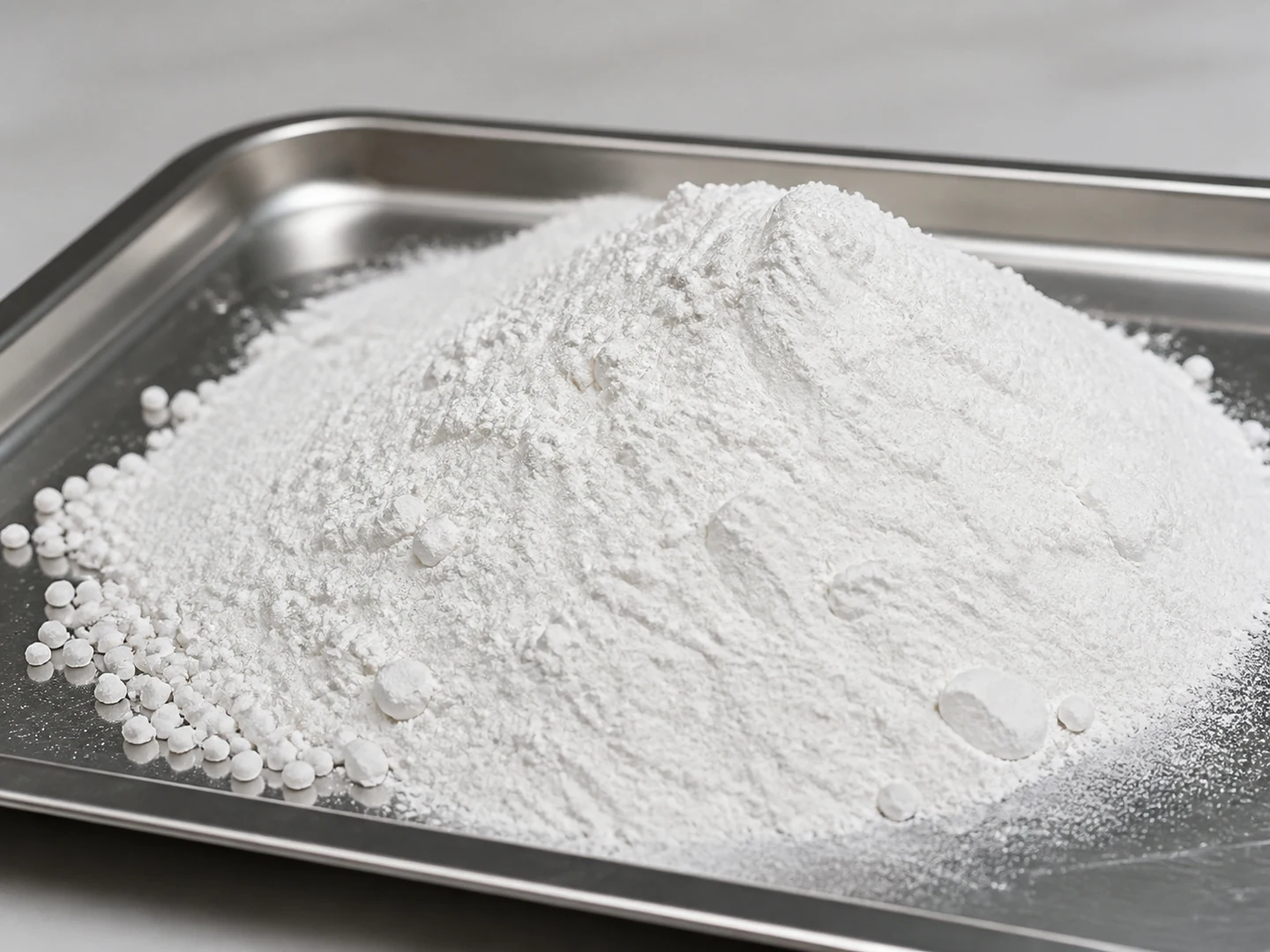
Datasheet values
- Density
- 1.35–1.45 g/cm³
- Vicat softening range
- 75–90°C
- Water absorption
- below 0.1%
- Shore hardness
- A 70 to D 80 by compound
- Profile diameter
- 0.20–3.00 mm
PVC is polyvinyl chloride resin that compounded into rigid or flexible products; plasticizers and other additives control hardness, flexibility and several performance properties.
What is PVC, and what makes it different from other brush filaments?
In the vinyl polymer filament or profile family, PVC is specified, supplied as rigid board or profile, flexible filament or wiping profile and molded holder component, drawn in round, rectangular and hollow sections and set in straight rows, helical, staggered, zoned and wavy fill patterns.
PVC is used in custom cleaning brushes for wet sealing, light wiping and corrosion-resistant strip or board backing where load, heat and solvent exposure are moderate.
It is usually weighed against Polypropylene PP, TPEE Elastomer Filament and Aluminum Holder, and the deciding difference is moisture uptake and working temperature rather than anything you can read off the name.
Compare PVC with PE board, PP, elastomer, aluminum holder. Change material when wet stiffness, temperature, chemical resistance, conductivity, particle shedding, or surface marking becomes the limiting factor.
What stiffness and contact pressure can I expect from PVC?
PVC is available as rigid board, semi-rigid profile and flexible wiping element can all be PVC formulations; PVC changes brush stiffness through filament diameter, free trim, density, crimp, and contact. Use finer filament and longer trim for conformable contact; use coarser filament, shorter trim, or higher density for stronger displacement or cutting.
Filament-level figures for this grade and the ones it is usually compared to. A finished brush behaves differently again.
| Property | PVC | Polypropylene PP | TPEE Elastomer Filament | Aluminum Holder |
|---|---|---|---|---|
| Shore hardness | Shore A 70–95 or Shore D 70–85 | Shore D 65–75 | Shore D 35–72 (Grade Range) | — |
| Continuous temperature (°C) | 50–70 | 80–100 | 100–120 | — |
| Peak temperature (°C) | 75–90 | 120–140 | 130–150 | — |
| Water absorption, 24 h | 0.04–0.40% (24h, ISO 62/ASTM D570) | ≤0.03% (24h, ISO 62/ASTM D570) | 0.20–0.80% (24h, ISO 62/ASTM D570) | — |
| Filament diameter (mm) | 0.08–2.00 | 0.08–3.00 | 0.10–3.00 | — |
| Flexibility | Low to Medium Flexibility | Medium Flexibility | High Flexibility | — |
The part people get wrong: the same grade can feel soft or aggressive depending on diameter, trim and density. Specify that geometry before the material, or the sample will surprise you.
How does water affect PVC performance?
PVC takes up 0.04–0.40% (24h, ISO 62/ASTM D570).
Low water absorption; rigid and flexible PVC profiles remain suitable for wet cleaning and strip-brush backing.
What this means for your application: moisture uptake is low enough to ignore in service, which is why this grade holds its stiffness through washdown.
A practical check: run one wet cycle and compare tip contact against the dry state. If the wet brush leaves residue behind or no longer reaches the bottom of the bore, change the material rather than the geometry.
What temperature limits apply to PVC?
Maximum working temperature is about 60°C in industrial-brush reference tables; confirm the exact PVC grade for heated or chemical service.
The filament tables quote 50–70°C continuous and 75–90°C peak. The tighter number above is the one to build to, because a brush is loaded while it is hot.
Where it stops working: validate with a sample if the process sits near the top of that band. If the filament takes a permanent set under load, step up to TPEE Elastomer Filament or Polypropylene PP, which hold a higher continuous temperature.
Diameter, trim length and applied load all shift the real limit, so a thin filament touching lightly survives conditions that would flatten a thick one under pressure.
What chemicals attack PVC?
It stands up to water, dilute acids and alkalis.
Compatibility is a function of concentration, temperature and contact time together. A short rinse in a dilute solution is a different exposure from an overnight soak in a concentrated one, even with the same chemical on the label.
Before you commit to a quantity: Specify the exact PVC grade or alloy, filament or profile size, color, straight or crimped form, working temperature, wet or dry use, chemical exposure, surface finish, and any required material documentation.
What is the practical lower limit for filament diameter?
The floor is roughly 0.08 mm; finer than that and the filament snaps rather than flexes. In practice you are choosing inside 0.08–2.00 mm.
Free trim runs 5–250 mm, and the two interact: a finer filament needs a shorter trim to keep useful stiffness, while a thicker one carries a longer trim and still lands pressure on the tip.
Split the range by duty: roughly 0.08–0.56 mm for light wiping, dusting and surfaces that mark easily, and 0.56–2.00 mm where residue is packed on and point pressure matters more than surface risk.
Tip treatments available on this filament: end rounding, anti-static coating, antibacterial coating and flame-retardant formulation.
In practical brush terms: reaching deep into a bore or crevice is a diameter problem before it is a length problem. A thicker filament on a moderate trim pushes further in before the tips fold over.
What applications typically use PVC?
Wet sealing, light wiping and corrosion-resistant strip or board backing where load, heat and solvent exposure are moderate.
Where it turns up in practice:
- Dust Removal
- Industrial Machine Cleaning
- Brick, Tile & Building Material Machine Brush Use
- Mold Cavity Cleaning
- Printer & Scanner Cleaning
- Connector & Slot Cleaning
It is normally set into these constructions:
- Custom Strip Seal Brushes
- Custom Machine Table Brush Plates
- Custom Handheld Detail Brushes
- Custom Wheel Brushes
- Custom Roller and Conveyor Brushes
- Custom Polishing Buffing Wheels
The trade-off: Plasticizer migration or extraction, thermal degradation, low-temperature behavior and screw retention can limit flexible or board PVC.
How do I specify PVC for a custom brush?
Send the brush type, filament diameter, free trim length, density, contact setting, wet or dry duty, working temperature and the actual cleaning chemistry together. Any one of them on its own leaves the stiffness undefined.
What usually goes wrong at this step:
- Selecting PVC from the material name alone without setting filament diameter, trim length, and density
- Using dry stiffness to predict wet behavior without checking moisture absorption or liquid exposure
- Ignoring trapped abrasive particles, chemical concentration, temperature, or contact motion when assessing surface risk
Reference standards behind the figures on this page: ISO 527-1:2019; ASTM D638; ISO 62:2008; ASTM D570-22; ISO 868:2003; ASTM D2240-15(2021); ISO 4892-3:2024; ASTM G154-23; UL 94; ISO 139; ISO 5079; ISO 20743.
Source: Westlake — PVC and PS resin property summary. The figure quoted here is a working temperature for a plasticised brush profile, not a melting point. Confirm the exact PVC compound if the brush runs warm or sits in solvent.
What else does the datasheet specify for PVC?
| Filament cross-section | Round/Rectangular/Hollow |
|---|---|
| Electrical behaviour | Insulating; Anti-Static Modification Can Reach 10^6–10^9 Ω |
Questions this page is asked
How should flexible PVC be checked for plasticizer or additive extraction?
Expose the identified compound to the actual cleaner, oil, solvent or process fluid at its concentration, temperature and dwell, including repeated rinse and drying and representative mechanical strain. Compare mass, hardness, dimensions, flexibility, cracking, tack, discoloration and any transferred residue with predeclared limits before accepting the component.
What should be verified when PVC holds screws, anchors or bonded brush elements?
Test the complete joint after the expected temperature, chemical, moisture and sustained-load cycles and measure torque or pull retention, creep, cracking, hole deformation and adhesive or insert movement as applicable. Release the design to the weakest qualified component and joint condition, not to a resin temperature or chemical rating taken in isolation.
Where these figures come from
| Property | Published value | Source |
|---|---|---|
| Chemical resistance | Good resistance to water, dilute acids and alkalis; ketones, aromatic solvents and high heat attack PVC compounds. | Westlake Retrieved 2026-07-20 |
| Published datasheet figures |
|
Westlake Retrieved 2026-07-20 |
| Hardness and stiffness | Available as rigid board, semi-rigid profile and flexible wiping element can all be PVC formulations. | Westlake Retrieved 2026-07-20 |
| Limitations | Plasticizer migration or extraction, thermal degradation, low-temperature behavior and screw retention can limit flexible or board PVC. | Westlake Retrieved 2026-07-20 |
| Temperature resistance | Continuous service: up to 60°C. | Westlake Retrieved 2026-07-20 |
| Water resistance | Low water absorption; rigid and flexible PVC profiles remain suitable for wet cleaning and strip-brush backing. | Westlake Retrieved 2026-07-20 |
Guides that go deeper on this
Continue Exploring
Recommended Reading & Related Brush Resources
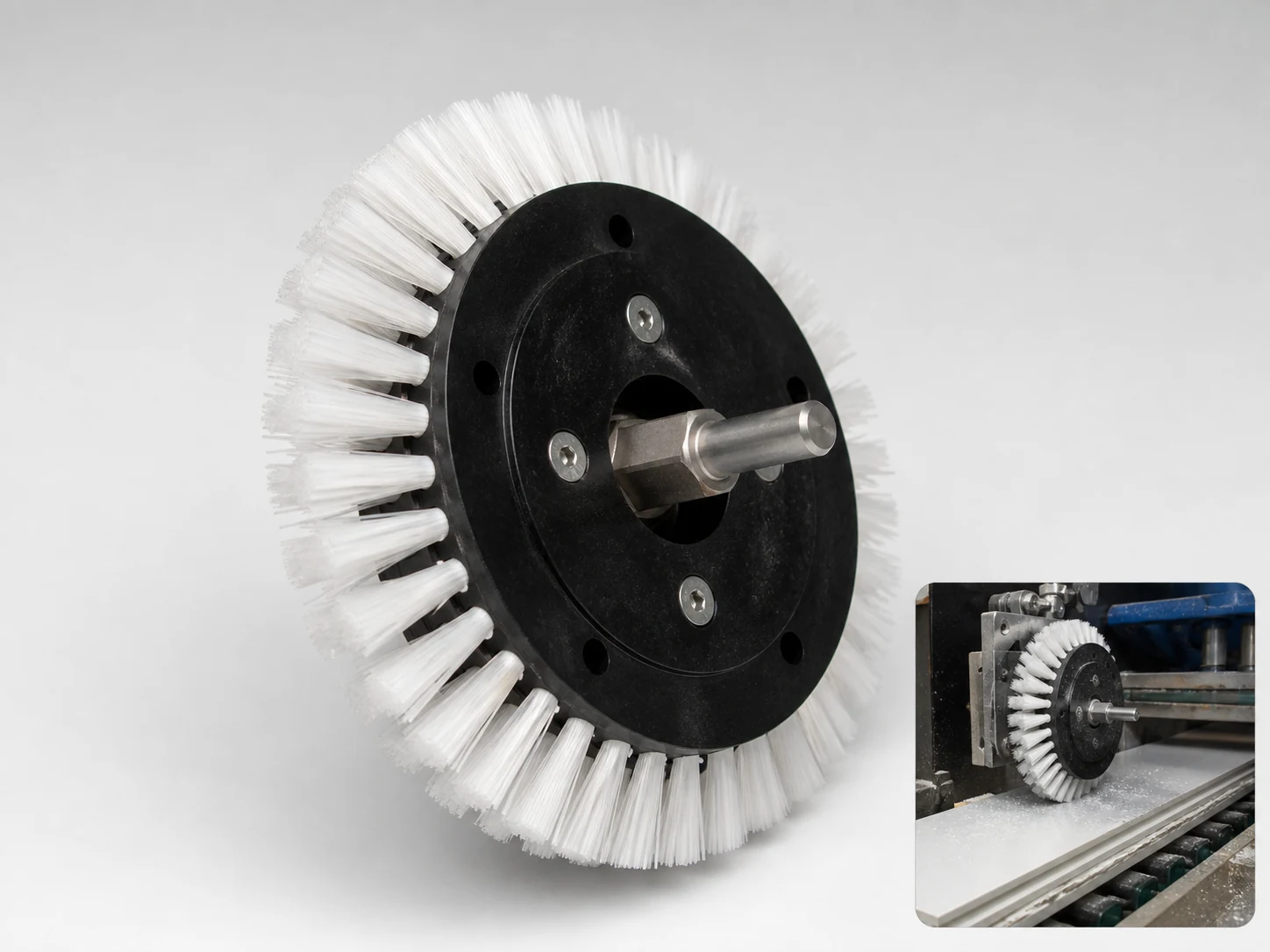
Nylon PVC Brush Plate
Custom PVC-backed nylon brush plates for CNC, punch, and sheet-processing tables. Sweep dust and…
See the specification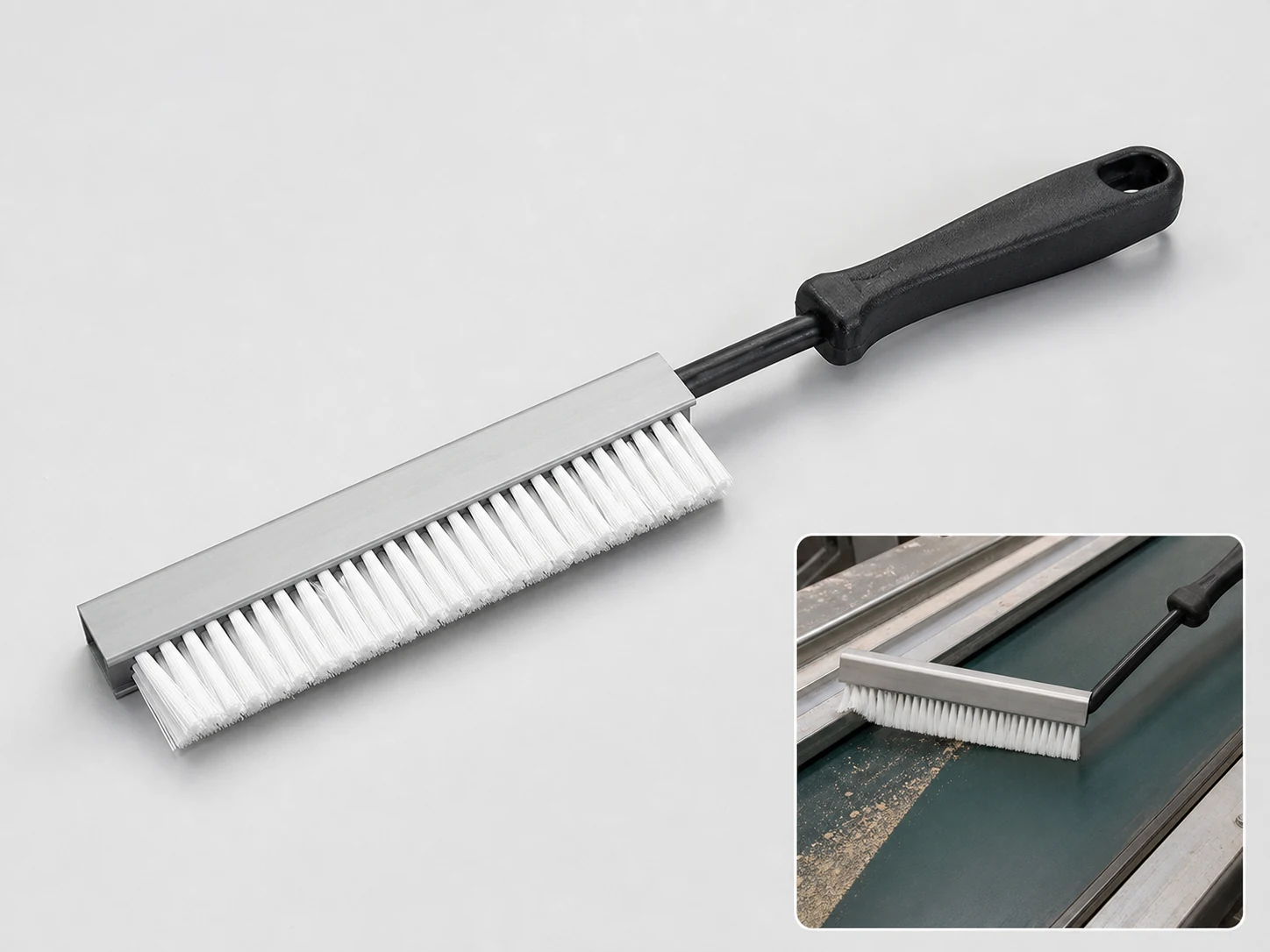
PVC Brush
Custom PVC brush with nylon PA bristles for wiping, dust control, and gap sealing…
See the specification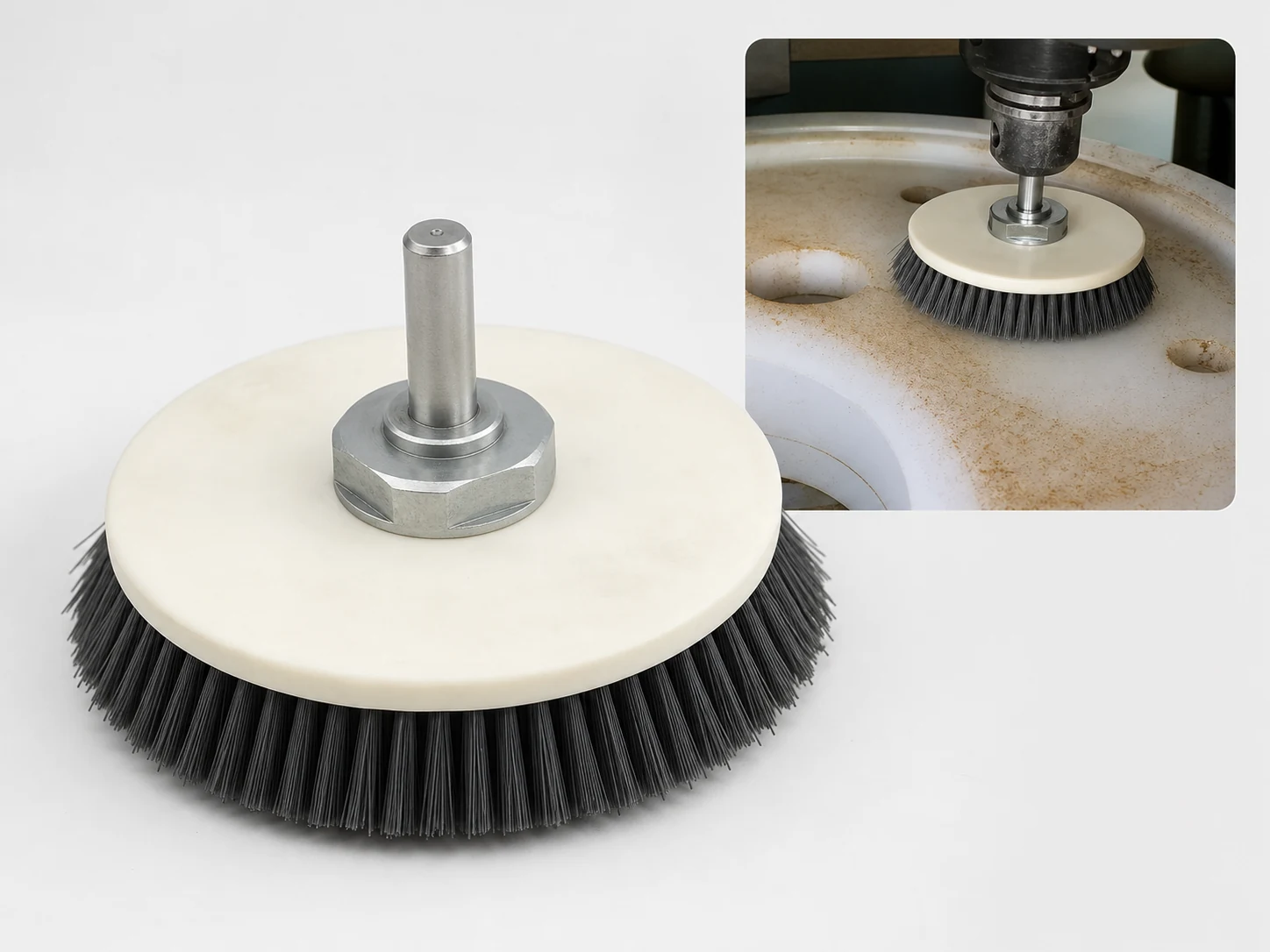
PVC Disc Brush
Custom PVC disc brush with nylon filament face for deburring, cleaning, and finishing. Specify…
See the specification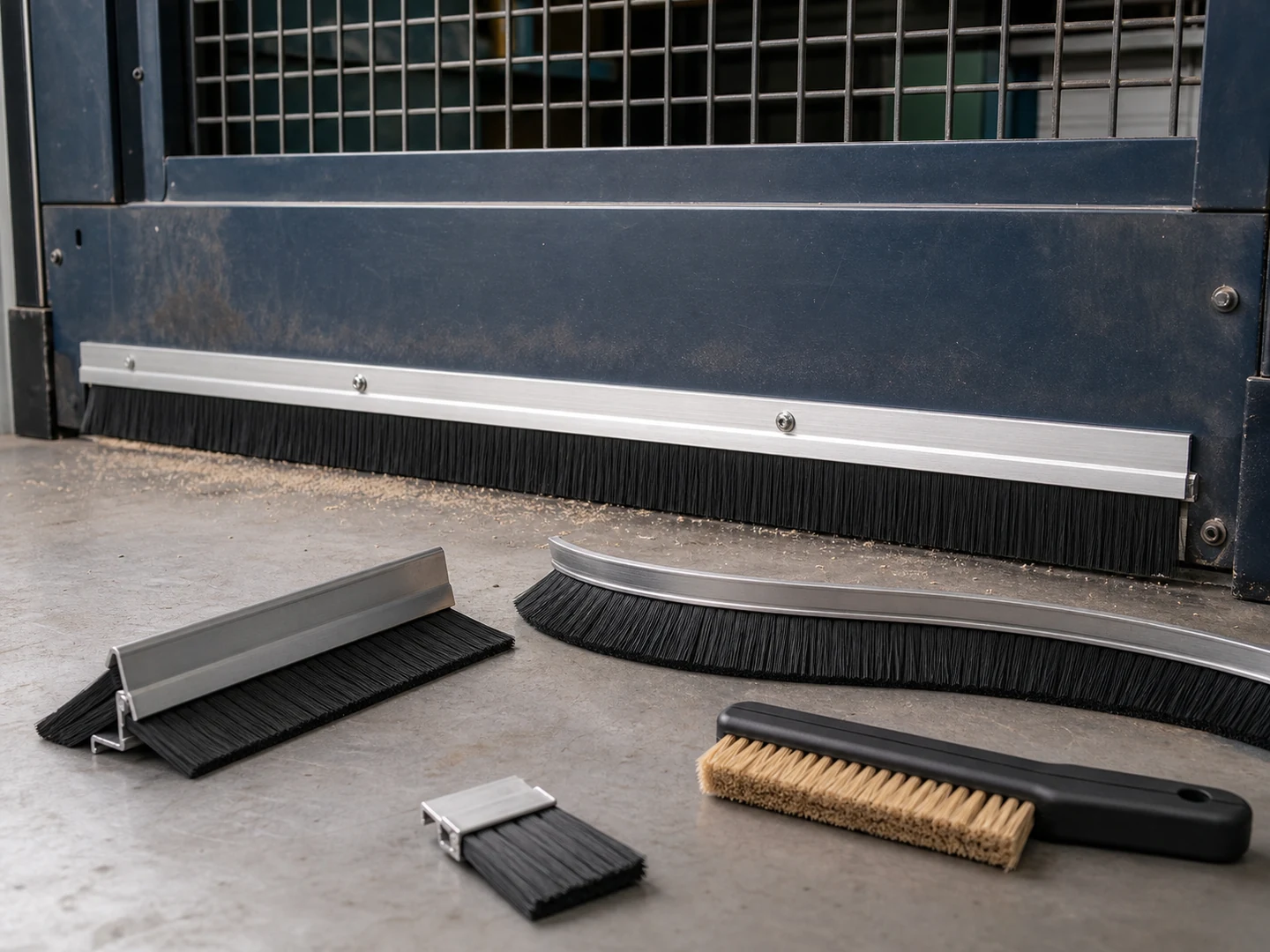
Custom Strip Seal Brushes
Choose a strip seal brush when a continuous line of filament must seal, wipe,…
See how this type is built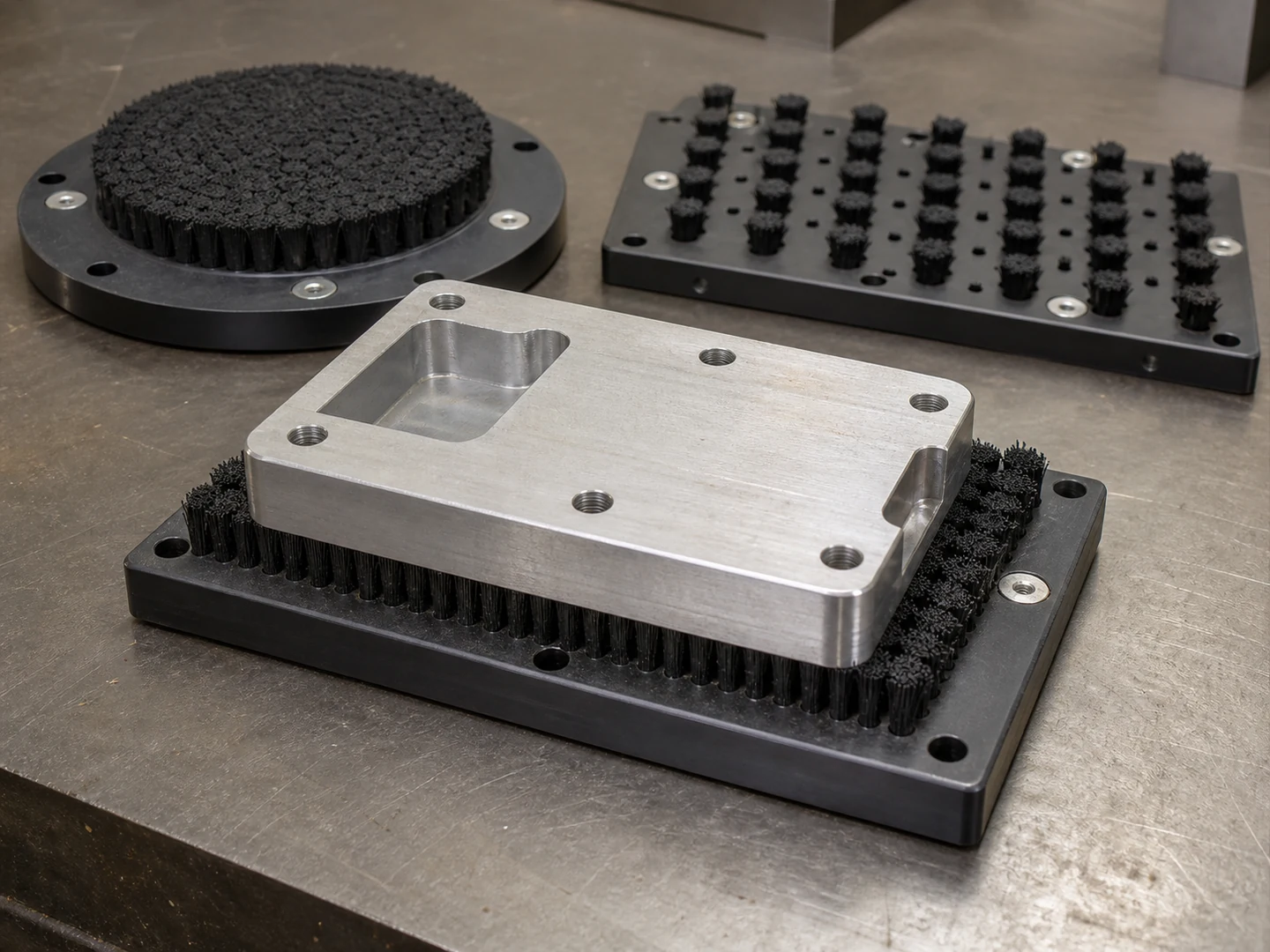
Custom Machine Table Brush Plates
Choose a machine table brush plate when a broad field of bristles must support,…
See how this type is built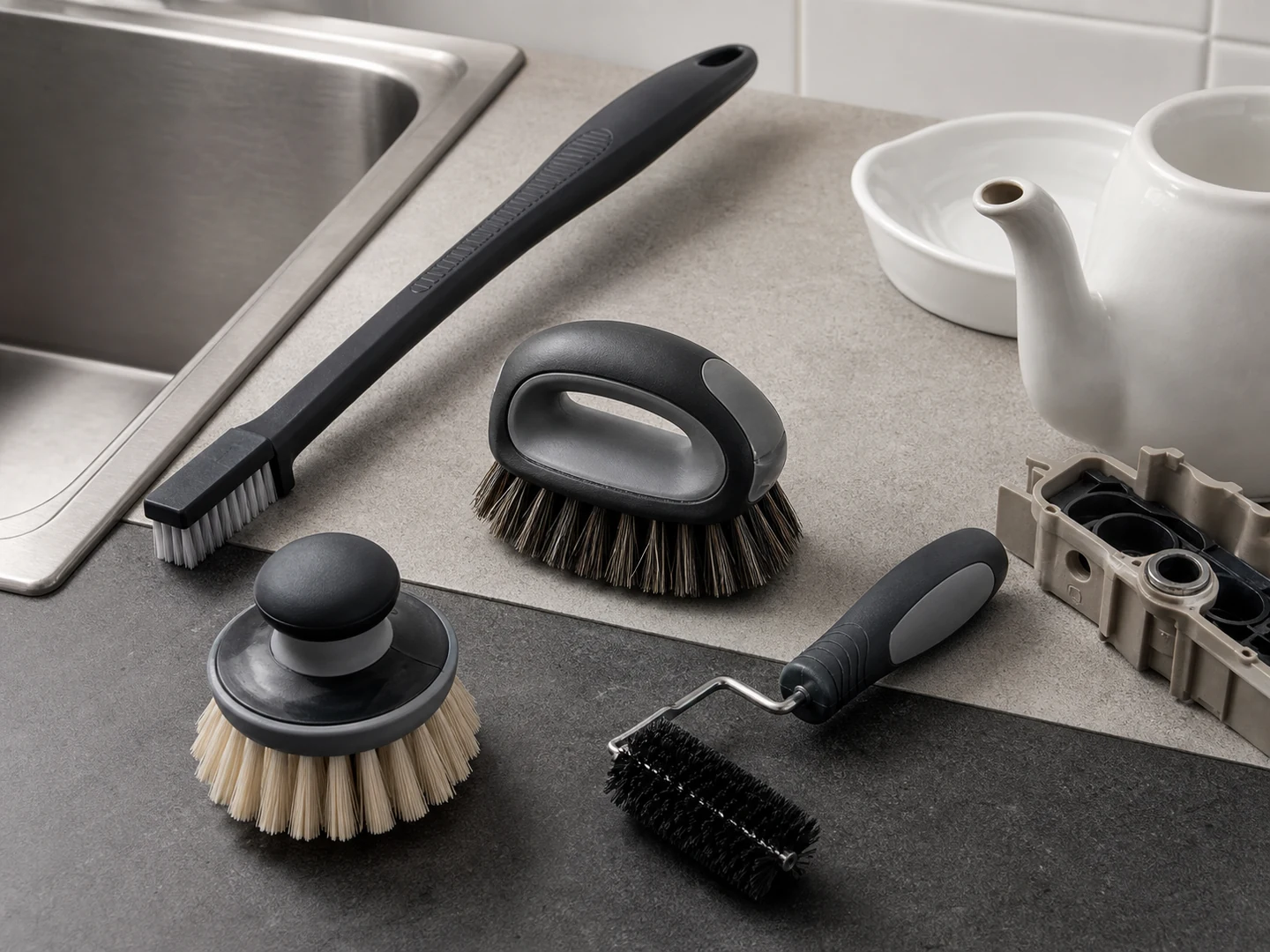
Custom Handheld Detail Brushes
Choose a handheld detail brush when you need direct control in seams, recesses, fittings,…
See how this type is built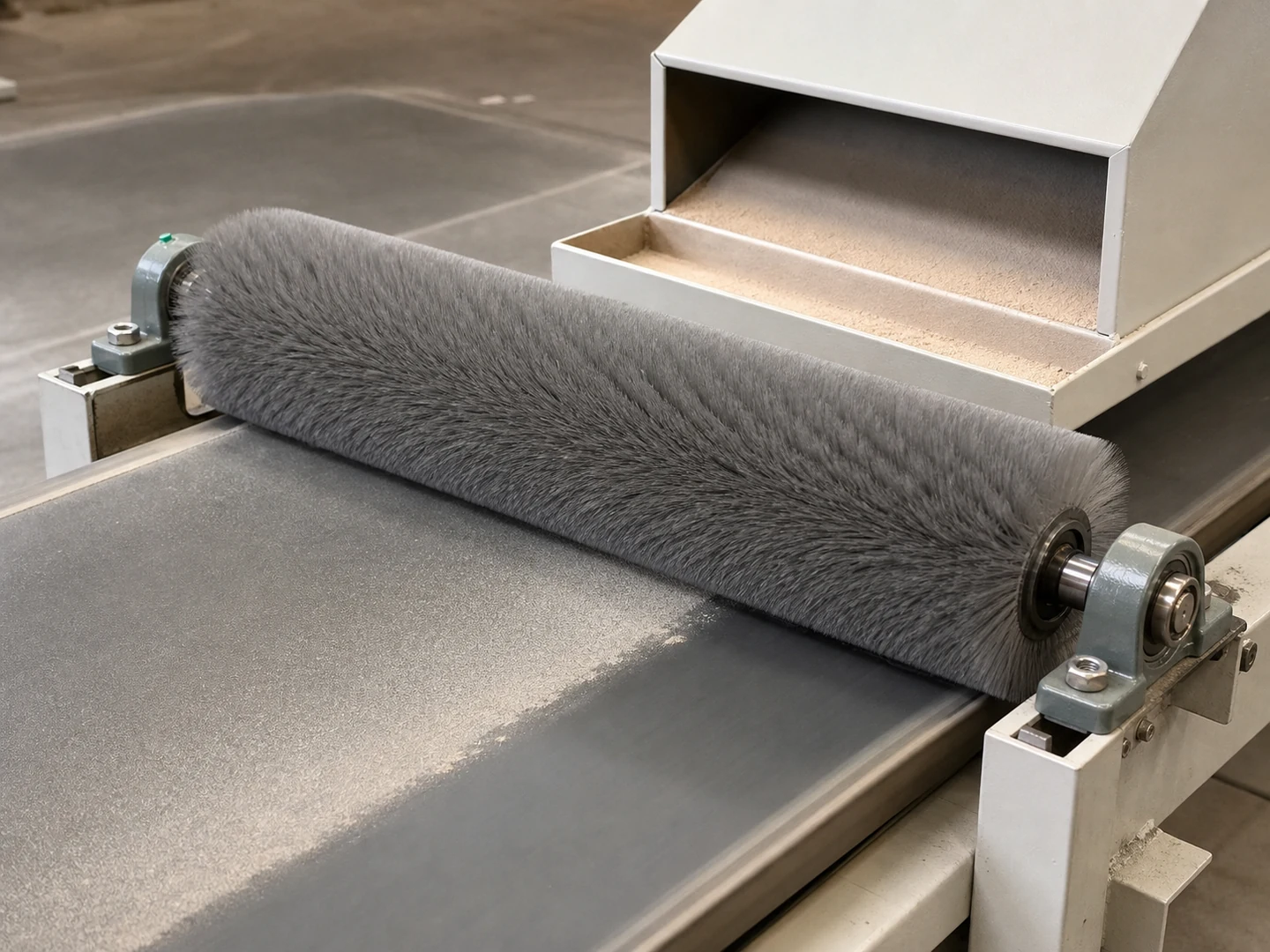
Dust Removal
For Dust Removal, the brush must reach the working area, disturb or collect loose…
See the cleaning job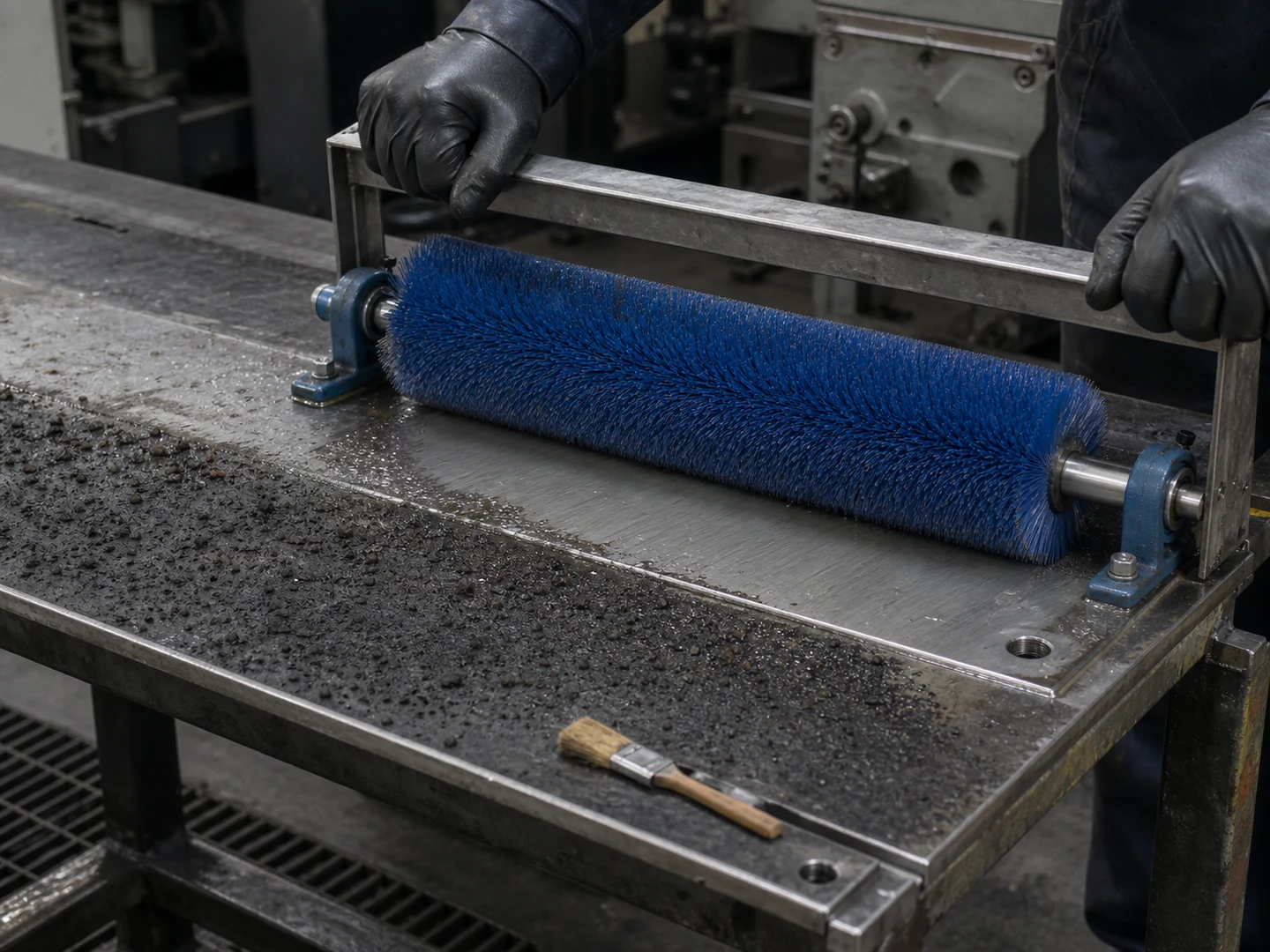
Industrial Machine Cleaning
For Industrial Machine Cleaning, the brush must reach the working area, disturb or collect…
See the cleaning jobCustom Manufacturing RFQ
Discuss This Material
Share the working surface, residue, dimensions, material direction, interface, quantity and drawing or sample photo.
Custom Brush RFQ
Request a Custom Cleaning Brush Quote
Upload a drawing, product photo, or sample photo and provide the core dimensions and cleaning conditions.
“We need a brush to remove wet residue from a stainless steel conveyor, about 800mm wide. The current brush wears quickly. We can send photos.”
“We sell drinkware and need a cleaning brush to include with the product. Quantity around 5,000 pieces.”