
Application
Meat Processing Equipment Cleaning
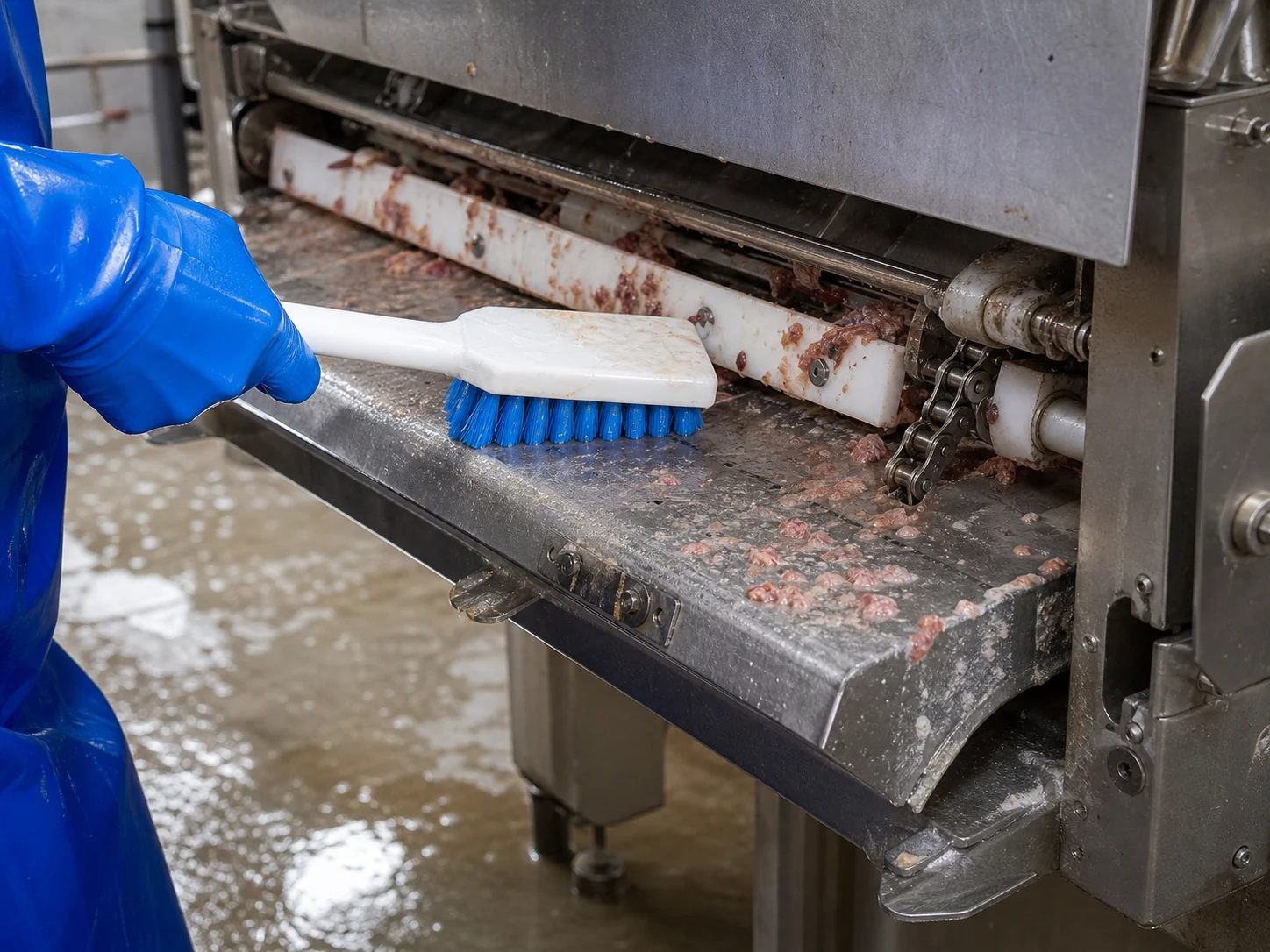
For Meat Processing Equipment Cleaning, the brush must reach the working area, disturb or collect protein/fat/blood/biofilm, and release it without creating unacceptable surface damage or process interference. The available access and required motion should be reviewed together with the cleaning method.
At a glance
- Cleaning target
- Protein/Fat/Blood/Biofilm
- Working environment
- Wet Indoor Area
- Cleaning method
- Wet Brushing / Soaking / Steam Cleaning
- Requirements to check
- FDA 21 CFR; EU 10/2011; HACCP; Hygienic-Design Requirements
Protein and fat set into a film that hides in blade housings, mincer throats and saw guides, so meat-plant brushes are picked for those enclosed volumes and for hot caustic wash-down.
What makes Meat Processing Equipment Cleaning different from other food and beverage cleaning?
The task is to remove Protein/Fat/Blood/Biofilm while controlling surface damage, residue carryover, brush shedding and chemical or temperature degradation.
The work happens in wet indoor area against protein, fat, blood and biofilm.
The part people get wrong: the residue tells you the filament, but the access opening tells you the construction. Get them in that order and the shortlist is short.
What are the most common cleaning targets in Meat Processing Equipment Cleaning?
5 targets, each with its own opening, residue and contact requirement.
| Part or area | Residue type | Cleaning requirement |
|---|---|---|
| Meat Slicer | Protein, fat and tissue residue | The head must reach the working face and apply even contact without marking the surface. |
| Grinder and Mincer | Protein, Fat, Blood, Biofilm | |
| Band-Saw | ||
| Conveyor and Belt | The brush must span the working width and hold even contact along the whole face while the surface moves under it. | |
| Hooks, Racks and Trolleys | The head must reach the working face and apply even contact without marking the surface. |
The dimensional envelope those targets impose on the brush:
| Parameter | Typical range |
|---|---|
| Contaminant | Protein/Fat/Blood/Biofilm |
| Required hardness | Medium–Hard |
| Maximum temperature | 100°C |
| Chemical exposure | Alkaline Cleaning Solution pH 10–13; Peracetic Acid/Chlorine-Based Disinfectant |
| Cleaning method | Wet Brushing/Soaking/Steam Cleaning |
| Environment | Wet Indoor Area |
Which brush types work for each cleaning target?
Select hand, tube, strip, roller, disc or machine-mounted geometry from access and motion.
| Cleaning target | Recommended brush type | Why it fits |
|---|---|---|
| Meat Slicer | Handheld Detail Brushes | A slicer holds fat behind the blade guard and in the carriage track, so a hand-guided head reaches those points with the machine locked out. |
| Grinder and Mincer | A grinder strips down to a worm, plate and knife, so each part is cleaned by hand where protein has packed into the holes and the flight. | |
| Band-Saw | A band saw fills its wheel housing and blade guides with bone dust and fat, so a hand-guided head is what clears those enclosures once the blade is off. | |
| Conveyor and Belt | Roller and Conveyor Brushes | A meat belt has to be free of protein before the next product arrives, so a full-width brush works it in-process rather than waiting for wash-down. |
| Hooks, Racks and Trolleys | Handheld Detail Brushes | Hooks and rack bars are round and hung in numbers, so a hand-guided head goes all the way round each one where a spray only hits the side facing it. |
Almost all of it is hand work with the machine stripped and locked out; the single bore brush goes down the mincer throat on a shaft.
In practical brush terms: reach first, then residue. A brush that fits but is too soft can be stiffened; a brush that does not fit is simply the wrong tool.
What filament materials work best for Meat Processing Equipment Cleaning?
PBT is the default for daily peracetic and chlorine sanitising, PA66 where blood and fat have dried onto a guard or blade, and silicone for the sealing and wiping edges that are stripped and cleaned with the rest of the machine.
| If the condition is… | Filament to start with | Why |
|---|---|---|
| Daily peracetic or chlorine sanitising | PBT | no swelling and no loss of trimmed diameter after repeated cycles |
| Dried blood and fat on guards and blades | PA66 Nylon | stiff enough to lift a bonded protein film |
| Sealing and wiping edges stripped for cleaning | Silicone | food-grade, non-shedding contact edge |
The constraints this application puts on the filament:
| Constraint | Value for this application |
|---|---|
| Filament hardness | Medium–Hard |
| Maximum service temperature | 100°C |
| Chemical exposure | Alkaline Cleaning Solution pH 10–13; Peracetic Acid/Chlorine-Based Disinfectant |
| Cleaning method | Wet Brushing, Soaking, Steam Cleaning |
How do I choose the right brush for my meat processing equipment equipment?
Start with medium-to-hard fill, a 100°C ceiling and an alkaline solution at pH 10–13, then size each head to the blade housing, throat or guide it enters.
Work through it in this order:
- Identify the target part and measure the access opening or clearance
- Describe the residue: what it is, how thick it sits, and how strongly it holds
- Choose the construction that can physically reach that target
- Set the filament from surface risk, working temperature and cleaning chemistry
- Fix filament diameter, free trim length and density for the contact pressure you need
- Run one cycle and check the result before committing to a production quantity
Before you commit to a quantity, send the component dimensions, the wash temperature, and the caustic concentration the brush will see.
When is a meat processing equipment brush the wrong tool?
Blade housings, mincer heads and saw guides are stripped and cleaned in a COP tank, because a brush cannot verify what it reached. Hot water and foam do the fat removal, and brushing a fat film cold only spreads it.
What common mistakes should I avoid in Meat Processing Equipment Cleaning?
- Naming the machine without the wash temperature and caustic concentration the brush will see
- Changing the filament while leaving excessive engagement, poor alignment or no discharge path unchanged
- Copying a worn brush without first recording its motion, direction, mounting and original working diameter
When a brush is running but not cleaning, start here rather than adding pressure:
| Symptom | What to change |
|---|---|
| Residue remains | Increase discharge or relative motion before adding pressure |
| Surface marks | Reduce engagement and use finer/softer fill |
| Rapid wear | Check alignment, temperature and chemical attack |
| Redeposition | Add wash, vacuum or collection path |
Questions this page is asked
How should brush access be defined around guards, joints and blade housings?
Identify the equipment model and sanitation breakdown state, isolate hazardous energy, and open or remove only the parts authorized by the manufacturer and plant procedure. Choose a head that can contact and then exit the exposed feature without forcing, shedding or masking an uncleanable joint, and account for every tool component before reassembly.
How are meat-processing brushes segregated between sanitation zones?
Assign and visibly identify tools by raw or ready-to-eat area, food-contact status, allergen program and cleaning task, with controlled storage that prevents splash or floor contact. Do not transfer a tool after use in drains, floors, raw-product or allergen areas unless the site's validated decontamination and release procedure explicitly permits that movement.
What releases meat-processing equipment after manual brushing?
Finish the documented wash, rinse and sanitizing steps under the approved chemical conditions, then inspect accessible and formerly shielded food-contact features for soil, residue, damage and missing brush material. Reassemble hygienically and apply the establishment's pre-operation verification and corrective-action rules before product contact rather than relying on appearance alone.
Guides that go deeper on this
Continue Exploring
Recommended Reading & Related Brush Resources
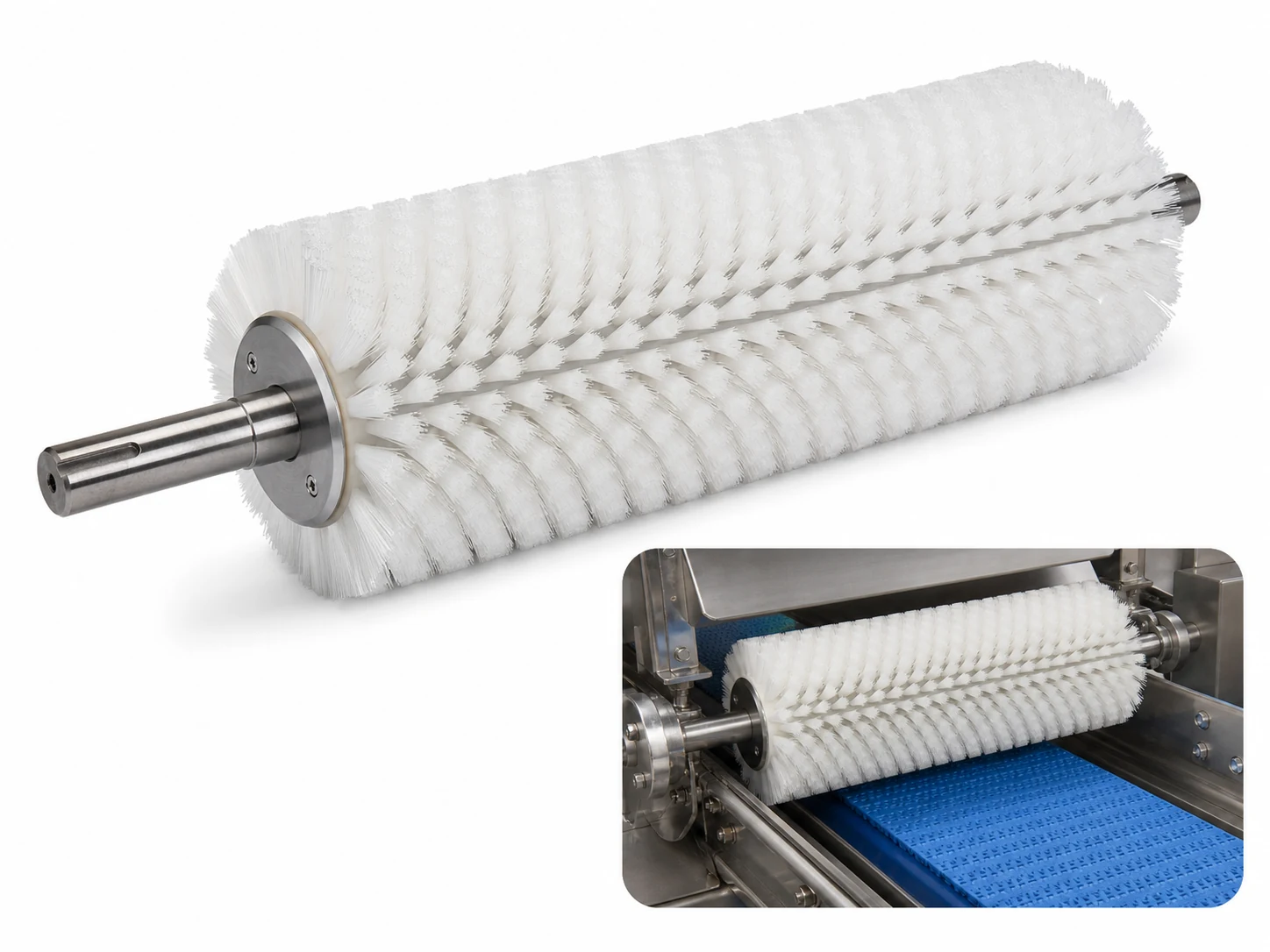
Cleaning Brush Food Processing Conveyor Belt
Shaft-mounted conveyor belt cleaning brush for powder, crumb, oil, and sticky carryback. PBT, PP,…
See the specification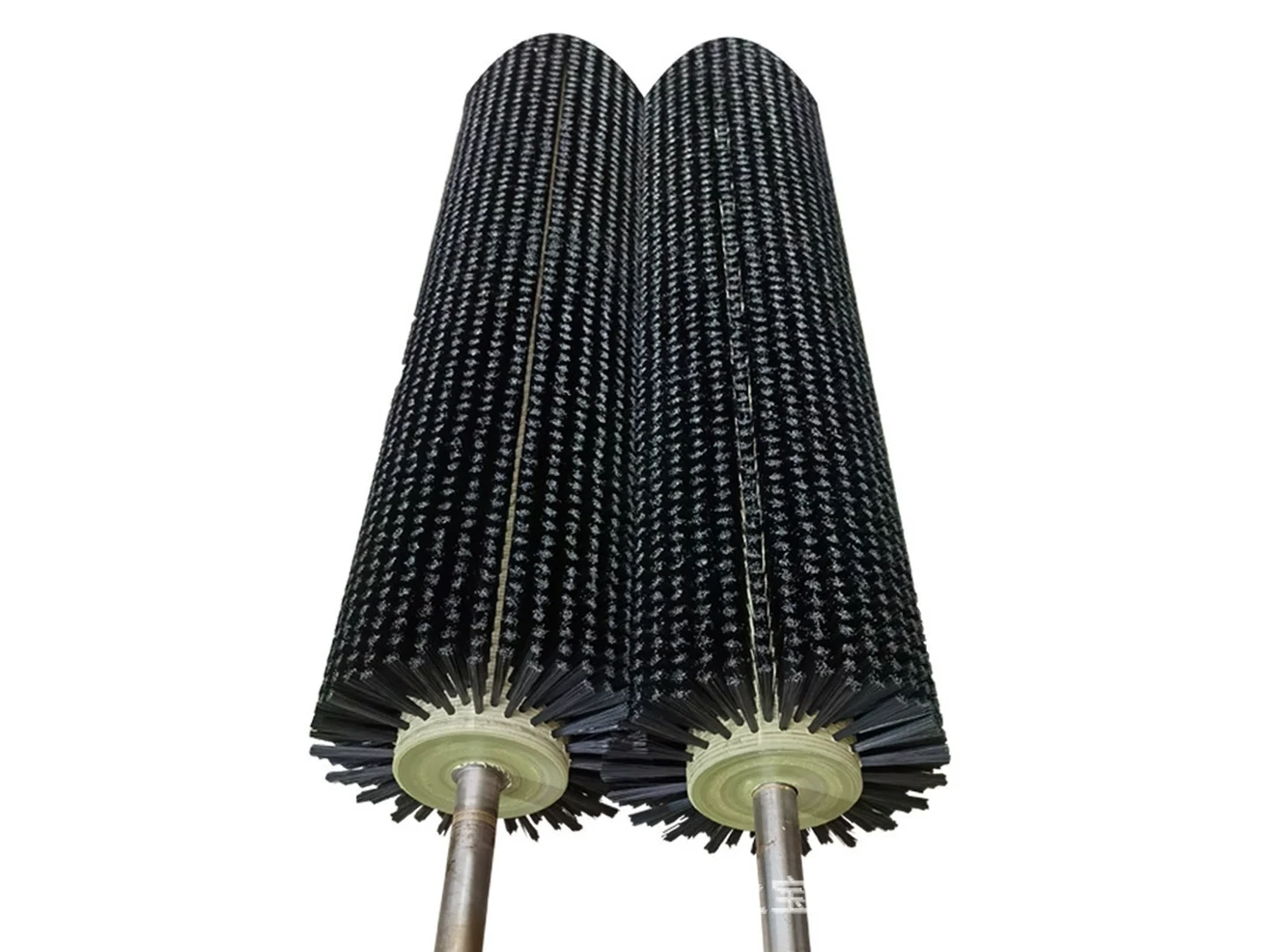
Food Equipment Cleaning Brush
Food-safe PBT or PP fill in an open, drainable construction that survives hot washdown…
See the specification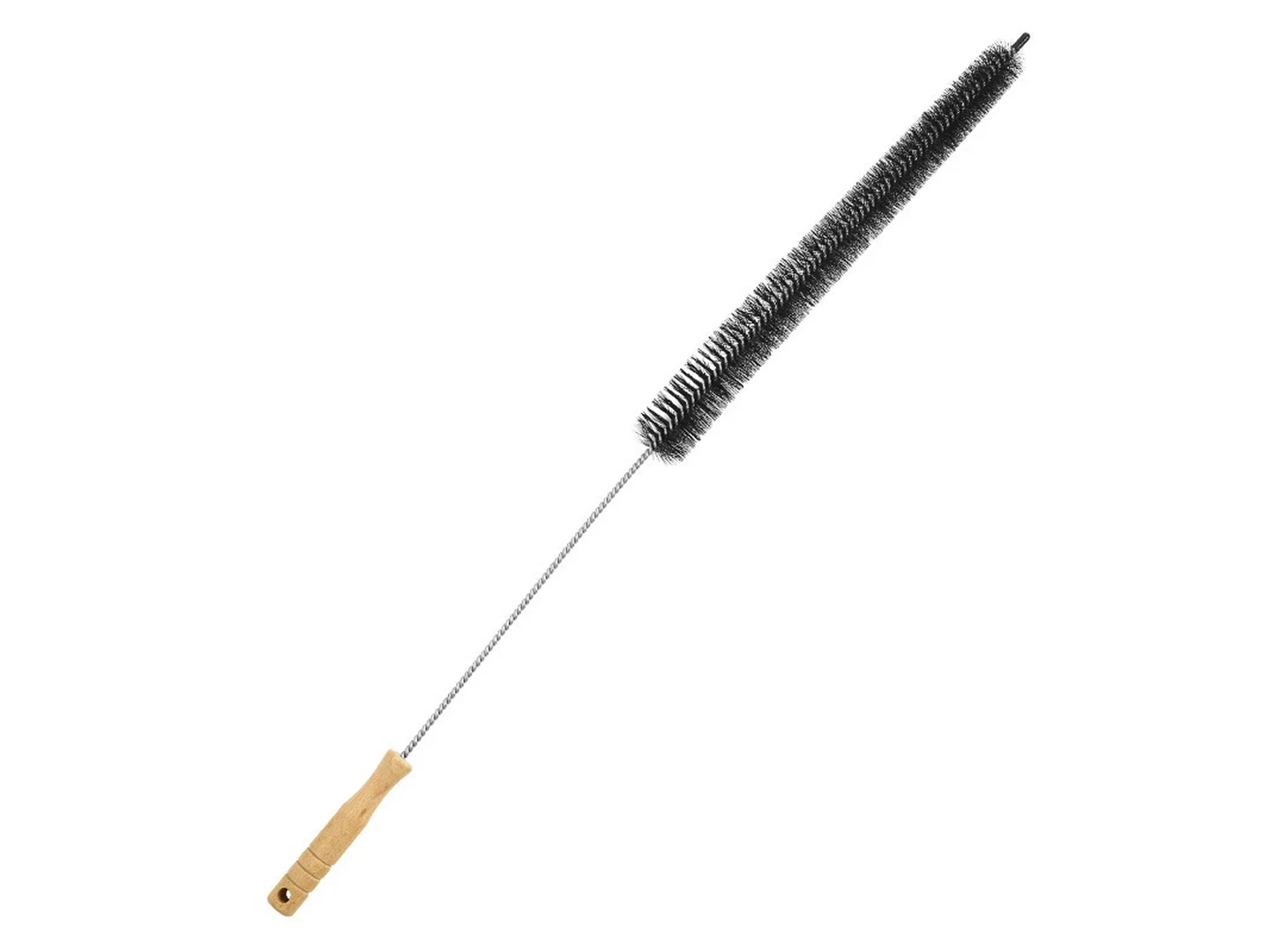
Dairy Equipment Cleaning Brush
Chemical-resistant dairy equipment cleaning brush for tanks, conveyors, and filling machines.
See the specification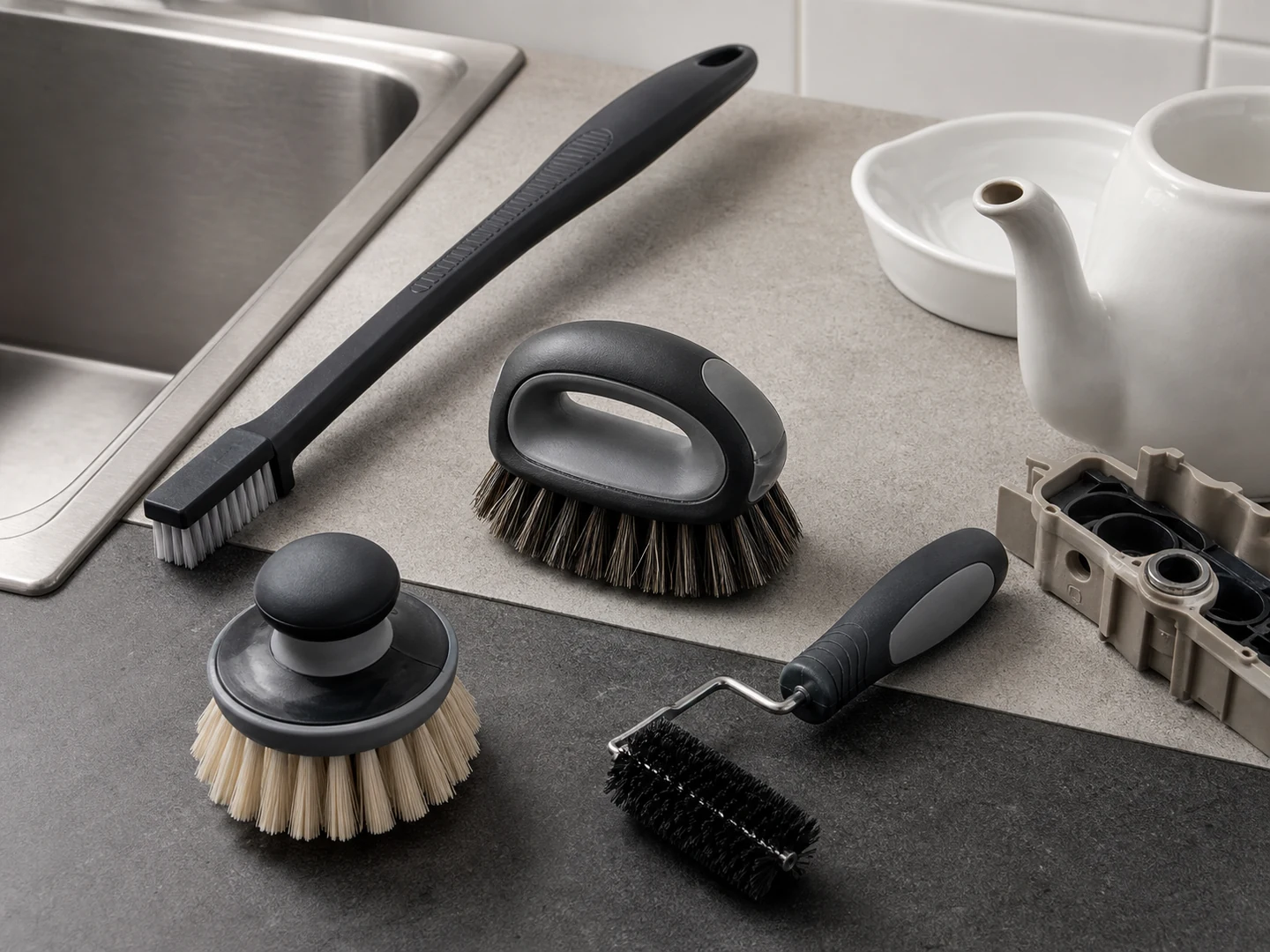
Custom Handheld Detail Brushes
Choose a handheld detail brush when you need direct control in seams, recesses, fittings,…
See how this type is built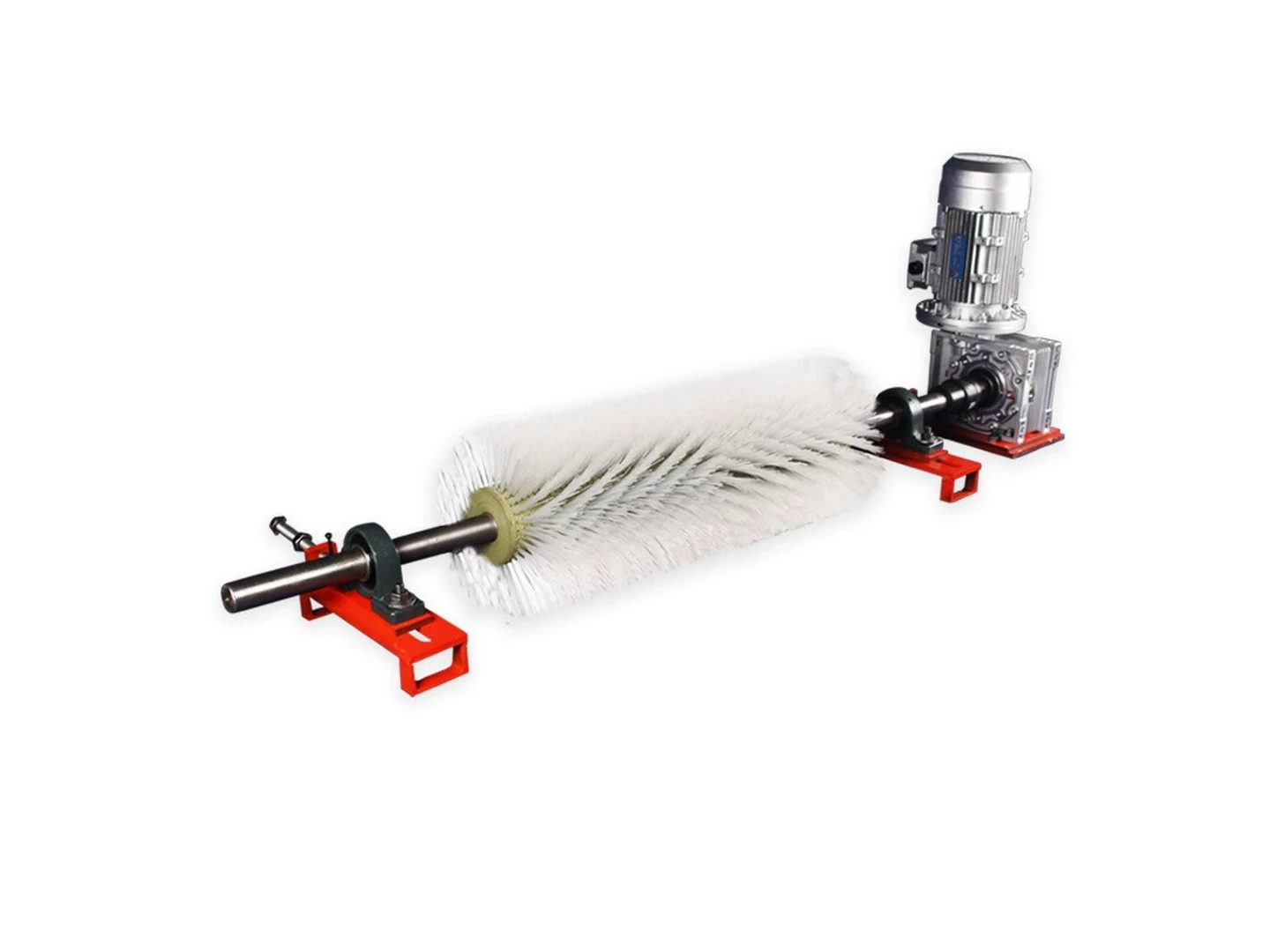
Custom Roller and Conveyor Brushes
Choose a roller or conveyor brush when a cylindrical brush must clean, wipe, guide,…
See how this type is built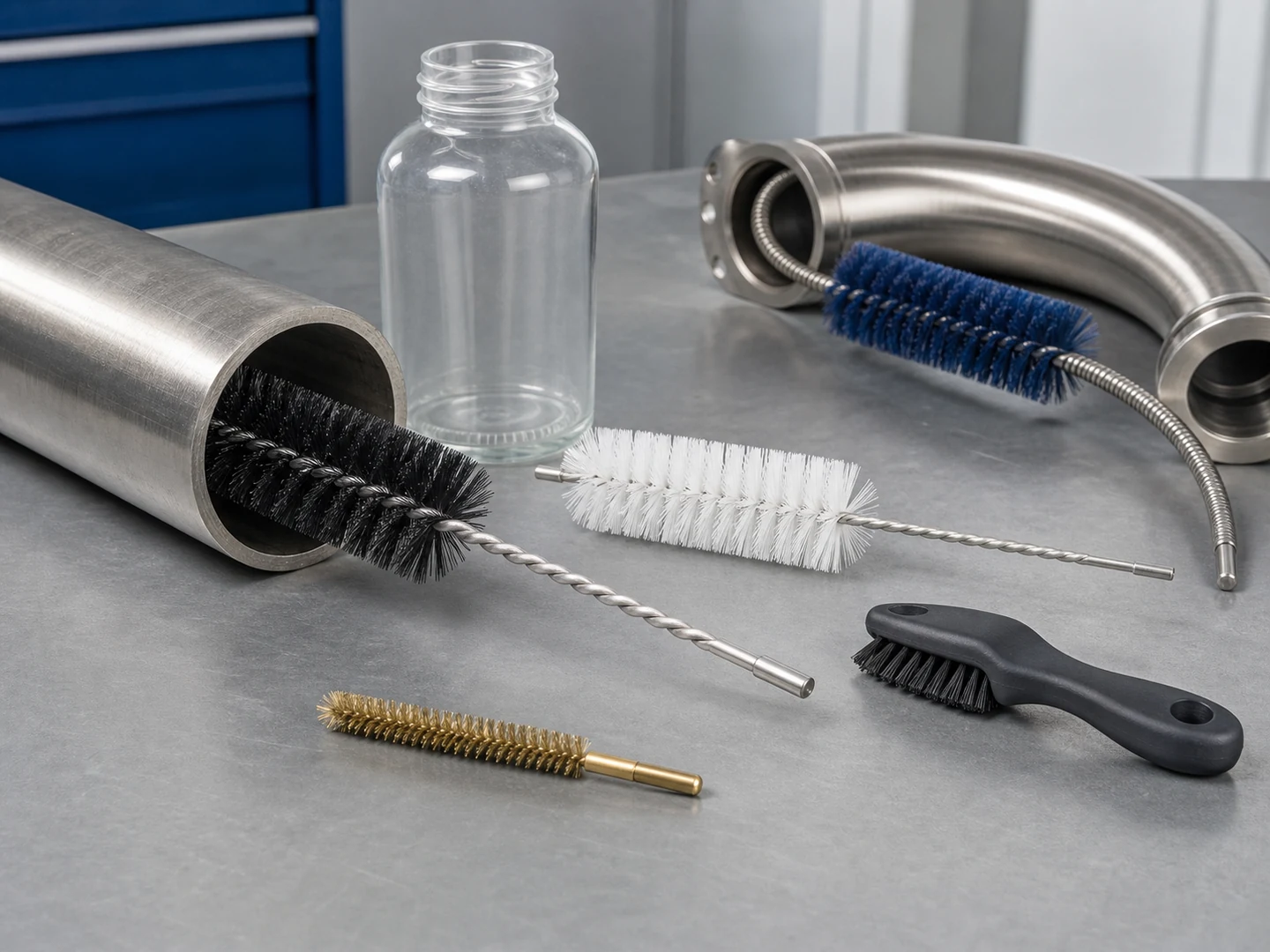
Custom Tube & Pipe Bore Brushes
Choose a tube, pipe, or bore brush when the working surface is inside a…
See how this type is built
PBT
Choose PBT based on its stiffness, recovery, wear, wet-service, chemical, and temperature behavior. Do…
Compare this material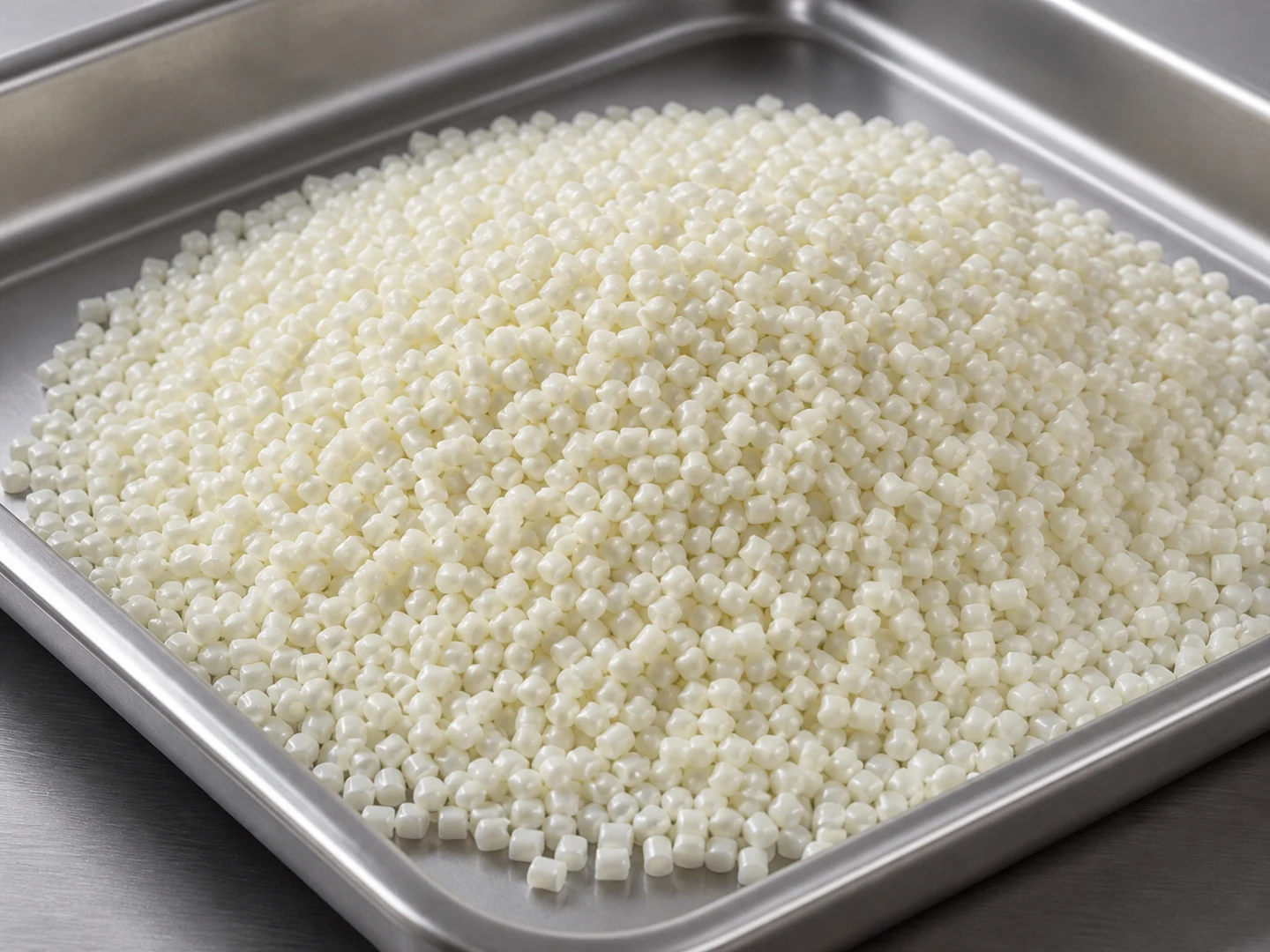
PA66 Nylon
Choose PA66 Nylon based on its stiffness, recovery, wear, wet-service, chemical, and temperature behavior.
Compare this materialCustom Manufacturing RFQ
Discuss This Application
Share the working surface, residue, dimensions, material direction, interface, quantity and drawing or sample photo.
Custom Brush RFQ
Request a Custom Cleaning Brush Quote
Upload a drawing, product photo, or sample photo and provide the core dimensions and cleaning conditions.
“We need a brush to remove wet residue from a stainless steel conveyor, about 800mm wide. The current brush wears quickly. We can send photos.”
“We sell drinkware and need a cleaning brush to include with the product. Quantity around 5,000 pieces.”