
Custom Cleaning Brush
Dairy Equipment Cleaning Brush
Chemical-resistant dairy equipment cleaning brush for tanks, conveyors, and filling machines.
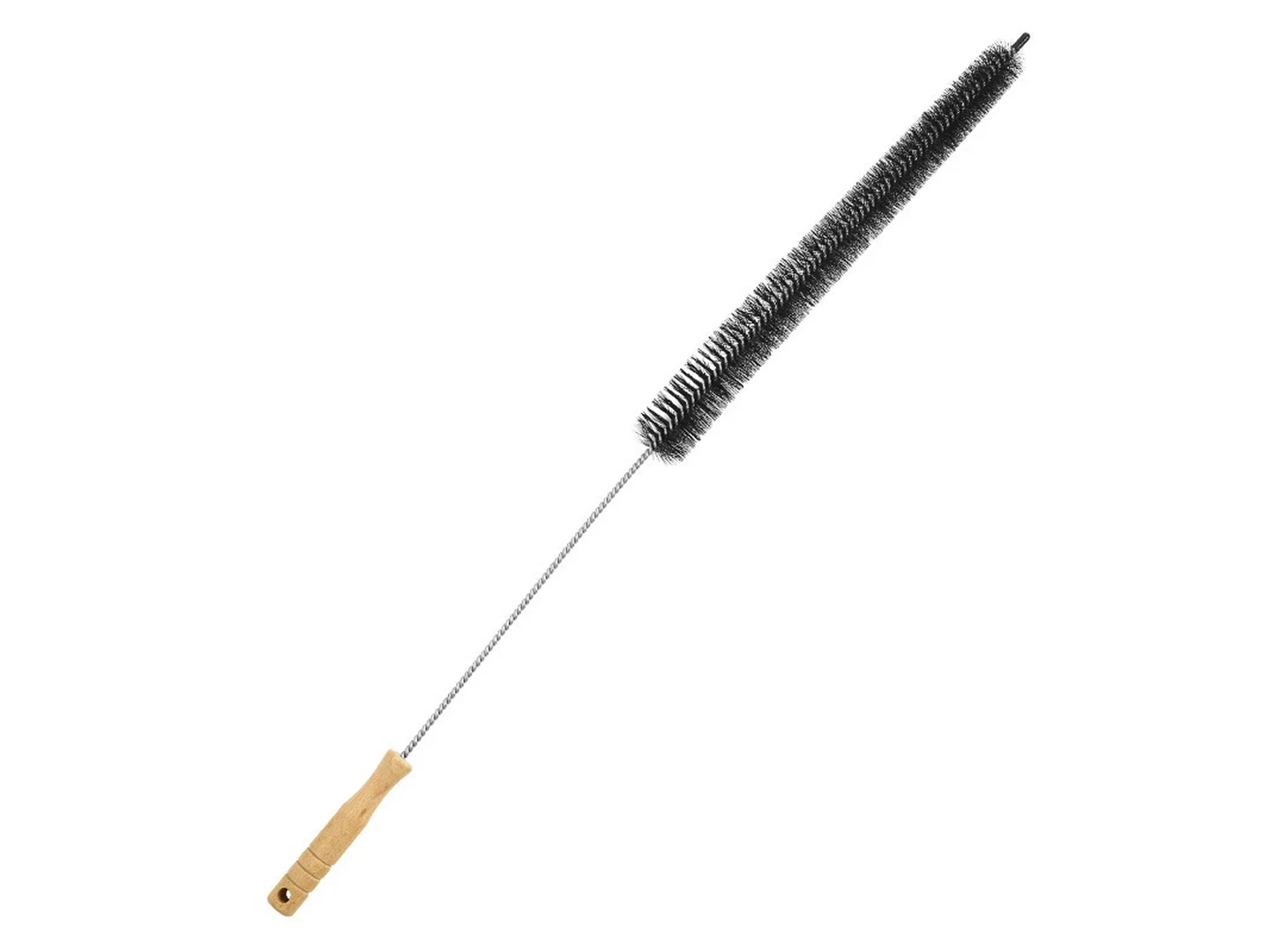
Medium brush
100 pcs
Minimum order
Worked with two hands or on a pole: chimney, gutter and pond-filter brushes, discs, cups and tank brushes.
Production lead time, once the specification is confirmed
- Up to 100 pcsWithin 7 days
- 101–5,000 pcsWithin 14 days
- 5,001–50,000 pcsWithin 21 days
- Over 50,000 pcsConfirmed with your quotation
Peak season can extend these times; the shipping date is confirmed in writing with your quotation. Sampling and shipping are quoted separately.
A washdown-duty hand brush for manual cleaning of dairy processing equipment — tanks, vats, conveyors, and filling machines — with chemical-resistant synthetic filaments and a drainable, non-absorbent design that holds up under hot-water sanitation.
What can this brush do for you?
Filament options built for hot washdown and detergents
The brush can be configured with PP, PBT, nylon, or polyester filaments, each selected for the actual temperature and chemical load in your plant. PBT stays stiff and stable in continuous hot-water washdown up to about 85°C and tolerates intermittent exposure to higher temperatures. PP resists many acid and alkaline cleaners without softening. Nylon provides high flex fatigue resistance for repeated scrubbing. This means the brush does not soften, mat, or shed filaments during normal sanitation cycles.
Wide contact face reduces manual scrubbing time
Head widths up to 300 mm and trim lengths up to 80 mm create a broad scrub path across tank walls, conveyor beds, and open equipment surfaces. Dense filament fill ensures the wide head is not just covering area but actually lifting milk fat, protein films, and lactose residues with each stroke. Operators finish large surface zones in fewer passes.
No ferrous metal in the brush head
The block and filaments are synthetic, and the only metal component, if specified, is a stainless steel threaded adapter for mounting. This eliminates rust transfer onto food-contact surfaces and supports metal-free configurations for plants with metal detection requirements. The brush itself does not become a contamination source.
Open drain construction prevents water pooling
The molded block is designed with drainage openings, so rinse water, detergent, and loosened soil pass through instead of collecting inside the brush. This reduces bacterial growth opportunities and makes the brush easier to sanitize between shifts. The brush does not trap what it just removed.
Color coding supports zone separation
Standard and custom colors allow plants to dedicate specific brush colors to raw milk, pasteurized product, allergen areas, or general washdown zones. A simple visual control helps prevent cross-contamination and makes the sanitation program easier to audit.
What is a Dairy Equipment Cleaning Brush?
A Dairy Equipment Cleaning Brush is a hand-held or fixture-mounted scrubbing tool with a synthetic filament head, used during manual washdown of dairy processing surfaces. Unlike a general-purpose scrub brush, it is engineered for the wet, chemical, and temperature conditions found in dairy plants: hot-water rinses, alkaline and acid detergents, sanitizers, and heavy rinse traffic.
The brush head is typically a molded PP or PBT block filled with a dense pattern of PP, PBT, nylon, or polyester filaments. The handle may be a molded grip for direct hand use or a threaded socket for extension poles, machine arms, or custom wash-station fixtures. During use, the operator applies detergent or foam to the surface and scrubs with push, pull, and circular strokes. The open block drains continuously, and the synthetic materials do not absorb water.
This is a tool for removing dairy soils — milk fat, protein films, lactose residues, and general processing debris — from accessible surfaces. It is not a CIP device, a pipe brush, or an abrasive tool for hard mineral scale. It works as part of a sanitation sequence, not as a replacement for automated cleaning or chemical action.
Technical Specifications
Dimensions and material combinations are configured per project. The ranges below represent production capability, not a single stock configuration.
| Parameter | Value / Options |
|---|---|
| Head width | 20–300 mm, selected for surface width or access space |
| Trim length | 20–80 mm, longer for irregular contours, shorter for flat-surface stiffness |
| Overall length | 180–800 mm, hand grip or extension-pole configuration |
| Filament diameter | 0.20–0.80 mm, thinner for film removal, thicker for sticky or dried residues |
| Filament material | PBT, Polypropylene (PP), Nylon (PA), or Polyester; see selection notes below |
| Block / base material | PP or PBT, molded with drain openings |
| Handle / thread | Molded hand grip, 1/2 in stud, M8, M10, or custom interface |
| Operating temperature | 0–140°C depending on filament; PP up to ~100°C, PBT up to ~140°C, nylon up to ~100°C (moisture-sensitive) |
| Washdown conditions | Recommended for 20–85°C water and detergent cleaning; not for steam sterilization unless specified |
| Color options | Standard blue, red, yellow, green, white, black; custom colors for zone coding |
| Brush type | Custom Handheld Detail Brushes |
| How it is driven | Hand-guided |
| Cleaning target | milk storage tank and silo, cheese vat, and conveyor and filling-line equipment cleaning |
| Surface or part | tanks, conveyors, pipes, walls, drain, fixtures, belts, and guides |
| Residue or debris | milk, protein film, fat, mineral scale, fat deposits, particles, and milk fat |
| Mounting / connection | Molded hand grip, 1/2 in stud, M8, M10, or custom interface |
Where does this brush work best?
- Milk storage tanks and silos — exterior walls, manway areas, and legs where foam or manual scrubbing removes protein films before final rinse.
- Cheese vats, curd tables, and draining racks — open surfaces that need agitation to release curd particles, fat deposits, and whey residues.
- Conveyors and filling-line equipment — belts, side guides, and housings where drip residues and spillage accumulate during production.
- Removable parts and fittings — valve bodies, pump casings, and pipe fittings cleaned at a wash station away from the line.
- Receiving-area equipment — milk cans, crates, and trays that require a dedicated brush to avoid cross-contamination with non-food zones.
- Washdown stations — where the brush is used with detergent or foam application as part of the plant’s sanitation routine.
How do I choose the right one?
Match the filament to the chemical and temperature load
PBT is the first choice for hotter washdowns, stronger alkaline cleaners, and repeated exposure to oxidizing sanitizers. PP is economical and resists many acids and alkalis, but softens above about 100°C. Nylon offers high flex fatigue and abrasion resistance, but absorbs water and can lose stiffness in continuously wet environments. Polyester is an alternative when a balance of cost and chemical resistance is needed.
Size the head and trim for the surface geometry
Measure the widest area you need to cover and the narrowest opening you need to reach. A wide head (150–300 mm) speeds up large flat surfaces; a narrow head (20–80 mm) fits into corners and around pipework. Longer trim (50–80 mm) reaches into recessed areas and around curved tank walls; shorter trim (20–30 mm) gives a firmer scrubbing action on flat surfaces.
Choose the handle for how the brush is used
Use a molded hand grip for operator-held cleaning. Use a threaded stud (1/2 in, M8, M10) for mounting on extension poles, machine arms, or custom fixtures in automated or semi-automated wash stations. If the brush will be removed frequently for cleaning, consider a quick-connect or ratchet-lock interface.
Filament selection reference
| Condition | Recommended filament | Reason |
|---|---|---|
| Hot water washdown up to 85°C, frequent alkaline detergent | PBT | Best temperature and chemical resistance; low water absorption |
| Mild detergent, ambient to warm water, cost-sensitive project | PP | Good acid/alkali resistance, lower cost, adequate for general dairy soils |
| High abrasion or flexing against rough surfaces, but not high heat | Nylon | Excellent flex fatigue and abrasion resistance; absorbs moisture, so monitor stiffness |
| Metal detection required in process area | PP or PBT with all-plastic handle and block | No metal components; specify metal-free configuration |
When a different tool is the better choice
If the residue is hard mineral scale, carbonized deposits, or requires aggressive mechanical action, a stainless steel wire brush or abrasive pad may be needed — but test on polished stainless surfaces first, as those can scratch. If you need to clean the inside of pipes or closed vessels, use a tube brush or rely on the CIP system. If the surface is extremely delicate, consider a softer silicone or foam applicator. This brush is for general dairy soil removal with detergent support, not for heavy abrasion or replacing automated cleaning.
Can I customize this brush?
Dairy equipment cleaning brushes are configured around the actual equipment and sanitation program. We will need the equipment type, surface material, residue description, washdown temperature and chemicals, access dimensions, handle preference, and whether food-contact or metal-detectable requirements apply. A drawing or photo of the area to be cleaned helps us get the configuration right faster.
We can adjust:
- Head geometry — width, length, curved or contoured shape for tank radius, angled head for corners
- Filament configuration — material, diameter, trim length, straight or crimped, stiffness, density
- Block — material, color, drain hole pattern, molded-in logo or part number
- Handle — molded ergonomic grip, extended handle, threaded stud size, quick-release, or custom bracket
- Overall length and reach — matched to operator height and equipment access
- Color coding — custom colors for zone separation or brand identity
- Packaging — bulk, individually bagged with color coding, or kit sets
If your project requires material declarations, inspection reports, or third-party testing support, we can assist with those requirements during the customization process.
Which filament survives the cleaning chemicals a dairy equipment cleaning brush meets?
How do I sanitize the brush itself between production shifts?
Rinse the brush with hot water and approved detergent at the end of each shift, remove any visible soil from between filaments, and hang the brush head-down to drain and air dry. The open block design prevents water pooling. If the brush is used in a high-hygiene area, consider dedicating it to that zone and including it in the plant’s brush hygiene program. Replace brushes when filaments become matted or the block shows cracks that could trap soil.
Will synthetic filaments scratch polished stainless steel equipment?
Standard PP, PBT, and nylon filaments are non-metallic and generally gentler than wire or abrasive pads. However, stiff filaments used with excessive pressure or abrasive cleaning powders can still create micro-scratches on mirror-finish surfaces. For critical surfaces, specify a softer filament or a flagged tip and test on a non-visible area before full use.
Can the brush be used with metal detection in the processing area?
Yes, but only if the brush is specified as metal-free. Standard models may include a metal threaded insert for mounting. For metal-detectable or metal-free zones, specify an all-plastic handle and block configuration, or choose a metal-detectable additive in the plastic if that is preferred. Confirm the requirement at the time of ordering.
How can I tell if the brush is still effective before starting a cleaning shift?
Check that the filaments are upright and not flattened to one side, that the block has no cracks or missing filaments, and that the handle or thread is secure. A quick test is to press the filaments against a flat surface: they should spring back to vertical. If they remain bent or the brush feels softer than when new, it is time to replace it. Brushes in dairy service are often replaced on a schedule rather than when visually worn.
Should I use this brush on internal surfaces of tanks that are cleaned by CIP?
Generally no. CIP systems are designed for closed vessels and pipework, and manual brushing is not required for those surfaces. This brush is for external surfaces, open equipment, removable parts, and areas that CIP cannot reach. Using it inside a CIP-cleaned tank could introduce contaminants if the brush is not dedicated to that purpose. Follow your plant’s sanitation plan.
Guides that go deeper on this
Custom Manufacturing RFQ
Describe Your Application
Send the key measurements, cleaning requirement, residue, material direction, mounting method, quantity, and drawing or photo.
Drawing or photo optional — it speeds things up, it does not gate the enquiry.
Custom Brush RFQ
Send Your Brush Project
Upload a drawing, product photo, or sample photo and provide the core dimensions and cleaning conditions.
“We need a brush to remove wet residue from a stainless steel conveyor, about 800mm wide. The current brush wears quickly. We can send photos.”
“We sell drinkware and need a cleaning brush to include with the product. Quantity around 5,000 pieces.”