
Application
Nozzle Cleaning
For Nozzle Cleaning, the brush must reach the working area, disturb or collect carbon deposit / polymer residue / adhesive / paint / mineral scale, and release it without creating unacceptable surface damage or process interference. The right structure is set by how the brush reaches the area, how it moves, and how the cleaning is performed.
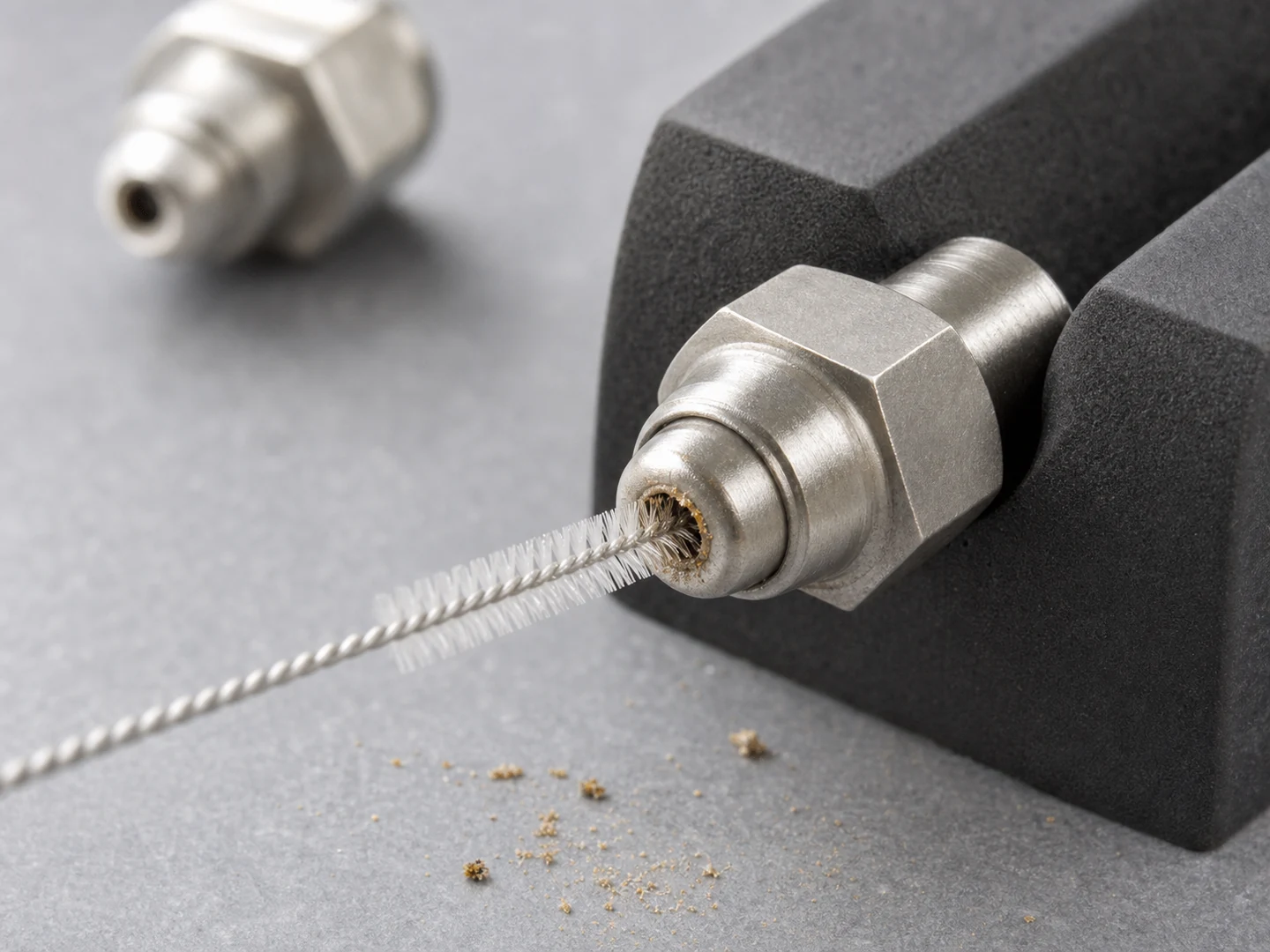
At a glance
- Cleaning target
- Carbon deposit / polymer residue / adhesive / paint / mineral scale
- Working environment
- Industrial Production Area / Maintenance Workshop
- Cleaning method
- Dry Brushing / Wet Brushing / Solvent-Assisted Cleaning
- Requirements to check
- Equipment-manufacturer cleaning limits and material-compatibility requirements
A nozzle orifice is a calibrated dimension, so the brush that clears cured coating, resin or carbon out of it must not enlarge, score or round the bore it passes through.
What makes Nozzle Cleaning different from other industrial and manufacturing cleaning?
The main difficulty is removing oil, carbon, scale, biofilm, process residue, and particles from bores, channels, tubes, hoses, ports, and internal passages without damaging the surface, loading the brush, or carrying contamination back into the process.
The work happens in industrial production area and maintenance workshop against carbon deposit, polymer residue, adhesive, paint and mineral scale.
The part people get wrong: the residue tells you the filament, but the access opening tells you the construction. Get them in that order and the shortlist is short.
What are the most common cleaning targets in Nozzle Cleaning?
6 targets, each with its own opening, residue and contact requirement.
| Part or area | Residue type | Cleaning requirement |
|---|---|---|
| Spray and Paint Nozzle | Cured coating, resin and adhesive residue | The head must be narrower than the opening and stiff enough to lift residue without splaying at the mouth. |
| Fuel Injector Nozzle | Carbon deposit, varnish, fuel residue | |
| Burner and Gas Nozzle | Soot, carbon deposit, combustion ash | |
| Dispensing and Filling Nozzle | Product residue, dried syrup, adhesive, biofilm | |
| Welding and Cutting Tip | Weld spatter, slag, oxide build-up | |
| Precision Micro-Nozzle | Dried media, particulate, film residue |
The dimensional envelope those targets impose on the brush:
| Parameter | Typical range |
|---|---|
| Filament diameter | 0.30–1.00 mm; 0.08–0.25 mm |
| Overall length | 152–406 mm; 200–450 mm |
| Working length | 120–300 mm; 10–150 mm |
| Internal diameter | 1–300 mm |
| Passage length | 20–10,000 mm |
Which brush types work for each cleaning target?
Miniature twisted-wire bore brush, tapered detail brush or calibrated pin-brush set.
| Cleaning target | Recommended brush type | Why it fits |
|---|---|---|
| Spray and Paint Nozzle | Handheld Detail Brushes | A spray tip’s orifice is what sets the fan pattern, so the head clears dried coating without touching the orifice edge that shapes the spray. |
| Fuel Injector Nozzle | An injector has several micro-holes on a machined tip, so a fine head cleans the tip face and seat area without entering and enlarging a hole. | |
| Burner and Gas Nozzle | A burner port is drilled to a fixed size that sets the air-fuel ratio, so the brush lifts carbon off the port face without reaming it. | |
| Dispensing and Filling Nozzle | A dispensing nozzle must be free of dried product before the next fill, so a narrow head passes into the bore and draws the residue back out. | |
| Welding and Cutting Tip | Spatter builds on the tip and inside the shroud, so a stiff narrow head knocks it out without scoring the bore the wire runs through. | |
| Precision Micro-Nozzle | At micro-nozzle size the brush has to be smaller than the bore and still touch its wall, which sets the filament diameter before anything else is chosen. |
The layouts this application is normally built in:
- Driven brush — use when oil, carbon, scale, biofilm, process residue, and particles needs repeatable scrubbing or controlled relative movement
- Passive or free-running brush — use for loose contamination and lower process complexity on bores, channels, tubes, hoses, ports, and internal passages
- Localized hand, strip, or tube brush — use where only an edge, gap, port, or maintenance point needs contact
In practical brush terms: reach first, then residue. A brush that fits but is too soft can be stiffened; a brush that does not fit is simply the wrong tool.
What filament materials work best for Nozzle Cleaning?
Soft nylon or brass for compatible surfaces; stainless or abrasive nylon only after nozzle material and dimensional tolerance are approved.
| If the condition is… | Filament to start with | Why |
|---|---|---|
| Sensitive or coated surface | Nylon PA | balanced flex life and abrasion resistance |
| Wet, washdown, or detergent service | Polypropylene PP | acid, alkali, water, and detergent resistance |
| Bonded residue or aggressive cleaning | PBT | stable wet stiffness and low moisture uptake |
The constraints this application puts on the filament:
| Constraint | Value for this application |
|---|---|
| Filament hardness | Medium to Hard |
| Maximum service temperature | 200°C |
| Chemical exposure | Water, neutral or alkaline cleaner, or compatible organic solvent according to nozzle material |
| Cleaning method | Dry Brushing, Wet Brushing, Solvent-Assisted Cleaning |
How do I choose the right brush for my nozzle equipment?
Work down from the orifice tolerance: it caps the brush diameter, then the fill hardness, then the material, in that order.
Work through it in this order:
- Identify the target part and measure the access opening or clearance
- Describe the residue: what it is, how thick it sits, and how strongly it holds
- Choose the construction that can physically reach that target
- Set the filament from surface risk, working temperature and cleaning chemistry
- Fix filament diameter, free trim length and density for the contact pressure you need
- Run one cycle and check the result before committing to a production quantity
Before you commit to a quantity, send the orifice diameter with its tolerance, the internal taper, and the nozzle material.
When is a nozzle brush the wrong tool?
Cured coating and baked resin come off in a solvent soak or an ultrasonic bath, where nothing touches the orifice at all. A brush is wrong the moment its diameter approaches the orifice tolerance, because clearing the hole and enlarging it become the same action.
What common mistakes should I avoid in Nozzle Cleaning?
- Asking for a brush that fits the orifice without stating the orifice tolerance it must not exceed
- Changing brush material while leaving excessive engagement, poor alignment, or no discharge path unchanged
- Copying a worn brush without recording motion, direction, mounting, and the original working diameter
When a brush is running but not cleaning, start here rather than adding pressure:
| Symptom | What to change |
|---|---|
| Residue remains | Increase relative motion or discharge, then change filament diameter or density; do not add pressure before checking loading by oil, carbon, scale, biofilm, process residue, and particles. |
| Surface marks or scratches | Reduce engagement, use finer or softer fill, and remove trapped abrasive particles from contact with bores, channels, tubes, hoses, ports, and internal passages. |
| Rapid wear or uneven cleaning | Check alignment, runout, support, motion, temperature, chemical attack, and whether the brush covers the complete working path. |
| Brush loads or redeposits residue | Open the fill pattern or add wash, vacuum, air, scraping, or a collection path so removed oil, carbon, scale, biofilm, process residue, and particles leaves the contact zone. |
Questions this page is asked
How can cleaning protect a calibrated nozzle opening?
Measure or otherwise verify the critical opening before and after a controlled trial, and keep every rigid brush core, wire end and scraping edge from loading the metering surface. Stop if the tool requires force, raises a burr, removes coating or changes the verified dimension, since opening the passage by damage is not a cleaning result.
What functional check should follow nozzle brushing?
After the specified flush and reassembly, test the nozzle with the approved process medium and compare flow, pressure response, spray pattern, jet direction or extrusion result with the equipment's acceptance criterion. Inspect for loose residue and brush fragments first so the validation run does not drive contamination into a downstream passage.
Guides that go deeper on this
3D Printer Nozzle Brush: Cleaning and Maintenance
Read this guideGuideCosmetic Filling Nozzle Brush: Hygiene, Bore and Chemicals
Read this guideGuideHow to Choose the Right 3D Printer Nozzle Cleaning Brush
Read this guideGuideInkjet Nozzle Brush: When Brushing Helps, When It Risks
Read this guideGuideNozzle Cleaning Brush: Cosmetic Filling, Spray and Orifices
Read this guideContinue Exploring
Recommended Reading & Related Brush Resources
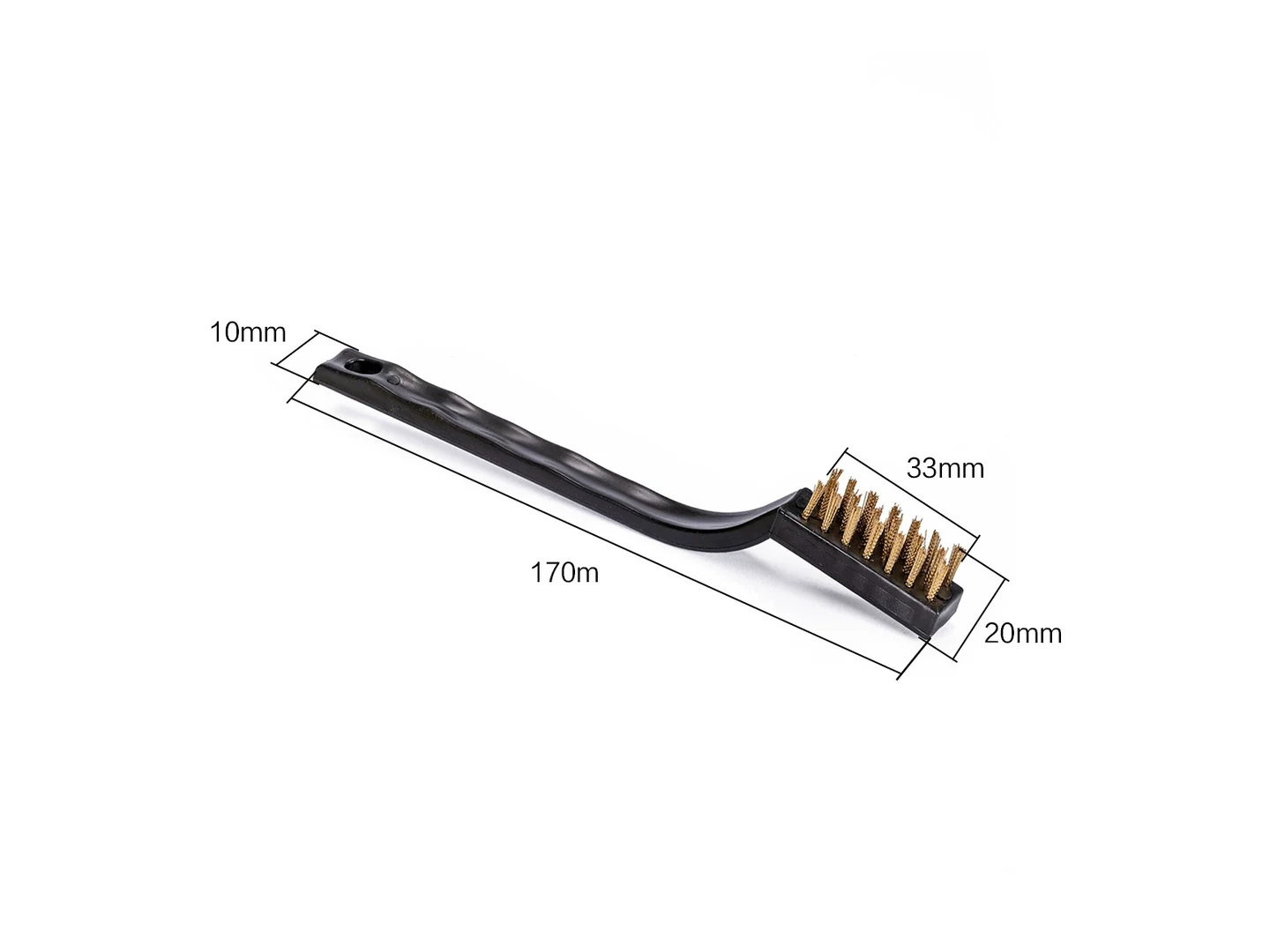
3D Printer Nozzle Brush
Small brass-wire 3D printer nozzle brush for hotend and heater-block cleaning at 200–250°C. Customizable…
See the specification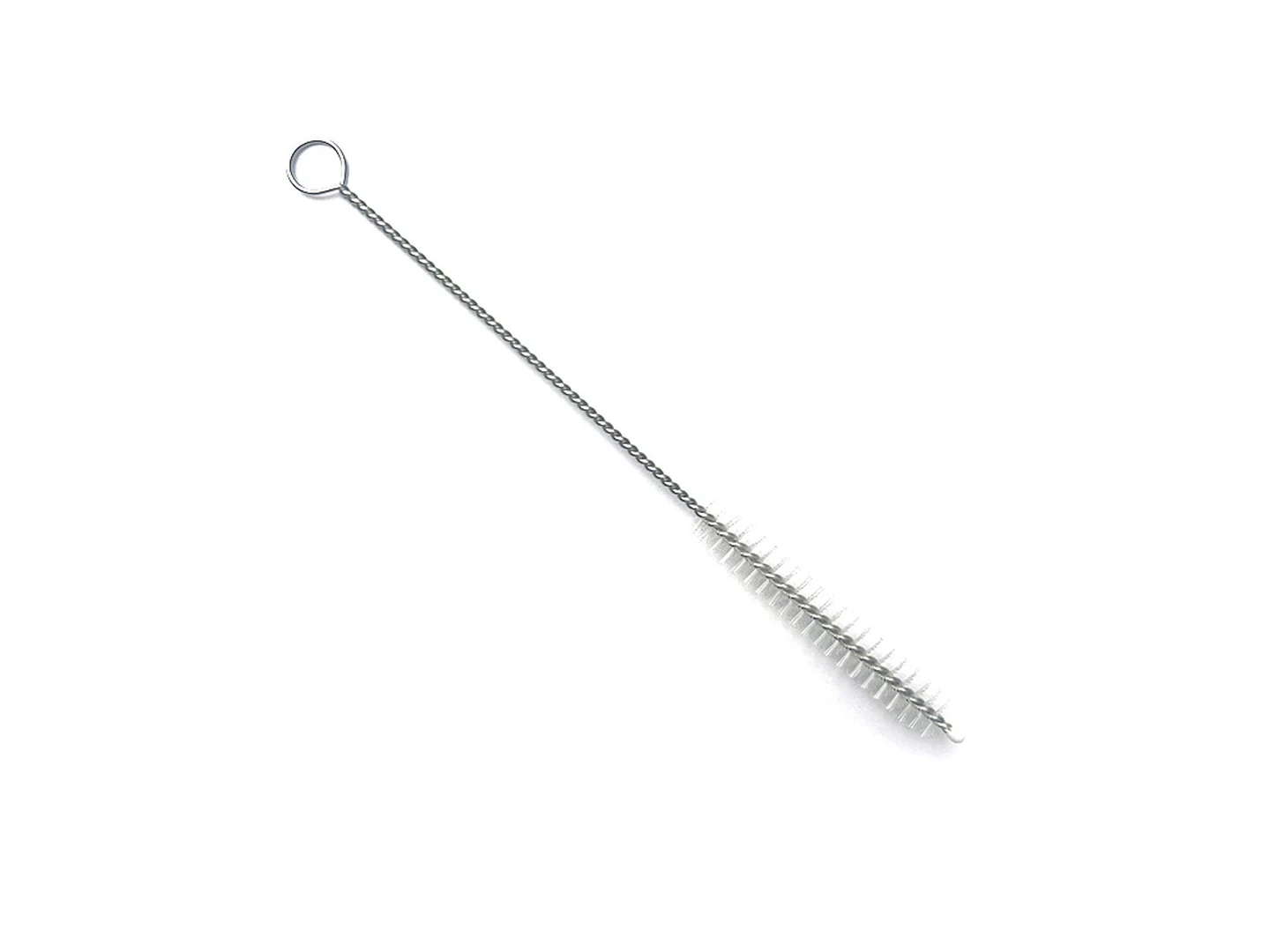
Container Filling Nozzle Brush
Small-diameter PBT and nylon nozzle brushes for cleaning filling nozzles, valve ports, and narrow…
See the specification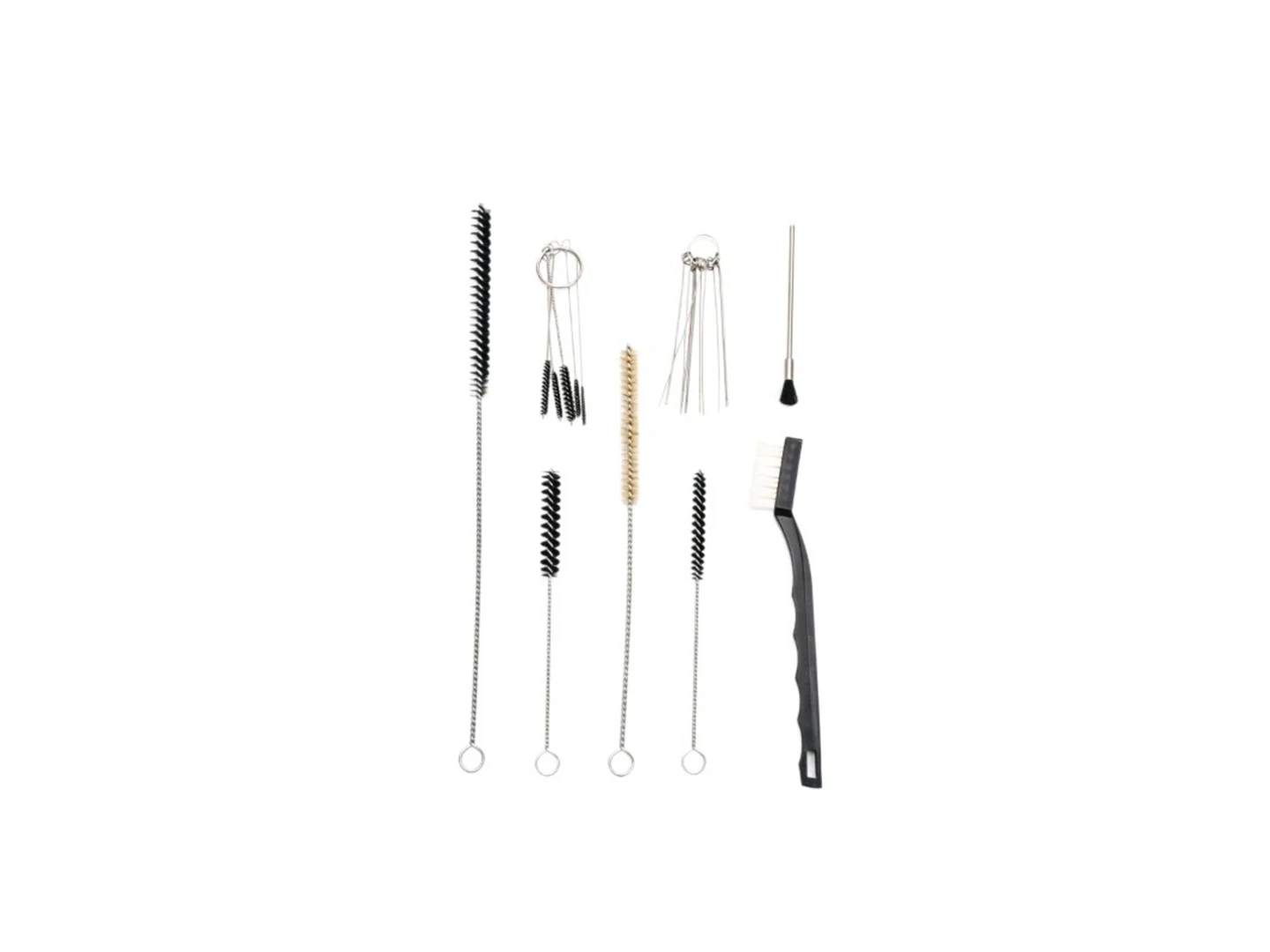
Inkjet Nozzle Cleaning Brush
Custom inkjet nozzle cleaning brush with PBT or PTFE filaments, 2–6 mm tip, 100–150…
See the specification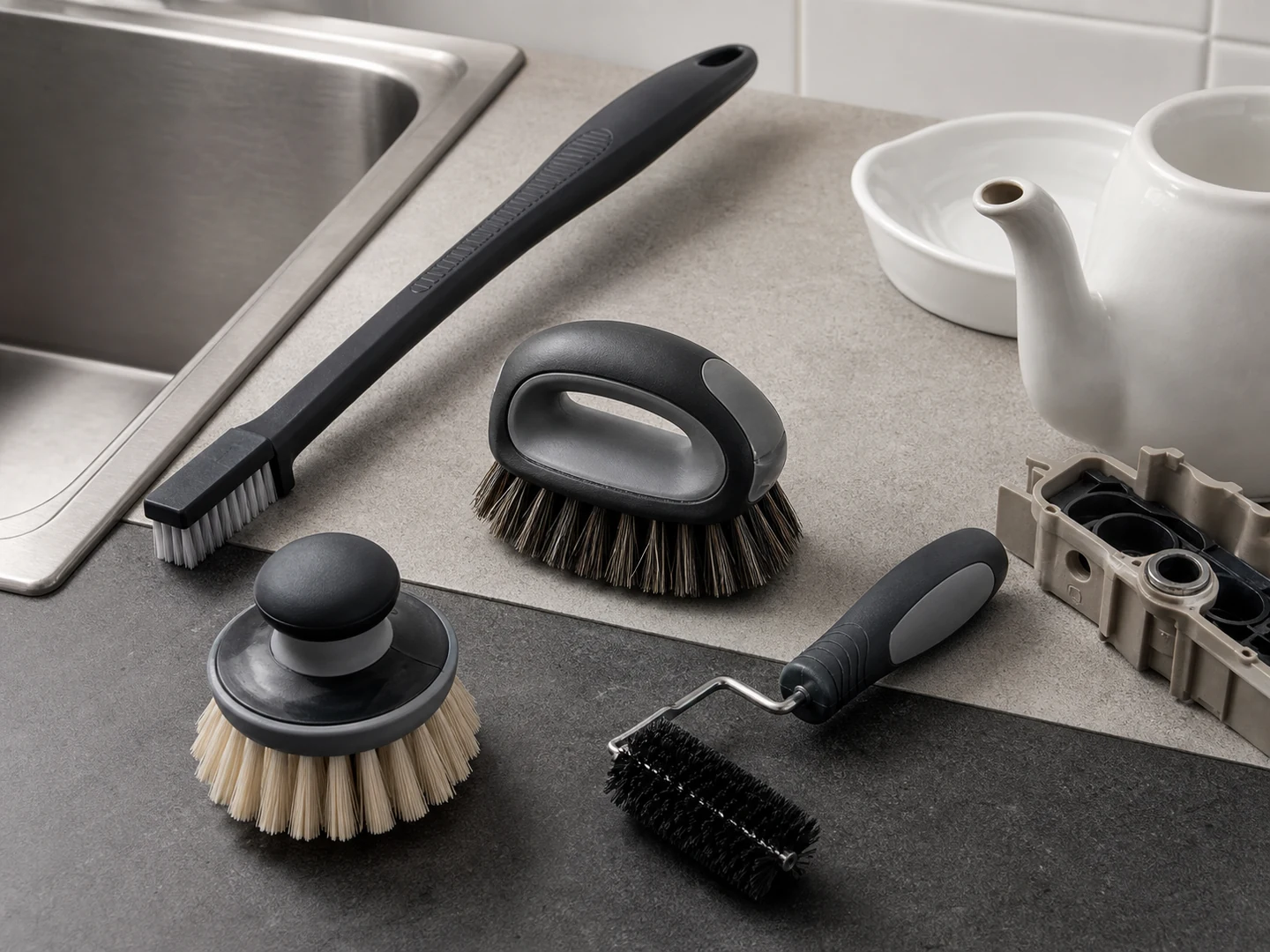
Custom Handheld Detail Brushes
Choose a handheld detail brush when you need direct control in seams, recesses, fittings,…
See how this type is built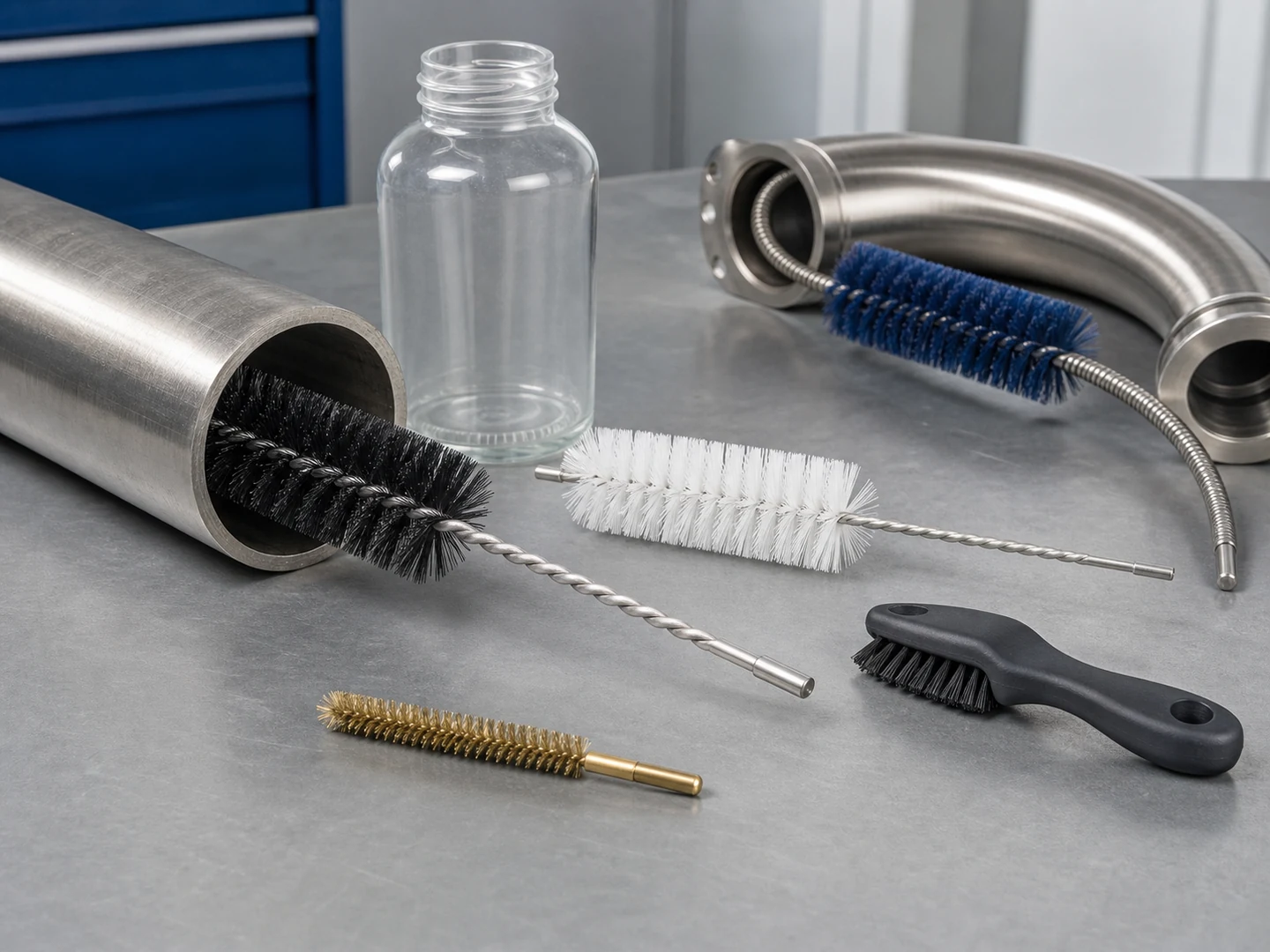
Custom Tube & Pipe Bore Brushes
Choose a tube, pipe, or bore brush when the working surface is inside a…
See how this type is built
Nylon PA
Choose Nylon PA based on its stiffness, recovery, wear, wet-service, chemical, and temperature behavior.
Compare this material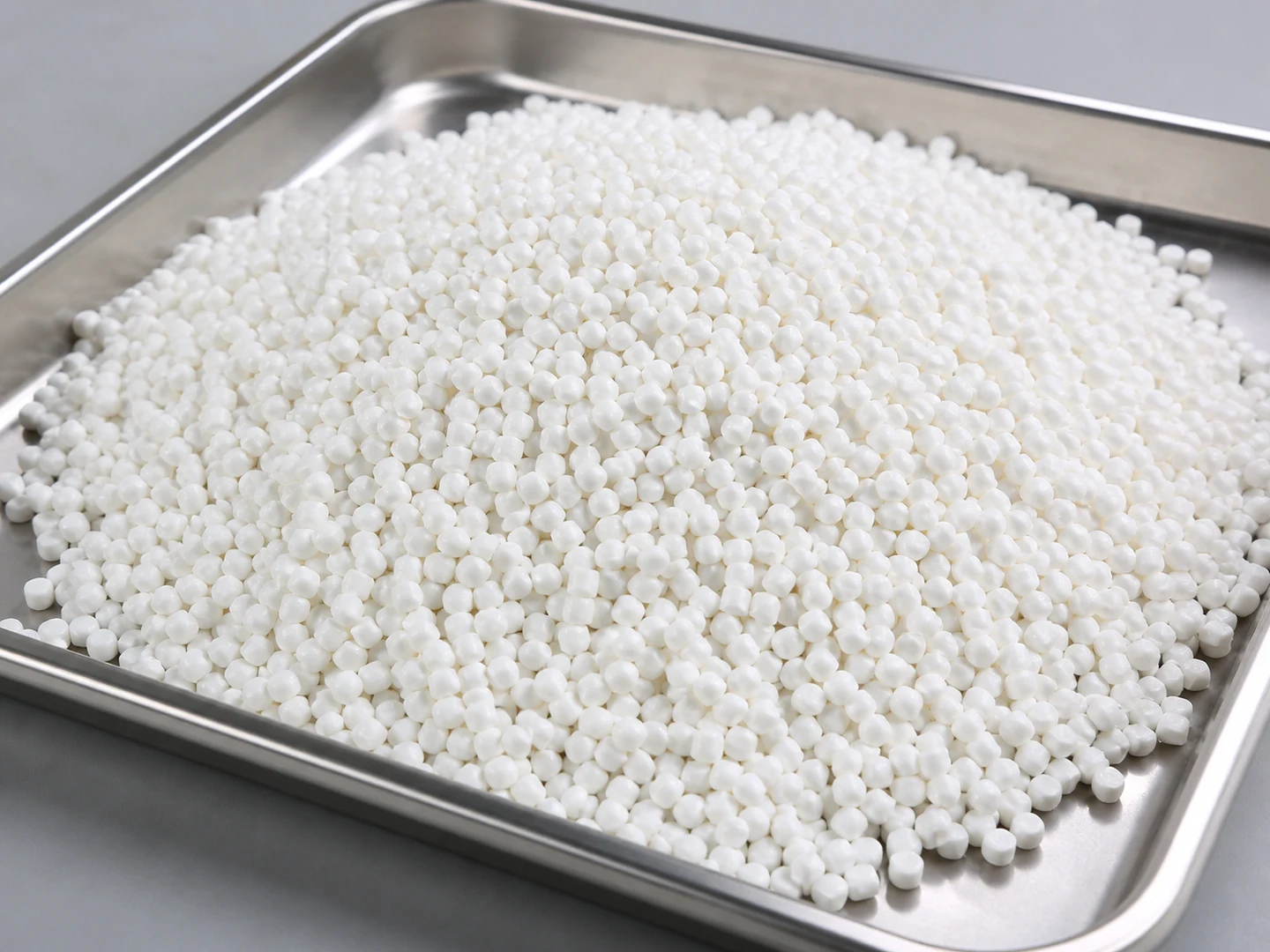
PBT
Choose PBT based on its stiffness, recovery, wear, wet-service, chemical, and temperature behavior. Do…
Compare this material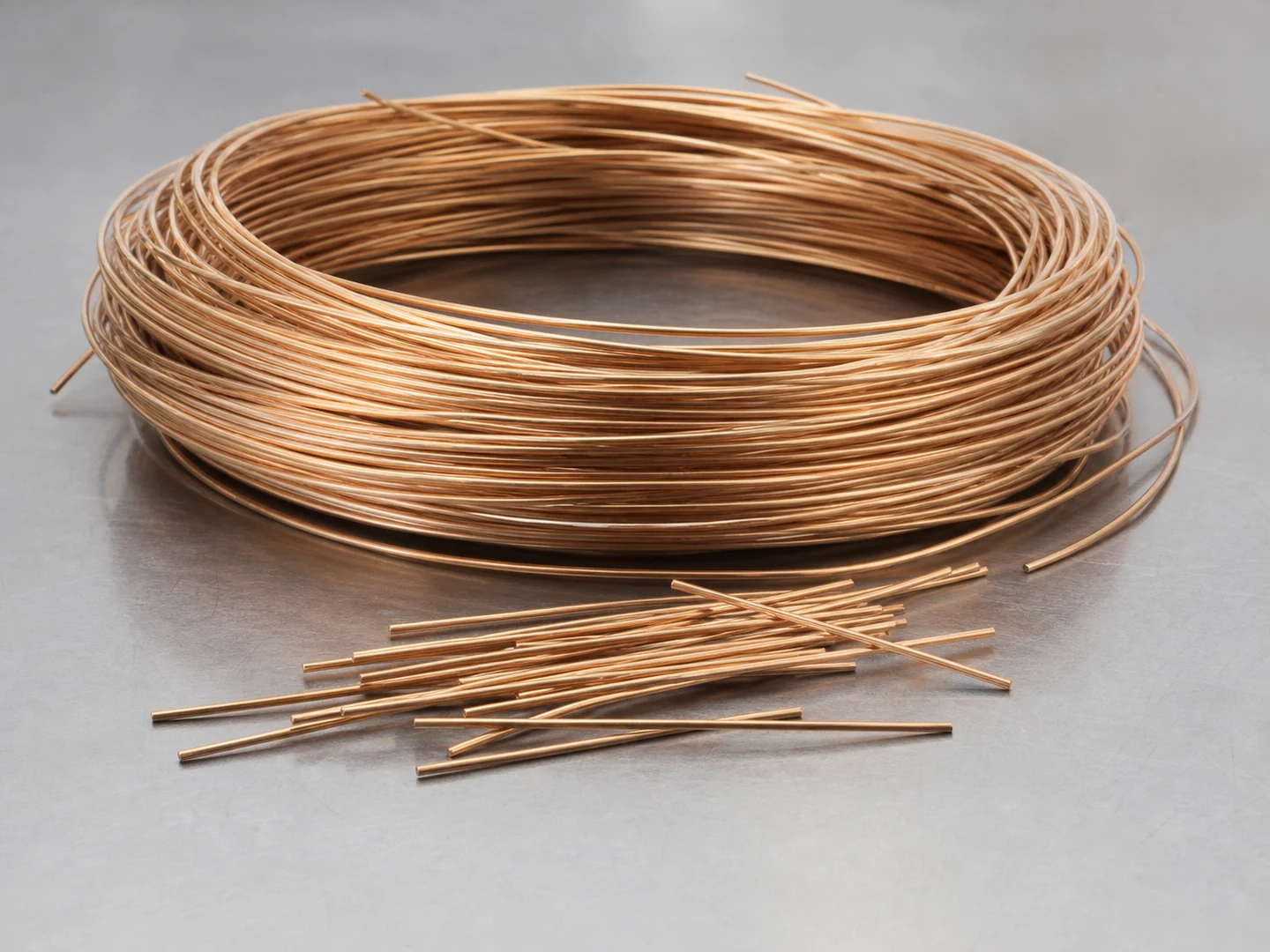
Phosphor Bronze Wire
Choose Phosphor Bronze Wire based on its stiffness, recovery, wear, wet-service, chemical, and temperature…
Compare this materialCustom Manufacturing RFQ
Discuss This Application
Share the working surface, residue, dimensions, material direction, interface, quantity and drawing or sample photo.
Custom Brush RFQ
Request a Custom Cleaning Brush Quote
Upload a drawing, product photo, or sample photo and provide the core dimensions and cleaning conditions.
“We need a brush to remove wet residue from a stainless steel conveyor, about 800mm wide. The current brush wears quickly. We can send photos.”
“We sell drinkware and need a cleaning brush to include with the product. Quantity around 5,000 pieces.”