Brush Medical Scrub
Two-sided surgical hand scrub brush with nylon nail brush and sponge side for preoperative hand and forearm scrubbing.
- Head Ø
- 1–50 mm
- Head length
- 5–100 mm
- Handle
- 100–600 mm

Custom Cleaning Brush Manufacturer
PRODUCT CATEGORY
Instrument and endoscope cleaning depends on exact lumen access and the cleaning procedure. A channel brush that is too small may not contact the wall; one that is too large can be difficult to pass or may damage the device. Reuse, packaging and documentation also matter in regulated workflows.
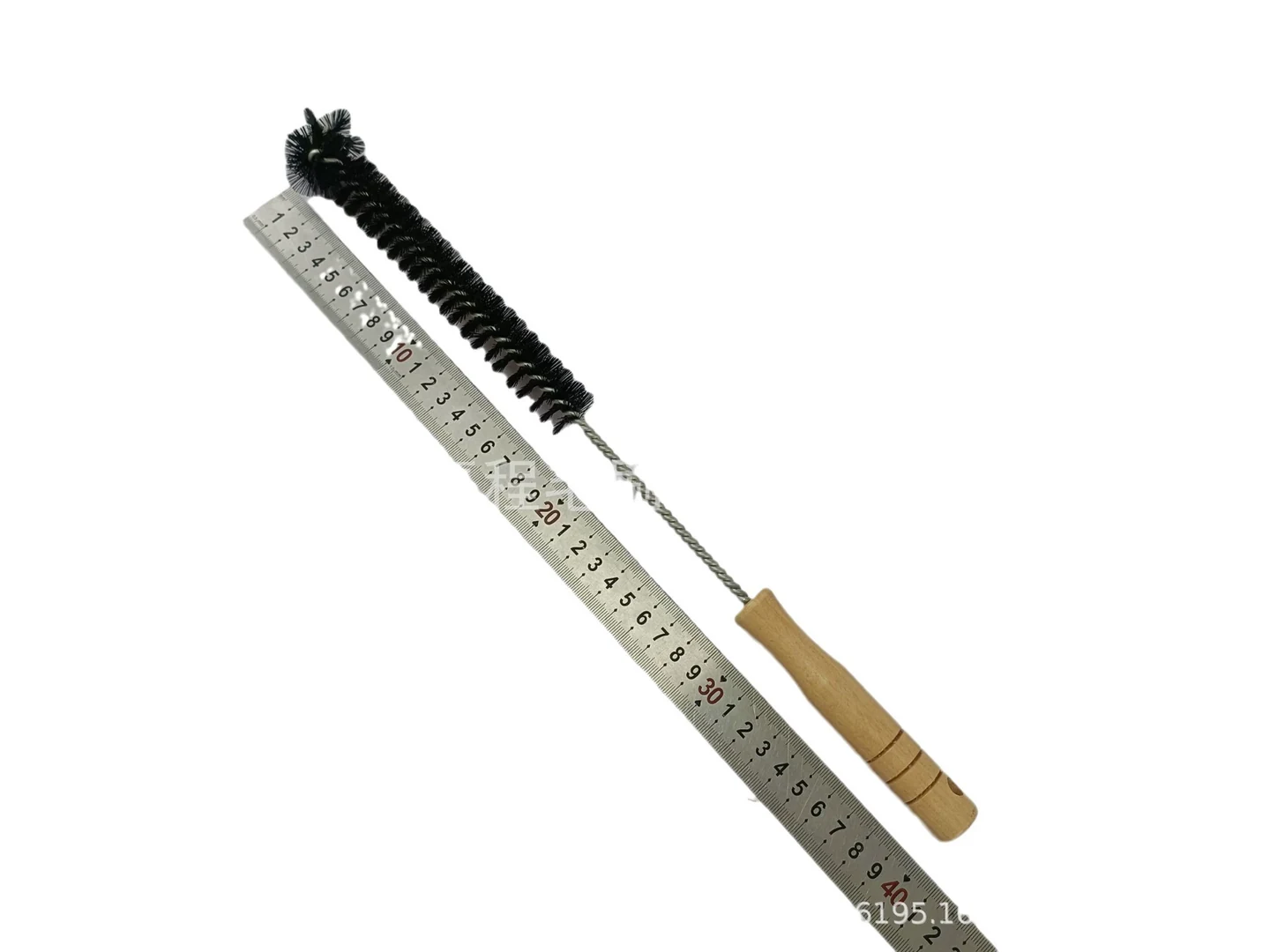
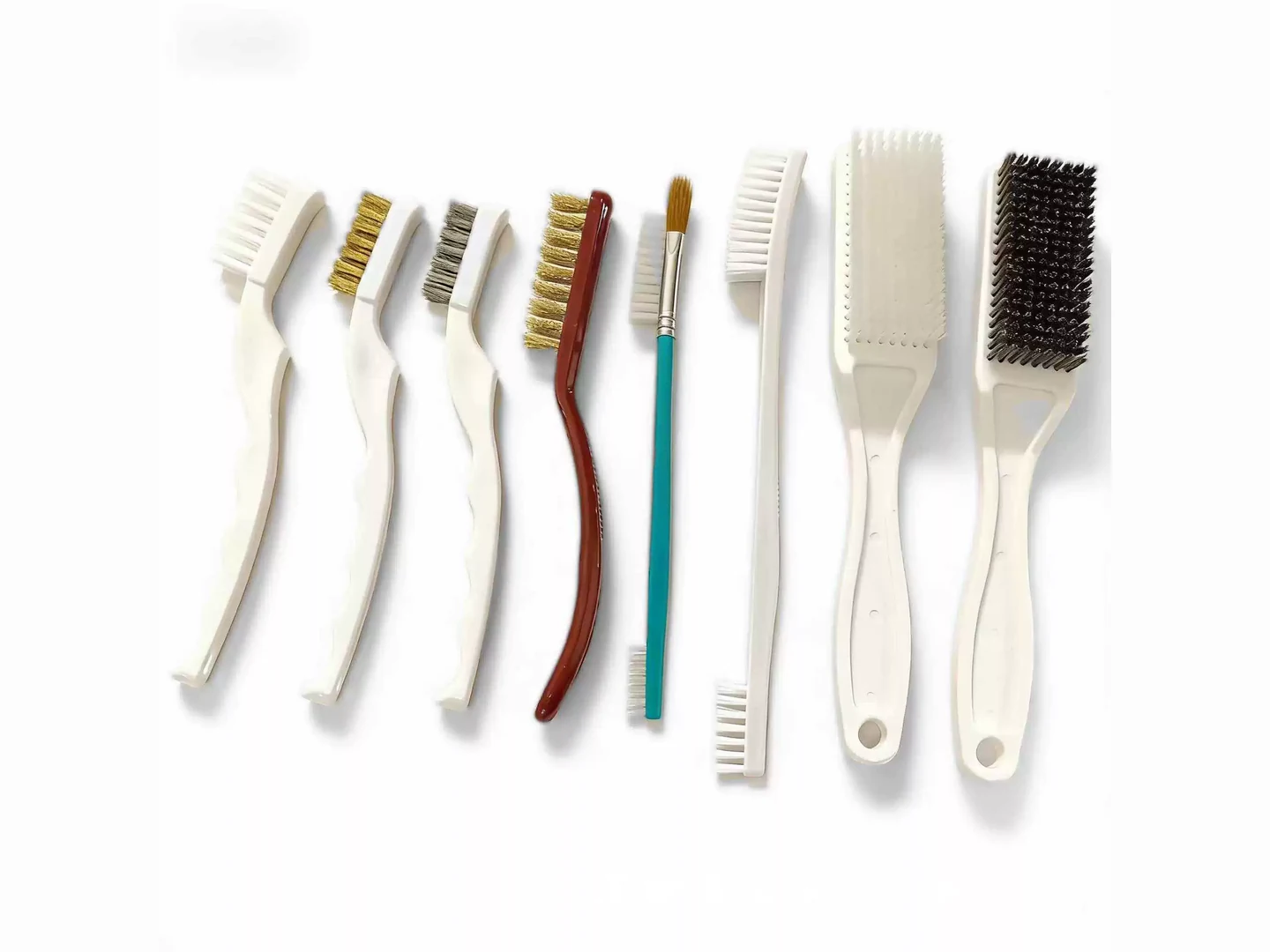
Compare channel brushes, disposable and reusable endoscope brushes, cannula cleaners, surgical instrument brushes and flexible medical tube-cleaning products.
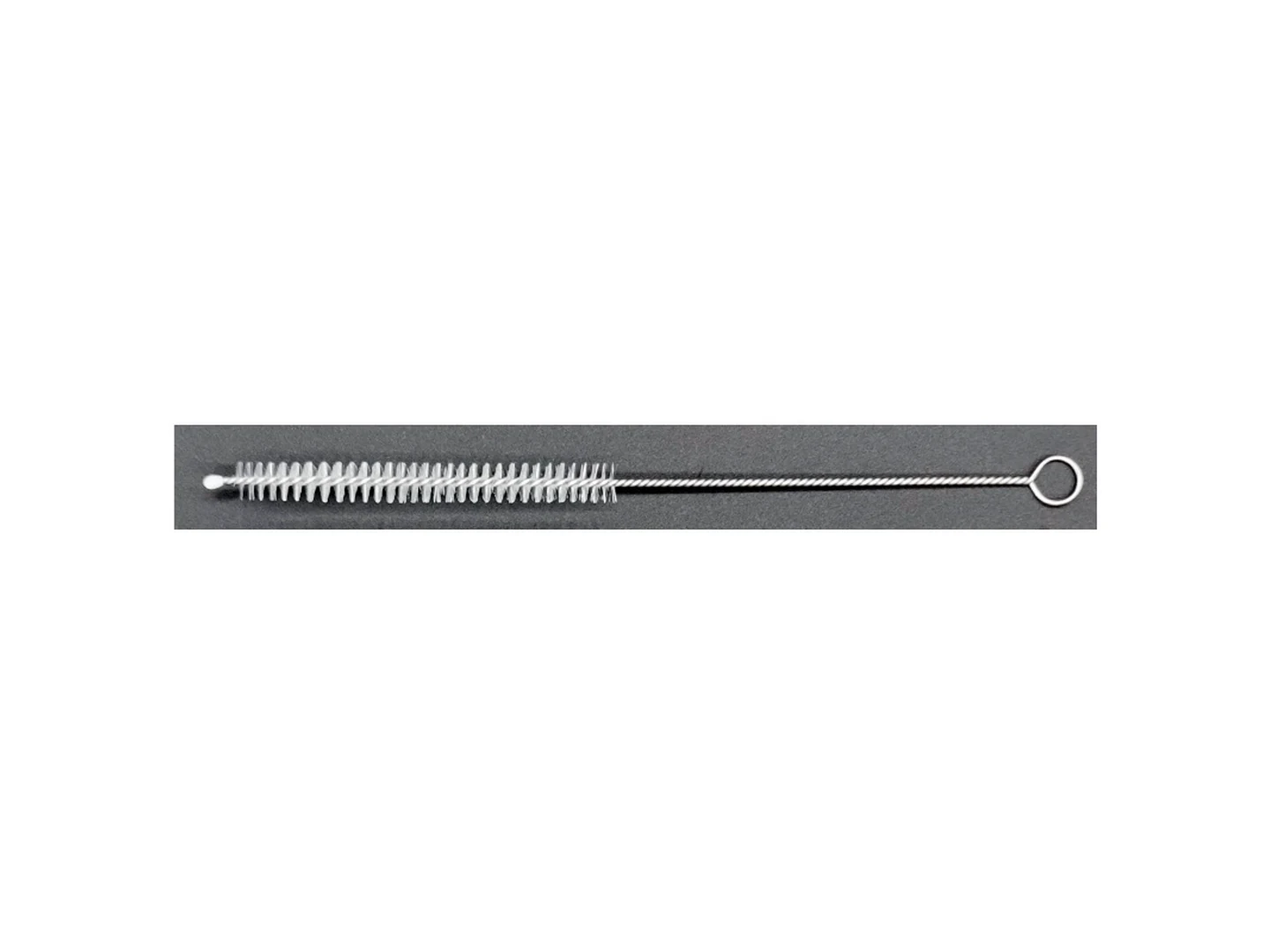
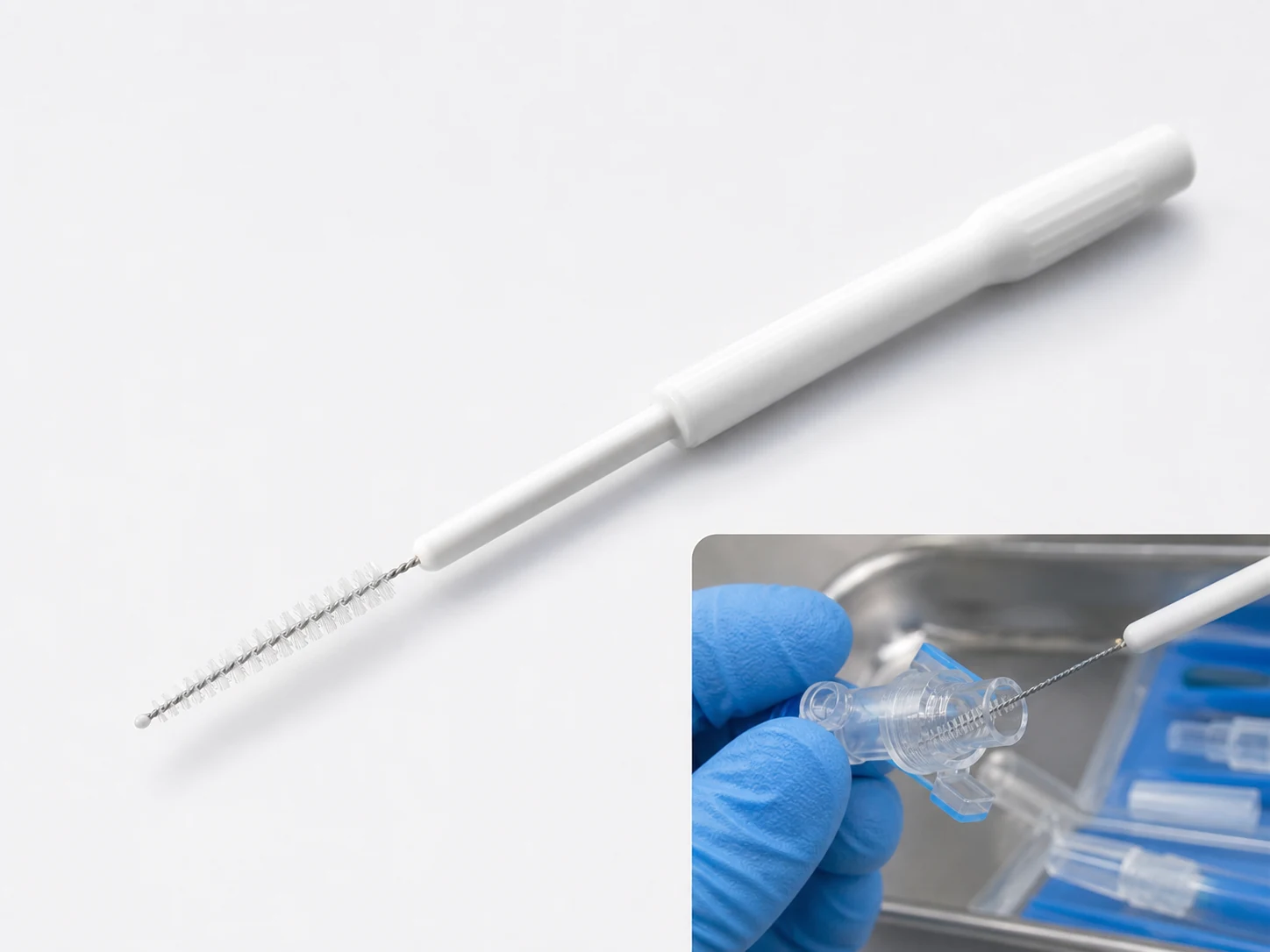
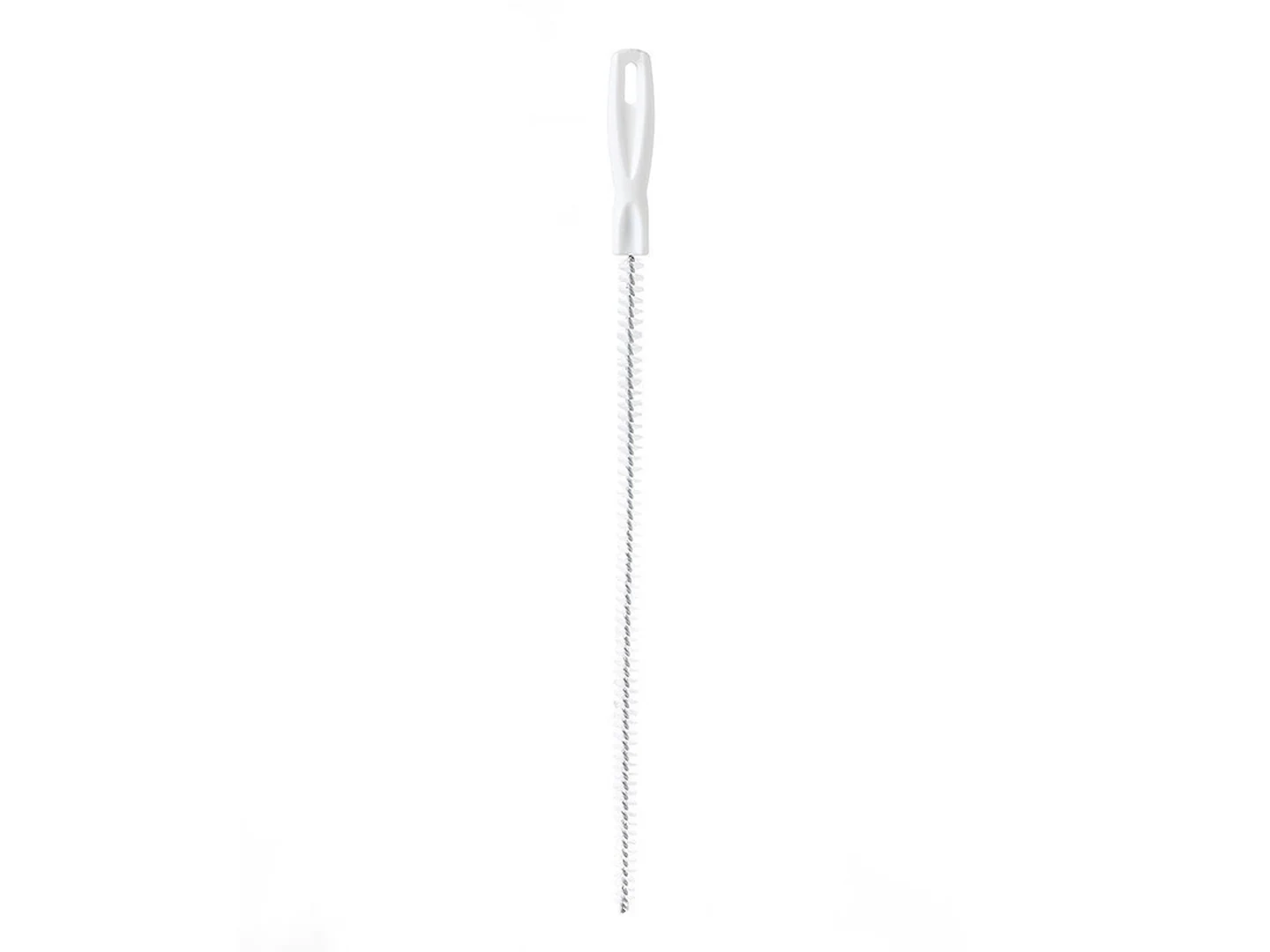
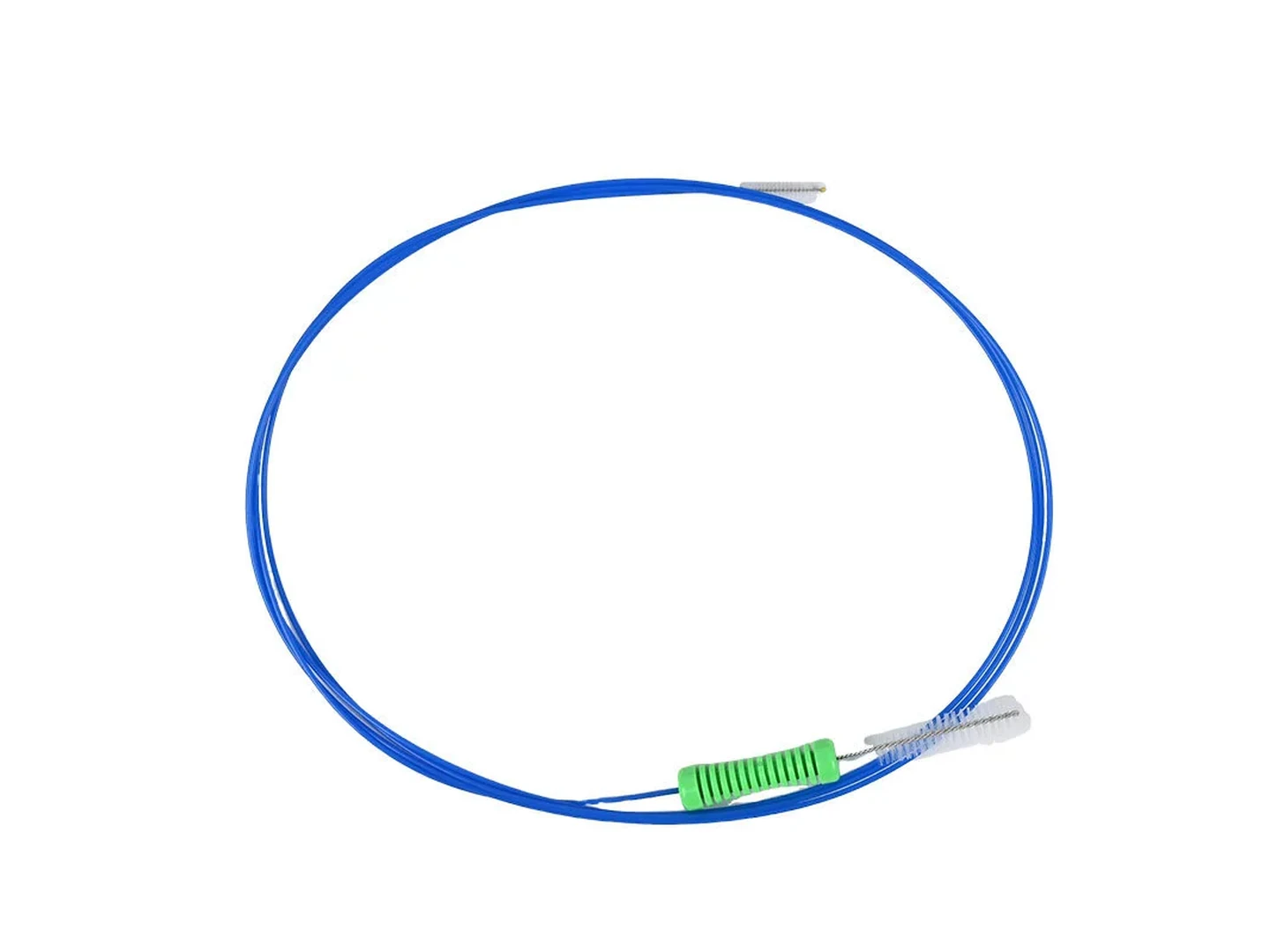
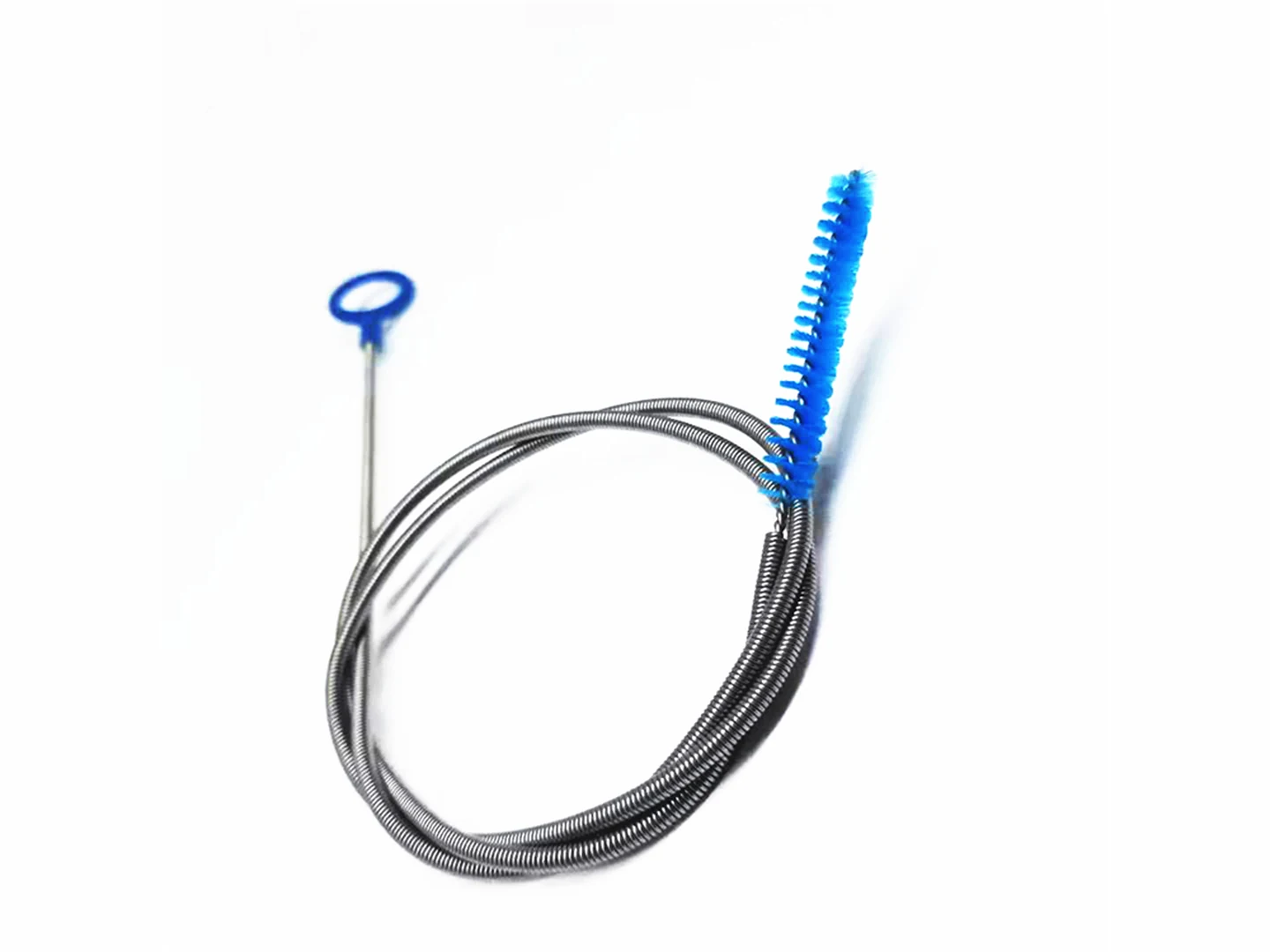
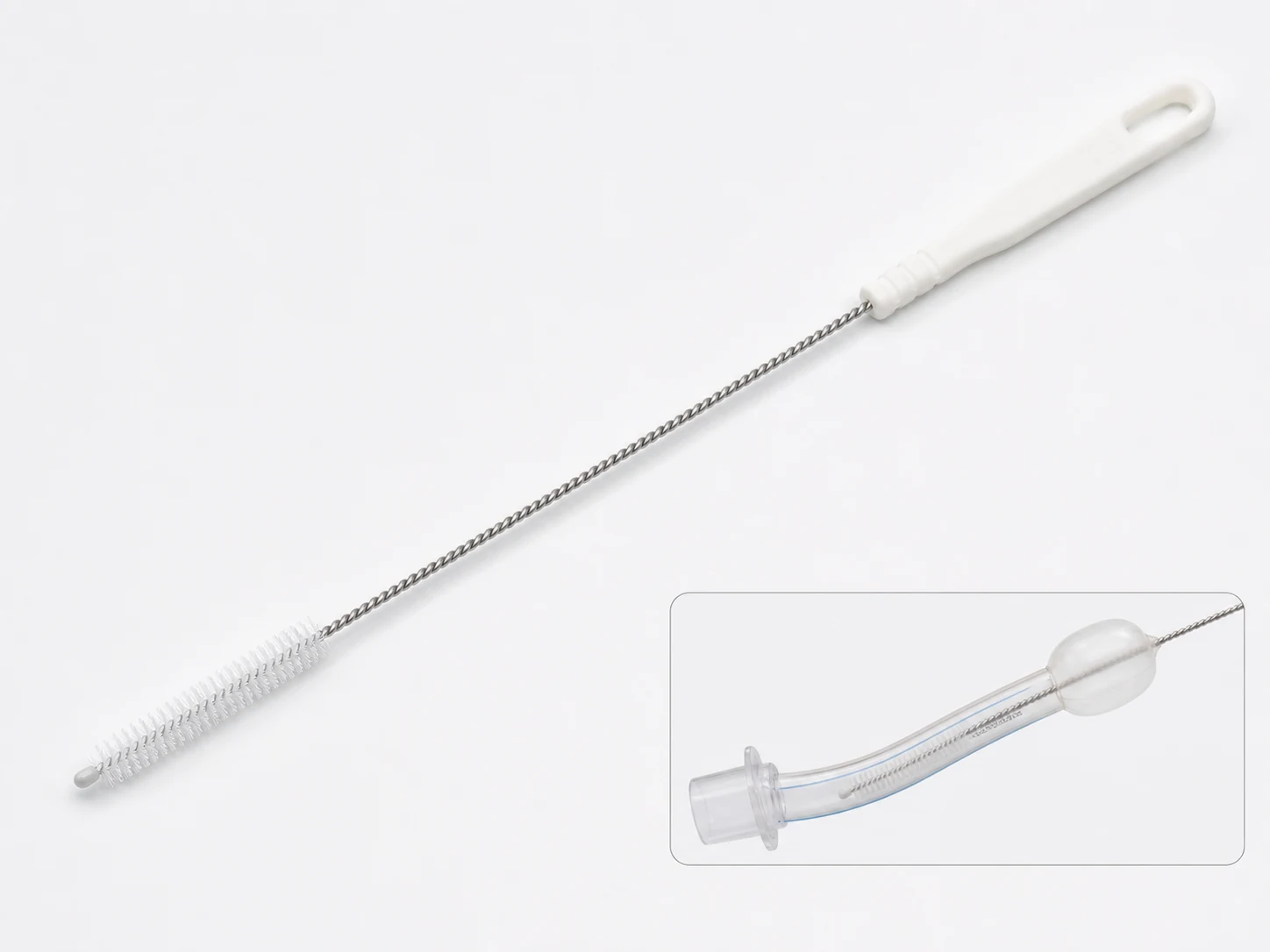
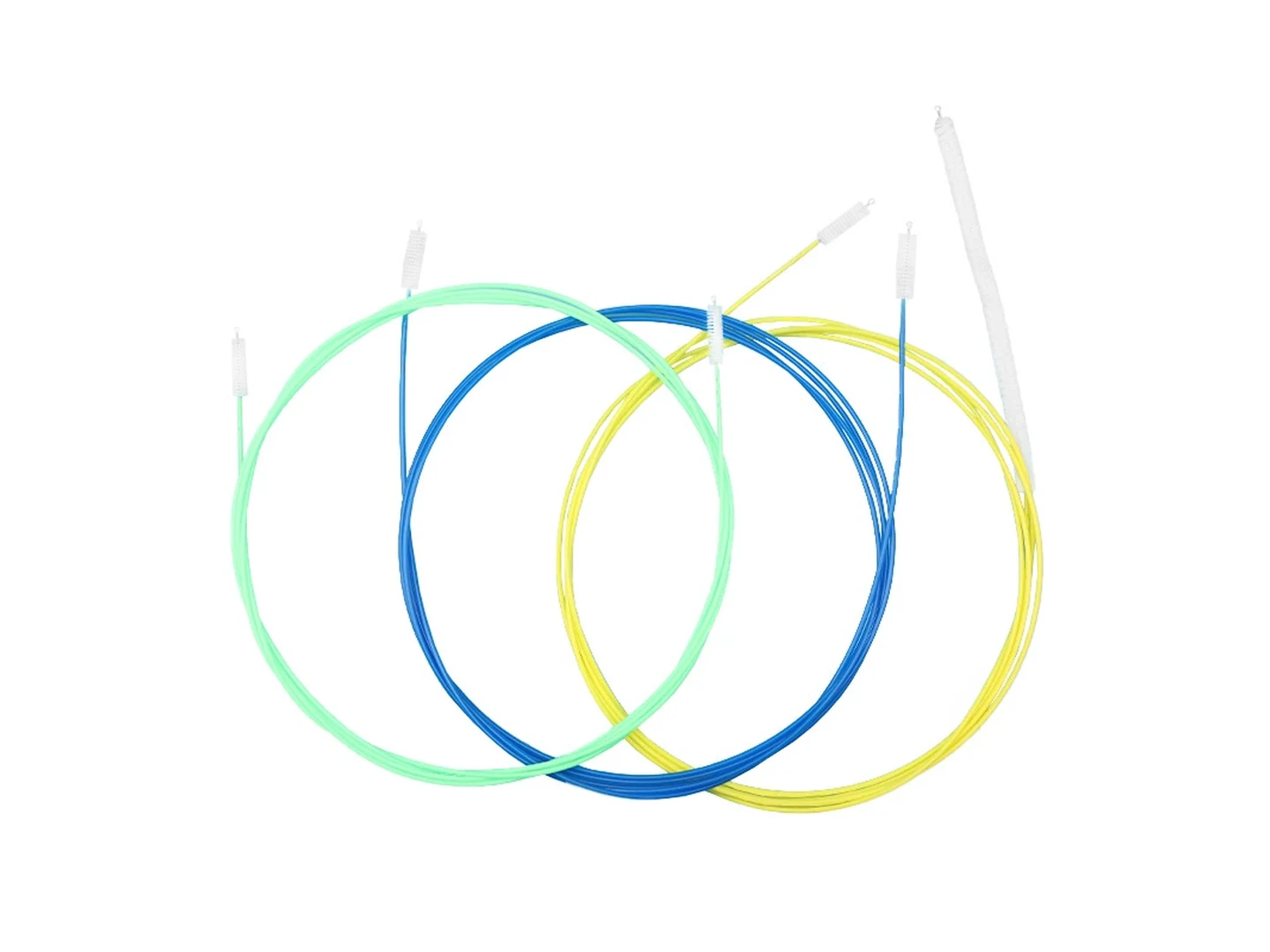
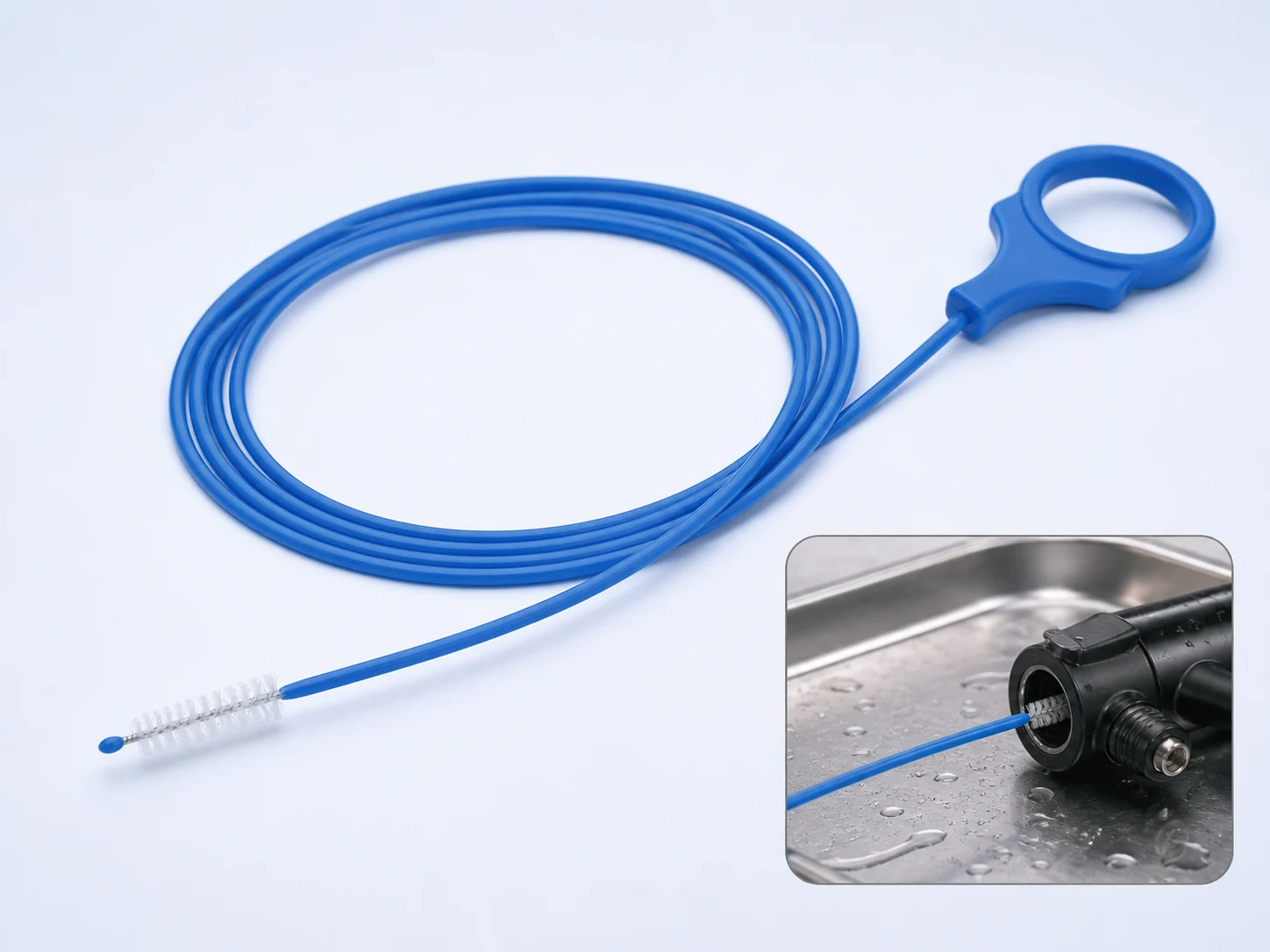
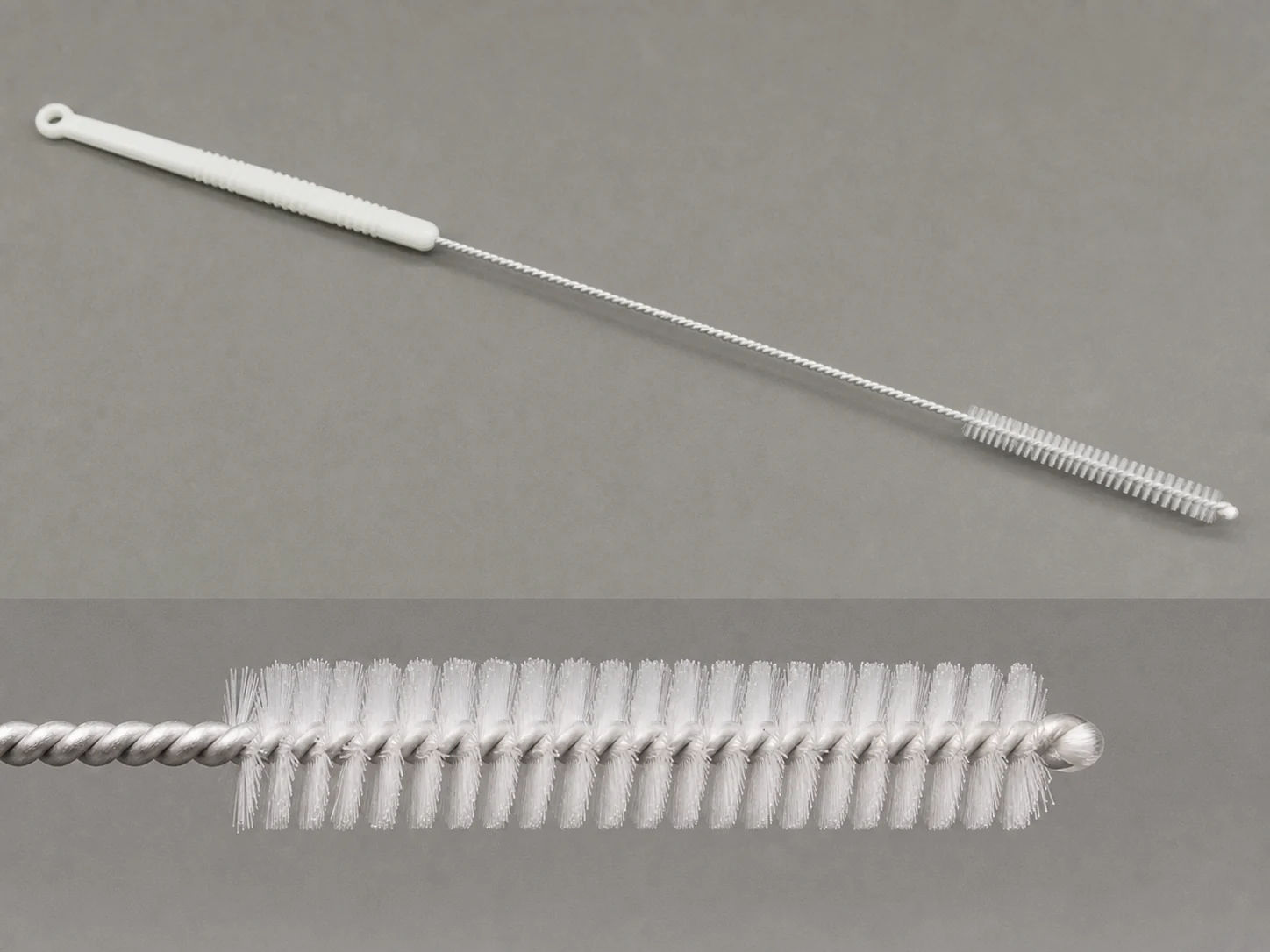
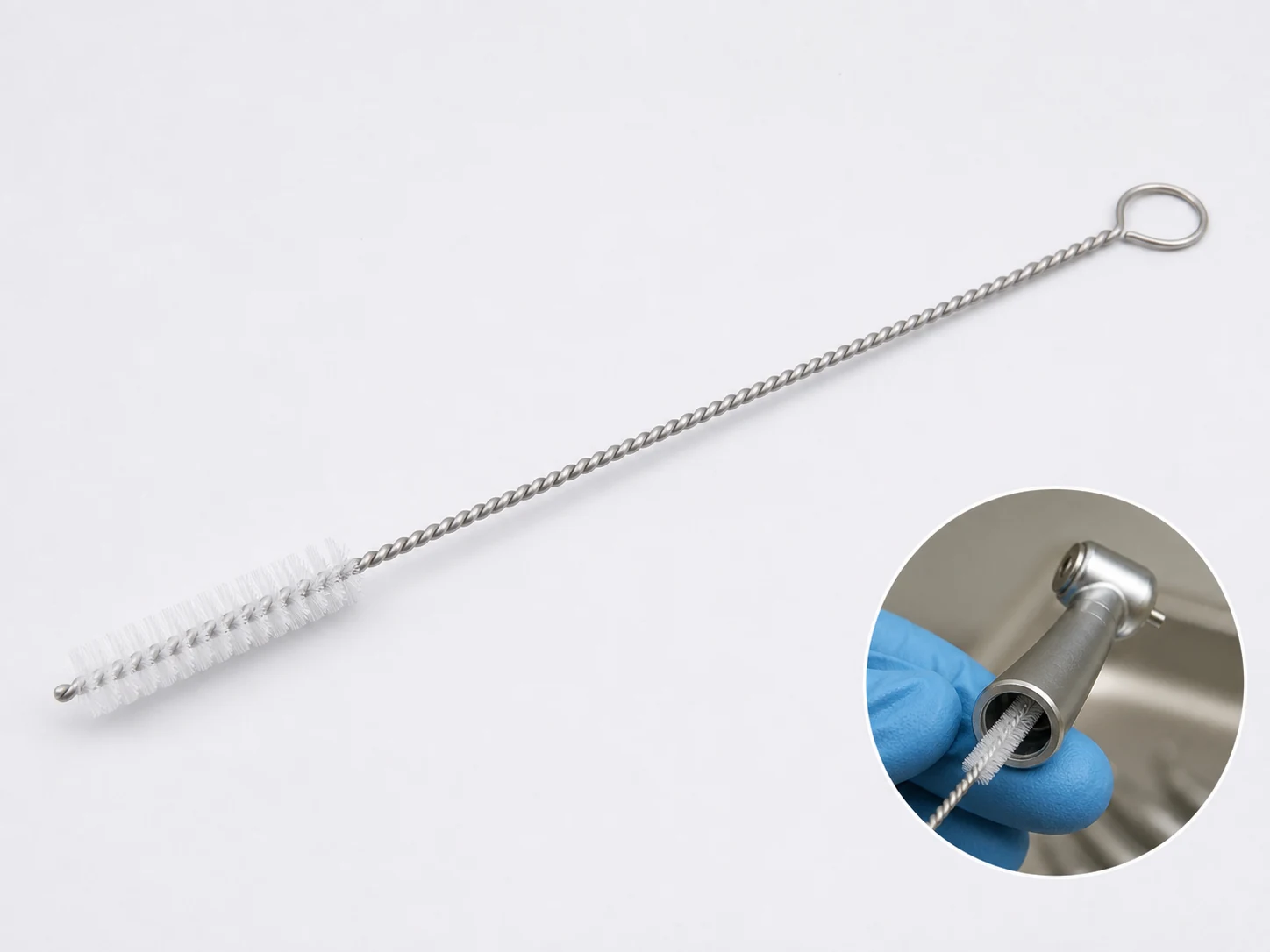
Use the manufacturer or process dimensions for channel ID and length, then consider whether the brush is reusable, disposable and compatible with the cleaning protocol.
Working diameter should create suitable wall contact without excessive insertion force or risk to the channel.
Long, curved or flexible channels need enough stem length and flexibility to pass through without kinking or losing control.
Material, handle, packaging and cleaning/reprocessing expectations may differ depending on intended use.
Where validation, traceability or specific material grades are required, those conditions must be specified explicitly rather than inferred from a generic medical label.
A channel brush is built around an internal lumen, while a general instrument brush may clean joints, serrations or exposed surfaces. The cleaning protocol can overlap, but the contact geometry does not.
Diameter, working length, stem flexibility, tip style, handle, filament and packaging direction can be tailored where appropriate. Device dimensions and procedure requirements should guide the design.
Provide device type, lumen ID, channel length, cleaning method, reuse expectation and any documentation requirement. We can then assess a suitable brush configuration.
Choose your brush type, cleaning task, material direction, and key details before sending a custom brush request.