
Custom Cleaning Brush
CPAP Hose & Tube Cleaning Brush
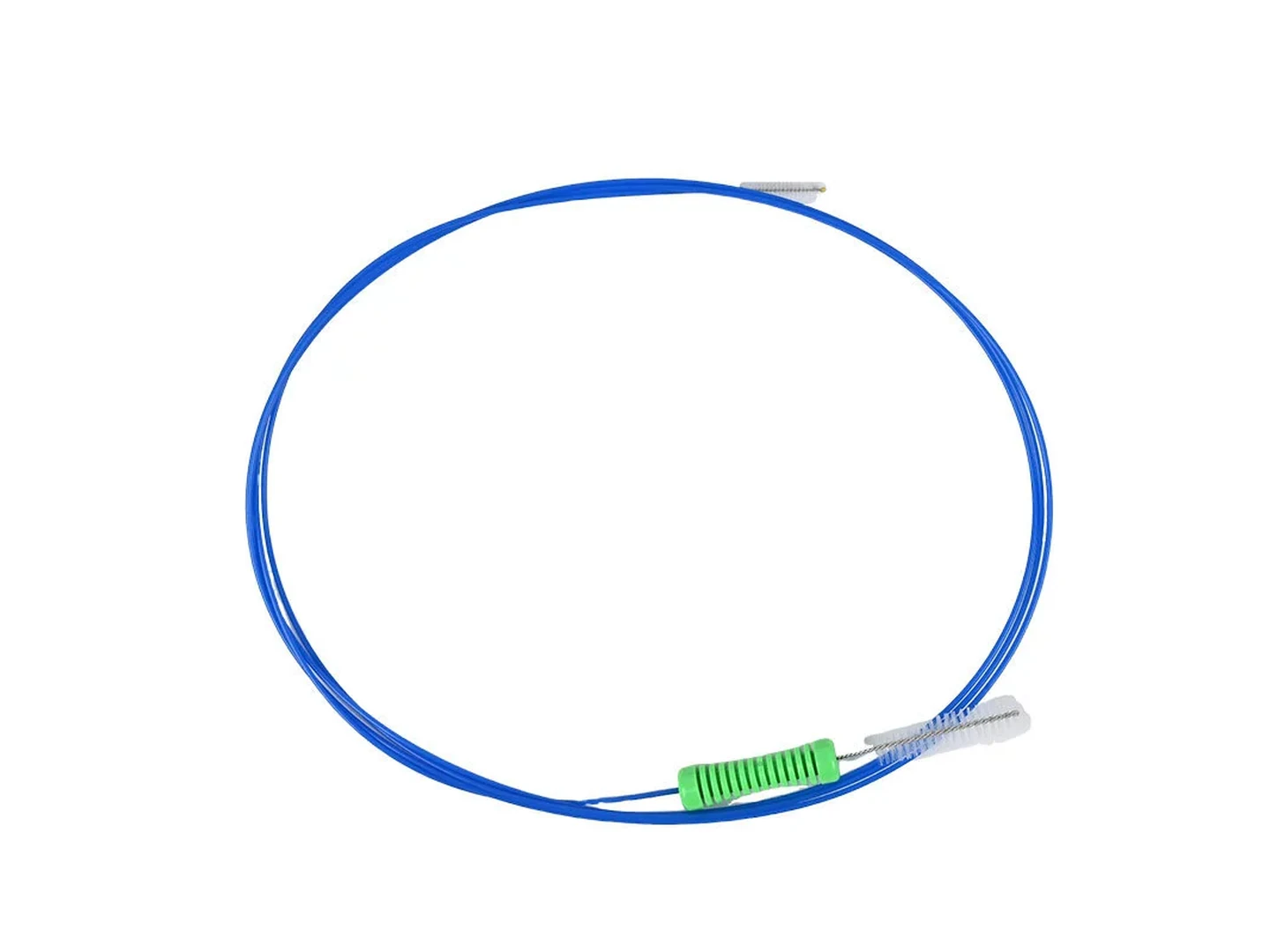
Long-reach CPAP tube cleaning brush for 15, 19 and 22 mm hoses, mask connectors and humidifier ports. 1200–2200 mm flexible stems.
Small brush
500 pcs
Minimum order
Held in one hand: tube, bottle, detail and swab brushes — including long-handled ones with a small head.
Production lead time, once the specification is confirmed
- Up to 500 pcsWithin 7 days
- 501–50,000 pcsWithin 14 days
- Over 50,000 pcsWithin 21 days
Peak season can extend these times; the shipping date is confirmed in writing with your quotation. Sampling and shipping are quoted separately.
A long-reach, flexible tube brush sized for 15, 19 and 22 mm CPAP hoses, mask connectors, and humidifier ports. It wipes condensation film, lint, dust, soap residue, and soft biofilm from curved tubing walls before the deposits harden.
What can this brush do for you?
Full-Length Reach for a Standard CPAP Hose
A one-piece stem from 1200 to 2200 mm covers the full run of 6 ft and 8 ft heated or non-heated hoses without a second tool. The flexible core follows coils and bends while staying stiff enough to push and pull through the lumen from one end.
Wall Contact Sized to the Hose ID
The brush head is built in 15 mm, 19 mm, and 22 mm sizes so filament tips sweep the tube wall in full circumference instead of gliding through the center. Near-size fit wipes condensation film off the lumen surface; a 5 to 20 percent oversize head scrubs soft biofilm and soap residue from flexible polymer tubing.
Soft Polymer Filament Ends Protect the Tubing Surface
PBT and PA6 filaments in 0.08 to 0.25 mm diameters have rounded, non-scratching tips sized to loosen deposits without scoring the hose wall. Keeping the lumen smooth matters in CPAP maintenance: scratches create places for biofilm to anchor and are harder to rinse clean afterward.
Non-Absorbent Rinse-Clean Construction
Bristles and handles made from PBT, PP, and nylon do not wick water into the core. After use, the brush rinses quickly, sheds moisture, and air-dries without holding detergent film or becoming a damp storage item.
Handle Control Along a Two-Meter Reach
A loop or overmolded straight handle gives a secure grip while the operator slowly rotates and withdraws the brush through the wet tube. The loop can double as a hanging feature so the brush dries between uses instead of lying on a countertop or in a drawer.
What is a CPAP Hose & Tube Cleaning Brush?
A CPAP tube cleaning brush is a long-reach hand tool with a short filament brush section near the working end of a flexible stem. The brush is designed for one task: mechanical removal of film, dust, lint, soap residue, and early biofilm from the inside of a breathing hose after it is disconnected from the CPAP machine and the mask.
In use, the operator inserts the brush end into one end of the hose, runs warm water and a mild detergent through the tube, and works the brush with slow push-pull and rotation strokes across the full internal length. The bristle section contacts the tube wall, loosens the deposit layer, and the rinse carries loosened material out. The process is repeated from the other end when the hose has a tight bend or a coupler that limits single-pass access.
Standard CPAP hoses are flexible polymer tubes with internal diameters of 15 mm or 19 mm and lengths from 1.2 m to 2.2 m. This brush is sized to those dimensions. It also reaches the short tubes between the mask frame and main hose, and the humidifier outlet port once the chamber is removed.
This is a mechanical cleaning step, not a disinfection or sterilization process. Brushing removes what the rinse alone cannot; it does not replace the disinfection method recommended by the CPAP device manufacturer. The tool is intended for use only with the tube disconnected from the machine and mask.
Technical Specifications
The table below lists the standard build for the CPAP tube cleaning brush. Dimensions, materials, and fit can be adjusted to match your hose.
| Parameter | Value / Options |
|---|---|
| Brush head diameter | 15 mm, 19 mm, 22 mm standard; 12 to 25 mm custom |
| Working brush length | 40 to 100 mm |
| Overall length | 1200 to 2200 mm; 1800 mm for a 6 ft hose, 2000 to 2200 mm for an 8 ft hose |
| Stem construction | Twisted 304 stainless steel wire or polymer-coated flexible cable; core diameter 1.0 to 3.0 mm |
| Filament material | PBT polyester, PA6 nylon, or PET polyester |
| Filament diameter | 0.08 to 0.25 mm |
| Handle / loop | PP or TPE-overmolded; 20 to 60 mm loop, straight grip, or T-handle |
| Brush-to-tube fit | Near-size for wiping films; 5 to 20 percent oversize for soft scrubbing on flexible polymer; lower interference for wire-core stems |
| Operating temperature | Up to 80 degrees Celsius in warm water |
| Chemical exposure | Mild detergents, diluted white vinegar, and standard CPAP cleaning solutions; avoid strong solvents, bleach concentrates, and boiling water |
| Brush type | Custom Tube & Pipe Bore Brushes |
| How it is driven | Hand-guided |
| Cleaning target | standard 15, 19 and 22 mm cpap hose, mask-frame hose and connector, and humidifier outlet port and ventilator circuit cleaning |
| Surface or part | hoses, tubes, ports, walls, connectors, chambers, bends, mask connectors, and bores |
| Residue or debris | soap residue, biofilm, dust, condensation film, lint, soap scum, oil, mineral scale, and skin oil |
| Mounting / connection | Threaded Removable / Fixed |
We size the head diameter and overall length from your hose ID, hose length, and the residue you need to remove. If a parameter needs to be different for your project, it can be changed.
Where does this brush work best?
- Standard 15 mm and 19 mm CPAP hoses, heated and non-heated, in home therapy and institutional settings.
- Short mask-frame hoses and connectors where soap scum and facial oil collect at the smaller diameter.
- Humidifier water chamber outlet ports after the chamber is removed, where mineral film starts at the connection point.
- Sleep labs, DME cleaning stations, and respiratory therapy departments that process multiple hoses daily and need a repeatable hand-tool method.
- Travel CPAP setups with shorter hoses, by selecting the shorter overall length for compact kits.
How do I choose the right one?
Select based on the hose, not the machine brand.
Start with the internal diameter
Measure the hose ID, not the outside. A 15 mm brush head should sit close to the wall in a 15 mm hose for film wiping. If the hose is flexible polymer and the task is scrubbing soft biofilm or soap residue, choose a head 5 to 20 percent larger than the ID. For older or brittle hoses, stay near-size and use the softest filament option so the wall is not stretched or scratched.
Set the overall length to the full hose run
Choose an overall length at least 150 to 200 mm longer than the hose so the handle remains outside the far end. A 6 ft hose needs a 1800 mm or longer brush; an 8 ft hose needs the 2000 to 2200 mm build. If you use the brush on both the main hose and the mask short tube, target the longest run first.
Match the filament to the residue
Soft, small-diameter PBT filament handles daily condensation film and dust. Stiffer PA6 nylon or crimped filament removes heavier soap residue and early biofilm without being as harsh as wire. If the hose is old, soft and thin filament protects the lumen from stress marks.
Choose the stem by bend radius and push feel
A polymer-coated flexible cable follows tight coils and resists kinking. Twisted stainless wire pushes through long straight runs with more authority but creates higher interference if the fit is oversize. For metal-sensitive environments or inspection requirements, a nylon monofilament stem is available.
Use the right cleaning sequence
Brush with warm water and a mild detergent, then rinse, then air-dry. If the residue is mineral scale, soak in diluted white vinegar or a manufacturer-approved descaling solution before brushing; a dry brush alone will not remove hardened deposits.
A quick selection reference:
| Cleaning condition | Recommended configuration |
|---|---|
| 15 mm hose, daily condensation film | 15 mm soft PBT head, near-size fit |
| 19 mm hose, biofilm or soap residue | 19 to 21 mm PA6 head, slight oversize fit |
| Older hose, risk of scratching | Near-size soft filament, polymer-coated cable |
| Long coiled hose, tight bends | Flexible coated cable, shorter brush section |
| Hard mineral scale or baked-on film | Pre-soak first, then use the brush; consider a wire brush only if hose material allows and surface scratches are acceptable |
Use a smaller tube brush or foam swab if the lumen is below 12 mm. Use a wire brush only for damaged or disposable tubing where surface scratches are not a concern. Brushing is not a substitute for disinfection when the CPAP manufacturer requires a separate sanitizing step.
Can I customize this brush?
Every custom CPAP tube cleaning brush starts with the hose, not a stock drawing. Provide the hose internal diameter, hose length, bend radius or coil shape, residue type, cleaning chemicals, wash temperature, and preferred handle. A sample hose or drawing shortens the design step.
We can adjust:
- Overall length, from 1200 to 2200 mm or the exact hose length needed
- Brush head diameter, matched to 15 mm, 19 mm, 22 mm, or a custom ID from 12 mm to 25 mm
- Brush section length and position, single head at the working end, dual heads, or a longer wiping zone
- Stem, twisted 304 stainless steel, polymer-coated cable, or nylon monofilament for metal-free builds
- Filament, PBT, PA6, or PET; 0.08 to 0.25 mm diameter; straight or crimped; custom color for diameter coding
- Handle, loop, straight grip, T-handle, overmolded TPE, hang hole, and length
- Packaging, bulk polybag, hang-tab retail card, multi-pack, or cleaning-kit configuration with mask and oral accessories
If your project needs material declarations, inspection records, or third-party testing for a respiratory product line, we can coordinate that documentation during the customization stage.
How long does a CPAP hose & tube cleaning brush last, and how is it cleaned between runs?
How far should the brush be inserted into the CPAP hose?
Insert the working end into the tube and push until the brush section reaches the far end or exits the opposite opening. The handle should remain outside the hose so you can rotate and withdraw the tool. Work from both ends if a coupler or bend prevents a single continuous pass.
Can this brush be used with hot water and cleaning solutions?
Warm water up to 80 degrees Celsius, mild dish detergent, diluted white vinegar, and standard CPAP cleaning solutions are compatible with the standard PBT, PA6, PP, and stainless steel construction. Avoid boiling water, bleach concentrates, acetone, and solvent-based cleaners, which can embrittle the bristles or degrade the handle.
How do I know when the brush needs replacement?
Inspect for a kinked or deformed stem, flattened or matted bristles, loose ferrule, cracked handle, or a loop that no longer springs back. If the brush no longer maintains even wall contact or feels harder to push than when new, retire it. Daily-use brushes should be visually checked at least monthly.
Does brushing sanitize the CPAP hose?
No. Brushing removes film, lint, dust, and loose deposits so the disinfecting step can reach the tube wall. Follow the CPAP machine and hose manufacturer’s recommended disinfection process separately; brushing cannot replace it.
Can one brush clean both 15 mm and 19 mm hoses?
Only when the difference is within the brush’s contact range and no oversize is required. A 19 mm head in a 15 mm hose may bind or fold; a 15 mm head in a 19 mm hose will glide without wall contact. Use one brush per hose ID, or specify a dual-diameter head if you need a single tool for both.
What should I do if the brush head sticks inside the hose?
Stop pulling and straighten the hose. Rotate the brush slowly while pulling back; do not yank. If binding continues, the head is too large, the stem is bent, or the hose has a kink. Remove carefully, clear any kink, and switch to a smaller head or a lower-interference fit.
Guides that go deeper on this
CPAP Hose Cleaning Brush: What Fits Narrow Flexible Tubing?
Read this guideGuideCPAP Tube Brush Sizing: Diameter, Length and Drying Risk
Read this guideGuideCustom Brush Sampling and Validation Plan
Read this guideGuideHow to Maintain Chimney and Boiler Tube Brushes in Production
Read this guideGuideHow to Maintain Tube Brushes for Plastic Processing Lines
Read this guideCustom Manufacturing RFQ
Describe Your Application
To quote this brush accurately, send the size, material, cleaning target, residue, quantity, and any available drawing or sample photo.
Drawing or photo optional — it speeds things up, it does not gate the enquiry.
Custom Brush RFQ
Send Your Brush Project
Upload a drawing, product photo, or sample photo and provide the core dimensions and cleaning conditions.
“We need a brush to remove wet residue from a stainless steel conveyor, about 800mm wide. The current brush wears quickly. We can send photos.”
“We sell drinkware and need a cleaning brush to include with the product. Quantity around 5,000 pieces.”