
Application
Toilet & Bathroom Cleaning
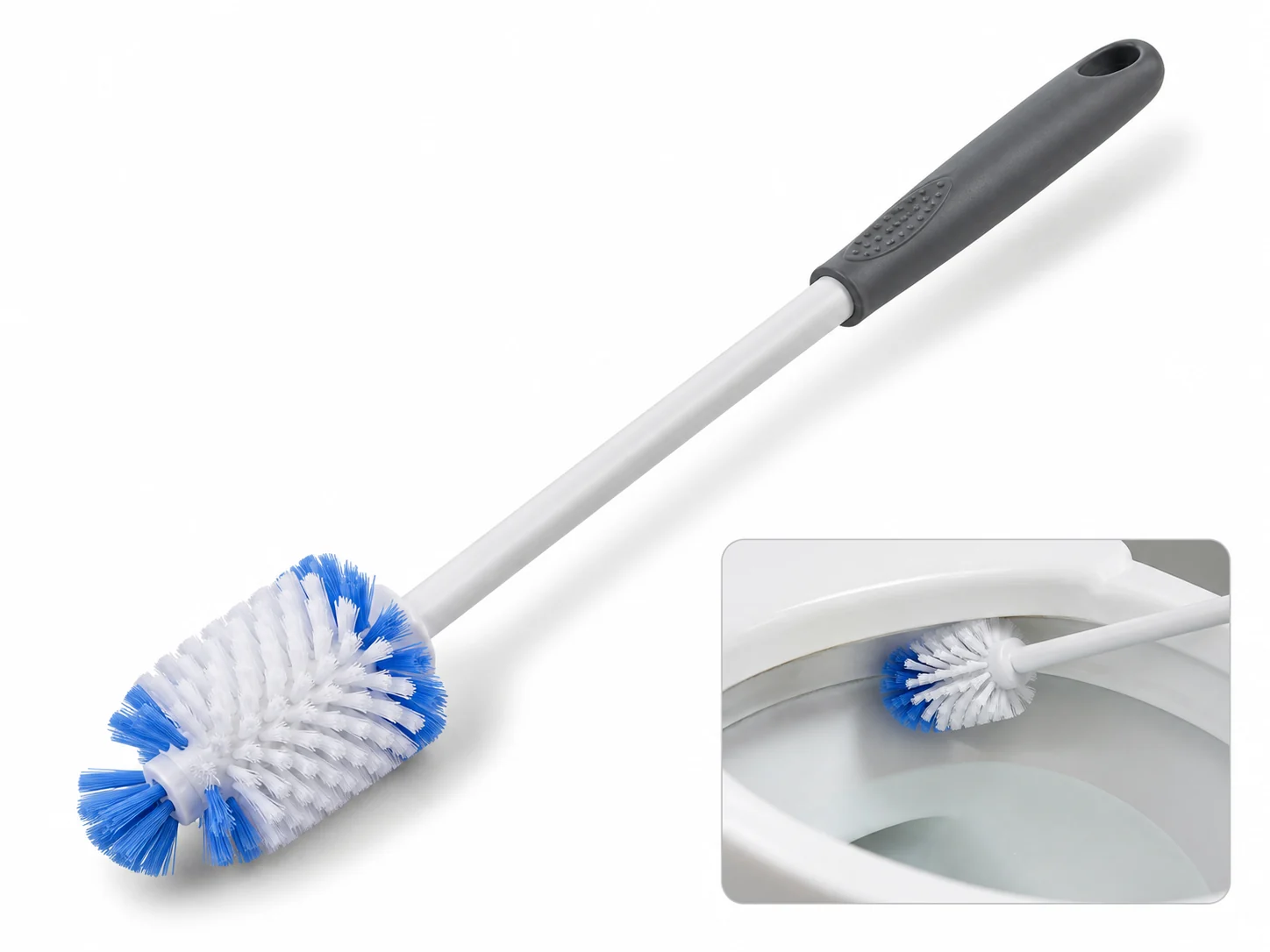
A toilet brush has three jobs the bowl wall does not show: the channel under the rim, the waterline ring and the entrance to the trap. An angled nylon head on a long polypropylene handle reaches all three. Keep abrasive fill for the scale ring only, because it is harder than the glaze.
At a glance
- Cleaning target
- Biofilm / urine scale / limescale / soil
- Working environment
- Indoor / Wet Area
- Cleaning method
- Wet Brushing
- Requirements to check
- No specific certification; handle and fill chosen for the cleaners in use
Why does a toilet need its own brush?
The visible bowl is the easy part. Most of the soil collects where the eye does not reach: in the channel under the rim that the flush water runs through, in the ring of scale at the waterline, and at the trap opening at the bottom of the bowl.
A round brush on a straight stem cleans the bowl wall and passes over all three. A toilet brush has an angled or tapered front that slips under the rim and down into the trap, and a handle long enough to keep the hand away from the water.
We make toilet brushes for cleaning-product brands, janitorial suppliers and hotel housekeeping programs, to the head shape, fill and handle the buyer specifies.
What does a toilet brush have to clean?
| Part or area | Residue type | Cleaning requirement |
|---|---|---|
| Under-Rim Channel | Biofilm, urine scale and soil in the flush channel | An angled or tapered head that slips under the rim and scrubs the channel the flush water runs through. |
| Waterline Ring | Limescale and hard-water ring at the water surface | Firm fill that works the mineral ring at the waterline without scoring the glaze around it. |
| Trap Entrance and Siphon Jet | Organic soil and scale at the trap opening and jet hole | A narrow tip that enters the trap opening and the siphon jet without bending back on itself. |
| Bowl Wall | Soil, stains and film on the glazed bowl | Even contact over the whole curved wall, with fill soft enough not to mark the glaze. |
Sizes from the toilet brushes we make:
| Parameter | Typical range |
|---|---|
| Overall length | 300–450 mm for a standard bowl |
| Head diameter | 45–90 mm |
| Head length | 80–150 mm |
| Filament diameter | 0.20–0.80 mm |
| Use temperature | 5–100°C |
Which toilet brush shape works best?
| Cleaning target | Recommended brush type | Why it fits |
|---|---|---|
| Under-Rim Channel | Handheld Detail Brushes | The rim channel is hidden from view and shaped like a hook, so only a narrow, angled head guided by hand gets into it. |
| Waterline Ring | The ring sits on a curved wall at one height, so a hand-held head pressed along it does the work; a machine brush has no way in. | |
| Trap Entrance and Siphon Jet | The trap and the jet are small openings at the bottom of the bowl, reached only by a narrow tip on a long handle. | |
| Bowl Wall | The bowl is one curved, glazed surface that a rounded head held by hand covers in a few passes. |
A tapered front reaches the rim channel and the jet hole; a rounded back covers the bowl wall. Some heads add a sponge section that wipes loosened residue off the glaze after the bristles have scrubbed it.
Which bristle and handle materials should a toilet brush use?
| If the condition is… | Filament to start with | Why |
|---|---|---|
| Daily cleaning of the bowl, rim and trap | Nylon PA6 or PA612, about 0.30 mm | Firm enough to loosen soil and soft scale, and safe on vitreous china glaze at normal hand pressure |
| A hard-water scale ring at the waterline | Abrasive nylon with silicon carbide | Cuts mineral scale faster, but silicon carbide is harder than glaze; use it on the scale ring only, and try it on a hidden spot first |
| Wiping loosened residue off the glaze | Open-cell PU sponge section | Holds cleaner and wipes the bowl after the bristles have scrubbed it |
Handles are polypropylene, which takes bleach and detergent and stays light on a long handle. Where the fill is set in a twisted core, 316 stainless wire holds up better than 304 or galvanized wire in wet, chlorinated use; rinse acid cleaners off after each use.
How is a toilet cleaned with a brush?
- Apply the cleaner under the rim and around the waterline first, and give it the contact time on the label.
- Work the angled tip along the under-rim channel all the way round, then scrub the waterline ring.
- Push the tip into the trap opening and the siphon jet, then finish the bowl wall with the back of the head.
- Flush with the brush held in the running water, then let it drip dry before it goes back into the holder.
What do we need to quote a toilet brush?
- Head shape: round, tapered or angled, with or without a sponge section.
- Fill: standard nylon, abrasive nylon, or both in separate zones.
- Overall length and handle material, color and grip.
- Logo, packaging, and whether a holder is supplied by you or by another maker.
- Quantity per design. Our minimum for small hand brushes is 500 pieces.
When is a brush the wrong tool for a toilet?
A blocked bowl needs a plunger or a toilet auger, not a brush. Thick urine scale inside the trap, and siphon jets closed with scale, need a descaling product left to soak before any brush can reach them.
Glaze that is already worn or cracked stains again quickly whatever brush is used; the fixture needs replacing.
What mistakes make toilet cleaning harder?
- A round head on a straight stem that never reaches under the rim.
- Abrasive or wire fill used all over the bowl, which dulls the glaze and makes it stain faster.
- Putting the brush back in a closed holder wet, where it stays damp and smells.
- Leaving acid descaler on a metal core or stem instead of rinsing it off.
Questions buyers ask about Toilet & Bathroom Cleaning
How does a toilet brush clean under the rim?
With an angled or tapered front that slips into the flush channel under the rim. A round head on a straight stem passes under it and leaves the channel dirty.
Can an abrasive toilet brush scratch the bowl?
It can. Silicon carbide is harder than toilet glaze, so abrasive nylon belongs on the scale ring only. Use standard nylon for the rest of the bowl, and try an abrasive head on a hidden spot first.
Guides that go deeper on this
We have not written a guide specific to this one yet. The material that covers selection, filament, dimensions, maintenance and sourcing is collected in the technical resources library.
Continue Exploring
Recommended Reading & Related Brush Resources
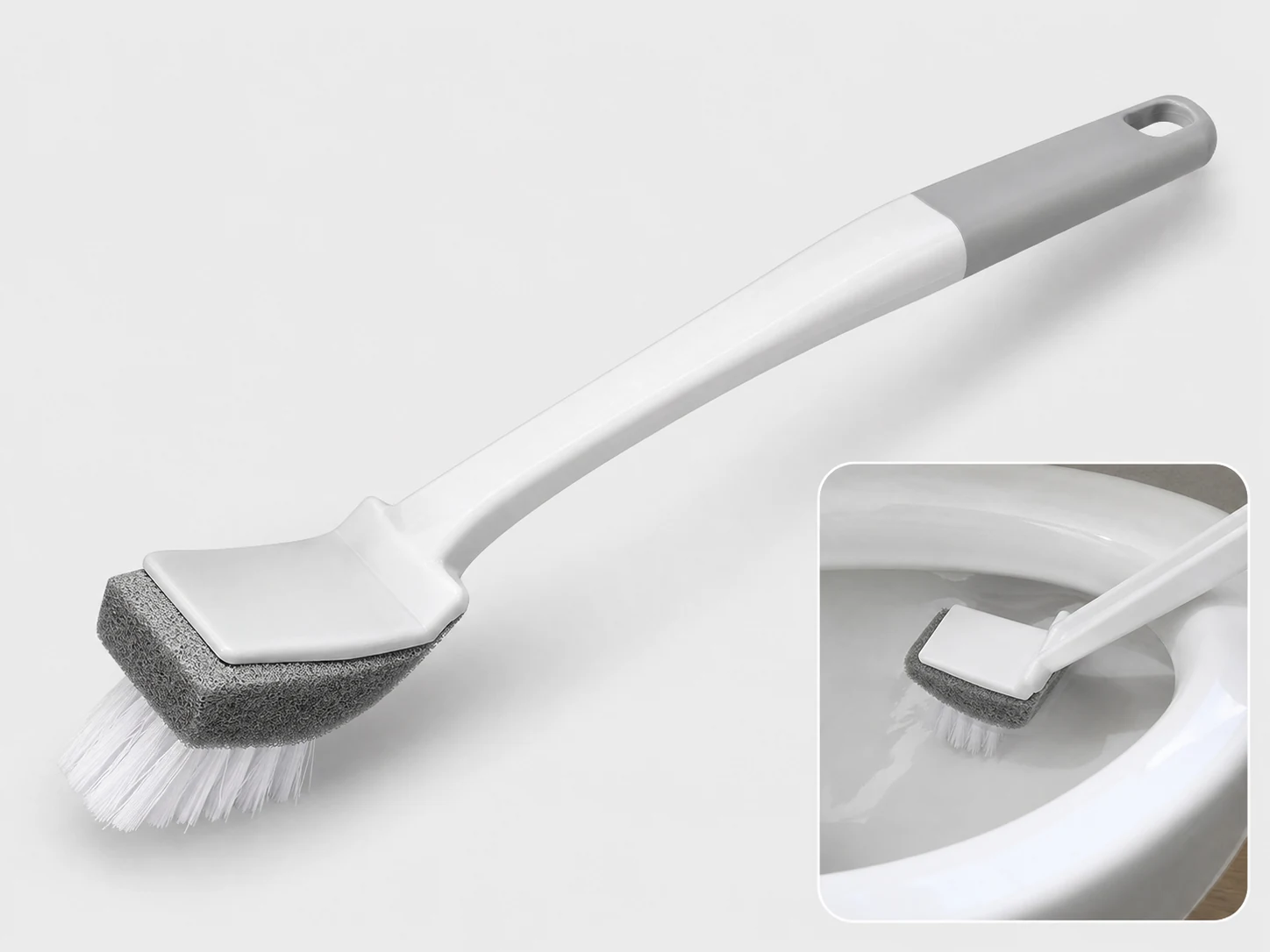
Toilet Ceramic Body Cleaning Brush
Non-scratch ceramic toilet brush with SiC abrasive nylon bristles and PU sponge for hard-water scale, limescale rings, and under-rim buildup.
See the specificationToilet Brush
Professional toilet bowl cleaning brush with Nylon PA filaments, 316 stainless steel core, and PP handle.
See the specification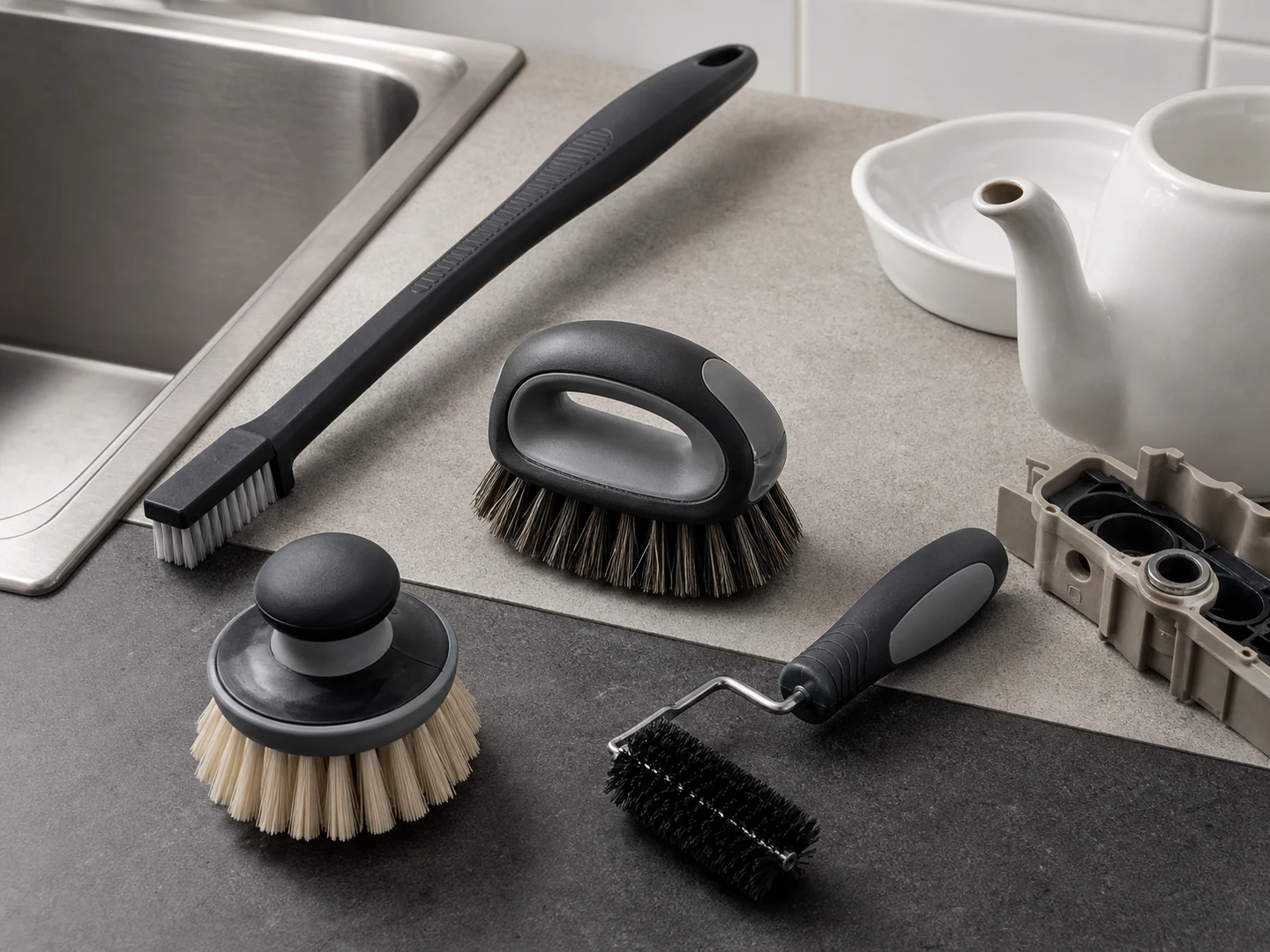
Custom Handheld Detail Brushes
A handheld detail brush puts the operator's hand pressure into a small place: a seam, a grout line, a vent, a connector, a mold vent or a grinder chute.
See how this type is built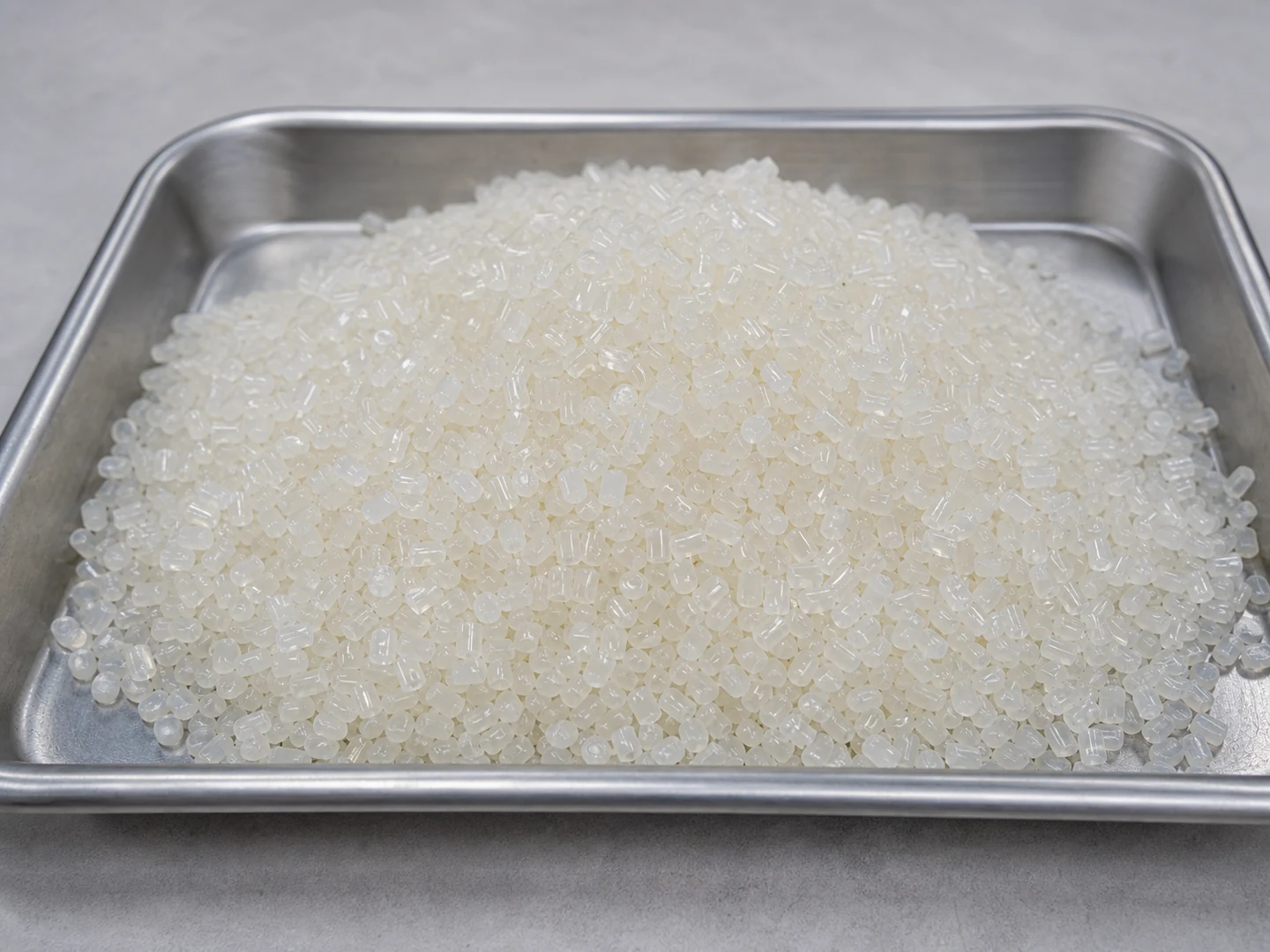
Nylon PA
Nylon is the default brush filament: tough, springy and long-wearing, in a stiffness range from soft detail fill to coarse scrubbing fill.
Compare this materialCustom Manufacturing RFQ
Discuss This Application
Share the working surface, residue, dimensions, material direction, interface, quantity and drawing or sample photo.
We reply to every request within 24 hours, with a quotation or with the questions we need answered first. If the brush can be made on our existing tooling, we make the sample directly. If it needs new tooling, we quote a sample fee and a tooling fee, and the sample fee is credited against the bulk order. Need an NDA first? We sign yours before you send drawings, and the files you send are never shown to other customers.
- MOQ500 pcs for small hand-held brushes, 100 pcs for medium and large ones
- SampleTypically 3–7 days
- ProductionFrom 7 days after sample approval, by size and quantity
- Payment30% deposit and 70% before shipment above US$10,000; smaller orders on agreed terms
“We need a brush to remove wet residue from a stainless steel conveyor, about 800mm wide. The current brush wears quickly. We can send photos.”
“We sell drinkware and need a cleaning brush to include with the product. Quantity around 5,000 pieces.”