
Material
Nylon Gear
Brush drive component material
Nylon Gear is evaluated as a brush component material rather than as filament. Use the project load, geometry, mating parts, exposure, cleaning method, and service requirements to select this component material.
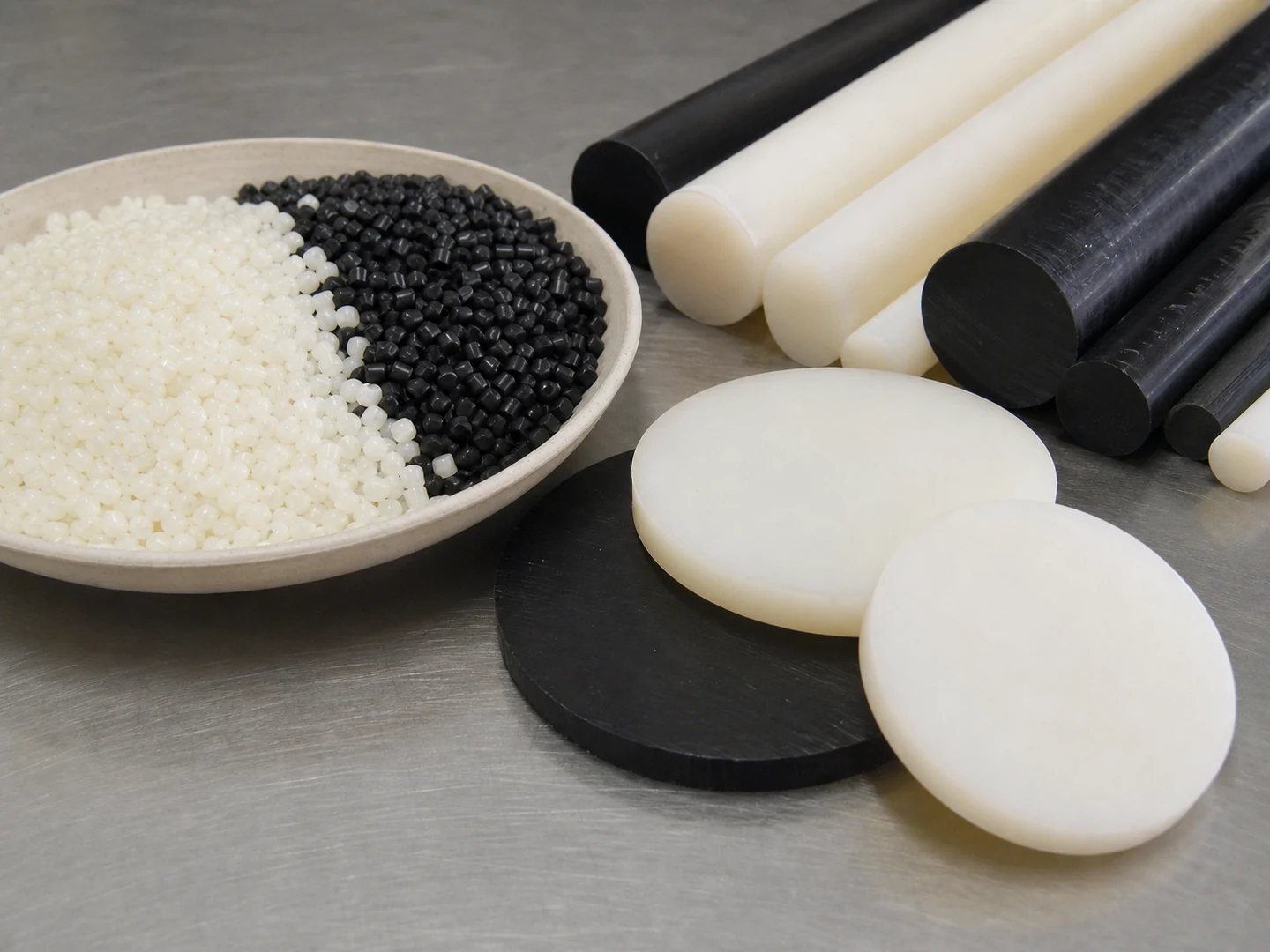
Datasheet values
- Density
- 1.12–1.15 g/cm³
- Hardness
- Shore D 75–85
- Module range
- 0.5–8
- Use temperature
- -20–100°C
- Water absorption
- 1–9% by PA grade
A nylon gear is a molded or machined polyamide power-transmission component used to drive or synchronize a brush.
What is Nylon Gear, and what makes it different from other brush filaments?
Nylon Gear belongs to the brush drive component material group, supplied as machined cast-nylon gear, molded pa6 or pa66 gear and lubricated nylon drive component.
Nylon Gear is used in custom cleaning brushes for powered appliance, floor-machine and conveyor brushes that need a quiet moderate-load drive interface.
Compare Nylon Gear with POM gear, metal gear, PA12 gear, reinforced nylon. Change material when wet stiffness, temperature, chemical resistance, conductivity, particle shedding, or surface marking becomes the limiting factor.
What stiffness and contact pressure can I expect from Nylon Gear?
Nylon Gear is grade-dependent; cast and extruded nylon provide strength and wear behavior but are not dimensionally identical, and Nylon Gear changes brush stiffness through filament diameter, free trim, density, crimp, and contact. Use finer filament and longer trim for conformable contact; use coarser filament, shorter trim, or higher density for stronger displacement or cutting.
The part people get wrong: rigidity here controls how flat the working face stays under load, not how hard the brush scrubs. Those are two different specifications.
How does water affect Nylon Gear performance?
Nylon Gear takes up 1–9% by PA grade.
Moisture absorption can change dimensions; PA12 is less moisture-sensitive than common PA6/PA66.
What this means for your application: the component swells and moves as it takes on water, which shifts the hole pattern and loosens the fill anchorage before it affects anything else.
A practical check: cycle a sample through the wet process and check the fill retention afterwards. Loosening tufts mean the component moved, not the filament.
What temperature limits apply to Nylon Gear?
Continuous-use temperature is nylon-grade dependent. For example, Ensinger publishes about 93°C (200°F) long-term service for one cast PA6 grade, while other polyamide grades and reinforcements differ. Confirm the exact gear grade, moisture condition, load and duty cycle.
Where it stops working: validate with a sample if the process sits near the top of that band. A permanent bend under load means the answer is a higher-temperature filament family, not a heavier trim.
The usable limit also moves with diameter, trim and contact pressure. A fine filament under light load tolerates more than a thick one under heavy scrubbing.
What chemicals attack Nylon Gear?
Compatible with oils and many mild chemicals, with low-moisture nylon grades used for dimensional stability.
The same cleaner can be harmless or destructive depending on how strong it is, how hot it runs and how long it sits. Quote the concentration and the dwell time, not just the product name.
Before you commit to a quantity: Specify the exact Nylon Gear grade or alloy, filament or profile size, color, straight or crimped form, working temperature, wet or dry use, chemical exposure, surface finish, and any required material documentation.
What is the practical lower limit for filament diameter?
Filament diameter does not apply to Nylon Gear. It is a brush component rather than the fill, so it carries no filament of its own and sets no lower diameter limit.
The dimensions that do decide it are the bore or mounting size it has to fit, its wall section or thickness, and the hole pattern that receives the fill. Those come from the machine interface, not from the cleaning task.
If the sample comes back rejected: fix the component dimensions against the equipment first, then choose the fill material and its diameter for the residue you are removing. The two are specified separately.
What applications typically use Nylon Gear?
Powered appliance, floor-machine and conveyor brushes that need a quiet moderate-load drive interface.
The applications that keep coming back to this grade:
- Printer & Scanner Cleaning
- Connector & Slot Cleaning
- PCB Cleaning
- Semiconductor Wafer & Chip Cleaning
- Dust Removal
- Brick, Tile & Building Material Machine Brush Use
The constructions that usually carry it:
- Custom Roller and Conveyor Brushes
In practical brush terms: Not suitable from material name alone for high torque, high precision, hot wet service or unsupported cantilever load.
How do I specify Nylon Gear for a custom brush?
A usable specification carries the construction, the filament diameter and free trim, the density and contact setting, and the service conditions: wet or dry, temperature, and what the cleaner actually is.
The mistakes that most often send a sample back:
- Selecting Nylon Gear from the material name alone without setting filament diameter, trim length, and density
- Using dry stiffness to predict wet behavior without checking moisture absorption or liquid exposure
- Ignoring trapped abrasive particles, chemical concentration, temperature, or contact motion when assessing surface risk
Reference standards behind the figures on this page: ISO 527-1:2019; ASTM D638; ISO 62:2008; ASTM D570-22; ISO 868:2003; ASTM D2240-15(2021); ISO 4892-3:2024; ASTM G154-23; UL 94.
Source: Ensinger — Cast Nylon / TECAST PA6 Technical Data. Ensinger documents nylon use in gears and publishes grade-specific thermal data; no universal nylon-gear continuous-service temperature is applied.
Questions this page is asked
What should a nylon brush-drive gear specification identify?
State the exact PA chemistry and grade, reinforcement and internal lubricant, moulded or machined route, moisture-conditioning state, module or pitch, pressure angle, tooth count and width, bore or hub construction, tolerances, lot and mating-gear material. Measure released dimensions in the defined condition because a dry PA6 gear, conditioned PA66 gear and low-moisture PA12 gear cannot share one mesh setting.
How should a nylon gear be qualified in a powered brush drive?
Run the actual gear pair through representative torque, speed, starts, stops, reversals, shock, alignment, lubrication, brush load, housing temperature and duration while tracking temperature rise, noise, backlash, tooth wear and transmitted motion. Include overload and jam behavior required by the machine risk assessment, and establish inspection or replacement intervals from the tested duty rather than resin wear data alone.
Which checks are needed after a nylon gear sees washdown or process chemicals?
Condition the assembled drive with the real humidity or immersion, chemical concentration, temperature, rinse and dry-storage sequence, then remeasure tooth thickness, backlash, runout, bore or hub fit, shaft retention and free rotation under load. Inspect for swelling, embrittlement, cracks, pitting, abrasive debris and tooth-profile loss, and do not transfer compatibility from another PA grade or an unstressed coupon.
Where these figures come from
| Property | Published value | Source |
|---|---|---|
| Chemical resistance | Compatible with oils and many mild chemicals, with low-moisture nylon grades used for dimensional stability. | Perlon Retrieved 2026-07-20 |
| Published datasheet figures |
|
Ensinger Retrieved 2026-07-20 |
| Hardness and stiffness | Grade-dependent; cast and extruded nylon provide strength and wear behavior but are not dimensionally identical. | Perlon Retrieved 2026-07-20 |
| Limitations | Not suitable from material name alone for high torque, high precision, hot wet service or unsupported cantilever load. | Perlon Retrieved 2026-07-20 |
| Temperature resistance | Continuous service: 90–120°C. | Ensinger Retrieved 2026-07-20 |
| Water resistance | Moisture absorption can change dimensions; PA12 is less moisture-sensitive than common PA6/PA66. | Ensinger Retrieved 2026-07-20 |
Guides that go deeper on this
We have not written a guide specific to this one yet. The material that covers selection, filament, dimensions, maintenance and sourcing is collected in the technical resources library.
Continue Exploring
Recommended Reading & Related Brush Resources
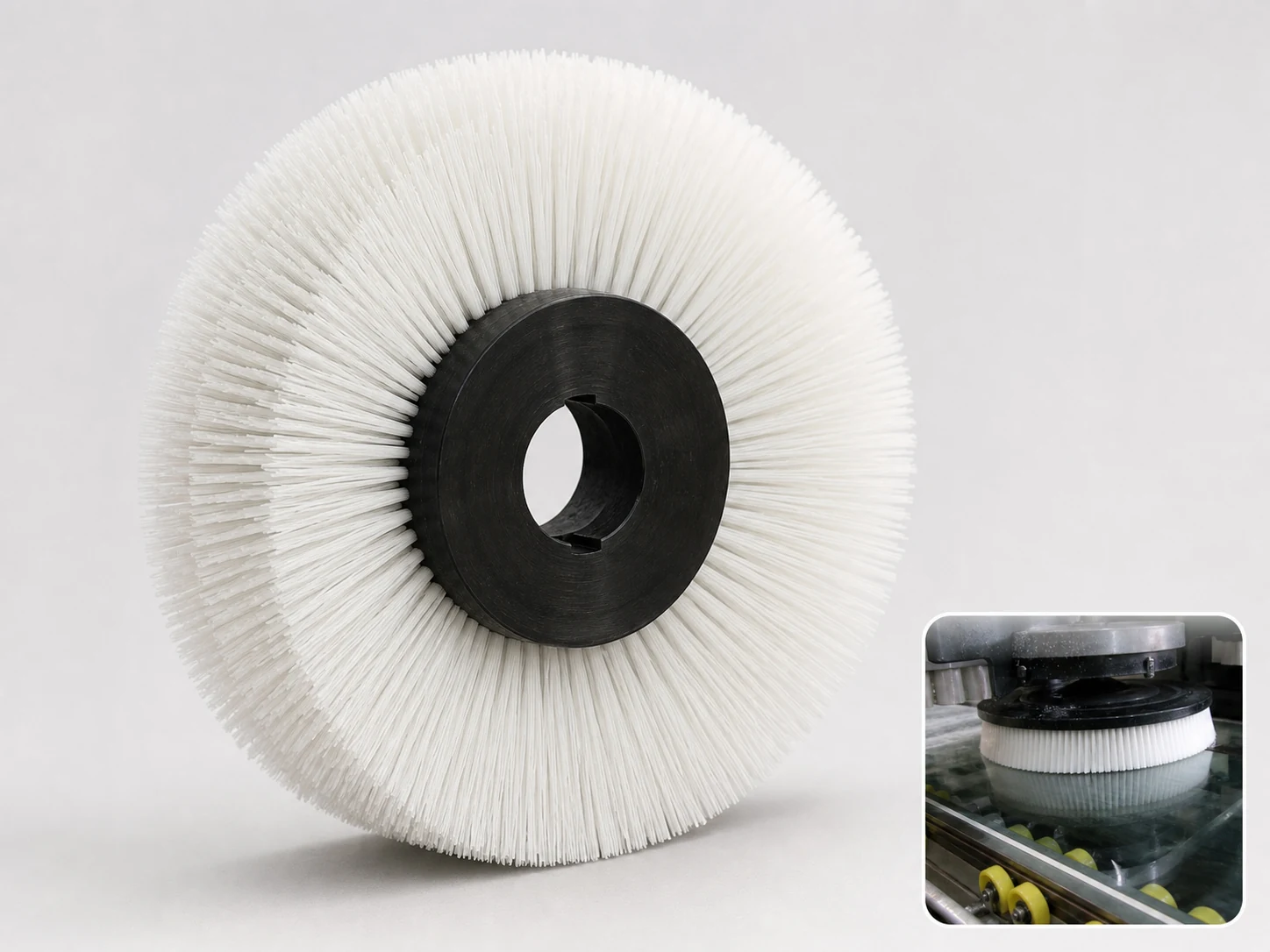
Disc Brush Glass
Non-marring disc brush glass for flat glass washing lines. Nylon 6/12 and PP filaments…
See the specification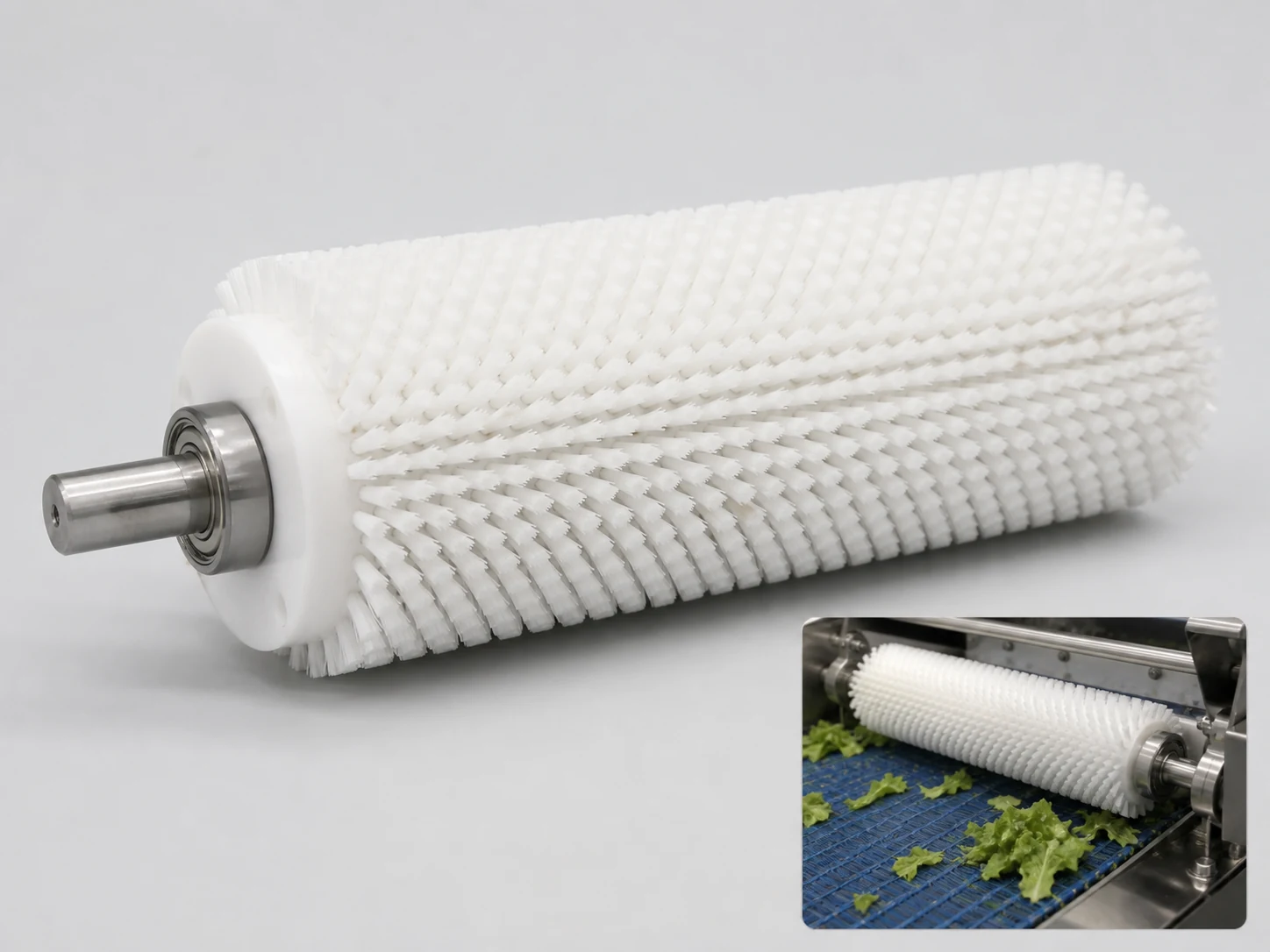
Brush Roller Fruit and Vegetable
Cylindrical brush rollers for fruit and vegetable washing, scrubbing and polishing lines. Nylon PA,…
See the specification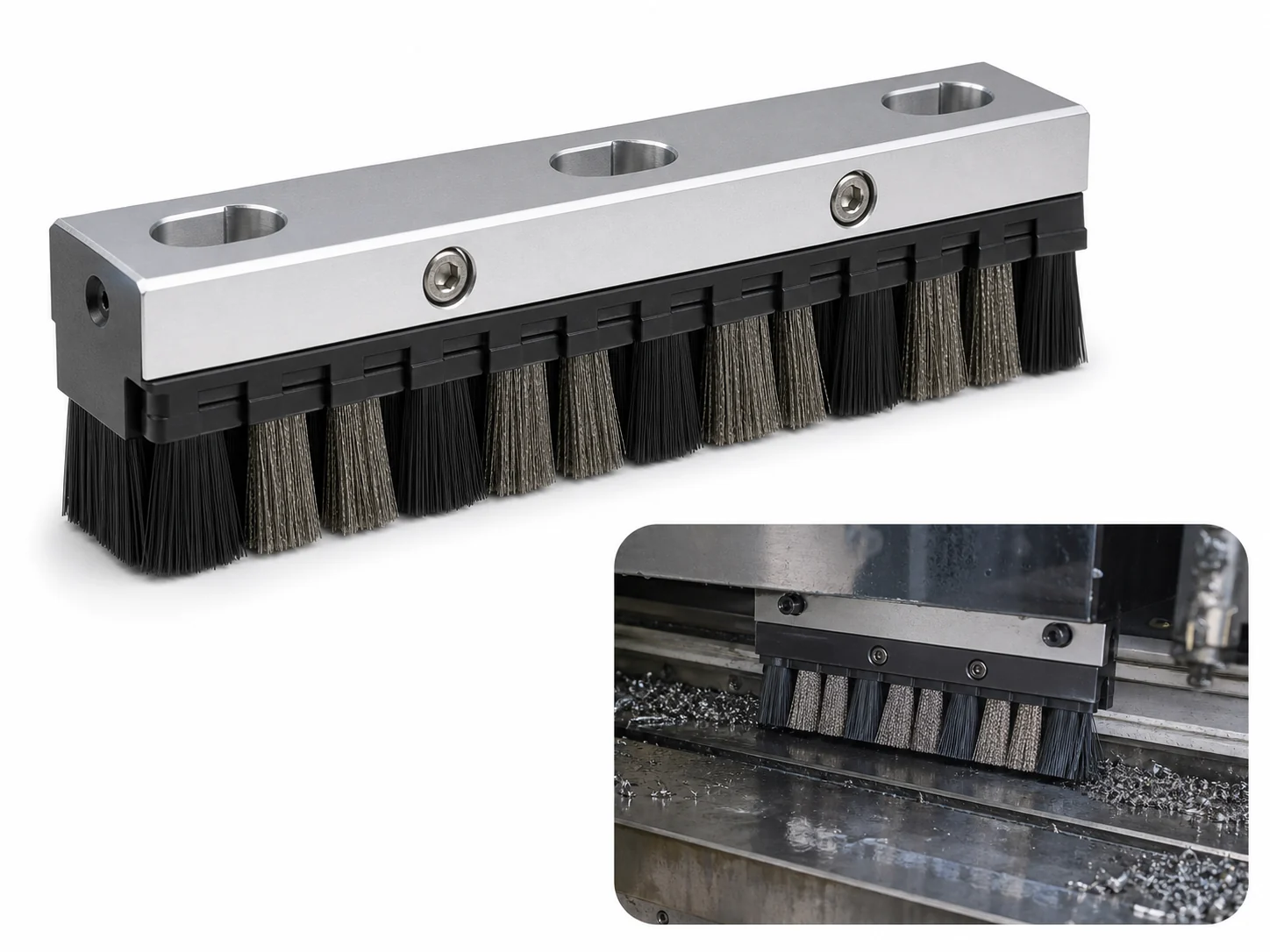
Machine Tool Brush
Configure a machine tool brush to clear chips, coolant, scale, and weld spatter from…
See the specification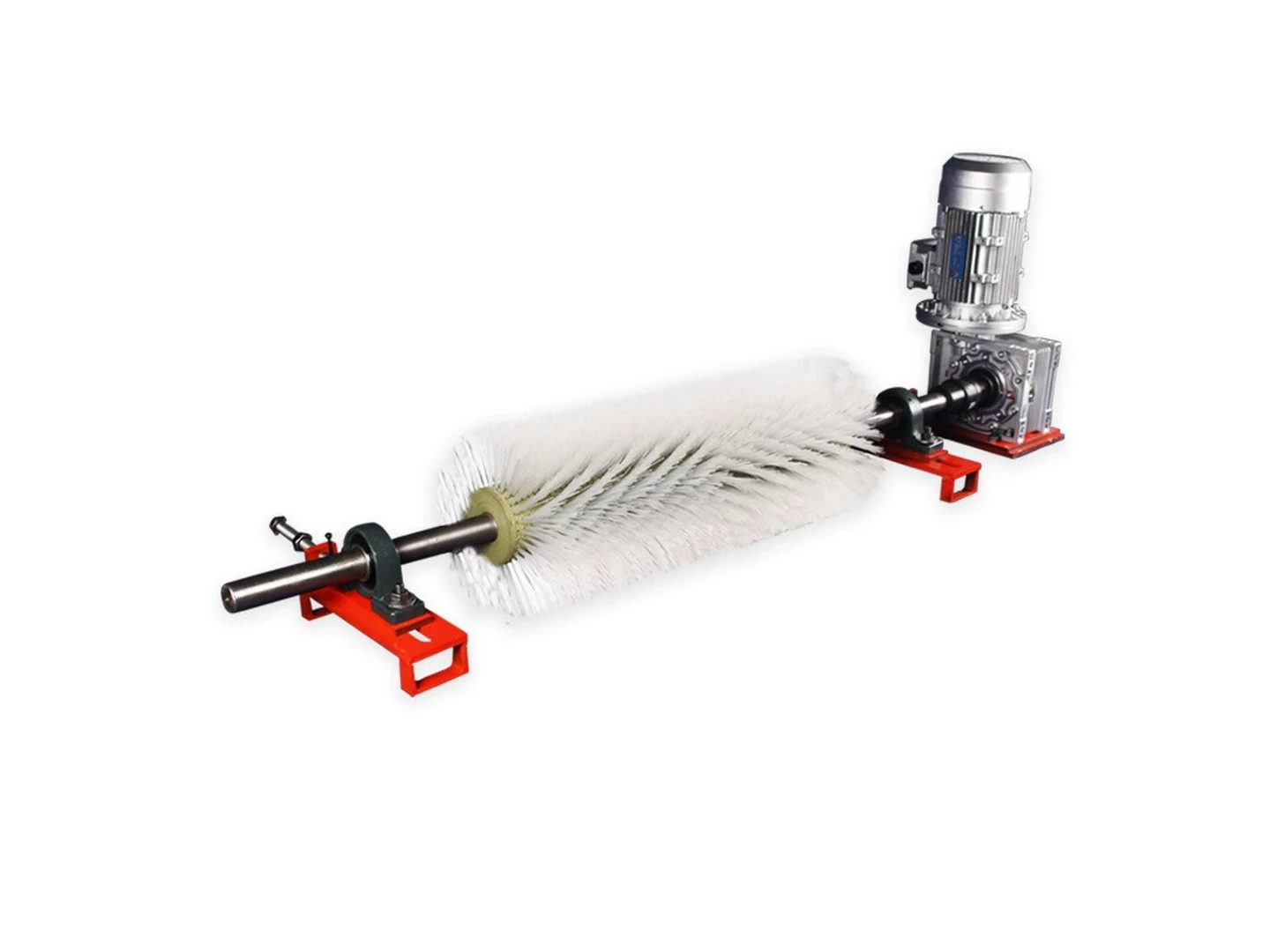
Custom Roller and Conveyor Brushes
Choose a roller or conveyor brush when a cylindrical brush must clean, wipe, guide,…
See how this type is builtCustom Manufacturing RFQ
Discuss This Material
Share the working surface, residue, dimensions, material direction, interface, quantity and drawing or sample photo.
Custom Brush RFQ
Request a Custom Cleaning Brush Quote
Upload a drawing, product photo, or sample photo and provide the core dimensions and cleaning conditions.
“We need a brush to remove wet residue from a stainless steel conveyor, about 800mm wide. The current brush wears quickly. We can send photos.”
“We sell drinkware and need a cleaning brush to include with the product. Quantity around 5,000 pieces.”