
Custom Cleaning Brush
Brush Roller Fruit and Vegetable
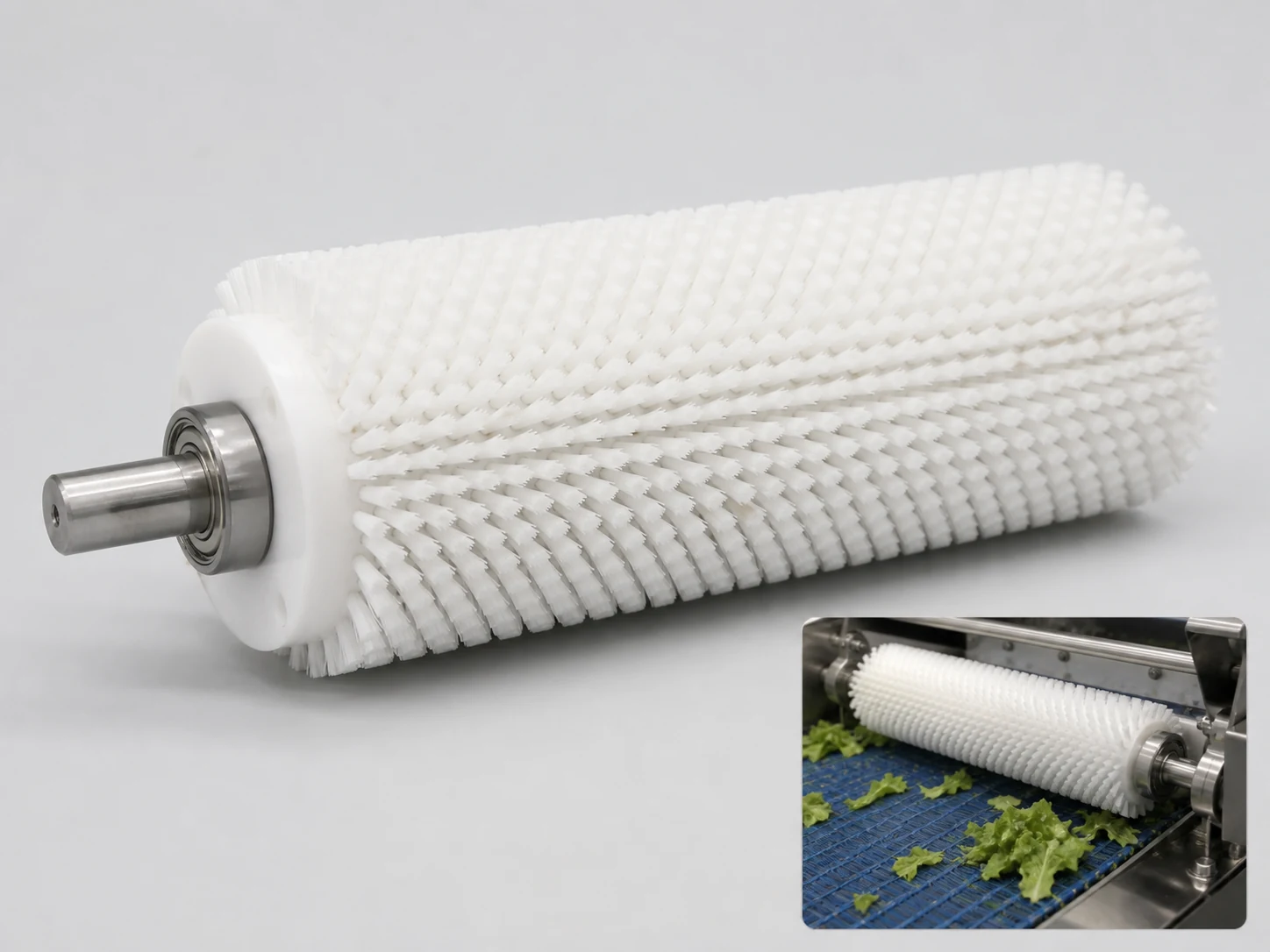
Cylindrical brush rollers for fruit and vegetable washing, scrubbing and polishing lines. Nylon PA, PBT or PP filament; custom diameter, length and trim.
Medium brush
100 pcs
Minimum order
Worked with two hands or on a pole: chimney, gutter and pond-filter brushes, discs, cups and tank brushes.
Production lead time, once the specification is confirmed
- Up to 100 pcsWithin 7 days
- 101–5,000 pcsWithin 14 days
- 5,001–50,000 pcsWithin 21 days
- Over 50,000 pcsConfirmed with your quotation
Peak season can extend these times; the shipping date is confirmed in writing with your quotation. Sampling and shipping are quoted separately.
A cylindrical roller brush for fruit and vegetable washing, scrubbing, and polishing lines. It mounts on the drive shaft or end plates of produce processing equipment and uses flexible synthetic filament to remove field soil, mud, loose peel, and wax from produce skins while the product moves across or beneath the rotating roller.
What can this brush do for you?
Removes field soil without cutting through the skin
The brush cleans by letting filament tips flex as they sweep over the produce. Standard Nylon PA filament is resilient enough to lift clay, sand, and caked field soil, but the tips bend on contact instead of slicing into the skin. The roller can scrub potatoes, carrots, apples, and thin-skinned fruit without turning a wash station into a peeling station.
Maintains even scrubbing pressure across the full roller width
The working face is filled in a continuous spiral or segmented strip pattern so no bare bands run along the roller. When a produce bed passes the roller, each item in the contact zone receives the same filament pressure. This reduces half-cleaned rows and missed patches at the outer edges of the bed.
Holds its performance in wet, continuous-duty wash lines
The filament and core are selected for sustained rotation in wet produce areas. Water-stable plastic cores and filament materials resist softening and dimensional change under normal wash-line conditions. PBT and PP options are available when the line runs hotter water or a different chemical program.
Sheds soil and peel debris instead of packing it around the core
Mud, peel fragments, and leaf debris pass through the open filament face and fall away with the wash water. A proper fill spacing prevents the roller from collecting a mat of dirt around the core, so each revolution contacts the produce with clean filament tips rather than a layer of packed material.
One roller format covers washing, scrubbing, and polishing duty
By changing filament diameter, trim length, and fill density, the same roller platform can be configured as a gentle polisher for waxed fruit, a medium scrubber for apples and cucumbers, or a firmer root-crop scrubber. The roller is built to the contact your line actually needs.
What is a Brush Roller Fruit and Vegetable?
A Brush Roller Fruit and Vegetable is a rotating cylindrical brush installed in the wash, scrub, or polish section of a fruit and vegetable processing line. It is an inline process component, not a hand brush or a general-purpose cleaning tool. The roller turns continuously while produce moves across or underneath it, so every item in the bed receives repeated filament contact.
In most installations the roller mounts on the existing line shaft or on its own end plates. The outer brush face runs in controlled contact with the produce skin, while spray bars wash away loosened soil. In a polishing station, the same rotating contact spreads wax or conditioning solution evenly instead of removing soil. The cleaning result comes from three factors working together: filament stiffness, free trim length, and the pressure set between the roller and the produce bed.
Because the roller is a wear component, it is normally specified as a matched part for the machine and crop. It is sized to the shaft, working width, and skin sensitivity rather than sold as a fixed one-size replacement.
Technical Specifications
The table lists the parameters a buyer or line engineer would normally confirm before ordering.
| Parameter | Standard / Configurable Range | What to Confirm |
|---|---|---|
| Roller outside diameter | 100–300 mm | Clearance to the produce bed and gap mechanism |
| Working face length | 600–2,000 mm | Width of the conveyor or wash bed |
| Inner bore / shaft interface | 50–120 mm bore with keyway, square, splined, or flange mount | Existing shaft diameter, key size, and drive end |
| Filament material | Nylon PA standard; PBT and PP options | Water temperature, detergent program, and duty cycle |
| Filament diameter | 0.3–0.8 mm typical; finer or coarser available | Skin sensitivity and soil load |
| Trim length | 20–60 mm free filament length | Contact depth and roller-to-produce pressure |
| Fill pattern | Spiral full fill, axial brush strips, or sectional rows | Drainage, coverage, and replacement method |
| Core material | Polypropylene or polyamide plastic standard; stainless steel available | Weight, corrosion exposure, and shaft loading |
| Typical rotation speed | 50–300 rpm, line dependent | Drive speed and rotation direction |
| Continuous wash temperature | PP up to 60°C; Nylon PA for standard wet duty; PBT for high-temperature and hot-water lines | Wash tank temperature and chemical exposure |
| Brush type | Custom Roller and Conveyor Brushes | |
| How it is driven | Machine-driven, mounted in the equipment | |
| Cleaning target | wet washing line, scrubbing station, and polishing and wax distribution cleaning | |
| Surface or part | roller, plates, potatoes, carrots, bores, gaps, plastic, and bars | |
| Residue or debris | wax, polish, mud, clay, loose skin, and dust | |
| Mounting / connection | 50–300 rpm, line dependent |
All dimensions are built around the existing machine geometry. If the line uses a segmented roller, non-standard drive coupling, or unusual shaft length, the diameter, face length, core, and filament configuration are adjusted during project specification.
Where does this brush work best?
Wet washing lines for field crops
Potatoes, carrots, beets, sweet potatoes, and radishes carry clay and soil into the packhouse. The roller sits after the soil-removal section and works under spray to lift remaining field debris before grading or packing.
Scrubbing stations for apples, citrus, and cucumbers
Medium filament contact removes surface dust, light blemishes, and handling marks without bruising the fruit. This is the standard duty for sorting-line scrubbers that need consistent skin cleaning at line speed.
Polishing and wax distribution
After washing and drying, a softer filament set polishes apples, citrus, and tomatoes while spreading wax or conditioning solution into an even film. The roller face should be less aggressive here than in a soil-removal station.
Peel finishing after abrasive peeling
On root-crop lines, the roller follows a knife or abrasive peeler and lifts loose skin fragments from the surface. The result is a cleaner product entering inspection or packing without additional peeling loss.
How do I choose the right one?
Start with the machine interface, not the brush face. Measure the existing shaft diameter, keyway or mounting pattern, total roller length, and the space available around the roller. A brush that fits the bore but is too long, or that matches the length but will not couple to the drive, cannot be installed.
- Shaft diameter, keyway size, and drive-end configuration
- Working face length and total roller length between end plates
- Available outside diameter before the roller contacts guards or adjacent equipment
- Rotation direction and operating speed
The filament set depends on the crop and the job the roller performs.
| Produce / duty | Typical filament | Trim length | Contact result |
|---|---|---|---|
| Thin-skinned tomatoes, stone fruit, peppers | 0.3–0.4 mm Nylon PA | Longer trim | Gentle surface cleaning with low bruising |
| Apples, citrus, cucumbers | 0.4–0.6 mm Nylon PA | Medium trim | Balanced scrubbing and polish support |
| Potatoes, carrots, beets, sweet potatoes | 0.6–0.8 mm Nylon PA or stiff PBT | Shorter trim | Firm clay and field-soil removal |
| Wax and conditioning-film distribution | 0.25–0.5 mm fine or medium filament | Longer trim | Smooth surface film without drag marks |
These are starting points. Line speed, gap setting, and produce size determine whether the final filament should move one step finer or stiffer.
Choose PBT when the line uses hot wash water or an aggressive detergent program. Keep PP for cool-water duty below 60°C. Nylon PA is the standard starting material for general wet produce washing.
Full spiral fill gives denser, more uniform contact and is common in scrub stations where finish matters. Axial strip segments and sectional rows allow individual brush sections to be replaced and improve the path for water and debris drainage. A heavy mud line usually clears better with segmented fill; a polishing or waxing line usually benefits from full coverage.
Use a different cleaning tool when the produce contains embedded stones, woody stems, or hard attached debris that must be cut loose. A brush roller will deflect instead of cutting. When the process requires deep peel removal, pair the roller with an abrasive drum or knife peeler. For very fragile leafy crops, soft foam rollers or water-only washing usually cause less damage than filament contact.
Can I customize this brush?
Most fruit and vegetable brush rollers are built to the specific machine and crop, not taken from a standard shelf. The following items can be adjusted for an order.
- Roller geometry — outside diameter, working length, core bore, keyway or spline, and end-plate configuration
- Filament material — Nylon PA, PBT, or PP selected for the wash temperature and chemicals
- Filament diameter and trim — matched to skin sensitivity and the required scrubbing pressure
- Fill layout — spiral full fill, axial brush strips, sectional rows, chevron pattern, or staggered tuft rows
- Core construction — plastic or stainless steel, with the drive lugs and mounting hardware specified for the line
- Color and marking — core color or strip identification for line position and replacement tracking
- Packaging — bulk crate, individually wrapped rollers, or pre-assembled line kits
To document the configuration, provide the shaft drawing or a worn sample, roller length, outside diameter, gap setting, produce type and skin condition, wash chemicals, water temperature, and the required function: wash, scrub, polish, or peel finish. A clear photo of the installed roller accelerates the process.
If the project also requires material declarations, inspection data, or third-party testing for a customer specification, we can support those requirements during the customization project.
When is a brush roller fruit and vegetable worn out rather than just dirty?
What should I check before the first start-up?
Confirm that the shaft couplers and end plates are locked, the filament face is clear of guards or housing, and the rotation direction matches the machine design. Run the roller wet at low speed for 10–15 minutes so the filament settles, then inspect the ends for rubbing, hot spots, or loose tufts before full-speed operation.
How can I verify even contact across the roller width?
Run a known dirty test batch through a single pass and inspect the produce across the left, center, and right of the bed. If one section remains dirty, check the gap setting, core runout, end-bearing wear, or uneven filament wear. Even contact should show consistent soil removal from edge to edge.
How do I know when the roller is worn out?
Look for flattened or tangled filament zones, reduced outside diameter, missing tuft rows, melted tips, or produce leaving the station with patches of soil. When filament no longer recovers after bending or no longer reaches the produce at the original gap setting, the roller should be replaced.
Does the brush roller remove pesticide residue or sanitize the produce?
No. The roller removes physical soil, peel fragments, and wax, but it does not remove all chemical residues or disinfect the surface. Wash-water chemistry, rinsing, and any required sanitation step remain separate parts of the process. Mechanical brushing improves the access sanitizer has to the skin, but it is not a sanitation replacement.
What indicates the roller is too aggressive for the crop?
Skin tears, bruising, visible tip marks, broken stems, or excess peel removal are the main signals. Back off the gap, reduce the operating speed, or move to a finer and longer filament before accepting the roller as final.
When is a brush roller the wrong choice for a produce line?
Use a different method when the crop is too small or too irregular to bridge the roller gap, when debris is so hard it requires a knife or abrasive drum, or when floating delicate leaves through a water channel causes less damage than filament contact. The brush roller is best where controlled mechanical scrubbing is needed and produce can tolerate repeated filament flex.
Guides that go deeper on this
Abrasive Nylon Grit and Filament Selection
Read this guideGuideBrush Roller Conveyor Mistakes with Dry Dust
Read this guideGuideBrush Speed, Engagement, and Heat
Read this guideGuideConveyor Belt Cleaning Brush Design
Read this guideGuideFloor Scrubber Brush Selection: Disc Brush vs Roller Brush
Read this guideCustom Manufacturing RFQ
Describe Your Application
For a custom quote, we need the key dimensions, surface or part, residue, material preference, quantity, and reference image or drawing.
Drawing or photo optional — it speeds things up, it does not gate the enquiry.
Custom Brush RFQ
Send Your Brush Project
Upload a drawing, product photo, or sample photo and provide the core dimensions and cleaning conditions.
“We need a brush to remove wet residue from a stainless steel conveyor, about 800mm wide. The current brush wears quickly. We can send photos.”
“We sell drinkware and need a cleaning brush to include with the product. Quantity around 5,000 pieces.”